
Come and take a look at our collection of furniture!
Come and take a look at our collection of furniture!
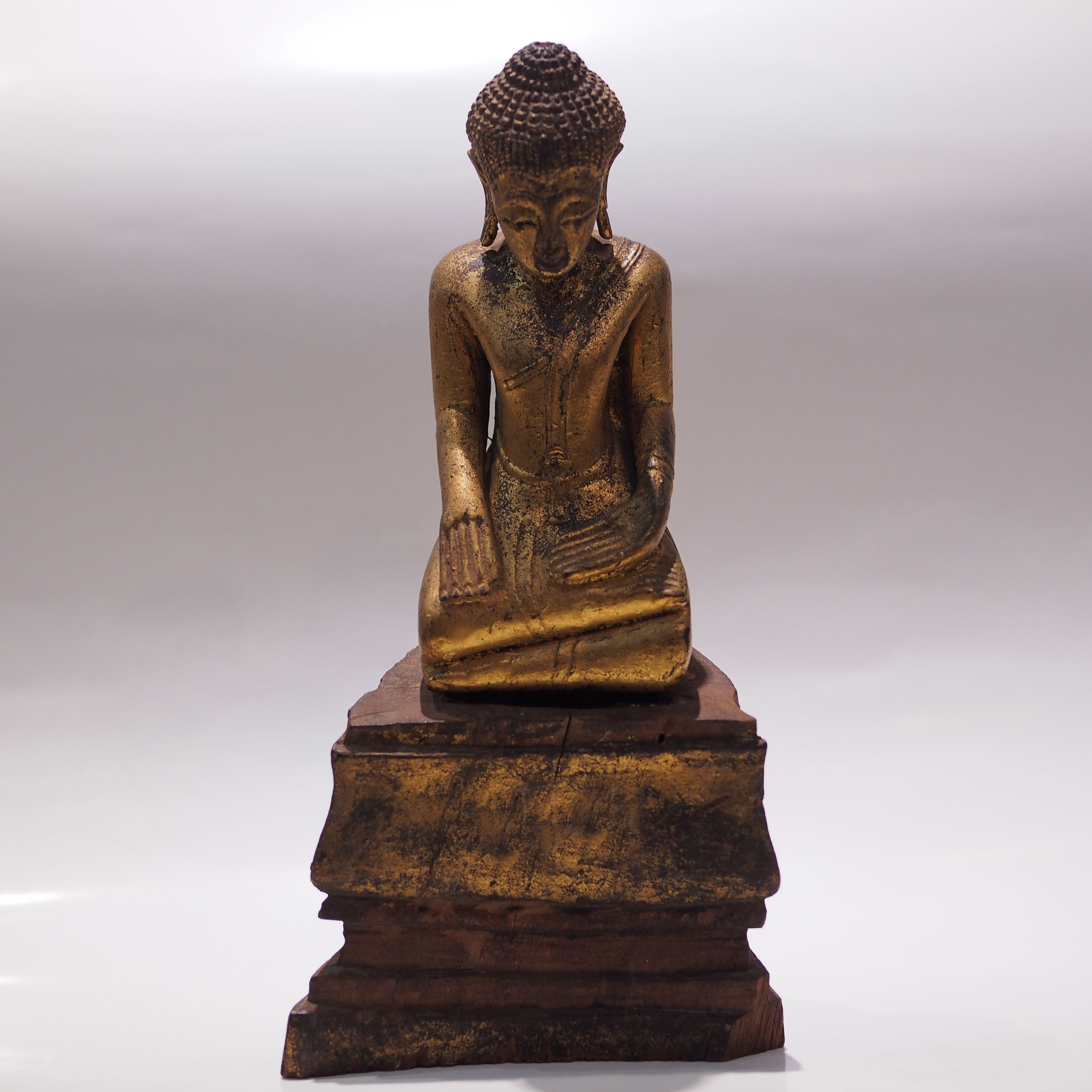
W100xD70xH220mm, Thailand
Mudras are symbolic hand gestures, without the use of words it communicates the mind’s idea which is more powerful than language.
This is a Buddha statue in the Bhumisparsha Mudra posture, with his right hand resting on knee while reaching toward the earth and the left hand lies on the lap facing upward. This gesture is also known as the “earth witness” which is the most iconic image of Buddhism. This gesture symbolizes unshakability and steadfastness; the legend goes just before Siddhartha Gautama was enlightened to become the Buddha, demon Mara called upon his armies of monster to attacking, hoping to scare him away from his meditation under the bodhi tree. Siddhartha stayed unshaken and continued his mediation. The demon claimed the enlightenment for himself and called for his monsters to give witness to his superior spiritual achievements, Mara then asked Siddhartha if anyone could give witness for him. Siddhartha simply extended his hand to reach the ground and the earth responded and giving witness for him. Mara was defeated at his own challenge and vanished. The next day Siddhartha Gautama enlightened to become the Buddha himself. The serene expression of this figurine best captured this moment of enlightenment.
Here is a monk practicing more mudra gestures.
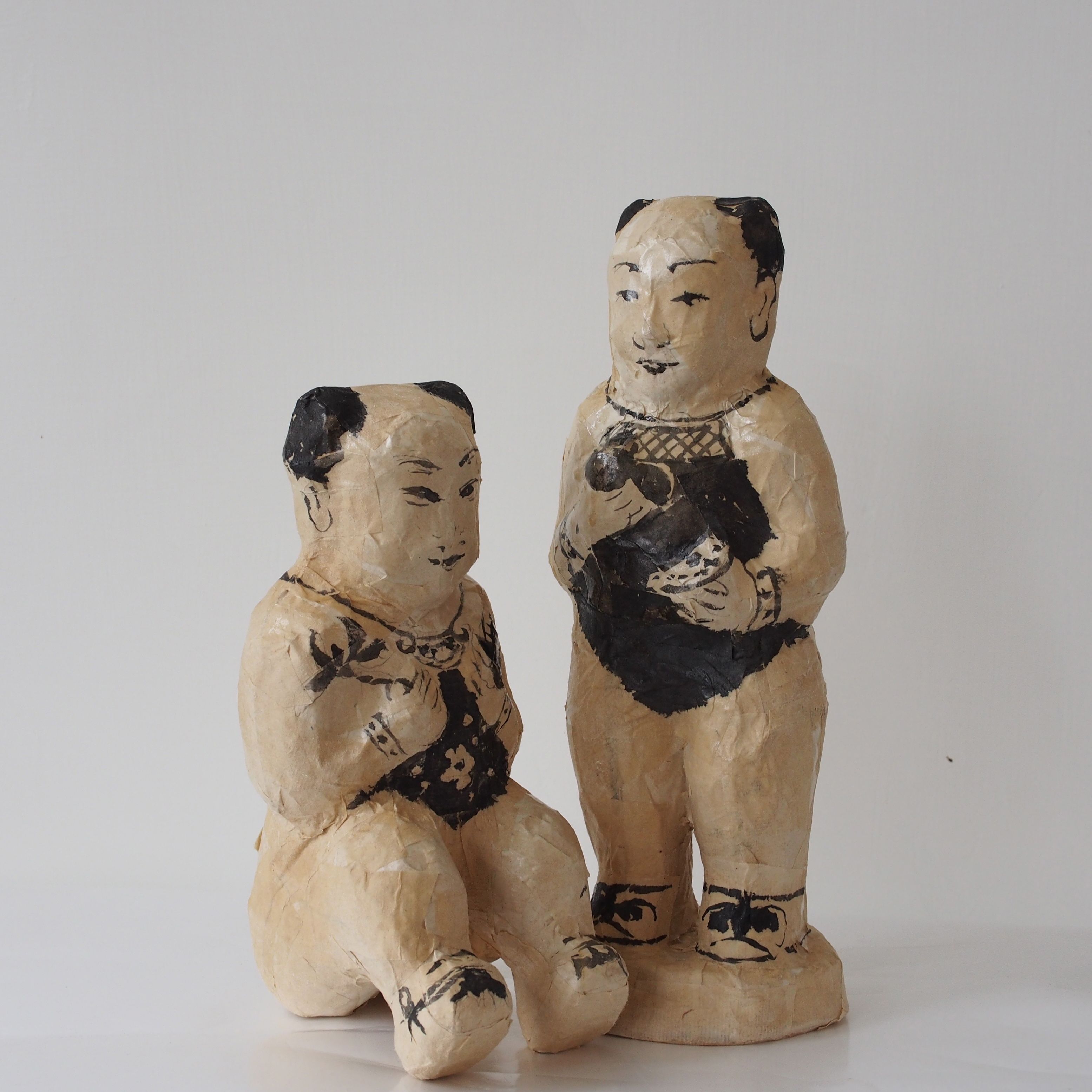
sitting W110xD140xH220mm, Hong Kong
Cute pairs of paper mache dolls inspired by the Ci Zhou kiln dolls.
They are the first in the series, stay tune for their transformation!
 DIA100mm, China
A Hakka silver bracelet which is called a Shiu Ag, the Hakka believes that the bracelet can keep the evil “wind” away (驅風), the bracelet is quite popular with the older generation women. In Chinese medicine the sickness of the 4 seasons, cold / dampness / dryness / summer heat / heat (寒,濕,燥,暑,熱) will enter our body through the “wind”, so its best to get rid of the evil wind.

W45xD45xH50mm, China
Millefiori, “mille” (thousand) and “fiori” (flowers), in Italian.
I had a similar millefiori paper weight as a child. I had no concept of a paper weight then and took it as a treasure item which I spend numerous lazy afternoons staring into the glass. I would swear once I saw the little flowers moving inside but of course no one would believe me.
The millefiori frog here is not a Baccarat, but I just love the 70s psychedelic feeling to the film … and now you can perhaps also see the flowers moving inside the glass.
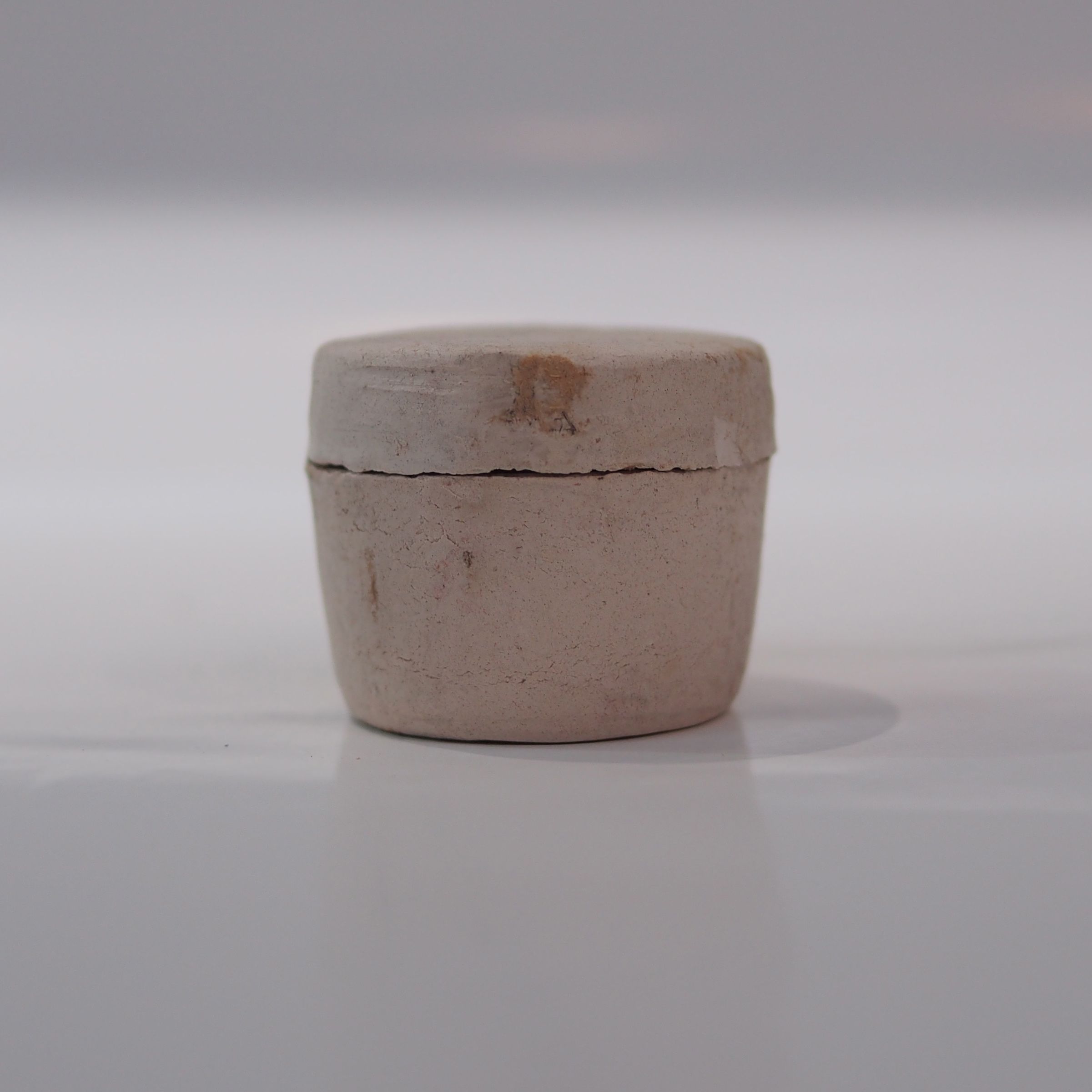
DIA40xH35mm, China
This small pottery jar was a container for opium.
A cheap packaging of the opium den which would then be transferred to a more delicate bottle.
It is similar to today’s disposable plastic bag for pills.


W35xD40xH130mm, Sumatra, Indonesia
This beautifully carved figurine belongs to the datu (shaman) of the Batak tribe in Sumatra. It is the finial of a tungkot malehat, a ritual staff used by the datu. The tungkot malehat consist of the kneeling figure as well as a rattan or bamboo staff (which unfortunately is missing). Traditionally, these magic staff is carved by the datu himself, they are powerful supernatural weapons for fighting off evils spirits and also has the power of healing. During the ceremony the datu would enter into a trance while holding the staff which would aid him in the ritual.
 L1140xH660mm, China
This Yang Liu Qing print is about the story “Wenji Reurning to Han”.
Wenji, was the daughter of the scholar Cai Yong, equally well learnt she was tributed to have revived some important ancient literature that was lost during the war. Wenji though has a rather tough life; her first husband Wei passed away and during the war she was kidnapped by the Huns tribe and made to be the queen of the Hun king. The king treated her well, they had children and soon Wenji though missing home was well settled in Hun.
Meanwhile her father Cai Yong was jailed and died for his support of a declined politician. The story would have ended here if emperor Cao Cao has not suddenly missed his friend Cai Yong and thought of his daughter. Emperor Cao requested for her return to Han, though unwilling the Hun king dared not disobey and reluctantly send the mother of his child home to Han. Feeling the sorrow as she departed her Hun family, Wenji wrote the poem “Eighteen Stanzas for a Barbarian Reed Leaf Pipe”
Happy to see her, Emperor Cao Cao felt bad that she is all alone and without a family so he arranged for her to be wedded to an official named Dong. Unfortunately, Dong committed some crime and received a death sentence. Wenji fearing she will lose yet another husband went to see Cao Cao and begged for his pardon. Moved by her action, Cao Cao ordered for Dong’s release and chatted with her about her father’s literature. Wenji told him that all the 4000 odd books were destroyed during the war but she could still recite 400 out of the 4000. Cao Cao was excited to record the lost literature and Wenji wrote them down word for word.
Click here to see our other Yang Liu Qing prints.

DIA600mm, Hong Kong
心經 The Heart Sutra
bō rě bō luó mì duō xīn jīng
般若 波羅 蜜多心 經
guān zì zài pú sà, xíng shēn bō rěbō luó mì duō shí,zhào jiàn wǔ yùn jiē kōng
觀自在菩薩, 行深般若波羅蜜多時, 照見五蘊皆空,
dù yī qiē kǔ è 。 shè lì zǐ, sè bú yì kōng ,kōng bú yì sè,
度一 切苦 厄。舍利 子,色不 異空, 空不 異色,
sè jí shì kōng ,kōng jí shì sè。 shòu xiǎng xíng shí, yì fù rú shì
色即 是空, 空即 是色。受想 行識, 亦復 如是。
shè lì zǐ, shì zhū fǎ kōng xiāng, bù shēng bú miè, bú gòu bú jìng,
舍利子, 是諸法空相, 不生不滅, 不垢不淨,
bù zēng bù jiǎn, shì gù kōng zhōng wú sè, wú shòu xiǎng xíng shí, wú yǎn ěr
不增不減, 是故空中無色, 無受想行識, 無眼耳
bí shé shēn yì, wú sè shēng xiāng wèi chù fǎ, wú yǎn jiè, nǎi zhì wú yì shí jiè,
鼻舌身意, 無色聲香味觸法, 無眼界,乃至無意識界,
wú wú míng, yì wú wú míng jìn, nǎi zhì wú lǎo sǐ, yì wú lǎo sǐ jìn
無無明, 亦無無明盡, 乃至無老死,亦無老死盡。
wú kǔ jí miè dào, wú zhì yì wú dé,yǐ wú suǒ dé gù
無苦集滅道, 無智亦無得,以無所得故。
pú tí sà duǒ, yī bō rě bō luó mì duō gù, xīn wú guàài。 wú guà ài,
菩提薩埵,依般若波羅蜜多故,心無掛礙。無 掛礙,
gù wú yǒu kǒng bù, yuǎn lí diān dǎo mèng xiǎng, jiū jìng niè pán
故無有恐怖, 遠離顛倒夢想, 究竟涅槃。
sān shì zhū fó, yī bō rě bō luó mì duō gù, déā nòu duō luó sān miǎo sān pú tí
三世諸佛, 依般若波羅蜜多故, 得阿耨多羅三藐三菩提。
gù zhī bō rě bō luó mì duō, shì dà shén zhòu, shì dà míng zhòu
故知般若波羅蜜多, 是大神咒, 是大明咒,
shì wú shàng zhòu, shì wú děng děng zhòu。 néng chú yí qiè kǔ, zhēn shí bù xū
是 無上 咒, 是無 等等 咒。能除 一切 苦, 真實 不虛。
gù shuō bō rě bō luó mì duō zhòu。 jí shuō zhòu yuē
故 說般 若波 羅蜜 多咒。即說 咒曰:
jiē dì jiē dì,bō luó jiē dī,
揭 諦揭 諦, 波羅 揭諦,
bō luó sēng jiē dī, pú tí sá pó hē
波羅 僧揭 諦,菩提薩 婆訶。
The heart Sutra is about emptiness; things exists only through our minds… Thoughts, ideas, names, concepts. Nothing really exists on their own sides.
Here is the Dalai Lama’s teaching on the Heart Sutra and the 37 Practices.

DIA190mm, China
This embroidery is taken from a traditional Chinese under garment, the du dou, a garment that is made by the mother for the child as an extension of love and blessing. The design of this embroidery showed the well wishes of the mother, the hope that her child would become a zhuang yuan, the scholar who came first in the official examination. Since the Siu dynasty, the imperial court has set up a system of examination to find the best scholar to take up an imperial post. This is perhaps the only way to promote one’s status in a hereditary society.
In the embroidery, there is the zhuang yuan holding a bamboo while stepping on head of the Ao fish. 獨占鰲頭, occupying the head of the so fish alone, is a symbol of being the zhuang yuan for during the ceremony with the emperor the zhuang yuan will be standing on the head of a stone carving of the ao fish.
 Mountain Folkcraft