Archives for posts with tag: chinese

L300xW120xH400mm, China

Deer is a symbol of blessing in China; deer in Chinese sounds like “lu” which means fortune and the salary for a emperor’s officials.  This is a bamboo weaved deer container, zoom in closer and you will appreciate how the fine bamboo threads are.

W600xL600mm, China

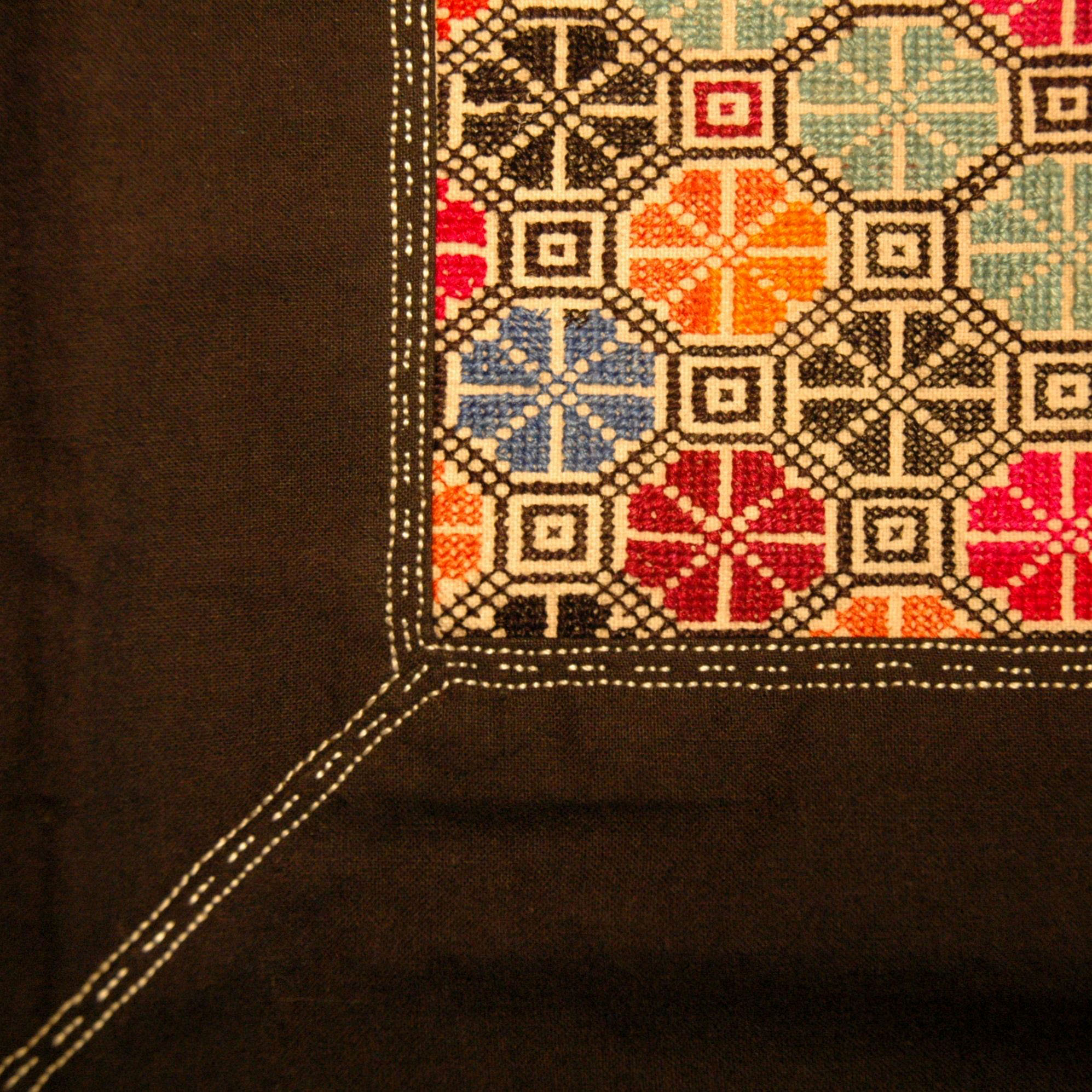
This Miao embroidery started its life as a traditional baby carrier.  The cloth baby carrier was once very popular, looking at old photos I too have spend some time wrapped up in a much less elaborated version of it.  For those who are not use to carrying baby around with belt and cloth, the Miao has converted the embroidery as a cushion cover.  The embroidery is made with cross stitch, a basic stitching of the Miao.

L150xW120mm, China

Wood block print presented on greeting card.

DIA60xH60mm, China

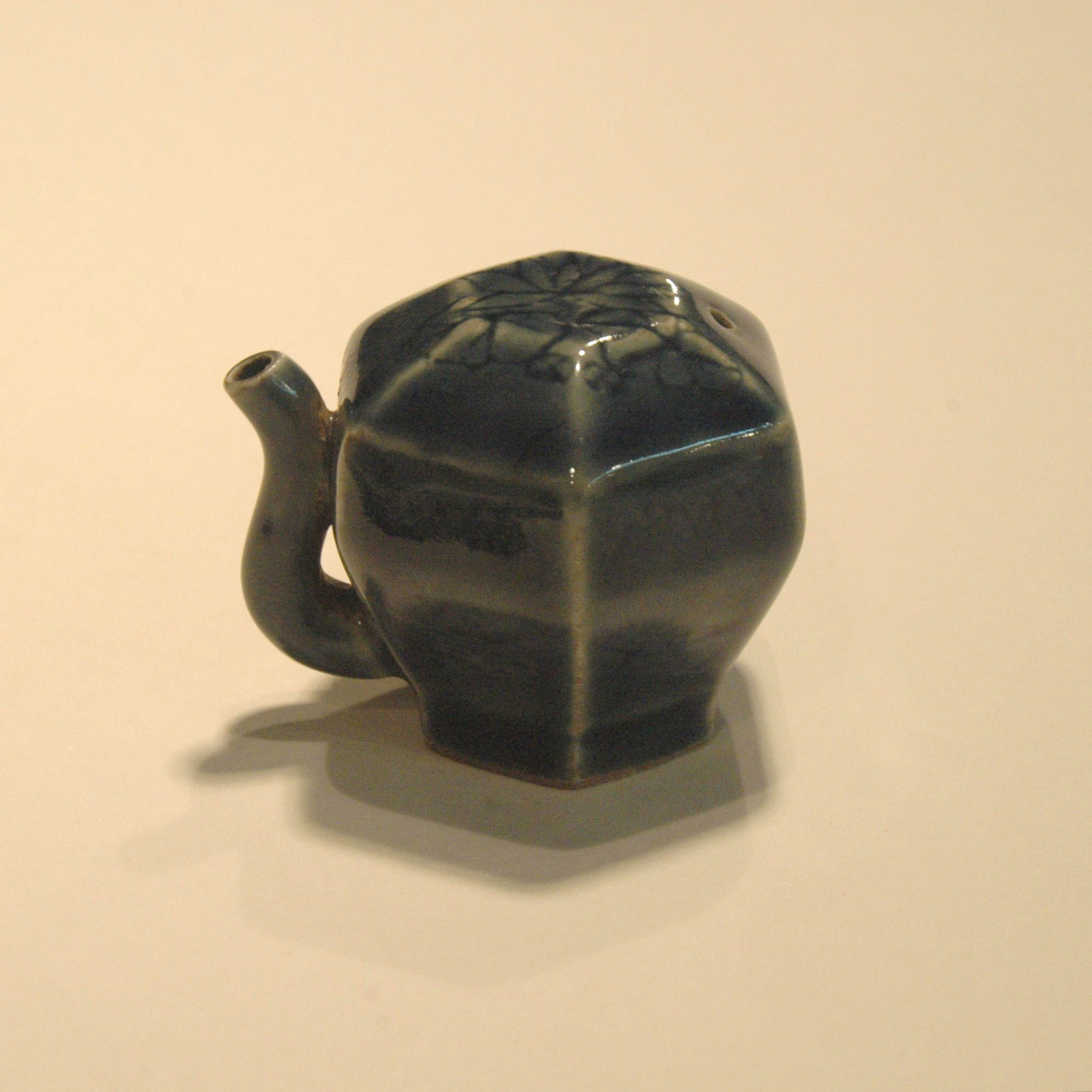
Here is another stationary for the Chinese calligraphy – a water drip for grinding and dilution of the ink.  It has a small water inlet and an outlet, the inlet acts also as suction control for the water flow.

W100xH50, China

This is holder for Chinese ink brush, the concept has been around for 1500 years (its hard to imagine otherwise as the ink brush is quite a messy object without it).  There are many different design and material, the ceramic mountain has been a popular design since the Ming dynasty.  Funny enough, there are brush holders that are named after mountains  but also also mountains that are named as “brush holder”, in Hong Kong (Beacon Hill), in Liao Ning, Qing Hai, Si Chuan, Fu Jian and of course the most famous mount on Huang Shan.

DIA250xH150mm, China

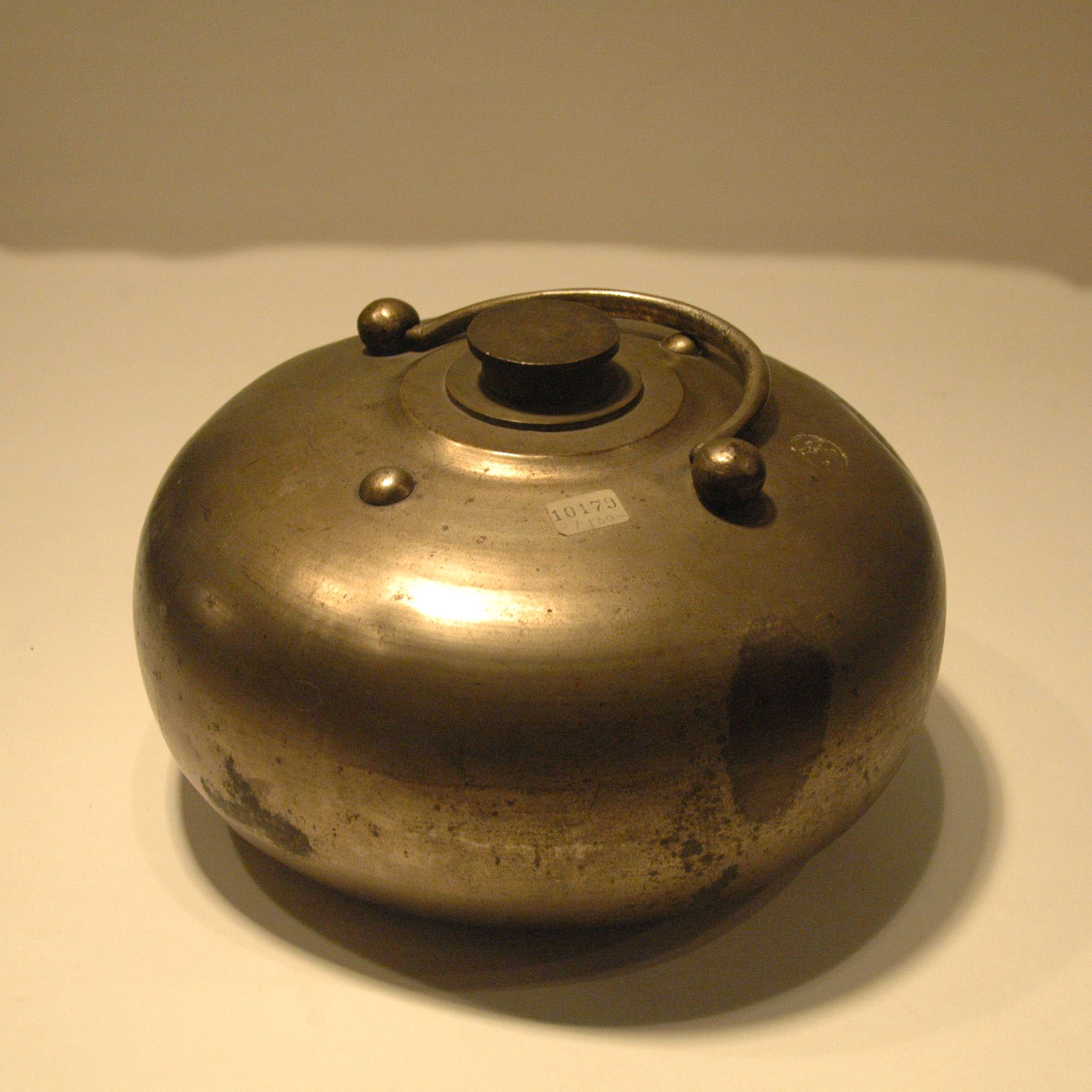
For these cold nights, here is a Chinese version of the hot water bottle known as the “hot water mistress”.  It is made with a good conductor (such as copper nickle, pewter or porcelian) and once hot water is filled in through the small screw up opening, it will be enclosed with a thick cloth bag and put in to warm the bed.

W100xD80xH200mm, China

This is a gold plated figure of the God of Wealth General Zhao Gong Ming worshiped by the Taoist.  The figure is well known to be in armour, one hand holding a piece of gold, the other a silver whip and riding on a black tiger.  Legend had it that originally there were 1o suns, they blasted the earth, Hou Yi was asked to shoot down all of them but one.  The 9 suns became demons, 8 of them revenged and brought about sickness but one of them Zhao became human.  He was trained and attained the power to fight plague, as a reward for his hard work he was made god and in charge of the wealth of the world. You might also known him as one of the door god icon.

W100xL290mm, China

This is an old wood block printed script in 2 volumes of a popular Buddhist sutras in Chinese.  The sutra was translated into Chinese in Tang Dynasty; it was presented as a dialogue between the Buddha and Ksitigarbha.  The teaching is about the the ultimate sense of a universal code of duty for all living beings.

W120xH650mm, China

Gold and lacquered wood carving is a craft specialized in the Chao Zhou area; lacquer are applied on the wood carving before gold leaf is gilded on.  The carving are used to decorate items from furniture to architecture.  One of the theme for the wood carving are popular legends and scenes from opera.  This particular wood carving tells the story of Hua Mu Lan (made even more popular by Disney in the movie Mulan).  In the Northern dynasty, there were a lot nomad attacks in the north, one male from each family are required to be drafted to war.  The girl Mulan’s family has an elderly father and a very young brother, Mulan decided to take upon the duty, disguised herself as a male and went to join the army.  After a 12 years battle, the war was won and Mulan triumphantly returned, only then did her army mates realized she was in fact a female.

DIA200xH300mm, China

This is a ceramic jar for keeping delicious food (a bit like a tuck box).  Before refrigerator became popular, food were kept in jars, pickles, all the special goodies for Chinese New Year, apart from the children this also attracted the ants.  In those days, this uniquely designed jar were a standard container in every Guang Dong household, it has a name “piss ant off”.  Here is the reason why; once the lid is closed off, water is poured into the trench to prevent the ants from climbing into the jar.