jewelleryDon’t forget our collectable jewellery event is still on.

Newly arrived pieces with will be featured in the posts of the next following days.
These pieces of jewellery are carefully put together with the art of  Chinese knots with the strings all handwoven for the design.

Stay tune!

To see all our jewellery collection, click HERE!

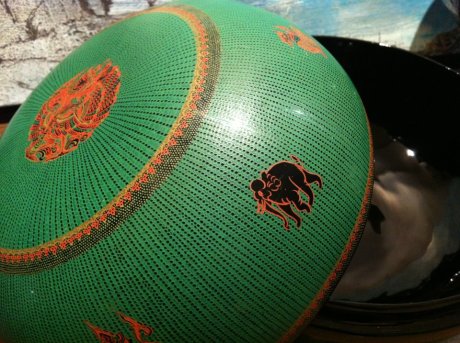
Green lacquerware

DIA200xH150mm, Myanmar

ASIAN FOLKCRAFT COLLECTION
SOIL X MOUNTAIN FOLKCRAFT

It is almost certain that Burma acquired the technique of lacquer production from China where it has a three-thousand year history. However, the use of lacquerware was not confined to royalty and the monkhood in Burma. Lacquer objects were used daily by commoners. Food, refreshments, clothing, cosmetics and flowers are all put in lacquer receptacles.

The importance of lacquer to the Burmese is probably equivalent to the modern uses of porcelain, glass and plastic combined. Indeed, lacquer has many of the characteristics of modern plastic. It is light, waterproof, easily moulded and dries to a hard state.  It can be applied to virtually any surface: plain or carved wood, bamboo, paper, fabric, even metal and stone.

This fruit bowl is made by coiled bamboo, covered by over 20 layers of lacquer and decorated with the Burmese astrological symbols. Process of producing green lacquer ware is rather time consuming: One part indigo was added to ten parts of orpiment to produce a traditional green color. With age, many such green lacquer wares have come to assume appeasing opaque turquoise hue.

W270xD270xH280mm, Thailand

This bamboo weaved basket is known as a kratip, a container for cooked sticky rice.  They are a common item owned by every household.  The kratip is double weaved, acting as a insulator for keeping the rice warm.  Kratip comes in different shape and sizes, here is a smaller version.

Come and see the Asian Folkcraft Collection!

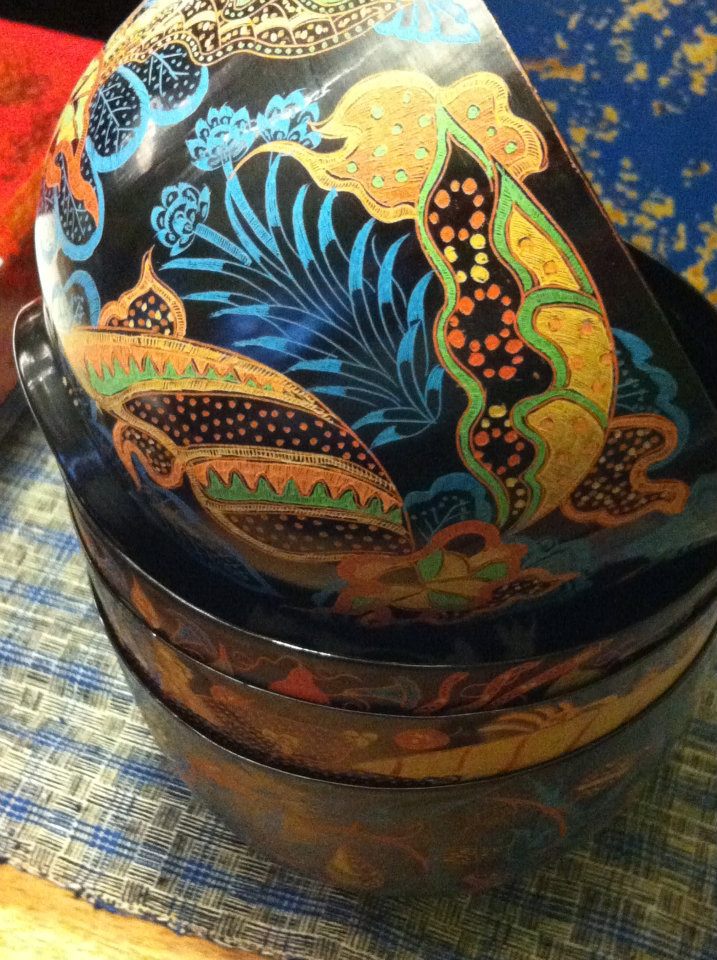
horse hair bowlDIA130xH90mm, Myanmar

Veronica Gritsenko is a British-Ukrainian artist and scholar. In 2000 she set up the Black Elephant studio in Bagan, Burma and eventually developed her own unique technique and designs based on ancient methods and materials.  Black Elephant Lacquer is collected by private connoisseurs and was acquired by the British Museum and The Royal Botanic Gardens Museum.

These bowls are made with horsehair woven in between very thin bamboo splints, with further application of lacquer mixed with rice husk ashes.  Burma is famous for a special type of incised lacquerware called “yun” – It’s engraved with a sharp iron stylus and the incisions are filled with colouring matter to create a design.

Item from SOIL for the ASIAN FOLKCRAFT COLLECTION

Opium Scale

L180xD90xH20mm, Thailand

For the Asian Folkcraft Collection, we have another tool – an opium scale.  This old scale is neatly set inside a teakwood case with carving on both side.

The scale is to be completed with a set of opium weights.

paper mache cow

W90xL200xH230mm, Myanmar

Burmese paper mache is usually made by applying layers of thin, tough, paper and rice paste to a clay model of an elephant.  After drying for a day or two, the object is then given a coat of white paint. The body is painted with brightly coloured enamel paints.

These paper maches are not only toys.  A donor may commission objects in different shapes for presentation to a pagoda or monastery on special occasions.    They are usually made by craftsmen or their families in the vicinity of the pagodas.

This animal paper mache collection from SOIL is avaible at Mountain Folkcraft during the ASIAN FOLKCRAFT event.

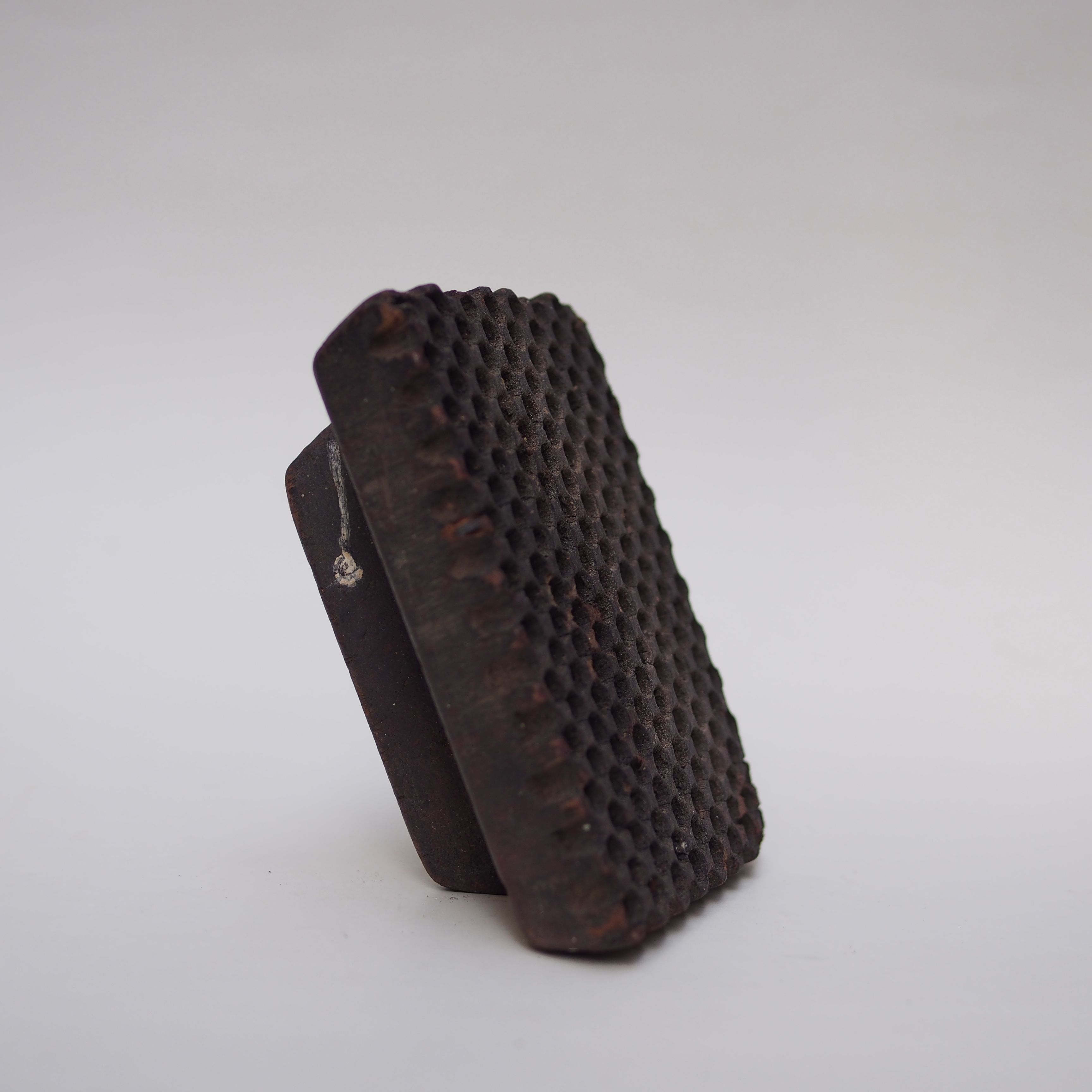
Fabric Stamp

fabric stamp

W150xL110xD70mm, India

Today for the ASIAN FOLKCRAFT we have a tool.

This is a well used piece of bunta, the wooden stamp used for fabric printng in India.

This beautiful video explains how the stamp is carved and how the printing is done.

burmese betel boxDIA60xH50mm, Myanmar

For the first item of the Asian Folkcraft Collection, we have a miniature of Burmese’s traditional lacquer betel box from SOIL.

 Betel, tobacco and pickled tea is an expression in Burmese language that speaks of hospitality and welcomes a visitor to one’s home.

 The circular betel box at first glance, looks solid, but is in reality nicely fitted with a lid over a small container for holding betel nut. The top of the bowl is fitted with two shallow trays, one on top of the other. The upper tray has four little cups to hold ingredients for making betel nuts: cloves, cutch, and seeds, shredded wild Licorice or sweet creeper.

 In the second tray is a layer of dried tobacco leaves. Only when the tray is taken out of the main bowl are green fresh betel leaves revealed.

displaydisplay

ASIAN FOLKCRAFT
SOIL
X MOUNTAIN FOLKCRAFT

Display all set up!  Crafts from all over asia; China,  India, Indonesia, Japan, Thailand, Malaysia and Myanmar.

We are open 10:00-18:30, close Sunday and Public Holdiay


asian-folkcraft-small

ASIAN FOLKCRAFT

SOIL x MOUNTAIN FOLKCRAFT

Come to see a collection of folkcraft from all over asia; China,  India, Indonesia, Japan, Thailand, Malaysia and Myanmar.