Clay figurines are a popular toy for adults and childern allover China and could be dated back to over 5000 years. In the area of Xu Zhou, clay figurines of dogs, pigs, rooster, duck and even houses were found in Neolithic sites. The tradition continues and was the most established in the Ming and Qing dynasty more subject matter were covered. The more natural non coloured version were favored by intellectuals while the mono white and black version are amulet figures. This figurine being decorated with colour is toy tiger.
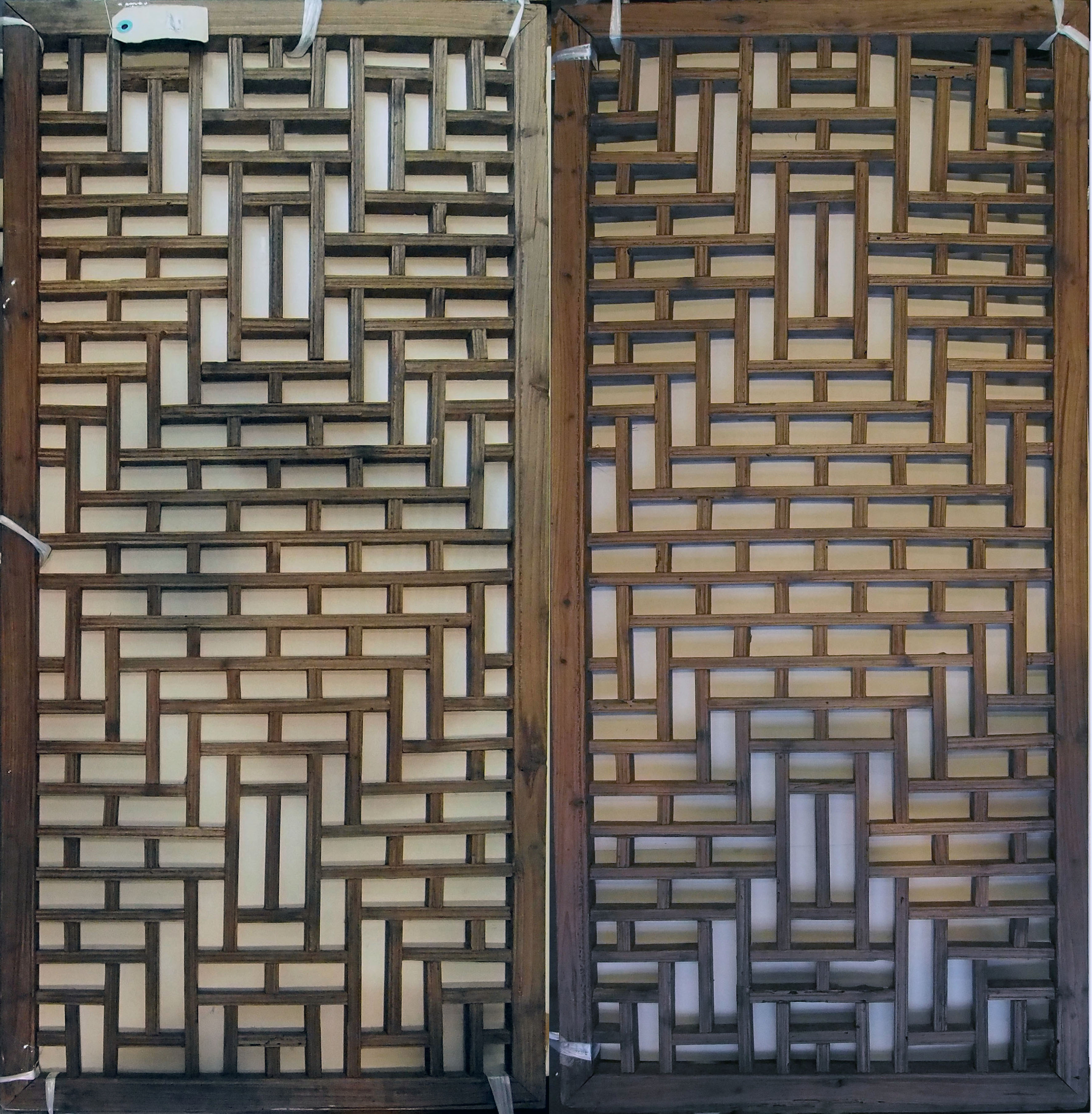
These wooden window lattices belonged to the houses of Hui Zhou, an area with elaborated civilian architecture brought on by the wealth of the successful merchants in the area. The Hui style architecture is unique, a combination of the local stilt houses and official northern courtyard houses, suiting to the southern climate, resulted in 2 stories courtyard houses with the living area directly opened to the inner courtyard with no wall or door in between, hence the courtyard which open up to the sky becomes part of the living area. This pair of window lattice would have been used for the ground floor bedroom facing the living area. They would have belonged to a humble family, though the craftsmanship is not as elaborated as that of the Yin Yu Tang, it is entirely put together by notches and without the use of a single nail.
See the Yin Yu Tang, a house transported from Hui Zhou to the Peabody Essex Museum.
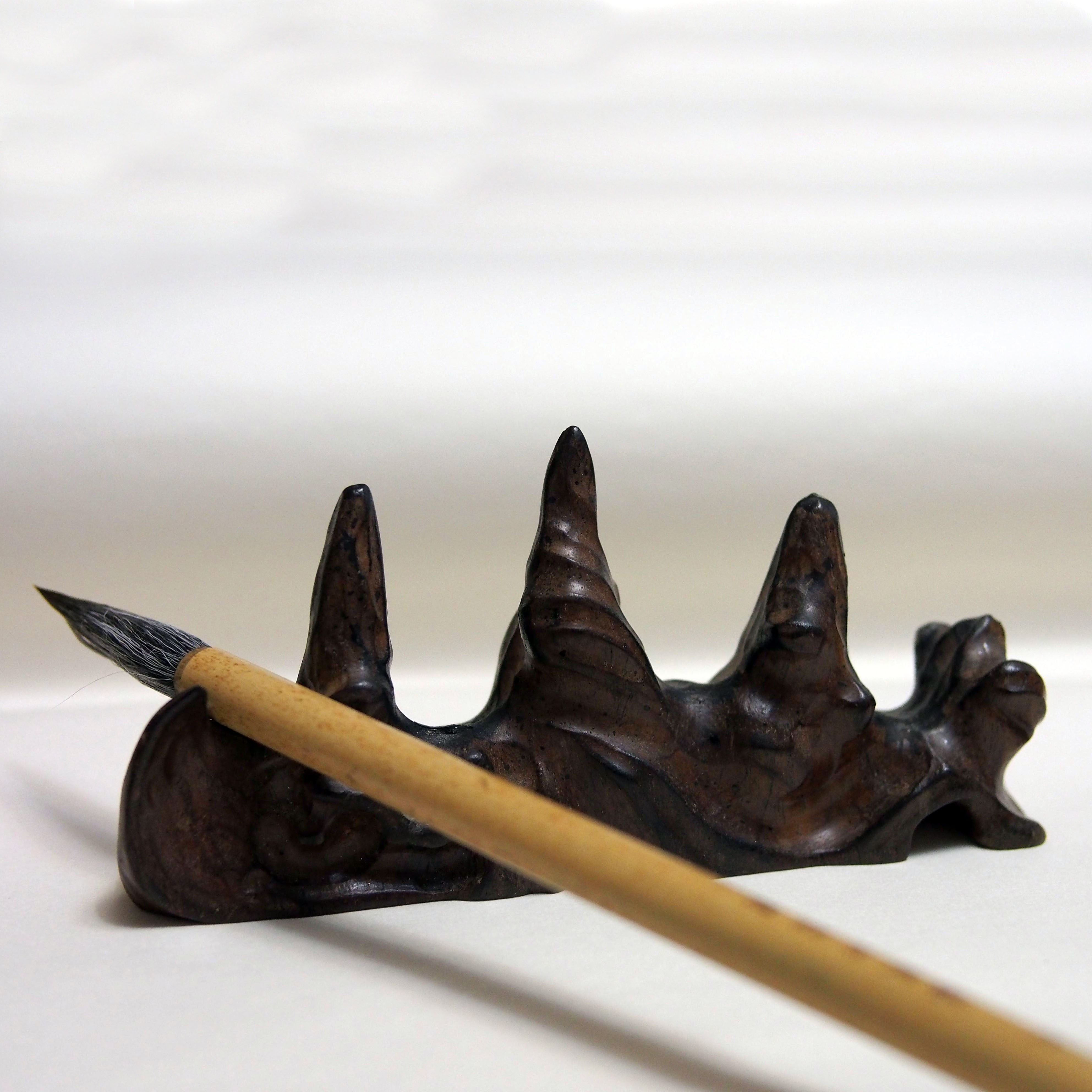
An essential stationary for the scholar, a brush rest for the temporary resting of the brush, as well as the mind. When the job is done, the brush will be hung vertically to let gravity dry up the brush evenly. There are many shapes for the brush rest but the mountain is one of the popular form, they can be made from coral, agate, crystal, jade to more common material such as wood and ceramic.
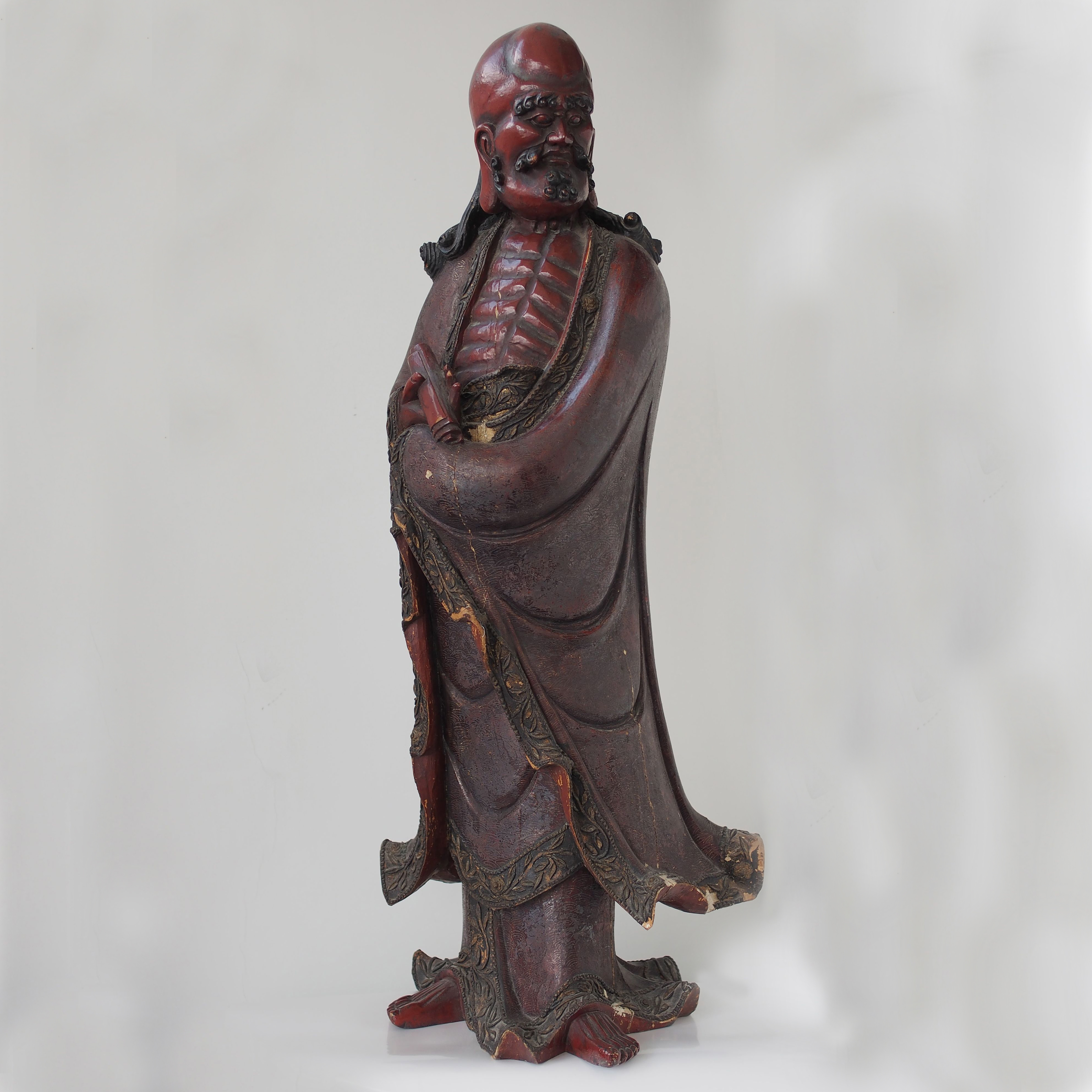
This is a statue of the Bodhidharma, the Buddhist monk who is accredited to have introduced Buddhism to China. It is believed that he is the third son of King Tamil Pallava of Kanchipuram and arrived to the now Guangzhou area in Southern Northern Dynasty (470AD). The most famous legend about Bodhidharma is his wall glazing. After felling out with Emperor in the Southern State, Bodhidharma travel up Yang Tze River, arrived at Shao Lin Temple and meditated by glazing on the wall for 9 years.
He is also believed to have introduced the 72 Shao Lin super kung fu and here is one of them.
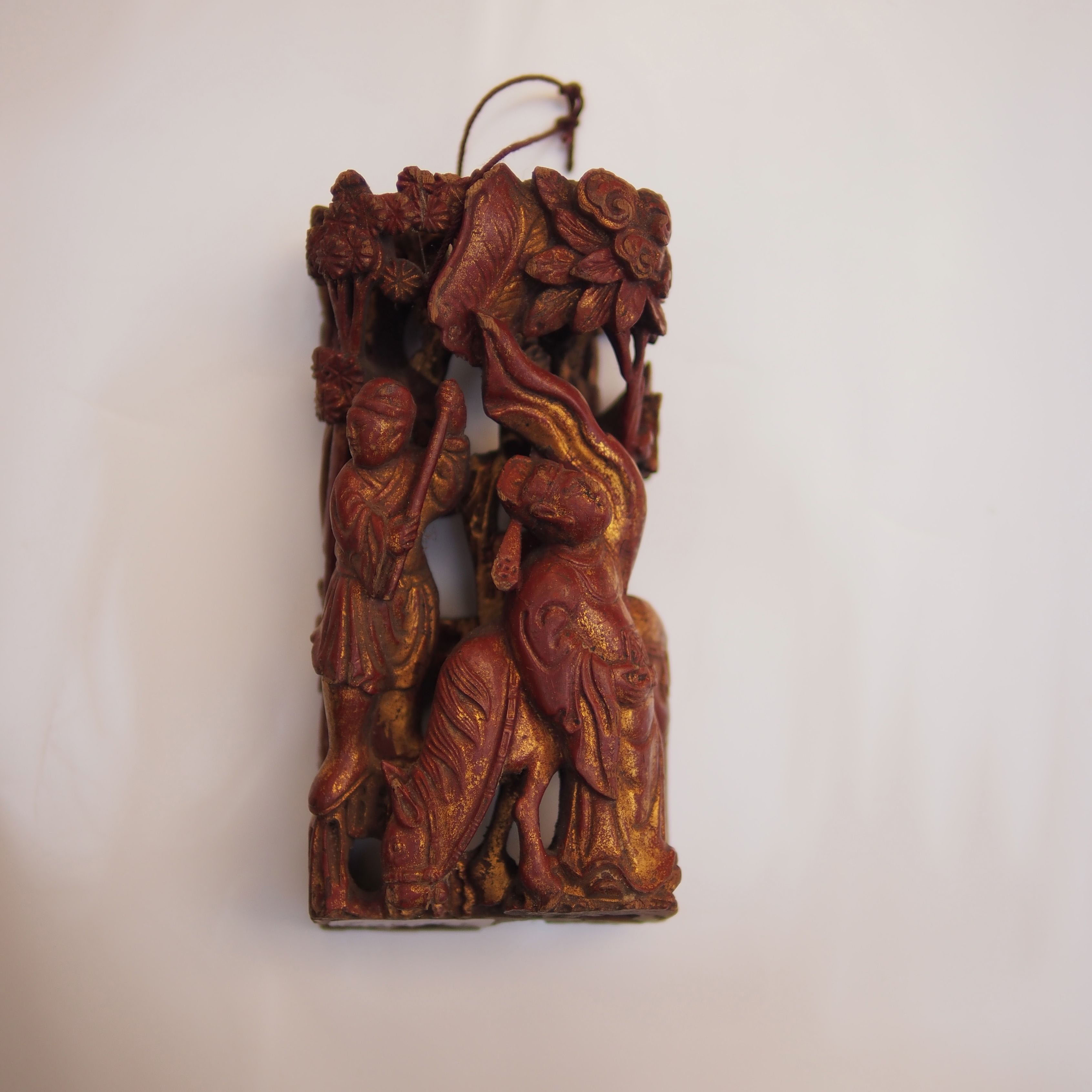
This wood carving is depicting the event of the top scholar of the year, Zhuang Yuan, a parade showing off his achievement. Early on the Chinese has established a strong examination system for the selection of her court officials. The procession started inside the Jin Luan Dian, one of the three main courts of the forbidden city, this is here the Emperor will announce the top 3 scholars, their name will be sang out. After thanking the Emperor, the Zhuang Yuan will depart the Jin Luan Dian, passing the Tai He Men, Wu Men, Duan Men, Cheng Tian Men, Ta Ming Men then head back to Chang An Zho Men to exit the forbidden city and continue his celebratory journey home. Chang An Zho Men, now demolished, is the single entrance for “non-emperor”. On the day of the results, after names of the Zhuang Yuan and others have been sang out in Jin Luan Dian, their names will be written on two yellow piece of paper, one to be kept as a record inside the court and the other larger piece to be posted inside a a temporary scaffolding hut outside Chang An Zho Men. The examination system was a attempt to find the most capable regardless of the social background, it is similar the Chinese legend of the carps jumping up the sky in belief that they will become dragons. For this the Chang An Zho Men (left door by Chang An Street) is also known as the Dragon Gate.
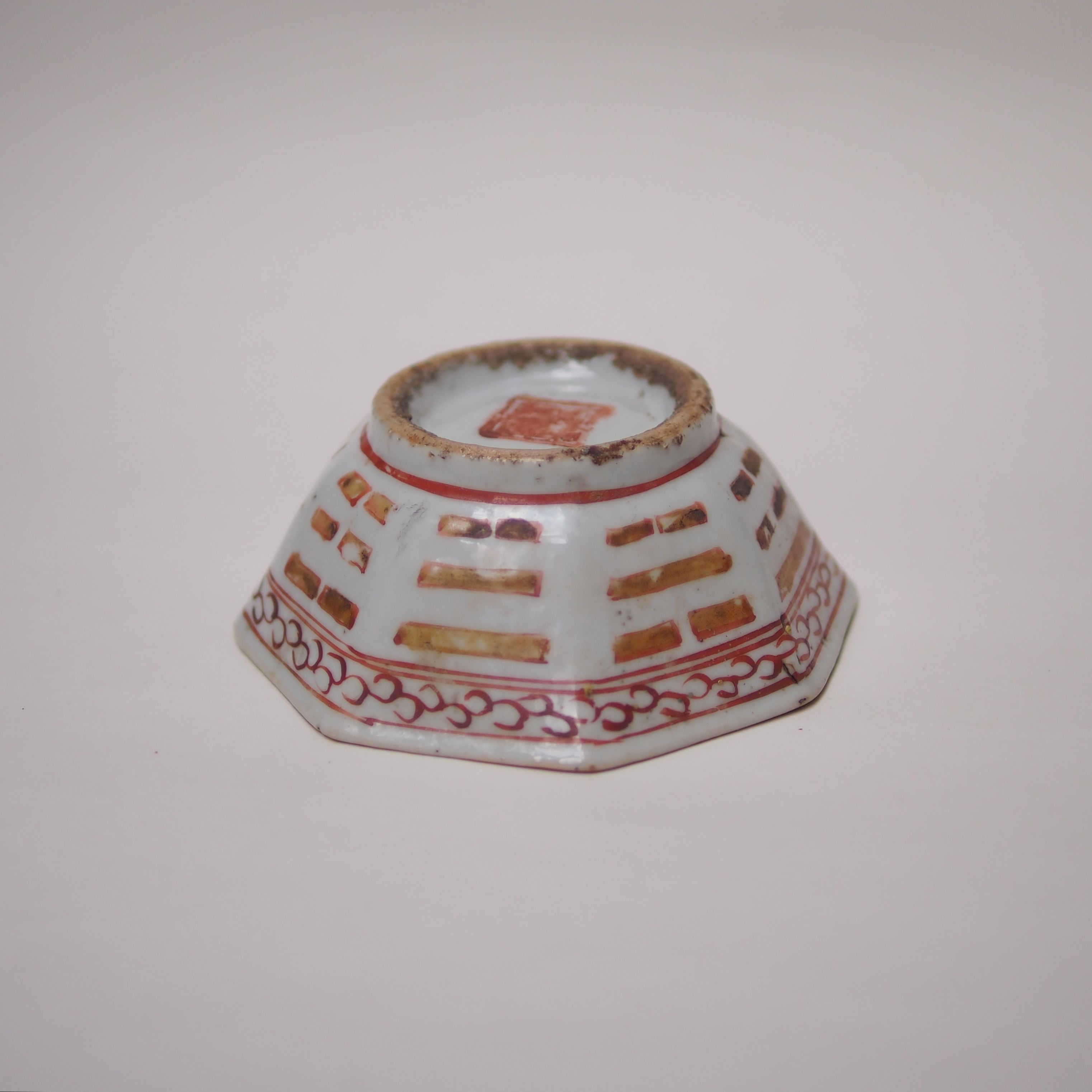
This pottery bowl was used as a container for Taoist offering. The horizontal line pattern on the bowl are trigram figures from the I Ching, on each face of the octagon bowl are the pattern; 乾 Qian, 兑 Dui, 离 Li, 震 Zhen, 巽 Xun, 坎 Kan, 艮 Gen, 坤 Kun. These 8 trigrams correspond to 8 nature phenomenon, namely, Sky, Lake, Fire, Thunder, Wind, Water, Mountain, Earth. From the 8 trigrams found by Fu Hsi, 64 hexagrams was developed capturing more natural phenomenon and human events,it was later used for prediction of events. From the Yuan dynasty, trigrams pattern were introduced to ceramic decoration and flourished in the Ming dynasty.
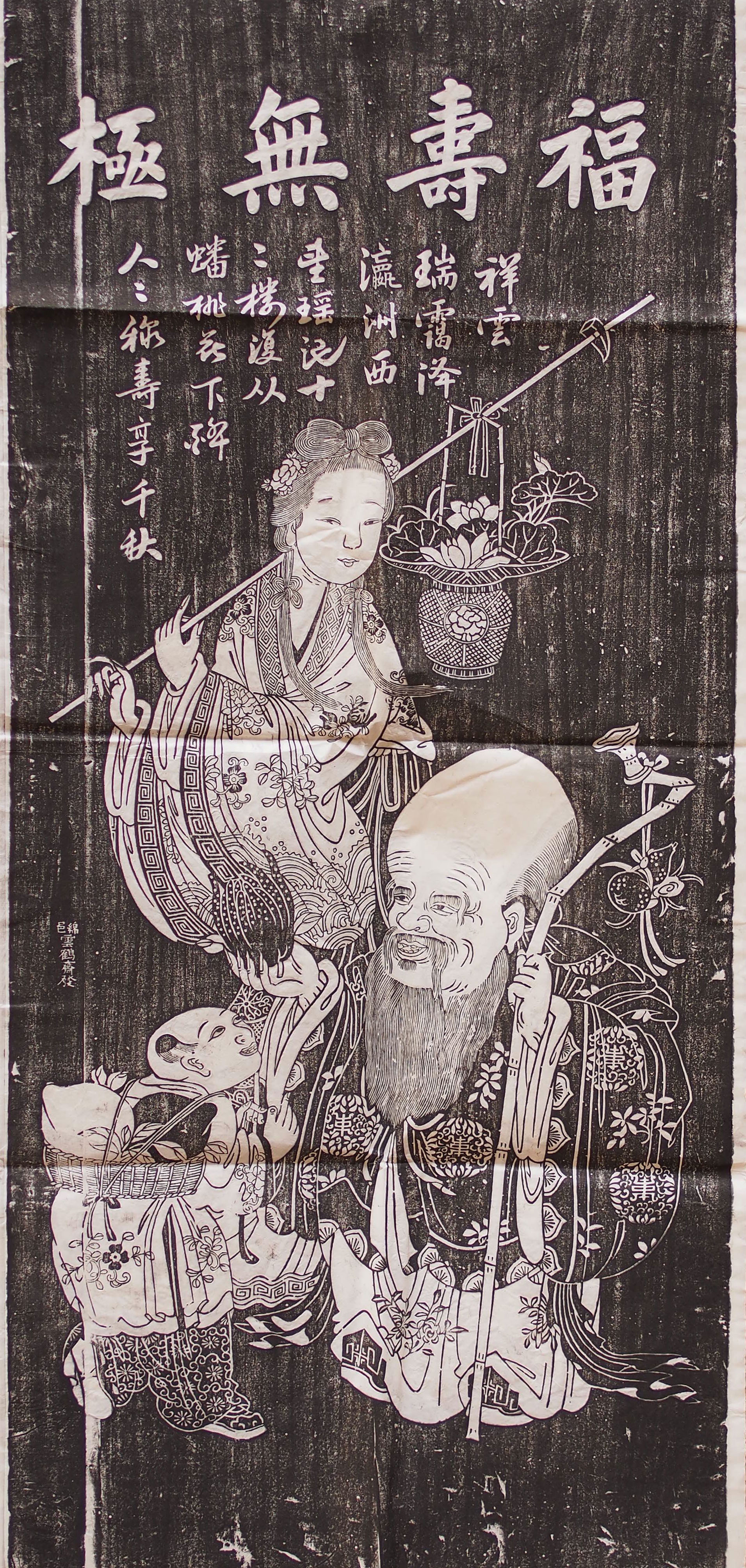
This birthday print is filled with blessing symbols –
God of Longevity who is holding a cane on one hand and the Buddha’s hand fruit on the other hand.
The lady of behind is Ma Gu, the female God of Longevity with a basket full of magical plants. Unlike the God of Longevity who has an appearance of an old man with a protruding forehead, Ma Gu is portrayed as a beautiful girl in her late teens. In the legend, every year on the 3rd of lunar March, on the birthday of the Queen Mother of the West, Ma Gu will give her best wishes.
Lastly, the child saint carrying a basket full of longevity peaches, also a well known theme for birthday blessings.
Unlike the birthday scroll being a respectable birthday present for the elderly lady that would be held around birthday time, this is a Mian Zhu new year print that is pasted on the wall on Chinese New Year and to be replaced yearly.
This embroidery captured a scene from the legend Madame White Snake, the novel Jing Shi Tong Yan from the late Ming dynasty. The story was set in the West Lake of Hang Zhou in the period of the Sung dynasty. The serpent spirit of the white snake and her friend green fish subordinate transformed themselves into 2 pretty girls; Bai (white) Su Zhen and Qing Qing (green). Bai fell in love with the Xu Xian and used her magical power got married to him. As time goes by, many strange incident happened because of Bai and Qing. Xu Xian was approached by monk Fa Hai who told him the truth about his wife being a serpent spirit and gave him a monk’s bowl. As Xu Xian place the bowl over his wife’s head, Bai and Qing returned to their original selves. Monk Fa Hai took the bowl with the two spirits and build a Lei Feng pagoda on top of them.
A more romantic story has been adapted for opera, movies where the true love of the white snake is celebrated and the monk became a busybody.
To see the same scene as the embroidery, go 10 minutes into the movie.
As for the Lei Feng pagoda, it was believed that the brick used for building the pagoda has the power of healing, people began to steal the brick, grind it into powder and use it for medicine. 950 year later in 1924, the pagoda fell under its own weight … wonder if the white snake and the green fish manage to escape. A new pagoda was rebuild in 2002.
Chinese figurine of the lion are more often friendly and friendly rather then fierce, this might be because there are no lions originated from China. The image of lion was brought to China by word of mouth from traders of the Western Region, as a tribute from Persia to the Emperor and as the symbolic “suan ni” from the Buddhist culture. The worship of lion is thus mainly as a mystic protection of evil rather than the fierce forceful animal.
Black glaze pottery was first developed in China as early as the Jin dynasty (400 A.D.), it was a popular glazing in the Tong and Sung dynasty and further refined in the Qing dynasty.
This fabric is woven by the Pu Ji tribe, a minority tribe in Gui Zhou. Weaving is a technique passed down the generation of women, all fabric for the household would have been weaved by the family. Traditionally, the young girls will be helping their mother and elder sisters and pick up the know how along the way, by the time they are a teenager they will be capable of making the cloth from scratch.
By from scratch, its from the cotton and indigo plant. Cotton are collected and made into yarns and rolled onto the simple spindle while the strings for the warp are set out according to the design and often with the use of the exterior of the building. Clothes are placed on the loom and the work begins.






 Mountain Folkcraft