Fiber weaving is a craft that has been practiced by the Aboriginal tribes in Australia.
Daily objects such as baskets, nets, etc. are made with plant fiber collected from the area, typically pale rush (Juncus Pallidus), white flag iris (Diplarreana Moraea) and forest flax lily (Dianella Tasmanica) according to the different seasons. The grass will be dried over a slow fire and stripped before they are use for weaving.
A Taoist wood block print entitled “Heaven Earth Dragon Carriage”.
On the left of the print is Yuan Shi Tian Zun, the supreme Taoist deity, together with Tai Shang Lao Jun and Ling Boa Tian Zun formed the 3 Pure Ones. On the right of the print is the Jade Emperor, the God who creates the system of nature and the universe. Jade Emperor sits inside his dragon carriage and around them the 4 guards; Wang Ling Tian Jun, Pu Hua Tian Jun, General Li, Marshal Zhao. This new year print is used to bless of journey in vehicles, it is also used on the wedding day after the bride was picked up by the groom’s car, the couple would need to thank the gods for providing a safe journey.
The Chinese chess is a popular game since the Warring State period 1600BC and today major tournaments are held across China and it is a major past time for many.
The character of the chess resembles different roles in the military and have their own rule in movement. Unlike western chess, the pieces are placed on the nodes rather than the square itself
General – 將 / 帥 (restricted in the middle “palace” 9 nodes except when executing the flying attack at the other general)
Advisors – 仕 on either side of the general (restricted in the palace and can only move in a diagonal fashion)
Elephants – 相 / 象, protectors of the general (restricted on their own side of the board which is separated by the river in the middle, moves in a 2 nodes diagonal (田 field) but the first diagonal point has to be cleared)
Horses – 馬 (moves in an elongated diagonal (日 sun))
Chariots – 車, a powerful piece (move in a vertical or horizontal straight line and more restricted to one node at a time.
Cannons – 砲 (move as the same way as the Chariots, it require another piece as a spring board for taking down opponent’s pieces)
Soldiers – 卒 / 兵 (can only advance and no retreat, once on the enemy’s side it can move side ways)
From these rules, and the popularity of the game, there are some idioms basing on the game of chess.
過河卒 – “the soldier that crossed the river” – point of no return
卒子過河當車使 – “soliders across the river can be used as chariots” – even minute, it can be very effective
事急馬行田 – “urgent! the horse will need to across the field” – normally, the horse moves in a 日 sun fashion and the elephant in a 田 field, but being so desperate the horse will need to forfeit its usual move and do the field.
放馬後炮 – “putting the cannon behind the horse” – a powerful move, the horse enters the opponent’s palace and restricting the general from moving to either side, then the cannon come in and checkmate. the idiom refers to those comments after checkmate.
飛象過河 – “elephant fly across the river” – as the elephant is forbidden to cross the river, it refers to those who dont follow the rules.
棄車保帥 – “forfeit the chariot to save the general” – making sacrifices to avoid a total loss
The Kalaha is played by 2 persons who make their moves alternatively. They take a seat at opposite sides of the boards. Each player has at his disposal the 6 small grooves next to him – the ambos – and the big groove at his right – the kalaha
The aim is for each player to gather as many balls as possible in his own kalaha; the total amount of balls is 36
Before the game starts the balls must be placed in the ambos, 3 pcs. In each, none in the kalaha.
The player selects one of his own ambos from which he removes all the balls. Then he drops these balls one by one, from the left to the right, into his own ambos and also into the kalaha when it is next in turn. If there are any balls left these must be dropped into the opponent’s ambos, but not into his kalah.
An extra move is granted if the player drops his last ball into his own kalaha.
if the player drops his last ball into an empty ambo of his own he may take both this ball and the balls in the opponent’s ambo directly opposite and drop all of them into his own kalah.
The game is over when the ambos of one of hte players are empty. The player who still has balls left in his ambos may move them into his onw kalaha as they shall be included in the final result.
The player whose kalaha holds the major part of the balls is the winner.
Characters from the Beijing Opera (which is a collection of legendary stories in itself) are made into toys. I suppose the its no difference now with Buzz Lightyear and the Woody action character, an hero friend you can keep in the pocket.
This is Guan Yu, the hot blooded general of Liu Bei in the Three Kingdoms era (200BC), the character is made popular by the historic novel “Romance of the Three Kingdoms” (published 1350) where he is described as 9 feet tall with a 2 feet long beard, a date colour face and red lips, eyes of a phoenix, silkworm like eyebrow and above all loyal and dignify.
Not only is he a favorite character for the kids, he can also liked by the adults, taking on the role as the God of Wealth. In praise for his loyalty, in Hong Kong Guan Yu is also worshiped by the police and Triads alike.
Peony is a flower that has been much appreciated, beyond displaying in gardens.
Its beauty reciprocated in painting, opera and poetry.
Emperor Xuan Gong was with his beloved Lady Yang admiring the peony blossom in the palace garden. Li Bai was summoned to court to write a poem about the peony.
清平调
雲想衣裳花想容,春風拂檻露華濃。
若非群玉山頭見,會向瑤臺月下逢。
一枝紅豔露凝香,雲雨巫山枉斷腸。
借問漢宮誰得似?可憐飛燕倚新妝。
名花傾國兩相歡,長得君王帶笑看。
解釋春風無限恨,沉香亭北倚闌干。
The poem “Lady Yang” by Li Bai, translation by S. Obata
The glory of trailing clouds is in her garments,
and the radiance of a flower on her face.
O heavenly apparition, found only far above
On the top of the Mountain of Many Jewels,
Or in the fairy Palace of Crystal when the moon is up!
Yet I see her here in the earth’s garden
The spring wind softly sweeps the balustrade,
And the dew-drops glisten thickly …
She is the flowering branch of the peony,
richly-laden with honey dew.
hers is the charm of the vanished fairy,
That broke the heart of the dreamer king
In the old legend of the Cloud and Rain.
Pray, who in the palace of Han
Could be likened unto her,
Save the lady, Flaying Swallow, newly dressed
In all her loveliness?
She stands, leaning against the balustrade
Of Chen Hsiang Ting, the Pavilion of Aloes.
Vanquished are the endless longings of Love
Borne into the heart on the wind of spring
The radiant flower and the flowery queen rejoice together,
For the emperor deigns to watch them ever with a smile.
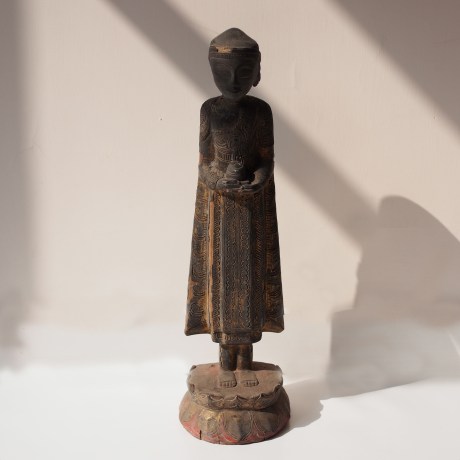
This is a figurine of the Buddha with an alms bowl standing on a lotus flower.
In Theravada Buddhism, “pindacara” a daily alms collection of food “pindapata” is practiced by the monks (and nuns). The word for monk “bhikkhu” means one who lives on alms, while “pindapata” means dropping a lump. The monks would leave their monastery, in a group they walk barefooted in single file according to seniority, their robe formally arranged covering both shoulders. The route will go through the village house by house, accepting but never requesting food that is dropped into the bowls. This figurine, the Buddha, is leading figurine of a group which consists of monks of different heights which unfortunately is not with us.
Monks in Burma
the second film has a more in depth view of a monk’ life.
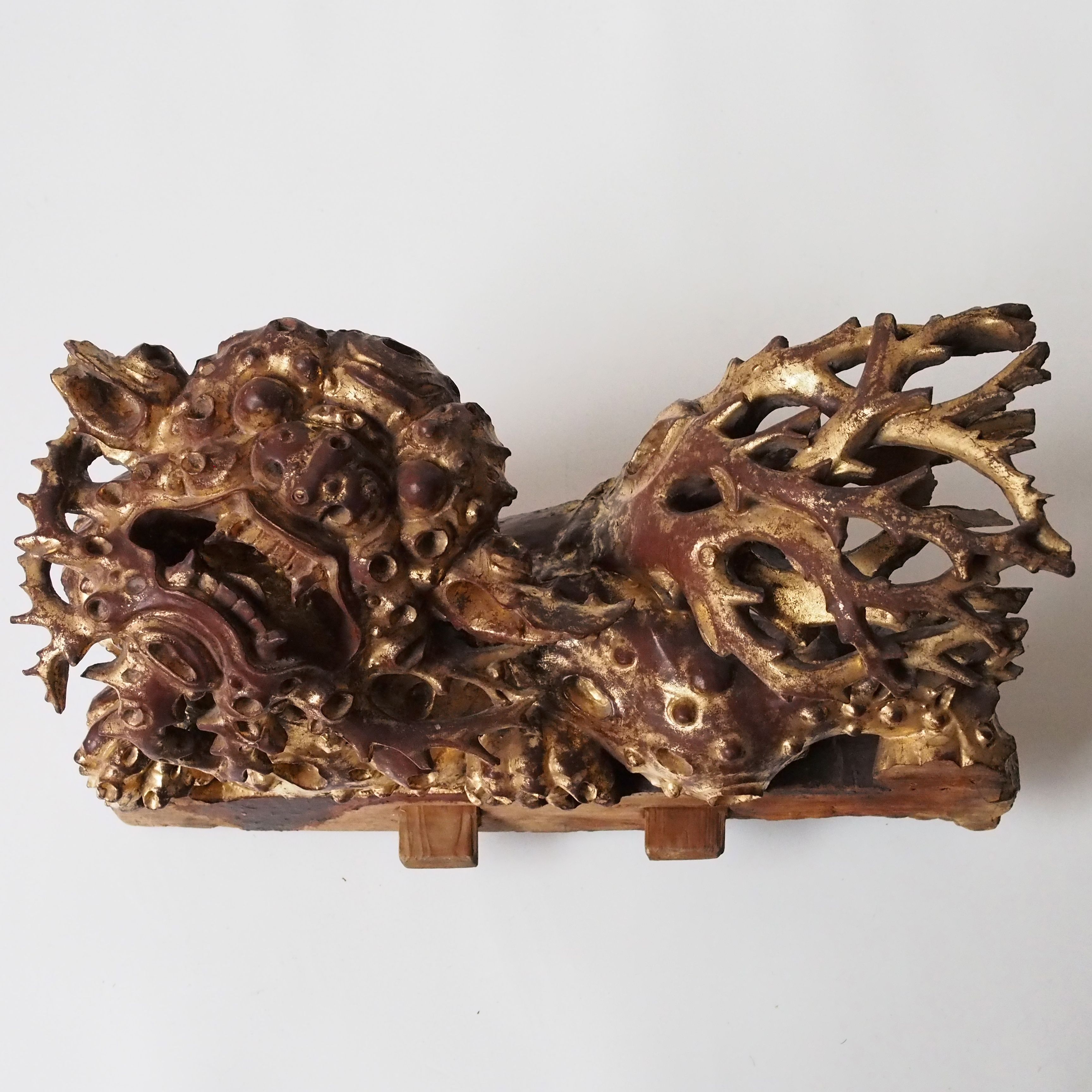
Chi Wen, the second son of the dragon, like the Tao Tie and the Suan Ni. The Chi Wen loves enjoying the vista and fire eating, because of this it is often found on the ridges of traditional buildings as a protection against fire. The Chi Wen has a head of a lion but the tail of a fish, the legendary owl fish (which was likely to be the whale)
This beautifully carved golden wood carving is used as a decoration for the company logo.
You can take a glimpse of it in the film below, a documentary about a traditional cake shop in Hong Kong. In the first episode, the decoration construction for the Mid Autumn festival starts at 3:34″. The pair can be seen under the logo at 5:05″, closed up at 5:10.
This series of documentary “May Food Keep Us Together” is one of my favorite, it examines the tradition, the generations of the family who runs these food places that are quickly replaced by the chain fast food outlet.

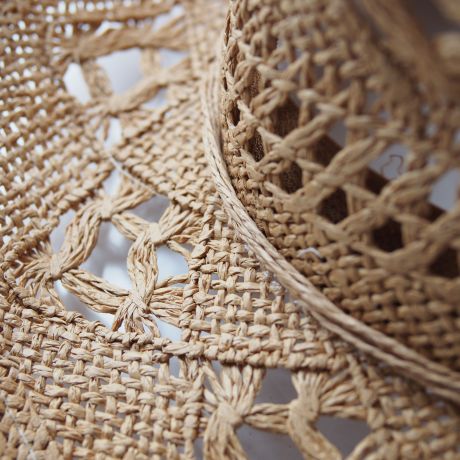 Head Circumference 590mm, Australia






 Mountain Folkcraft