Archives for the month of: August, 2012

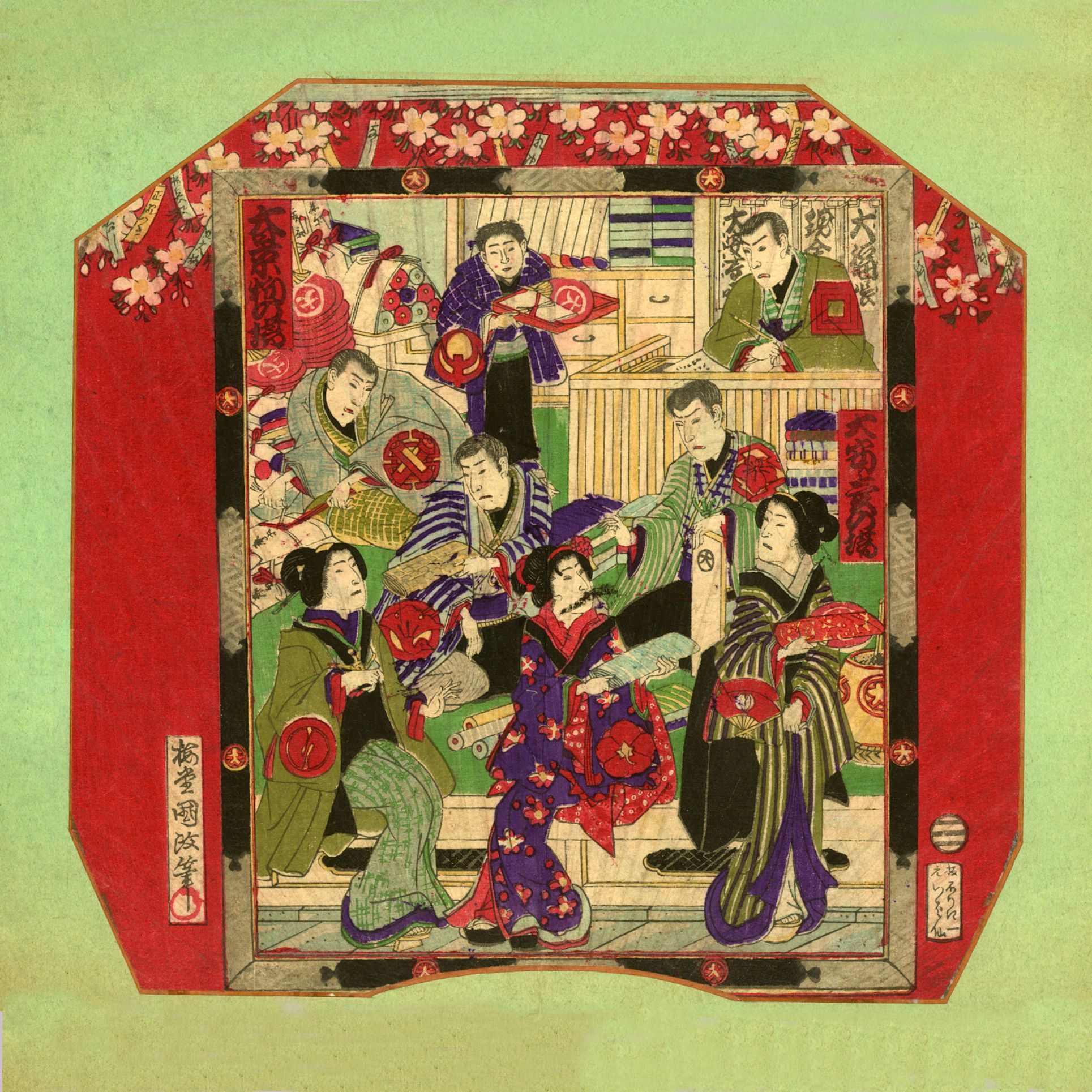
W300xL220mm, Japan

This ukiyo-e print is a work by Baido Kunimasa (1848-1920); born Takenouchi Hidehisa during his career he used different names (go) for his works, Baido Hosai, Baido Kunimasa, Kochoro, Kunimasa IV, Kunisada III, Toyokuni V and Toyokuni V.

This print depicts the on going in a kimono shop.  Wonder if it was something like a xmas shopping day, everyone looks really stressed out in the picture.

W180xD90xH130mm, China

This neat container has 2 compartments for storing tea leaves.  Pewter has traditionally been material used the tea leaves storage, it is an alloy which oxidized more slowly then metal like iron or bronze and less reactive to the tea leaves which organic.  Tea leaves is known to absorb the smell in the environment, pewter being an odorless also has an advantage over other materials.  Last of all, it is easily shaped to create an air tight container.

DIA80xH60mm, China

No, this is not rudolph.  Yes, the red nose is missing.  For the Chinese, not only does the deer symbolizes longevity, it also represented success as an official.  This cute container is a the base of a mortar, its small size suggest its for grinding medicinal seeds or nuts, e.g. garlic, pepper etc.

Textile Width 340mm, Thailand

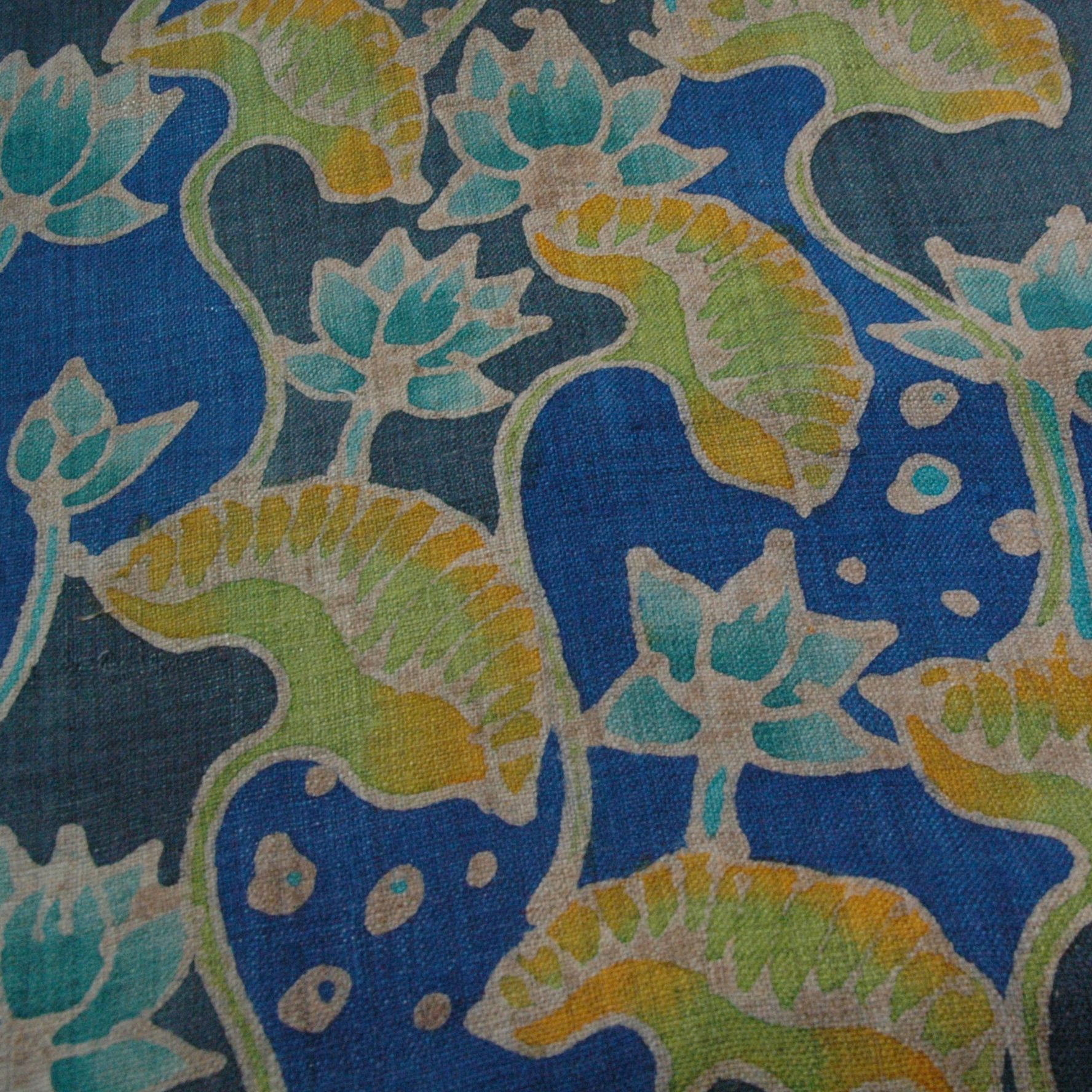
This is a piece of handwoven textile that has a beautiful pattern print on with the technique of stencil dyeing.  Stencil dyeing is a form of resist dyeing; a dye resistant paste is applied on the fabric through a stencil, colour pigment is then added on by hand giving detail shades to the pattern.

W130xD130xH150m, China

A small wooden box with brass handles and buckles, perfect for a treasure hunt.

I have been wondering what a box like this would be for.  The lock is rather redundant as the box is so small that the thief would have just grab it and go.  Perhaps its a box for a child to keep all the little precious items; a pebble from the beach, a ginkgo leave, an unknown seed, a dice, feather of some bird, a seashell …

W40xD50xH130mm, Macau

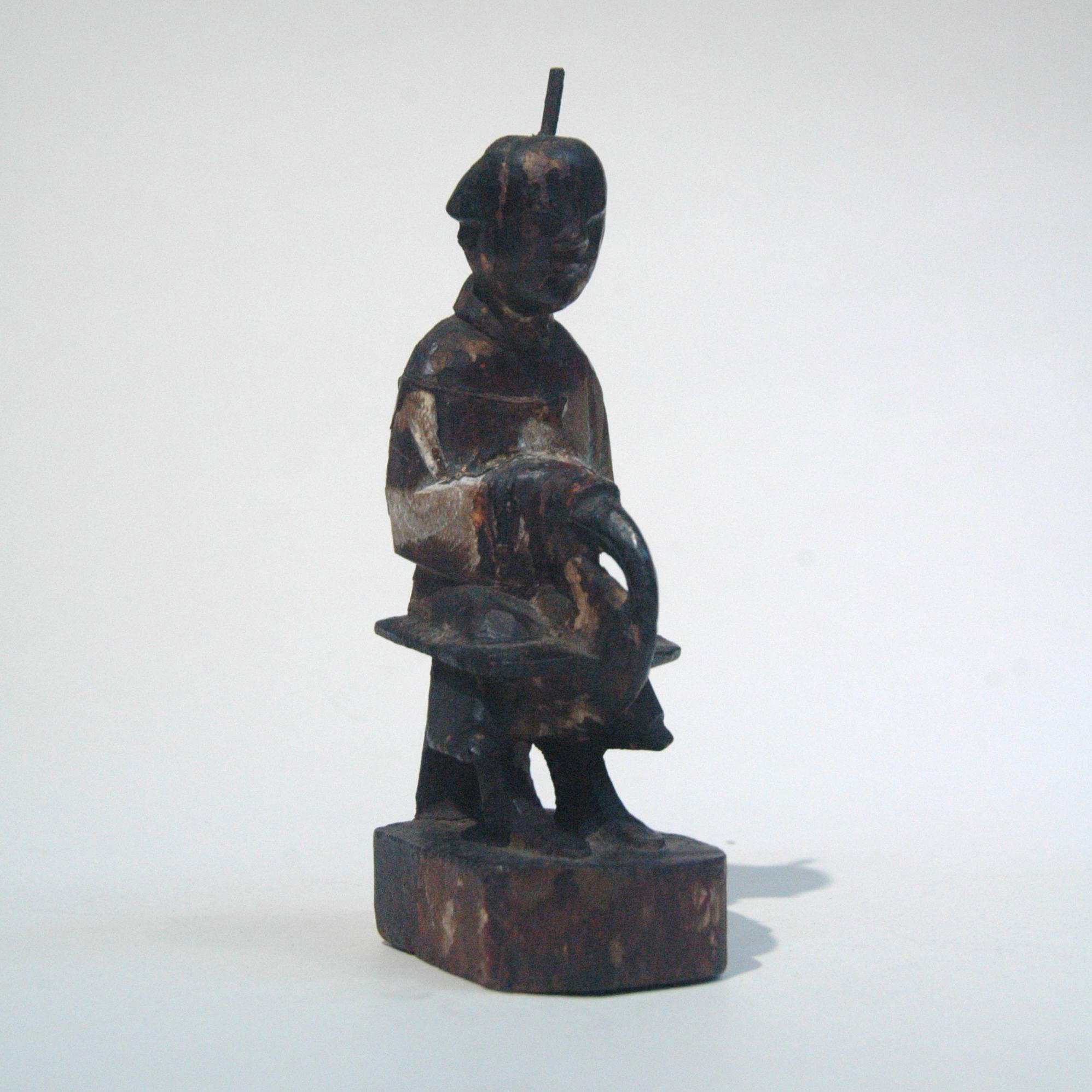
This is an old figurine worshiped by the fisherman on the junk boats of Hong Kong, it is one of the ancestral saints – Crane Riding Mother Saint, a figurine representing the female ancestors.  It is believe that ancestors would protect the fisherman at sea.  In Taoism, the Taoist saints be believe to travel around by riding a crane.

See our other entry of the Junk Boat Gods;
Tanka Wooden Effigy, Junk Boat God (god?), Junk Boat God


L310xW180 (when folded)

W400xH250, China

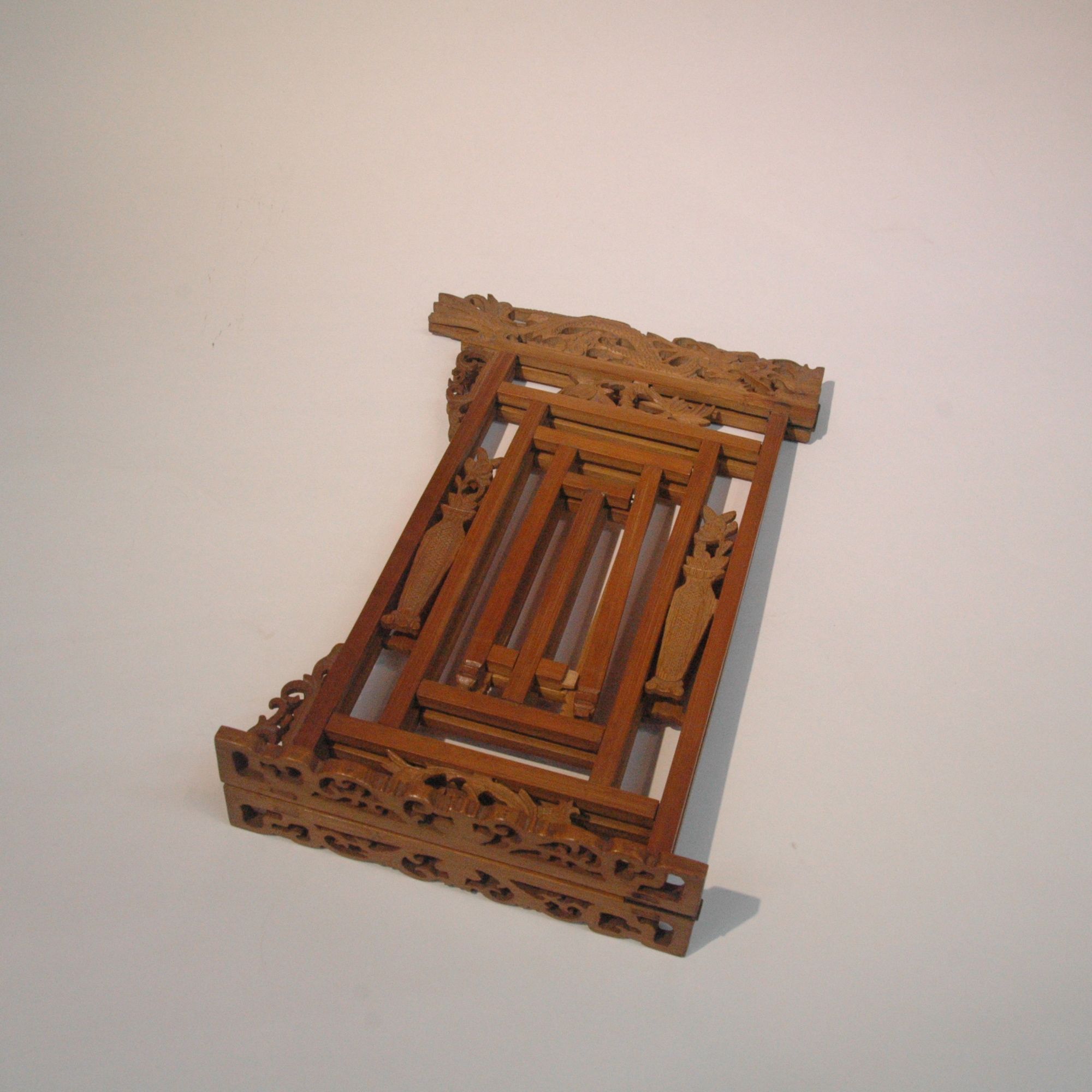
This is a holder for Buddhism script that is made of bamboo, it can be folded for easy transportation.  Since its invention over 1000 year ago, it has also been adopted to be used as a book stand.  The angle of the tilt for the book can be adjusted to suit the position of the reader.  It was one of the stationary items for the wealthy scholars which is now all to be replaced by the mighty ipad.

L210xD140xH100, China

Narcissus, daffodil, is a very popular plant in China especially for the Chinese New Year.  So popular that there is a special container for its presentation.  A month before Chinese New Year, one would find daffodil bulbs for sale in the market.  The bulb would be placed inside the bowl, secured by pebbles and 2/3 of it cover with water.  Up till the days before flowering, the water would be replaced daily, when it started to flower every 3 days.  When the shoots started to appear, locate the bowl to a sunny but cool place.  As daffodil is part of the New Year decoration, it is almost essential that it is blooming with flowers on New Year’s day, this normally takes 25 days at 20C, if lacks behind a bit of warm water on New Year’s eve would normally do the trick.   And if all fails, one can always pay a bit more for the perfectly planted daffodil at the flower market.
CIR 55mm (UK size O), China

I had a similar ring when I was a teenager, it was one of my favorite.  It has a “pure silver” mark in Chinese (but as a human guinea pig I can verify that it is really pure silver as I suffer badly with metal allergy, only pure gold and silver would pass the test, how posh is that!)

Enamel was brought into China from France in the Qing dynasty (17th century) and was immediately adored by Emperor; workshops for the court were set up in Imperial Court in Beijing and in Guangdong.  It then became popular throughout the country during the reign of the next 2 emperors.  The type of enamel produced in China was mainly cloisonne, where a thin wire is applied to form cells to hold the enamel.

W70xL160xH60mm, China

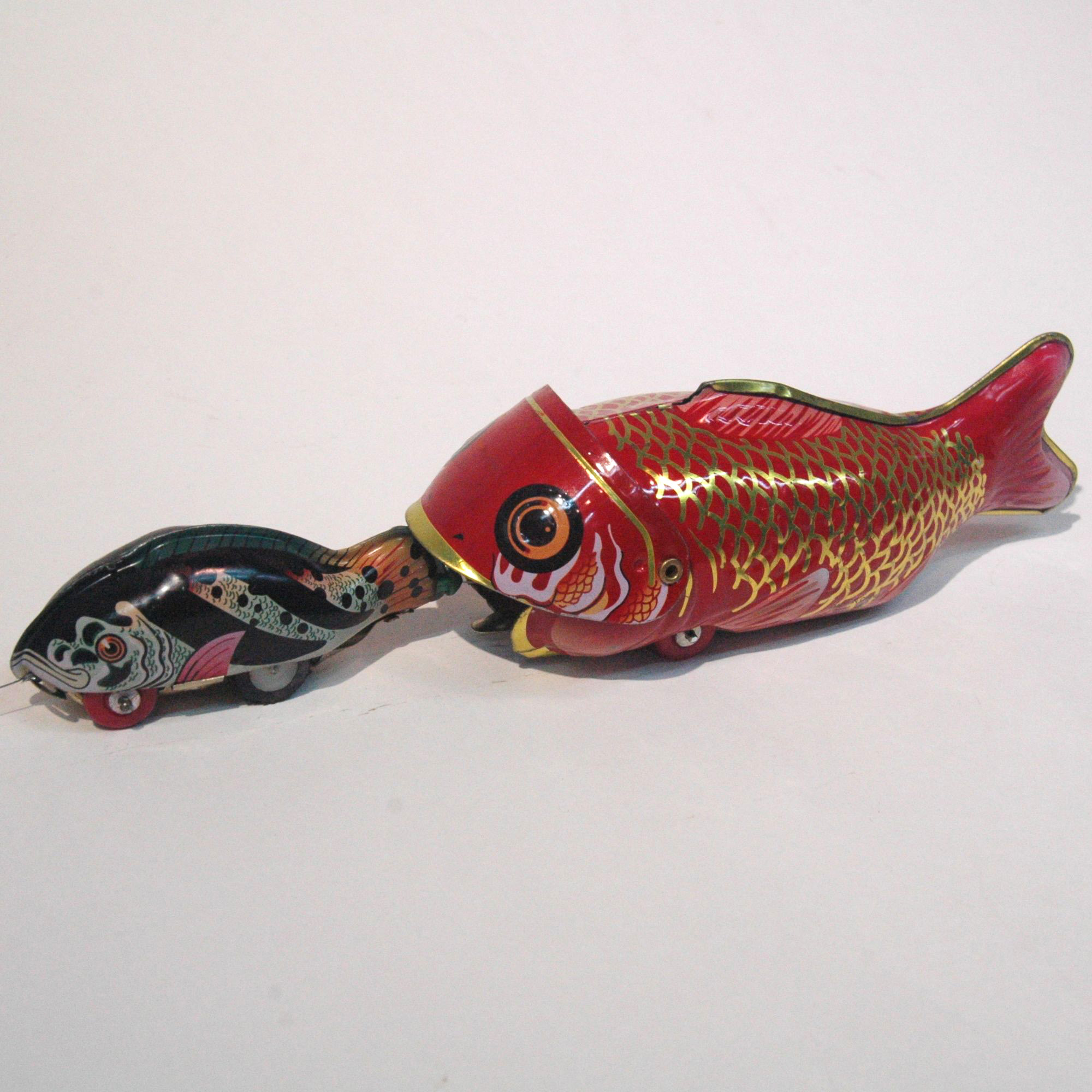
For something much lighter today is a tin toy of a carp swallowing a smaller fish.  Wind it up and you will see the carp chasing the other fish which finally disappear altogether inside the bigger fish.

Something of a similar theme, see out post fish bag.