wood block printW220xL300mm, China

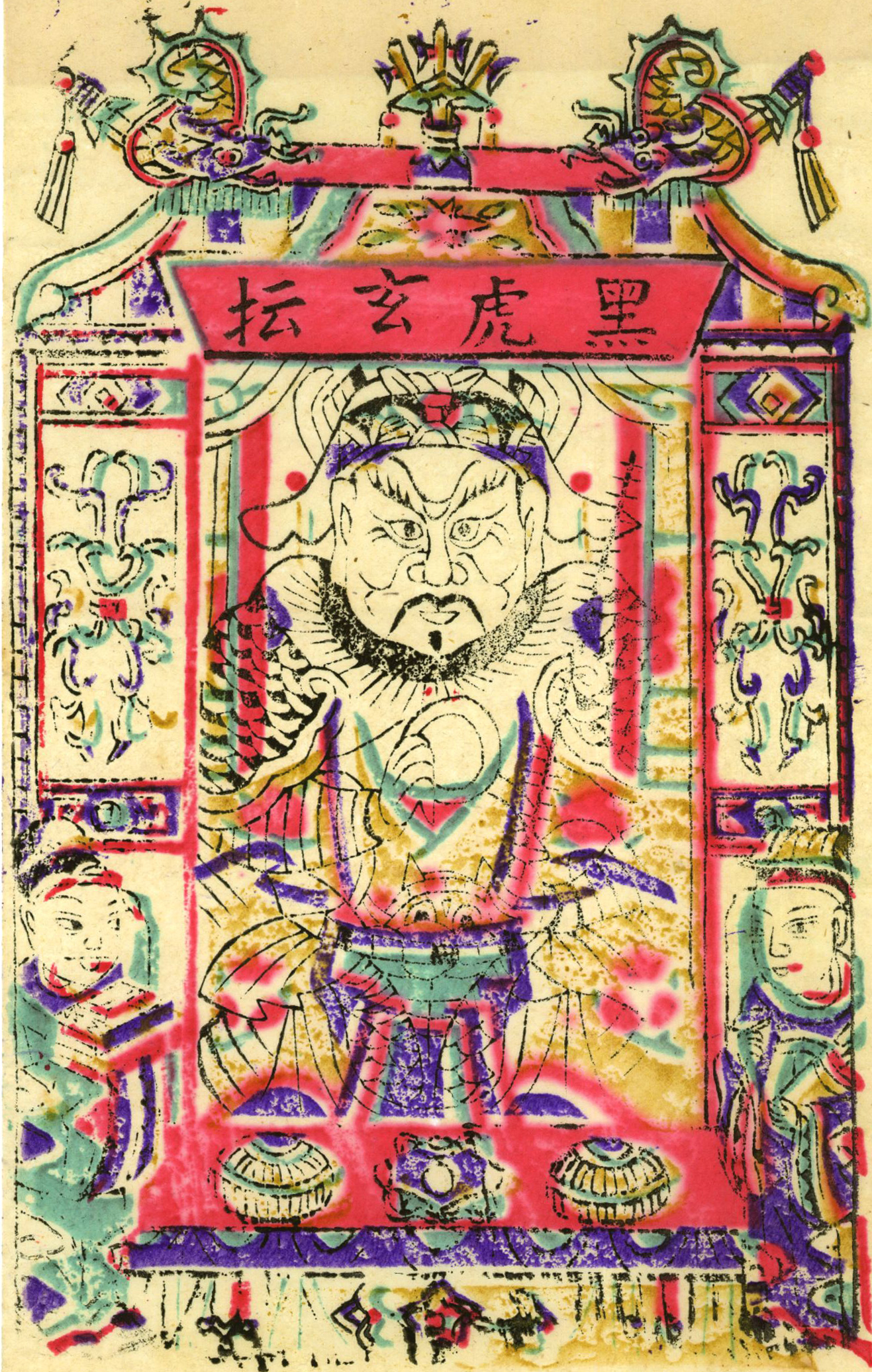
A new year wood block print of the God of Wealth, Zhou Gong Ming.  It is believed that Zhou was born in humble family in the Qing dynasty.  As a young he worked as a labourer for a wood merchant, being honest, generous and hard working he was popular.  Soon he was able to start his own wood business and accumulated a good deal of wealth.  Zhou would lend money to those who need them; one merchant borrowed some money and made a lost at a natural disaster, Zhou only asked him to return a pair of chopstick for the money owned.  At time of war, Zhou used his own money to fund an army in support of his country and headed the army himself.  He bravery was well known and even tamed a troubled tiger as a pet.  In most of the God of wealth icon, this black tiger is at his company, here you can see it half hidden inside his coat.  Because of his generosity and bravery he was worshipped after his death and named the God of Wealth.

Click here to see our other items of the God of Wealth and the mystical version of his life.

four season flower bowl four season flower bowlDIA160xH60mm, China

The four season flowers, Narcissus, Lotus, Chrysanthemum, Plum Blossom, were a popular decoration for pottery and other works of art.  They symbolizes a good fortune for all the four seasons.

Click to see the other four season flowers pottery ware.

The four seasons are appreciated all over the world, here is Mutter’s amazing performance on Vivaldi.

furniture

Come and take a look at our collection of furniture!

Thai Buddha

W100xD70xH220mm, Thailand

Mudras are symbolic hand gestures, without the use of words it communicates the mind’s idea which is more powerful than language.

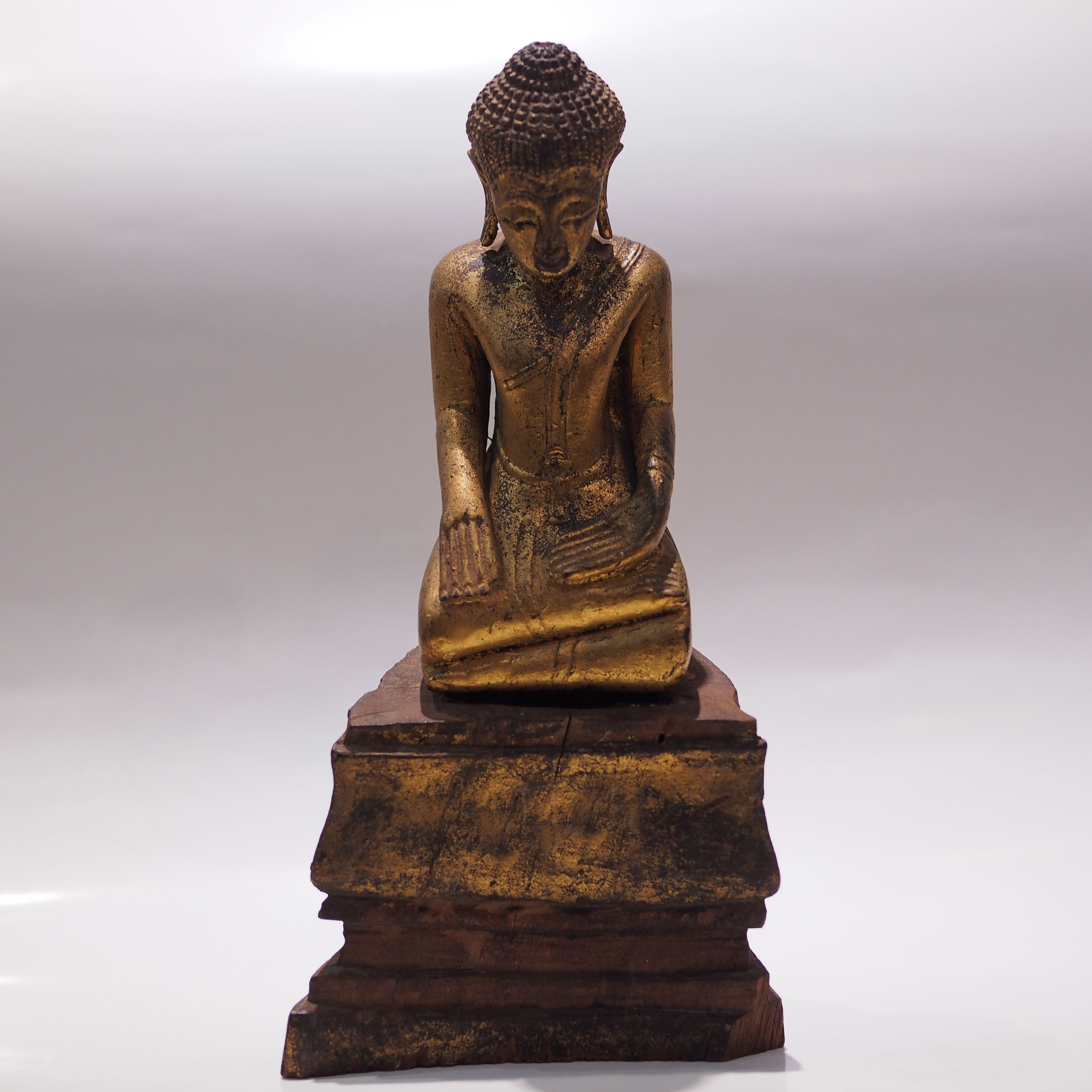
This is a Buddha statue in the Bhumisparsha Mudra posture, with his right hand resting on knee while reaching toward the earth and the left hand lies on the lap facing upward.  This gesture is also known as the “earth witness” which is the most iconic image of Buddhism.  This gesture symbolizes unshakability and steadfastness; the legend goes just before Siddhartha Gautama was enlightened to become the Buddha, demon Mara called upon his armies of monster to attacking, hoping to scare him away from his meditation under the bodhi tree.  Siddhartha stayed unshaken and  continued his mediation.  The demon claimed the enlightenment for himself and called for his monsters to give witness to his superior spiritual achievements, Mara then asked Siddhartha if anyone could give witness for him.  Siddhartha simply extended his hand to reach the ground and the earth responded and giving witness for him.  Mara was defeated at his own challenge and vanished.  The next day Siddhartha Gautama enlightened to become the Buddha himself.   The serene expression of this figurine best captured this moment of enlightenment.

Here is a monk practicing more mudra gestures.

paper mache dolls

sitting W110xD140xH220mm, Hong Kong

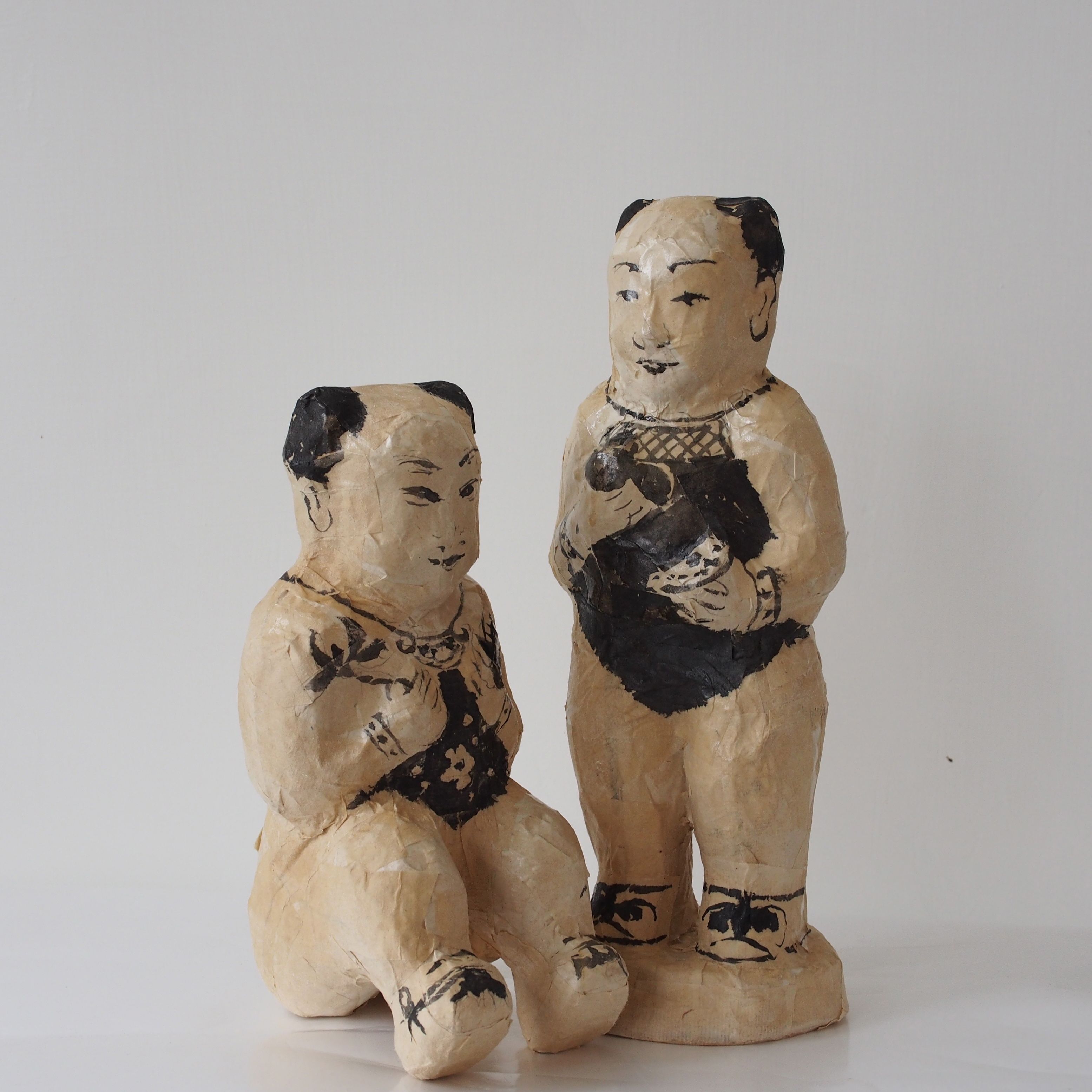
Cute pairs of paper mache dolls inspired by the Ci Zhou kiln dolls.

They are the first in the series, stay tune for their transformation!

silver braceletDIA100mm, China

A Hakka silver bracelet which is called a Shiu Ag, the Hakka believes that the bracelet can keep the evil “wind” away (驅風), the bracelet is quite popular with the older generation women.  In Chinese medicine the sickness of the 4 seasons,  cold / dampness / dryness / summer heat / heat (寒,濕,燥,暑,熱) will enter our body through the “wind”, so its best to get rid of the evil wind.


millefiori

W45xD45xH50mm, China

Millefiori, “mille” (thousand) and “fiori” (flowers), in Italian.

I had a similar millefiori paper weight as a child.  I had no concept of a paper weight then and took it as a treasure item which I spend numerous lazy afternoons staring into the glass.  I would swear once I saw the little flowers moving inside but of course no one would believe me.

The millefiori frog here is not a Baccarat, but I just love the 70s psychedelic feeling to the film … and now you can perhaps also see the flowers moving inside the glass.

small opium jar

DIA40xH35mm, China

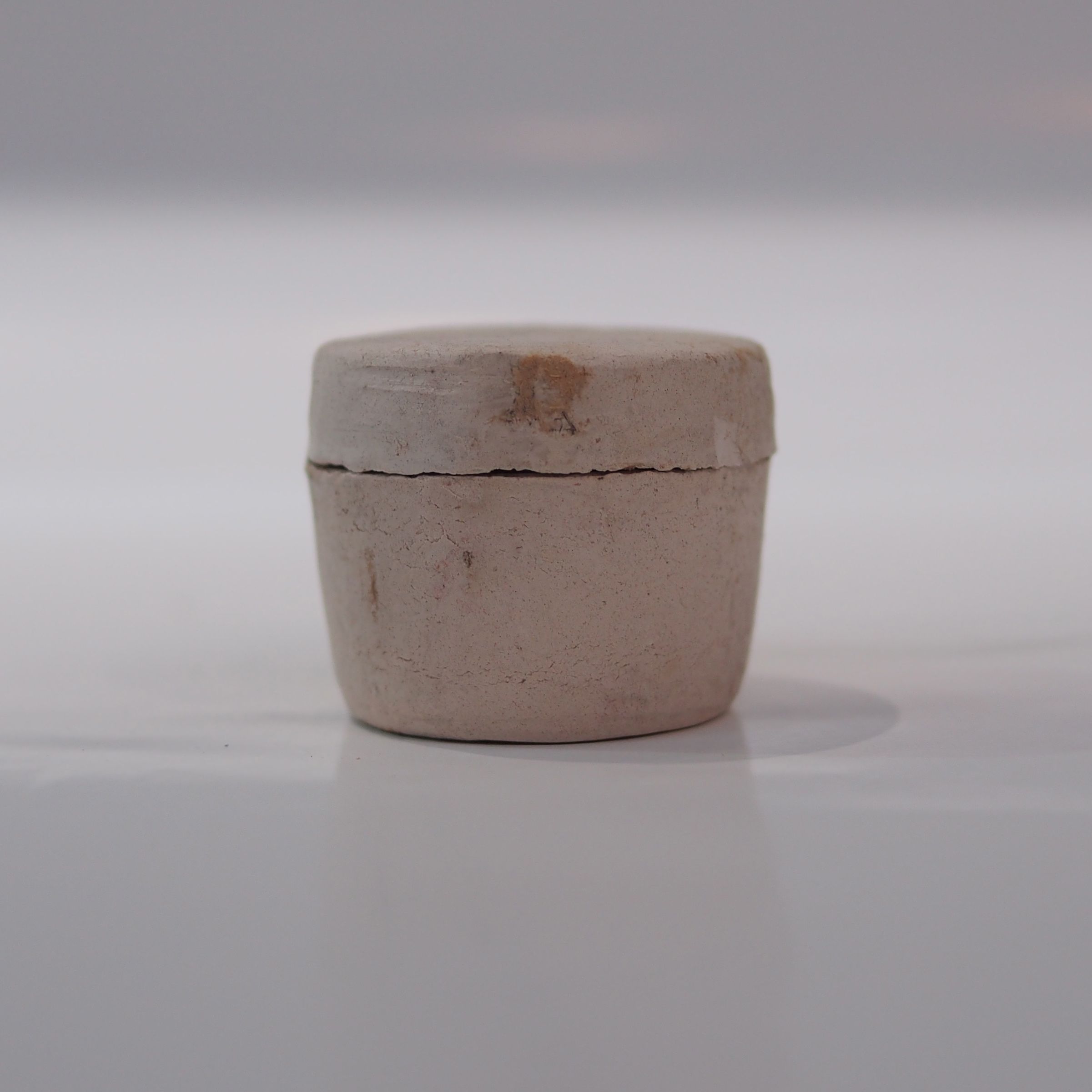
This small pottery jar was a container for opium.

A cheap packaging of the opium den which would then be transferred to a more delicate bottle.

It is similar to today’s disposable plastic bag for pills.

small jar

Tungkot Malehat

W35xD40xH130mm, Sumatra, Indonesia

This beautifully carved figurine belongs to the datu (shaman) of the Batak tribe in Sumatra.  It is the finial of a tungkot malehat, a ritual staff used by the datu.  The tungkot malehat consist of the kneeling figure as well as a rattan or bamboo staff (which unfortunately is missing).  Traditionally, these magic staff is carved by the datu himself, they are powerful supernatural weapons for fighting off evils spirits and also has the power of healing.  During the ceremony the datu would enter into a trance while holding the staff which would aid him in the ritual.

yang liu qingL1140xH660mm, China

This Yang Liu Qing print is about the story “Wenji Reurning to Han”.

Wenji, was the daughter of the scholar Cai Yong, equally well learnt she was tributed to have revived some important ancient literature that was lost during the war.  Wenji though has a rather tough life; her first husband Wei passed away and during the war she was kidnapped by the Huns tribe and made to be the queen of the Hun king.  The king treated her well, they had children and soon Wenji though missing home was well settled in Hun.

Meanwhile her father Cai Yong was jailed and died for his support of a declined politician.  The story would have ended here if  emperor Cao Cao has not suddenly missed his friend Cai Yong and thought of his daughter.  Emperor Cao requested for her return to Han, though unwilling the Hun king dared not disobey and reluctantly send the mother of his child home to Han.  Feeling the sorrow as she departed her Hun family, Wenji wrote the poem “Eighteen Stanzas for a Barbarian Reed Leaf Pipe”

Happy to see her, Emperor Cao Cao felt bad that she is all alone and without a family so he arranged for her to be wedded to an official named Dong.  Unfortunately, Dong committed some crime and received a death sentence.  Wenji fearing she will lose yet another husband went to see Cao Cao and begged for his pardon.  Moved by her action, Cao Cao ordered for Dong’s release and chatted with her about her father’s literature.  Wenji told him that all the 4000 odd books were destroyed during the war but she could still recite 400 out of the 4000. Cao Cao was excited to record the lost literature and Wenji wrote them down word for word.

Click here to see our other Yang Liu Qing prints.