Archives for category: pottery

DIA70xH120-250mm, China

We have a collection of these green glazed oil lamps, in pairs, of different heights.  For the ceramic oil lamp design, the design for these lamps are the most basic.  Its functional, well proportioned and durable (if Muji existed in Qing dynasty China, I suspect their oil lamp will be like these).  They are made on a pottery wheel and glazed with green glaze that has been popular since the Sung dynasty.

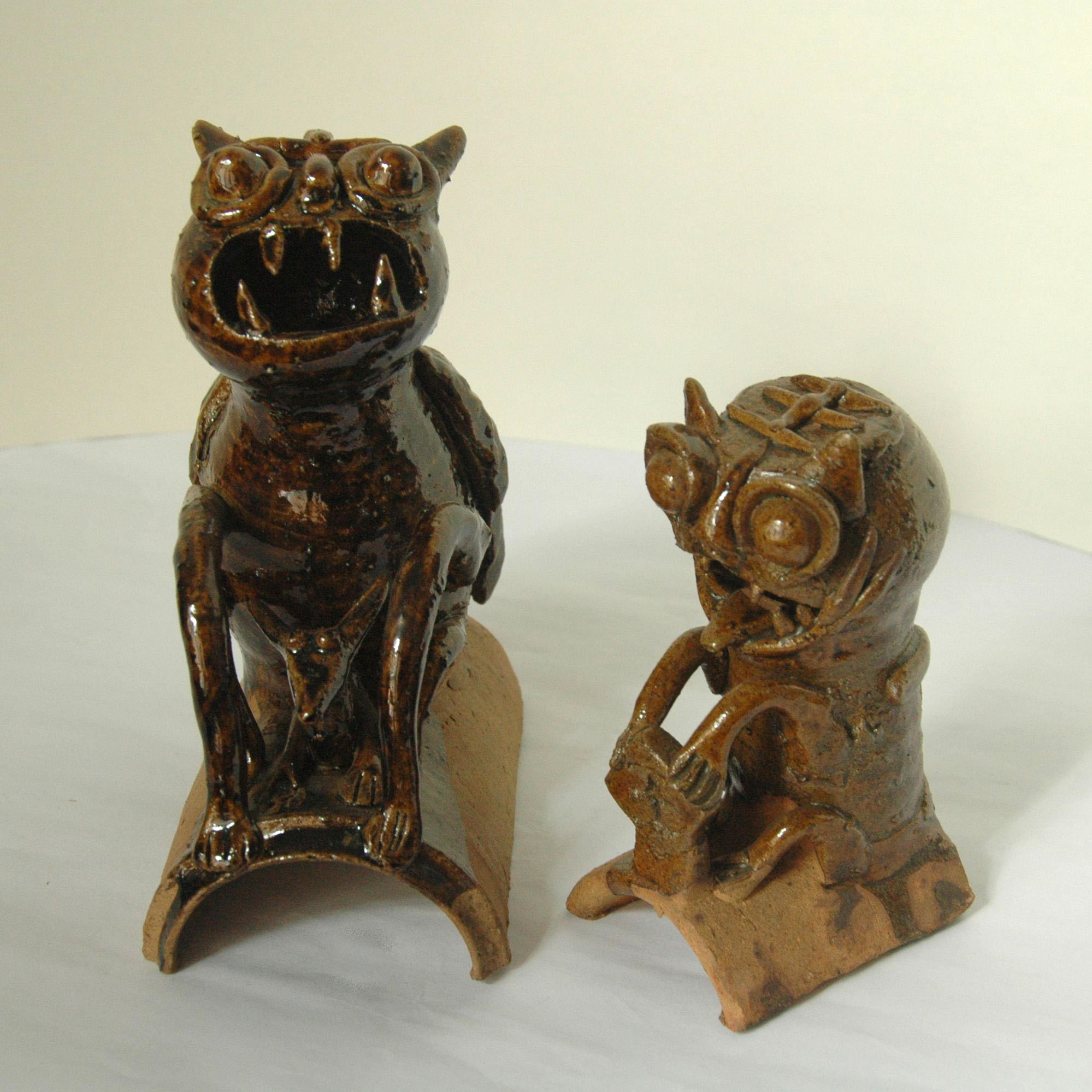
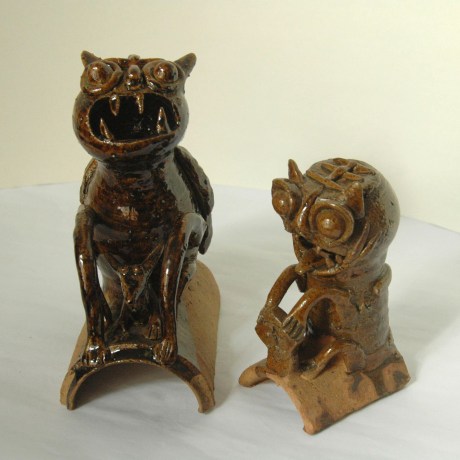
W80xD120xH150mm, China

These are roof ridge tiles called the cat shingles, in the Yun Nan area each house would have one placed on the center of the roof ridge with its back toward the courtyard and facing the outside.  Although they are called cats, they are actually resemble tiger (you can see this by the 王 sign on their forehead, this is a symbol for all the Chinese tiger figurines).  It is believed these tiger figurines are capable of  protecting the household by eating up all the demons and bad feng shiu.  On the day when the cat tile is set on the roof, a special ceremony will take place (on a even number day in lunar feb or aug) which involve feeding the tile cat dates and nuts, a sprinkle of  chicken blood, chants, incense, burning of paper, followed by member of the family petting the cat and finally the awakened cat will be placed on the ridge.  On the 1st and 15th of every lunar month, incense will be offered to the cat.

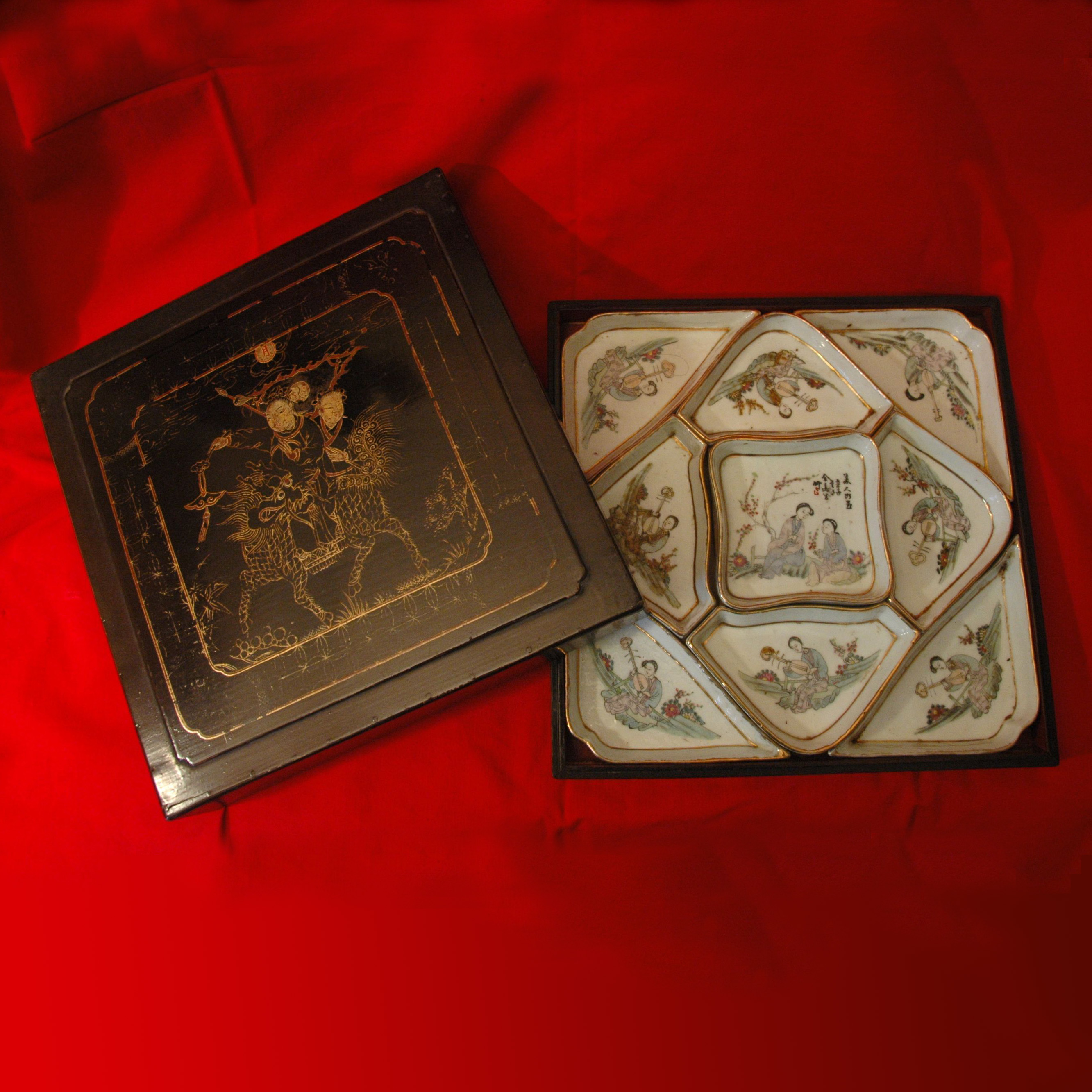
W300xL300xH80mm, China

On Chinese New Year and the few days after, it is traditional to visit family and friends to give them good wishes in person.  Every household would prepare a box filled with goodies to entertain their guests.  The box would contain a set of porcelain dishes so that an assortment of snacks and sweets can be displayed.  The common items to be kept are, melon seeds, sugared melon, coconut, lotus seeds, lotus root, candied kumquat, fried dumpling, sweets, nuts, etc.

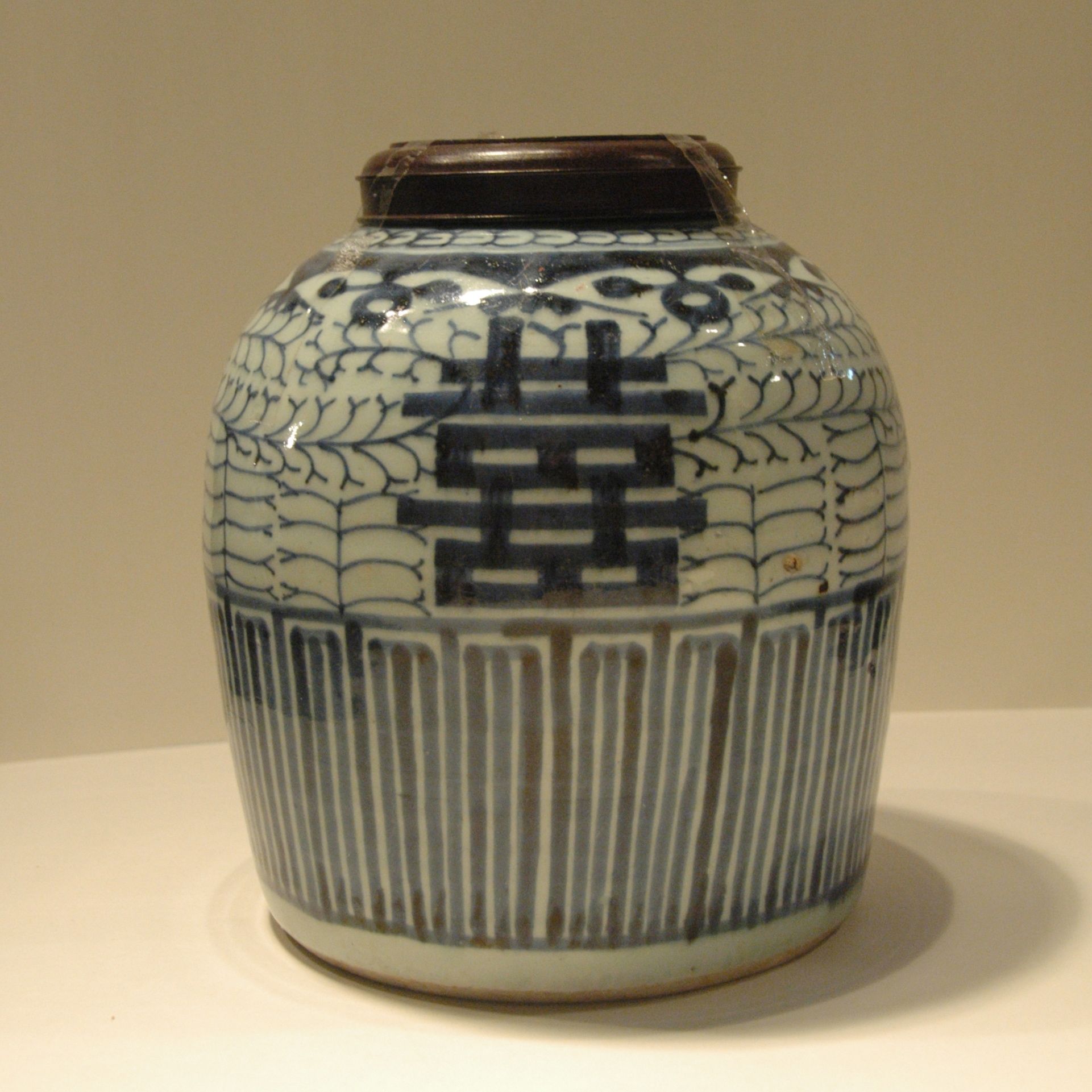
DIA180xH250mm, China

In the old days, for a common Chinese family the ceramic items on the dowry list would include: one vase, a pair of blue and white double happiness jars, a pair of hat rest.  Inside of the jars would be placed dates and lotus seeds as a symbol of  adding a son for the family.

DIA150xH120mm, Hong Kong

The perfect mystery gift!  This ceramic coin jar has been completely packed with coins and notes and used to belonged to a great grand aunt of mine who passed away in the 80s. For the family it seems to be a waste to break this time capsule, the pieces we managed to wiggle out from the top are a 1 dollar bill of 1959 and 50 cent coin of 1965, see the very young Queen’s portrait?  The current Hong Kong bills are of course without the Queen’s head.

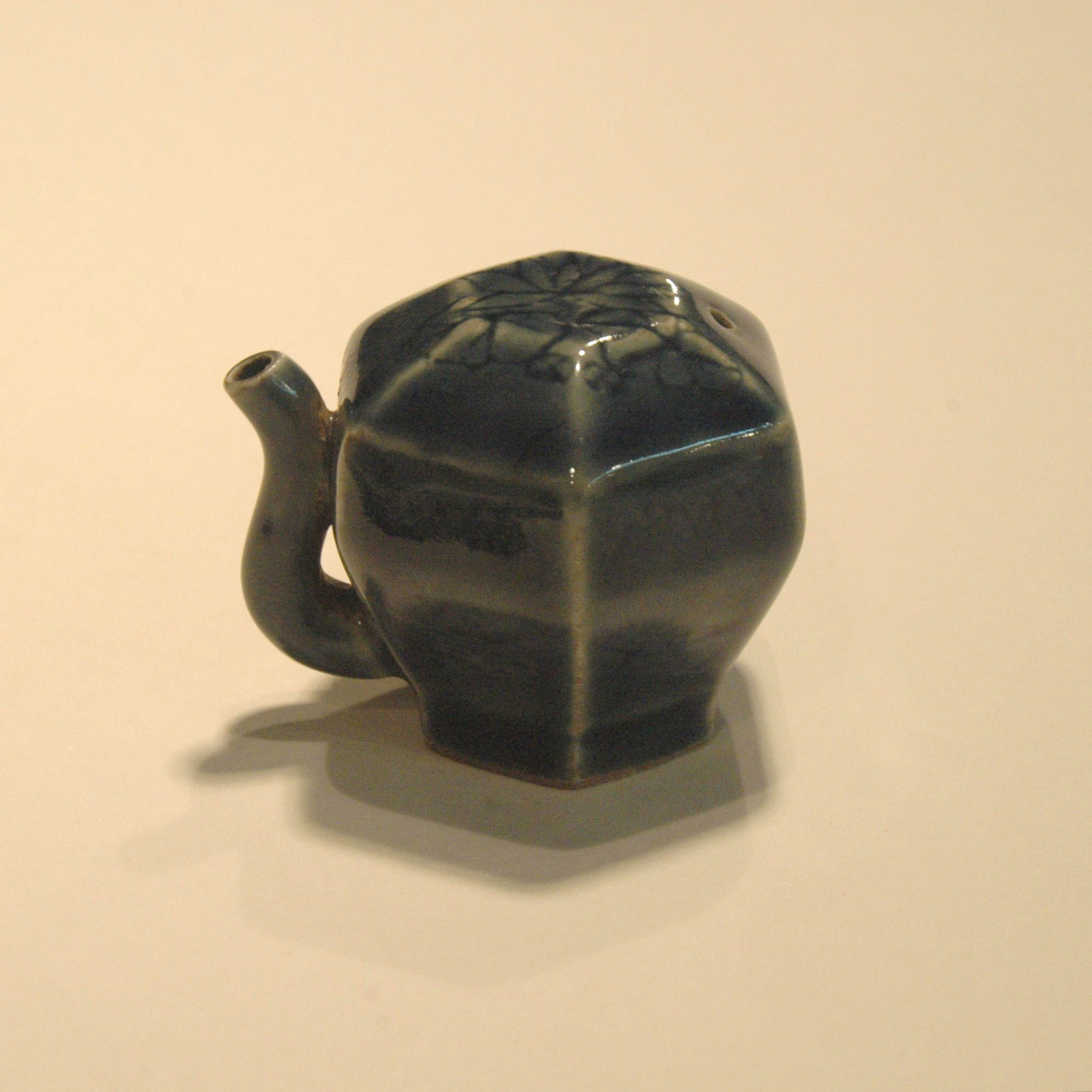
DIA60xH60mm, China

Here is another stationary for the Chinese calligraphy – a water drip for grinding and dilution of the ink.  It has a small water inlet and an outlet, the inlet acts also as suction control for the water flow.

W100xH50, China

This is holder for Chinese ink brush, the concept has been around for 1500 years (its hard to imagine otherwise as the ink brush is quite a messy object without it).  There are many different design and material, the ceramic mountain has been a popular design since the Ming dynasty.  Funny enough, there are brush holders that are named after mountains  but also also mountains that are named as “brush holder”, in Hong Kong (Beacon Hill), in Liao Ning, Qing Hai, Si Chuan, Fu Jian and of course the most famous mount on Huang Shan.

L400xW250xH250mm, Hong Kong (NOT FOR SALE)

For our dog Spike’s birthday we have on the blog a pottery I made (hand built + hollow out).  Some of you might have seen the little fellow in the shop running about.  For those who are spike or sealyham terrier fans, here is his blog:
http://spiketang.wordpress.com/

DIA200xH300mm, China

This is a ceramic jar for keeping delicious food (a bit like a tuck box).  Before refrigerator became popular, food were kept in jars, pickles, all the special goodies for Chinese New Year, apart from the children this also attracted the ants.  In those days, this uniquely designed jar were a standard container in every Guang Dong household, it has a name “piss ant off”.  Here is the reason why; once the lid is closed off, water is poured into the trench to prevent the ants from climbing into the jar.

H110xW90xDIA70mm, China

Drinking game started in China as a form of a disciplined for the banquets, a discipline to enhance the atmosphere for drinking.  The first recorded game is one of archery, the loser drinks (kind of dangerous if you ask me).

Here is a popular game: Rod Tiger
in the order cycle of  Rod > Tiger > Chicken > Worm > Rod
the 2 players say at the same time starting with Rod-Rod then 1 of the 4 words, e.g. Chicken,  so it will be “Rod-Rod Chicken”, the player of the immediate higher ranking wins, the loser drinks.