Archives for category: embroidery

Embroidery DIA200mm, China

This embroidery is from a silk du dou, a more elaborated version than the one shown in the previous post – du dou.  The du dou is the traditional undergarment for the Chinese; it was invented by Nu Wa and Fu Xi, the Chinese version of Adam and Eve and this is their version of the fig leave.  The embroidery has a symbolic meaning of fertility; in the center is a baby with a long life locket, under him is is a pomegranate (a fruit of many seeds), over him is a bat (which has the same pronunciation as “blessing”)
An interview with the HK Central Art Geeks, a Singaporean group who set out to discover the artistic side of Hong Kong.

Visit their web site @
http://bigshot52.sg/Hkartgeeks/index.html

Some of our fabric: Stencil Dye Fabric, Hand Woven Textile, Hand Woven Textile, Miao Hand Woven Fabric, Indigo Dye Fabric, Ikat, Silk Tie Dye, Indigo Dye Fabric, Tie Dye, Discharge Dye Fabric.

L250xW350mm, China

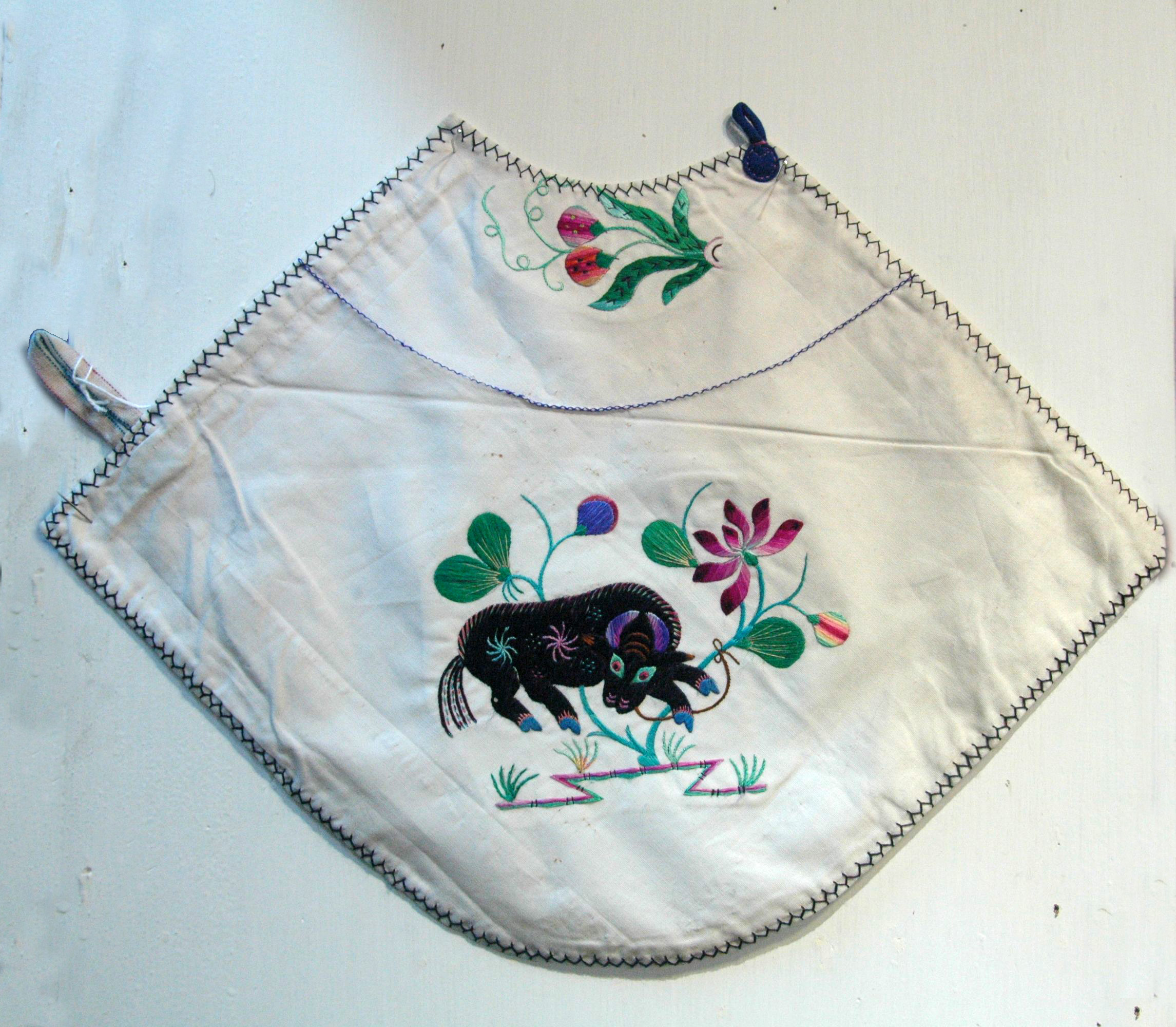
Du Dou is the traditional Chinese undergarment to be worn on the upper part of the body.  The top will be hang around the neck by a ribbon while the side is tied around the body by another ribbon.  It is usually made by the female for their lovers, hubby, children or for their own use.  The one used by the female are usually a simple red cloth without any embroidery, the one for the lover are more elaborated  the theme for the embroidery will be  some love story from opera, legends etc.  The embroidery made for the children are that of blessing, zodiac signs, etc.

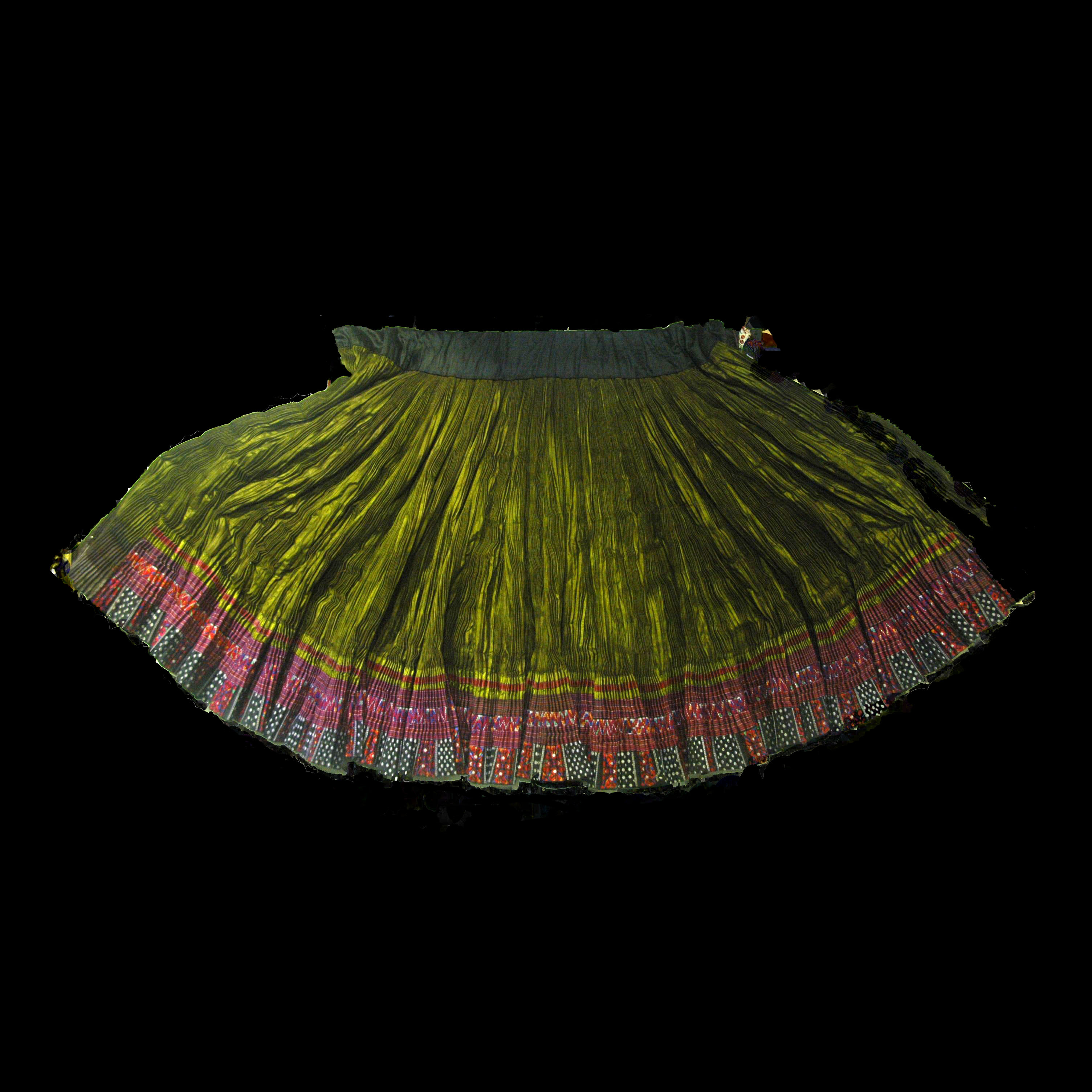
CIR650xH650mm, China

The pleated dress is part of the female Miao tribe costume.  The legend of the pleated dress goes like this; once upon a time, there was a handsome Miao hunter, one day he caught a beautiful golden pheasant and he gave it as a gift to the girl he was in love with.  The girl, Ah Beng, looking at the golden pheasant and decided to make herself as beautiful as the bird, so she weaved a cloth added embroidery and made herself a pleated dress.  The neighbors saw how beautiful she looked and soon everyone started dressing with amazing pleated dresses.

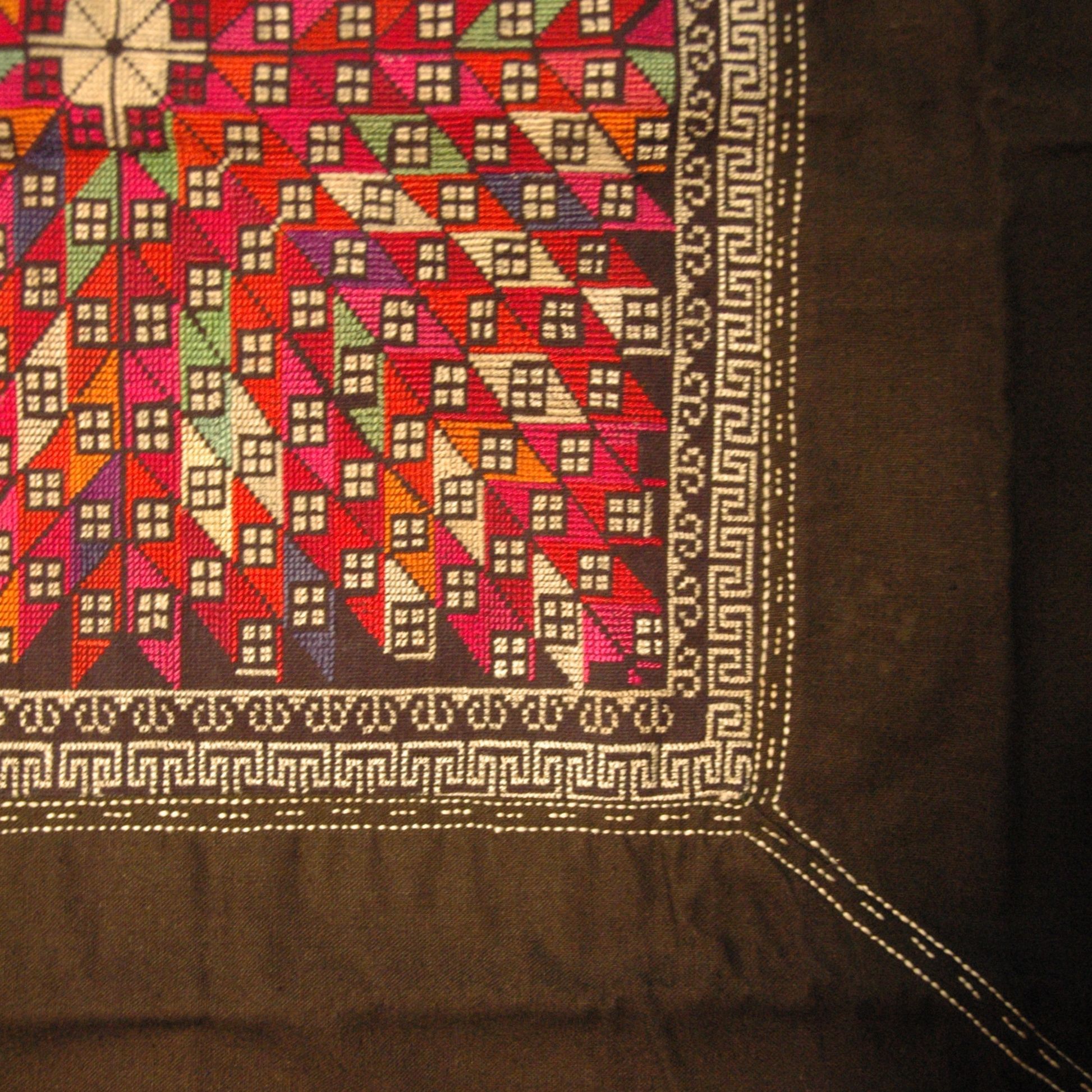
W600xL600mm, China

This cushion cover is made with the “seat” portion of a baby carrier used by the Miao tribe.  Baby carrier has been a both a functional and symbolical item in China; it enables mothers to go to the fields while keeping the baby by their side, traditionally mothers will sew the carrier by hand, the embroidery on the carrier embedded symbols of  blessing extending their love for the child.  With the modernisation of China, hand stitch baby carrier can only be  found among the minority tribes.

W75xH200mm, China

This small piece of silk embroidery (which we have framed) was taken from a children’s underwear (Du Dou).  The Du Dou is an undergarment for cover the chest and tummy, its a rectangular or square piece of cloth to be worn diagonally with the top corner trimmed for the neck.  2 strings affixed to the top corner is tied around the neck while the 2 strings attached to the side corners are tied around the back.  The embroidery patterns for children are of the theme of blessing; tiger is one of them.  Tiger is seen as an animal of strength and power, it has been worship for its protection; it is believed that evils will be frighten away when embroidery that has been wrapped around a child.  The tiger Du Dou is traditionally worn by all the children and babies on Duan Wu (the day of ills).

W600xL600mm, China

This cushion cover is made with the “seat” portion of a baby carrier used by the Bia tribe.  This carrier is made with the patchwork technique, the coin pattern is made by folding strip of cloth into an oval shape and stitch over a colour patchwork.  Traditionally patchwork is a blessing for a baby, mother would made a patchwork duvet using clothes gathered from a varies families, wishing the child will have the blessing from these families.

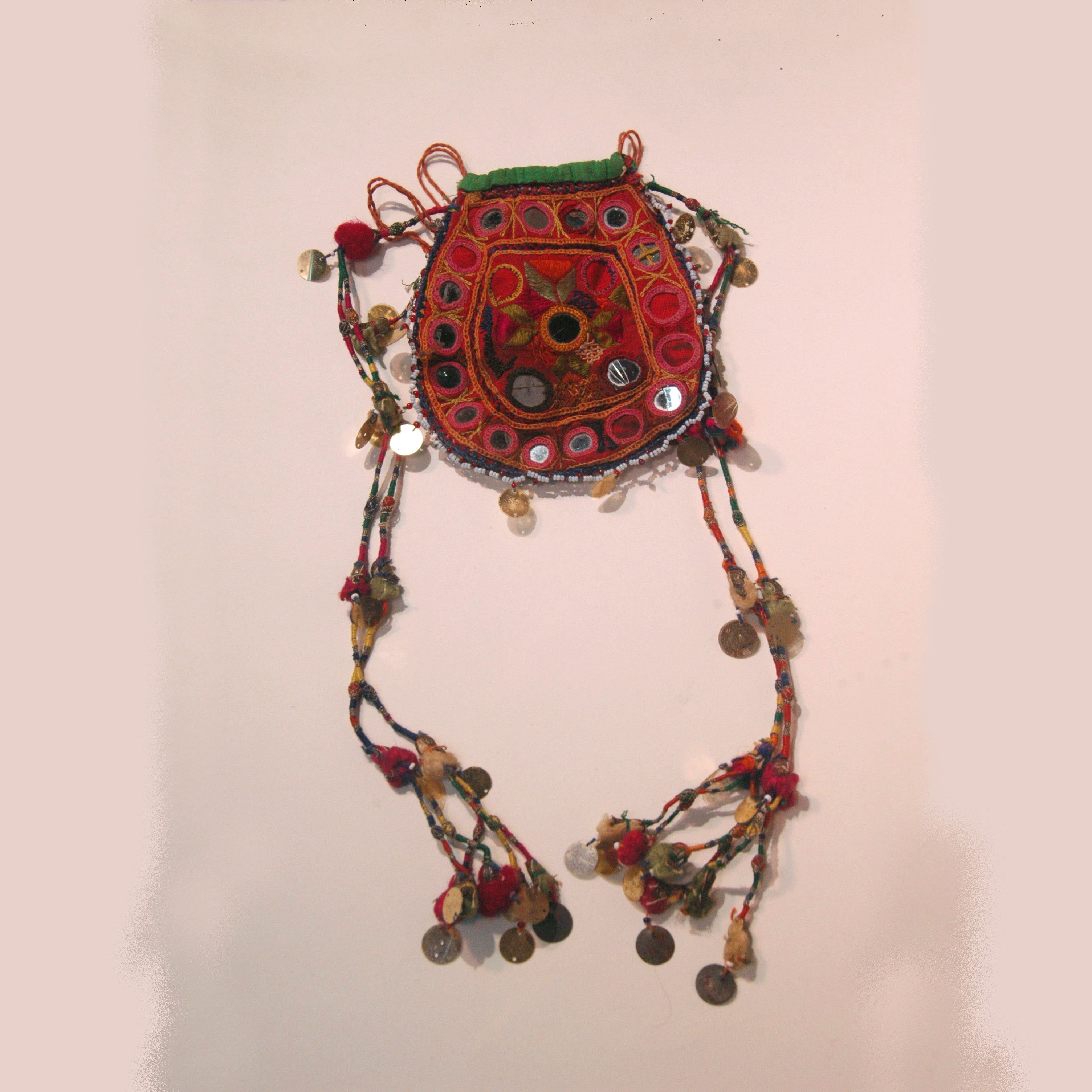
W140xH140mm, India

Shisha (originated from the Persian word shisheh which means glass) is a form of embroidery that is very popular in Gujarat, Rajasthan, Haryana and Delhi of India.  Shisha embroidery is believed to originate in Perisa in the 13th century and brought to India by Persianate Moghul Dynasty.  This form of embroidery can be found on garments, accessories and even for home furnishing product, the glass is usually paired with the colorful fabric used in the area.  This is a small bag with mirror shisha embroidery and tasseled with bronze discs.

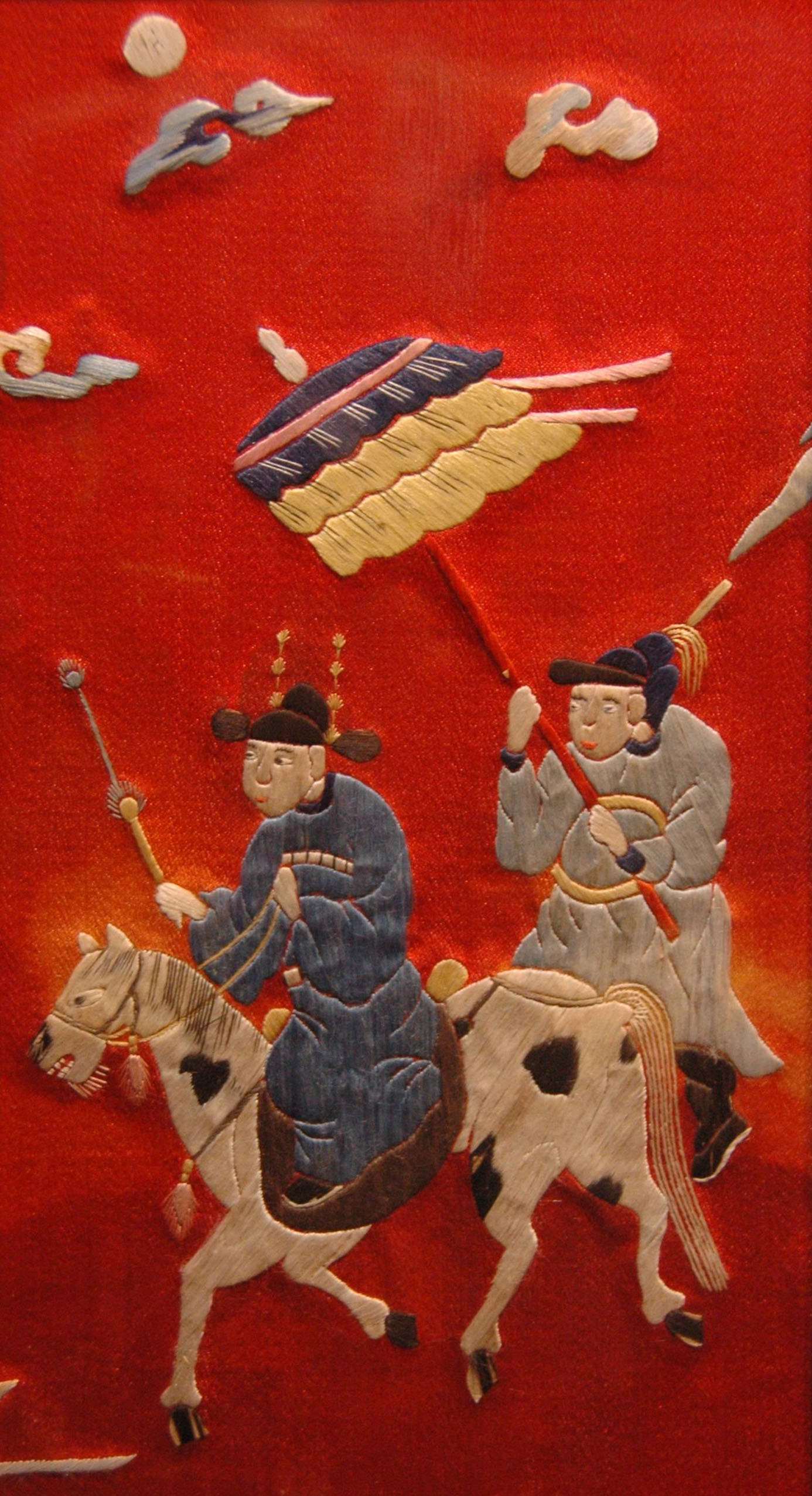
W100xH170mm, China

Since the Siu dynasty 605 AD, China has developed a system in the selection of her officials basing on a literature examination, this system continued till the last examination held in 1905.  By the Tang dynasty, the examination system was very refined; divided into several parts they are held at interval within a year, 50 topics are covered, all the examination will be overseen by the .  By passing the test, one gain the title of the test.  At the final stage, a selected few will be given questions set by the Emperor himself.  The top scholar, Zhuang Yuan, from the final exam will be paraded in the town of Beijing which is what this embroidery is depicting.  This embroidery is taken out from a large embroidery, something like a curtain, we have framed it as a painting.

W100xL300mm, China

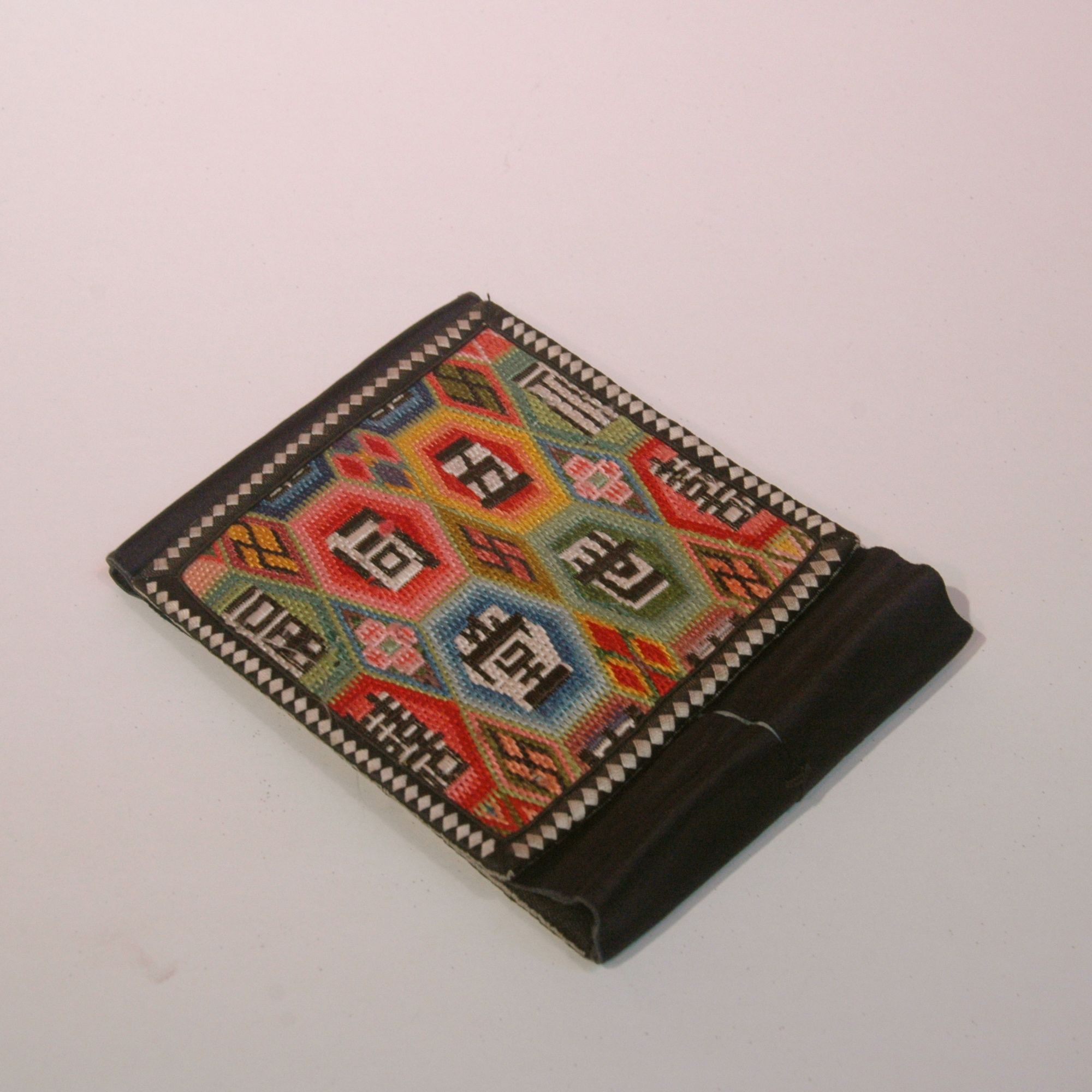
This is a silk embroidered wallet, He Bao (荷包).  For a long time, I thought the word He has to do with lotus (荷花) but in fact its from the word (负荷) – loading.  In the old days (this going back to Han dynasty), there are no pockets in the Chinese costumes, these He Bao are developed to keep essential items such as the seal, money, handkerchiefs, etc.  In the beginning they are more of a concept for a small sack that are made of leather, can be hung by the waist, carried by hand or as a small rucksack.  By Qing dynasty, they became a popular fashion accessory, made of silk and embroidered.  They will be hang or kept at the waist band, apart from the wallet, the fashionable gentleman would also have in his waist band, a hand fan, aromatic sac, pocket knife etc.  This is folding He Bao, one of the embroidery side would hang out of the waist band while the other 2 flaps securely tuck in.  Embroidered on the wallets are word of blessings; happiness, good fortune, longevity, 5 generations together.