Today we have something more traditional, part of the Dong tribe consume, a triple ring silver neckwear. Together with the silver head wear, they are the most important part of their costume, passing down from generations. There are many style for the neck ring, we found this particular one to be very modern and bold.
Here it is the first piece of uniquely designed jewellery we are presenting to you for the Something Old Something New jewellery collection!
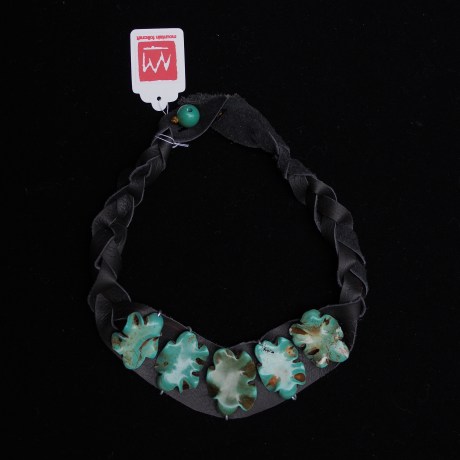
A leather neckwear of leave shaped turquoise ornaments.
As a child I was intrigued by this colour, an in between of blue and green, and with such a posh name – TURQUOISE. The name of other colours are more simple, almost as if they have been designed for a child – RED, BLUE, GREEN, YELLOW, PINK, etc., with TURQUOISE there is a French air about it. It was until much later that I discover the material, turquoise, and funny enough the name came from an old French word which means Turkish, Turkey was the place where turquoise was imported to Europe.
Mu Yu is a form of Chinese percussion musical instrument, it comes in different sizes from DIA 40- 850mm producing different sound at each size. The smallest size is only for the used in the Buddhism recitation. The name Mu Yu (wooden fish) is believed to be a reminder for the monks, as the fish is awake and alert in the day and at night, Buddhism should be practiced just the same.
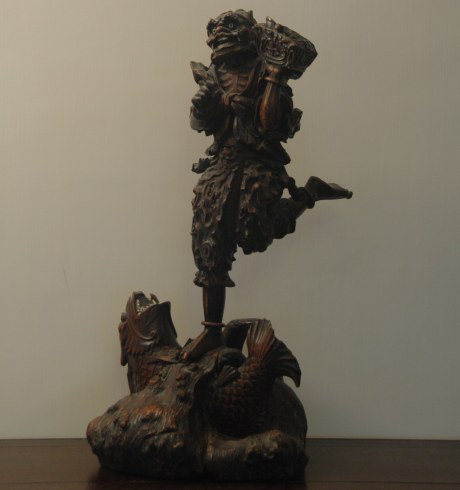
This is a figurine of the Kui Xing, unlike the one posted earlier, this figurine has a more popular composition; its left leg is kicking backward in the air. This composition is inspired by the word 魁 (the Chinese word for “Kui”). Can you see the resemblance?
魁, on the left is the word 鬼 (ghost) and the left 斗 (dou – traditional Chinese unit for volume, where 1 dan = 10 dou). The word 鬼 (ghost) reflect the appearance of Kui Xing, a talented scholar who was born with a face so slightly that he looked like a ghost . The word 斗 (dou), goes back to phrase 才高八斗 which is a praise for someone’s intellect, if the intellect in the world is measured to be 1 dan, someone who has 8 dou of the world intellect who be a genius. Dou therefore became a measurement of intellect as well as for wine.
There are broadly 2 types of shadow puppets in Cambodia, Sbek Thom and Sbek Toch. Sbek Thom are large shadow puppets, the leather part can get up to 1.5-2m tall and 1.5m wide. The puppeteers for Sbek Thom are part of the performance and are not in disguised, they dances in front and behind of the screen; the epic Ramayana is performed. This shadow puppet belongs to the Sbek Toch genres, they are smaller and usually tell the folktales based on everyday life (unlike Sbek Thom which has a religious significant).
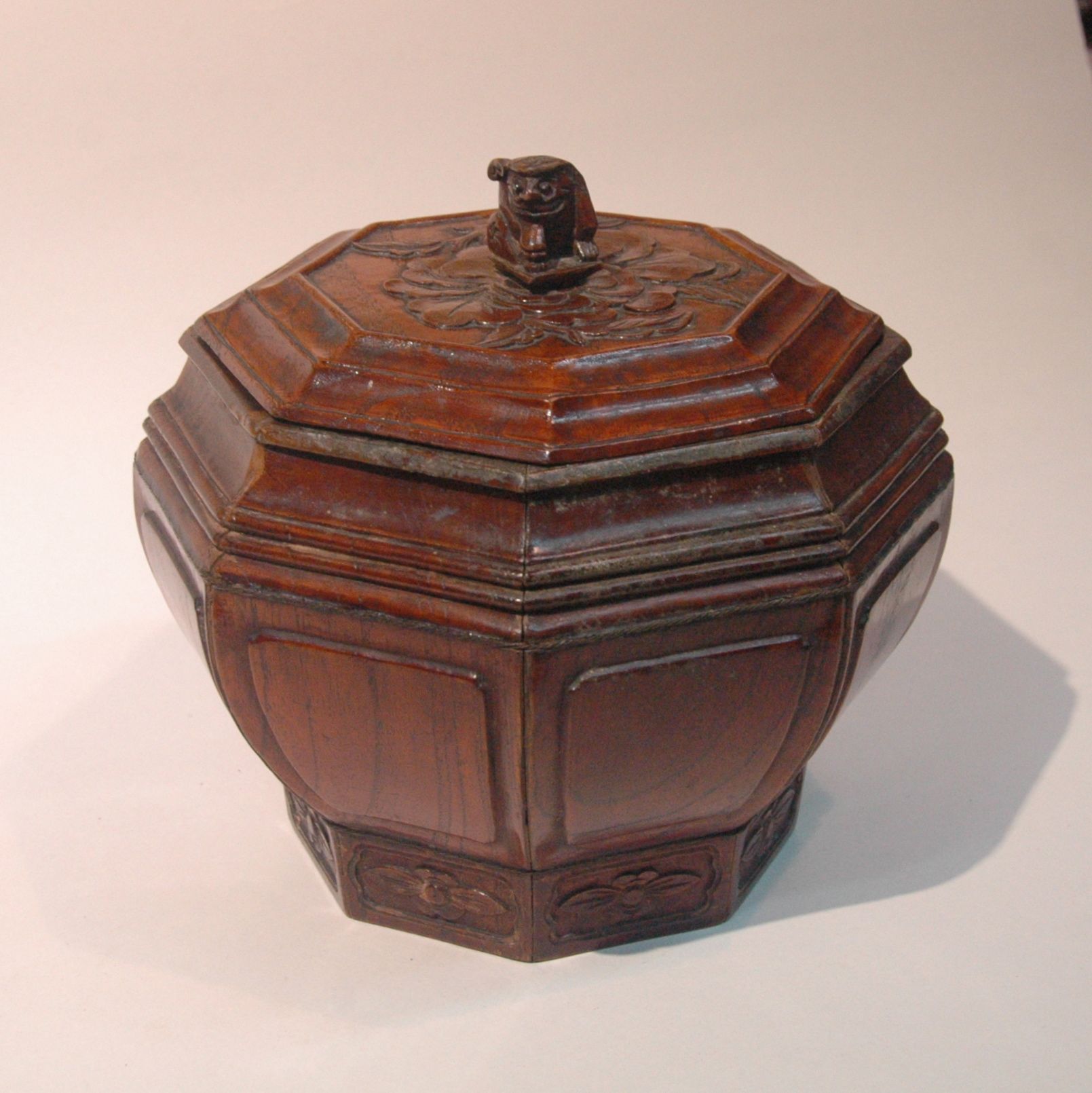
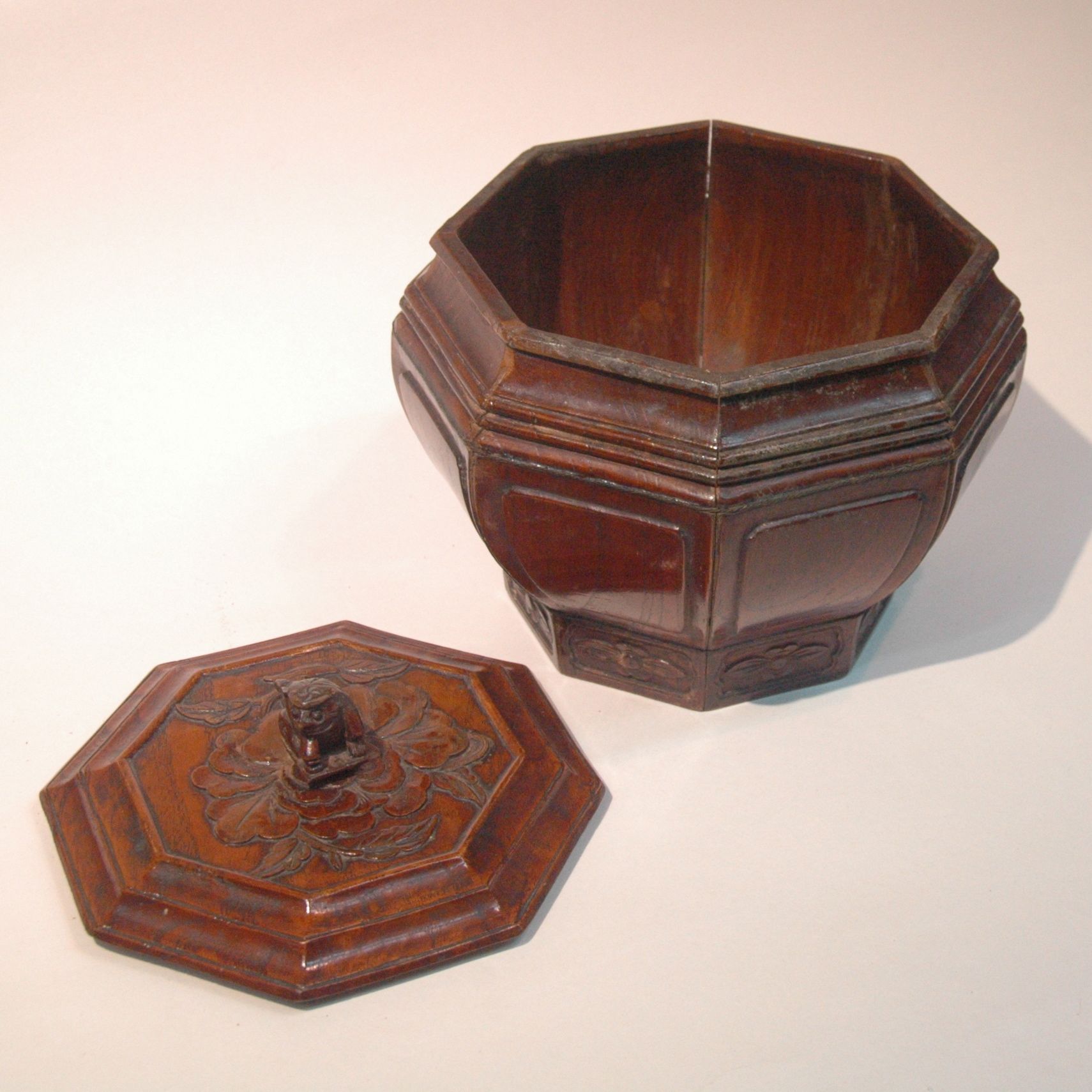
This is one of the container for dowry for the Chinese in the old days, a container to be filled with melon seeds. Melon seeds is a popular snack for the Chinese especially for festive celebration like the Chinese New Year, apart from its nutrient and availability, more importantly its symbol for fertility.
Traditional melon seeds are kept in their shell and nibble open, unfortunately I cannot find a human demonstration, here is one by the squirrel.
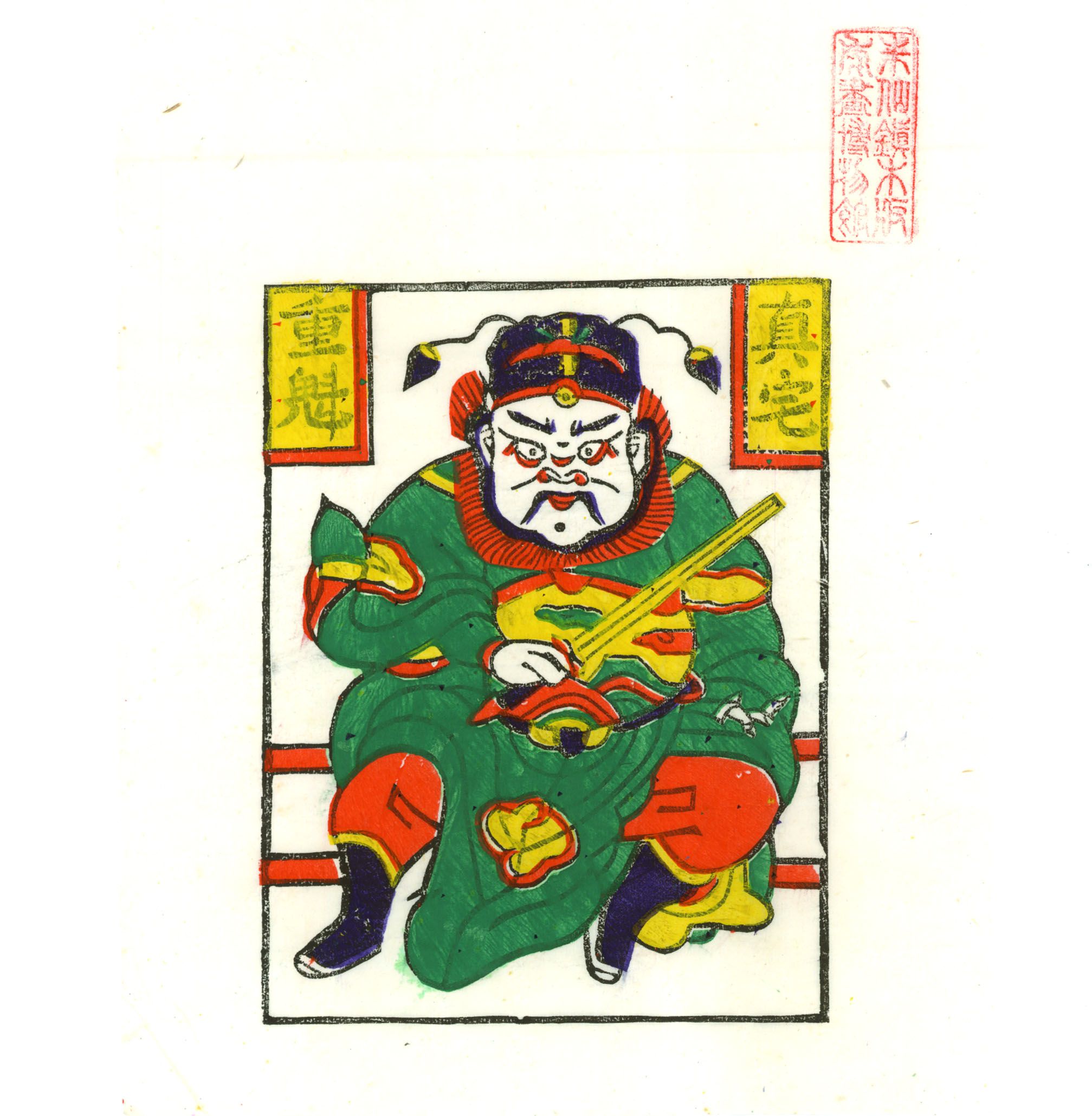
This is a new year print of Zhong Kui, the saint who can defeat all ghosts and evils, keeping the household safe. Zhong Kui has a fierceful stern face covered with a thick beard, despite having such a strange appearance he was a bold character who is a well learnt scholar. Legend has it that in Tang dynasty 730AD, the emperor was gravely ill, one night he dreamt that a ghost came to steal his jade pipe and his favorite concubine’s fragrance sachet. The emperor was upset and was about to send in his warriors to chase off the ghost and saw a larger ghost appear. The larger ghost has messy hair, horns on his head and worn a green robe, he reached out and caught the thief, dug out his eyes and swallowed them. The emperor was horrified by the act and asked who he was, the larger ghost paid his respect and said he is Zhong Kui and that he tried hard in the scholar exam but failed. Ashamed for his failure, he met his death by the steps after reading the results at the courts, feeling sorry for him the earlier Tang emperor award him a green robe for his funeral. Moved by the emperor he oath to remove all the ghost and evils for the Tang dynasty. When the emperor woke up from his dream, his sickness was gone, he ordered the making of Zhong Kui’s print to spread the news. Later on it became a new year tradition for the Tang emperor to award his officials prints of Zhong Kui.
In certain part of China, Zhong Kui is worshiped at every occasion from Chinese new year to opening of a temple to a shop, the start of a work for the year to the start of construction, relocation to birthday and weddings. The ceremony will include the offering to the print of Zhong Kui and for a grander gesture the performance of masked dance or a puppet show of the Zhong Kui theme.
Here is a masked dance performance for a temple ceremony in Taiwan.




 Mountain Folkcraft