Archives for the month of: October, 2011

DIA 150mm, China

The buddhist rosary, Mala, is used for counting the number of times the Mantra is recited.  This is a 21 bead waist mala, if you count the numbers there are actually 22 beads, the additional larger coral bead in the center is known as the Guru bead, it symbolizes the Guru from whom one has received the mantra being recited.  Within the 21 beads there are 3 marker beads.  The main beads are made of blue sand gemstone,  while the Guru and separator beads in coral.
 (S) H100xW50mm, China

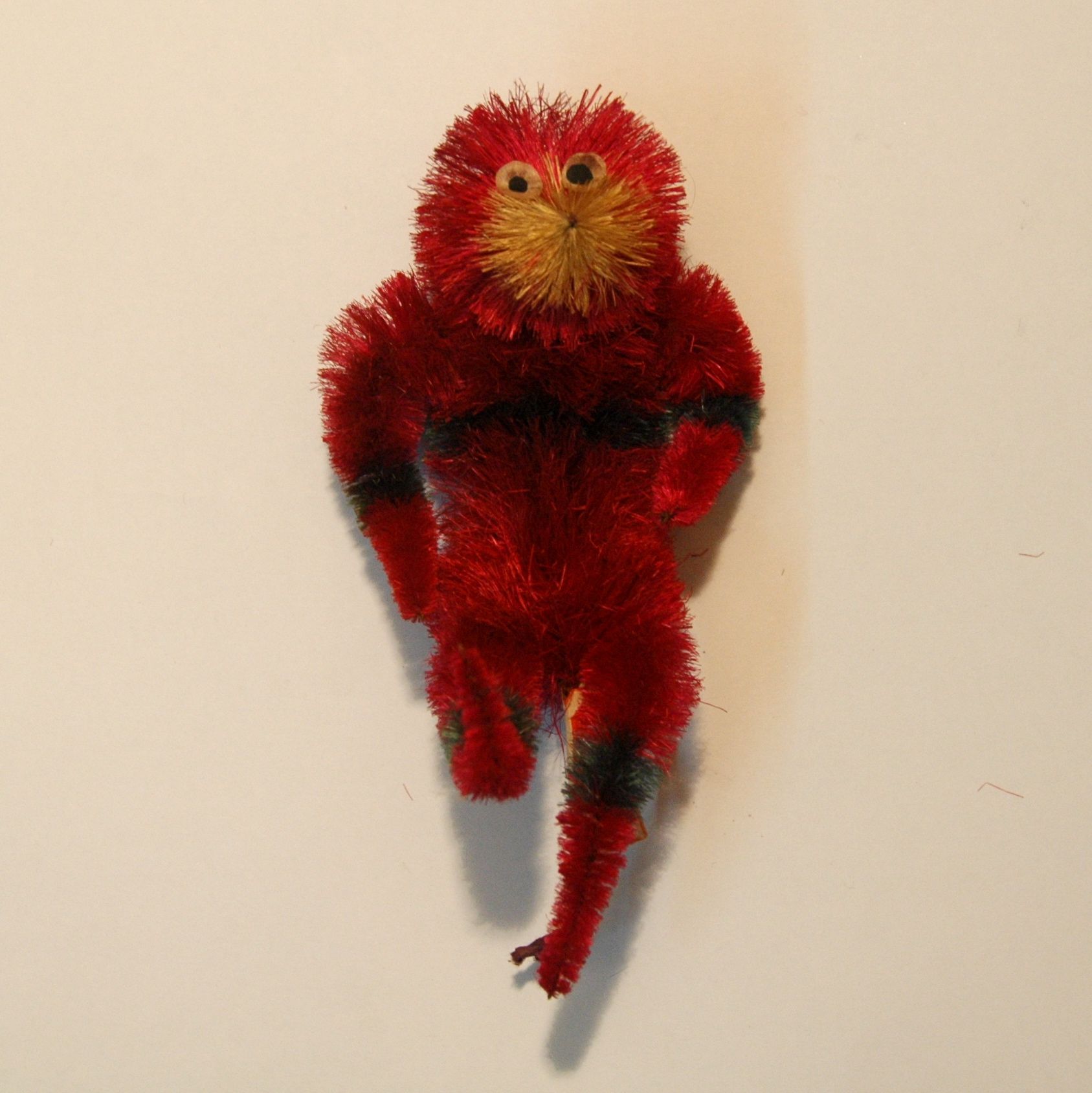
This is not what the name suggests, it is perfectly legal… Strands of hemp fiber are tied to a metal wire like a bottle brush.  With these wire, the monkey can becomes quite animated.  The monkey comes in three different sizes with the large one going up to 300mm tall.

China

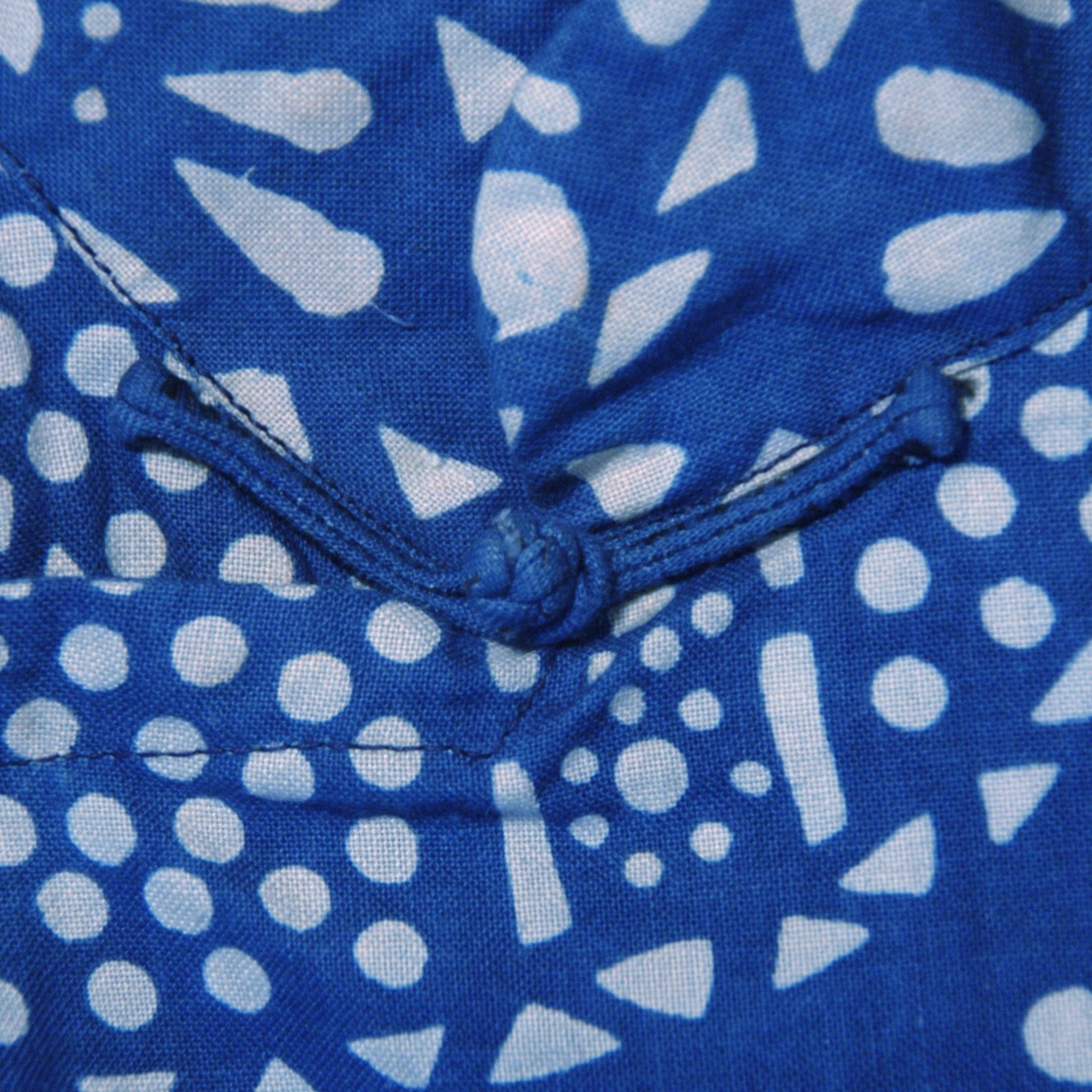
The Chinese developed a elaborated art of knotting which became popular in the Tang and Song Dynasty, however the concept of knotting as “button” did not appear until the Ming Dynasty, before that clothing were held together simply by tying up two strapes.  Apart from knot buttons other type of buttons appears e.g. copper, silver, pearl, agate, etc., apart from being functional, they also became a status accessory.   Knotting for buttons developed into several forms,some more elaborated than others, the knotting diagram shown above is for a basic design.

H150xW50xD70mm, Macau

Along the coasts and waterway of the southern China there is a tribe called the Tanka who reside on the junk boats.  Each family would have two small boats,one anchored for living and the other for fishing.  Wooden figurines of Gods and ancestors are made for worshiping and to offer blessing when they are out at sea.  With the decreasing number of fish and the better job opportunities on land, there are now only 1/5 of the Tanka still living at sea.

W400xL400mm, China

This is believed to be a piece of  Han Xiu embroidery from the area around Wu Han.  Han Xiu differ from the famous four Chinese embroidery styles where the colour scheme are flat and without shades.  Flourished in the early Qing Dynasty,  this style has now become a dying trade as the artisans have disappeared during the war.  This art has recently been listed as Intangible Cultural Heritage by the Chinese Government.  This particular piece of embroidery is a remnant of the decorative piece of a duvet cover.

L120xW120mm, China

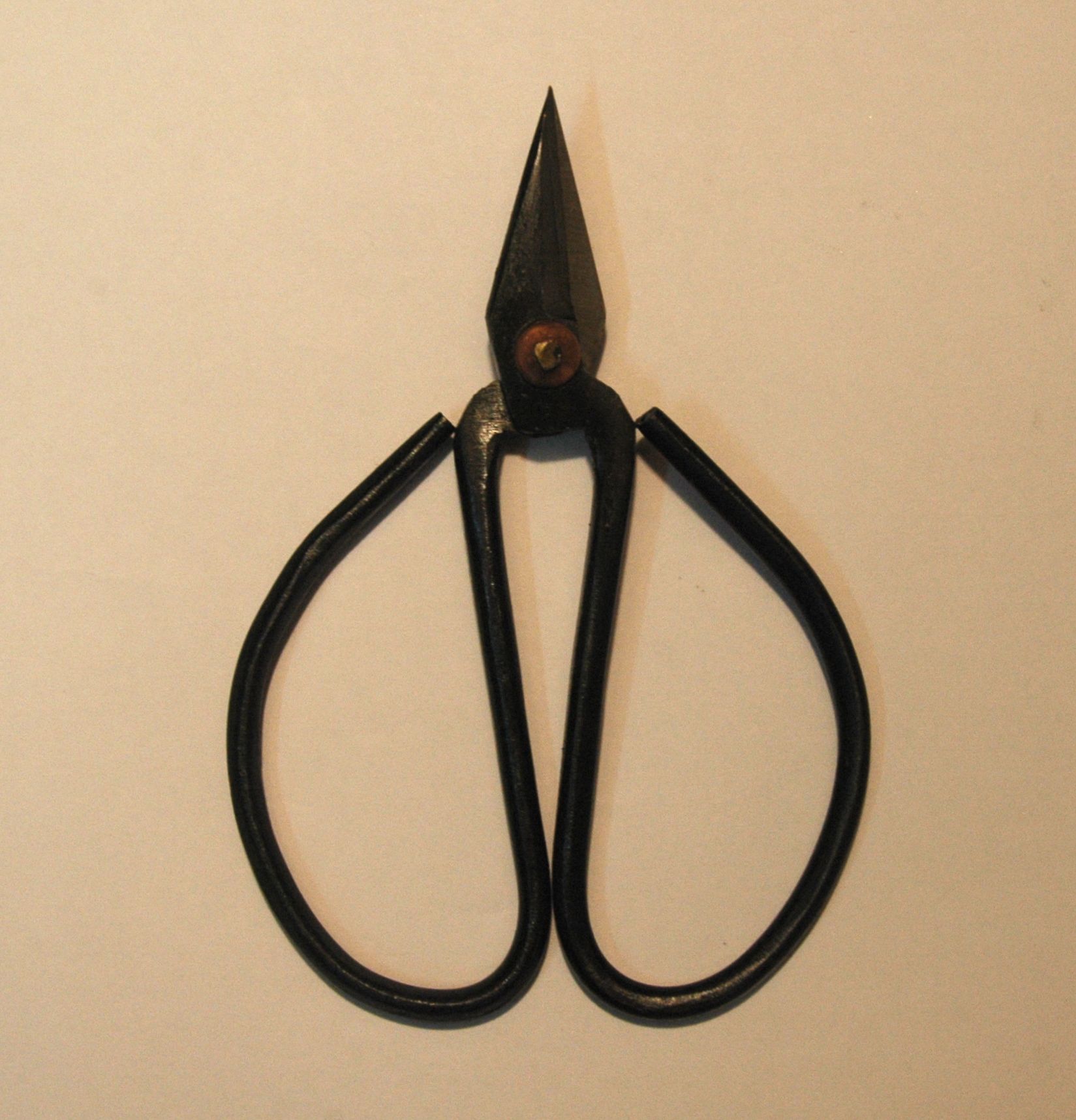
The early form of scissors in China is made with a single piece of flat metal stripe ribboned  to form a kind of spring shear.  As times goes by the pivot point moved further away from the blades developing better control for the tool.  The two parts scissors only started to appear in the Zong Dynasty, the two blades were held by a nail with the rest of the metal bar forming the handle.  To reduce the friction caused by the two blades, the blades are made slightly curved, touching only at the pivot and the tips.  During cutting only one point will meet to enable the shearing action, this is controlled by the hand movement of the user (so unlike the western scissors, the pivot are tuned loose).

Fish L200xW100mm, China

These ceramic moulds are for making Guo.  The guo is a Chaozhou dumplings made with a thin rice flour dough with fillings of different types vegetable, nuts or beans that can be savory or sweet.   Guo is made for Chinese New Year, all other festivals, harvests and all events in life (birth, adulthood, marriage, death).  Different guo are made for different events;  the red peach guo for new year, vegetable guo for spring and autumn festivals, rice plant guo for harvest.  The moulds are made of different patterns  for this purpose;  the turtle and the peach for birthday – represents longevity, the fish is synonymous with excess (to have more than enough), bat synonymous with blessing, etc.  These moulds can be of wood or ceramics.

(L)L700xW550mm (S)L370xW260mm, Japan

This is a Japanese fan, uchiwa, it is constructed from a single piece of bamboo.  The bottom part of the bamboo forms the handle while the top part is split into many equal splinters which are splayed out radially to create the frame of the fan, paper is then pasted on top and varnished for water protection.  For the large uchiwa, thick cotton string is used to tie together the bamboo stems to reinforce the fan structure.  The uchiwa are believed to be originated from China, during the Tong dynasty they were introduced to Japan and also became a popular accessories for the aristocracy and ladies.  The pattern on the paper are refined and elaborated.  Apart from daily use for cooling, the uchiwa is also used in ceremonies, dances and gifts.

W250xL250mm, China

Porcelain tiles are often used as a decoration piece in traditional wooden Chinese furniture.  These decorative tiles can be found as the panel for the seat or the back of the chair, panels for the door of a cabinet, panels for the back of the bed and as the panel of a screen.  The Chinese have viewed ceramic as utensils, it was not until late Ming dynasty when more colourful glazing was developed that ceramic as painting took a fashion.