

ASIAN FOLKCRAFT
SOIL X MOUNTAIN FOLKCRAFT
Display all set up! Crafts from all over asia; China, India, Indonesia, Japan, Thailand, Malaysia and Myanmar.
We are open 10:00-18:30, close Sunday and Public Holdiay
ASIAN FOLKCRAFT
SOIL X MOUNTAIN FOLKCRAFT
Display all set up! Crafts from all over asia; China, India, Indonesia, Japan, Thailand, Malaysia and Myanmar.
We are open 10:00-18:30, close Sunday and Public Holdiay

W300xL250mm, China
When I saw this bag, I felt the tribal craft has really adapted to the new material and function. Carrying on the bold embroidery tradition, it has also made use of fluorescent beads and pom-poms, compartments for wallets and travelling pass.

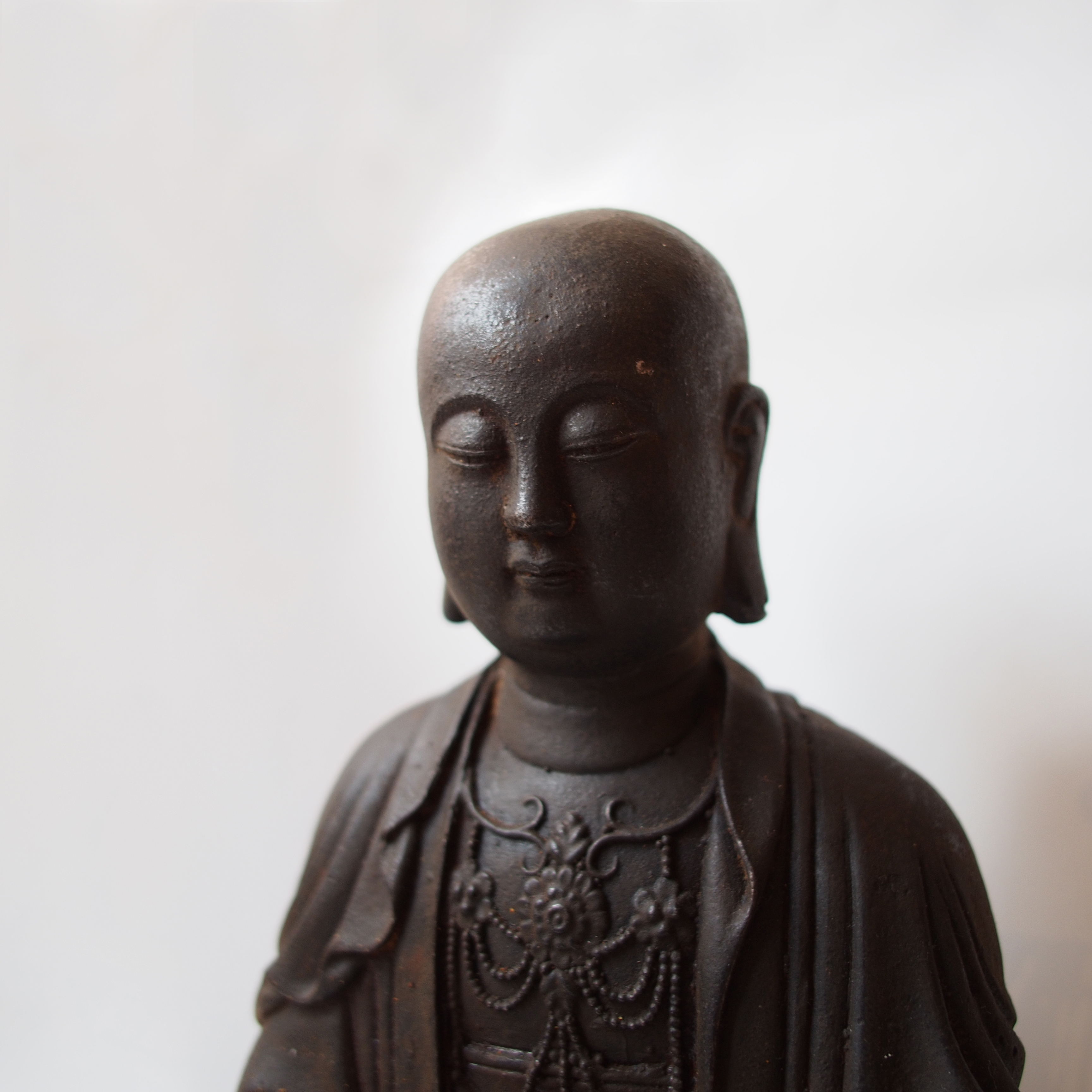
W180xD150xH250mm, China
This is an iron figurine of the Bodhisattva Ksitigarbha (Dayuan Dizang Pusa). Bohisattva Ksitgarbha is one of the four bodhisattvas of Mahayana Buddhism along with Samantabhadra, Manjusri and Avalokitesvara. Between the period of the death of Gautama Buddha and the rise of Maitreya Buddha, Ksitgarbha is responsible for the enlightenment of all the beings in the six worlds. He vowed not attain buddhahood until the hell is empty of all beings.
In this figurine Bodhisattva Ksitigarbha is holding a cintamani, a wish filling jewel, which came from the palace of the sea dragon. The cintamani has a capacity of relieve suffering and illness, a symbol of virtue of the Buddha.

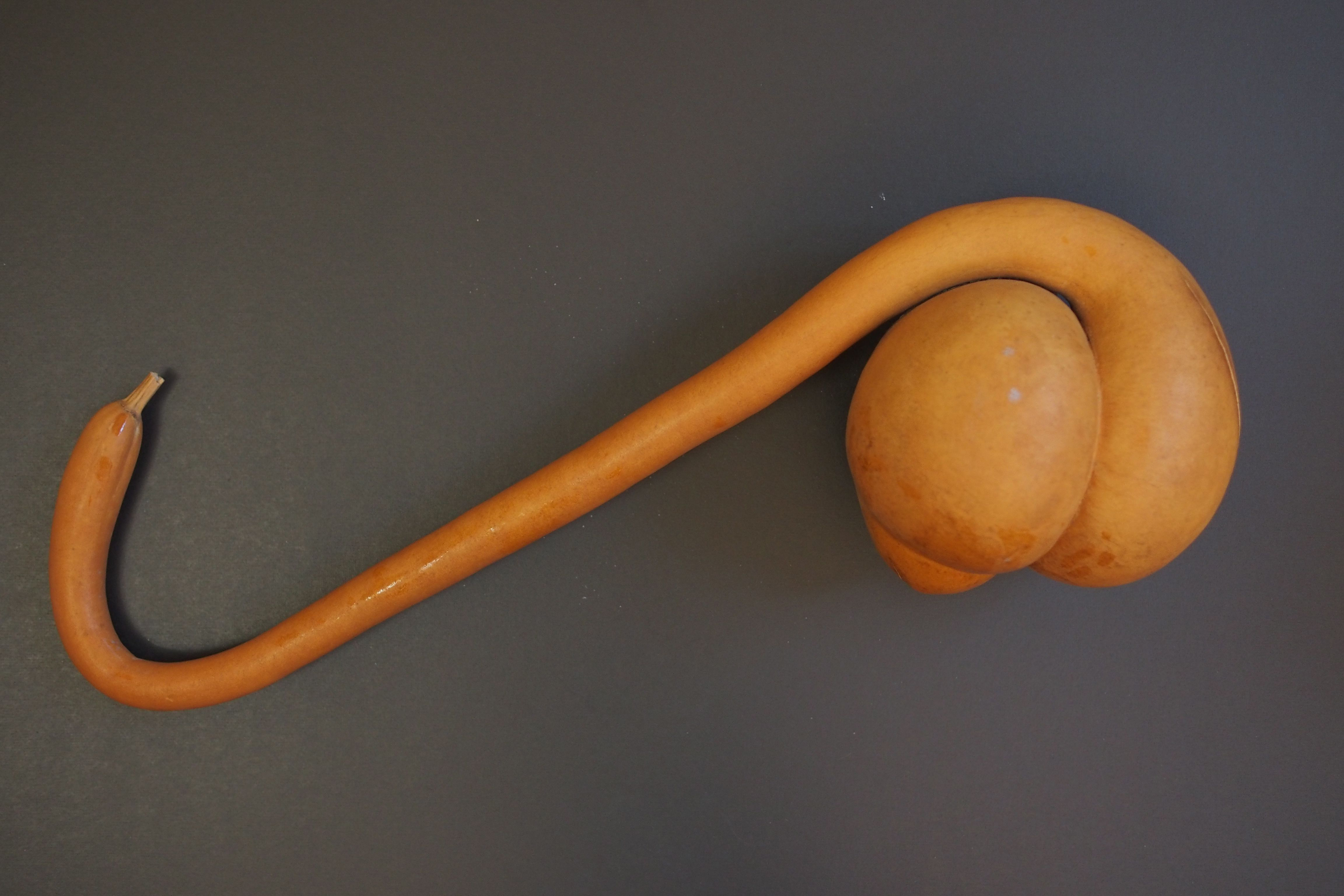
W180xD180xH600mm, China
There is small gourd and large gourd. The Chinese has a strong endearment for the gourd, there are many legends and tales about the fruit and here is one of them.
In ancient time, some earthlings has angered the Jade Emperor, an order was place for the Thunder God to have the human exterminated, all the land was to be flooded. The Thunder God was worried that his own children would be killed by the flood, he gave his son Fu Hsi a gourd and asked him to plant it on the ground. As soon as the gourd touches the soil, in a couple of hours the roots formed, then sprout came out, followed by branches and gourd fruits. By night, the gourd has a girth the size of a small room. A few more hours later, the fruit was ripened, Fu Hsi and his sister Nu Wa cut a lid into the gourd and put all their garments and food inside. Fu Hsi tried to save the people around him but no one listened, at the end only Nu Wa and himself climbed inside the gourd and closed the lid tightly. Within an hour, the rain has started pouring and it lasted for 9 days and nights. The two stayed there inside the floating gourd until the roaring sound has stopped, Fu Hsi opened the lid and looked outside and there is nothing left but miles of water without edge.
This gourd is not quite as large but still got Spike intrigued.
 Here are our other gourd items; Gourd Cricket Cage, Gourd Basket.
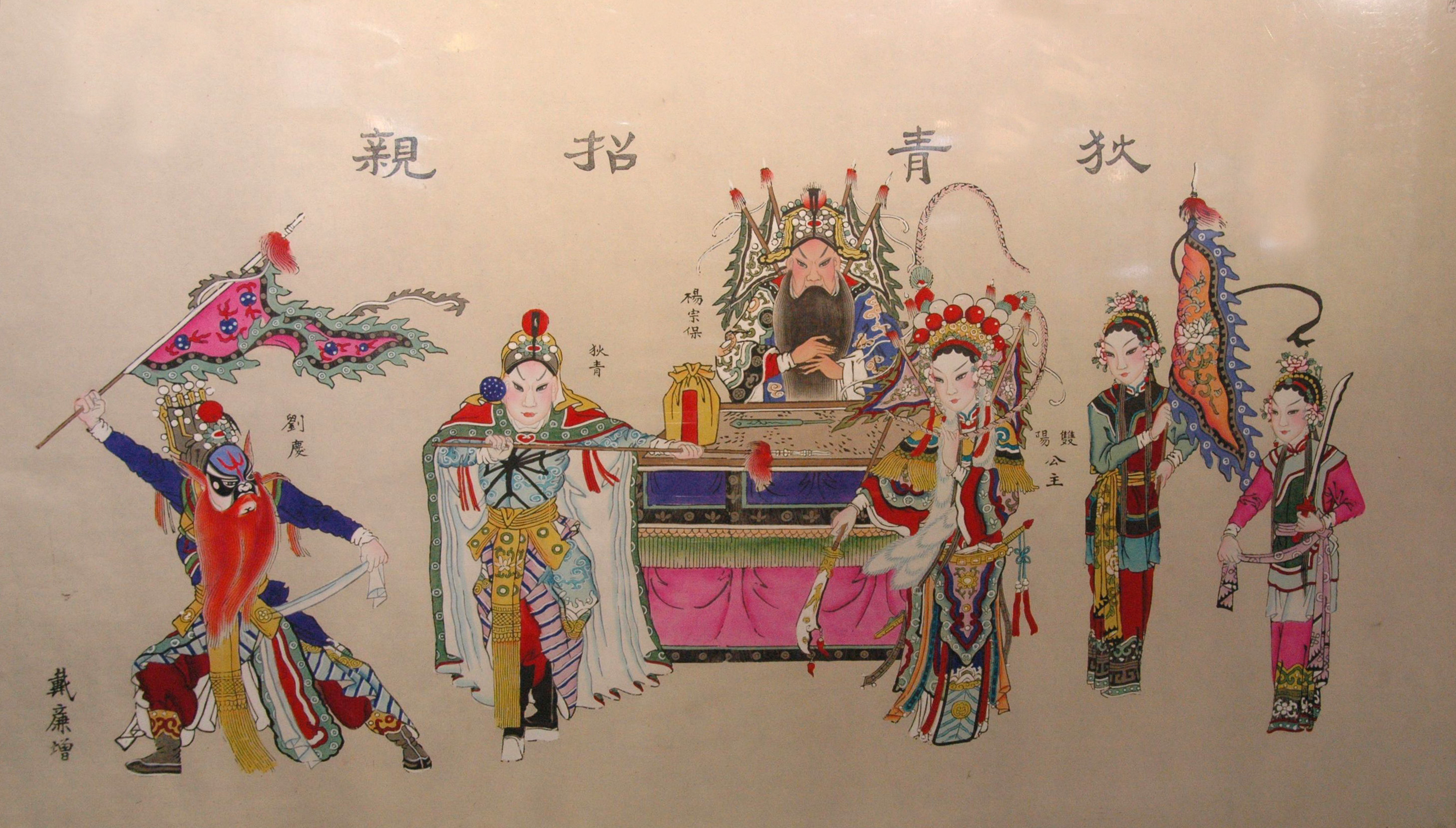
L1200xH700mm, China
This is a Yang Liu Qing wood block print portraying the story of the fearless Song dynasty warrior Di Qing (2nd left). The story has it that Di Qing and Liu Qing (1st left) of North Song was send by the Emperor to pacify the uprising to the west of the country. Unfortunately the army got lost and ended up in a wrong country, Dan Dan. There, Di Qing met the Dan Dan princess (3rd right) who fell in love with his looks. She lured him into the palace and asked for him to surrender and to marry her. Unwillingly, Di Qing wedded the princess but only thinking about escaping to defend his home land. The princess was upset that her newly wedded husband has departed without a word and set off after him, Di Qing explained about his duty and promised to return after his task. Like most plots, the hero forgot about the princess when he returned home with victory and never returned to Dan Dan. This time the princess was furious and led an army to attack Song, general Yang Zong Bao (center character) was no match with the princess and instructed Di Qing to deal with the princess. When the couple met, of course they forgot all about fighting and lived happily ever after …
Here is the opera version of the same story
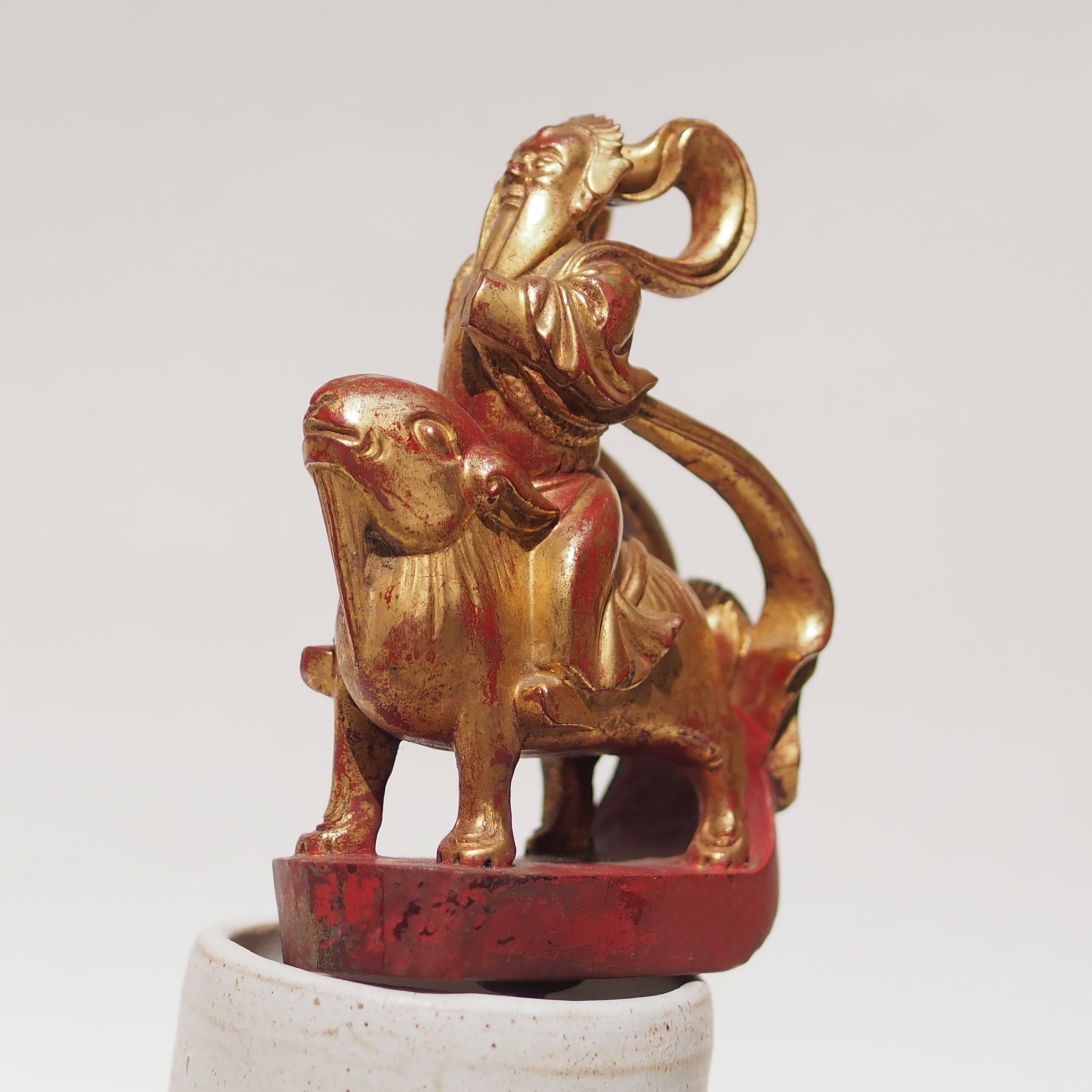
W50xL100xH140mm, China
This is the figurine of one of the five goat riding saints, the legend goes back to 880 B.C. when Guangzhou was constantly hit by famine and plague, there were 5 saints each with a different colour garment and each riding a different colour goat. The 5 saints each offer 6 stalk of rice to the residence and bless the city to be free of famine. The goat 羊 is homophone to the word blessed 祥, which resulted in Guangzhou being also known as the 5 Goats City. It was a wish for the ancient farmers, never to stave again.
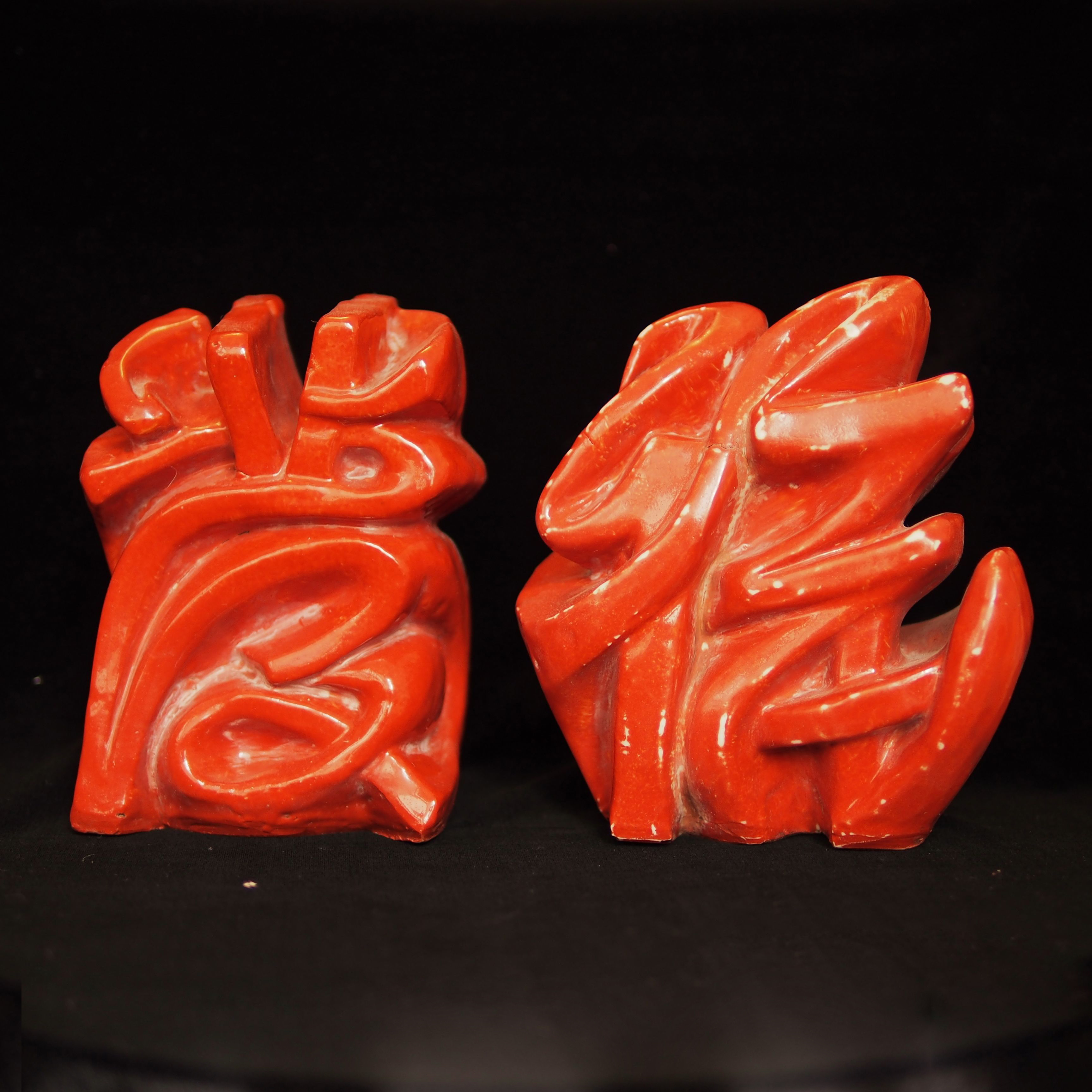

W140xD10xH150mm, China
These are two Chinese words, 发福, made into calligraphy pottery sculpture. It is interesting how the 2 dimensional words is transformed into 3D with the expressive action of the brush strokes.
The words 发福 originally meant the blossoming of fortune, a blessing that can be related to 发财 the blossoming of money, as in KUNG HEI “FAT CHOI”. Nowadays, the words 发福 refers to the putting on weight during the middle age. A tease in disguise of a blessing.
 H100xW70xD50mm, China
This beautiful figurine of the Guan Yin has unfortunately got his face distorted. We suspected the damage was done during the cultural revolution when all artworks, intellectual works, religion was ordered to be destroyed. From the denting, one can see that perhaps the person ordered to destroy the figurine does not have the heart to do it, despite the hammering the face is still vivid and the garments still carries its form despite being removed from the lotus throne.

H90xD50xW30, China
Two two lion with pup figurines are in fact bottles for medicine. The traditional Chinese medicine apart from the bitten tea, also comes in small pills and powder form. Judging by the size of the opening they would have been used to hold medicinal powder. Personally I find the powder form to be quite nasty, they tend to stick to your throat and the unpleasant taste lingered on for ages. I suppose these sweet looking bottles will help the patients take the medicine.
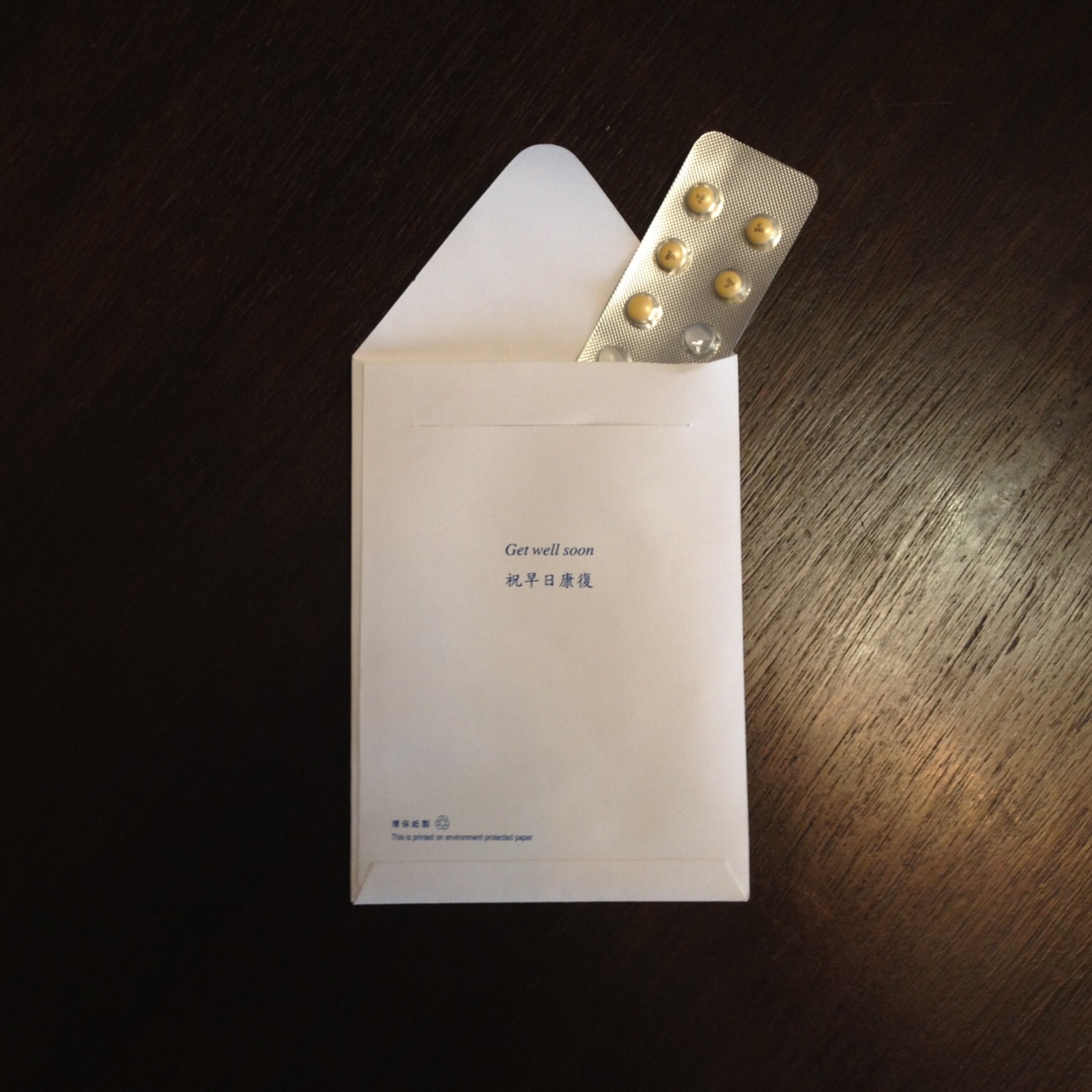 Here is the modern way of what thoughtful doctors do …
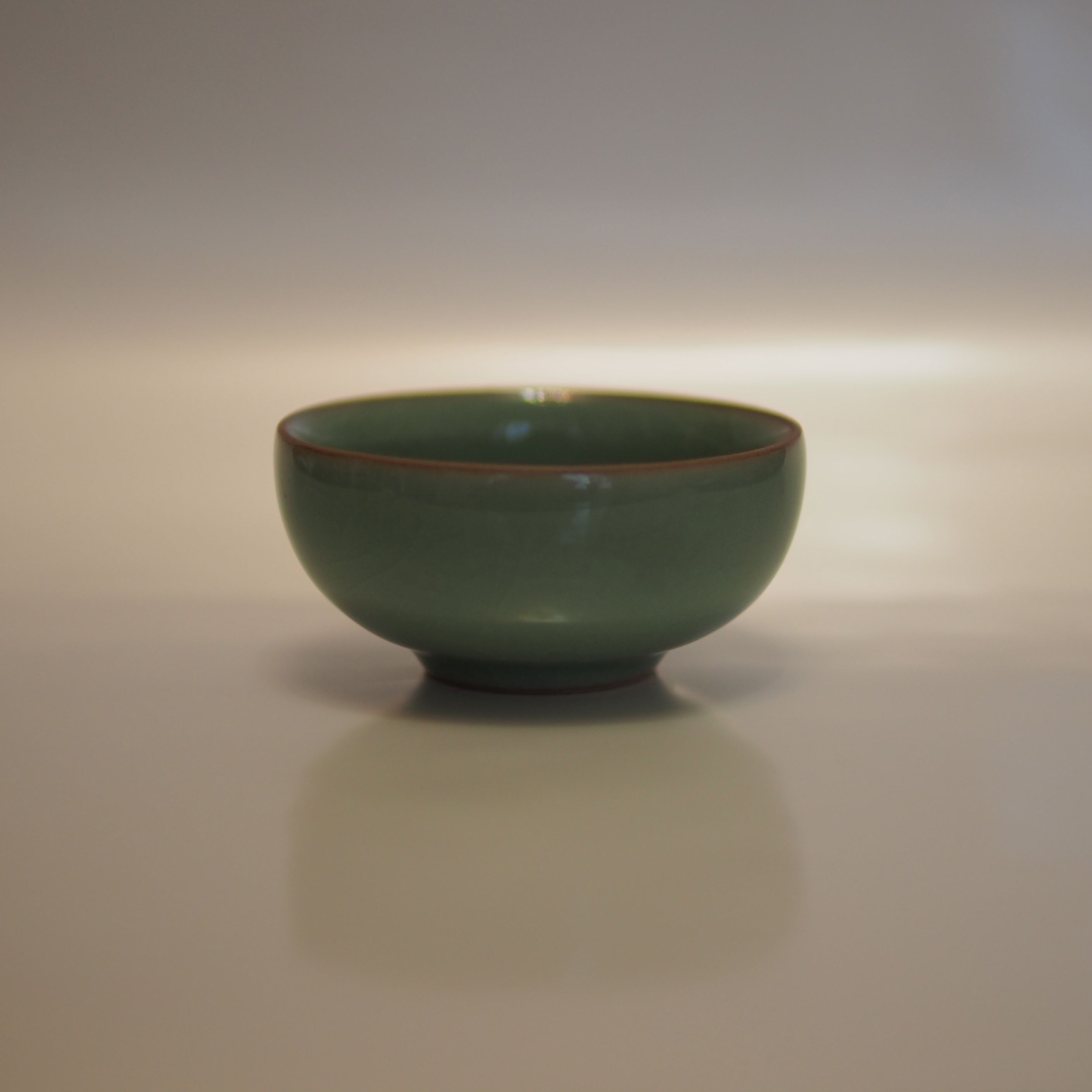
DIA75xH35, China
A modern day Jun ware cup. Jun ware is a type of celadon which dated back to the Tang dynasty and its popularity goes from the Sung dynasty all the way to the Qing dynasty. Its typical glaze has a spectrum of colour; rose purple, begonia red, aubergine purple, rooster blood red, grape purple, cinnabar red, spring onion green. Within these colours, there is a complexity of colours within.
 Mountain Folkcraft