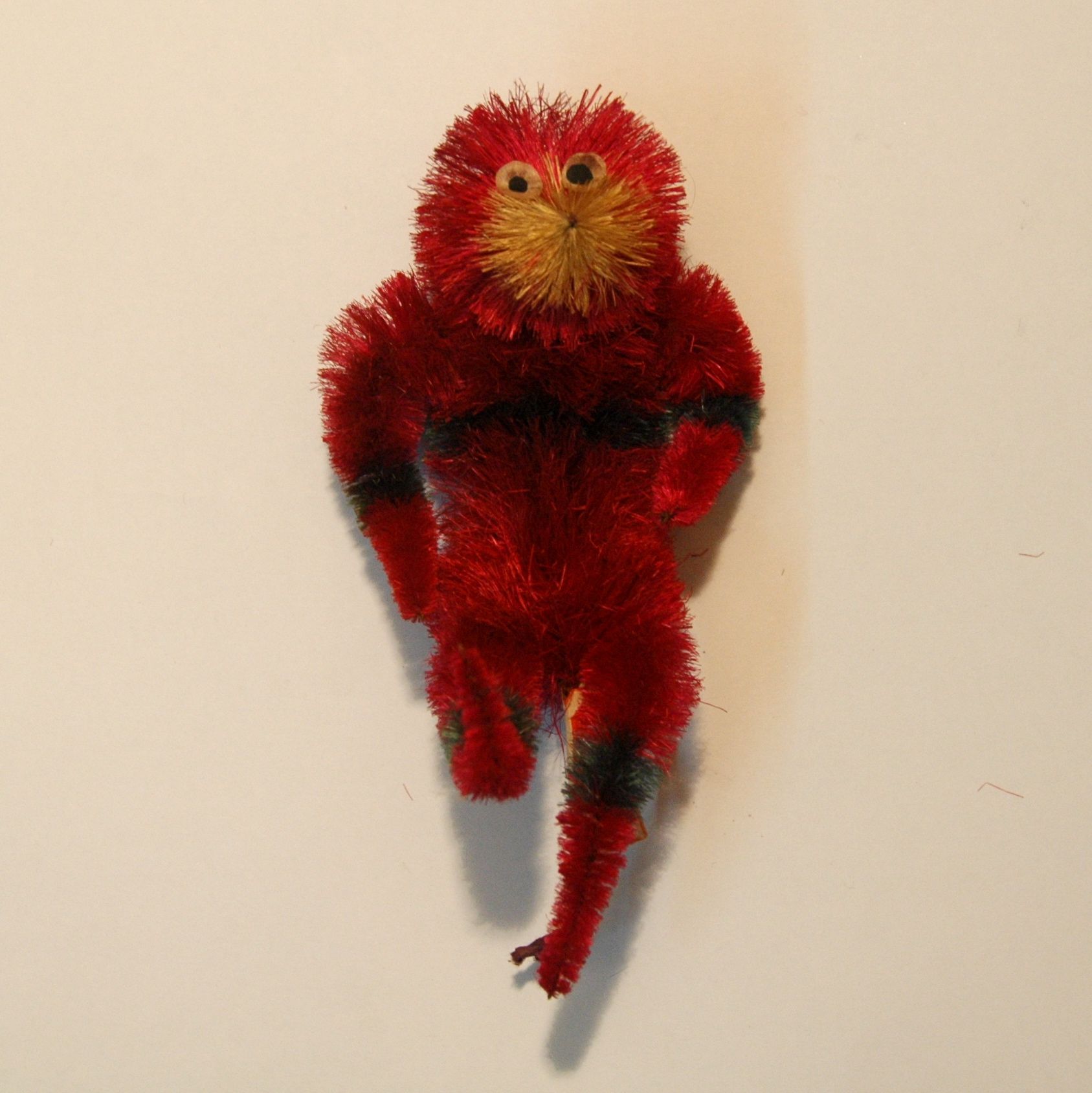
This is a mask used in the Talchum mask dance in Korea; the dances were in the past an outlet for letting out the frustration felt by the commoners towards the Yangban ruling class who were following the Confucian doctrine. The stories of the dance often mock the ruling class by ridiculing monks, the upper class and shamens. The dance would be performed at festivals, these dynamic dances are received by an equally energetic audience who would join in the dance at the finale. This is a monkey (Wonsungi) mask made of paper and fur; in the dance the monkey usually plays the role of mimicking humans.

L400xW100mm, China
The lady’s headband, Mei Lei, was most popular in Ming and Qing dynasty. Thanks to the television drama, it is often associated as the costume of the granny, Mei Lei actually was a very fashionable item for women of all ages. When it was at the height of fashion many style of Mei Lei appeared; black silk with gemstone, cloth patchwork with pearl, gold and gemstone, cloth or silk with embroidery, fur with gemstone, beaded, etc. Like the snuff bottle for men, the headband was an accessory of status symbol. As a functional item, the Mei Lei can keep the hair tidy as well as keep warm. This particular Mei Lei is made of glass bead with a cloth lining on the inside.
Jan Zi is a game that has been popular in China and some other asian countries since the Han dynasty, since 1933 it has also been included in the National Games of the PRC competition. The aim of the game is for the player to keep the weighted Jan Zi in the air using only their feet, a bit like volleyball or badminton. The game can be divided broadly into three categories; causal, style and competition. Causal; surround in a circle, passing the Jan Zi from player to player. Style; free style and fixed style competition. Competition; players to compete across a net, the game is similar to badminton where a larger jan zi is used. The upper part of the Jan Zi is made up of goose feather while the weight at the base of cloth finished up with a piece of leather.
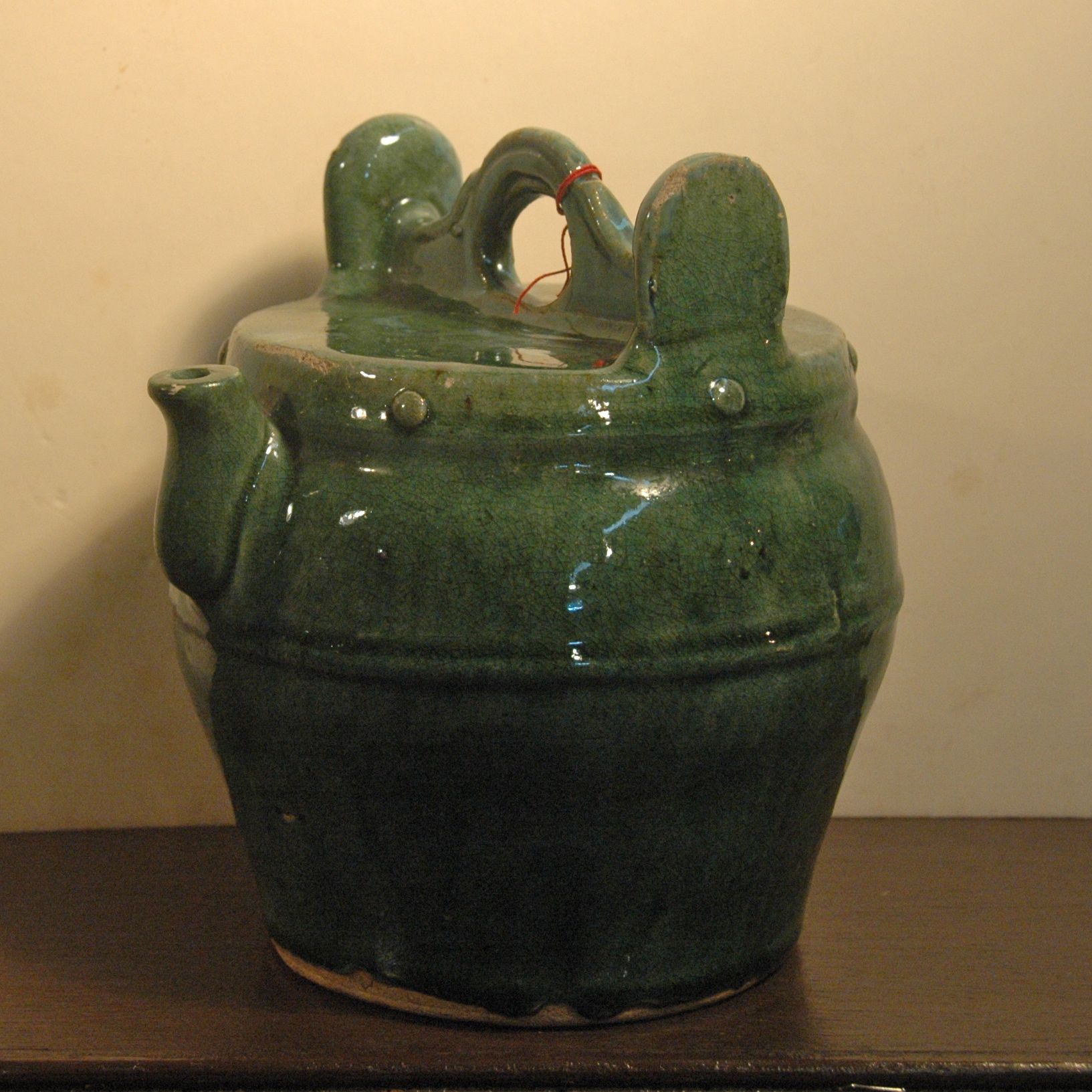
In the south western part of China days are long and hot, people especially labourer require large quantity of liquid to replenish. In the Qing dynasty, small “two cents” tea houses are quite popular in Guangzhou. These tea houses, furnished only with a few tables and benches, are frequented by coolie taking their breaks and sharing their stories. Hearty food, sweets and tea would be served which is in fact the origin of the morning dim sum. This kind of Shi Wan green glazed teapot would be found in such tea houses.
These tie dye are from the Bei minority tribe. It is started with a white piece of cotton cloth, the pattern are marked, area for the pattern are then tied tightly together with threads. When the tying is done, the cloth is first dipped into clear water and then in the dye, it is then hang to let dry and dye again, the dyeing process will take several days to complete. After dyeing, the cloth is soaked in clear water to remove any excess dye, the threads are removed and the cloth washed and the cloth stretch out. The white pattern are the are kept out from the dye from the tightly tied knots. The dark blue is the colour traditionally used for Bei tribe tie dye, we have requested for the additional colour to be made (all colours are traditional vegetable dye used by the Bei minority)
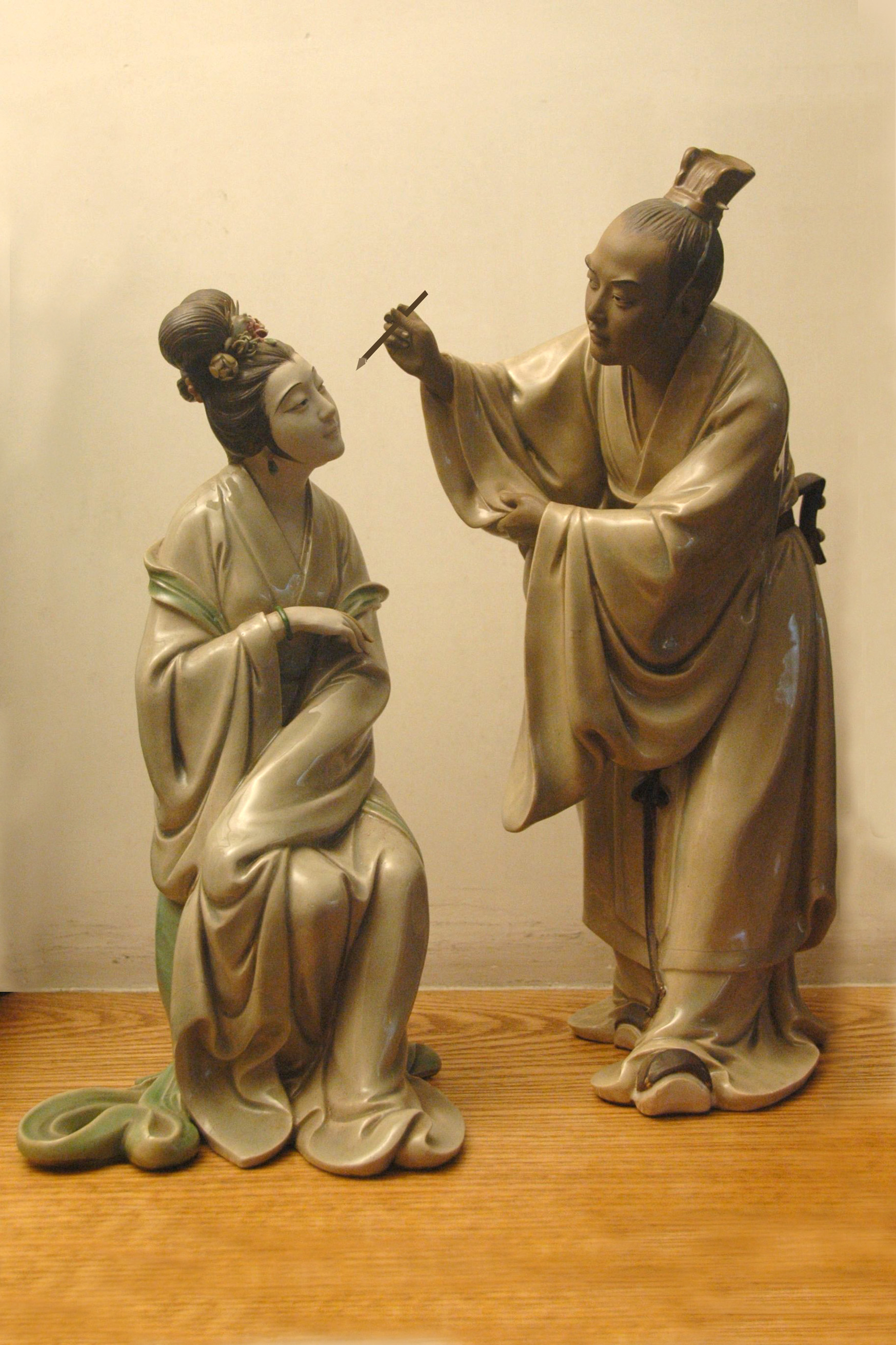
This is a story about Zhang Chang, a noble official in the Han Dynasty who kept the country at peace for many years. Being faithful and out spoken, others officials were jealous and would find faults in him to report to the Emperor. Zhang’s wife was beautiful, everyday Zhang would touch up her eyebrow before going to work. His rivals reported this to the Emperor and when he was questioned, he answered “there are more ridiculous thing a married couple would do in the bedroom, please ask me only about my duty, what I do with my wife is only my business.” Because of the nature of the story, it is a very popular subject for work of art. The Shi Wan area is famous for its pottery; its beautiful colour glaze, the fine detail and the capture of the gestures.
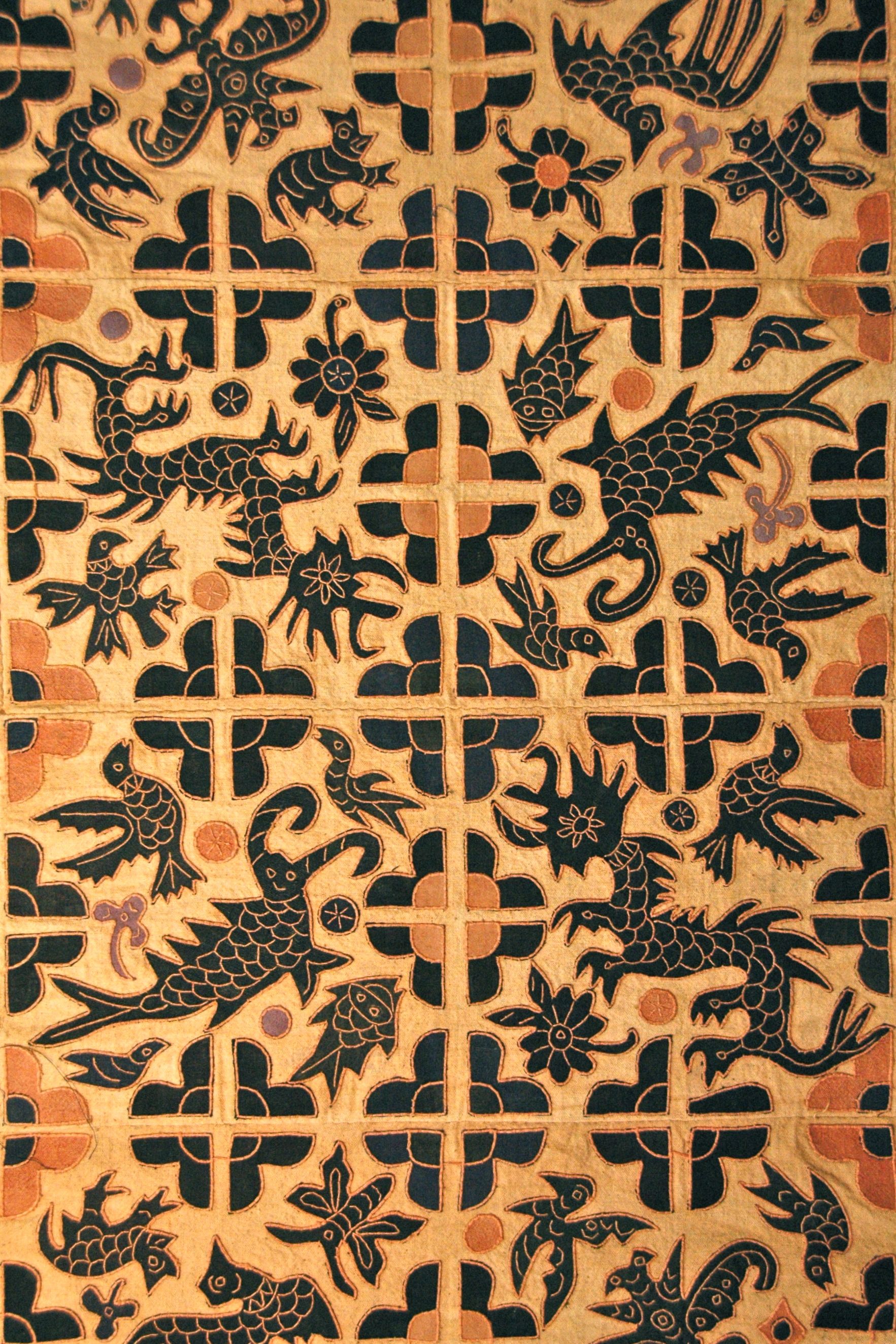
This is a patchwork embroidery duvet cover of the Miao Zu minority tribe. As the name patchwork embroidery suggests, its a combination of both type of needlework; colours are created by the patchwork and the detail added in by the embroidery. The Miao has their own individual language but not an individual text; their history is passed down the generations by word of mouth in form of songs or as a design on their embroidery. The story is symbolised by the pattern of the embroidery, for example in this work, bird = happiness and freedom, flower = young girl, butterfly = mother, dragon = power, etc.
Children like creating sounds and Chinese children are no different, in fact sound making toy is a category by itself! What can more desirable than a portable cute looking figurine that can make beautiful sounds! Both of these whistles have a tail at the end as a mouth piece, the second hole for generating the sound is located at the bottom. These ceramic whistles are in the shape of a dog and a bird.
The buddhist rosary, Mala, is used for counting the number of times the Mantra is recited. This is a 21 bead waist mala, if you count the numbers there are actually 22 beads, the additional larger coral bead in the center is known as the Guru bead, it symbolizes the Guru from whom one has received the mantra being recited. Within the 21 beads there are 3 marker beads. The main beads are made of blue sand gemstone, while the Guru and separator beads in coral.