Archives for category: tribal

L330xH20mm, Mongolia

In Mongolia Shamanism the Blue Mighty Eternal Heaven (Mongke Tengri) is worshipped, in its legend 6 treasures was given by the Blue Sky to the Mongolian, 3 big treasures and 3 small ones.  The 3 big treasures are, yurts, grassland, cattle and sheep, the 3 small treasures are, Mongolian knife, matouqin and dairy products.  Hence, the Mongolian knife is treated also as a sign of blessing on top of it function.  In the nomadic days, a mongolian man who wear it by the waist together with the snuff bottle and the Mongolian flink.  The sheath has 2 holes for keeping a pair of chopsticks, isnt this the perfect eating kit for nomadic life.

H170xW50xD70mm, Macau

I have been pondering about this figurine for a long time.  It is a Tanka god which would have been worshiped on the junk boat, keeping them safe on their fishing voyage.  But what kind of god would it be to be on a bicycle?!!  All my research led to dead ends.

A couple of days ago, I was in Tai O, an old fishing village in the remote part of Hong Kong.  I was attracted by the artworks surrounded a small convenience store, to my surprise they were created by the 84 years old owner, Mr. Lu, who was borned in Tai O of the Tanka clan.  He is like a walking history book and I took the opportunity to find out from him the nature of this figurine.  The figurine was indeed for worshiping, however it is not a proper god as such but someone in general who might harm you (giving you trouble, tummy ach, etc.)  So these people are made into figurines and offerings are made to them as if they are some kind of gods.  From the costume of the figurine, he is likely to be an official similar to today’s policeman.
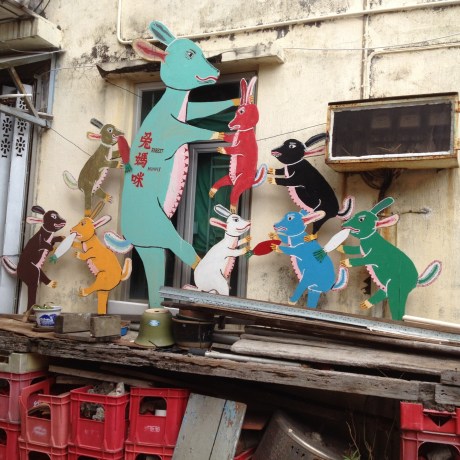
Decoration outside Tokyo Store, Tai O.
They were created each year for the Chinese New Year with the corresponding animals from the zodiac signs, this was for the year of the rabbit.
If you are visiting Hong Kong, Tai O is a great place to go if the city and the malls becomes too overwhelming.

W100xL600mm, Thailand

The Hmong tribe is one of the 5 major hill tribes in Thailand, the Hmong is a sub tribe of the Miao tribe in China.  It is believed that due to the cultural reforms brought on in the Qing dynasty, a search for more fertile land that have brought on a massive immgration in the 18th century.  According to records in the Chinese literature, the Miao tribe can be dated back to 3rd century BC.

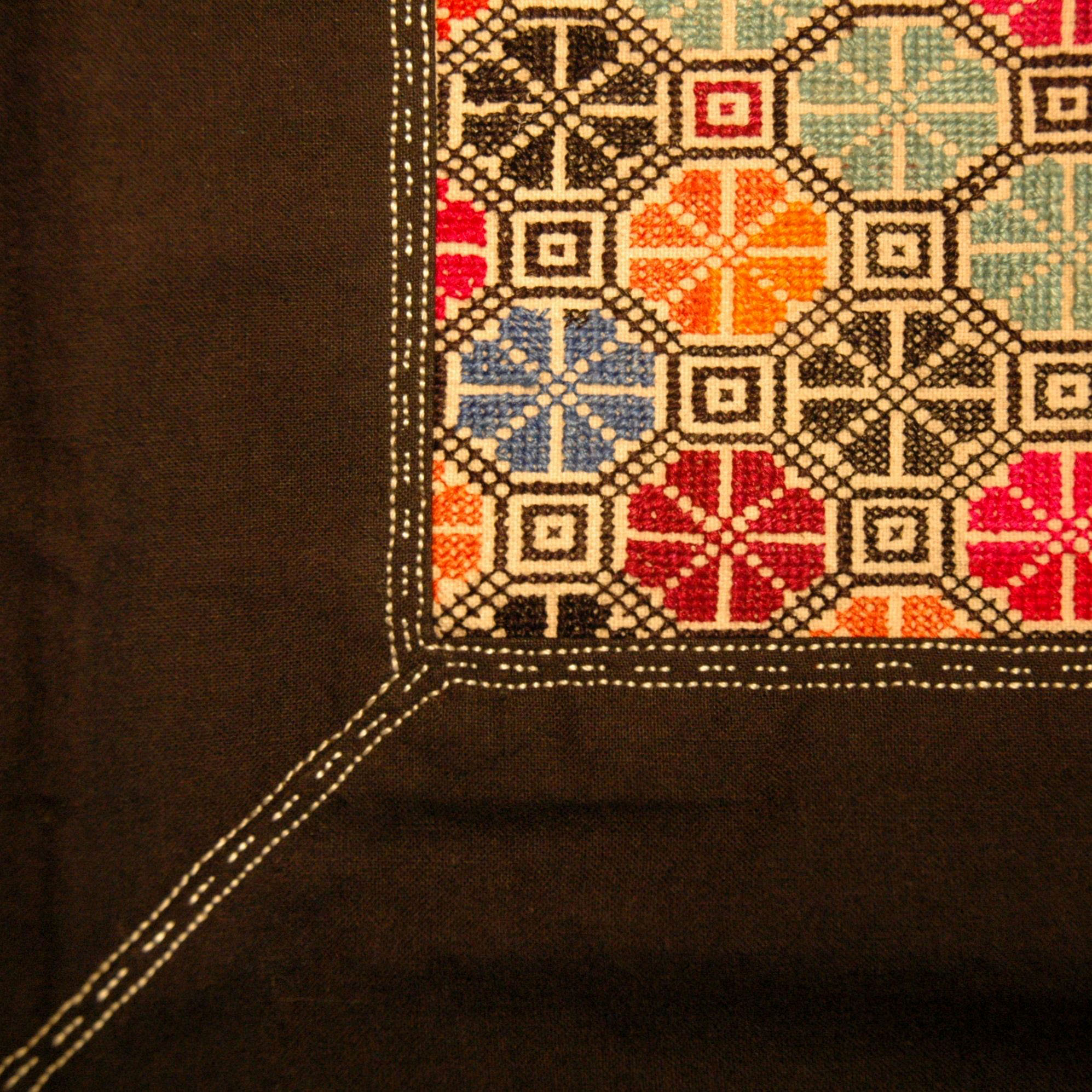
These embroidery were decorative pieces on the sleeve or collar of the Black Hmong costume, unfortunately the garments which these embroidery have been on were too worn to be kept, these are the pieces that have been salvaged.  Traditionally, these garments were worn during the Hmong New Year in November or December when the harvest has been completed.  They are combination of cross stitching and patchwork, the embroidery patterns all have a subtle symbolic meaning; (left) a protection cross, (center) flowers, (right) snails.  These embroider pieces are a perfect for any handmade projects, bags, jackets, etc.

W100xD40mm, China

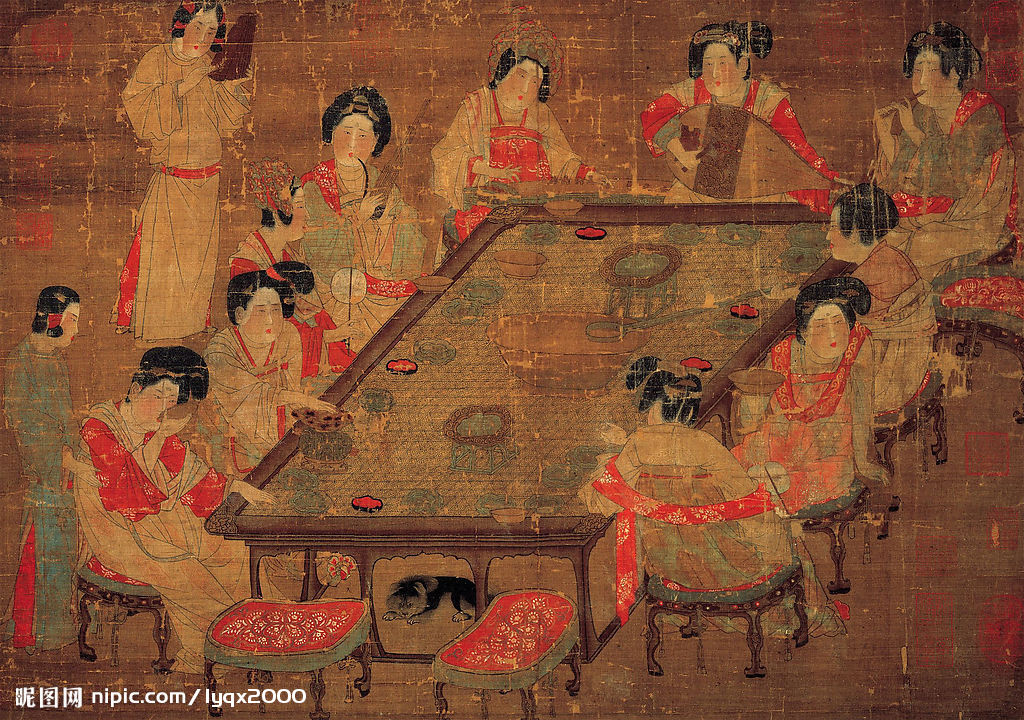
Comb in China became a special artisan trade around 700BC, the design, shape and material changes through out the different dynasty.  Apart from being a function object, it also became an accessory for hair styling in the Tong dynasty.  This can be seen in the Tang dynasty scroll “A Palace Concert” where ladies from the Emperor’s inner court were shown to be enjoying their drinks, the comb accessory can be seen as decoration in their hairdo.  This is still practiced by the minority tribes; the Shui, the Miao, the Dong tribe etc.  There is a folk tale explaining why the Shui tribe ladies have a comb in their hair, the story goes: a group of women were working hard in the fields, they have left their baby in a basket at the edge of the rice paddle.  Suddenly they heard the baby crying, they went running to see what is wrong only to found a large centipede making its way to the baby.  By the baby’s side is few wooden combs, the centipede had a look at the combs and compared the number of teeth with his own number of legs.  “Damn, i have been out numbered” thought the centipede and quickly made retreated.  Since then, the Shui tribe ladies have combs in their hair.

W600xL600mm, China

This Miao embroidery started its life as a traditional baby carrier.  The cloth baby carrier was once very popular, looking at old photos I too have spend some time wrapped up in a much less elaborated version of it.  For those who are not use to carrying baby around with belt and cloth, the Miao has converted the embroidery as a cushion cover.  The embroidery is made with cross stitch, a basic stitching of the Miao.

China

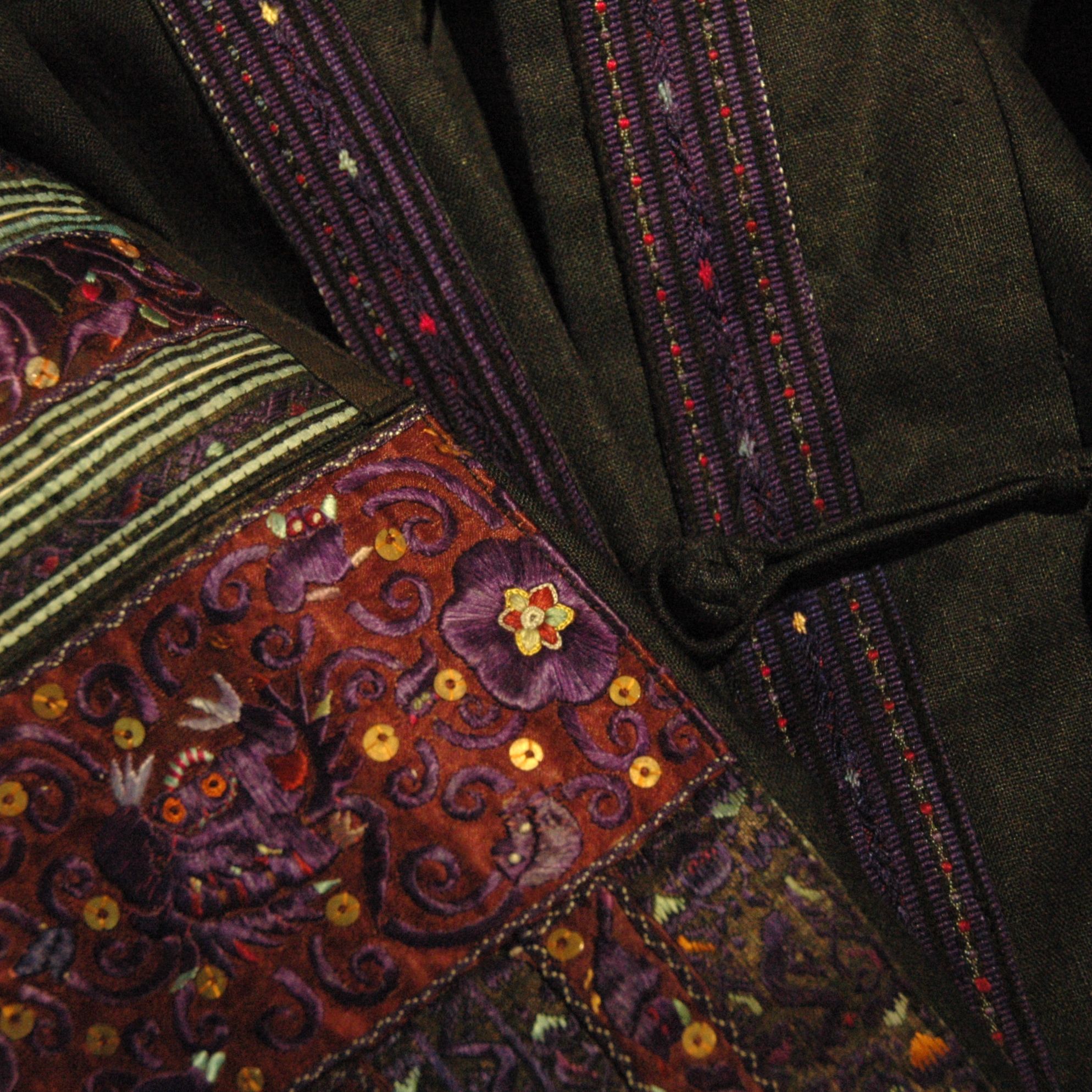
This is a jacket designed and tailored by our shop in the style of the Miao tribe.  The decorative pieces are embroidery from the Miao tribe in Gui Zhou.  The red eye creature in the embroidery (can you spot it?) is a three legged toad.  The toad represented wealth and good harvest.  This representation is shared by an old Chinese folk story; once upon a time there was an evil monster, the young Lui Hai had him defeated and it turned out to be a three legged toad.  The toad turned good and followed Lui everywhere fighting other monsters.  Lui also has a habit of aiding the poor, the legend has it that the toad has the ability of  bring wealth, at where he reside there is treasure.  The toad became a symbol of fortune and blessing.

W150xL200mm, Malaysia

This is a Mah Meri mask used for the Mayin Jo-oh mask dance ceremony.  The Mah Meri is a tribe of 2000 people living along the southwest coast of West Malaysia.  Mayin Jo-oh is a traditional dance where the Muyang (plant and animal shadowless spirits) would join in the celebration.  The dance is performed by 5 women and 2 masked men in a counter clockwise fashion.

W600xL900mm, China

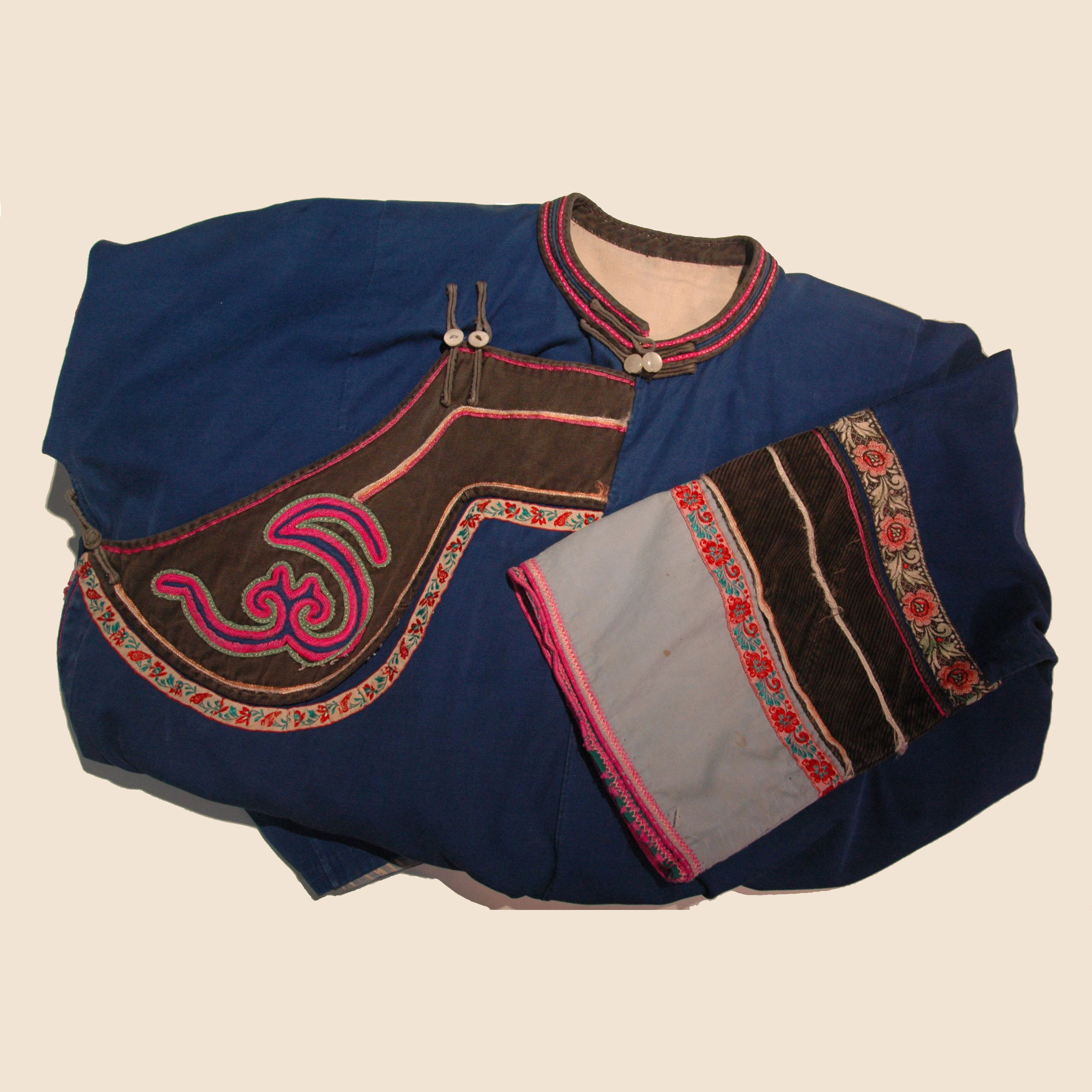
This is one of the traditional costume of the Miao tribe from the Qian Chung Nan area  In fact there are over 200 different styles within the Miao tribe, different district would have their own costumes (hairstyle, accessory, clothing, etc) which has been modified along the different dynasty.  From the Qing dynasty, embroidery, silverware, Manchurian style left or right breasted garments were added into the collection.  This garment would have been worn by a middle age female; made with blue cotton, tailored to be loosely fitted with no collar.

Textile Width 880mm, China

These tie dye are from the Bei minority tribe.  It is started with a white piece of cotton cloth, the pattern are marked, area for the pattern are then tied tightly together with threads.  When the tying is done, the cloth is first dipped into clear water and then in the dye, it is then hang to let dry and dye again, the dyeing process will take several days to complete.  After dyeing, the cloth is soaked in clear water to remove any excess dye, the threads are removed and the cloth washed and the cloth stretch out.  The white pattern are the are kept out from the dye from the tightly tied knots.  The dark  blue is the colour traditionally used for Bei tribe tie dye, we have requested for the additional colour to be made (all colours are traditional vegetable dye used by the Bei minority)

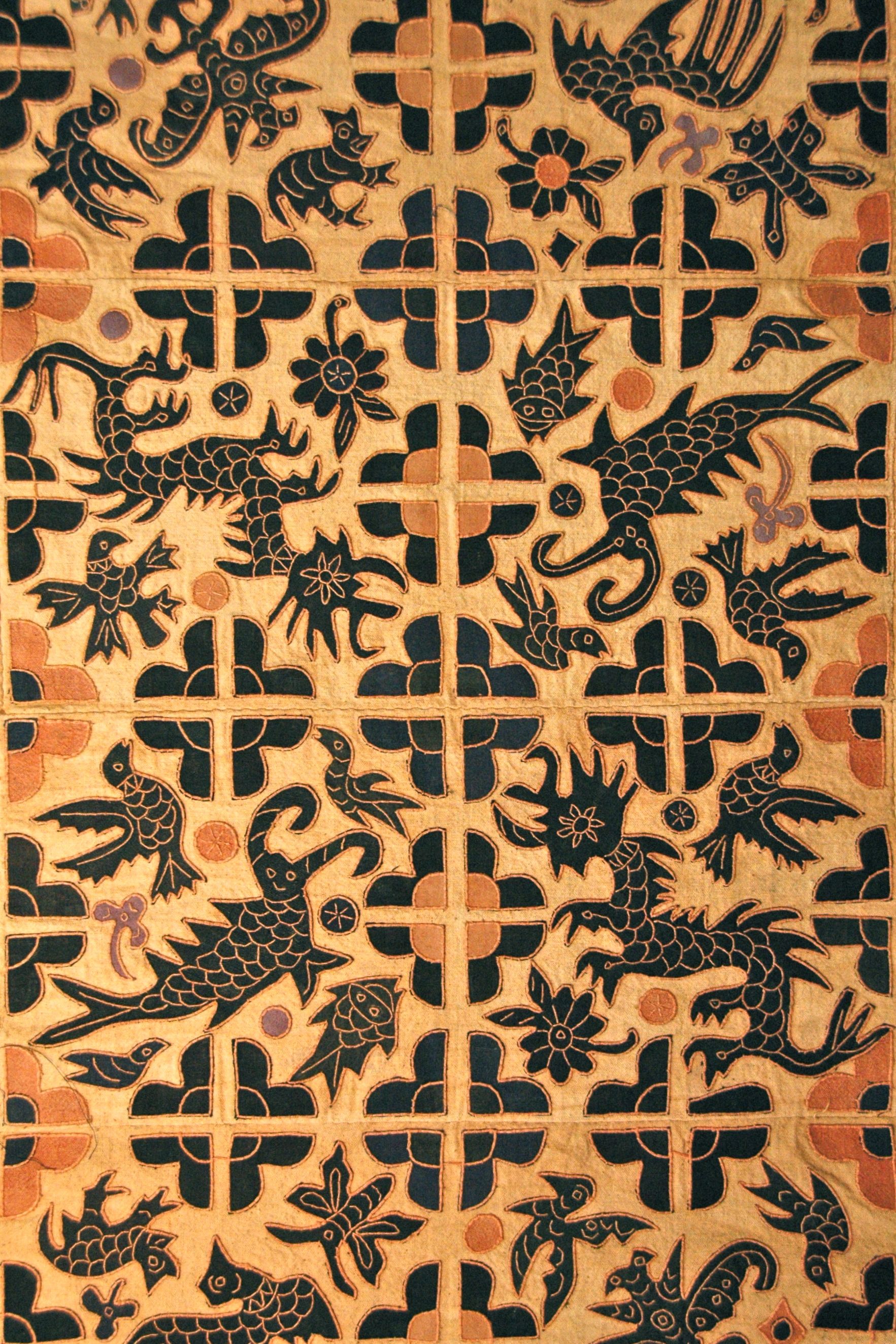
L1400xW1000mm, China

This is a patchwork embroidery duvet cover of the Miao Zu minority tribe.  As the name patchwork embroidery suggests, its a combination of both type of needlework; colours are created by the patchwork and the detail added in by the embroidery.  The Miao has their own individual language but not an individual text; their history is passed down the generations by word of mouth in form of songs or as a design on their embroidery.  The story is symbolised by the pattern of the embroidery, for example in this work, bird = happiness and freedom, flower = young girl, butterfly = mother, dragon = power, etc.