Archives for category: tribal

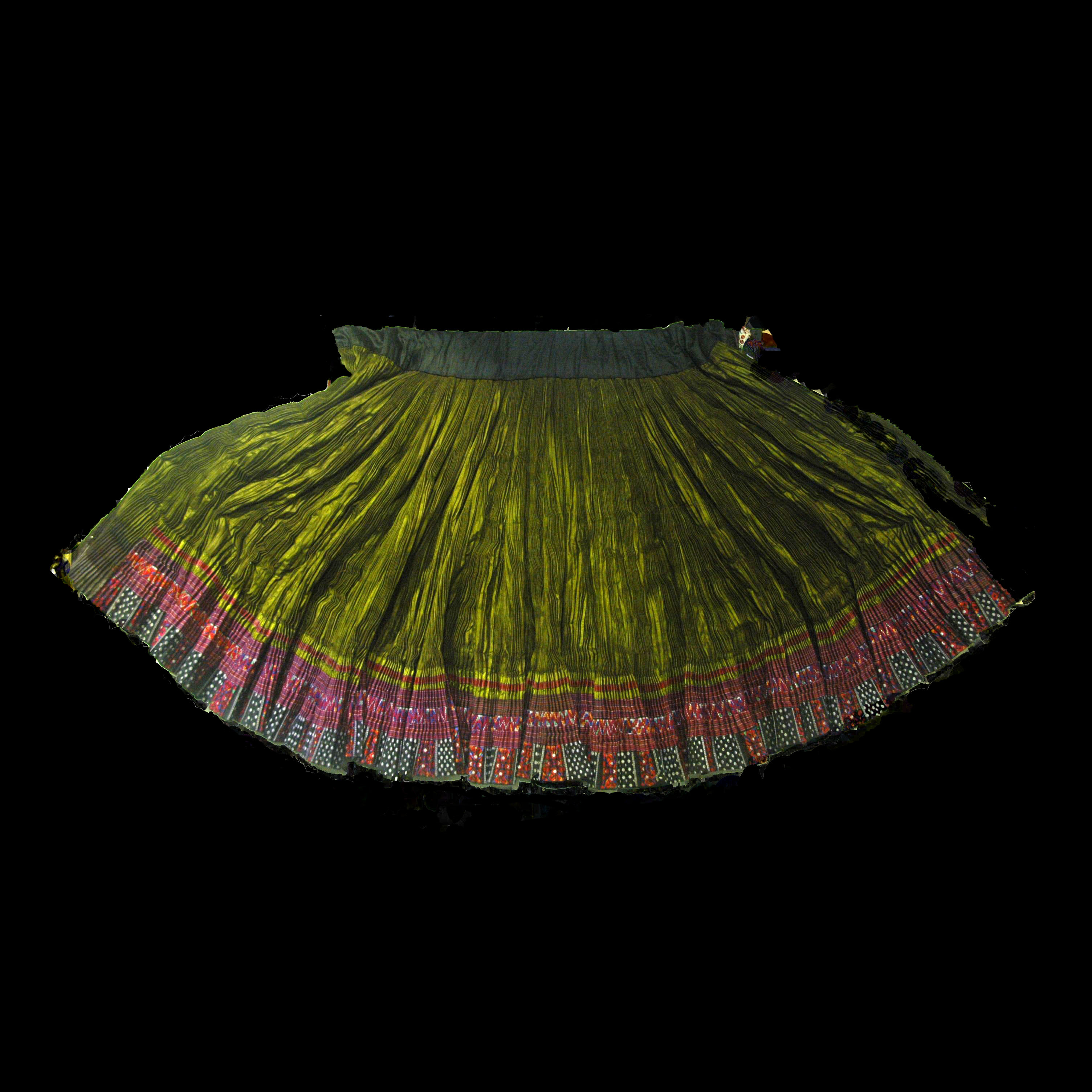
CIR650xH650mm, China

The pleated dress is part of the female Miao tribe costume.  The legend of the pleated dress goes like this; once upon a time, there was a handsome Miao hunter, one day he caught a beautiful golden pheasant and he gave it as a gift to the girl he was in love with.  The girl, Ah Beng, looking at the golden pheasant and decided to make herself as beautiful as the bird, so she weaved a cloth added embroidery and made herself a pleated dress.  The neighbors saw how beautiful she looked and soon everyone started dressing with amazing pleated dresses.

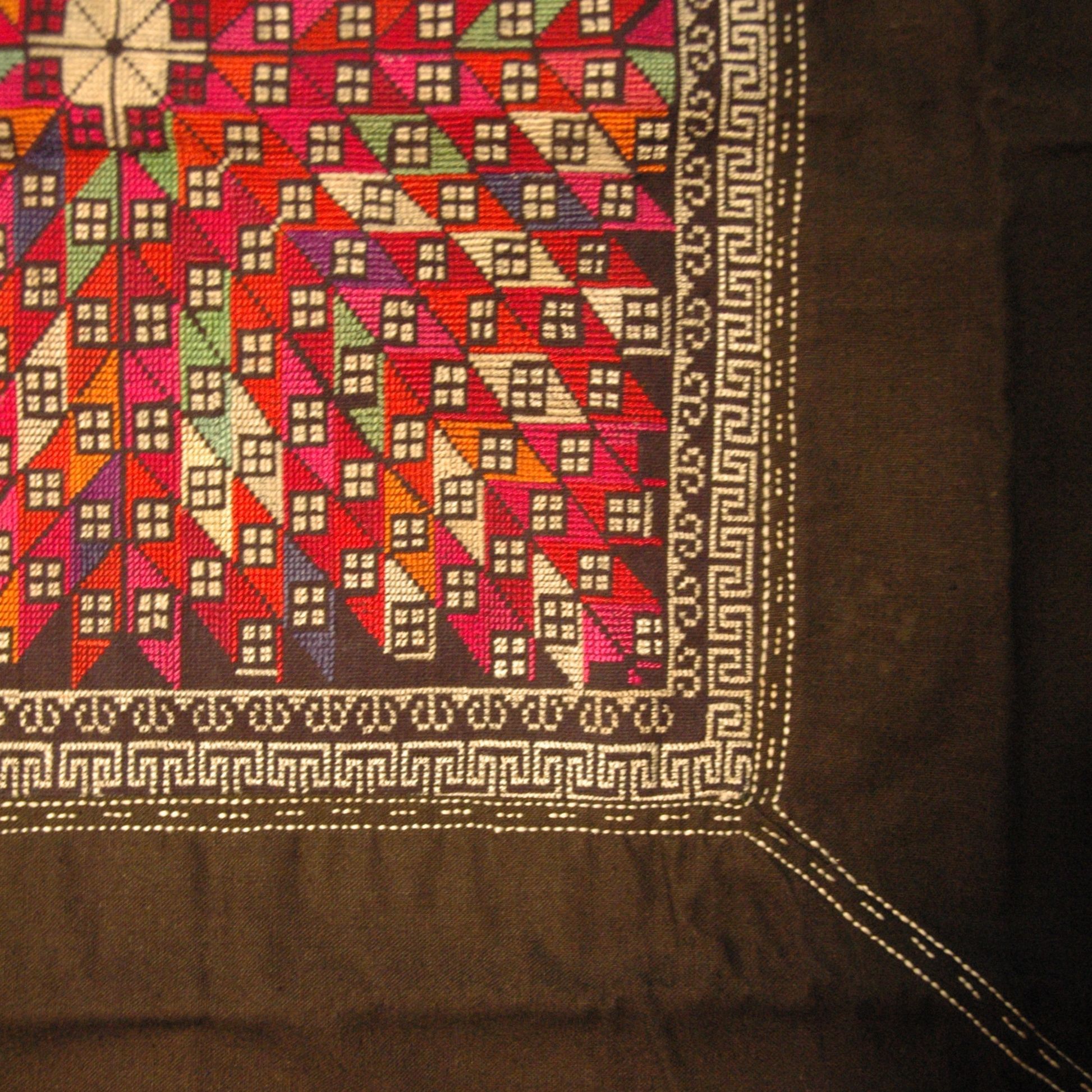
W600xL600mm, China

This cushion cover is made with the “seat” portion of a baby carrier used by the Miao tribe.  Baby carrier has been a both a functional and symbolical item in China; it enables mothers to go to the fields while keeping the baby by their side, traditionally mothers will sew the carrier by hand, the embroidery on the carrier embedded symbols of  blessing extending their love for the child.  With the modernisation of China, hand stitch baby carrier can only be  found among the minority tribes.

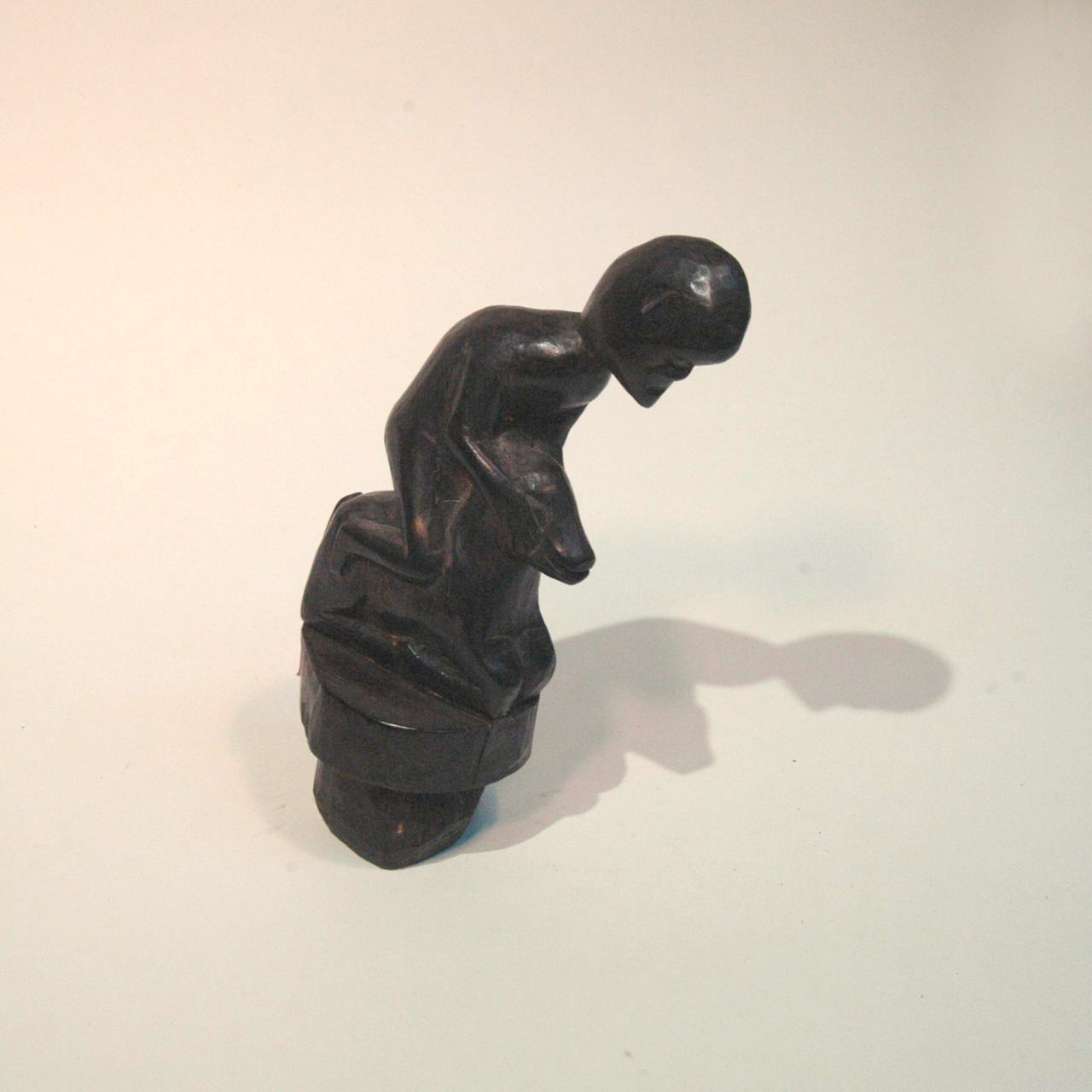
W50xD40xH120mm, Macau

We have posted this form of wooden figurine (Junk Boat God, Junk Boat God, god?) twice already in the blog, but this time with a new understanding.  Last week I was at the Hong Kong Heritage Museum visiting the Picasso Exhibition (Masterpieces from Musée National Picasso, Paris), if you are visiting Hong Kong try to prebook a ticket to see, its well worth the trip.  Now I have got you all excited, well, the effigy has nothing to do with Picasso, I found similar  figurines in the local history section of the museum and here is the describsion;

“Wooden Effigies – People who lived on land worshipped wooden tablets with the names of their ancestors written on them.  Fishermen worshiped wooden effigies instead.  the appearances of the effigies vary according to the status and sex of the deceased.  The usual practice was for a family to hire a spirit medium to conduct a ceremony, and sculpt a wooden effigy of the deceased according to her instuction.  As time passed and fishing families became better educated, wooden effigies were replaced by wooden tablets.”

If this is correct, I wonder if the person this effigy is made for had an ambition to become a concert conductor.  The explanation from the museum is quite different from the one told me by the old Tanka gentlemen in the Tai O fishing village (see Junk Boat God, god?).  Would a Tanka person help me to clarify this?

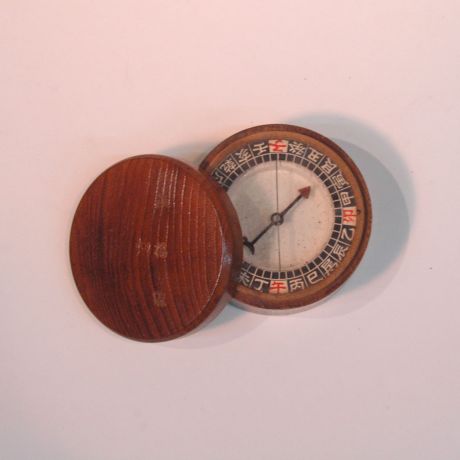
DIA100xH60mm, Hong Kong

This is a compass used by Tanka clan, a clan who lived on junk boats along the coast of Southern China and worked as fisherman.  As it is a day to day object, their compass is more simple then the traditional geomancers’ compass.  The compass for the Chinese is not only for telling the direction but related to space (direction extending to the universe) and time (past and future) as a whole

The Chinese Compass Points

Chinese navigators reduced the compass they inherited from the geomancers to its simplest form, using only 24 points, or even reducing them to 12 or 8.  The dial itself is divided into segments of 15 degrees each, represented by 24 Chinese characters.  These are the compass points, which scholars say were the basis for calculations by diviners and geomancers in ancient times.  These compass points were stabilized in their present system by at least the early 8th century.  These characters used on the compass dial are not the characters commonly used in China to represent directions.  Their origin or etymology is, for the most part, lost in the mists of antiquity.  But scholars have traced many of them back to over 4000 years ago when they appeared on “oracle bones” used to look into the future.  12 of the characters ;  子 zi, 丑 chou,  寅 yin,  卯 mou, 辰 chen, 巳  si, 午 wu, 未 wei,  申 shen, 酉 you,  戌 xu, 亥 hai, have been traditionally grouped together and referred to as the 12 branches.  8 of these character 甲 jia, 乙 yi, 丙  bing, 丁 ding, 庚 geng,  辛 xin, 壬 ren,  癸 gui,  are part of the traditional grouping knon as the 10 stems.  The remaining 4 乾 qian, 坤  kun , 艮 gen,  巽 xun derive from one of the earliest Chinese works on divination, the I Ching.  In very ancient times, the 12 branches were applied to the months of the tropical year and the 10 stems were used to name the ten day week.  Diviners used the stem/ branch combinations of the day, month and year of birth as basis for their calculations and conclusions.  The 12 brances are also associated with the Chinese zodiac; the rat, ox, tiger, hares, dragon, serpent, horse, gost, monkey, cock, dog and bear.  Each of htese creatures is supposed to exercise an astrological influence over a particular 2 hour period of the day, and one year out of every 12.

子 zi – North, rat, 23:00-01:00
癸 gui – N15°E
丑 chou – N15°E , ox, 01:00-03:00
艮 gen – NE
寅 yin – N60°E, tiger, 03:00-05:00
甲 jia –  N75°E
卯 mou – East, hare, 05:00-07:00
乙 yi –  S75°E
辰 chen –  S60°E, dragon, 07:00-09:00
巽 xun – SE
巳  si – S30°E, snake, 09:00-11:00
丙  bing –   S15°E
午 wu – South, horse, 11:00-13:00
丁 ding – S15°W
未 wei – S30°W, sheep, 13:00-15:00
坤  kun – SW
申 shen – S60°W, monkey, 15:00-17:00
庚 geng – S75°W
酉 you – West, cock, 17:00-19:00
辛 xin – N75°W
戌 xu – N60°W, dog, 19:00-21:00
乾 qian – NW
亥 hai – N30°W, pig, 21:00-23:00
W70xD60xH270mm, Borneo, Indonesia

This is a hampatong from Borneo, the Dayak tribes create these wooden figurines portraying humans, animals and supernatural creatures.  The hampatongs can be broadly divided into two types; the tajahan (ancestral figures) and pataho (guardian figures for protecting the tribe).  This particular figurine is a tajahan.  Each figures are have their own function and meaning, for the tajahan figures the craftman would capture the details of the particular ancestor.  The animal on which the ancestor is sitting on is most likely to be a goat is believed to be sacred.  This is a protective amulet of a male ancestor sitting on a chair. the bread are made from coconut husk.

Textile width 380mm, China

This checker fabric is from the Bu Yi tribe in China, they are famous for their hand woven checker pattern fabric and their wax dyed fabric, they are one of the remain tribes whom the tradition of cloth weaving remains a strong tradition.  The checker pattern cloth is used for head wrap, bed sheet and clothing; though they are all checkers, the use are very specific.  Each pattern has its own story, this particular cloth is for making clothes.  Instead of going online or glue to the telly, girls of the Bu Yi tribe would weaving as their past time during the evening; the motivation comes from the preparation of the dowry which has to include the minimum of bed sheets, duvet cover, 10 costumes.

W90xL1900mm, China

This hand woven band is the belt for the costume of the Miao tribe.  Just after lunar New Year is the Cai Hua Shan festival of the Miao tribe.  Different clans will come together to the common area between the different villages, a large pine or cypress tree will be selected as the “flower stem”.  Before dawn the person in charge, “head of the flower stem”, will take on the task of erecting the tree post and tying ribbons and flower on the top.  This job is done by commonly agreed most kind hearted person (with such a task, I am not surprised).  The day begins with the “head” tossing wine to everyone and giving them blessing; fire crackers, drums are played to signify the start of the festival, followed by days of dance, music and laughter.  It is also the chance for dating, the men will give a woven band to the lady he desire and in return the lady will give him a embroided handkerchief or headwrap.

W600xL600mm, China

This cushion cover is made with the “seat” portion of a baby carrier used by the Bia tribe.  This carrier is made with the patchwork technique, the coin pattern is made by folding strip of cloth into an oval shape and stitch over a colour patchwork.  Traditionally patchwork is a blessing for a baby, mother would made a patchwork duvet using clothes gathered from a varies families, wishing the child will have the blessing from these families.

W80xH180mm, Sumatra, Indonesia

Apology for yesterday’s misinformation, this is actually the stopper of the guri guri potion container, a container of magic for the Batak tribe.

The magical potion is known as guri guri, used by the datu to perform good as well as magic with evil intention.  The guri guri is one of the most sacred object of the datu.  The figurine is a human riding on singa.   Singa is a mythological creature that is benevolent and powerful, it is described to be part human, part buffalo, part crocodile.

Textile width 380mm, China

We have a collection of the fabric from the Miao tribe, as they are hand woven, unlike the machine woven fabric, their textile width is quite narrow.  They are cotton fabric that would be normally used for making garments for the tribe.