Archives for category: tools

L140mm, China

There is the English idiom “born with a silver spoon in one’s mouth” describing someone from a wealth privileged family.  In China where silver spoon is not a common utensil, for such a person one would describe him as “born with a golden key in one’s mouth”.

CIR900mm, China

This is the standard 108 beads buddhist rosary, the rosary can be of different numbers of beads 21, 42, 14, 27, 54 with 1080 being the longest. The 108 beads is aimed to defeat the 108 earthly desires;

aggression
ambition
anger
arrogance
blasphemy
calculation
callousness
capriciousness
censoriousness
cruelty
cursing
deceit
derision
discord
egoism
envy
excessiveness
furtiveness
garrulousness
grudgingness
hard-heartedness
haughtiness
high-handedness
ignorance
imposture
impudence
inattentiveness
indifference
insatiability
intolerance
intransigence
lack of comprehension
manipulation
mercilessness
obsession
obstinacy
prejudice
quarrelsomeness
rage
ridicule
sarcasm
stinginess
stubbornness
unkindness
unruliness
unyielding
vanity
violent temper
wrath

(also see entry for buddhist rosary, buddhist prayer beads)

L330xH20mm, Mongolia

In Mongolia Shamanism the Blue Mighty Eternal Heaven (Mongke Tengri) is worshipped, in its legend 6 treasures was given by the Blue Sky to the Mongolian, 3 big treasures and 3 small ones.  The 3 big treasures are, yurts, grassland, cattle and sheep, the 3 small treasures are, Mongolian knife, matouqin and dairy products.  Hence, the Mongolian knife is treated also as a sign of blessing on top of it function.  In the nomadic days, a mongolian man who wear it by the waist together with the snuff bottle and the Mongolian flink.  The sheath has 2 holes for keeping a pair of chopsticks, isnt this the perfect eating kit for nomadic life.

DIA230xH30mm, China

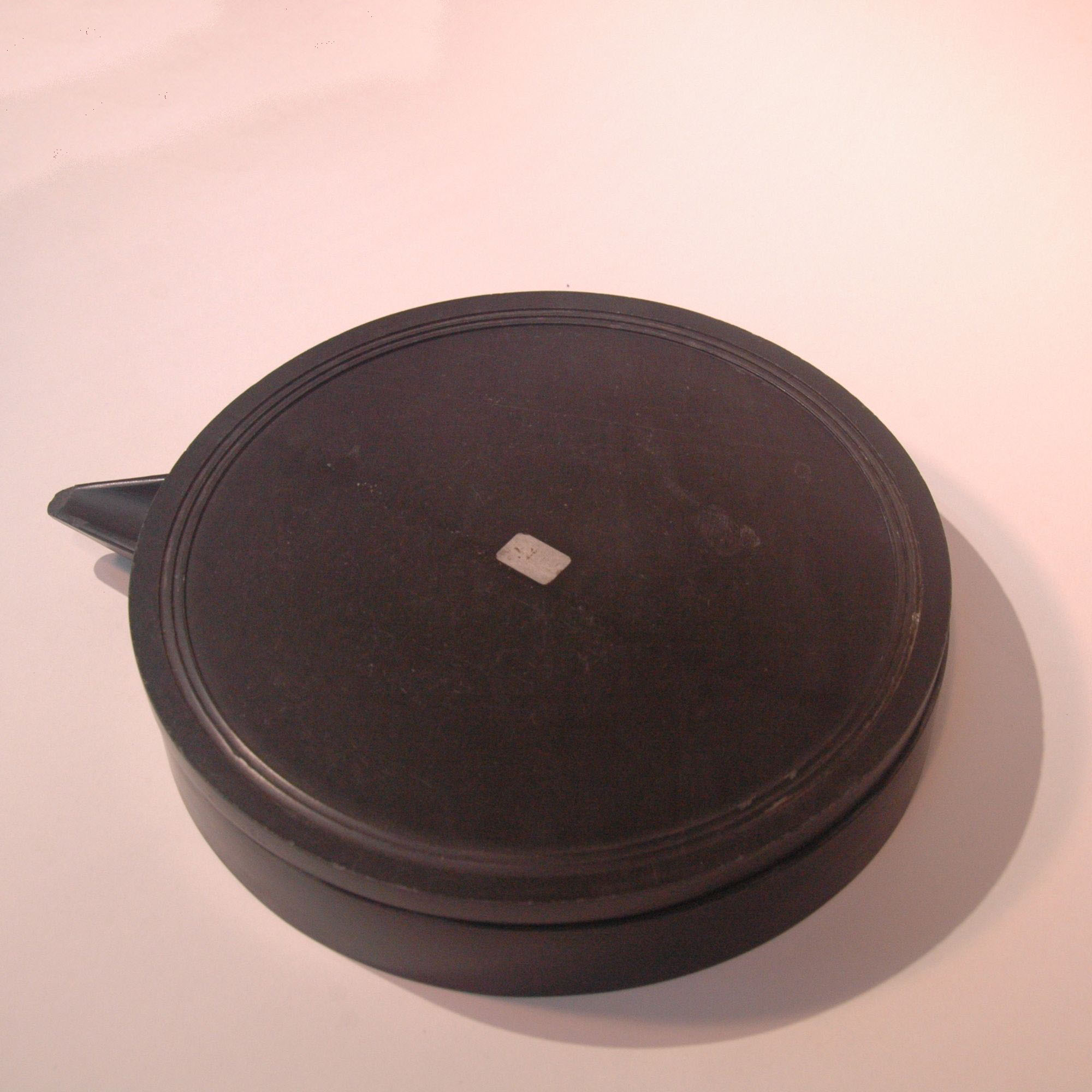
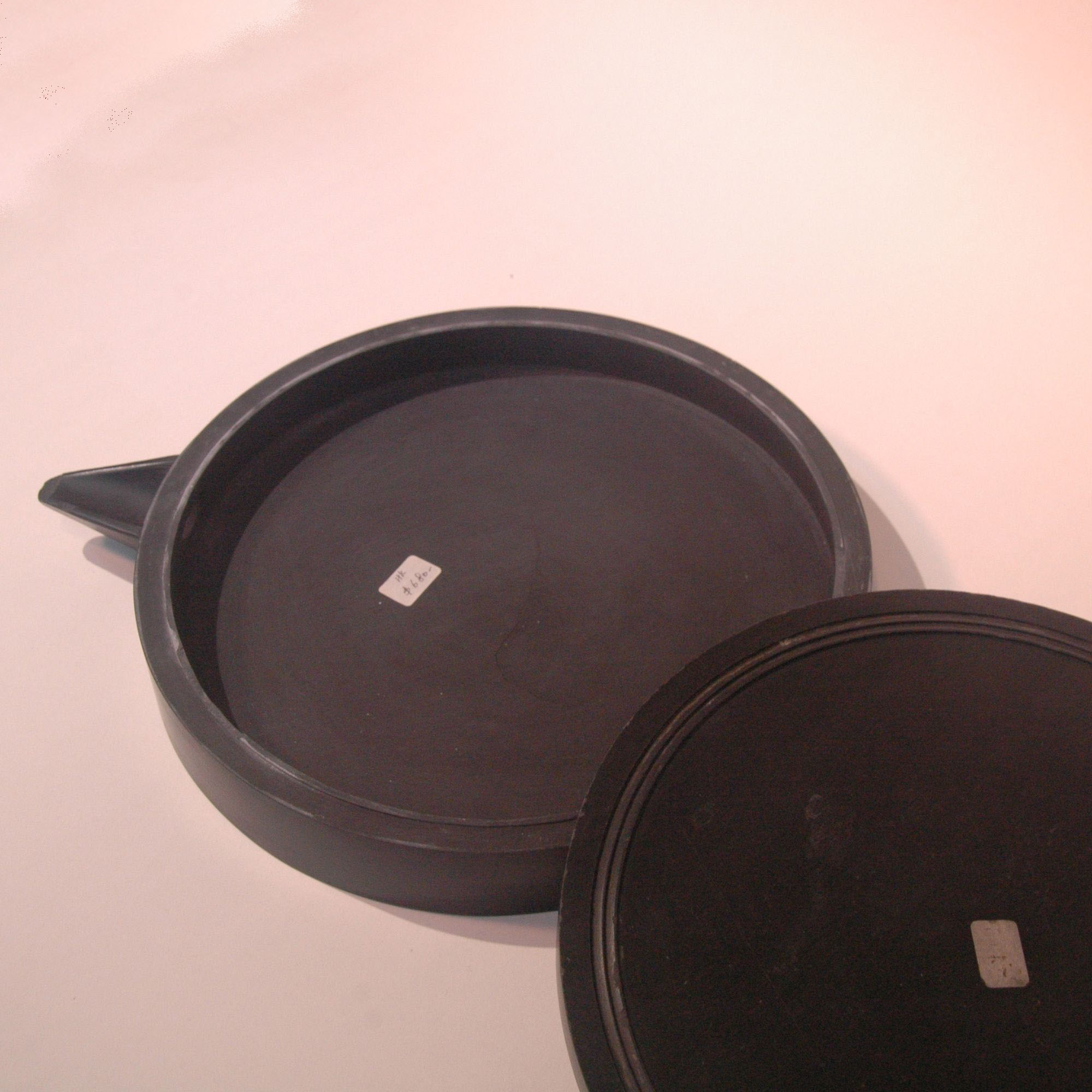
Yan, inkstone is one of the 4 stationary treasures of China, i.e., brush, ink, inkstone, paper.  The main function of the inkstone is for grinding the ink stick in preparation for the ink.  Before the inventory of inkstone, people would getting the pigment directly from the ink stick, this however is very restrictive in the size of the calligraphy word or painting, the brush would have ran out of ink when writing bigger size word.  To over come this problem, in Shang dynasty (17th century BC), flat and hard object (stone, bronze, jade, iron, brick) would be used for ink grinding.  Stone is the far most popular and liked material for inkstone, the stone type are also very selective.  This inkstone is a more utilitarian type, having no carving and the addition of a spout, its is most probably used to make a large quantity of ink for task like wood block printing.

L75mm, China

Tobacco was not introduced to China until the 17th century (imagine a smoke free China!), it very quickly became a hit in the Guangdong region through trading with the Philippines (then Spanish colony).  Nowadays, the paper wrapped tobacco cigarette are held between 2 fingers to be smoked, in old China smoking was a refined business. There were different tools for smoking (see water pipe), one of the common tools is the Yan Dai Guo, it consists of a pipe stem, a tobacco sac (the chamber of the pipe) and a mouth piece.  In the old days both men and women would carried with them these smoking items together with a tobacco bag (dried tobacco storage), there is an old saying that goes; tobacco sac is inseparable from the tobacco bag, the old chap is inseparable from the old wife.  The pipe stem for man is normally 150mm in length and the ladies very longer and has a smaller mouth piece.  This jade mouth piece would have been used by a middle class lady, the material of the mouth piece would tell a lot of the social status of the person (just as watches is for today), a common folk would use bronze while the well off would use materials such as jade, ivory, silver or gold.

TOBACCO SERIOUSLY DAMAGES HEALTH

DIA180xH80mm, China

This is a pewter sandalwood burner.  Sandalwood is a fine grain plant which can retain its fragrance for decades, however it is also one of the slowest growing tree.  To use the burner, lay in a line small piece of sandalwood (size of a toothpick) on the burner, covered with sandalwood powder and light at one end.  Wood from the center of the bark and its root has the strongest fragrance.

DIA550xH600mm, China

This small umbrella has a silver handle, a structure is made of bamboo and yawn, the shade is non-waterproof, to top it off, it has 2 pom pom on the top of the cap.  This is in fact a Chinese dance umbrella.  Around the Sung dynasty, merchants from the northern province acquired the umbrella from the south and brought them home as a novelty, in order to show it off a dance show is invented.  The moral of the story is – product promotion started early in China.

W390xL70xH20mm, Japan

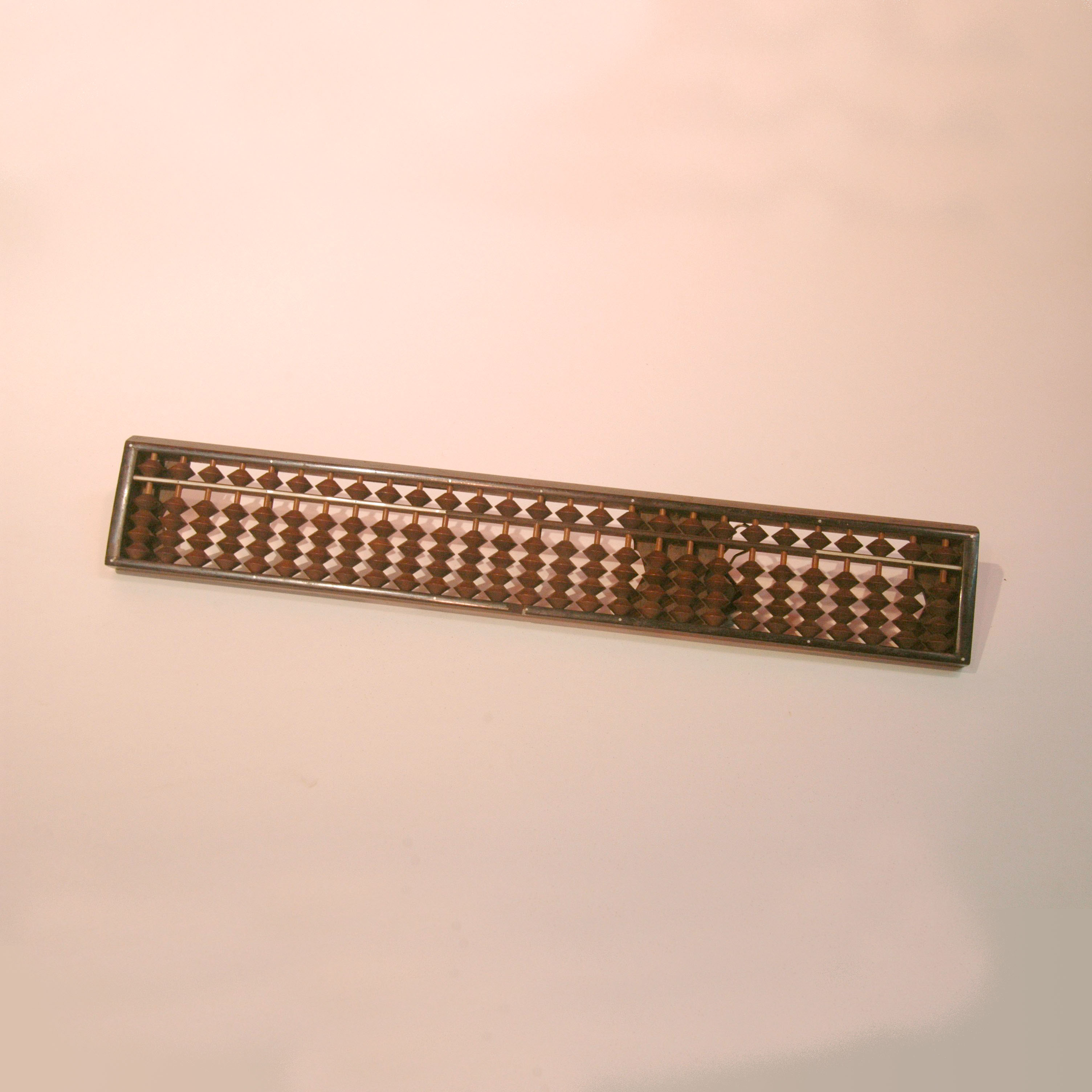
This is a Soroban.  A calculation device.  The Japanese version of the abacus.  The number of rods are always of odd number, starting from 13, then 21, 23, 27 (this one) and going up all the way to 31.  The more rods will allow for more digits in the calculation.  The beads on the rods are separated in 2 rows by the reckoning bar; on each rod below the bar are 4 earth beads, above it there is 1 heaven bead.  Each rod represent the same digit, with 1 heaven bead = 5 earth beads, so each rod can go up to 9 before moving to the next digit.  The Soroban is still currently in use in Japan, it is reinforced by being taught at school and as part of the entrance requirement to public cooperation.

L550xW80mm, China

This is a chinese traditional scale used for measuring light weight items such as gold or herbs.  The scale work by the concept of a lever; the item to be weight on one end and the weight on the other.  The weight is slide along until the scale is balanced and from the markings of on the rod, the weight of the item can be told.  The small red tassels are the points for pivots, changing the pivot points will give provide a different range for the scale.  This is a portable scale with a custom made bamboo casing.  The earliest found scale was dated around 700BC; the unit weight for the scale has been changing since, this scale is based on 16 tael to 1 catty, 1 tael = app 37.8g which is the current unit used for the hong kong wet market.

L220mm, China

Chopstick has been around in China for more than 3000 years; there has been many material used for making them, wood, bamboo, ivory, bone, lacquered, silver, gold, jade and of course the recent plastic and stainless steel version.  It is commonly believed that silver is used as a material for its ability to detect poison.  Perhaps it is the tarnishing of the silver from the sulphur in arsenic that made the name of the silver chopstick.  Please dont be alarmed by the tarnished silver on this pair of chopstick, it is due to natural oxidation from its age and not from any poison.  The legend of the silver chopstick goes like this; the famous politician of the Zhou dynasty Jiang Zi Ya was once only interest in fishing (with a straight hook) and nothing else.  His wife got fed up with his idleness and decided to kill him and to marry someone else.  One day as usual, he came home empty handed after fishing, his wife had prepared a spiked up meat dish for his supper, just as he tried to grab the meat a bird flew in and packed on his hand.  The bird did it again and again as he tried to go for the meat, sensing something is out of the ordinary, he pretend to chase the bird and left the house.  Up a hill, the bird told him only to eat with the two sticks on the ground where it stood.  Jiang return home and pick up the meat with the sticks as he was told, smoke appears and his wife fainted.  His eating sticks got famous and everyone started eating with chopsticks.  The moral of the story …. men, dont go fishing too often + remember to bring at least a fish home (even if you have to buy it from the supermarket).