Narcissus, daffodil, is a very popular plant in China especially for the Chinese New Year. So popular that there is a special container for its presentation. A month before Chinese New Year, one would find daffodil bulbs for sale in the market. The bulb would be placed inside the bowl, secured by pebbles and 2/3 of it cover with water. Up till the days before flowering, the water would be replaced daily, when it started to flower every 3 days. When the shoots started to appear, locate the bowl to a sunny but cool place. As daffodil is part of the New Year decoration, it is almost essential that it is blooming with flowers on New Year’s day, this normally takes 25 days at 20C, if lacks behind a bit of warm water on New Year’s eve would normally do the trick. And if all fails, one can always pay a bit more for the perfectly planted daffodil at the flower market.
W200xD150xH500mm, China
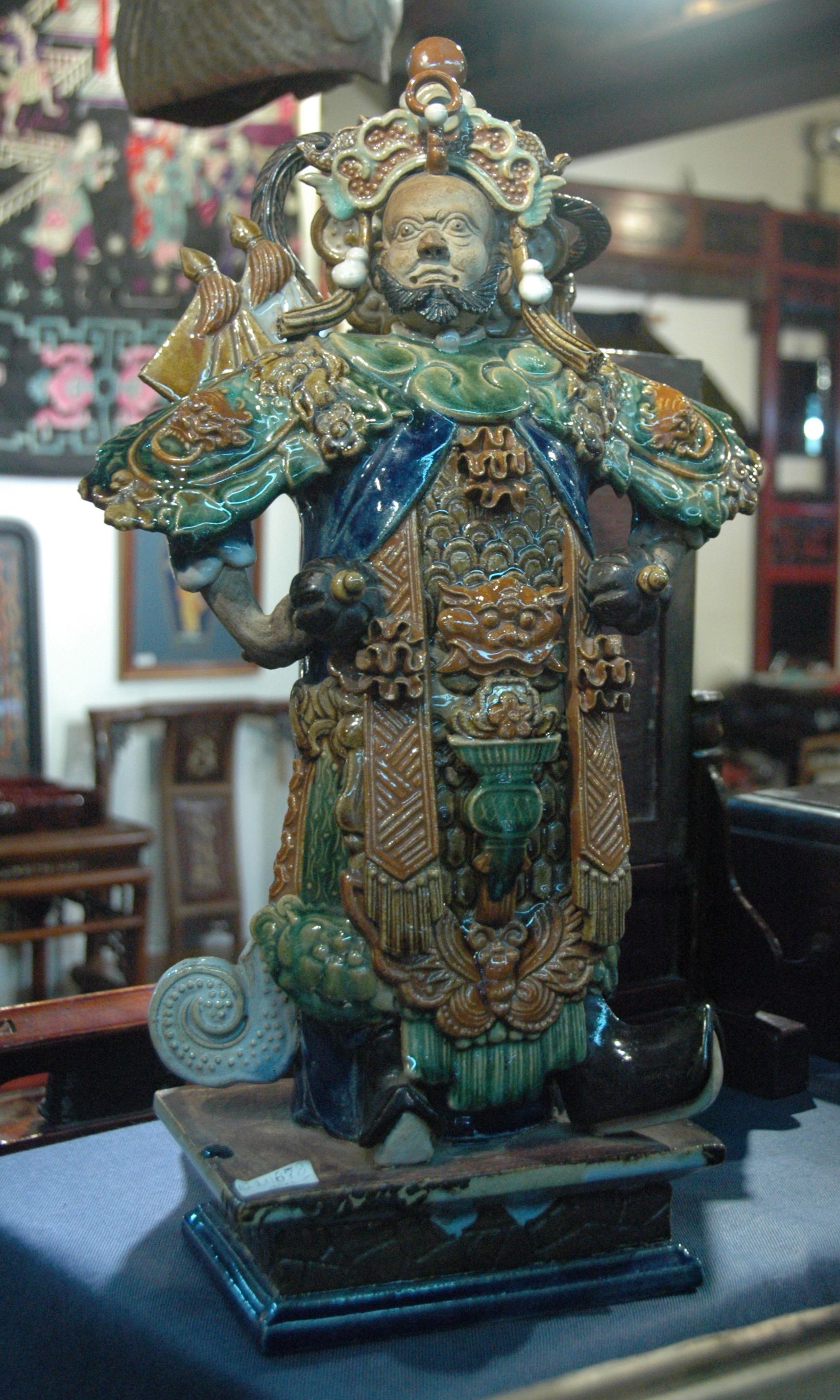
This figurine was made from the famous Shi Wan pottery town in the Guang Dong region. Their figurines are typical to have a glazeless delicate facial and hand depiction while contrasting with an expressive and bold glazing on the clothing. Another example can be seen in an earlier post, “Shi Wan Figurines“.
The general depicted here is one of the “3 good blokes” of the Tang dynasty, Pei Yuan Qing, his weapon is a pair of golden melon hammer.
You will be seen in this clip how the weapon is being used (well at least in the Beijing opera). This is a graduation show from the students of the Beijing opera school.
My dog spike has started sighing, ok ok, I promise no more Chinese opera reference for a while.
W40xD50xH120mm, China
This is a pair of brown glazed candle stand with a lion figurine. The lion style candle stand has been popular since the Jin dynasty (at that time the lion is more chubby and the candle holder is attached to the figurine itself). The Chinese believe that the lion is the king of the animals and thus can offer protection, aside from the other animals also from evils.
D60xW120xH150mm, China
To continue with the chicken theme, we have a flower vase from the Ci Zhou kiln. Ci Zhou kiln is the largest folk kiln in northern Chinese which dated back to the Song dynasty; it is famous for its black on white pottery (no, I did not set the camera to nostalgic tone) which was a break through in glazing tradition at the time, some believed that it set the foundation for the now well known blue and white porcelain ware. White slip is applied to the semi dried clay work, a iron based black slip that contained iron is painted over to add detail to the vase, a clear glaze is applied after the first firing.
DIA150xH220mm, China
This pesto was used as be a medicine grinder; in the old days every household would have a grinder like this for grinning the certain Chinese medicine, herbal, shells, mineral, hones, bones, etc.
The most famous figure for medicine grinding is however not a doctor as we might have thought, it is in fact a rabbit, the Jade Rabbit (see earlier post) that lived on the moon. Can you spot the rabbit? This image on the moon can be seen on lunar 15th of every month.

W100xD70xH130mm, China
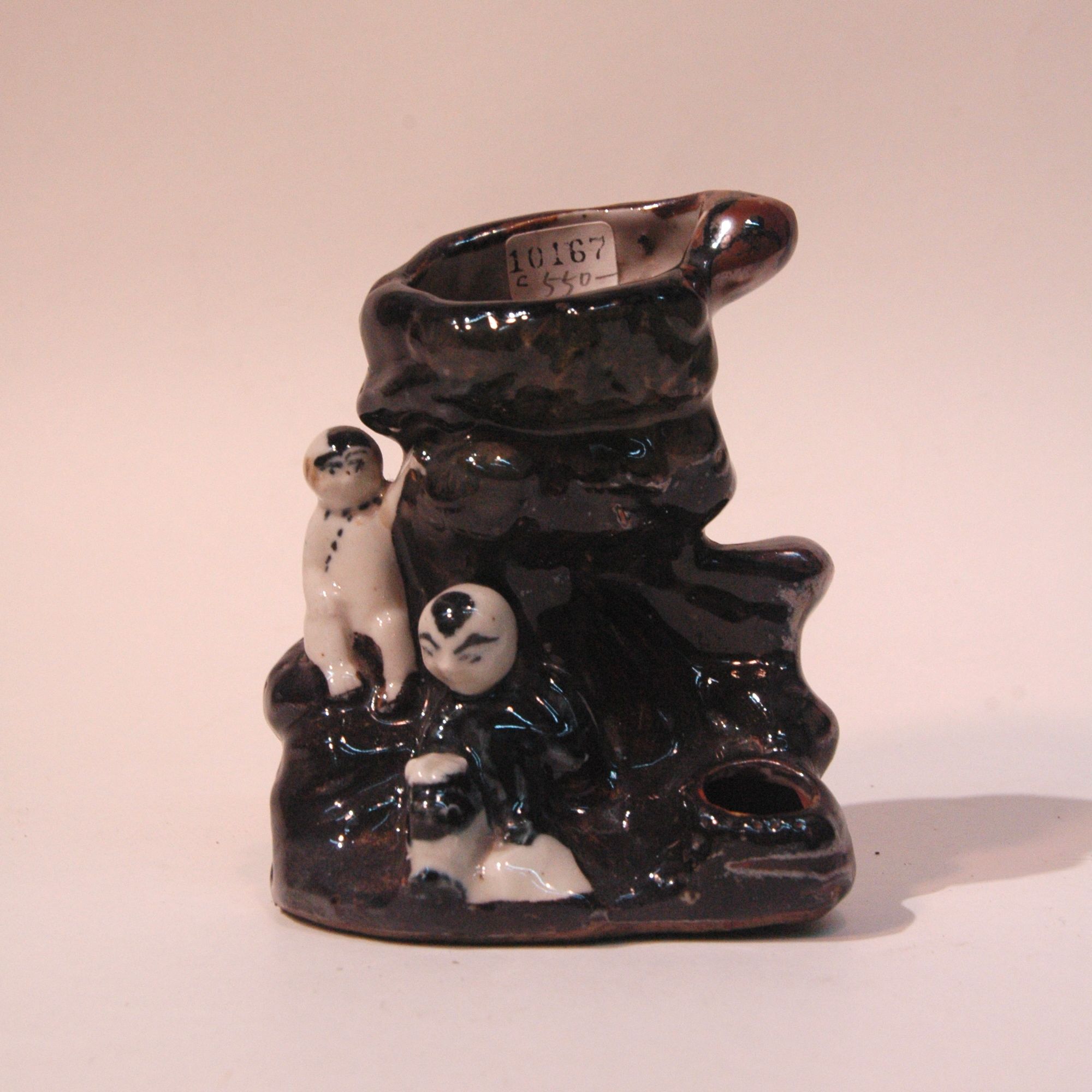
This sweet mountain is in fact a pen holder (particularly like the little guy on the top grabbing hold of the rock as if he is scared of falling off), this is perhaps one that is made for a child, like this water drip. Like today’s parents, parents in the past has also wracked their brains trying to get the child interested in studying or at least stay at the desk. See our other version at Ceramic Pen Holder.
W20xL150xH100mm, China
Today, lunar 5th May, is the Duan Wu Festival, better know as the Dragon Boat festival. It is a day to commemorate the death of the Chinese hero Qu Yuan. Qu Yuan was poet from the Warrings State Period,(278 BC), he was a close aid to the emperor helping the Chu Guo state becoming a strong state. Being loyal to his country he refused to collaborate with the corrupted higher ranking officers and empress, for this they kept him away from the emperor. Despite his advice and objection for a treaty with the Qin Guo state, the emperor was lured to visit the Qin, was held captive and died there . When the son of the emperor took over Qu Yuan was sent into exile. Qin attacked and conquered the Chu; Qu Yuan, heart broken that his country was lost committed suicide in the river Mi Luo Jiang. Hearing the news the folks steer boats to rescue him but neither him nor his body could be found, fearing that the fish would eat away his body, they beat drums to scare the fish away and throw in dumplings to keep the hungry fish away.
DIA80xH80mm, China
Nowadays spittoon has almost disappear, at least in Hong Kong, there only place you might still be able to see one are in the old tea houses (e.g. the famous Luk Yu Tea House), however, they are used more as a rubbish bin or at most to gather used tea, so luckily you will not see them in action. Before my research for this post, I have always seen spittoon as a very Chinese object, it is very surprising to find out that spittoon was originated from the UK and the USA and that it was a popular object in the 19th century at places where men gathers. The main use for spittoon in the West was for spitting of the chew tobacco, when it was imported to China, it was used as a receptacle for spit (usually of a larger size). This small spittoon was one of the accessories for smoking opium, it would have been placed on the opium bed within reach of the user.
W100xD100xH300mm, China
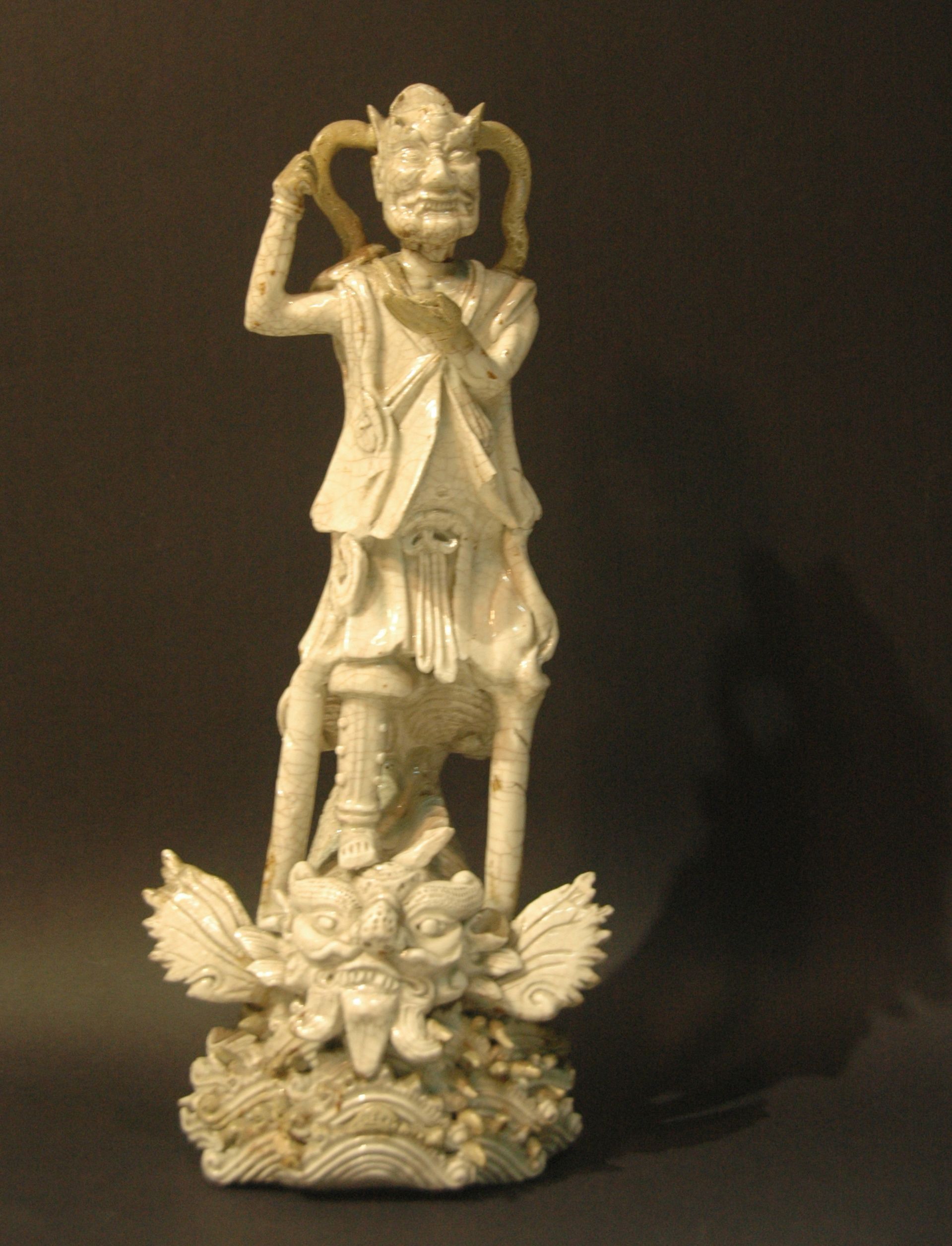
This is a figurine of Kui Xing, a well respected figure amonst the Confucius intellectuals, he is believed to have the power to control the fate of all literature. The legend has it that before being a god, Kui Xing was a scholar who took the Zhuang Yuan examination 3 times but failed, it was not because of his intellect but his ugly appearance. Furious and frustrated, he kicked the box that held his books, jumped into the river and committed suicide … those were the days before we have plastic surgery … Despite not being recognized officially by the court for his literary skills, his intellect was well acknowledged by the commoners, figurines of him were made for getting his blessing in examinations. On the figurine he held a brush and ink, he is believed to write down the names of those who will success in the examination. Under his feet is an Ao fish, a creature with a fish head a dragon body, a step carving outside of the palace where the Zhuang Yuan (the person who came top of the exam) will stand to wait for the emperor’s blessing.