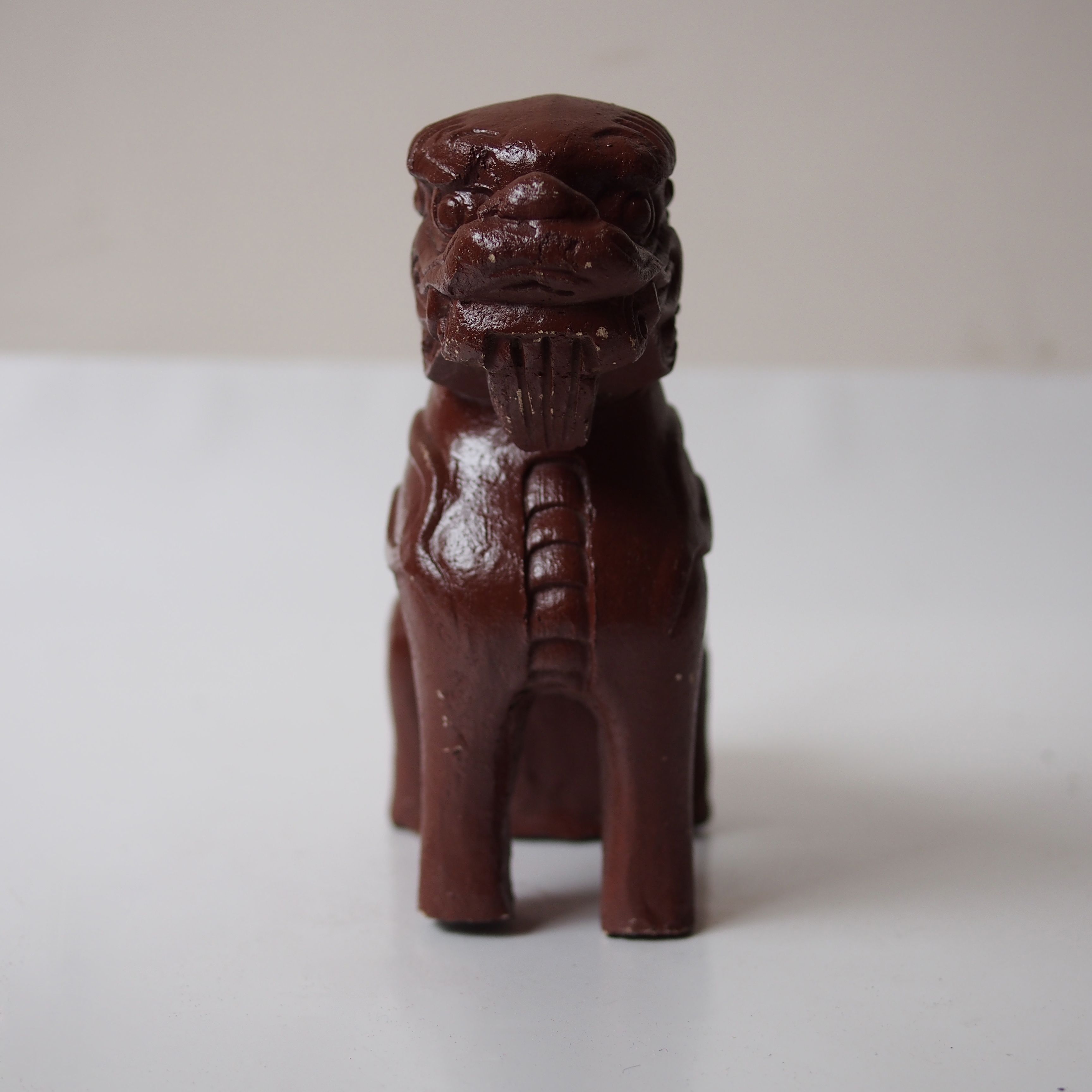
This little monster is the son of the dragon, his name is Suan Ni. He loves smokes and incense and normally found on the incense burner, as he also loves sitting around Suan Ni is one of the monsters that resides on the roof. Unlike his brother Chi Wen who loves looking a far and occupies the two ends of the main ridge, Suan Ni sits with the other 4 monsters on the hip of the roof.
The Phoenix Riding Saint – the brother in law of Jiang Zi Ya, who is always nagging Jiang for a promotion in his sainthood. Jiang, in charge of the appointment of saints put him at the end of the ridge, meaning that anything higher will cause him to fall off the roof.
Followed by the 5 roof hip monsters;
Pheonix – a mythical creature, the queen of all birds.
Suan Ni – the on of dragon who sit around and loves smokes and incense.
Xia Yu – a sea monster, together with Suan Ni, they can control the weather and protect the building. Xie Zhi – part eagle part leopard, eating all the bad guys, a symbol of justice. Dou Niu – a type of dragon, able to control the rain.
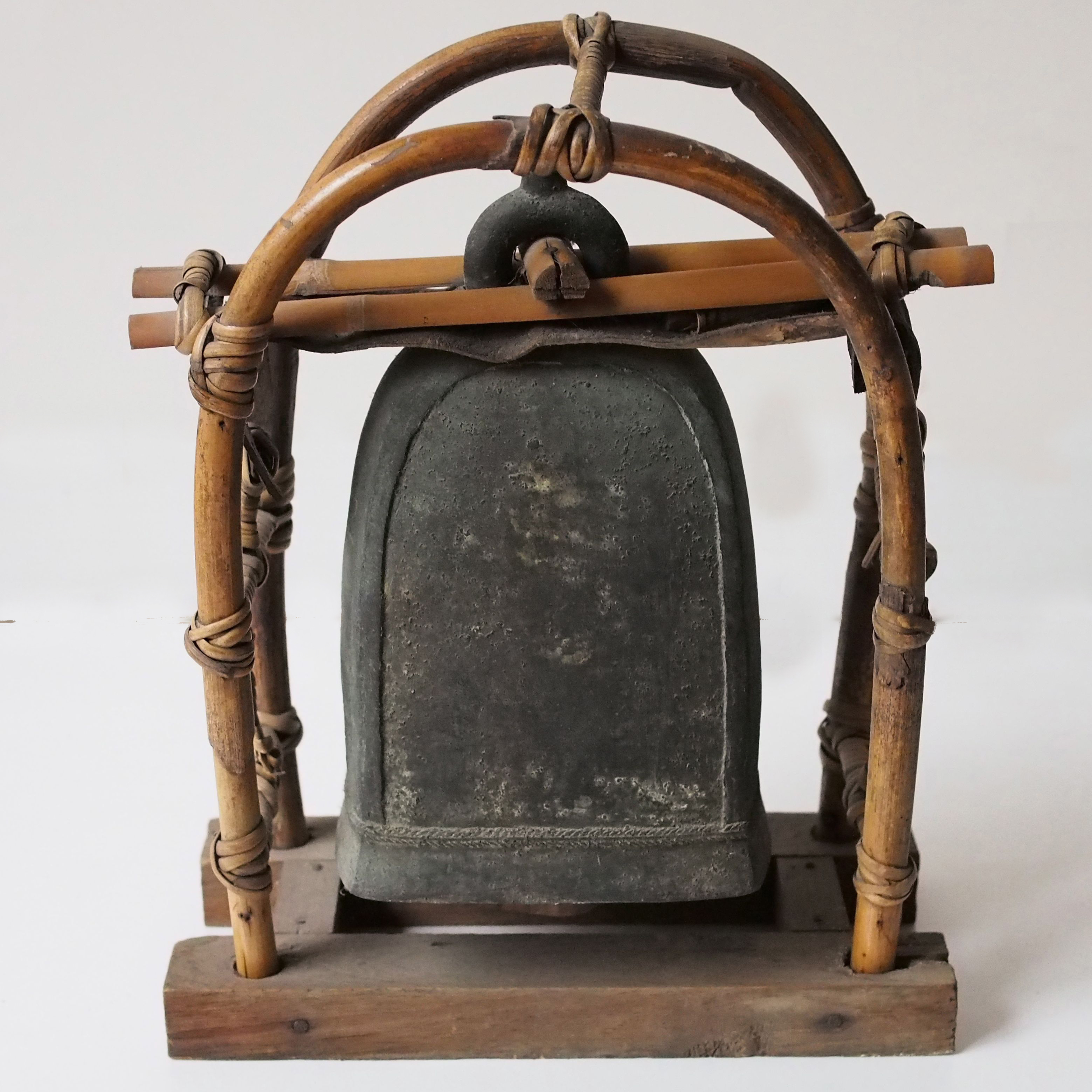
There is a long history for domesticated elephant in Thailand; with the strength the elephants can offer, they are captured from the wild and trained (a bit like the domestication of horses and dogs). The white elephants were offered to the King and worshiped, some were trained to be fighting elephants, as the one used by Queen Suriyothai’s carrier in the war with the Burmese in 1548AD. Others were trained to be laborers for the forestry, pulling logs from the mountain down to the river. To track the elephants, bells were put around their neck so they can be heard in the forest.
Here is a Thai folk tale about a boy and an elephant bell.
Once upon at time, there is a poor boy despite of his lack of education he was taught the virtue of respect. One day the boy was lost in the forest, he wandered fearfully and came face to came with a full grown elephant. The huge elephant was strolling peacefully munching banana and other fruits. Judging by the size of the elephant, the boy thought the elephant must be thousands of years old and must be respected, he kneeled and bowed giving his respect to the animal. Touched by the act the elephant helped him to find his way home, then the elephant said to the little boy, “Here is a bell given to me by the King of the Elephants, ring it if you are in trouble and the other elephants will come to help you.” Then one day, the boy and his father were in the forests collecting wood for the fire. Lighting strike and they became stuck by a fallen tree. The boy remembered the elephant’s word and rang the bell, soon a herd of elephants came and lift the fallen tree and relieved them. At the same time, the wild elephant who gave him the bell was captured and being trained as a fighting elephant. Unsuited to his general temperment, the elephant snapped, killed his mahout trainer and destroyed the village. The news reached the King and the troops were sent to kill the elephant, when the boy heard the news he volunteer to go to tamed the elephant in exchange for him to be free. As he entered the village, the elephant charged for an attack. The boy generally kneel and bowed as he did before, as he rang the bell, the elephant remembered him and came close to him. The elephant calmed down and followed him to meet with the King who kept his word and the elephant was free.
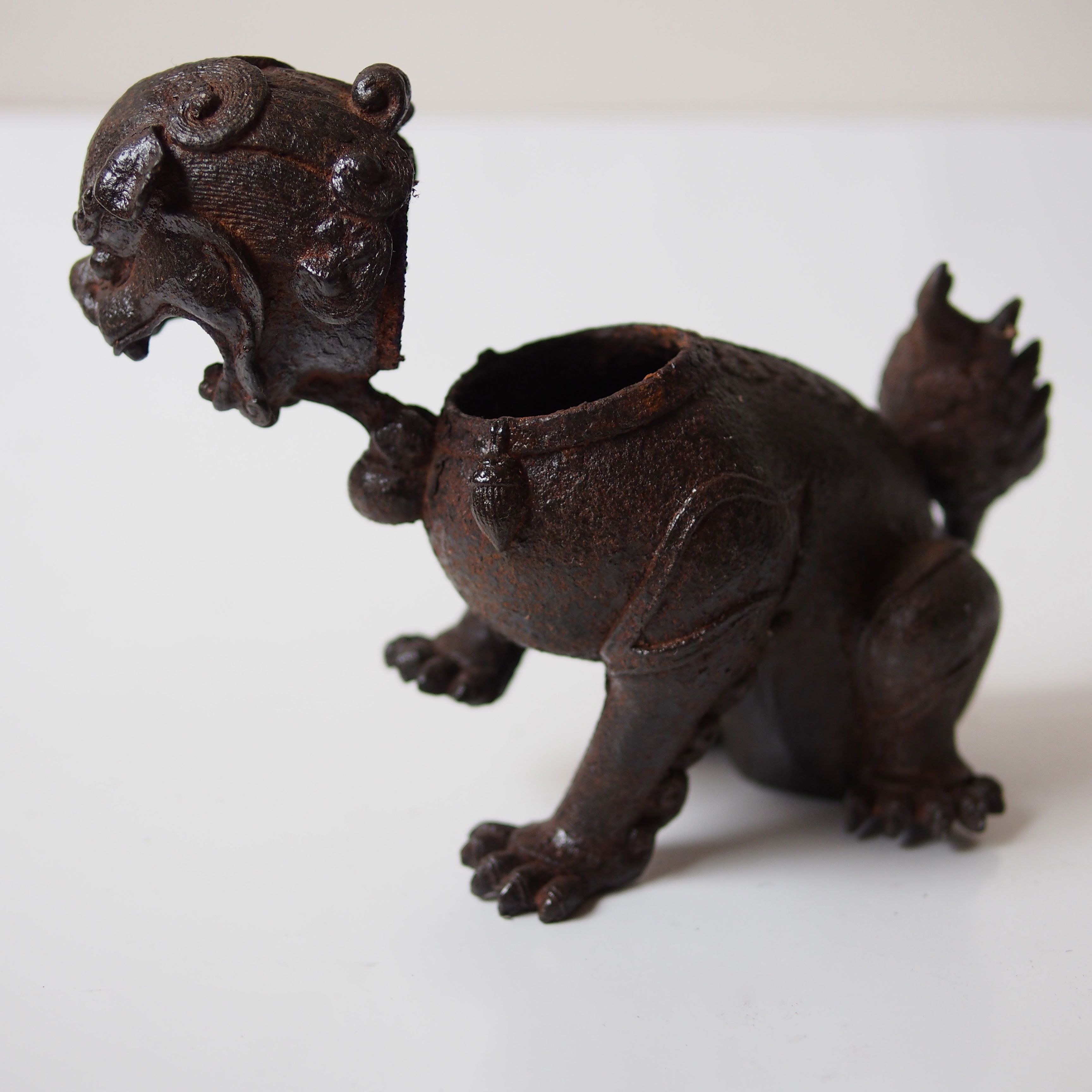
A pair of suan ni, with smoke coming out of their mouths!
Like the Tao Tie, Suan Ni is one of the sons of the dragon (the 8th son). Unlike the Tao Tie who adores food, the Suan Ni is a patient creature that loves the smoke from the incense. He can be found on the large incense burners and also as a carrier for the Bodhisattva Manjusri.
These Suan Ni are a pair of incense burners, flip open the head, place the incense, light it, flip the head back and enjoy their smokey conversations.
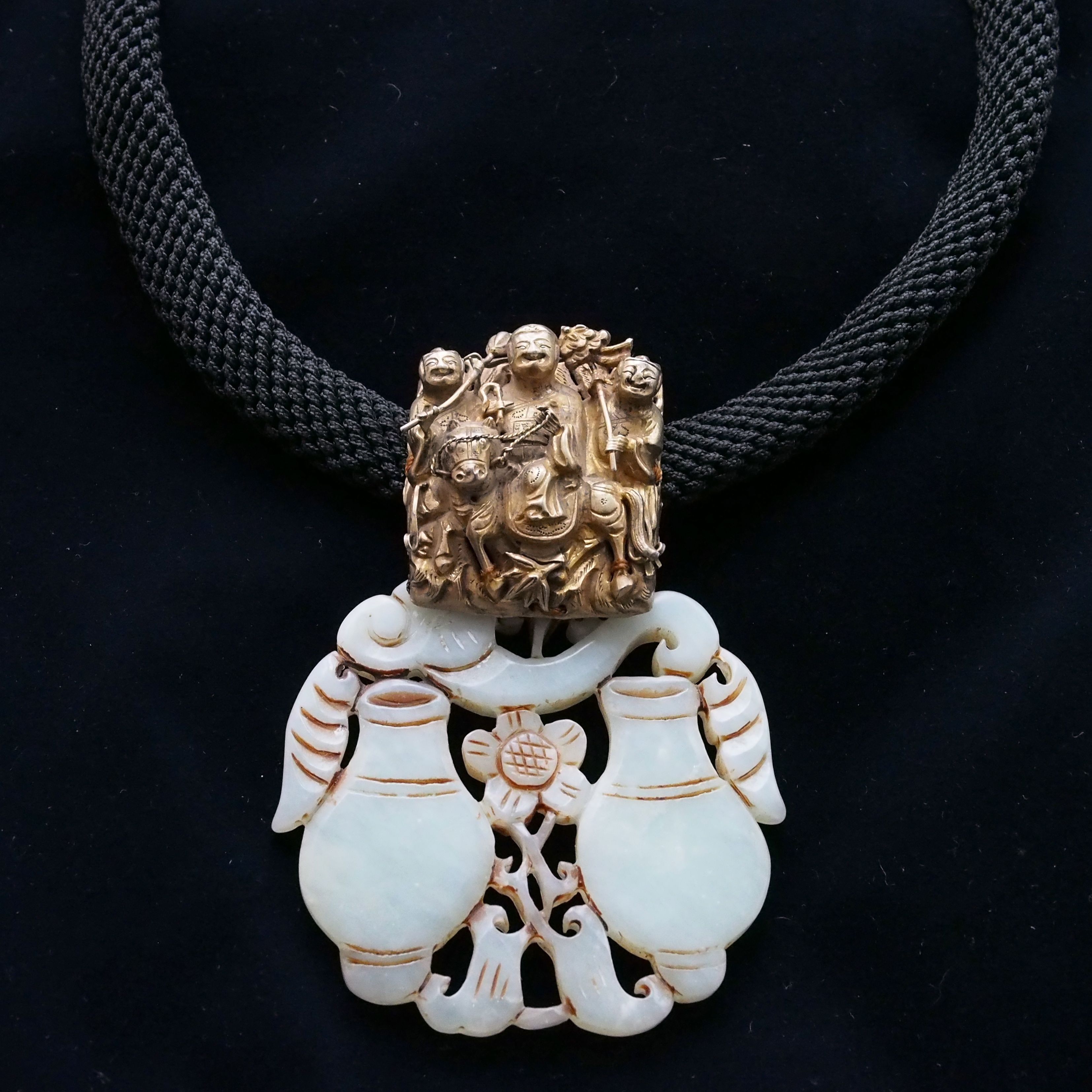
This delicate gold plated carving used to be a hat decoration. Until the Qing dynasty hat was seen as a status symbol, worn by only the Emperor and the high ranking officials, commoners are forbidden to wear hats and usual tie their hair with a piece of cloth. It was until the Qing dynasty that hats became an item for all, though their style and details are still well defined by the social levels. On its hundredth day birthday, a baby would be given a hat which is constructed a bit like the beach ball, bind by 6 equal wedges of cloth. The 6s represented the sky, the earth and the four directions. On this hat a decorative ornament would be place over the forehead, an ornament of good wishes; the eight immortals, longevity, luo han, etc.
This particular decoration has the theme of a Zhuang Yuan, the scholar who came top in the examination.
A wish for scholarly, prosperity, loyalty to the country, everything parents would wish for their child.
Something Old Something New
Collectible Jewellery Collection
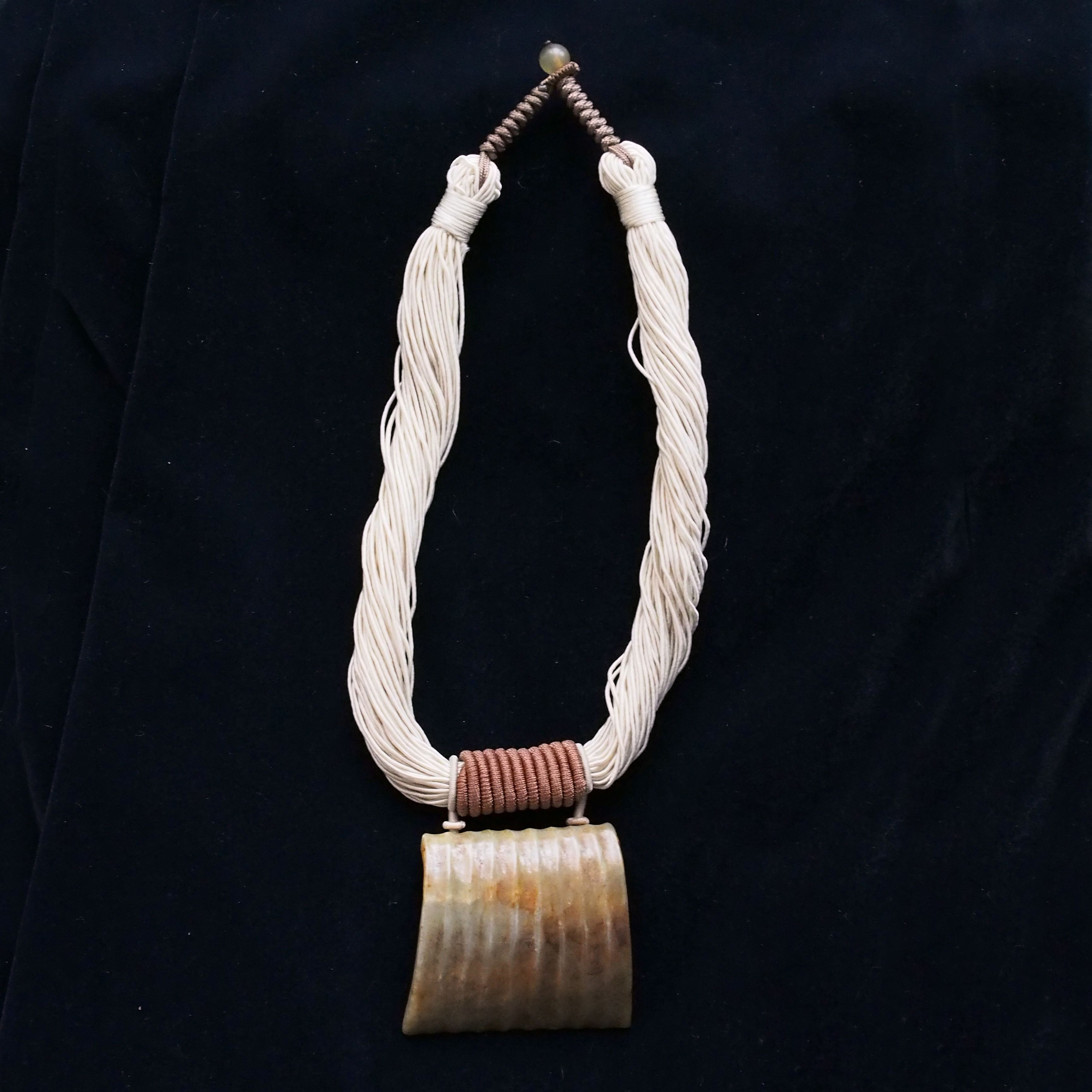
These fine strings which looks like rice noodles are hand woven strings.
Click on the photo and you can see the details of the knots carefully tied together.
The jade pendant of the necklace came from the form of an ancient head piece.
Something Old Something New
Collectible Jewellery Collection
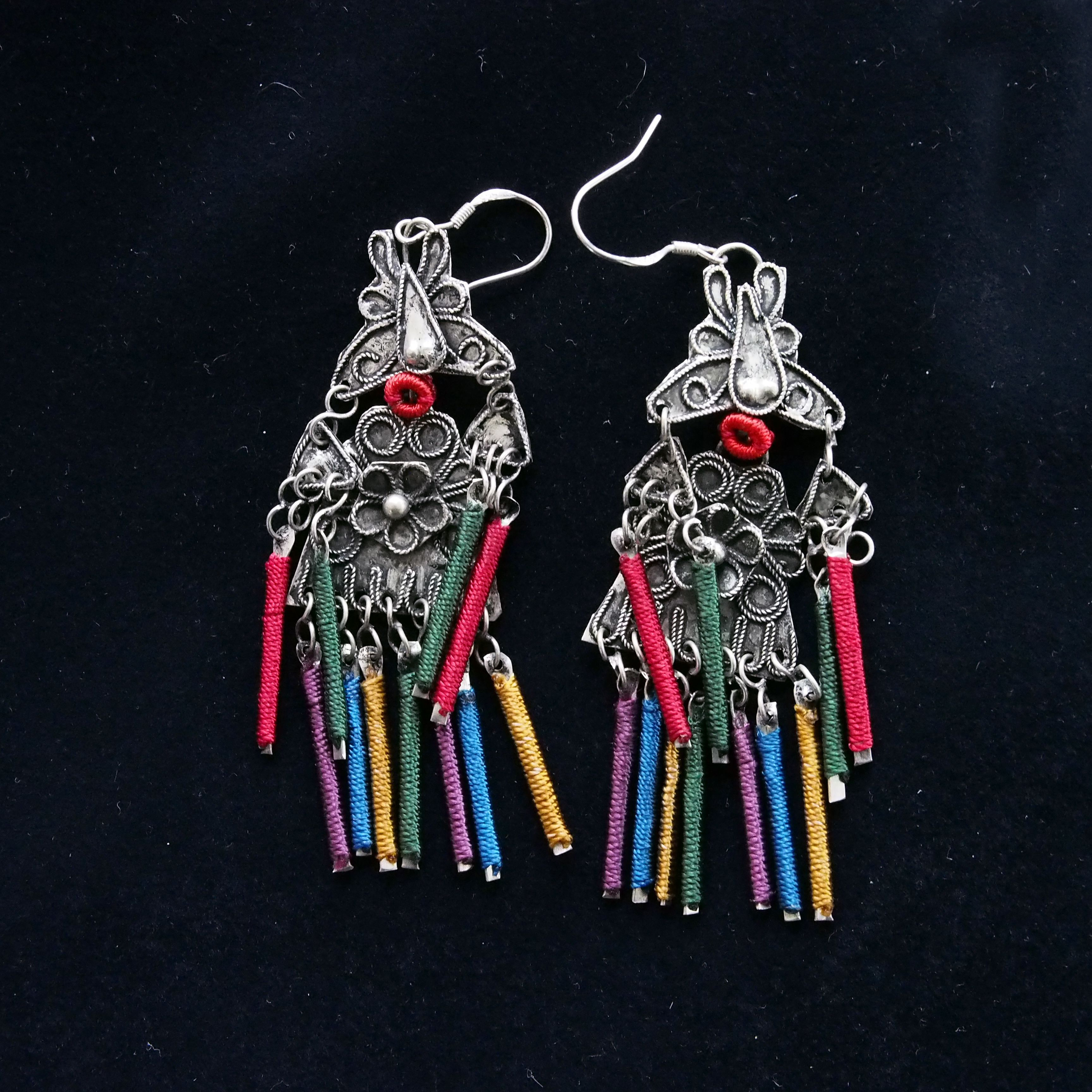
A matching pair of ear rings that goes with the Miao neckwear on yesterday’s blog. This pair of ear rings are also an assemblage of the accessories found on the Miao’s costume.
The ear rings look like a pair of Miao dancers. Here is a video of the Miao dancers wearing costumes with accessories (but I am sure your eyes will be focus on the sweet little girl dancing along on the left)
Something Old Something New
Collectible Jewellery Collection
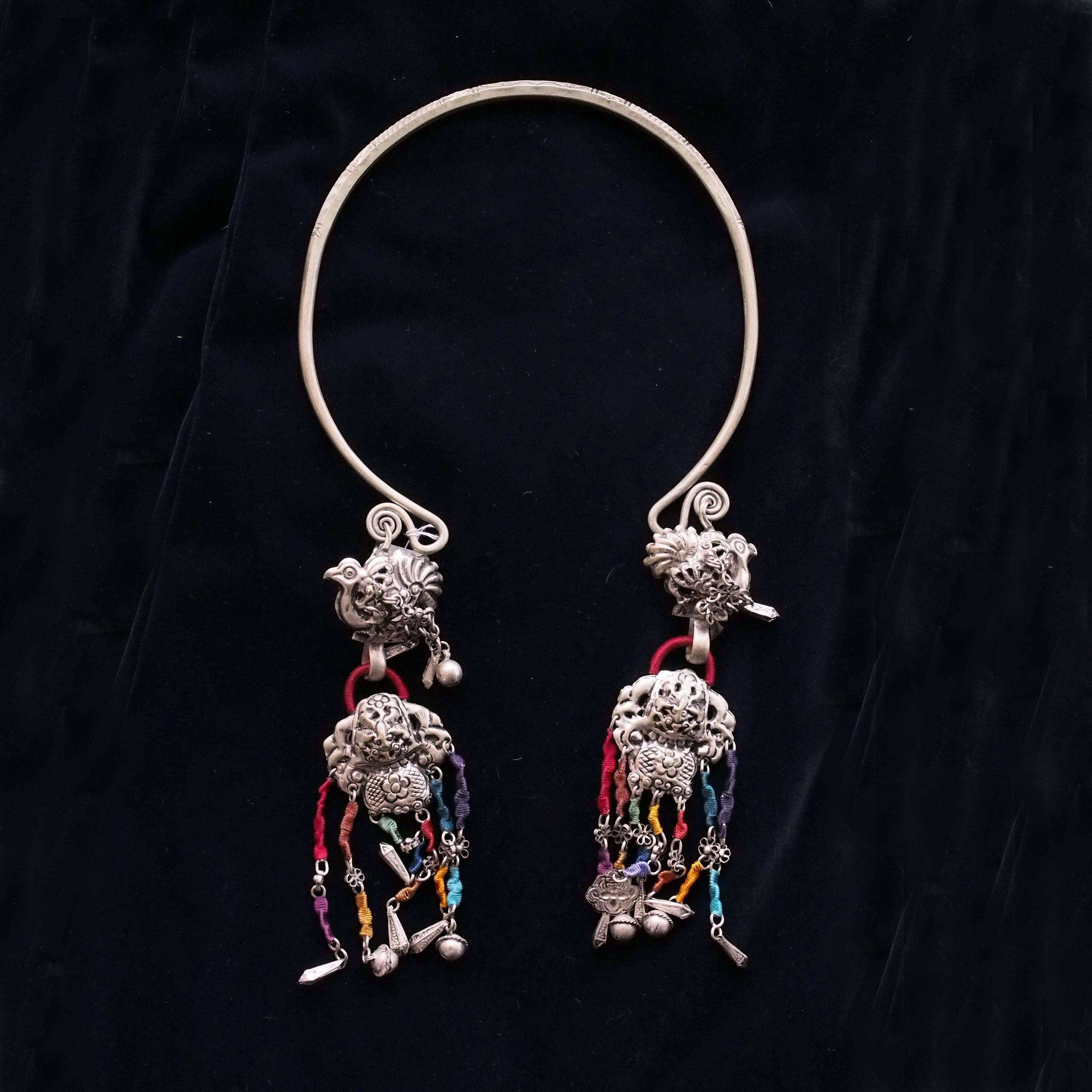
This neckware is an assemblage of different accessories found on the Miao tribal costume. The lower part of the neckware can be taken off for a different look.
The Miao’s jewellery has always been a collector’s item. This new design made the Miao accessories more wearable with today’s fashion.
Something Old Something New
Collectible Jewellery Collection
 L230xW80xH230mm, China






 Mountain Folkcraft