Archives for category: costume

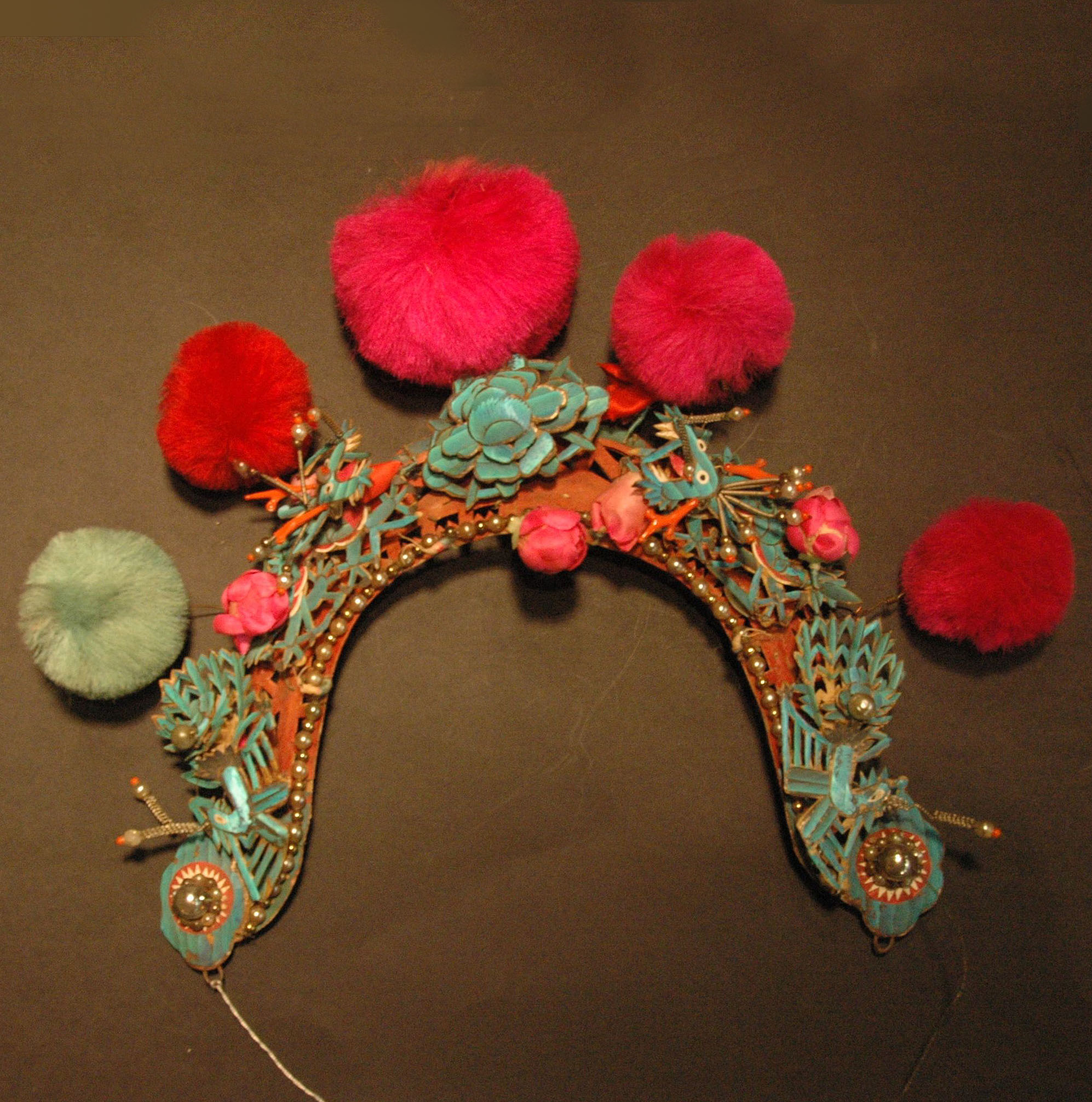
W300xH300mm, China

This is the head piece for Chinese opera, a crown used by the female warrior character, resembling the fighter’s helmet.  It has one layer of pompons and thus known as word one crown (the chinese word for one is 一, a simple horizontal line)

Due to the age of this piece, some of its tassels and a few of the pompons have gone missing.  The blue ornaments on the head piece are made from kingfisher feathers, tian tsui, a precious material.  The kingfisher bird has an amazing blue colour, however the intense colour is not from the pigment of the feather but from the reflection of the light.  Each piece of feather is painstakingly cut and inlay onto a metal gilt.   A relatively thin sheet of precious metal (gold or silver) is formed, gold or silver wires are bent according to the design and placed on the edge of this area, then small pieces of the feather is glued into the recess area.

Textile width 380mm, China

This checker fabric is from the Bu Yi tribe in China, they are famous for their hand woven checker pattern fabric and their wax dyed fabric, they are one of the remain tribes whom the tradition of cloth weaving remains a strong tradition.  The checker pattern cloth is used for head wrap, bed sheet and clothing; though they are all checkers, the use are very specific.  Each pattern has its own story, this particular cloth is for making clothes.  Instead of going online or glue to the telly, girls of the Bu Yi tribe would weaving as their past time during the evening; the motivation comes from the preparation of the dowry which has to include the minimum of bed sheets, duvet cover, 10 costumes.

W90xL1900mm, China

This hand woven band is the belt for the costume of the Miao tribe.  Just after lunar New Year is the Cai Hua Shan festival of the Miao tribe.  Different clans will come together to the common area between the different villages, a large pine or cypress tree will be selected as the “flower stem”.  Before dawn the person in charge, “head of the flower stem”, will take on the task of erecting the tree post and tying ribbons and flower on the top.  This job is done by commonly agreed most kind hearted person (with such a task, I am not surprised).  The day begins with the “head” tossing wine to everyone and giving them blessing; fire crackers, drums are played to signify the start of the festival, followed by days of dance, music and laughter.  It is also the chance for dating, the men will give a woven band to the lady he desire and in return the lady will give him a embroided handkerchief or headwrap.

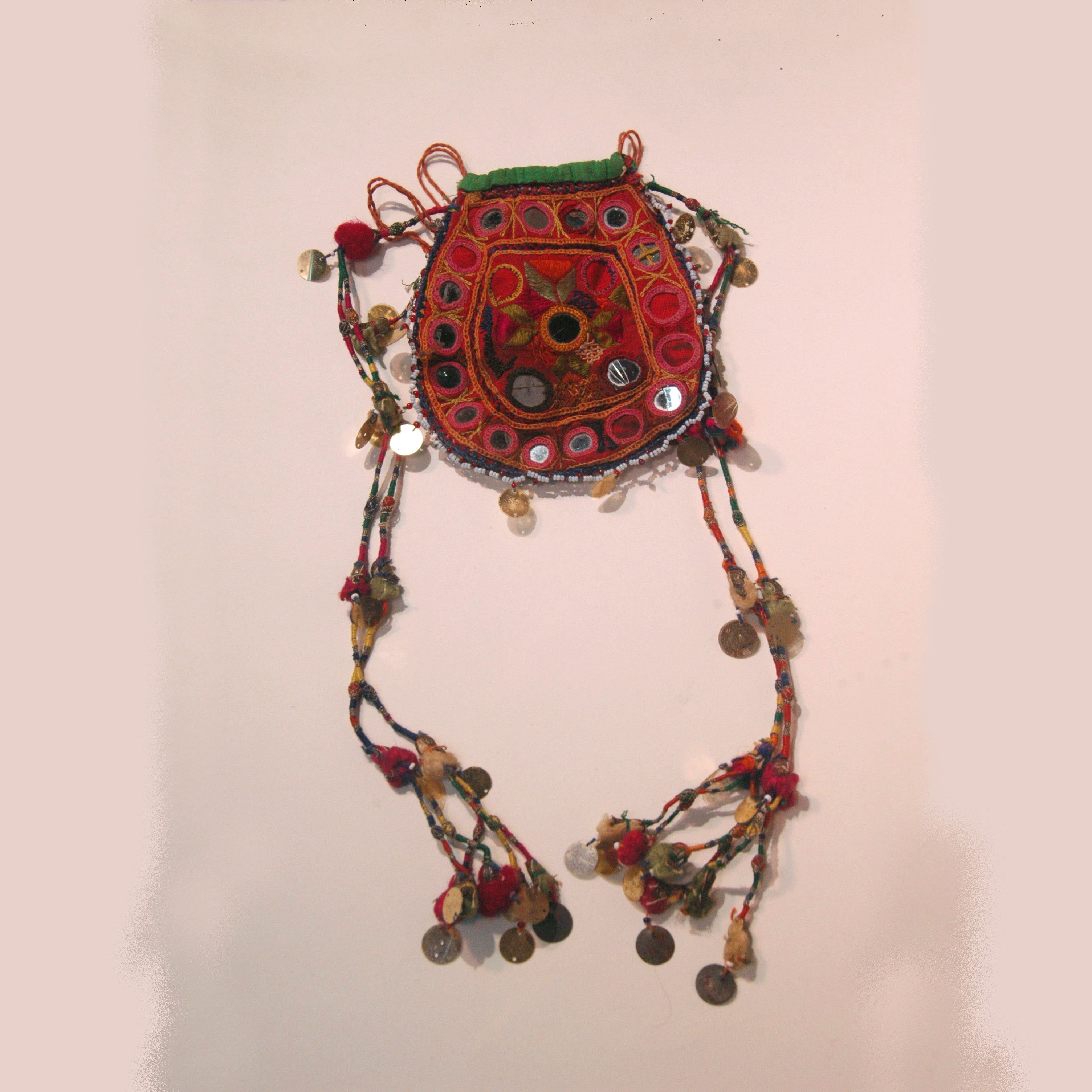
W140xH140mm, India

Shisha (originated from the Persian word shisheh which means glass) is a form of embroidery that is very popular in Gujarat, Rajasthan, Haryana and Delhi of India.  Shisha embroidery is believed to originate in Perisa in the 13th century and brought to India by Persianate Moghul Dynasty.  This form of embroidery can be found on garments, accessories and even for home furnishing product, the glass is usually paired with the colorful fabric used in the area.  This is a small bag with mirror shisha embroidery and tasseled with bronze discs.

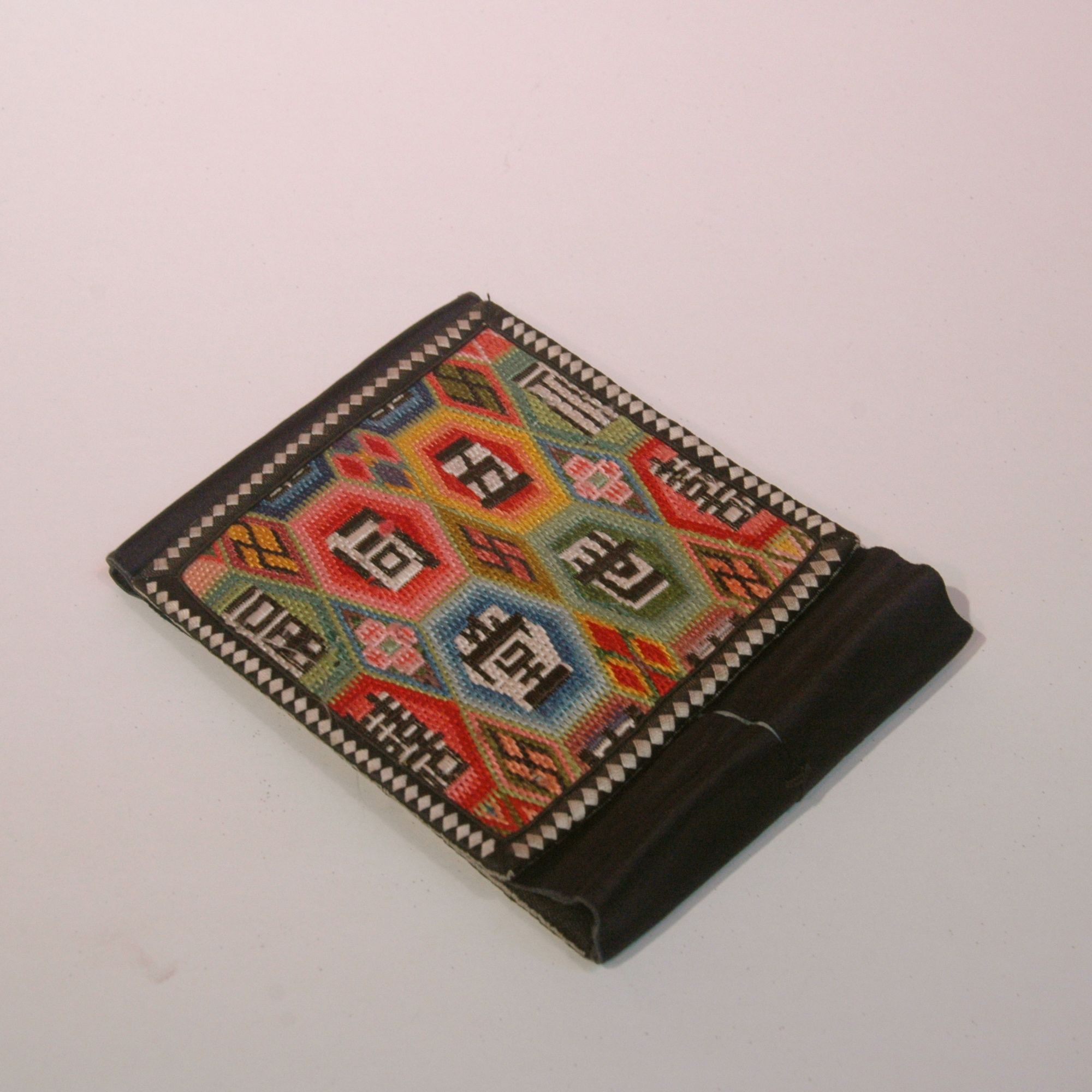
W100xL300mm, China

This is a silk embroidered wallet, He Bao (荷包).  For a long time, I thought the word He has to do with lotus (荷花) but in fact its from the word (负荷) – loading.  In the old days (this going back to Han dynasty), there are no pockets in the Chinese costumes, these He Bao are developed to keep essential items such as the seal, money, handkerchiefs, etc.  In the beginning they are more of a concept for a small sack that are made of leather, can be hung by the waist, carried by hand or as a small rucksack.  By Qing dynasty, they became a popular fashion accessory, made of silk and embroidered.  They will be hang or kept at the waist band, apart from the wallet, the fashionable gentleman would also have in his waist band, a hand fan, aromatic sac, pocket knife etc.  This is folding He Bao, one of the embroidery side would hang out of the waist band while the other 2 flaps securely tuck in.  Embroidered on the wallets are word of blessings; happiness, good fortune, longevity, 5 generations together.

W100xL600mm, Thailand

The Hmong tribe is one of the 5 major hill tribes in Thailand, the Hmong is a sub tribe of the Miao tribe in China.  It is believed that due to the cultural reforms brought on in the Qing dynasty, a search for more fertile land that have brought on a massive immgration in the 18th century.  According to records in the Chinese literature, the Miao tribe can be dated back to 3rd century BC.

These embroidery were decorative pieces on the sleeve or collar of the Black Hmong costume, unfortunately the garments which these embroidery have been on were too worn to be kept, these are the pieces that have been salvaged.  Traditionally, these garments were worn during the Hmong New Year in November or December when the harvest has been completed.  They are combination of cross stitching and patchwork, the embroidery patterns all have a subtle symbolic meaning; (left) a protection cross, (center) flowers, (right) snails.  These embroider pieces are a perfect for any handmade projects, bags, jackets, etc.

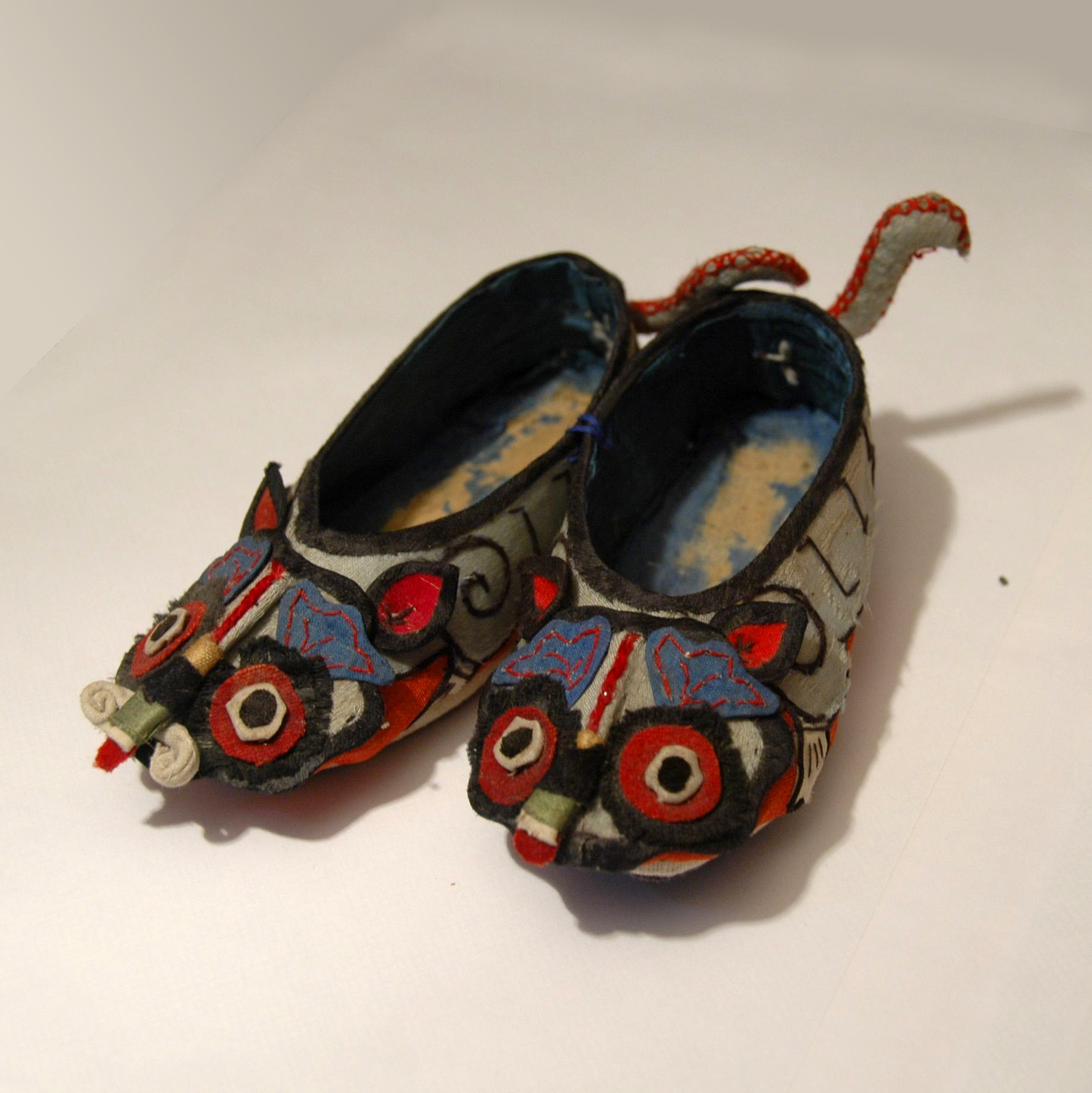
L130xH50xW50mm, China

Traditionally, this is one of the Chinese New Year gift a child will receive from their parents as a blessing for the year.  The story behind the tiger shoes goes like this; once upon a time in Yang Zhou, there is a kind heart boatman called Daai  Yang, one day came an elderly traveller who appreciated Daai Yang’s attitude and gave him a painting.  In the painting, there is a beautiful young lady stitching up a pair of tiger shoes.  Daai Yang really like the painting and hanged it up immediately when he got home.  That night, the lady in the painting came to Daai Yang, after a year of courting she bear a boy, for him.  The head of the village heard about this miracle and snatched the painting from Daai Yang, hoping that the lady will do the same for him.  The village head waited night after night but nothing happened.  Daai Yang and the son was very sad but helpless against the villain village head.  One day he met the old traveller again, she told Daai Yang to make a pair of tiger shoes for Xiao Hu and they will meet the wife again.  When the son worn the shoes Daai Yang made for him, the shoes grew wings and delivered him to the village head, the shoes then turned into a pair of tigers and chased the villain away.  The mother came down from the painting and the family lived happily ever after.  Since then tiger shoes took on a name of being able to protect the child.  RRrrrrrroarrrrR!

W100xD40mm, China

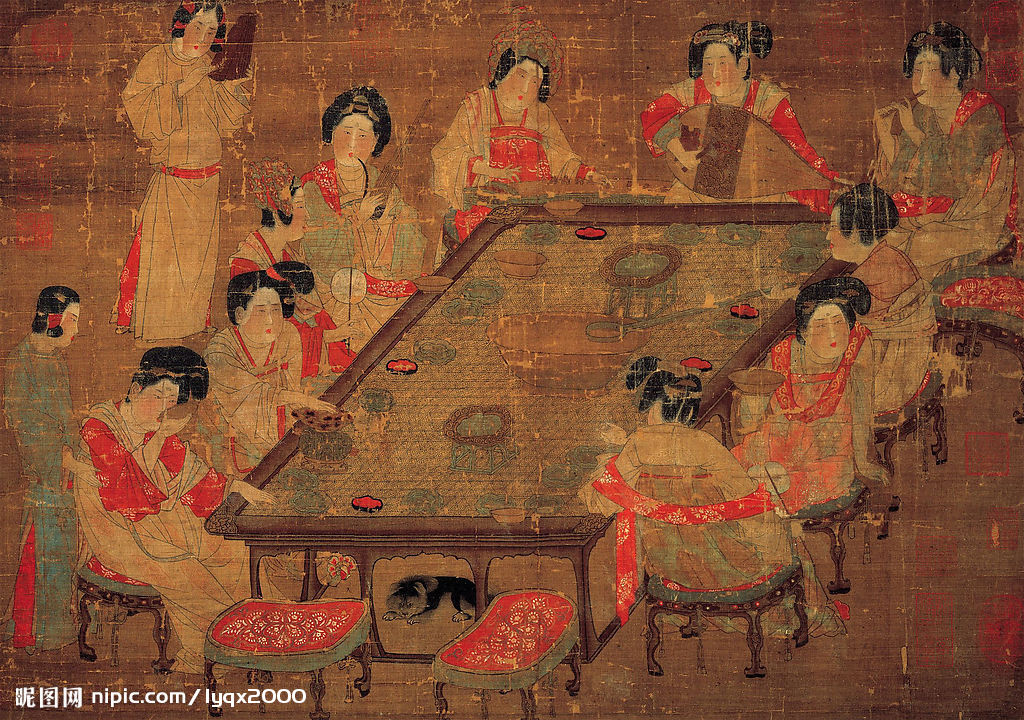
Comb in China became a special artisan trade around 700BC, the design, shape and material changes through out the different dynasty.  Apart from being a function object, it also became an accessory for hair styling in the Tong dynasty.  This can be seen in the Tang dynasty scroll “A Palace Concert” where ladies from the Emperor’s inner court were shown to be enjoying their drinks, the comb accessory can be seen as decoration in their hairdo.  This is still practiced by the minority tribes; the Shui, the Miao, the Dong tribe etc.  There is a folk tale explaining why the Shui tribe ladies have a comb in their hair, the story goes: a group of women were working hard in the fields, they have left their baby in a basket at the edge of the rice paddle.  Suddenly they heard the baby crying, they went running to see what is wrong only to found a large centipede making its way to the baby.  By the baby’s side is few wooden combs, the centipede had a look at the combs and compared the number of teeth with his own number of legs.  “Damn, i have been out numbered” thought the centipede and quickly made retreated.  Since then, the Shui tribe ladies have combs in their hair.

W600xL600mm, China

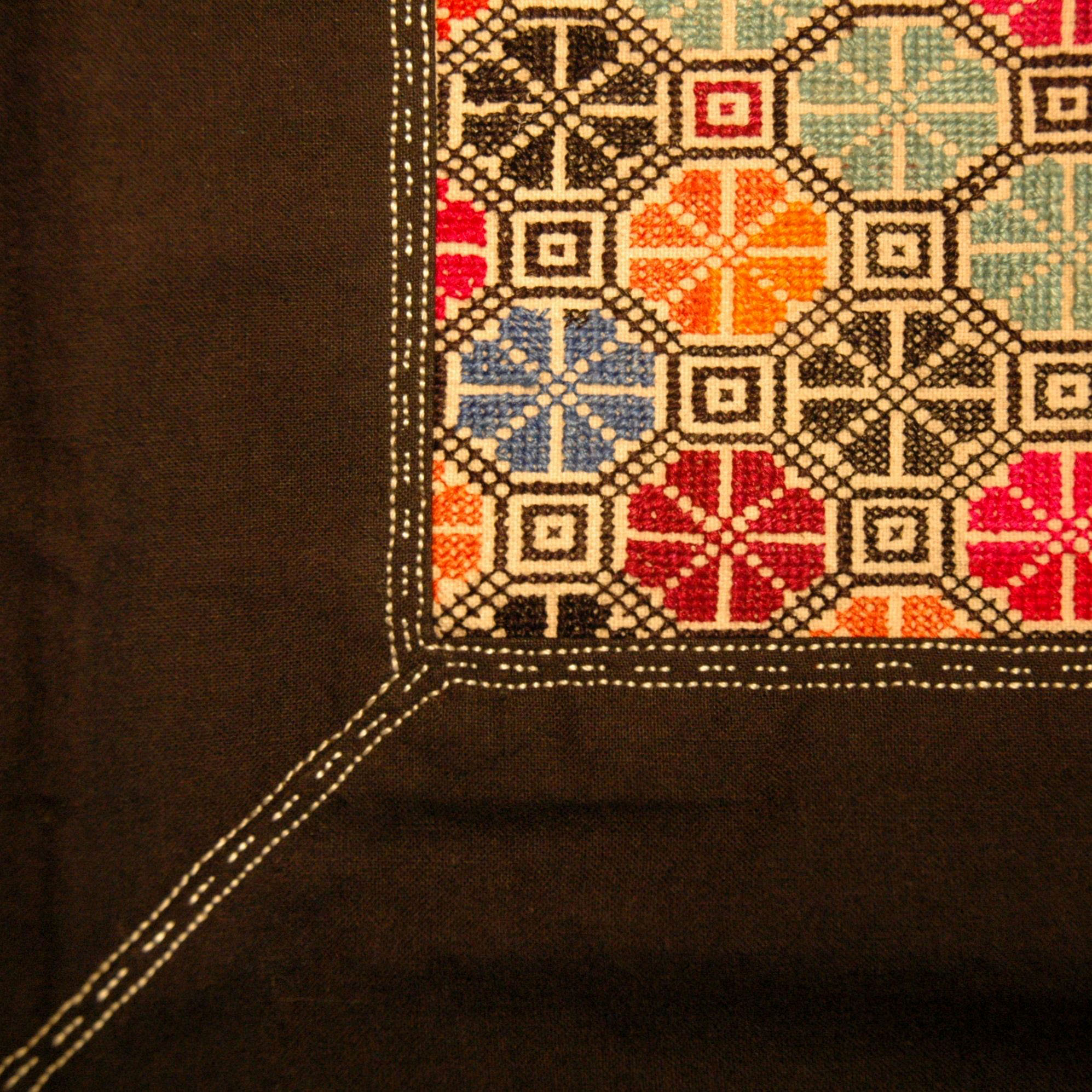
This Miao embroidery started its life as a traditional baby carrier.  The cloth baby carrier was once very popular, looking at old photos I too have spend some time wrapped up in a much less elaborated version of it.  For those who are not use to carrying baby around with belt and cloth, the Miao has converted the embroidery as a cushion cover.  The embroidery is made with cross stitch, a basic stitching of the Miao.

L60xD20xH50mm, China

The longevity lock, a tradition for the Chinese babies hundred day celebration, the child will keep it on till his 12th birthday.  The Chinese believes that life will be locked just as a door or a trunk.  In a way its a kind of blessing given to the child by the elders of the family.  Its history started from the Han dynasty, on the 5th of lunar May, every household would hang a 5 colour rope on the door as a blessing against the plague.  By the Jin dynasty, the 5 colour rope would be tied on to the arms of women and the children as a blessing.  The tradition extending into the empirical court in the Han dynasty, the Emperor would  give out the rope to all his ministers on the 5th of lunar May.  The rope became more elaborated by Ming dynasty and became the silver locket we have here.