Archives for the month of: September, 2013

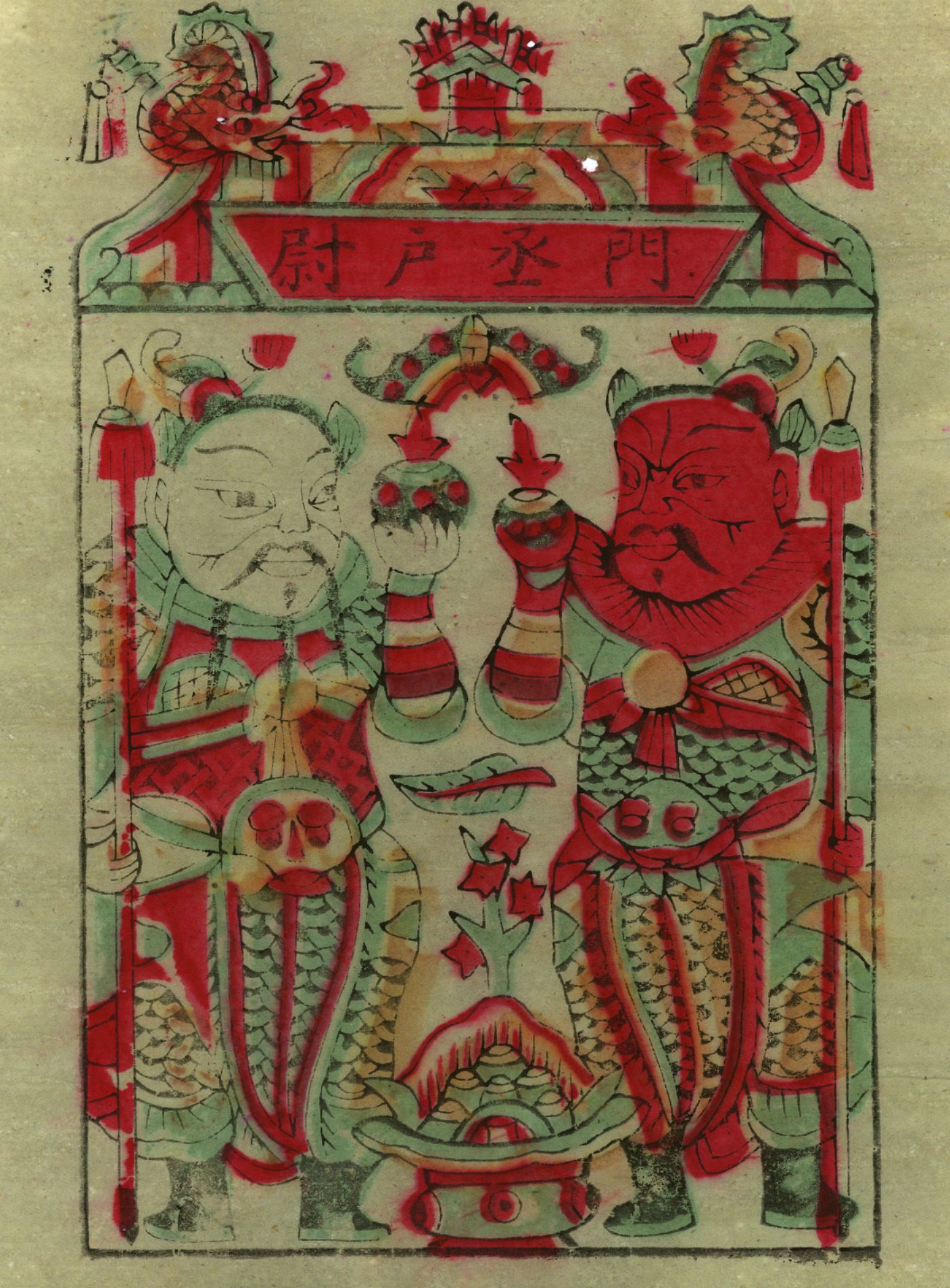
print2

W220xL300mm, China

There are many door gods, the most famous and the original ones are Qin Qiong and Wei Chi Gong.  The two generals have been keeping the ghosts away from the imperial court. the Tang Emperor felt sorry for their long shifts and ordered portraits to be put up on the doors to give them a well deserved break.  Click here for the full story.  Traditional Chinese doors comes in pairs and a print of the individual door god would be posted on both doors.  This particular prints has two door gods, the one with the white face on the left is Qin Qiong (門丞) and Wei Chi Gong (戶尉) is on the right, this print is made for single door.

The four words on the print “門丞戶尉” refers to the two door gods, but funny enough with the four words mixed up as “門尉戶丞” it became a Taoist spell for healing the sick.  The procedure apparently goes like this (please don’t try this at home);

take a rooster with lush feathers,
hold a knife with your right hand and the rooster on the left,
go to the house of the sick,
inside of the house take 3 steps and on each step say the spell,
“門尉戶丞,某甲病蠱,當令速出,急急如律令”
(門尉戶丞, so and so’s sickness, expel at once, promptly take the order)
then put the head of the rooster in the mouth of the patient 3 times,
take the knife and draw blood from the rooster’s comb,
mixed the blood with 100ml of white spirit for the patient to drink.

… if the patient was not very sick before … he probably would be now …
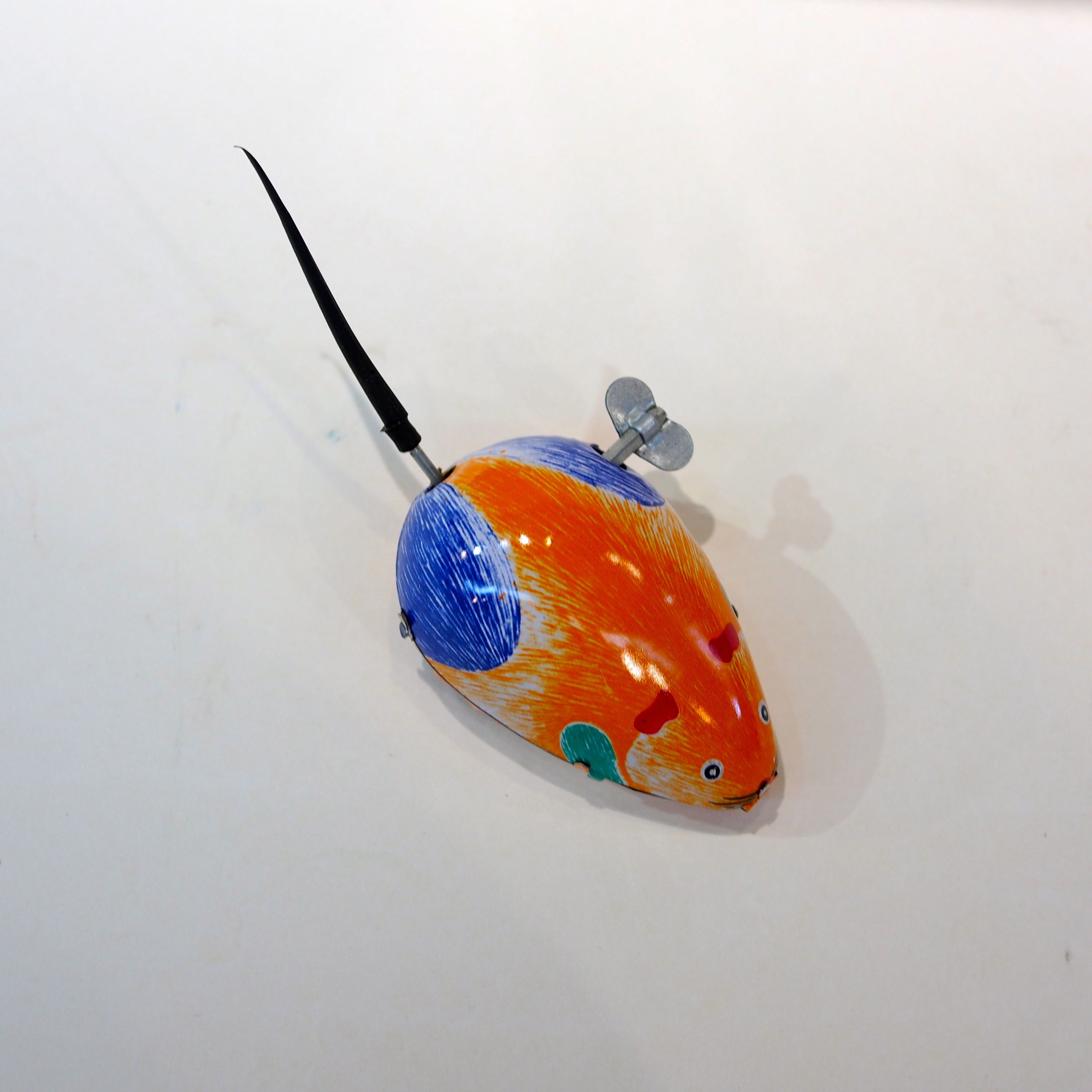
tin toy


W50xL130xH40mm, China

An orange mouse that has probably had a feast of carrots.

To see our other tin toys, click here.

charcoal basketDIA230xH120mm, China

This bamboo weaved basket is known as a Wu Fu, a basket for storing charcoal for brewing tea.  It use can be dated back to the “Book of Tea” by the Tang Dynasty scholar Gu yuan Qing.  The name Wu Fu is sophisticated way of refer to the charcoal basket, the word “wu” means black, dirt – which is the charcoal, the word “fu” is a grand mansion – the humble basket.

OLYMPUS DIGITAL CAMERA

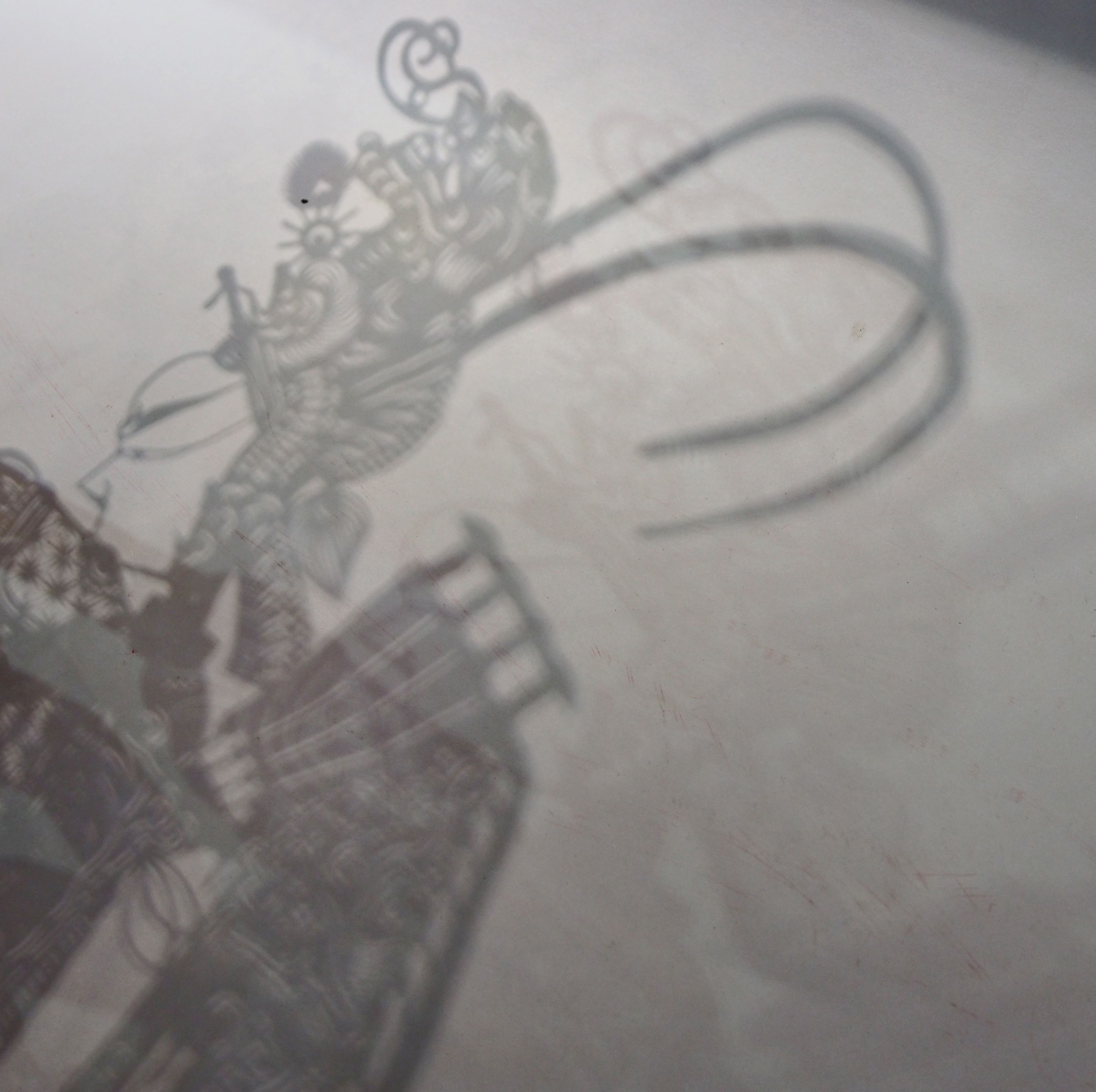
shadow puppe

W150xH380mm, China

A warrior of the Hua county in the Shaan Xi province., it is said that Chinese shadow puppetry originated from this county.  Shadow puppet theater started its form as a Taoist court ceremony  where illusion, shadows, dreams and a bit of imagination formed the idea of after death for the ancient emperor.  As time goes by, the religious ceremony took a form as entertainment for the emperor and thus shadow puppet theatre began.  The fashion from the courts later was copied by the nobles and then the wealthy, and to the masses.  The Hua school of shadow puppet are small and very finely made, it is believed that the tradition came from entertaining small party of the court.


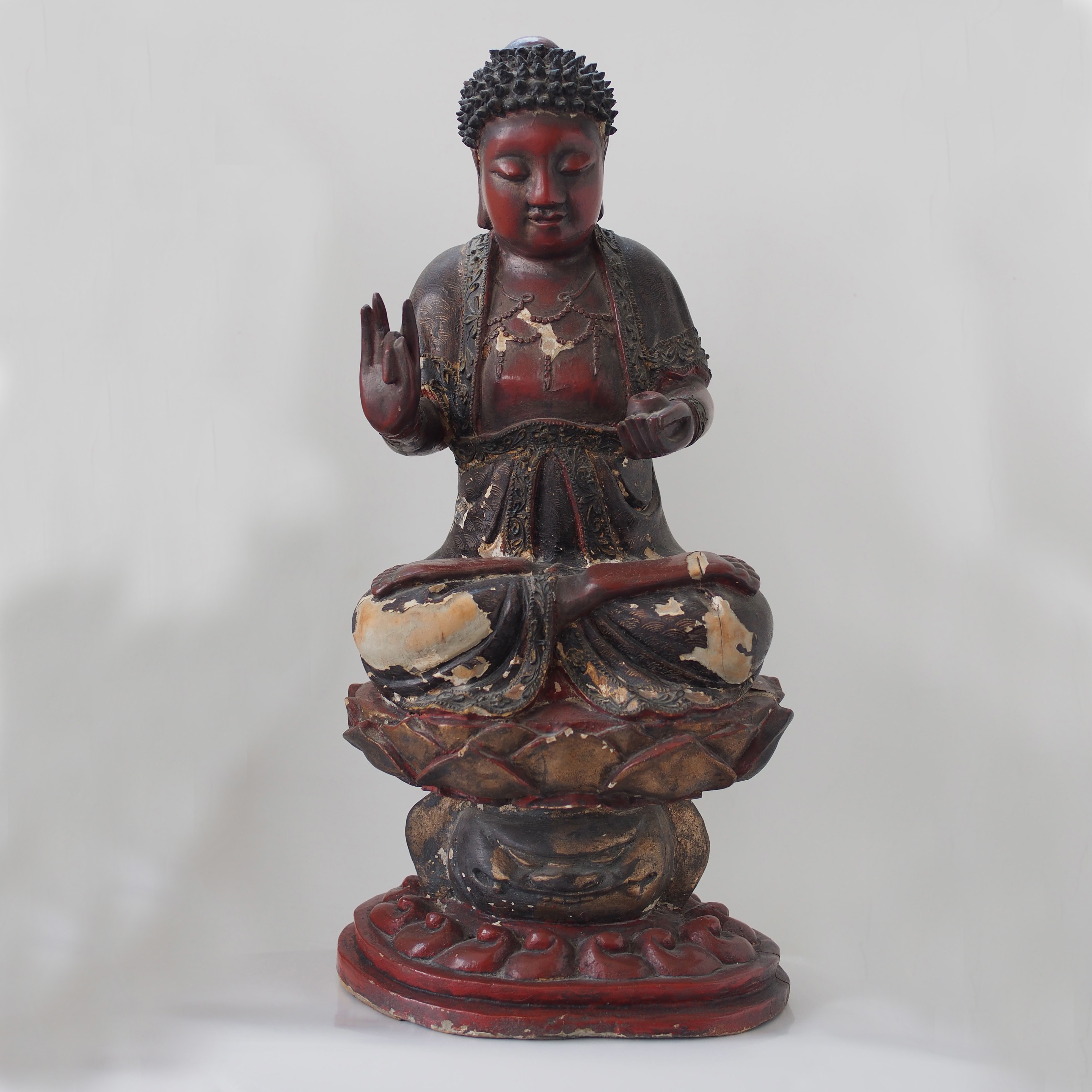
lacquer buddha on lotusW270xD180xH600mm, China

This is an old lacquer figurine of the Gautama Buddha.  He is sitting on a lotus blossom which symbolizes purity of the mind and body.  Though the lotus is rooted from the mud, its leaves naturally repel dirt and water, its blossom raises well above the muddy pool.  Under the lotus blossom sits a lion; lions are symbolic of bodhisattvas, being that have attained enlightenment.

The hand gesture of the Buddha indicating the banishing of evils (karana) and the gesture of leisure (avakasha).

At the back of the figurine is a secret compartment for storing scripts.

printL380xW260mm, China

This is a black and white line print from the Yang Jia Bu school of new year print.  The Yang Jia Bu school is set in a small village in the Shan Dong province, it is most flourished in the Qing dynasty.  The school is famous for the subject matter of the prints, new subjects are added yearly with reflection to the society and as time goes by became a source of documented life of the commons.

The two phrases on the print, “花能解語 晚玉生香” has been quoted in a few of the notable Chinese literature, The Romance of The West Chamber, Water Margin, The Golden Lotus and The Dream of the Red Chamber.  The phrase were praises to a woman; a woman can be as beautiful as a flower but the flower cannot understand words, a woman can be as beautiful as a piece of jade but jade is without fragrance.

leg tie

L940xW50mm, China

This embroidery band is for the tying the end of the trouser leg.  This was part of a typical Chinese costume until the introduction of the western style garments, you can still see the older generation still keeping up this tradition.  Along with the long Manchu grown “qipao”, the pot bottom shoes and the pig tail imposed in China by the Manchurian.  Before setting up the Qing dynasty, the Jurchen tribe was a nomadic tribe who often spend their days on horse back, the puttee was a beautiful functional accessory for their costume.

OLYMPUS DIGITAL CAMERA
W360xD190XH360mm, China

This fine lacquered cabinet was a household shrine for worshiping the ancestors in the Chaozhou area.  Ancestral tablets would be kept inside of the cabinets, with the higher ranking ancestor on the upper stage and the others on the lower level.  The decoration of the exterior of the doors are blessing figures of warriors and top scholars (zhuang yuan) while in the interior are scholarly plants, all a blessing for the descendants of the family.

The ancestral tablets are made of word with the name of the ancestor.  The legend goes like this; a long time ago there lived a poor widow and her son.  The son was a brute, abusive to the mother verbally and sometimes even physically, but the mother took care of him all the same.  One day, while the son was collecting logs in the mountain he saw a mother bird busy looking for food to feed her young, so tired is the bird that she collapsed in the nest after feeding the nestling.  Seeing this the young man realized he had been wrong of how he had treated his mother and felt terrible.  Right about the same time, his mother arrived with his lunch, the young man hurried to greet his mother.  Not knowing his intention, the mother told she would get another beating, she put down the food and started to run down the hill.  The son yelled behind her and the mother hurried, tripped, hit a tree and died.  Unable to tell his mother how sorry he had been, he took a piece of the tree, wrote on it his mother’s name and worship it on her birthday.  The character of the son changed and became a very successful man and the idea of ancestral tablets were adopted by others.

worship cabinet

duck

L350xW190xH200mm, China

A wood carving of a duck with hand painted feathers.

I am afraid there is no Chinese legends of ducks but only recipes …

Cantonese Roast Duck

INGREDIENTS

  • 1 duck
  • 1 tbs of honey
  • Chinese spiced salt

METHOD

  1. set up an area where you can hang the duck for 8 – 12 hours (e.g. over the sink, etc.)
  2. fill up the kettle and put it on.
  3. spoon out 1 tbs of honey and put the spoon in a mug.
  4. wash the duck and clean out all the giblets
  5. pour half a mug of hot water into the honey containing mug.
  6. in an unplugged sink, carefully pour the rest of the boiling water over the outside of the duck, you will notice the skin will tighten up as the water touches.
  7. hang the duck and pour the honey water over the skin.
  8. leave the duck alone for 8 – 12 hours
  9. in a preheated oven  roast the duck breast side up for 20 mins at 180c, turn it over and roast for another 20 mins, then breast side up again for another 20 mins.
  10. leave to rest for 15 mins if you can resist the temptation, carve it out, sprinkle with salt and enjoy!

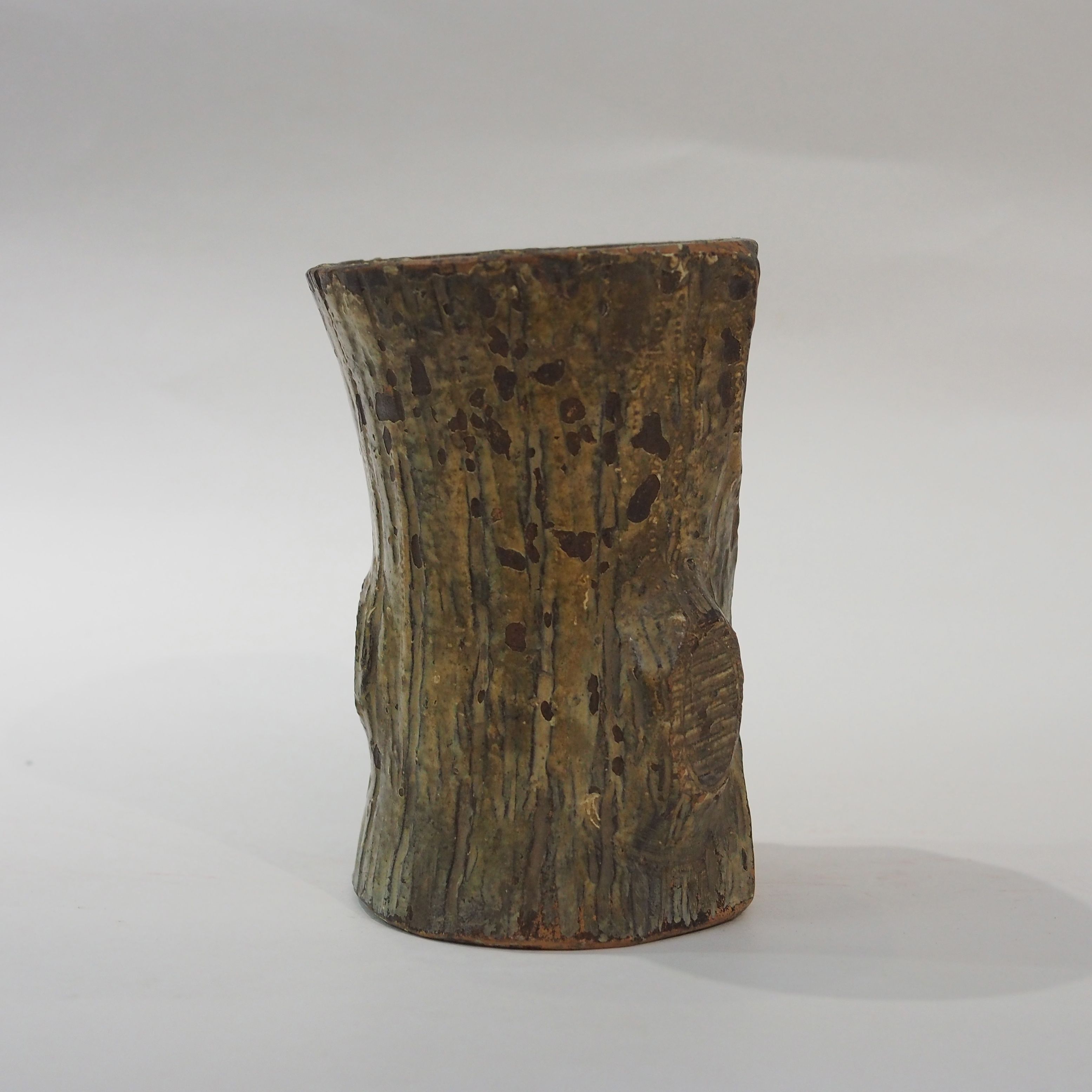
pen holder

DIA80xH420mm, China

This brush holder is in the form of a tree log, it is made with the stone is found outside of the mineral jade, the so called skin of jade.  As the material and colour is completely different from the jade, part of the “jade skin” is sometimes used as an articulation for jade carvings.  Here it is used on its own to resemble the bark of a tree.

Click here to see our other brush holders.