Archives for posts with tag: tool

millefiori

W45xD45xH50mm, China

Millefiori, “mille” (thousand) and “fiori” (flowers), in Italian.

I had a similar millefiori paper weight as a child.  I had no concept of a paper weight then and took it as a treasure item which I spend numerous lazy afternoons staring into the glass.  I would swear once I saw the little flowers moving inside but of course no one would believe me.

The millefiori frog here is not a Baccarat, but I just love the 70s psychedelic feeling to the film … and now you can perhaps also see the flowers moving inside the glass.

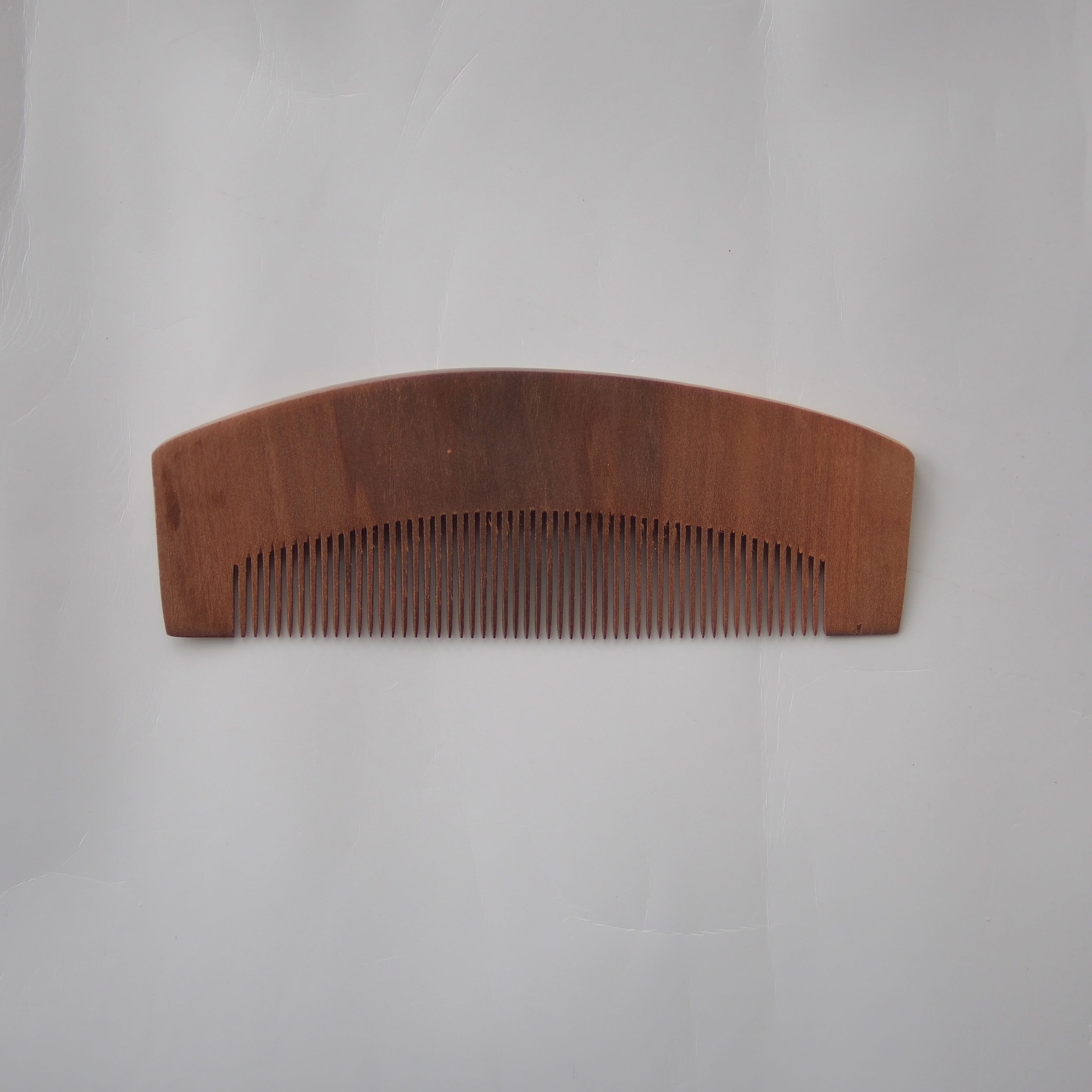
comb

L130xW50mm, China

Ever wonder how a wooden comb is made?

In the days when hair washing is not a daily event, the combs acted as a tool for cleaning of the hair.  Dust, dandruff, lices and any knots and tangles are all sorted.

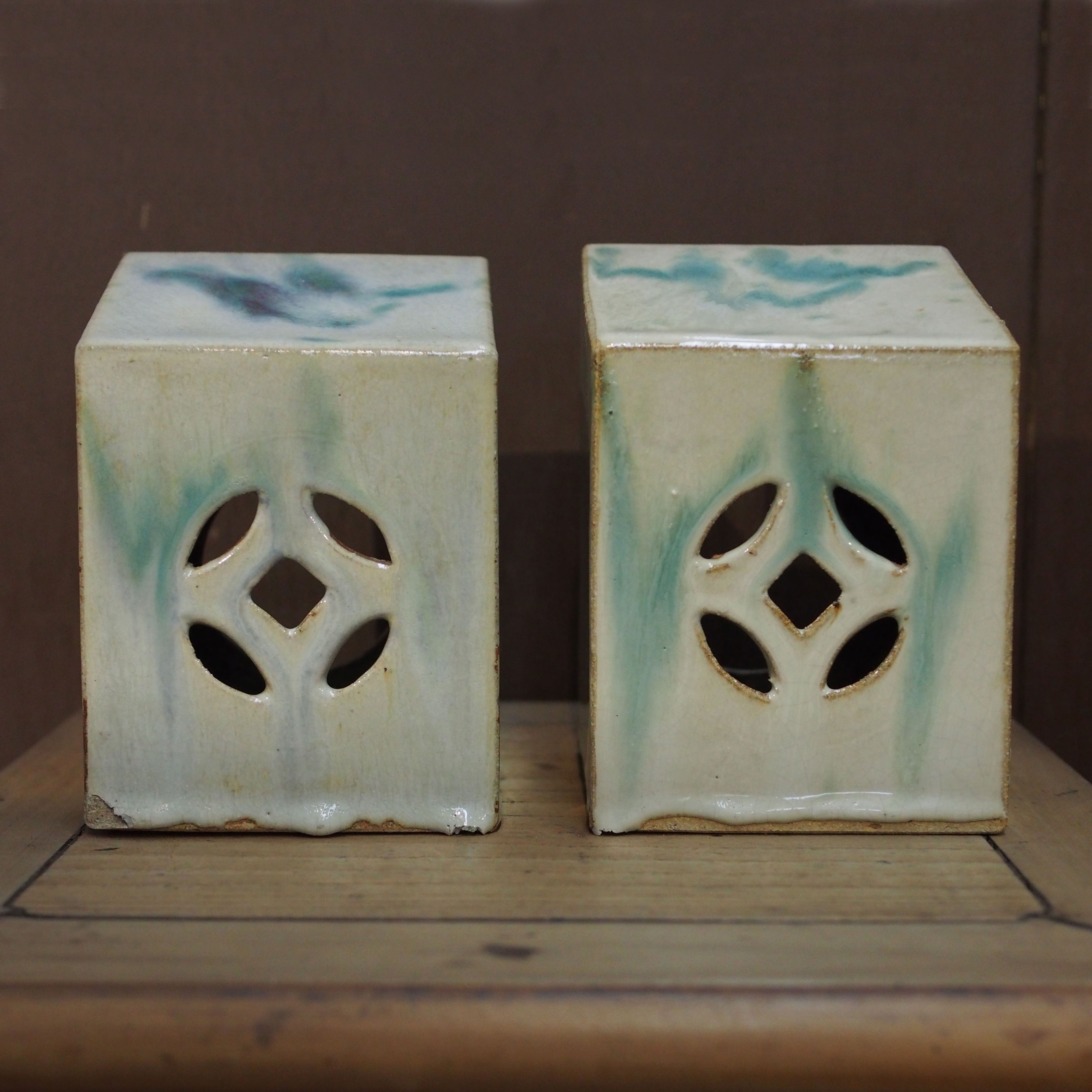
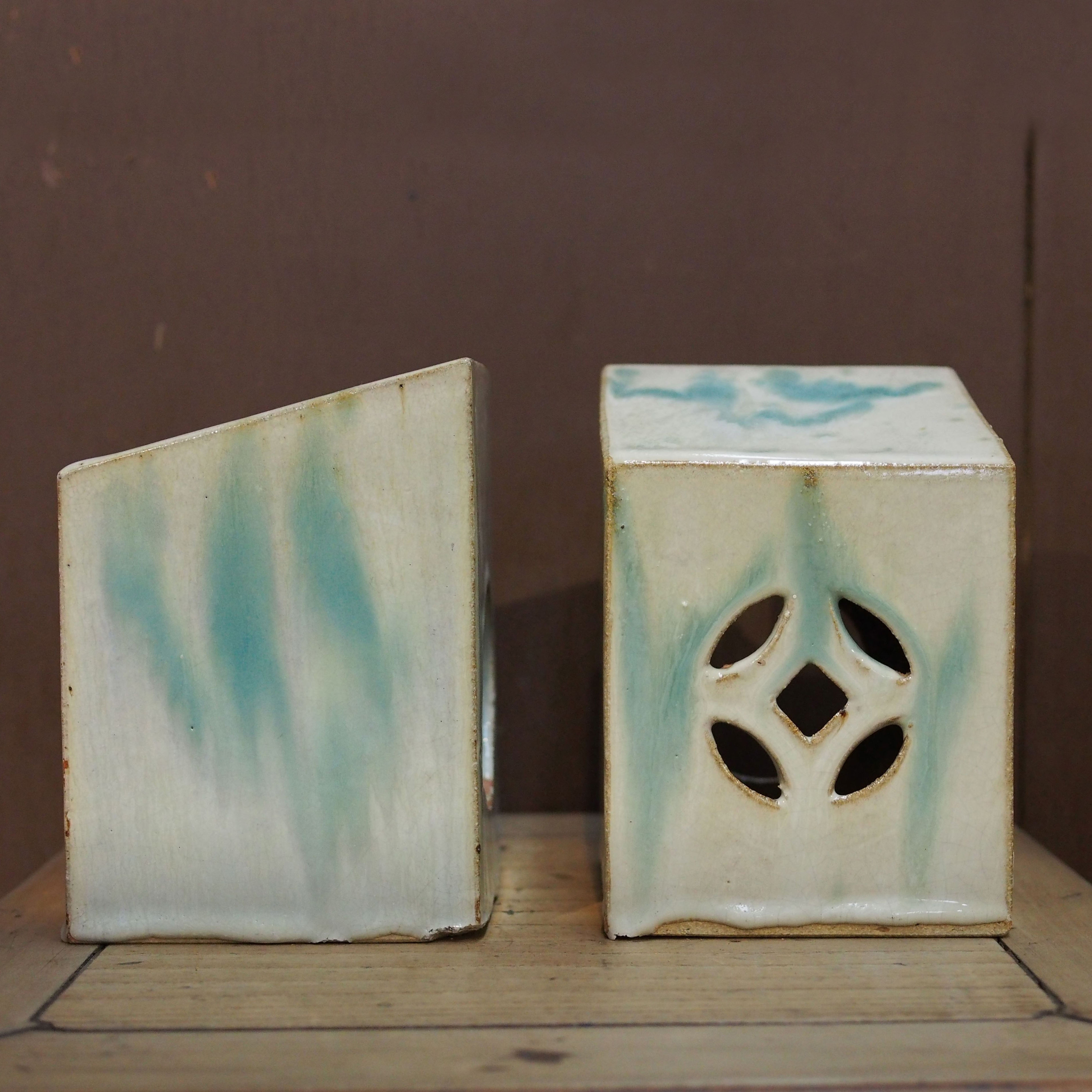
pillowpillowW120xD130xH180mm, China

This pair of very architectural objects are in fact a pair of ceramic pillows!  They have a running glaze which is typical of the Shi Wan kiln,  used for smoking opium, the airing holes which forms a pattern of an antique Chinese coin are used for ventilation, helping to keep the pillow cool.  I probably would not be able to be parted from the Tempurpedic but these would make lovely book ends.

W90xL120mm, China

In the old days,  needles are precious items that a girl would keep as part of  her possession. In the days before the $10 budget store when one will just get a new set instead of looking for the one you already have.  As needlework is part of any girls’ qualification, they would make their own pin holder, decorated with embroidery, patchwork, etc.

This is a pin holder in the shape of a dog.  

Opium Scale

L180xD90xH20mm, Thailand

For the Asian Folkcraft Collection, we have another tool – an opium scale.  This old scale is neatly set inside a teakwood case with carving on both side.

The scale is to be completed with a set of opium weights.

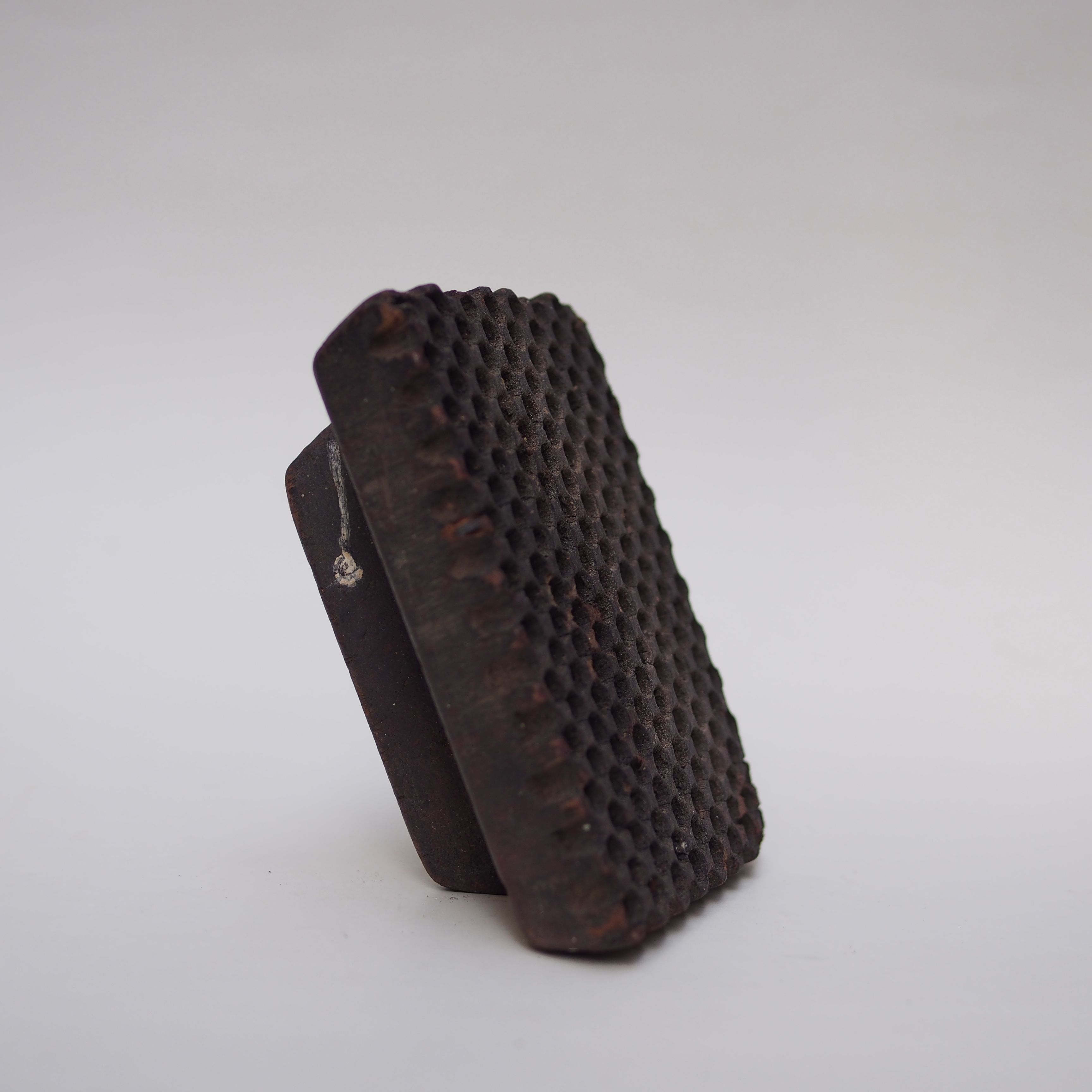
Fabric Stamp

fabric stamp

W150xL110xD70mm, India

Today for the ASIAN FOLKCRAFT we have a tool.

This is a well used piece of bunta, the wooden stamp used for fabric printng in India.

This beautiful video explains how the stamp is carved and how the printing is done.

Soup Dumpling Mould

W60xL330xD20mm, China

In the book Dream of the Red Chamber (Chapter 35), the young Pao Yu described a soup he had, one with young lotus leaves and lotus flower.  These leaves and flowers are little ornamental dumplings placed inside the soup.  The book went on to describe the moulds for their making.  A set of 4 silver moulds, each just over a foot long and an inch thick.  The moulds are the size of beans, of chrysanthemums, plum blossom, lotus seed, water chestnut.  The Red Chamber is a family of culture and wealth and for the ordinary folks the moulds are made of wood instead of silver.  With the pace of modern living, this delicate soup has now become the 疙瘩汤 … soup with comes from a stock cube and dumpling simply squeeze out of a plastic bag.

Isn’t this sad …

knife

knife 2

L190 (close) 230 (open), China

On old farmer’s folding knife with the handle made out of deer horn.  A very well used and well loved piece.

mu yuDIA90xH60mm, China

Mu Yu is a form of Chinese percussion musical instrument, it comes in different sizes from DIA 40- 850mm producing different sound at each size.  The smallest size is only for the used in the Buddhism recitation.  The name Mu Yu (wooden fish) is believed to be a reminder for the monks, as the fish is awake and alert in the day and at night, Buddhism should be practiced just the same.

Here is what it sounds like with chanting:

And here is a Maywa Denki version:

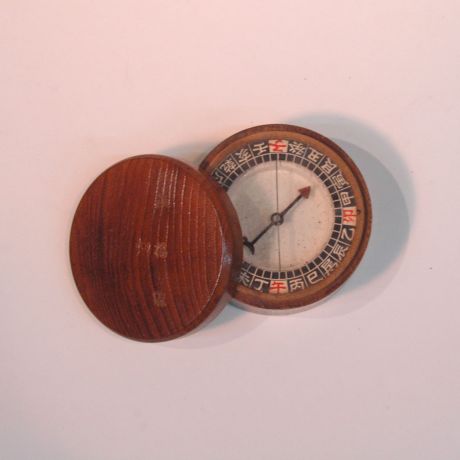
DIA100xH60mm, Hong Kong

This is a compass used by Tanka clan, a clan who lived on junk boats along the coast of Southern China and worked as fisherman.  As it is a day to day object, their compass is more simple then the traditional geomancers’ compass.  The compass for the Chinese is not only for telling the direction but related to space (direction extending to the universe) and time (past and future) as a whole

The Chinese Compass Points

Chinese navigators reduced the compass they inherited from the geomancers to its simplest form, using only 24 points, or even reducing them to 12 or 8.  The dial itself is divided into segments of 15 degrees each, represented by 24 Chinese characters.  These are the compass points, which scholars say were the basis for calculations by diviners and geomancers in ancient times.  These compass points were stabilized in their present system by at least the early 8th century.  These characters used on the compass dial are not the characters commonly used in China to represent directions.  Their origin or etymology is, for the most part, lost in the mists of antiquity.  But scholars have traced many of them back to over 4000 years ago when they appeared on “oracle bones” used to look into the future.  12 of the characters ;  子 zi, 丑 chou,  寅 yin,  卯 mou, 辰 chen, 巳  si, 午 wu, 未 wei,  申 shen, 酉 you,  戌 xu, 亥 hai, have been traditionally grouped together and referred to as the 12 branches.  8 of these character 甲 jia, 乙 yi, 丙  bing, 丁 ding, 庚 geng,  辛 xin, 壬 ren,  癸 gui,  are part of the traditional grouping knon as the 10 stems.  The remaining 4 乾 qian, 坤  kun , 艮 gen,  巽 xun derive from one of the earliest Chinese works on divination, the I Ching.  In very ancient times, the 12 branches were applied to the months of the tropical year and the 10 stems were used to name the ten day week.  Diviners used the stem/ branch combinations of the day, month and year of birth as basis for their calculations and conclusions.  The 12 brances are also associated with the Chinese zodiac; the rat, ox, tiger, hares, dragon, serpent, horse, gost, monkey, cock, dog and bear.  Each of htese creatures is supposed to exercise an astrological influence over a particular 2 hour period of the day, and one year out of every 12.

子 zi – North, rat, 23:00-01:00
癸 gui – N15°E
丑 chou – N15°E , ox, 01:00-03:00
艮 gen – NE
寅 yin – N60°E, tiger, 03:00-05:00
甲 jia –  N75°E
卯 mou – East, hare, 05:00-07:00
乙 yi –  S75°E
辰 chen –  S60°E, dragon, 07:00-09:00
巽 xun – SE
巳  si – S30°E, snake, 09:00-11:00
丙  bing –   S15°E
午 wu – South, horse, 11:00-13:00
丁 ding – S15°W
未 wei – S30°W, sheep, 13:00-15:00
坤  kun – SW
申 shen – S60°W, monkey, 15:00-17:00
庚 geng – S75°W
酉 you – West, cock, 17:00-19:00
辛 xin – N75°W
戌 xu – N60°W, dog, 19:00-21:00
乾 qian – NW
亥 hai – N30°W, pig, 21:00-23:00