Archives for posts with tag: mask

W140xH170mm, Indonesia

This is a mask used for the Kecak trance dance in Bali, it is also know as the monkey chant.  The chant is performed by 150 men during which the Ramayana epic will be performed by masked dances.  In the Ramayana legend, the monkey king Vanara helped Rama to save his wife Sita from the demon Ravana.

For our other monkey mask, check out previous entry:
Monkey Topeng, Korean Monkey Mask, Monkey Mask.

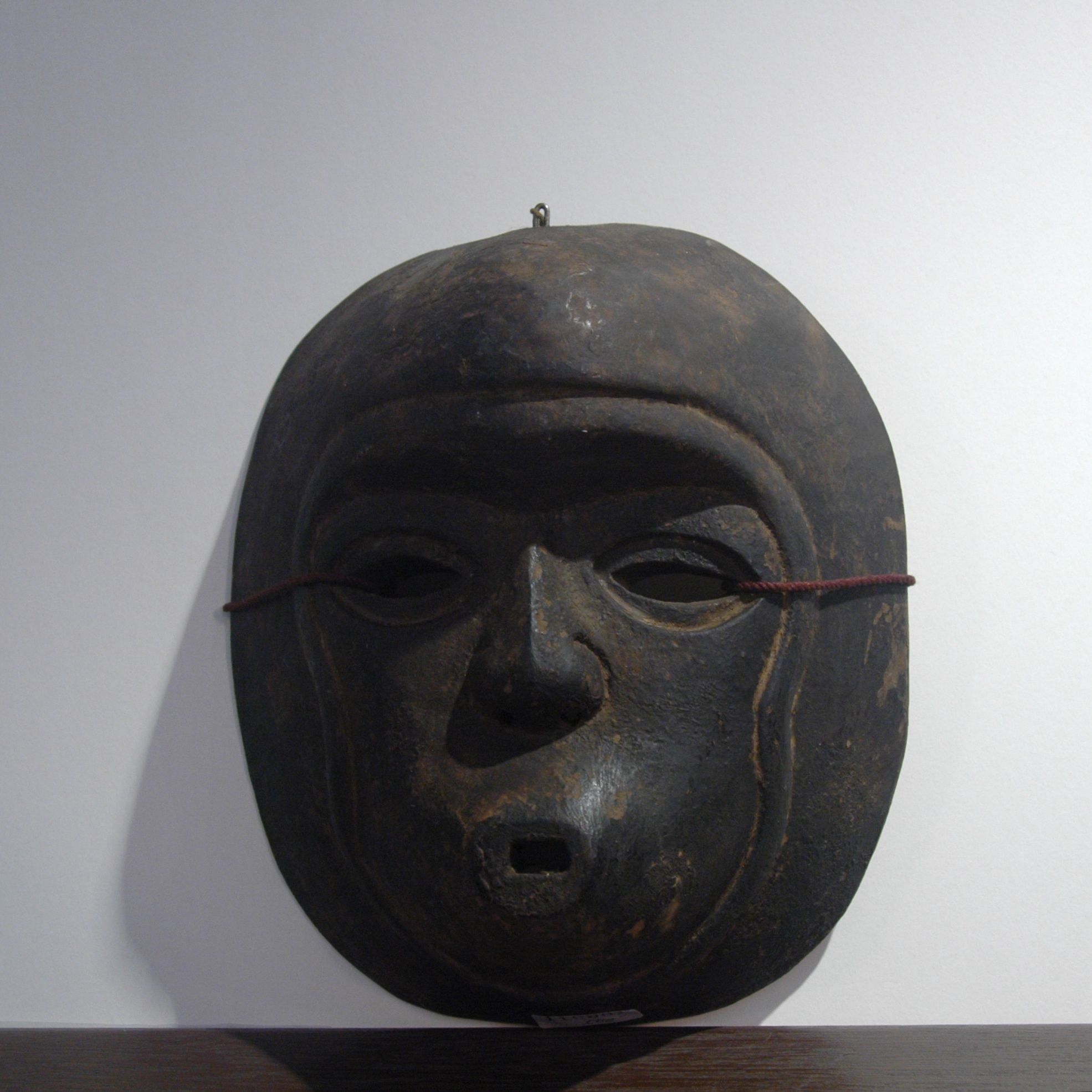
L160xW160mm, Indonesia

This is the topeng mask for the character Tembem, a friend of  Penthul.  Tembem and Penthul are characters used in the traditional Javanese dancing depicting warriors practising their fighting skills.  Their are a pair of comics, Penthul with a white face supports the warriors for them to keep a strong spirit.  Tembem, on the other hand, is the sad figure.  On his black face with the white painted tears on his eyes and nose, the crying Tembem represents the supporters who lost the fight.

H220xW140mm, China

This is a mask for the Chen He theatre of the Hu Nan district.  In the Ming dynasty, immigrants from Jiang Xi settled in the then barren land along the river of Chen He.  Mixing in the local dialect, the ground theatre and other religious element CHen He theatre was born, because of its history, there are a lot of different branches in the Chen He theatre.  This is a mask for the character Luo Han (Arhat), a Buddhist pupil who has a very high stage of attainment.

W150xH200mm, Indonesia

This is the Java mask for the Ramayana epic character Sugriwa , the king of the monkeys.  The monkey kingdomm Kishkindha was ruled by Bali, Sugriwa’s brother, one day a demon came to challenge a fight with Bali.  Seeing blood from the demon’s mouth and that Bali not returning, Sugriwa thought his brother has died and took over the kingdom.  Bali however returned unharmed and suspected Sugriwa has betrayed him, took Sugriwa’s wife Tara and banished him from the kingdom.  During his exile, Sugriwa made friends with Rama whose wife Sita was captured by the demon Rakshasas.  Sugriwa and Rama made a deal to help each other, Sugriwa to take revenge of Bali and Rama to save his wife.  Sugriwa challenged Bali and a fight started, midway Sugriwa’s counsellor Hanuman to place Garland of flower around Sugriwa’s neck.  Rama took the chance and shoot Bali at the heart.  After Bali’s death, Sugriwa took over the kingdom and forgot about the promise with Rama.  Rama’s brother Lakshmana was upset and was planned to destroy the monkey kingdom and to kill Sugriwa.  Luckily Tara reconciled Rama and Sugriwa.  Hanuman found out the location of Sita and with joint forces Sita was free.

W200xH300m, China

This is a mask of the Di Xi (Ground Opera); this form of opera is practice by the farmer villages in Gui Zhou area.  The folks will perform the opera passed on by the previous generation on Chinese New Year for around 20 days.  Unlike the other mask dances in China, apart from deterring away the evil spirit, the Di Xi only consist of fighting or war themes.  This specific themes can be explained by the its history; in early Ming dynasty,  tribal attacks along the border and by Mongols from the previous dynasty  has not be settled.  Military base were formed in the Gui Zhou area, these soldiers were known as the fort men (Tunpu), Di Xi was their opera, a way of introducing military and culture into the rural area.  Ceremony will be performed for the blessing of the mask, before the masks are blessed they are appreciated merely as wood carving objects, however once the blessed with prayers and scattered with the blood of a rooster they became sacred. The Di Xi masks are also worn differently from other Nuo masks; performers would covered their head with black muslin and wear the masks on their forehead.  The mask in the photo is General character, the colourful ornament on his head is in fact a helmet.

W150xL200mm, Malaysia

This is a Mah Meri mask used for the Mayin Jo-oh mask dance ceremony.  The Mah Meri is a tribe of 2000 people living along the southwest coast of West Malaysia.  Mayin Jo-oh is a traditional dance where the Muyang (plant and animal shadowless spirits) would join in the celebration.  The dance is performed by 5 women and 2 masked men in a counter clockwise fashion.

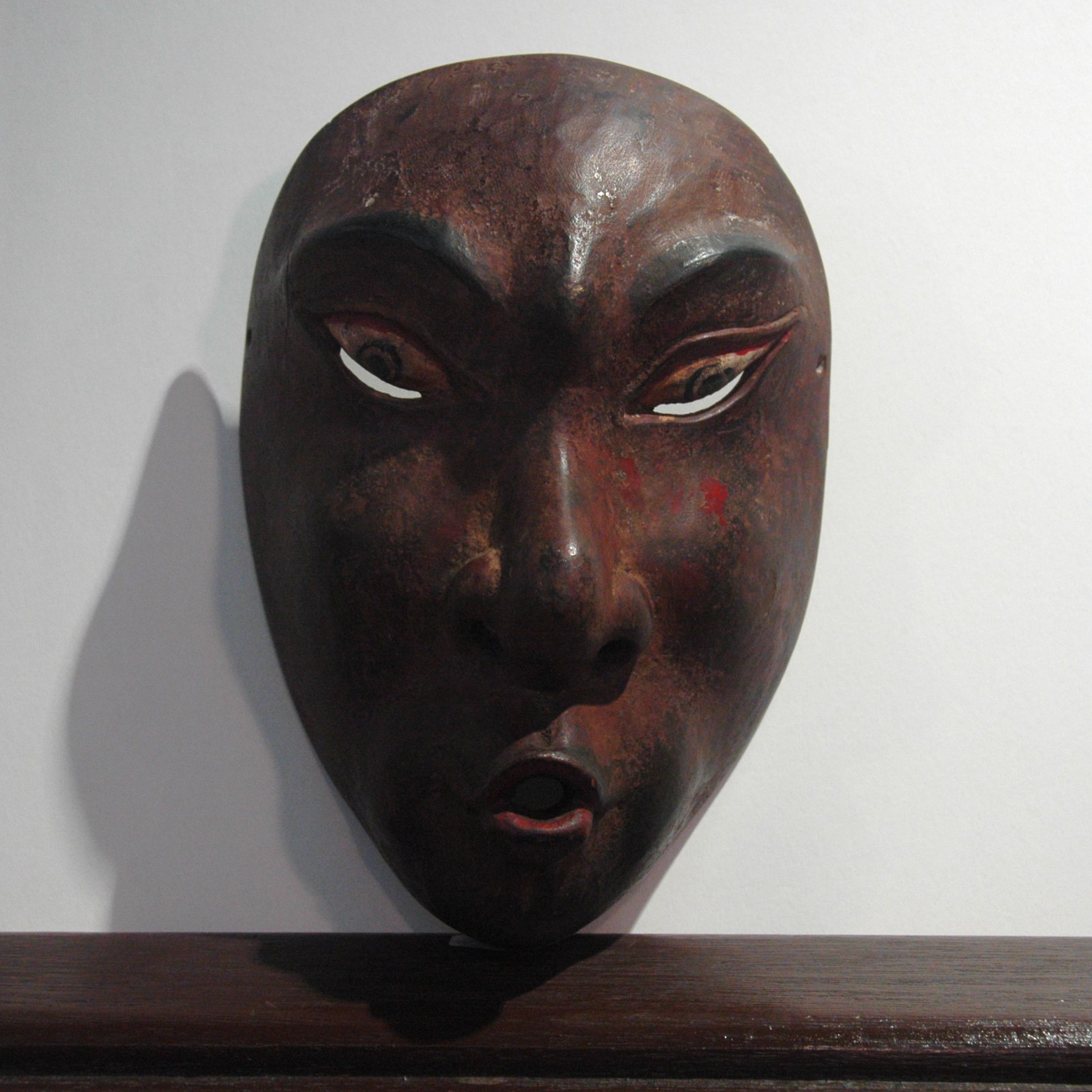
L150xW130mm, Indonesia

This is a Topeng use for masked dances in Indonesia.  This mask would have been worn by the Bondres character , a joker to bring in the humorous elements in the performance.  Despite the ugly facial expression, the Bondres are popular character because of the bawdy jokes and satires that poke fun at the current events.  The jawless mask was made so for the actor to be able to speak clearly.  Each dancer would have his own collection and there are many different of these clown character.  The eye brow and moustache are made with goat hair.

W200xH200mm, Korea

This is a mask used in the Talchum mask dance in Korea; the dances were in the past an outlet for letting out the frustration felt by the commoners towards the Yangban ruling class who were following the Confucian doctrine.  The stories of the dance often mock the ruling class by ridiculing monks, the upper class and shamens.  The dance would be performed at festivals, these dynamic dances are received by an equally energetic audience who would join in the dance at the finale.  This is a monkey (Wonsungi) mask made of paper and fur; in the dance the monkey usually plays the role of mimicking humans.

W200xH250mm, Indonesia

This is Java Topeng in the form of a monkey.  Actors would wear these masks to perform a traditional dance.  These performance usually take place at night and will last for several hours.

H250xW150xD50mm, Indonesia

This is an Indonesian topeng mask use for traditional dance drama which is most popular in Bali and Java.  These dances accompanied by gamelan music are performed during temple festivals and in ceremonies.