Archives for posts with tag: figurine

Medicine Bottles

H90xD50xW30, China

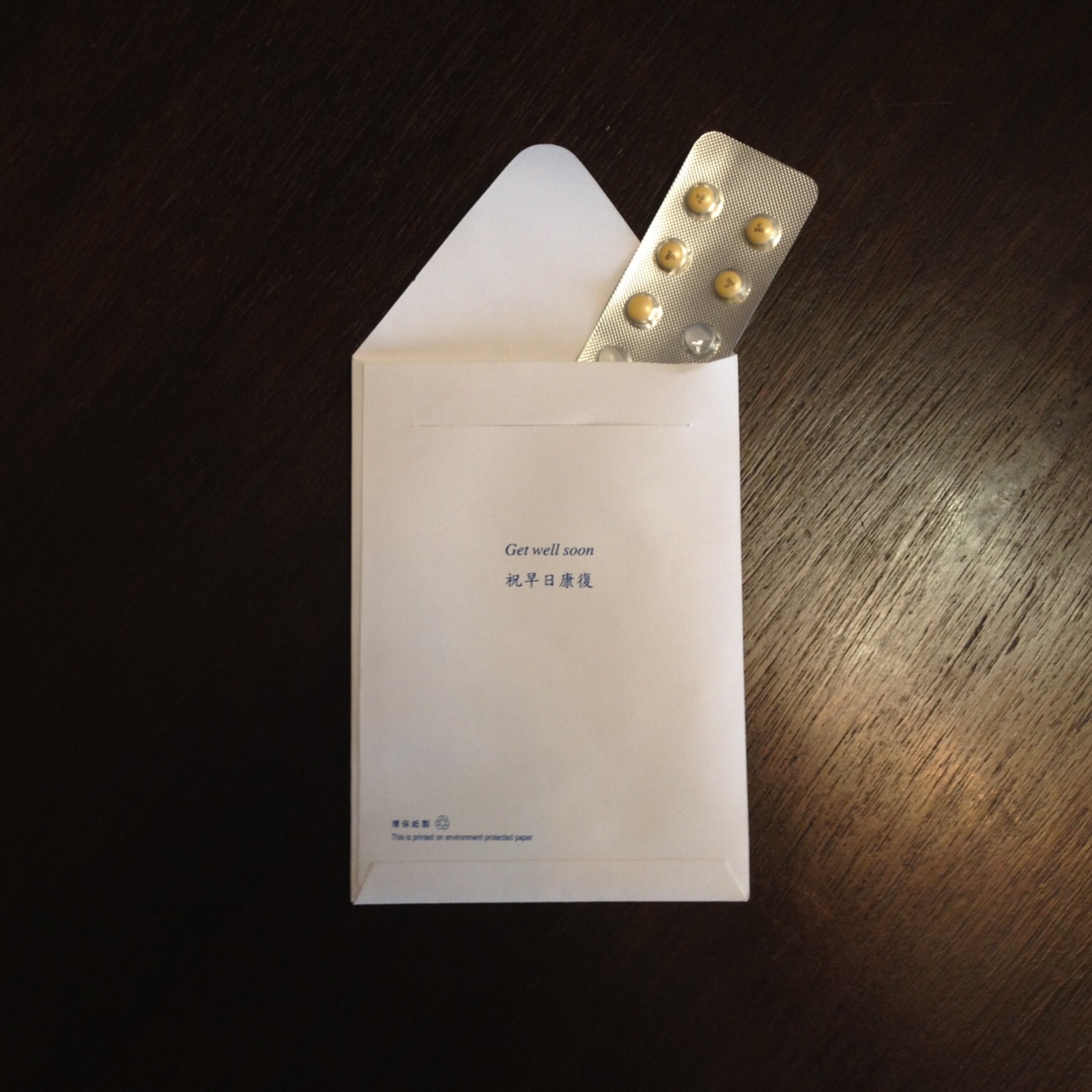
Two two lion with pup figurines are in fact bottles for medicine.  The traditional Chinese medicine apart from the bitten tea, also comes in small pills and powder form.  Judging by the size of the opening they would have been used to hold medicinal powder.  Personally I find the powder form to be quite nasty, they tend to stick to your throat and the unpleasant taste lingered on for ages.  I suppose these sweet looking bottles will help the patients take the medicine.

get well soonHere is the modern way of what thoughtful doctors do …

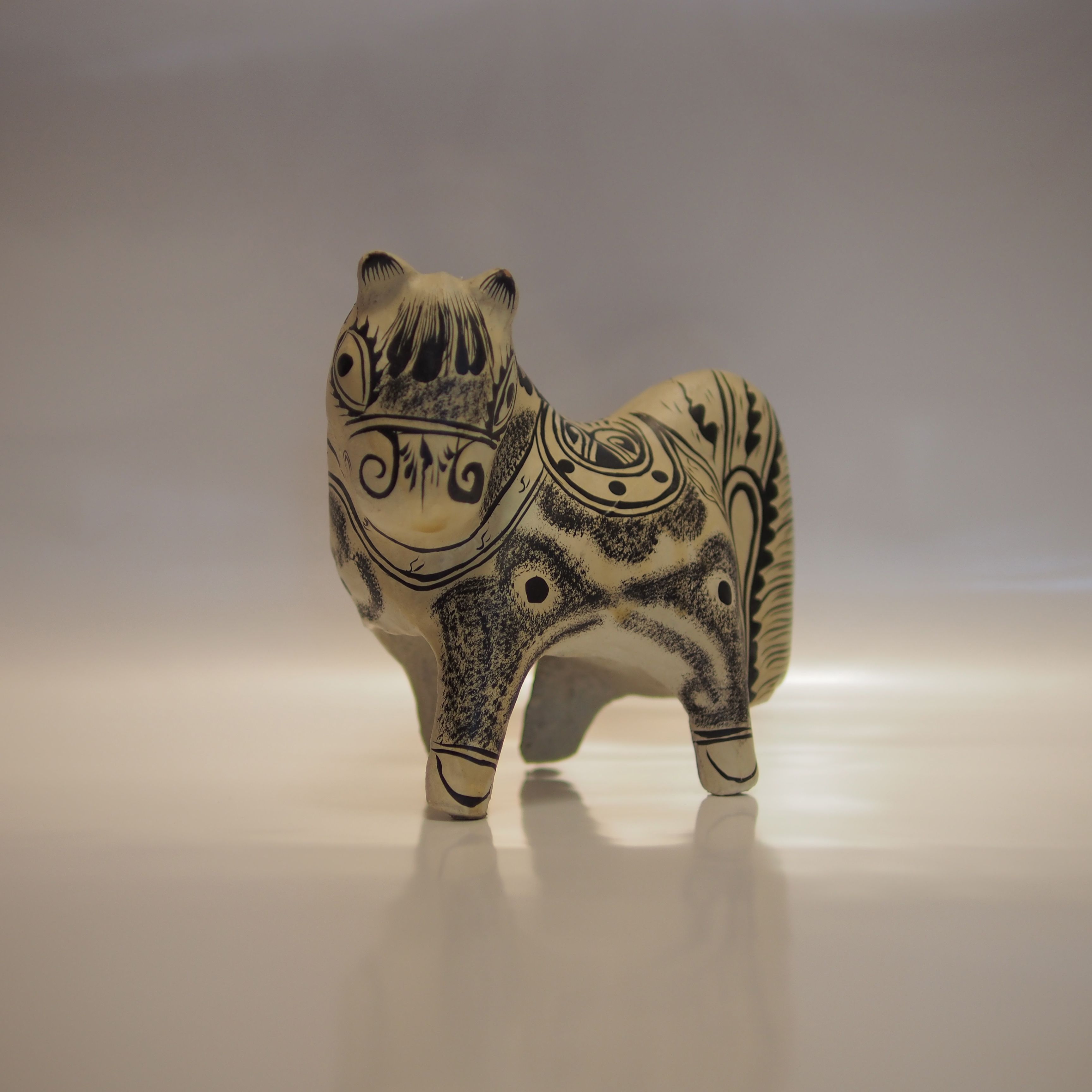
Clay Horse

H150xL150xW100, China

This sweet little clay horse is by the Hu Xin Min, an artisan who successfully injected new spirits into the traditional craft.

The  Feng Xiang province has a long and  famous for making clay figurines, they are dramatic and bold in patterns, a blessing present for the Chinese New Year, festivals.  The history of Feng Xiang goes back to the Tang dynasty, the first emperor  Zhu Yuan Zhang had the 6th division of his army based in the area.  During peaceful time, these soldiers from the south made clay figurines as a pass time.  Later on, the soldiers settled in the village and named it the 6th division village and the tradition of craft of clay toys started.

god of longevity W100xD80xH200mm, China

This is a figurine is that of the God of Longevity, he is holding a longevity peach that just one bite of it will make one immortal.

Click here to see the god of longevity’s relation with astronomy,
history and
his cane.

Ci Zhou KilnW70xH200xD120mm, China

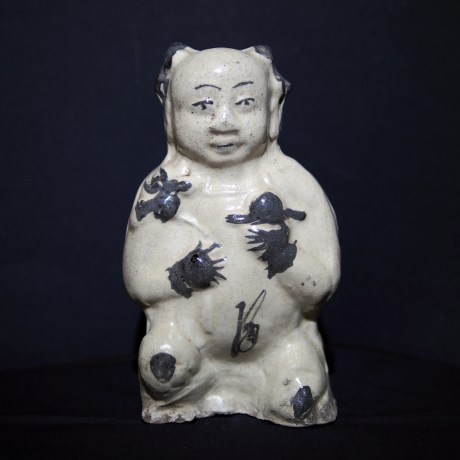
Today, for Something New Something Old pottery, we have something old.  A figurine of a boy holding a lotus made in the Ci Zhou kiln.  On further research, the boy’s name is Mo He Yue, the Chinese folk portrayal of the Buddha Siddhattha Gotama’s son – Rahula.  Rahula was born before Prince Siddhartha was enlightened to become the buddha, being raised by the his mother and grandfather King Suddhodana.  When Rahula was 7 year old, the Buddha returned to the palace, on the 7th day his mother Princess Yasodhara told Rahula to ask his father for the inheritance of the crown since the Buddha has already renounced his duty as the prince.  The Buddha knowing the crown goes with the worldly life is full of trouble, so instead gave his son spiritual enlightenment.  The Buddha asked his disciple Sariputta to ordain Rahula who later became one of the arhants.

Since the Tang dynasty, figurines of Mo He Yue have been used for the worship for the Qi Xi festival (7th of lunar July).  However, the Qi Xi festival has nothing to do with Buddhism but a celebration of love between a cowboy (Nin Lang) and a weaver girl (Zhi Nu).  

The love story goes something like this; a poor boy called Nin Lang who live with lived with his brother and the wife.  The sister in law was not keen on having a boy hanging around and had a cunning plan.  She asked Nin Lang to herd 9 of her cows but on his returned claimed that there were 10, if Nin Lang didnt manage to find the 10th cow he will not be allowed home again.  Nin Lang found a sick yellow cow on the hill, he nursed him carefully until the cow regained its health.  The cow was very grateful and revealed that he was actually a saint who has been strike down to earth.  The cow became a buddy of Nin Lang and told him  a place on earth where the female saints would hang out and there Ning Lang met Zhi Nu.  The 2 soon fell in love with each other and had a twin.  The Queen Mother of the West (the supreme head of all female saints) found out this forbidden sin, a earthy being having children with the saint, and escorted Zhi Nu back to heaven.  Seeing that Nin Lang became very sad at the departure of his wife, the cow told Nin Lang that after his death, his skin could be used to make a pair of shoes that could bring Nin Lang to heaven so he could find Zhi Nu again.  Years later, the shoes were made, Nin Lang flew to the sky and saw Zhi Nu at a distance.  The Queen Mother of West throw a hair ornament which became the milky way separating the two again.  Moved by their love, the pica pica birds formed a bridge to help them cross the milky way.  The Queen Mother of West touched, made an exception for them, once a year on the 7th of lunar July, the 2 are allow to meet on the pica pica bridge.  This story is of course a conception of the early Chinese astronomy; Nin Lang being Altair, Zhi Nu being Alpha Lyrae, the yellow cow – the Aldebaran and of course the Milky Way.

Since the Tang dynasty there has been the worship of the 2 lovers, in particular Zhi Nu, the weaver of colourful clouds in the sky.  It is believed that the girls would pick up her skillful hands. Now what has Rahula, the son of the Buddha got to do with the 2 lovers.  It has to do with other custom of Qi Xi, as it is a night of the union of the lovers, baby figurines were made as a symbol of conception of the much desired baby boy.  By Tang dynasty, with the arrival of Buddhism from India, these baby figurines were made into Rahula who is gifted and grown to be an arhant, an image of a son everyone wished for.  Rahula, being left behind by the Buddha at birth but eventually enlightened and preached by the Buddha.  This reunion fulfilled the void left behind the by separation of Nin Lang and Zhi Nu.

Slowly, the figurine changed from their role of being worship to being admired and by Sung dynasty when technique of molding was made popular, the Rahula (Mo He Yue) figurine became a toy.

spike nail

H100xL100xW60mm, Hong Kong (NOT FOR SALE)

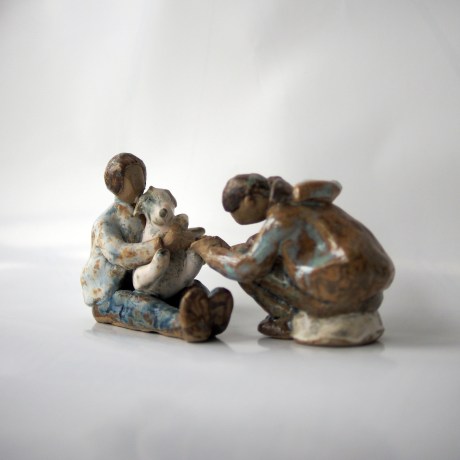
For our dog Spike’s birthday we have on the blog a pottery I made of him having his nail trimmed.  Some of you might have seen the little fellow running about in the shop.  For those who are spike or sealyham terrier fans, here is his blog:
http://spiketang.wordpress.com/

xmas

L50mm, China

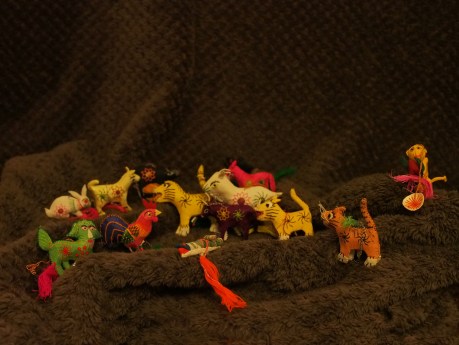
Here are a set of Christmas tree ornaments made in the form of Chinese folk toys.  Christmas trees were everywhere in Hong Kong since the beginning of December, but there are actually specific dates for both setting up and taking down of a Christmas tree.

Not to be brought or decorated until Christmas Eve (24th Dec),
to be removed after the 12th night (5th Jan)

If you have messed up with the first one, dont worry, just get the second date right.
Have a Merry X’Mas!

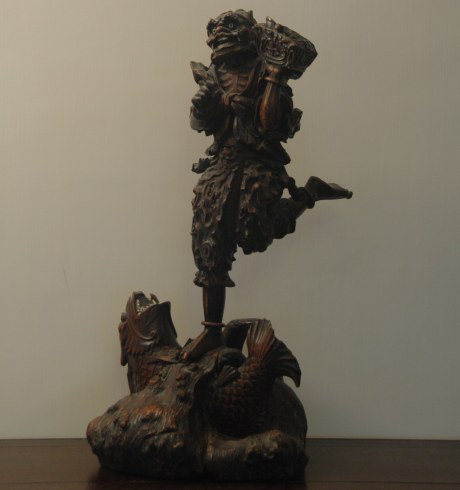
Kui XingW250xD250xH500mm, China

This is a figurine of the Kui Xing, unlike the one posted earlier, this figurine has a more popular composition; its left leg is kicking backward in the air.  This composition is inspired by the word 魁 (the Chinese word for “Kui”).  Can you see the resemblance?

魁, on the left is the word 鬼 (ghost) and the left 斗 (dou – traditional Chinese unit for volume, where 1 dan = 10 dou).  The word 鬼 (ghost) reflect the appearance of Kui Xing, a talented scholar who was born with a face so slightly that he looked like a ghost .  The word  斗 (dou),  goes back to phrase 才高八斗 which is a praise for someone’s intellect, if the intellect in the world is measured to be 1 dan, someone who has 8 dou of the world intellect who be a genius.  Dou therefore became a measurement of intellect as well as for wine.


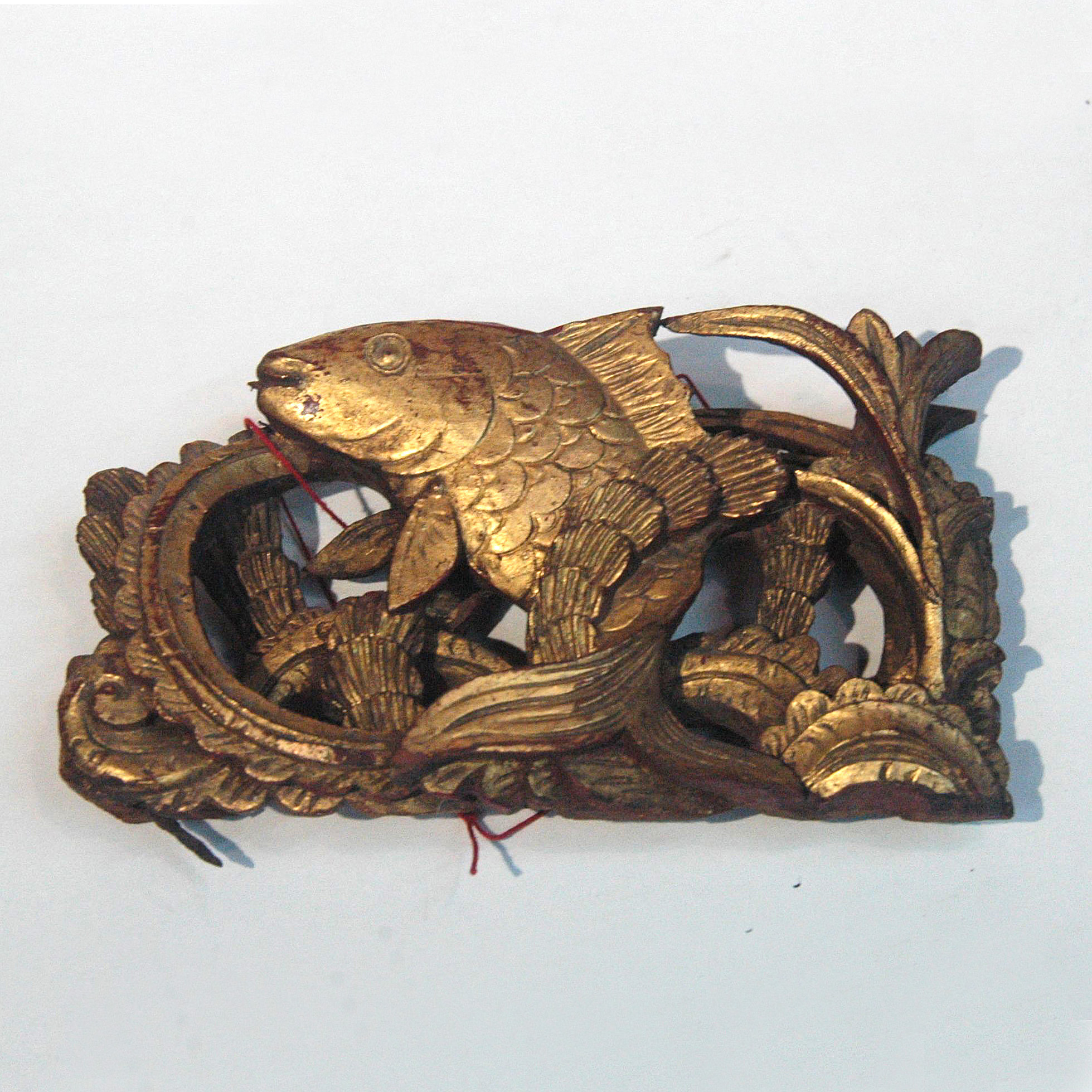
W130xH70xD30, China

The carp fish is a blessing symbol for the Chinese, there are many legends regarding the carp fish and here is one of them:
Once upon a time there is an orphan named Ji Qing, without a family he made his living as a boat tracker on the Chuan Jiang River.  Life was hard but he lived his days joyfully, being a good swimmer he is able to retrieve any objects his passenger accidentally dropped into the ocean.  Diving deep into the water he had a special bond with the carp fish, even if he is hungry he will not harm them, his friend made fun of him and called him silly Qing.  One day when he was tidying up the tow string, he saw a beautiful golden carp but at the same time a water snake was about to make it his dinner.  Ji Qing threw the string on the water snake and saved the golden carp, he took the injured carp to his hut and nursed it for days.  One evening exhausted from a day’s water he rushed home to see the carp but it was no where to be found.  Oddly on the table was 4 gold bars and there carved the words, “I have jumped to the sky and swam to the reef but failed to be a dragon (it is believe that if a carp can jump over the mountain it will turn into a dragon), here I am to give wealth to Ji Qing.

Would this be the golden carp?

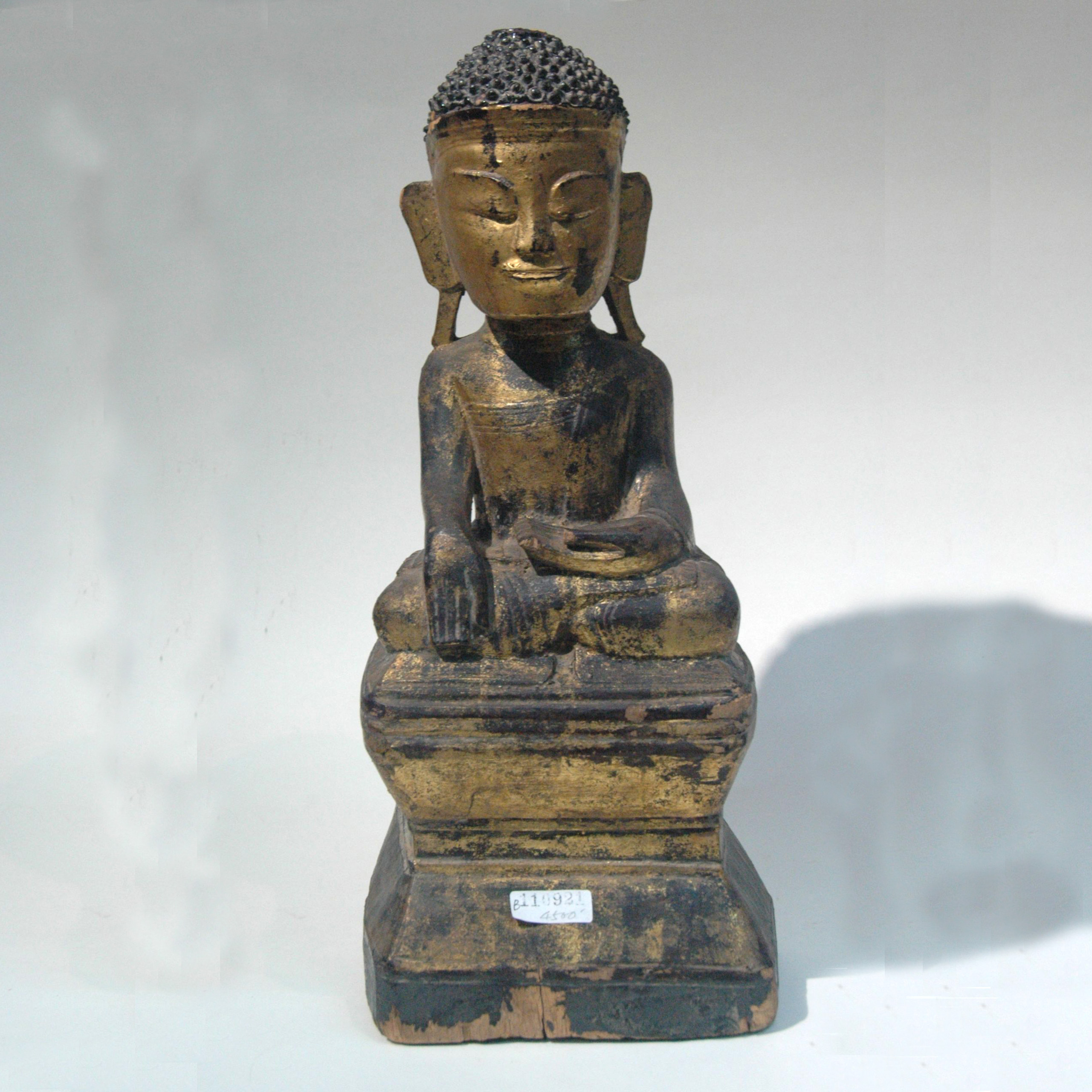
W150xD120xH370mm, Thailand

This is a Buddha statue in the Bhumisparsha Mudra posture, with his right hand resting on knee while reaching toward the earth and the left hand lies on the lap facing upward.  This gesture is also known as the “earth witness” which is the most iconic image of Buddhism.  This gesture symbolizes unshakability and steadfastness; the legend goes just before Siddhartha Gautama was enlightened to become the Buddha, demon Mara called upon his armies of monster to attacking, hoping to scare him away from his meditation under the bodhi tree.  Siddhartha stayed unshaken and  continued his mediation.  The demon claimed the enlightenment for himself and called for his monsters to give witness to his superior spiritual achievements, Mara then asked Siddhartha if anyone could give witness for him.  Siddhartha simply extended his hand to reach the ground and the earth responded and giving witness for him.  Mara was defeated at his own challenge and vanished.  The next day Siddhartha Gautama enlightened to become the Buddha himself.

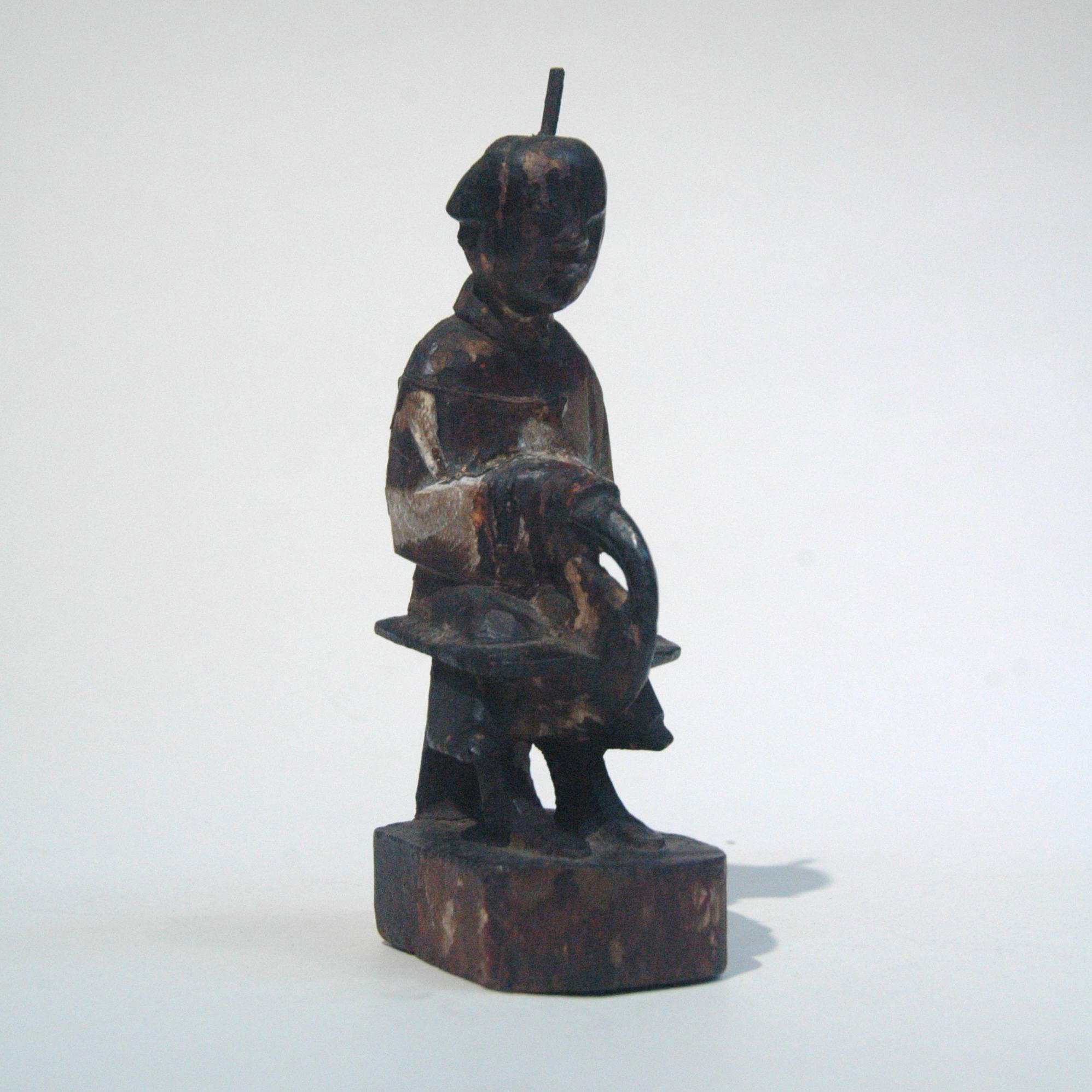
W40xD50xH130mm, Macau

This is an old figurine worshiped by the fisherman on the junk boats of Hong Kong, it is one of the ancestral saints – Crane Riding Mother Saint, a figurine representing the female ancestors.  It is believe that ancestors would protect the fisherman at sea.  In Taoism, the Taoist saints be believe to travel around by riding a crane.

See our other entry of the Junk Boat Gods;
Tanka Wooden Effigy, Junk Boat God (god?), Junk Boat God