Archives for category: tools

W100xD40mm, China

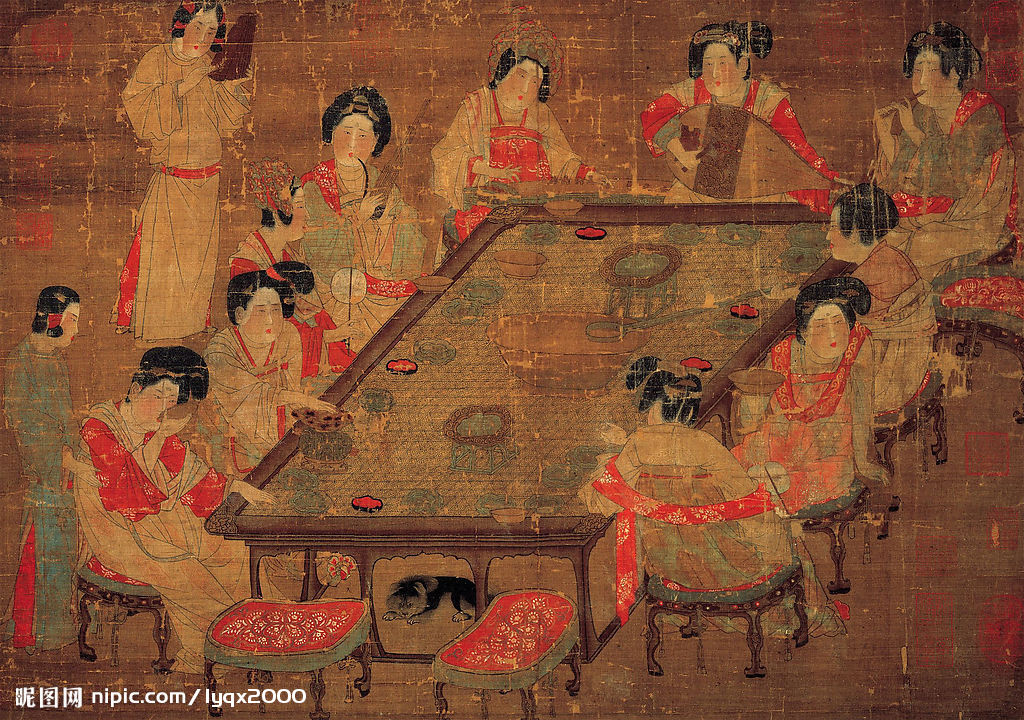
Comb in China became a special artisan trade around 700BC, the design, shape and material changes through out the different dynasty.  Apart from being a function object, it also became an accessory for hair styling in the Tong dynasty.  This can be seen in the Tang dynasty scroll “A Palace Concert” where ladies from the Emperor’s inner court were shown to be enjoying their drinks, the comb accessory can be seen as decoration in their hairdo.  This is still practiced by the minority tribes; the Shui, the Miao, the Dong tribe etc.  There is a folk tale explaining why the Shui tribe ladies have a comb in their hair, the story goes: a group of women were working hard in the fields, they have left their baby in a basket at the edge of the rice paddle.  Suddenly they heard the baby crying, they went running to see what is wrong only to found a large centipede making its way to the baby.  By the baby’s side is few wooden combs, the centipede had a look at the combs and compared the number of teeth with his own number of legs.  “Damn, i have been out numbered” thought the centipede and quickly made retreated.  Since then, the Shui tribe ladies have combs in their hair.
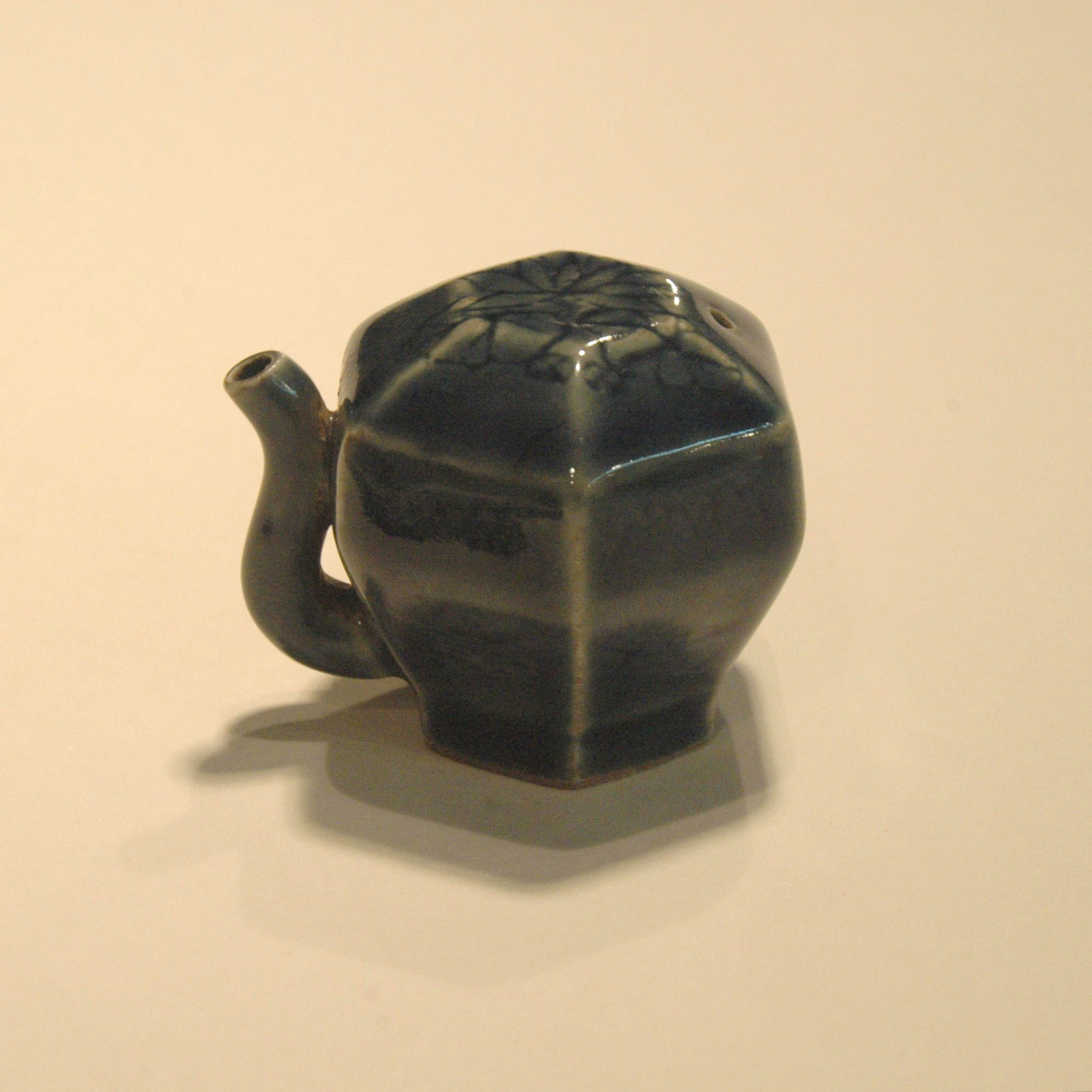
DIA60xH60mm, China

Here is another stationary for the Chinese calligraphy – a water drip for grinding and dilution of the ink.  It has a small water inlet and an outlet, the inlet acts also as suction control for the water flow.

W100xH50, China

This is holder for Chinese ink brush, the concept has been around for 1500 years (its hard to imagine otherwise as the ink brush is quite a messy object without it).  There are many different design and material, the ceramic mountain has been a popular design since the Ming dynasty.  Funny enough, there are brush holders that are named after mountains  but also also mountains that are named as “brush holder”, in Hong Kong (Beacon Hill), in Liao Ning, Qing Hai, Si Chuan, Fu Jian and of course the most famous mount on Huang Shan.

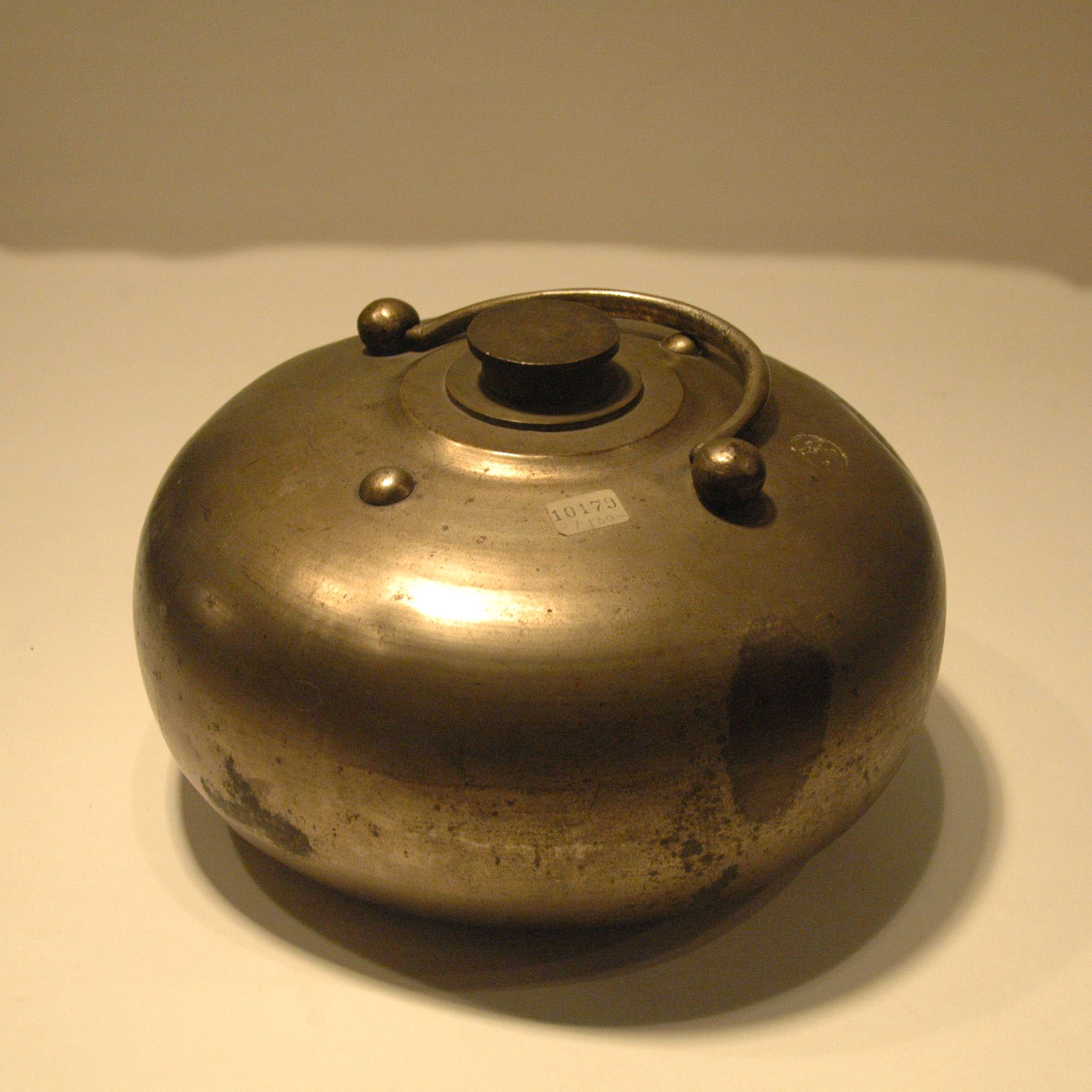
DIA250xH150mm, China

For these cold nights, here is a Chinese version of the hot water bottle known as the “hot water mistress”.  It is made with a good conductor (such as copper nickle, pewter or porcelian) and once hot water is filled in through the small screw up opening, it will be enclosed with a thick cloth bag and put in to warm the bed.

H250xW90xD30mm, China

Tobacco has been introduced to China in the Ming dynasty; imported from the Philippines, Japan and locally from Fu Jian.  Water pipe has been a  popular pass time in the Qing dynasty.  Empress Dowager Ci Xi is a lover of the water pipe and a has a large collection.  This is a peasant’s water pipe, made with bamboo as a material; the bamboo are natural in its smooth finish and in the shape, true to nature without any alteration.  The fancy type will be made of copper-nickel, copper, bronze, pewter with the mouth piece with jade or agate.  The Chinese believed that water is a good filter for the impurity and toxin of the tobacco.  However, the water is not changed often, after a while the water are filled with tar and becomes gluey (and possibly toxic), peasants will apply a few drop to ticks which would let go of their bite, the ticks will drop off instantly.

TOBACCO SERIOUSLY DAMAGES HEALTH

W150xH300mm, China

The traditional Chinese beds are almost like rooms on their own; there is an entrance through a gate at the front, the sides and the back are filled with wood carving panels or balustrade, even the roof are paneled.  Unlike the western bed where the user can get on from 2 sides and the end if they so want to, the chinese bed can only be entranced from one side.  If a couple were on the bed, the one sleeping inside will have to squeeze pass from the foot of the other person to get out of bed by the gate.  The gate is covered by a curtain which is drawn open in the day time and close at night.  This is the metal hook for holding apart the curtain over the bed, they come in a pair.

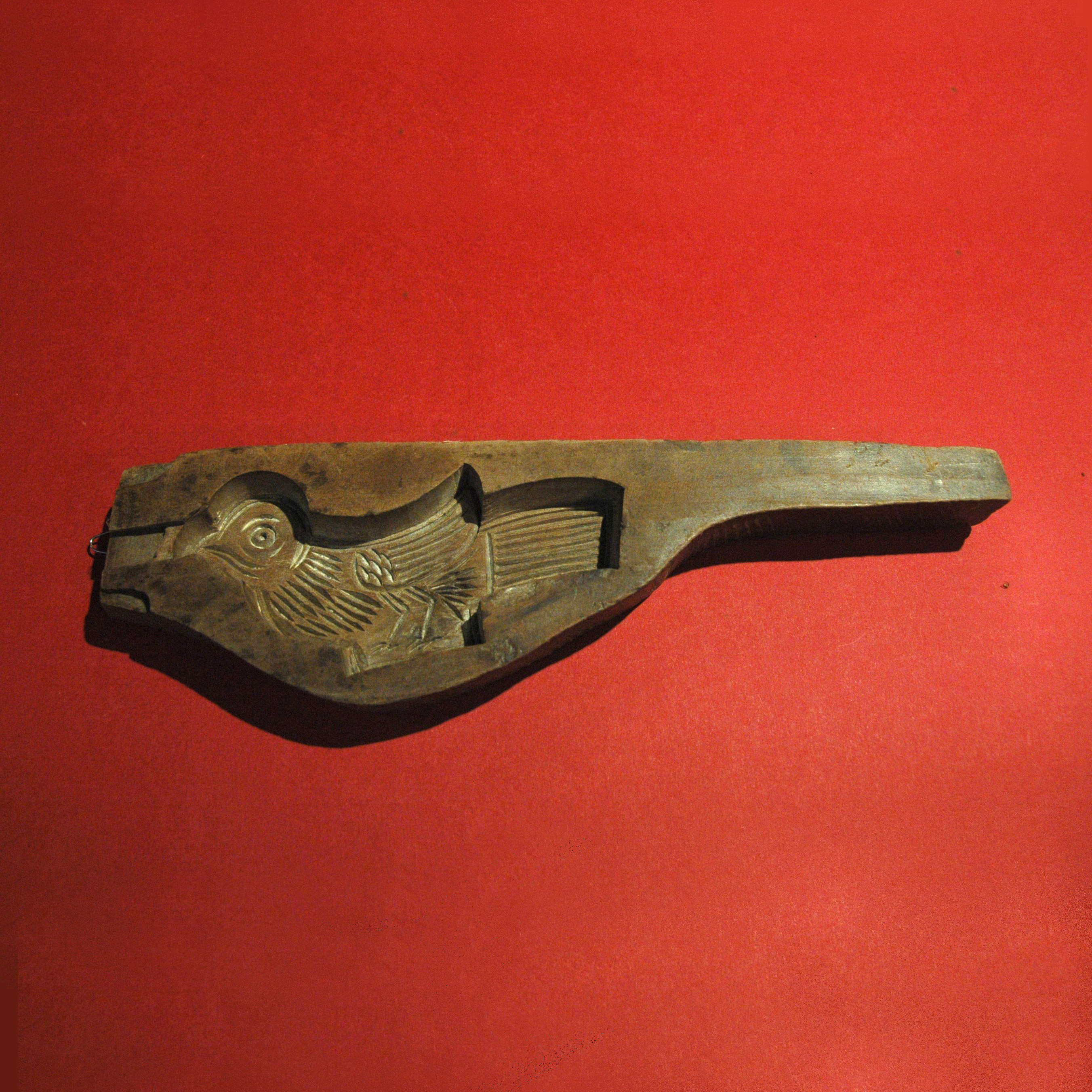
W80xL250mm, China

Traditionally a household would have a collection of different pattern cookie moulds; fish, cat, monkey, bird, bat, plants, etc.  These mould will be used for the several festivities each year with different recipes.  At the beak of the bird in this particular mould, one can see a carving adjoining to the edge of the mould, this air channel will make it easier when releasing the cookie from the mould.

DIA300XH100mm, Japan

This is a wooden container for the preparation of sumeshi
(rice used for sushi).

  1. Cooked 6 bowls of rice with 100mm of kelp
  2. Prepare the vinegar dressing;
    60cml rice wine vinegar + 40g sugar + 10g salt
  3. Put hot rice in the wooden container and add in vinegar dressing
  4. Use a spatula and mix the rice
    (with some sliding and slipping action)
  5. Use a uchiwa (fan) to cool off the rice
  6. Once cooled, covered and ready for making sushi!

DIA 150mm, China

The buddhist rosary, Mala, is used for counting the number of times the Mantra is recited.  This is a 21 bead waist mala, if you count the numbers there are actually 22 beads, the additional larger coral bead in the center is known as the Guru bead, it symbolizes the Guru from whom one has received the mantra being recited.  Within the 21 beads there are 3 marker beads.  The main beads are made of blue sand gemstone,  while the Guru and separator beads in coral.

China

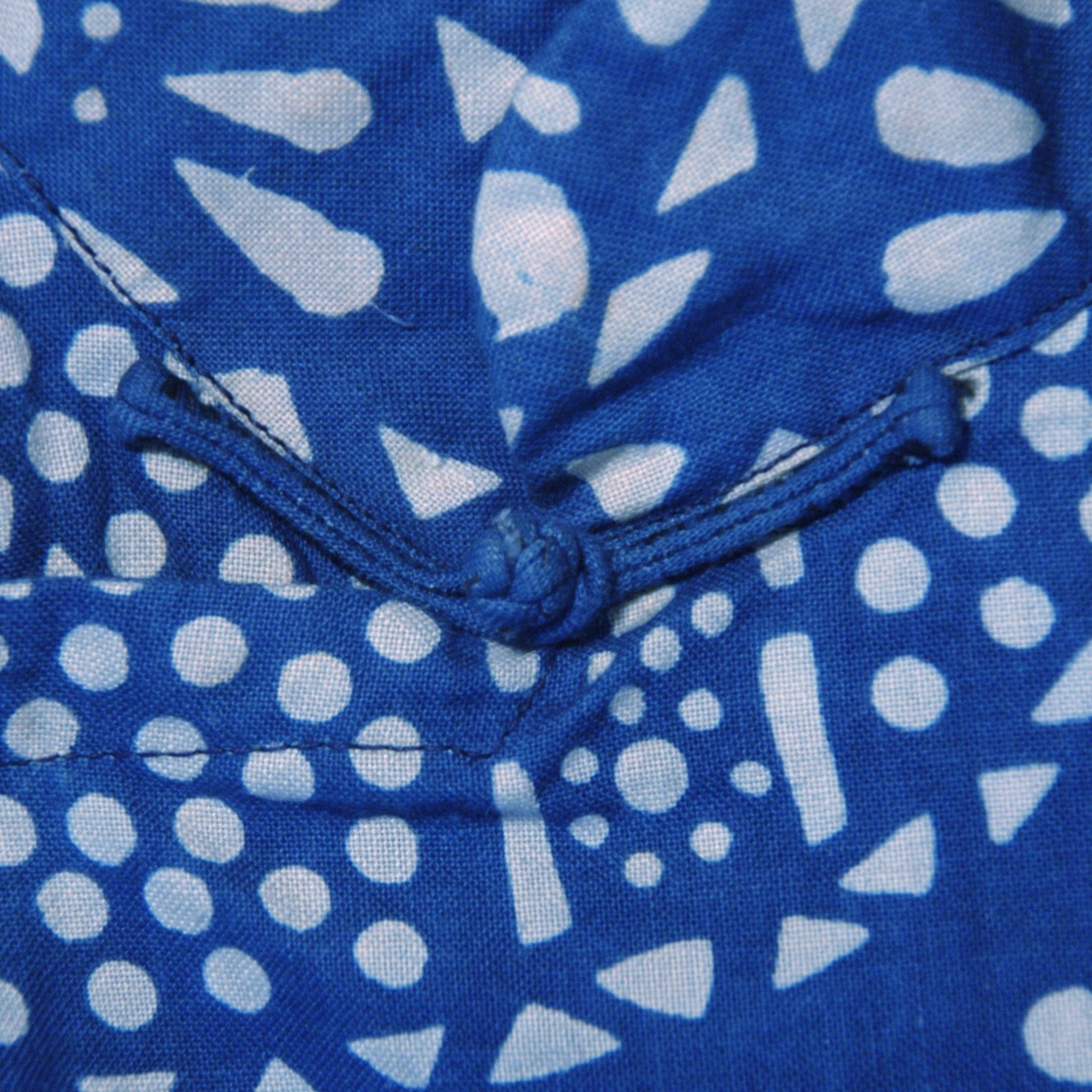
The Chinese developed a elaborated art of knotting which became popular in the Tang and Song Dynasty, however the concept of knotting as “button” did not appear until the Ming Dynasty, before that clothing were held together simply by tying up two strapes.  Apart from knot buttons other type of buttons appears e.g. copper, silver, pearl, agate, etc., apart from being functional, they also became a status accessory.   Knotting for buttons developed into several forms,some more elaborated than others, the knotting diagram shown above is for a basic design.