Archives for category: stone

lotus

DIA160mm, Hong Kong

For the Something Old Something New Jewellery Collection, we have a jade double lotus neckwear.  The twin lotus, Bingdi lotus, has 2 flowers on a single stem, there are more rare than having a twin for human.  For the Chinese it is a symbol of solidarity, being from the same branch, same heart, use to describe a loving couple.

Unfortunately, before I have a chance to post it on the blog, this unique item has already been sold.  But its such a nice piece that I could not resist of putting it on the blog anyway.

Follow the complete flowering process of the twin lotus here.

13 locket

DIA165mm, Hong Kong

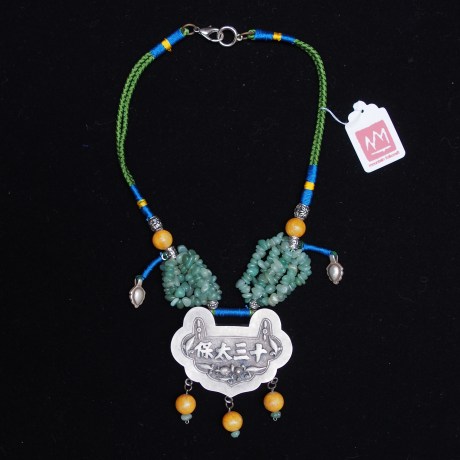
To keep everyone safe for the rumor of today being the end of the world, we have an old long life lockets for tonight’s post.

Long life lockets are normally given to a baby on its 100th day’s birthday by the grandmother as a blessing for the child.  In old China when mortality rate is high, the locket is a symbol of locking the child’s life to this world.  There are 4 words on this locket, “13 Tai Bao”, Tai Bao is a high level court official whose duty is to care and guide the emperor.  Legend has it Guang Hui Wang has 13 sons who  are on earth to care and guide humanity.  The 13 Tai Bao is so well known for their protection that even a famous herbal tea for securing pregnancy is named after them.

See our other references of the long life lockets; Silver Necklace, Clay Doll – A Fu, Du Dou Embroidery, Locket.

DSC_0020

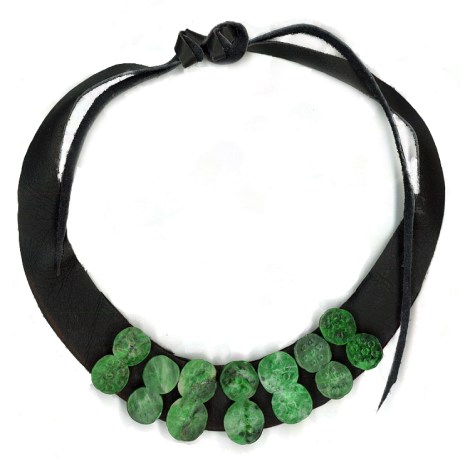
DIA160mm, Hong Kong

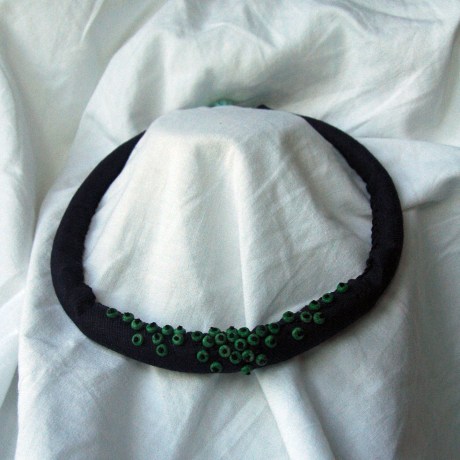
This neckwear has been sprinkled with a spoonful of jade beads.

Come to see our Something Old Something New Jewellery collection!

DIA160mm, Hong Kong

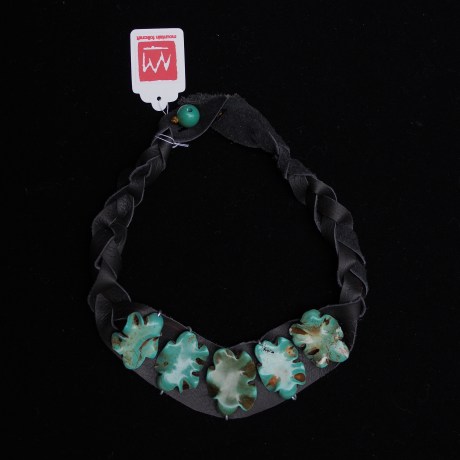
Here it is the first piece of uniquely designed jewellery we are presenting to you for the Something Old Something New jewellery collection!

A leather neckwear of leave shaped turquoise ornaments.

As a child I was intrigued by this colour, an in between of blue and green, and with such a posh name – TURQUOISE.  The name of other colours are more simple, almost as if they have been designed for a child – RED, BLUE, GREEN, YELLOW, PINK, etc., with TURQUOISE there is a French air about it.  It was until much later that I discover the material, turquoise,  and funny enough the name came from an old French word which means Turkish, Turkey was the place where turquoise was imported to Europe.

Here is the animated Ken Nordine with Turquoise;

W40xD40xH80, China

Every time I see this snuff bottle I feel as if this ought to be a bottle for some cold remedy.  The red cap on the monkey’s head reminded me an emergency siren or more the flashing light of the ultraman.

W40xD20xH120mm, China

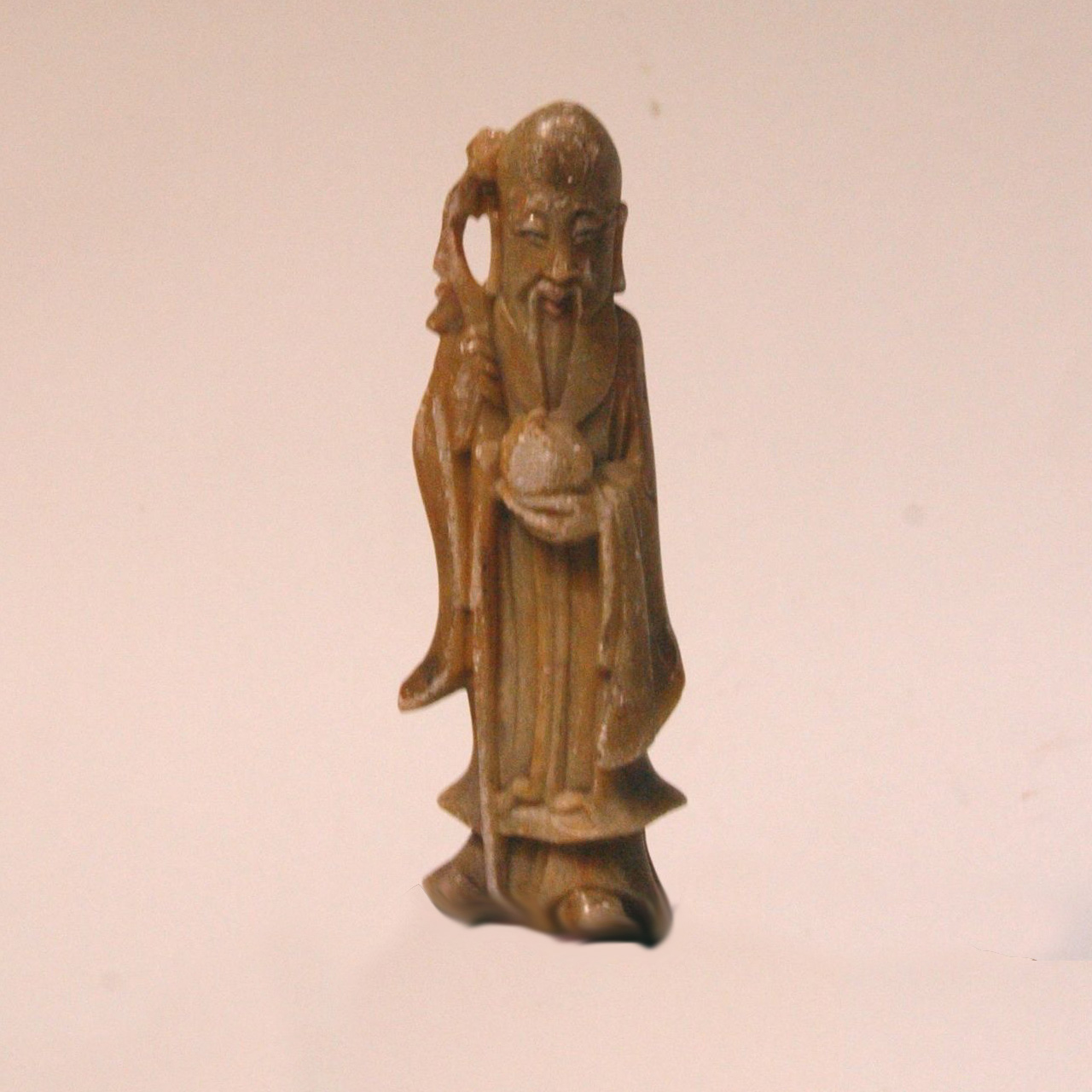
This is a figurine of the God of Longevity in an early post.  You might notice that he is always carrying a long cane; this cane came from the state banquet held for all the OAP (the 70+) in the East Han dynasty.  The emperor had the cane specially made for all those who attended the party, the cane symbolized the privileges that were awarded to the elderly.  The head of the cane was decorated with a turtledove thus its called a turtledove cane.

W130xD50xH230mm, China

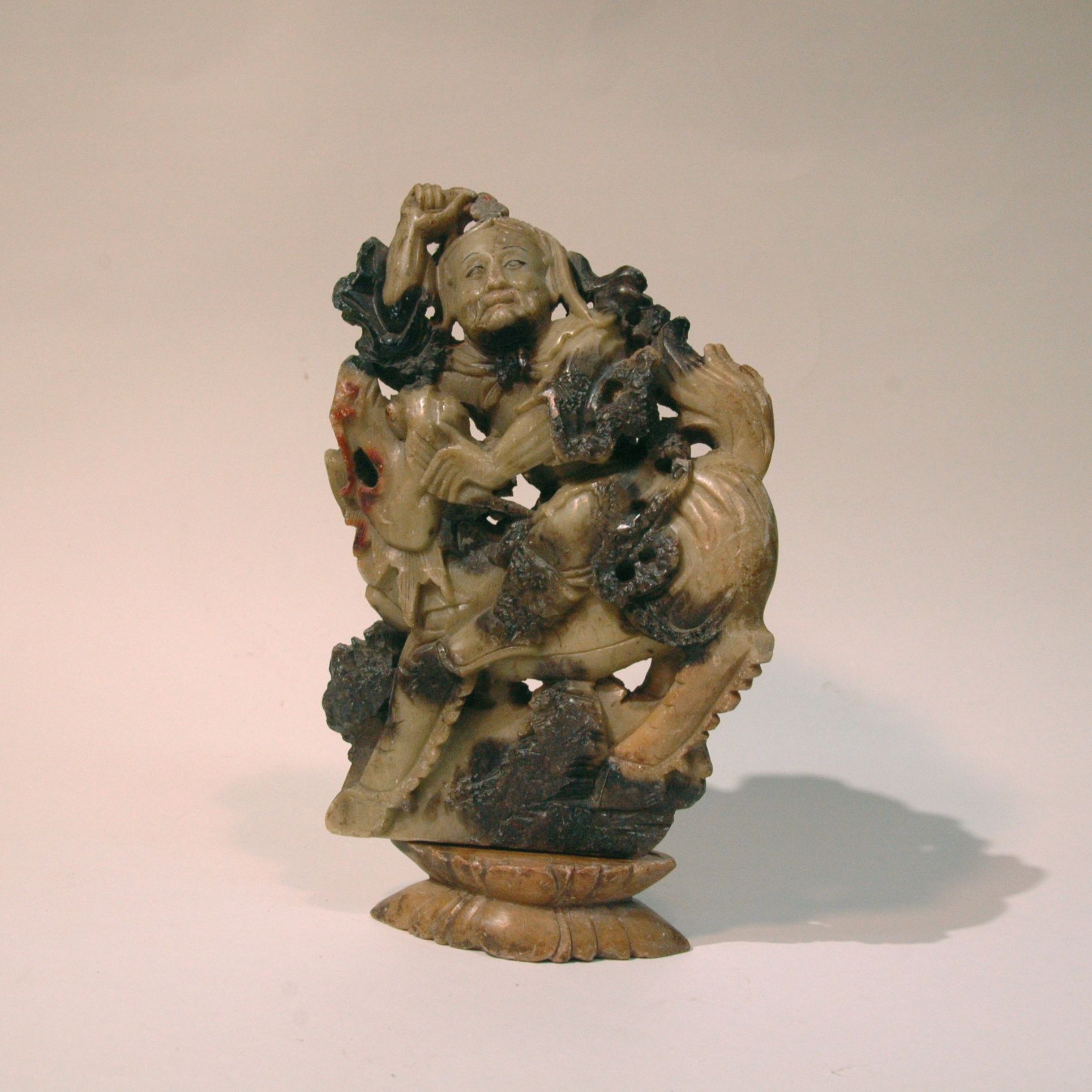
This figurine is a Shou Shan stone carving, the Shou Shan stone is famous for its wealth of colours, the artist would made use of the colour to form the composition of the carving work, all the carvings are one off piece of artwork.

The warrior of this carving is riding on a Kirin (yes, its the same mythical creature as on the beer can) with bats accompanying them.  The Kirin (together with the Phenoix, the turtle and the dragon) is believed by the Chinese to be one of the four old saintly creatures.  Its a creature of heaven and not of the earth, those that were captured by the gods became their carriage (as on this figurine).  The Kirin has the head of a dragon, horns of a deer, eyes of a lion, the body of a tiger, the scale of fish, but despite this fierce appearance it is a kind creature and believe to an animal of blessing.  As for the bats, they are also a symbol of blessing for the Chinese but as we all know what they look like I wont go into details in this post.

Here is a story about the bat and the kirin from the Ming dynasty which i find quite amusing; one day the Phoenix held a birthday party, as she was the queen of the birds all the birds from everywhere came to wish her happy birthday.  The bat, however, did not show up.  The Phoenix, being the queen, was not please at all, so she summoned for the bat and asked, “you live under my rule, where are you so arrogant and did not come when invited?”  The bat answered, “I have craws, I am a beast, why should I pay my respect to a bird?”  Then the Kirin held his birthday party and the bat did not show up, the Kirin was angry and condemned the bat, the bat answered, “I have wings, a bird, why should I come to a beast party?”  Then the Phoenix and the Kirin met up and of course the bat incident came up in their conservation, “what a world this is coming to that there is such non bird non beast creature, how frustration is that.”  As time moves on from the Ming Dynasty, I feel that the bats now would claim to be a bird in front of the Phoenix and a beast in front of the Kirin, a fence sitter in all sense.
W80xL60mm, China

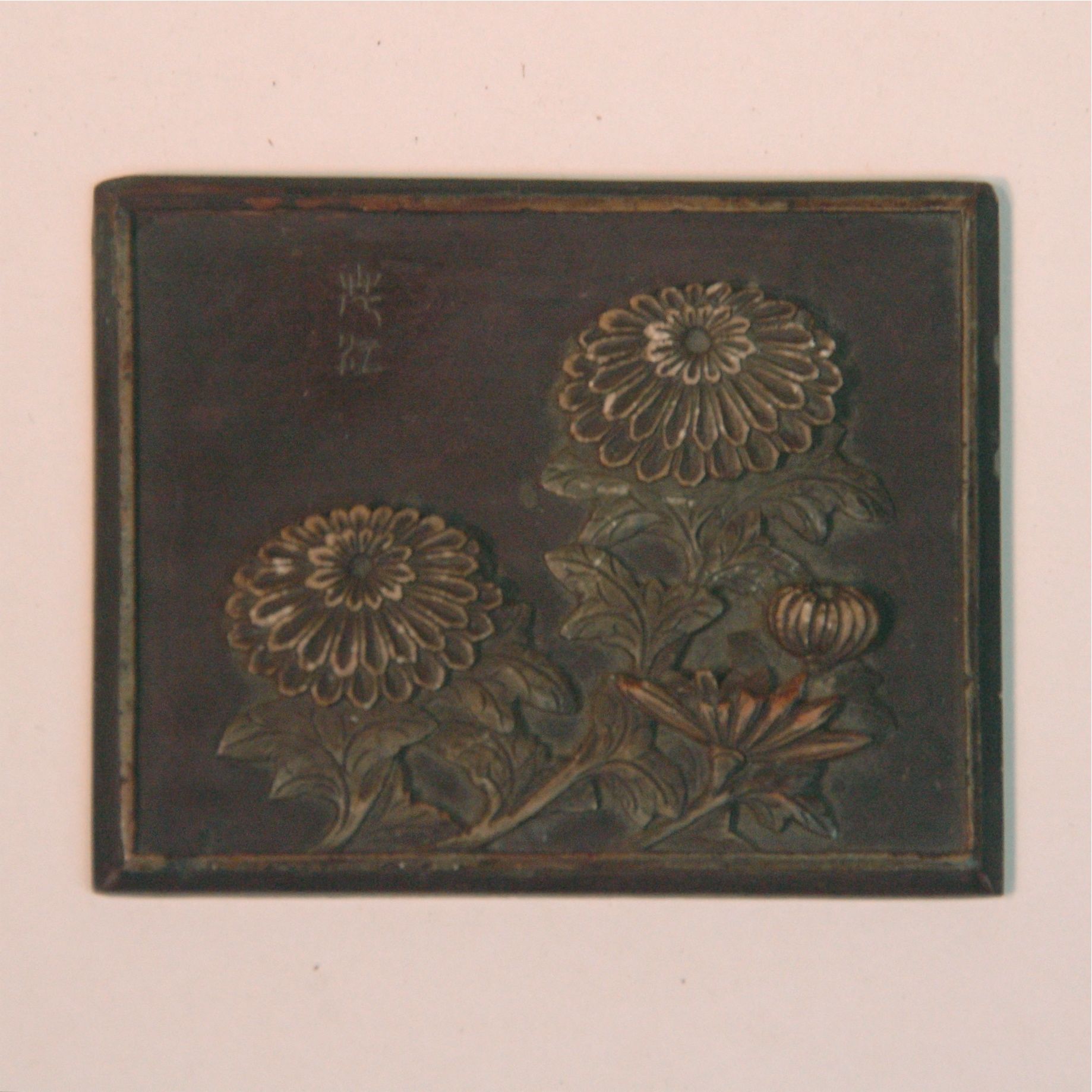
This is a stone carving use for the decoration of a small yan ping (see our other entries; yan ping and again yan ping).  Yan Ping is part of the Chinese stationary, it is designed to be used as a screen for shielding the ink well from drying.  The carving is a relief of the chrysanthemum flowers from a small piece of stone, the slight polish gave the flower its shading and tones.

W160xD55xH90mm, China

Anyone know what is function of this tool?  Advice needed!
A small gift will be sent to the person with a convincing answer.

What I have been thinking so far;

  • the bottom curve is similar to that of a rolling machine (e.g. fire cracker roller)
  • a rod can be fixed through the circular hole with a wooden pin then attached through the top opening
  • the pin will be limited the rolling extend of the rod

My idea has came from the fire cracker roller machine where the bottom curve acted as a roller producing hollow paper tubes for the fire cracker.

DIA230xH30mm, China

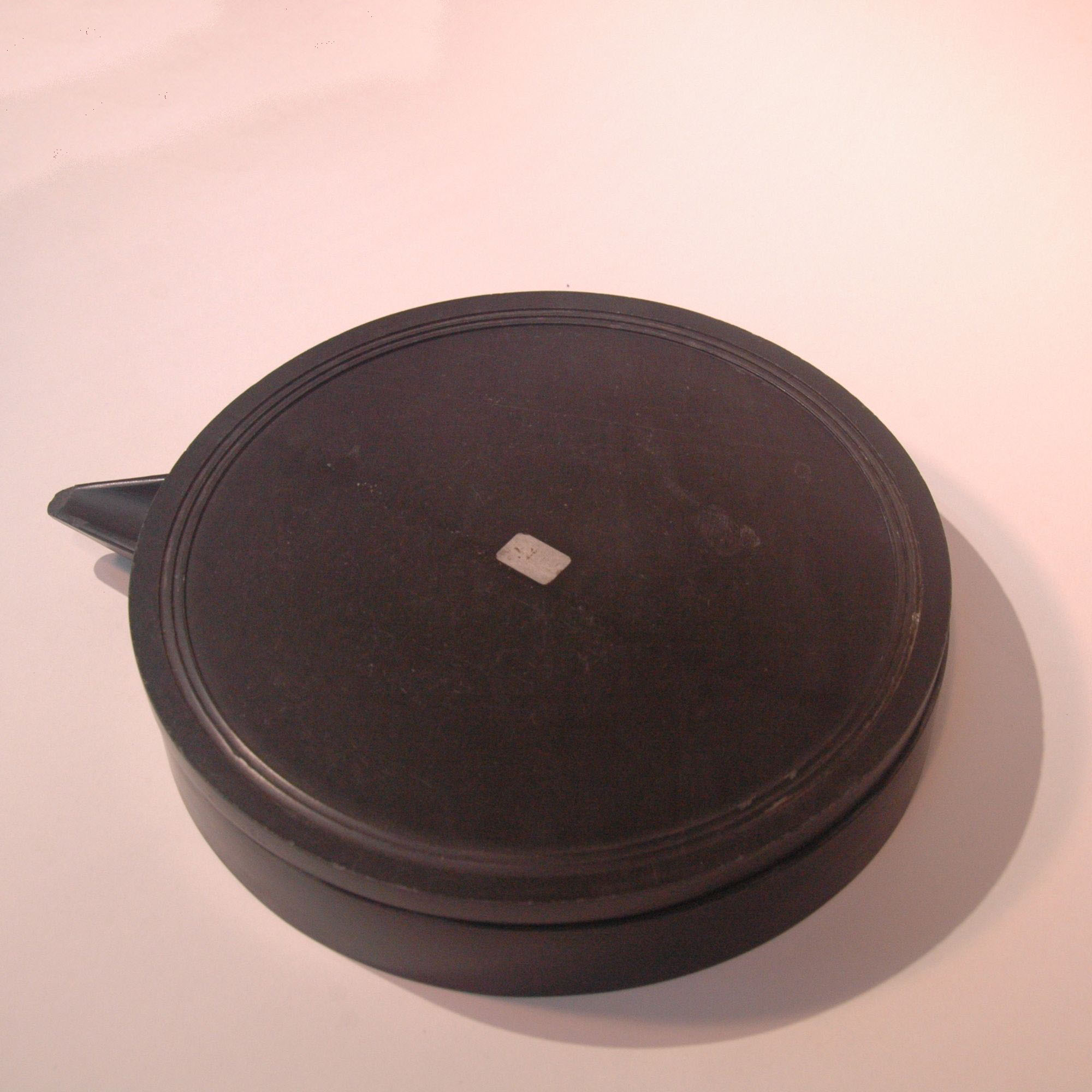
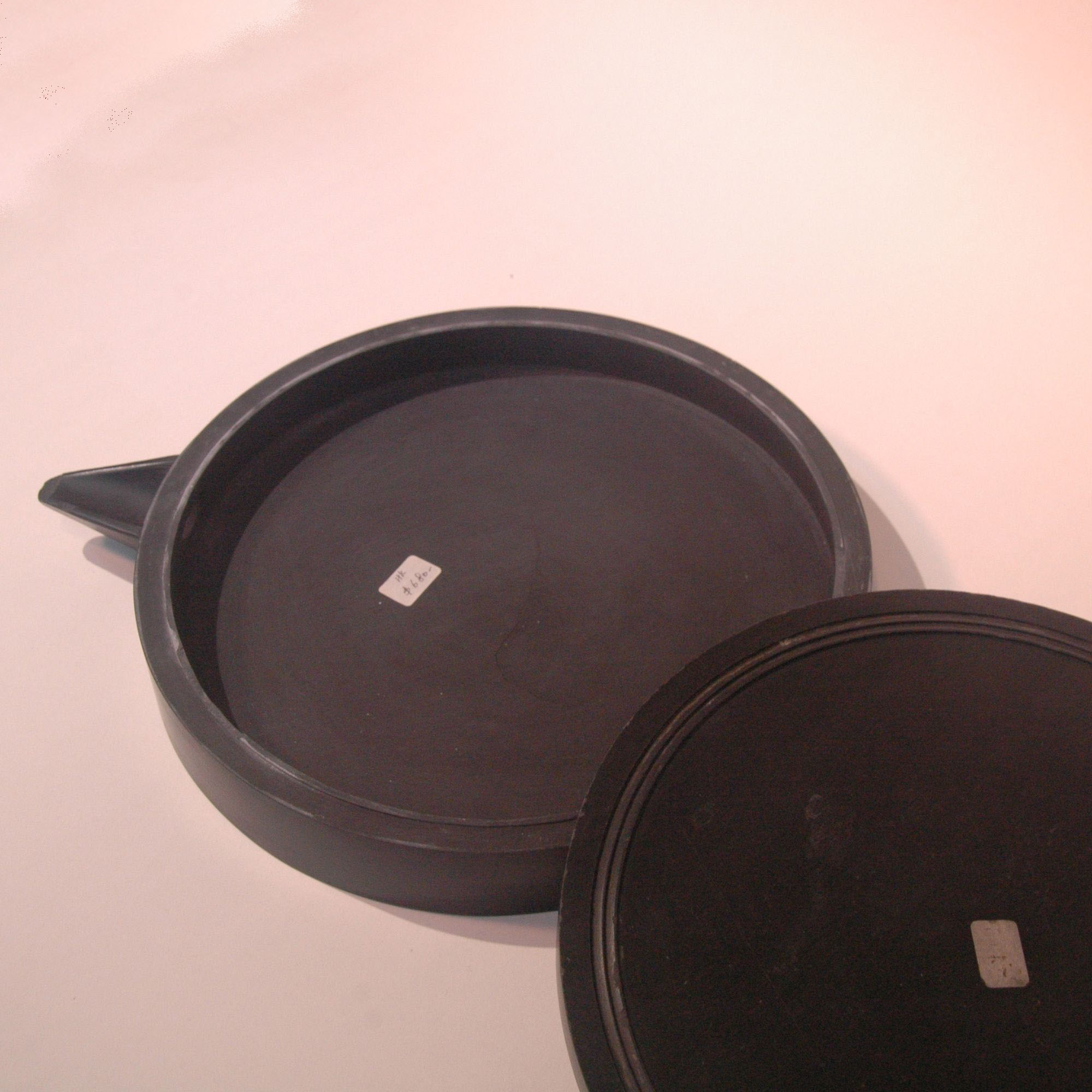
Yan, inkstone is one of the 4 stationary treasures of China, i.e., brush, ink, inkstone, paper.  The main function of the inkstone is for grinding the ink stick in preparation for the ink.  Before the inventory of inkstone, people would getting the pigment directly from the ink stick, this however is very restrictive in the size of the calligraphy word or painting, the brush would have ran out of ink when writing bigger size word.  To over come this problem, in Shang dynasty (17th century BC), flat and hard object (stone, bronze, jade, iron, brick) would be used for ink grinding.  Stone is the far most popular and liked material for inkstone, the stone type are also very selective.  This inkstone is a more utilitarian type, having no carving and the addition of a spout, its is most probably used to make a large quantity of ink for task like wood block printing.