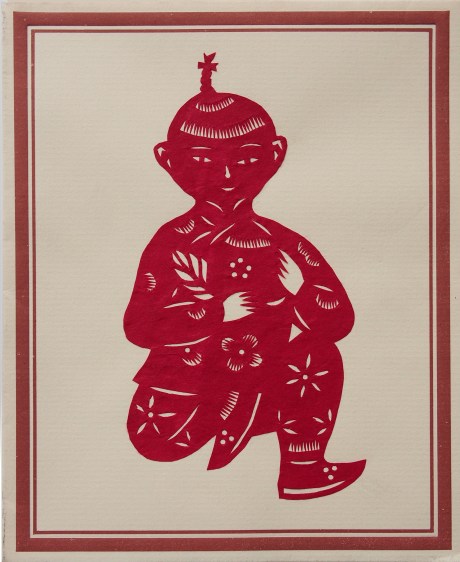
W130xH160mm, Hong Kong
A papercut out.
Portrait of a child.
Reminded me of my childhood outfit for Chinese New Year.
Covered in head to in red traditional costume.
W130xH160mm, Hong Kong
A papercut out.
Portrait of a child.
Reminded me of my childhood outfit for Chinese New Year.
Covered in head to in red traditional costume.
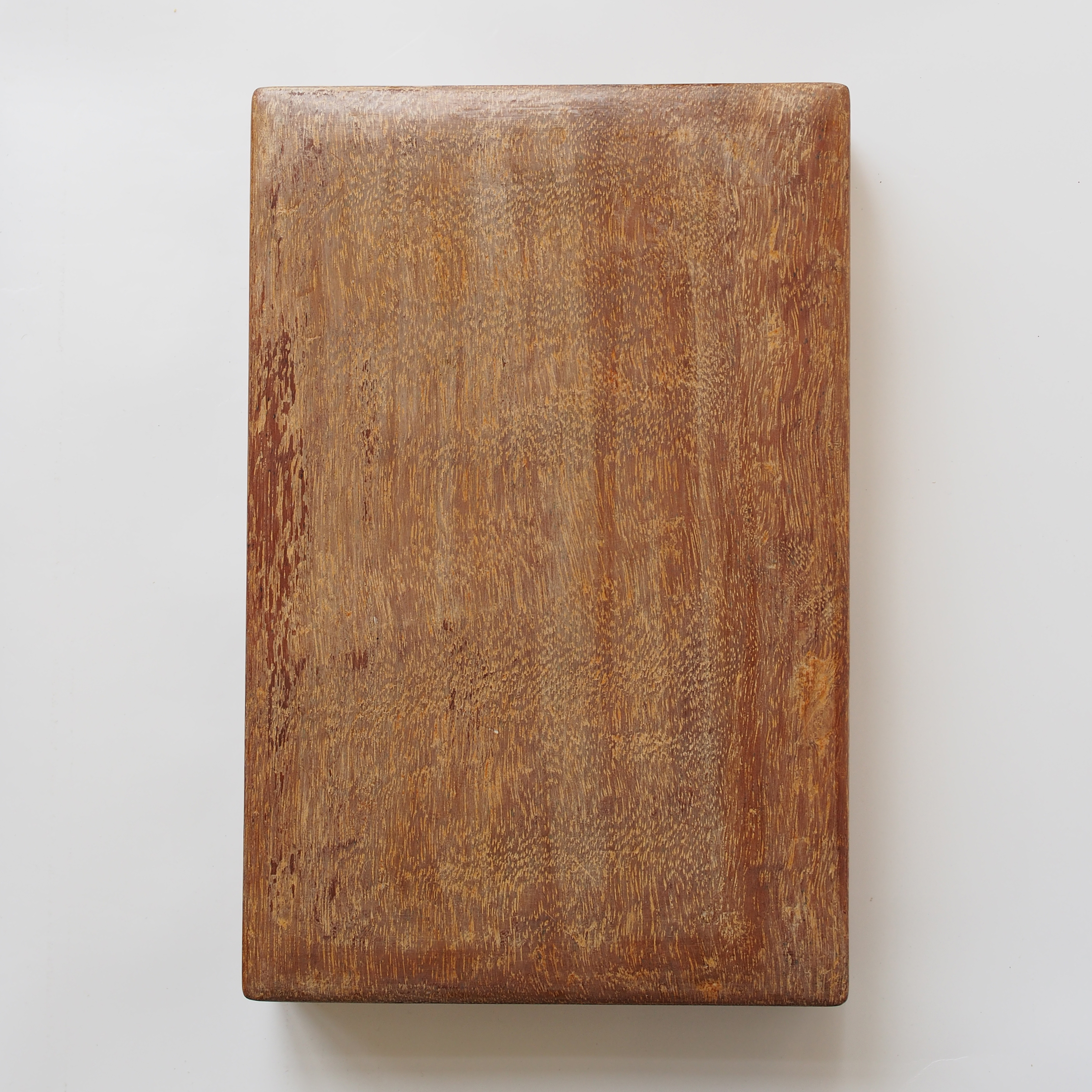
W185xL280xH45mm, China
A wooden box that contain a piece of stone. A stone that is used for grinding the ink bar – an inkstone.
A little water is added from the water drip onto the inkstone, one can still starting grinding the ink. In a small circular movement while keeping the ink still perpendicular to the stone, slowing the ink is dissolved. Though the inkstone has a very smooth surface, under the microscope this surface is in fact saw like, able to fine grind the inkstone.
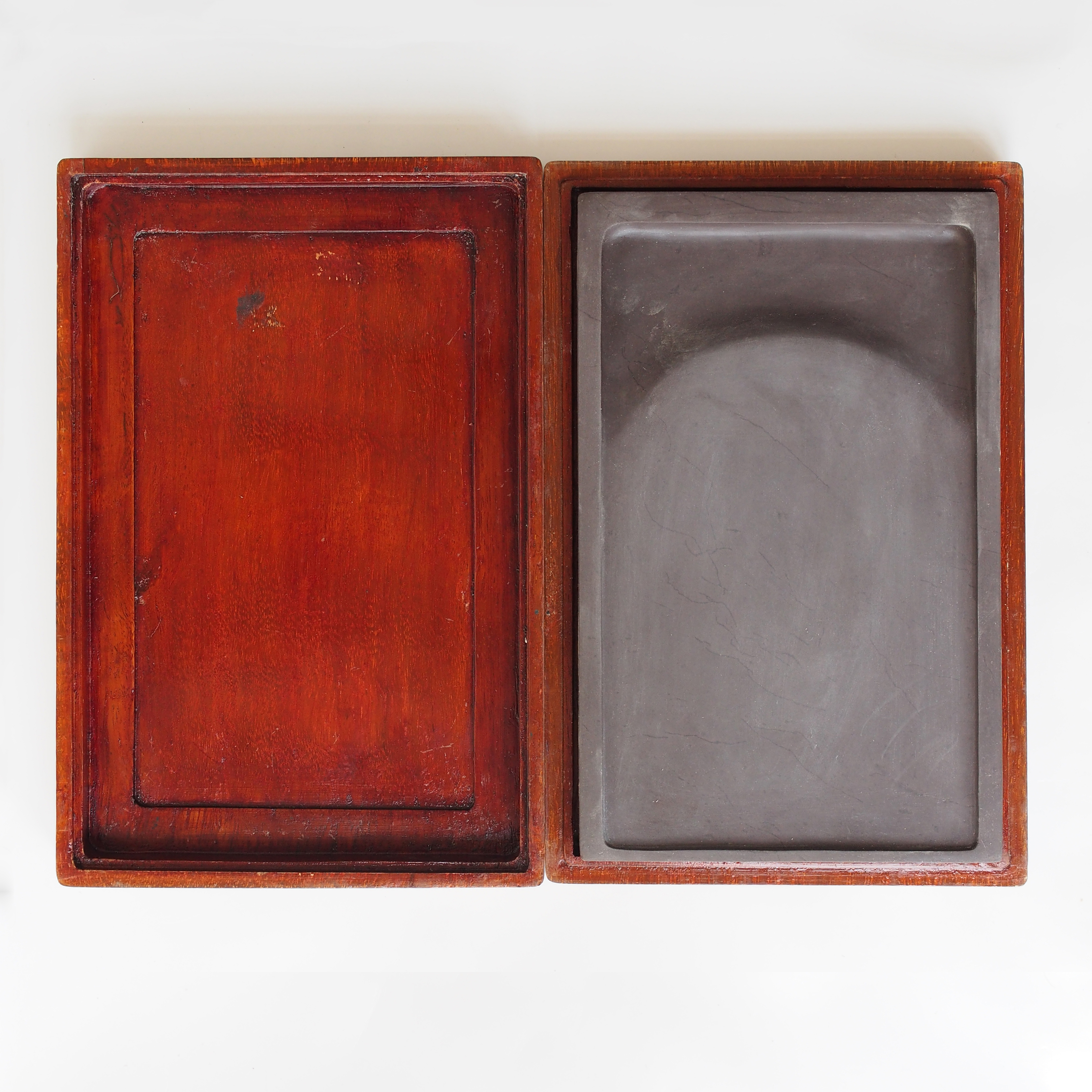
The inkstone is carved out from a single piece of stone and this detail is carried through to the case which is also carved out from a single piece of wood.
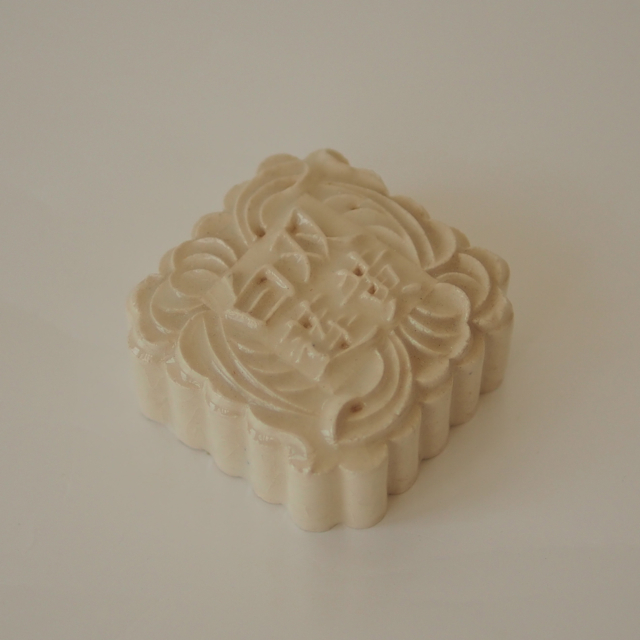 W70xL70xH25mm, Hong Kong
This is a ceramic paper weight made in the shape of a moon cake.
Today is the 15th of lunar August, the middle of autumn when the moon is at its fullest. Since the Zhou dynasty people has started to worship and celebrate the moon on this night. Food, such as moon cake, water melon, apple, dates, plums and grapes will be offer to the moon on an alter together with candles. Today, for most people the moon festival is about the appreciation of the moon, a time for family reunion and of course a feast.
As people becomes more health conscious in recent years, the once a year of loaded sugar and cholesterol is too much for some, the sales of moon cake has started to decline. However, they have found another target customer – doggy mooncake, mooncake made especially for the man’s best friend. Looks like they have found spotted the right target!
 W70xD50xH20mm, China
Continuing with the stationary items, this ceramic ware is a brush holder. A holder for the small brush, unlike the previous brush rests where they are lay horizontally, the brush here are inserted into the small holes and left standing. The small container is for keeping a bit of water in case the brush has gotten a bit dried. This kind of brush stand are usually used by the people who are writing all the time, e.g. the doctor, the pawn shop owner, the restaurant manager etc.

W50xL180xH50mm, China
Any guess of what this piece of bamboo is for?
You probably have one of those ergonomic mouse pad with a gel support at the wrist? Well, this is the traditional waist rest for Chinese calligraphy, not only does it support the arm, it also prevents the ink from rubbing onto the sleeves and the perspiration of the hand from making the paper moist. This member of the stationary is called a “Bi Ge”, arm rest. The name “Bi Ge” apparently came from the imperial chamber for secret books, also pronounced as “Bi Ge”.
Now for the second surprise, the material of this Bi Ge is not bamboo but ceramic!
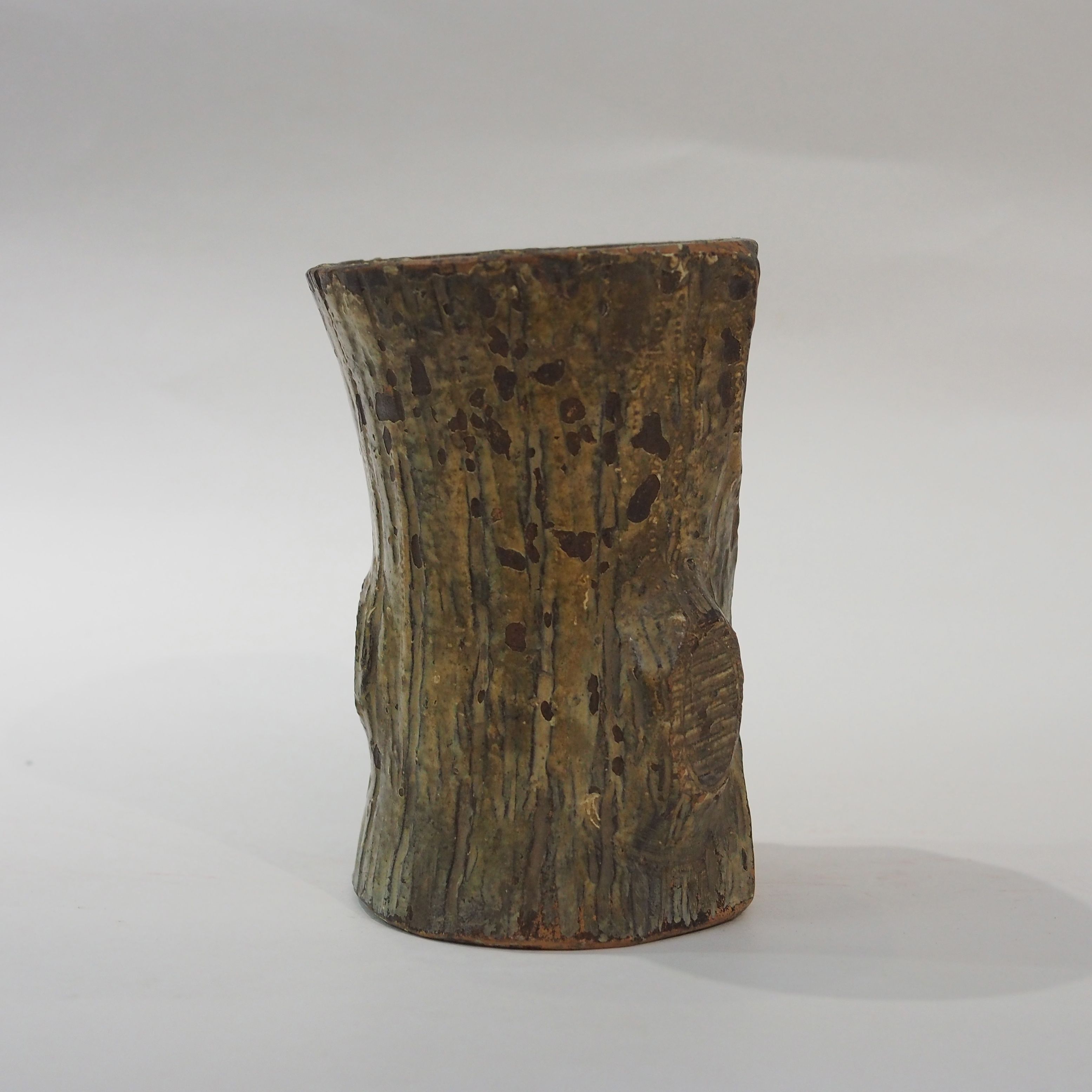
DIA80xH420mm, China
This brush holder is in the form of a tree log, it is made with the stone is found outside of the mineral jade, the so called skin of jade. As the material and colour is completely different from the jade, part of the “jade skin” is sometimes used as an articulation for jade carvings. Here it is used on its own to resemble the bark of a tree.
Click here to see our other brush holders.
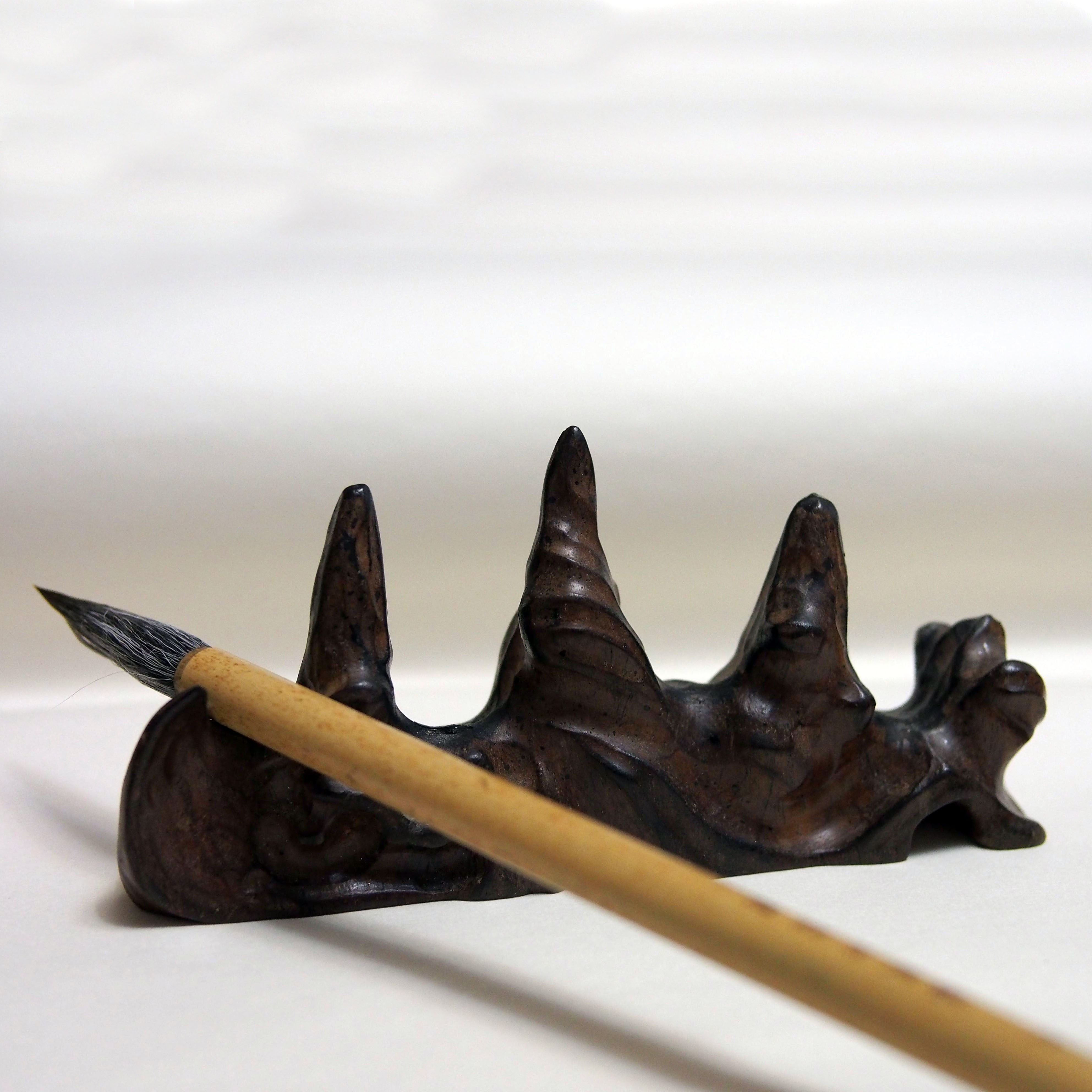 W140xD30xH70mm, China
An essential stationary for the scholar, a brush rest for the temporary resting of the brush, as well as the mind. When the job is done, the brush will be hung vertically to let gravity dry up the brush evenly. There are many shapes for the brush rest but the mountain is one of the popular form, they can be made from coral, agate, crystal, jade to more common material such as wood and ceramic.

L200xW130mm, Myanmar
This note book is made entirely by hand in Shan State, eastern sector of Burma. About 11 miles from Hsipaw in Shan State South lies Kyinthi Village beside Mandalay-Lashio Union Highway. Farming and orange is the economic mainstay of the village. Besides, there is a traditional cottage industry there which is production of Shan paper or Mongkai paper in which every house in the village is engaged for extra income.
Shan paper is made from the bark of tree called “Sar”. Such trees grow wild naturally. Shan paper or Mongkai paper is manufactured over one million sheets per month. Some Shan villages make the paper to be thick enough to use as bed sheets whereas some use it as waterproof wear after coating with lacquer.
Item from Soil for the ASIAN FOLKCRAFT COLLECTION


 Mountain Folkcraft