Archives for category: metal

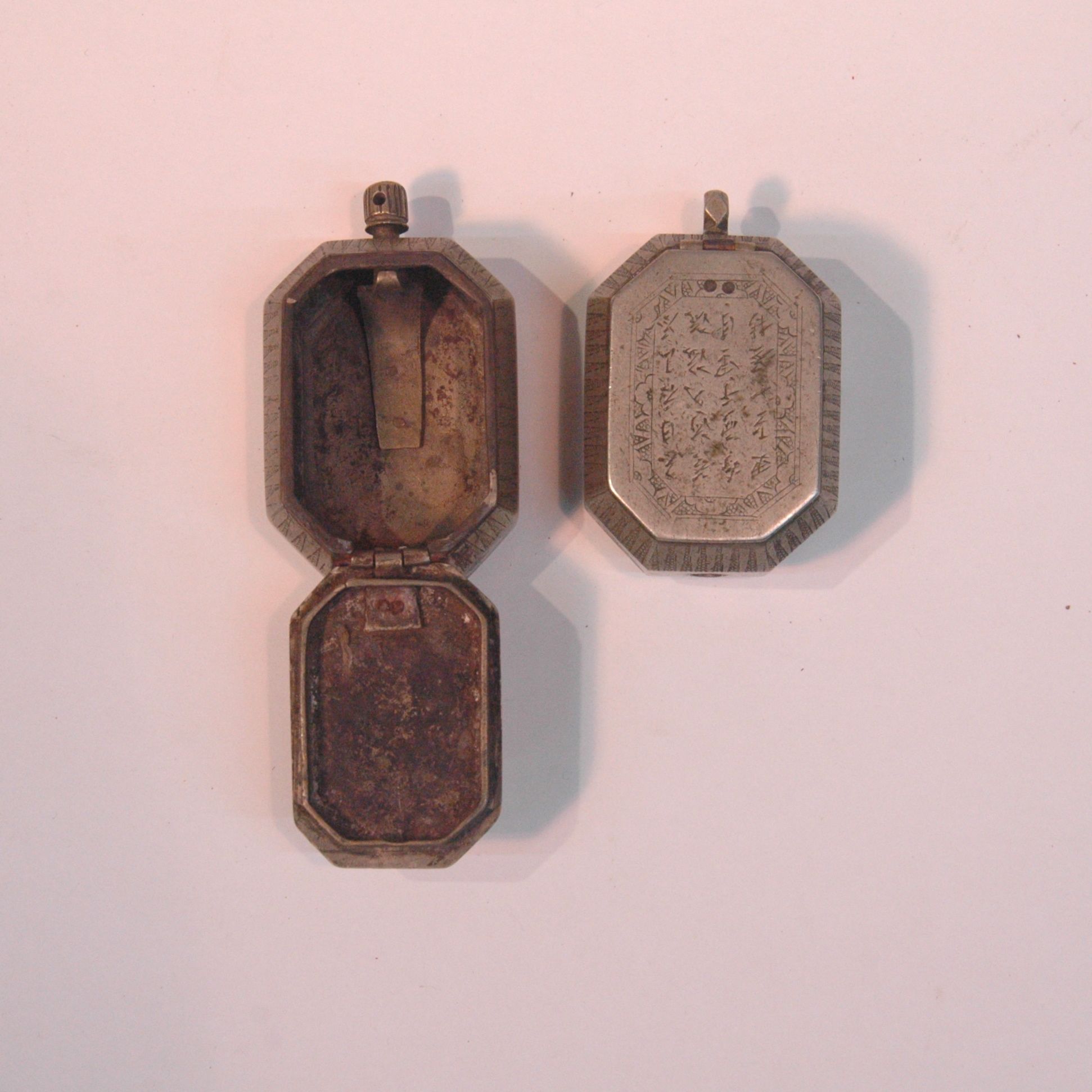
W50XD40XH70mm, China

This copper-nickle silver boxes are used in the late Qing dynasty for storing opium.  On the top of the box is a button for releasing the cover and also for attaching a string which can be tied to the waist.  The boxes are well used and worn, as if they were something treasured by the owner.  Knowing the history, its kind of sad looking at them, but at the same time they are a sharp reminder of what drugs can do to a person and a country.

DIA80xW120xH120, China

This is a container for the oil used for the oil lamp.  A very common item in the old days when oil lamp is the only form of lighting for the common people.  In China, the fuel used for the lamps would be tung oil – oil obtained from the seed of the tung tree (Vernicia Fordii).  During the second world war when food is scarce, dishonest merchants would sell cooking oil mixed with tung oil.  As the two oil have different density, the cooking oil would be floated on top, once the thin layer of oil is used, the customers will discover they have in fact paid a premium for the cheap tung oil.  Worse of all the food cooked would be spoiled and everyone would get an upset tummy.  :(

W150xH150mm, Thailand

This is a gold hairpin to be worn by the bride in a Thai wedding.  During Thong Mun, the engagement ceremony (which sometimes is on the same day as the wedding), the groom will present gold sindod (dowry) to the bride.  The ceremony will be attended also by friends and relatives.

DIA160xH140, China

Pewter was a popular material for the tea lovers in southern China around late Qing dynasty, at that time there were no electrical kettle but charcoal stove.  To keep the distinct aroma of tea, the teapot is only put on to the stove until the charcoal is red hot. The material of the teapot is also very selective, while iron and bronze could affect the subtle taste of the tea leave, pewter was seen as a better material.

L140mm, China

There is the English idiom “born with a silver spoon in one’s mouth” describing someone from a wealth privileged family.  In China where silver spoon is not a common utensil, for such a person one would describe him as “born with a golden key in one’s mouth”.

L330xH20mm, Mongolia

In Mongolia Shamanism the Blue Mighty Eternal Heaven (Mongke Tengri) is worshipped, in its legend 6 treasures was given by the Blue Sky to the Mongolian, 3 big treasures and 3 small ones.  The 3 big treasures are, yurts, grassland, cattle and sheep, the 3 small treasures are, Mongolian knife, matouqin and dairy products.  Hence, the Mongolian knife is treated also as a sign of blessing on top of it function.  In the nomadic days, a mongolian man who wear it by the waist together with the snuff bottle and the Mongolian flink.  The sheath has 2 holes for keeping a pair of chopsticks, isnt this the perfect eating kit for nomadic life.

DIA80xH100, China

This is a bronze compartment box for keeping small accessories.

I wonder if in the old days there would be a store like Muji selling a selection of compartments boxes for organisation of small items.

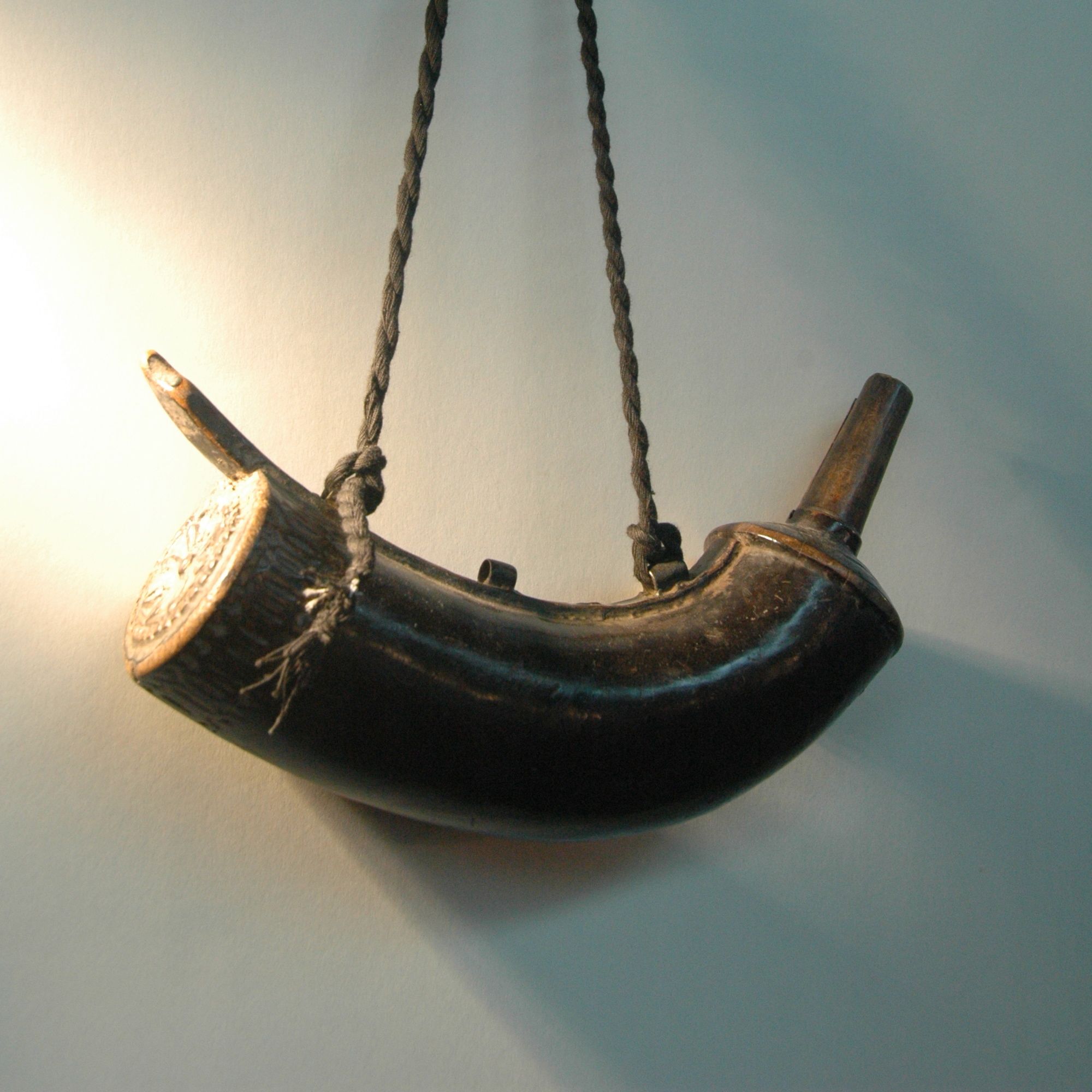
DIA70xL280mm, Thailand

This is a powder horn, a container for carrying gunpowder.  It is made with a a buffalo horn with a nonferrous metal for the base and the spout.  Powder horns were very common at a time when muzzle loading guns are used, people would store their black powder for ammunition reloads.  As the gun making technology advanced with the same ignition process, the need for carrying the powder horn diminished.

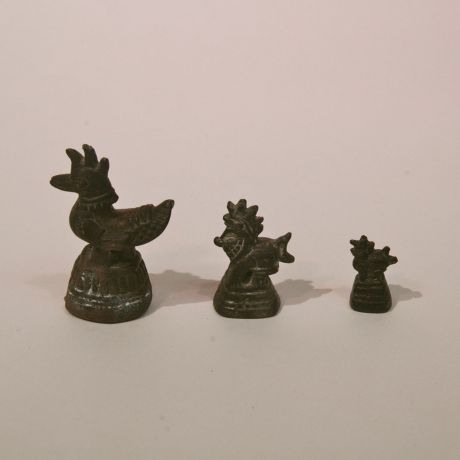
L40xW20xH50mm (L), Thailand

I used to play with these when I was a child, a flock of these metal birds.  I am certainly surprised to find out they are weights for measuring opium when i am older.  On further research, I am please again to know that because of the small weights they are used to measure anything light and precious (metal, spices etc).  The bird figure is of the Hamsa which represent a perfect balance, union and life.  As the Hamsa can walk, fly and swim; it is believed they have the power to transcend the limitation of the creation around it.

These brass weights are made with the method lost wax casting; a clay core model of the weight is made, a lay of molten wax is poured over the model.  The wax is refined and covered again covered by layers of clay which takes the negative form.  Drain duct as placed for the wax and gas to escape, the clay core secured, then molten metal is then pour in through an opening at the base, as this is going to be a precise weight the amount of metal used is carefully measured.  The wax is melted and replaced by the metal which takes the detail and shape of the wax, the outer layer is removed and the weight is casted.

The large hamsa weights 10 tical (164g), medium 3 tical (49g), small 1 tical (16g)
DIA180xH80mm, China

This is a pewter sandalwood burner.  Sandalwood is a fine grain plant which can retain its fragrance for decades, however it is also one of the slowest growing tree.  To use the burner, lay in a line small piece of sandalwood (size of a toothpick) on the burner, covered with sandalwood powder and light at one end.  Wood from the center of the bark and its root has the strongest fragrance.