
DIA165mm, Hong Kong
A simple necklace with a handmade millefiori bead. The making of a millefiori bead is though not as simple …
COLLECTIBLE JEWELLERY
SOMETHING OLD SOMETHING NEW
DIA165mm, Hong Kong
A simple necklace with a handmade millefiori bead. The making of a millefiori bead is though not as simple …
COLLECTIBLE JEWELLERY
SOMETHING OLD SOMETHING NEW

DIA160mm, Hong Kong
For the Mountain Folkcraft Something Old Something New Jewellery Collection, we have designed a series of unique neckwear and here is one of them.
Its ingredients are;
turquoise,
silver,
glass beads,
amber,
coral,
jade,
& lots of passion in design.

W330xH430mm, China
Verre eglomise is a technique which dated back to Roman time as early as 400AD and revived in Europe in varies different centuries. The French term was attributed by the french decorator Jean-Baptise Glomy who made it popular again in the 18th Century. Verre eglomise was introduced to China from the west in the Qing dynasty, it quickly took on as a home decorative object for the wealthy and riches. By the end of the Qing dynasty it has been adapted as a popular craft form in China, so much that they were also for exports back to Europe.
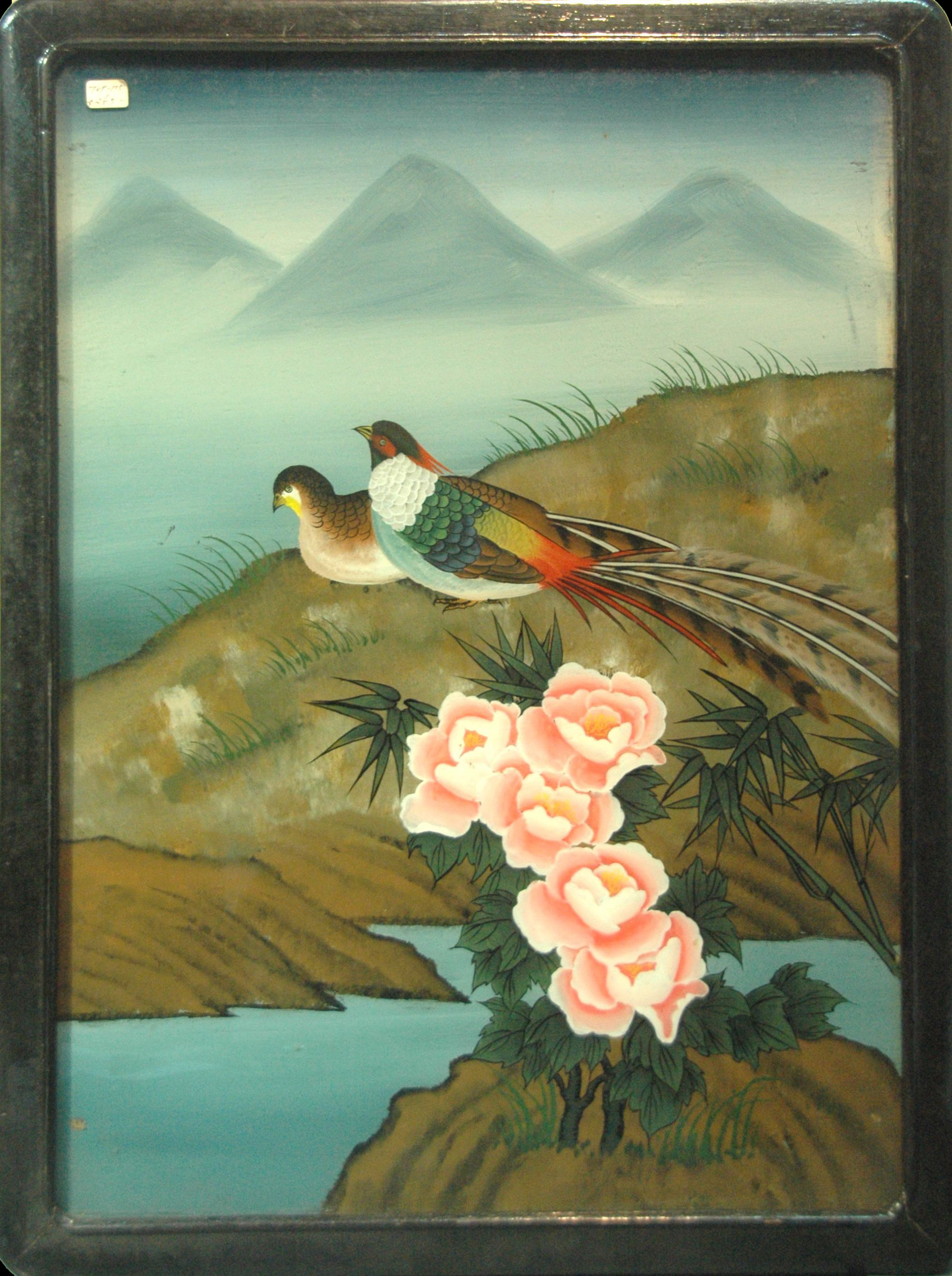
W450xH600mm, China
This is a glass painting of a pair of Lady Amherst’s pheasant (Chrysolophus amherstiae) which are native to south western China and north eastern part of Myanmar. For the Chinese, the Lady Amherst’s pheasant is a noble bird. At the time of monarchy the Empress, being the highest ranking second only to the Emperor, would have phoenix as a pattern. For the first ranking official, their costume would have a red crown crane, while the second ranking official the Lady Amherst’s pheasant. The third ranking, the green peafowl and the fifth the silver pheasant, the eighth being the quail.


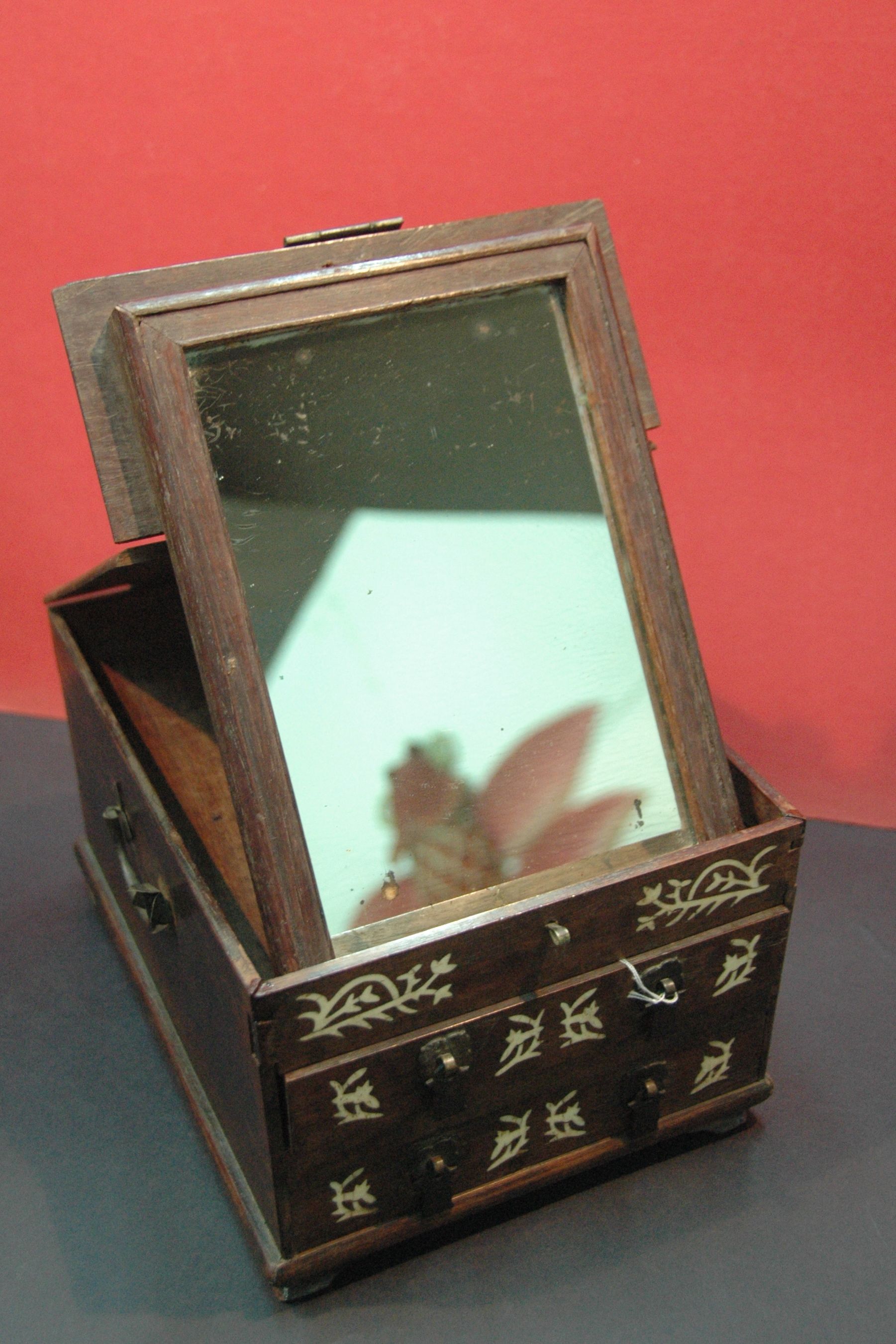
W180xD230xH140mm (300mm when opened), China
Ladies like to put makeup on and look pretty and the Chinese ladies are no difference. The concept of the Chinese vanity box has been around since the Sung dynasty; the mirror being part of the lid, can be folded away inside the box. The little drawers store all the essential rouge, eye liners etc. This box is decorated with the mother of pearl inlay.
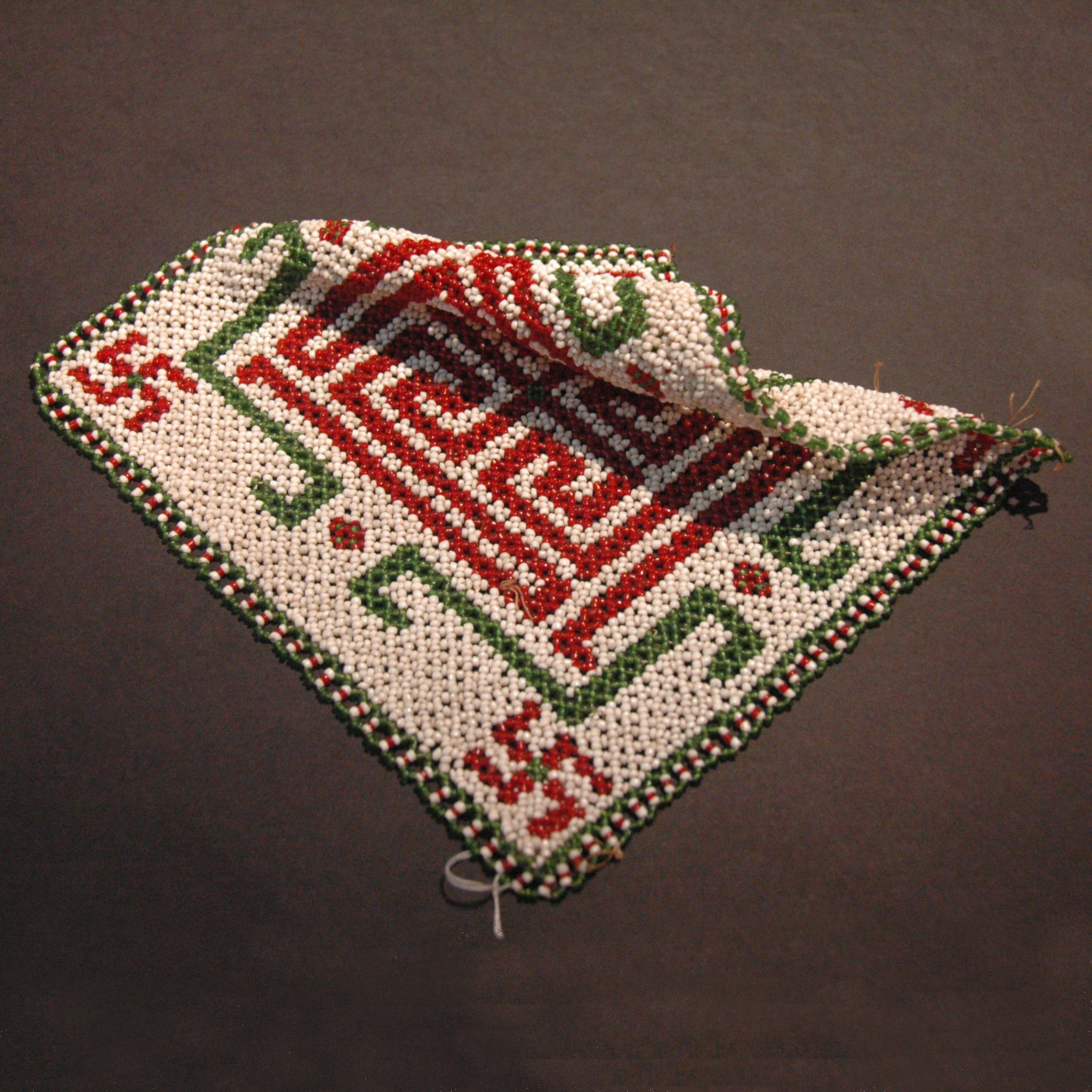
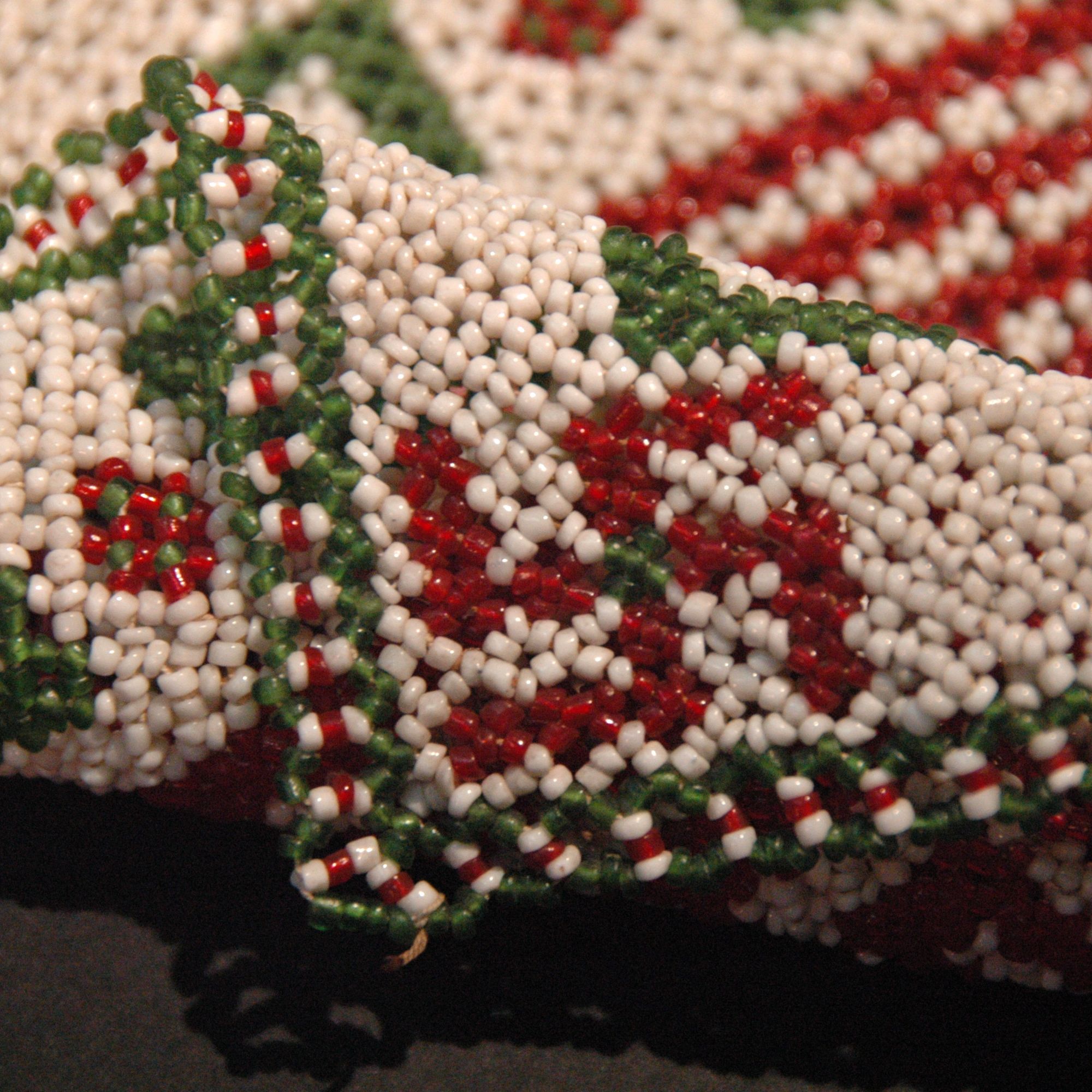
W200xL200mm, China
There are 2 lucky symbols on this glass bead mate; the Swastika signs at the corner and the longevity sign in the middle. The 卐 (Swastika) sign has been passed on to China along with ancient Indian Buddhism religion. In the 7th century, the Tang Empress Wu Ze Tian, ordered for its inclusion as a Chinese character, selected the right spinning version, to be pronounced as Wan with the meaning “the focal point of blessing from all direction”. Since then apart from its original Buddhism uses, 卐 was also used as a household blessing symbol from embroidery to pottery and architectural decorations, the symbol also become more graphic and elaborated. Longevity, has long been a symbol the Chinese adores for decoration. This symbol on the beaded mate is one generated from the typography of the word Shou (longevity).


L400xW100mm, China
The lady’s headband, Mei Lei, was most popular in Ming and Qing dynasty. Thanks to the television drama, it is often associated as the costume of the granny, Mei Lei actually was a very fashionable item for women of all ages. When it was at the height of fashion many style of Mei Lei appeared; black silk with gemstone, cloth patchwork with pearl, gold and gemstone, cloth or silk with embroidery, fur with gemstone, beaded, etc. Like the snuff bottle for men, the headband was an accessory of status symbol. As a functional item, the Mei Lei can keep the hair tidy as well as keep warm. This particular Mei Lei is made of glass bead with a cloth lining on the inside.
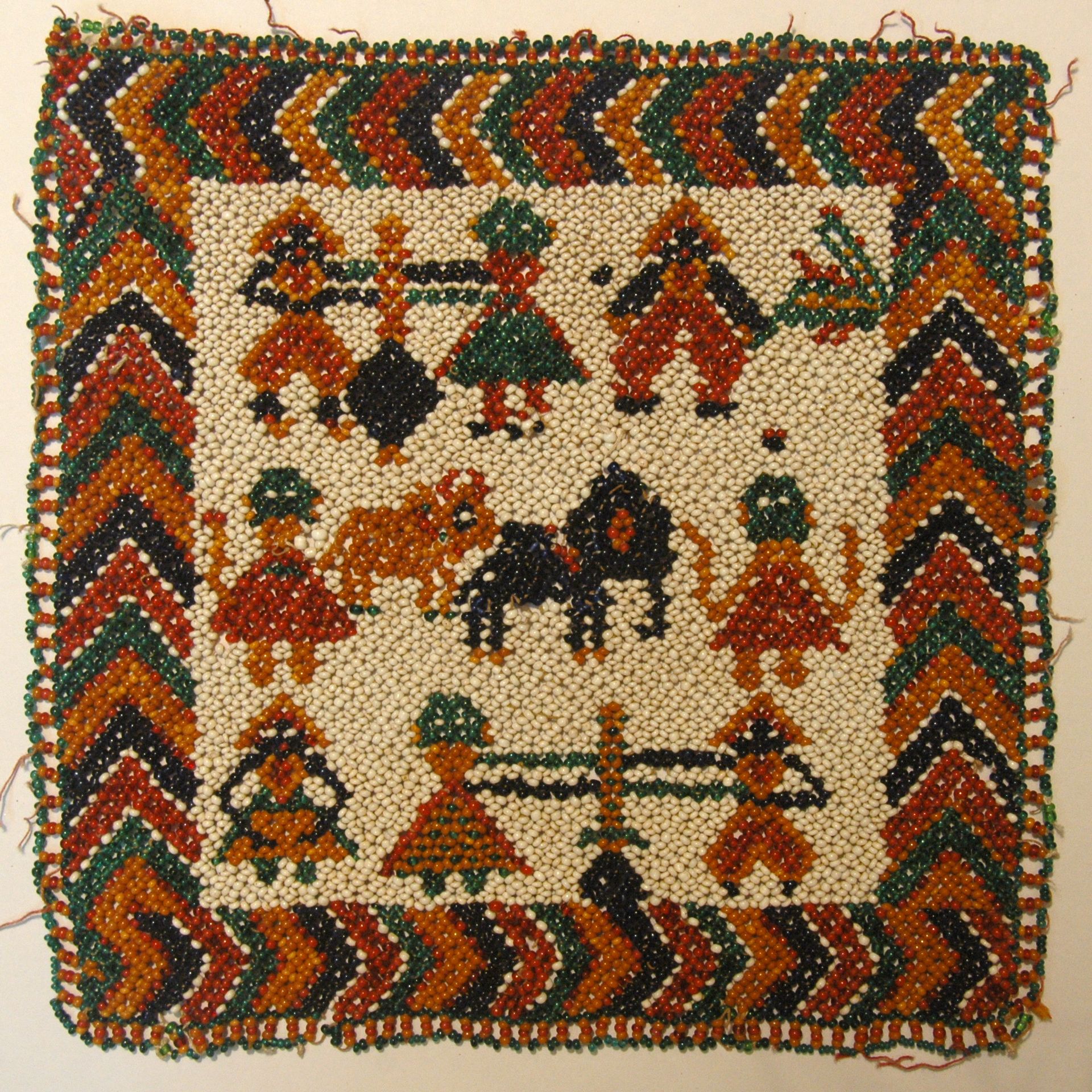 W200xL200mm, India
This is an Indian beaded chakla believed to be from the Kathi tribe in India. Beadwork (moti-bharat) was introduced into India through trades with East Africa in the 19th Century when Venetian Murano beads landed in western India. It became a very popular needlework craft among the Kathi women. These beadwork chakla would be traditional used as wall hanging decorations, usually over a door for attraction positive energy.
 W700xH550mm, China
This is a reverse glass painting; paint is applied onto a piece of glass which the image is to be viewed from the opposite side of the glass. This art form was introduced from west to China in the Qing dynasty and likely by missionary Giuseppe Castiglione. Being a Chinese court painter, he was a major influence in the oil painting history in China.
 H120xW90mm, China
Snuff bottle is very popular in Qing Dynasty China, tobacco was introduced to China in the 16th century smoking however is banned. The use of snuff (powdered tobacco) is believed to have medicinal effect and therefore allowed, it quickly spread amongst the upper class and became a social ritual. The container became more refined in terms of craftsmanship and the use material showing off the status of its owner. This bottle is a red overlay on transparent glass ground carved to illustrate bats (blessing).
 Mountain Folkcraft