Archives for category: figurine

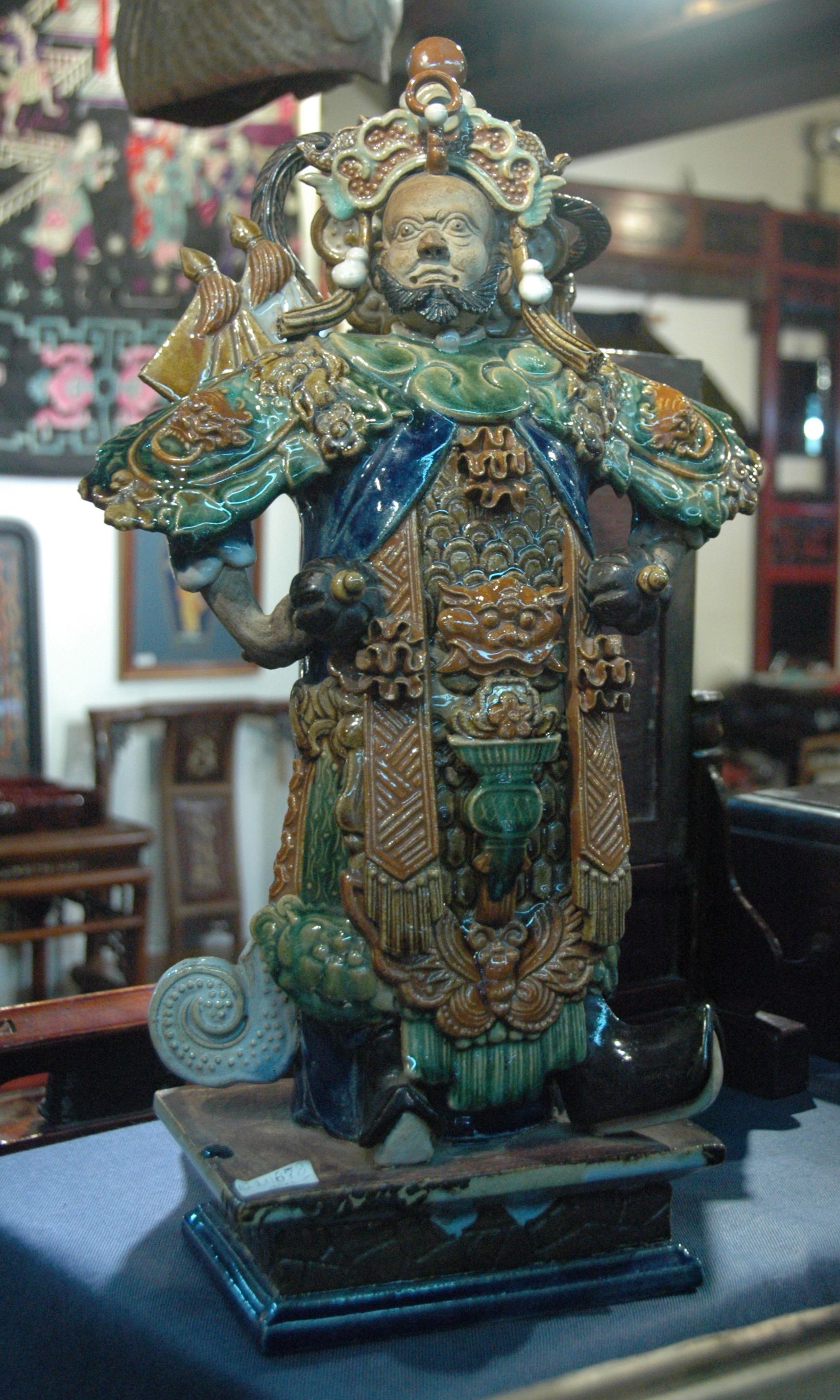
W200xD150xH500mm, China

This figurine was made from the famous Shi Wan pottery town in the Guang Dong region.  Their figurines are typical to have a glazeless delicate facial and hand depiction while contrasting with an expressive and bold glazing on the clothing.  Another example can be seen in an earlier post, “Shi Wan Figurines“.

The general depicted here is one of the “3 good blokes” of the Tang dynasty, Pei Yuan Qing, his weapon is a pair of golden melon hammer.

You will be seen in this clip how the weapon  is being used (well at least in the Beijing opera).  This is a graduation show from the students of the Beijing opera school.

My dog spike has started sighing, ok ok, I promise no more Chinese opera reference for a while.

H100xW50xD60mm, China

Wonder what a villain looks like?  This is a typical villain of the Chinese glove puppet, all villains have a white painted face with black features.  A word of caution: the white face villains came in all different ages, from a young chap to the bad government official and finally the elderly villain.  The shown in the photo here is one of the main villain in a puppet show, someone who has high power and no fear, for example, a prime minister who gave manipulate the emperor  etc.

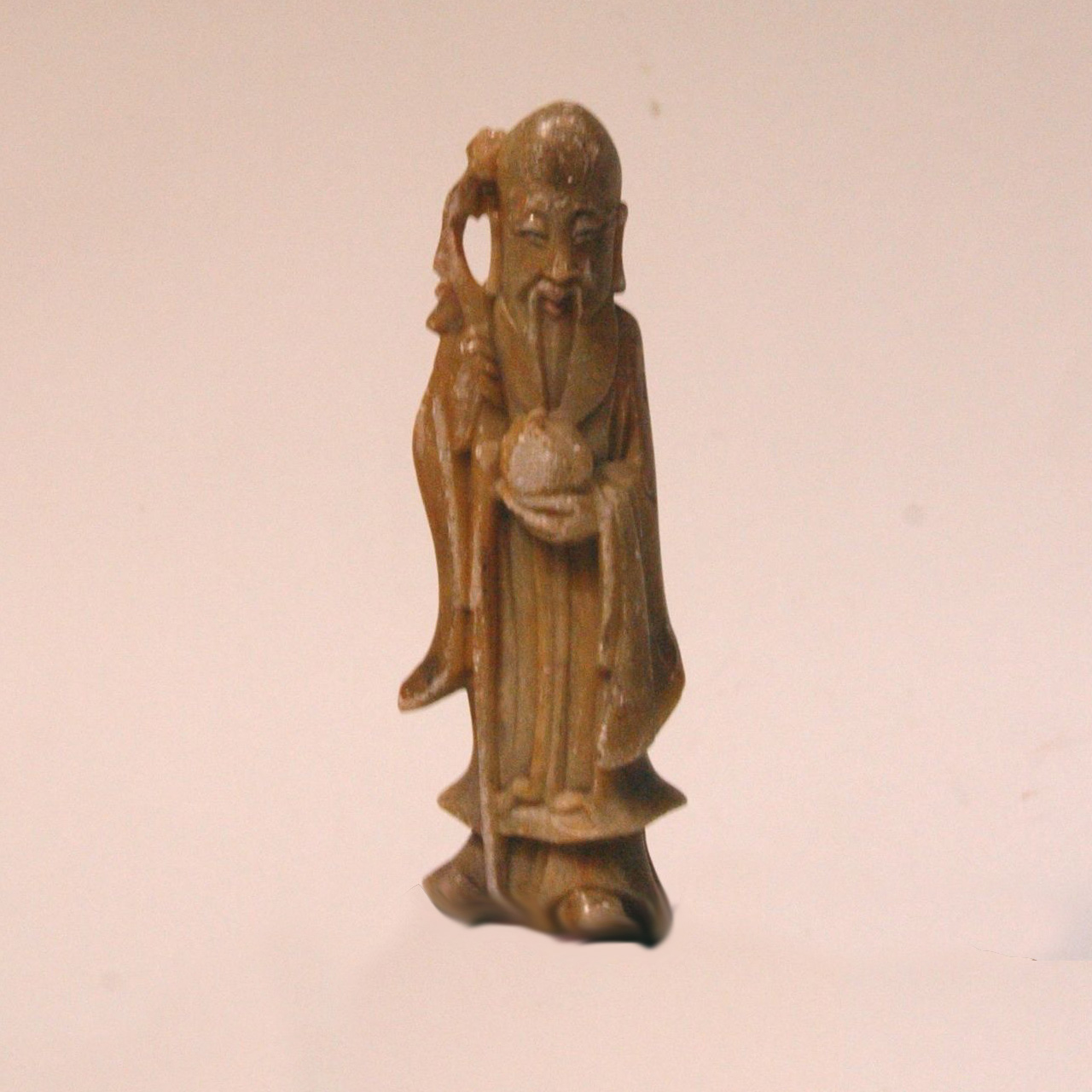
W40xD20xH120mm, China

This is a figurine of the God of Longevity in an early post.  You might notice that he is always carrying a long cane; this cane came from the state banquet held for all the OAP (the 70+) in the East Han dynasty.  The emperor had the cane specially made for all those who attended the party, the cane symbolized the privileges that were awarded to the elderly.  The head of the cane was decorated with a turtledove thus its called a turtledove cane.

W40xD50xH120mm, China

This is a pair of brown glazed candle stand with a lion figurine.  The lion style candle stand has been popular since the Jin dynasty (at that time the lion is more chubby and the candle holder is attached to the figurine itself).  The Chinese believe that the lion is the king of the animals and thus can offer protection, aside from the other animals also from evils.

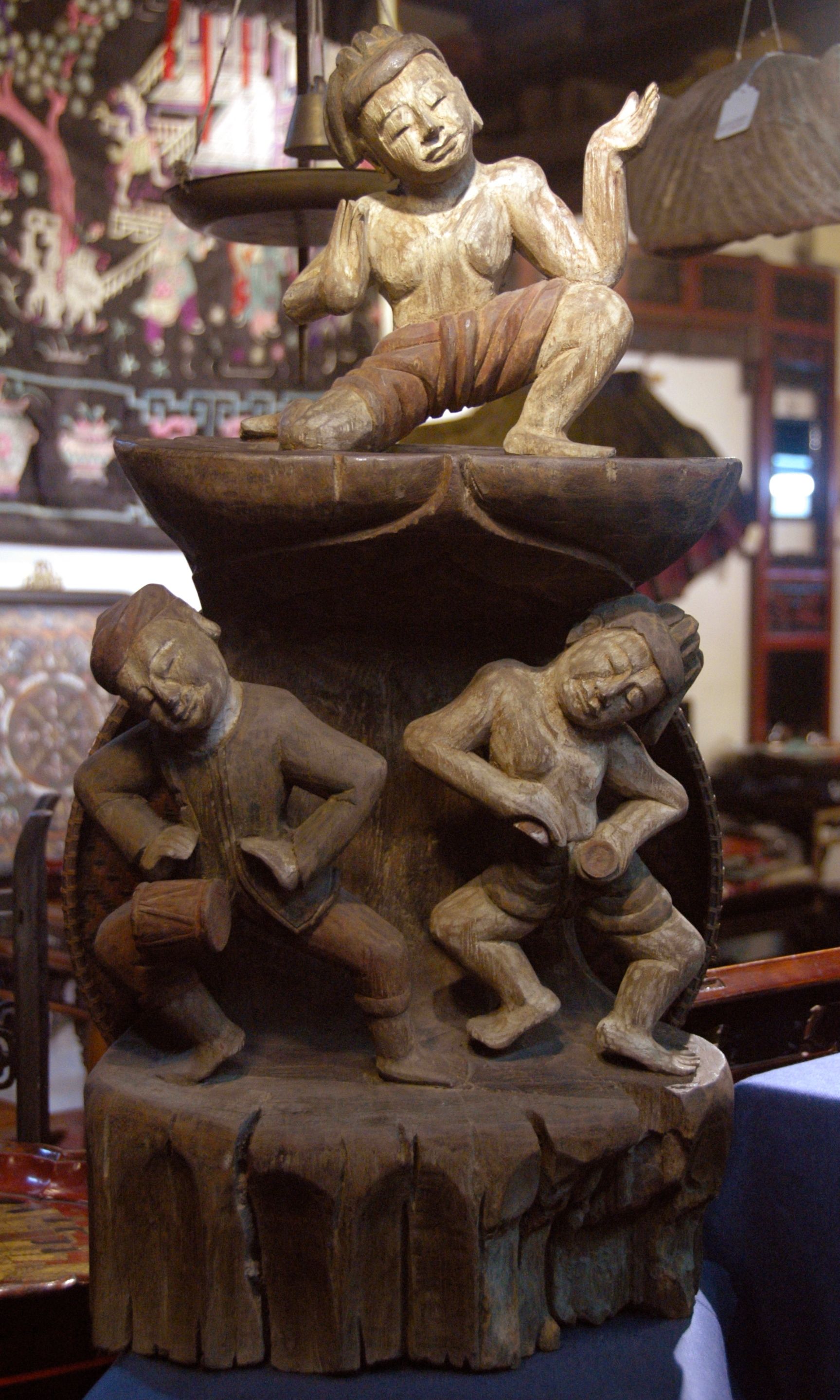
W350xD150xH700mm, Indonesia

This wooden figurine depicted the some of the instrument used in a Balinese gamelan.  Gamelan is the traditional Indonesian musical ensemble which is accompanied by dances, puppet performances or rituals, a dancer is also represented on this carving.

The player on the right is playing a castanet.  The drum played by the figurine on the left is known as a kendang, a two sided drum, which is made from hollowing out from the trunk of a tree.  The kendang player is the leader of the gamelan, giving clues to the other players.  Here is how it sound like solo;

D60xW120xH150mm, China

To continue with the chicken theme, we have a flower vase from the Ci Zhou kiln.  Ci Zhou kiln is the largest folk kiln in northern Chinese which dated back to the Song dynasty; it is famous for its black on white pottery (no, I did not set the camera to nostalgic tone) which was a break through in glazing tradition at the time, some believed that it set the foundation for the now well known blue and white porcelain ware.  White slip is applied to the semi dried clay work, a iron based black slip that contained iron is painted over to add detail to the vase, a clear glaze is applied after the first firing.

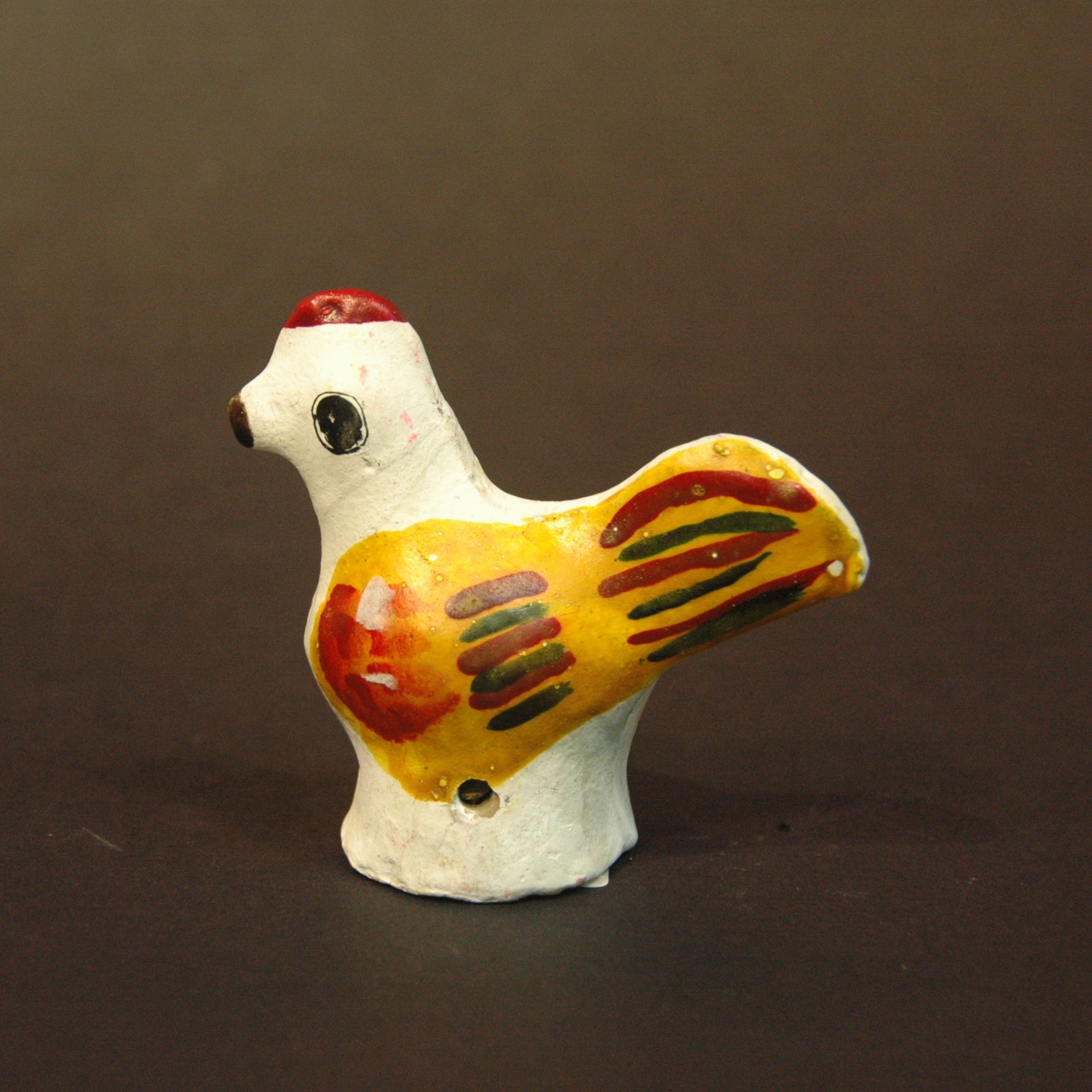
L50xW20xH50mm, China

The Chinese name for this cute little chicken is “the loud crowing rooster” which was originated from the “rooster crowing pillow”.  The rooster shaped pillow was believe to offer blessing to the child; better sleep and a wiser child.  The Chinese believed that the rooster is responsible for pulling the sun out of the darkness, a god that extinguish the ghosts (rooster being associated with the sun and light while the ghosts with darkness).  Nowadays, the symbolic meaning of the rooster is faded, this is seen as rooster toy more than a protector symbol.

W80xL250xH400mm, Thailand

The most famous rooster in Thailand is perhaps the one which belonged to King Naresuan.  King Naresuan was the King of Ayutthaya between 1555 – 1605, he was most famous for freeing the Siam of Ayutthaya from Burmese rule and subsequently the expansion of his empire.  Now how does the roost come into the picture?  It is believed in popular legend that the young Prince Naresuan wagered a bet with the Burmese Prince of Ayutthaya that if Naresuan’s rooster would won the cock fight, Ayutthaya would be freed from Burmese rule and of course the rooster being as couragous as his master won fiercelessly.  Ceramic rooster statues can be seen as offering to King Naresuan in a few temples in Ayutthaya.

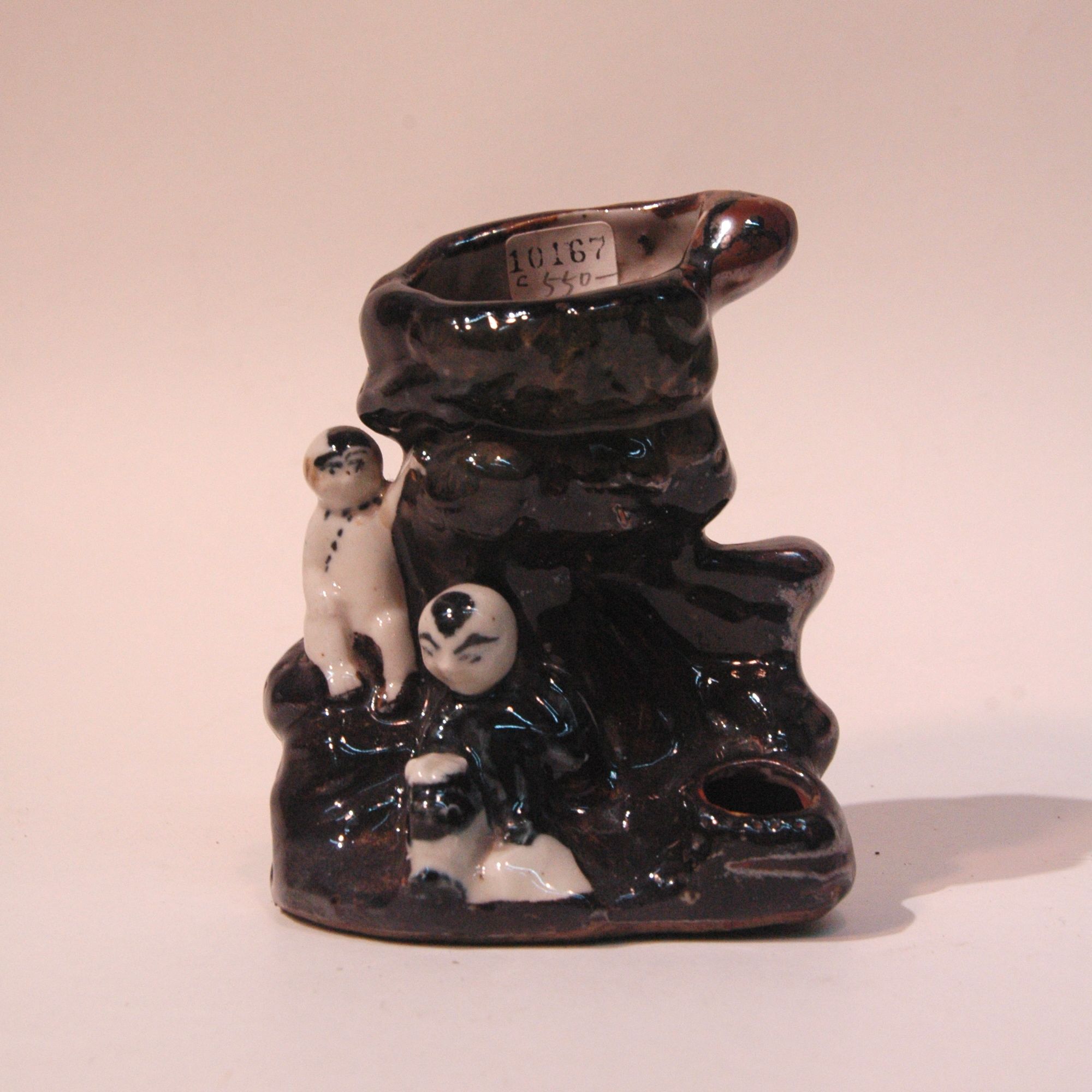
W100xD70xH130mm, China

This sweet mountain is in fact a pen holder (particularly like the little guy on the top grabbing hold of the rock as if he is scared of falling off), this is perhaps one that is made for a child, like this water drip.  Like today’s parents, parents in the past has also wracked their brains trying to get the child interested in studying or at least stay at the desk.  See our other version at Ceramic Pen Holder.

W50xD40xH100mm, China

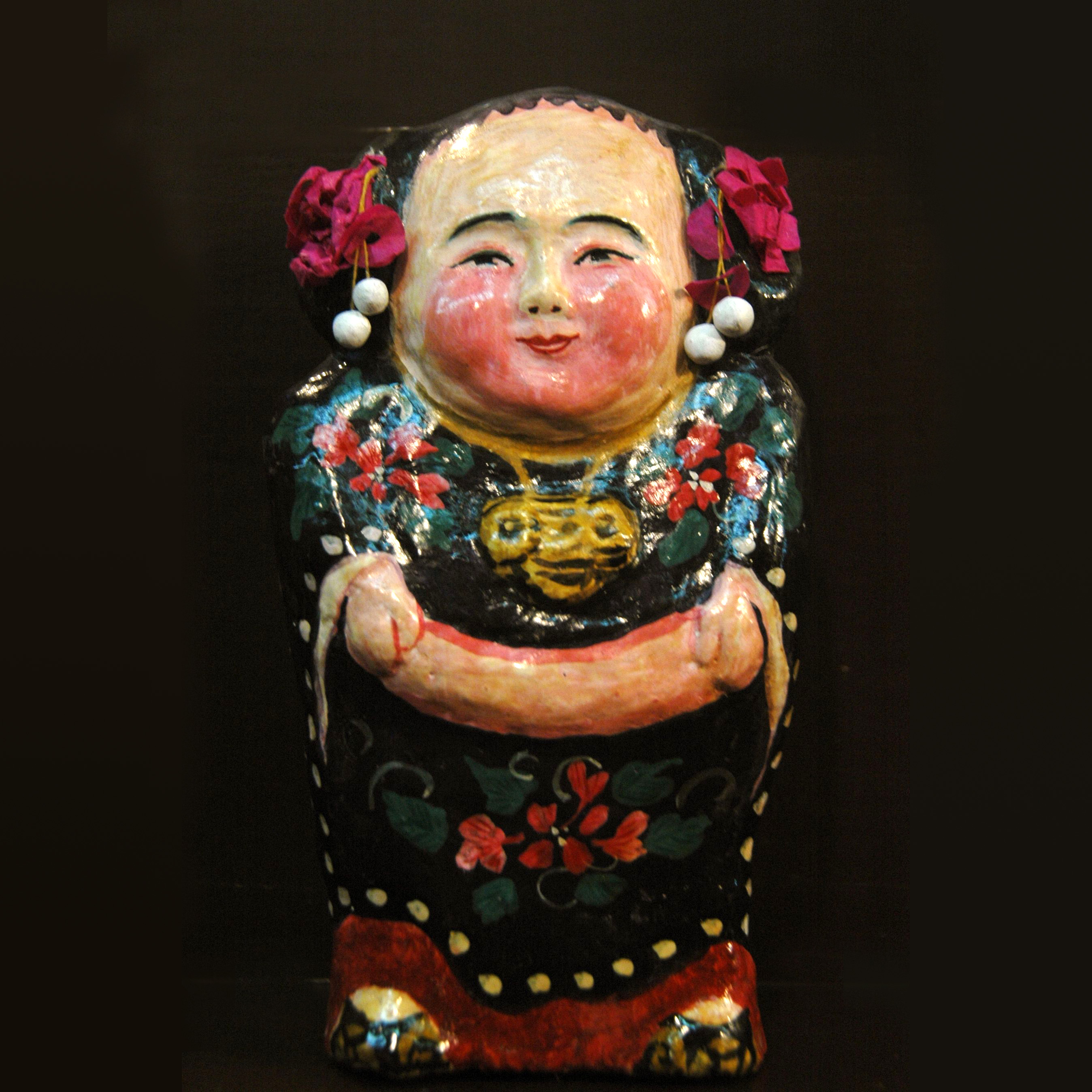
This is the clay toy of  Dah A Fu, we have previous talked about his story in an early post “Clay Toy A-Fu“.  Most of the A-Fu figurine have him seated, this is an unusual version, but from his accessories we can determined that he is A-Fu.  On his head, he is wearing peony (a symbol of wealth), the costume is the five fok jacket (a symbol of ease and comfort), around his neck is a locket (a symbol of longevity).  In the seated version, he is also hugging a lion with green fur (a symbol of protection from evil) and wearing a pair of court shoes (successful in the court examination).  All the wishes from the parents to the child are projected onto the figurine.