Archives for category: container

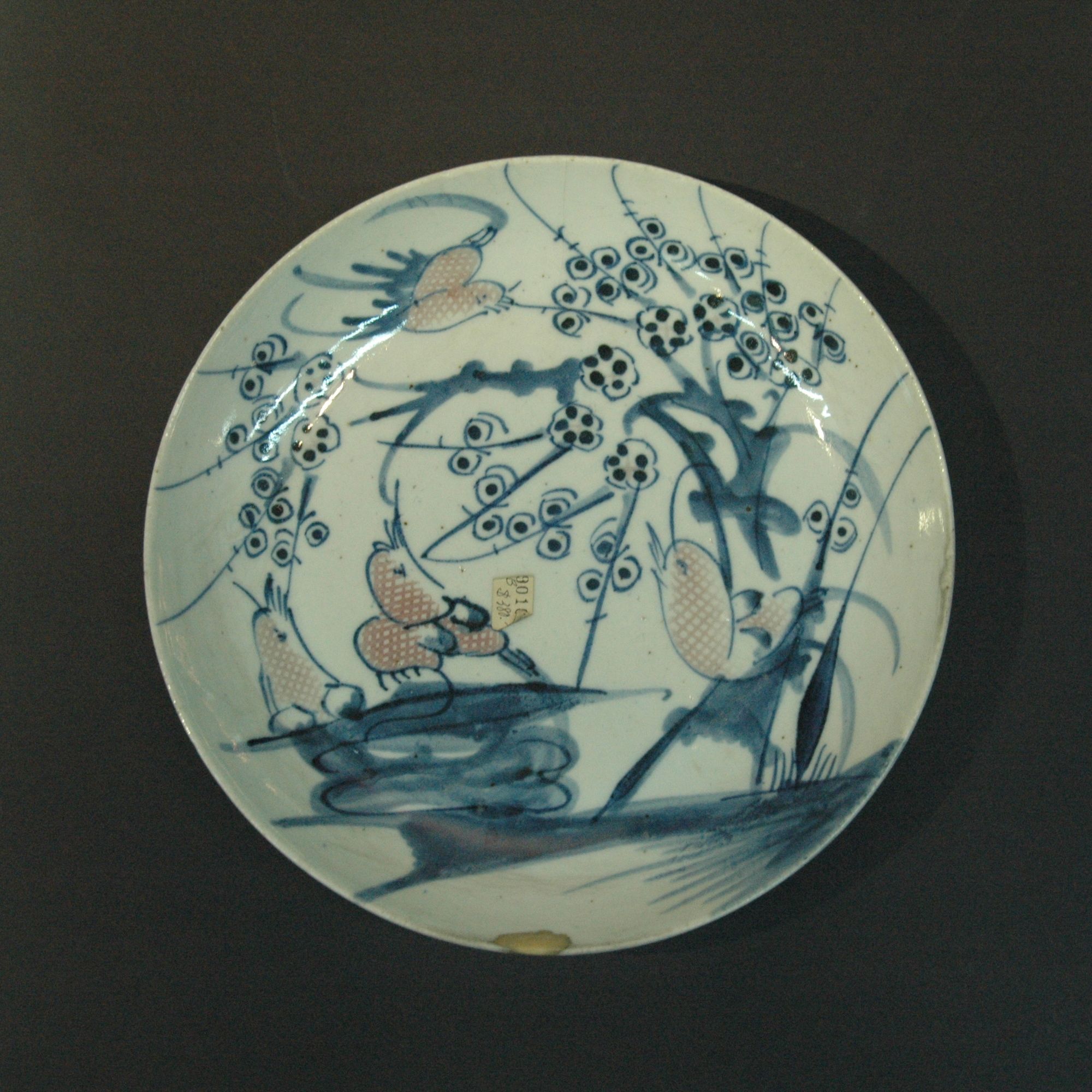
DIA250mm, China

The composition of this plate of the bird and the plum blossom which gave the plate its name – plum & bird plate.  The theme of bird and plum tree can be found on painting, pottery, jewellery, stationary, etc.  The pair sometimes are fighting for the attention of spring and sometimes delivering good news, they are often seen together.  Plum tree blossoms in the spring time, a start of a new year, both a sense of joy and happiness.  The bird, pica pica, is a special bird, according to the Chinese “Book of Birds” (around 500B.C.), the pica pica is capable of telling the weather – “If it sings with its head upwards it will be sunny, if it cries with its head facing down it will rain, people will be happy just listening to it sing”.  Looking at the plate, it seems weather will be good tomorrow, have a nice day everyone!

Though it is not a pica pica (magpie) and it didnt sing, nevertheless its a nice clip.
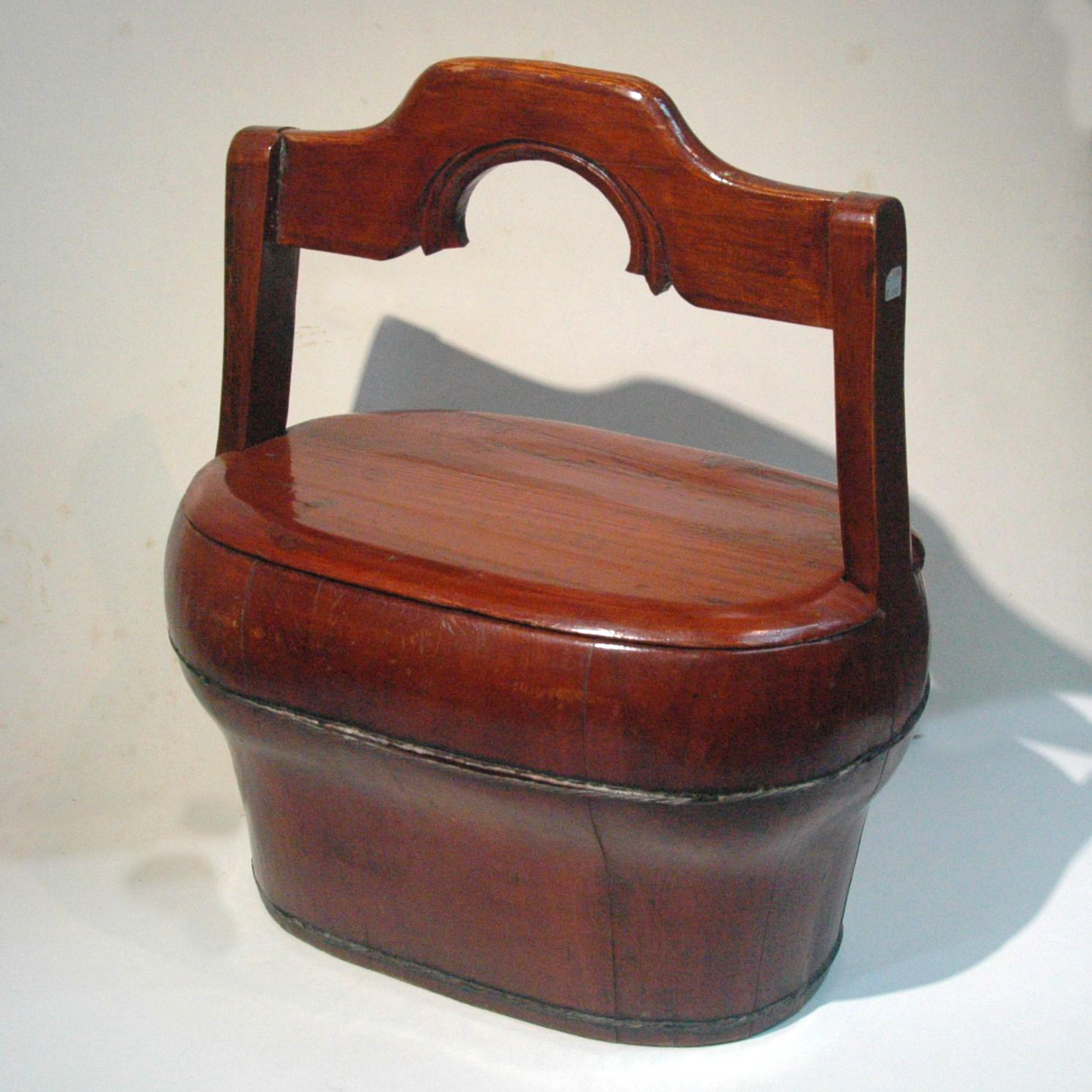
W370xD250xH470mm, China

A wooden pail is an everyday item in a traditional Chinese household, it is included in every bride’s dowry (see the previous post – Lacquer Pail) and indeed there are many types.  The one feature today is a plain version for storing food stuff such as sweet cakes, flours, grain or dried fruits.  The container is constructed by several pieces of wood (like a barrel), its oval shape made the construction much harder.

DIA180xH270mm, China

The Chinese started making wine some 5000 years ago and the container developed from bronze to lacquer, then to clay and porcelain.  This blue and white porcelain is one that is used by regular folks, this kind of flagon are bold in form and in the pattern different from the usual blue and white porcelain ware.

The traditional Chinese unit for alcohol are measure in sheng, dou, dan.
1 dan = 10 dou
1 dou = 10 sheng
1 dou = app. 6000ml

This flagon holds about 2 dou.

If you can also hold 2 dou of Chinese wine, check our the Wine God wood block print!

W180xD90xH130mm, China

This neat container has 2 compartments for storing tea leaves.  Pewter has traditionally been material used the tea leaves storage, it is an alloy which oxidized more slowly then metal like iron or bronze and less reactive to the tea leaves which organic.  Tea leaves is known to absorb the smell in the environment, pewter being an odorless also has an advantage over other materials.  Last of all, it is easily shaped to create an air tight container.

DIA80xH60mm, China

No, this is not rudolph.  Yes, the red nose is missing.  For the Chinese, not only does the deer symbolizes longevity, it also represented success as an official.  This cute container is a the base of a mortar, its small size suggest its for grinding medicinal seeds or nuts, e.g. garlic, pepper etc.

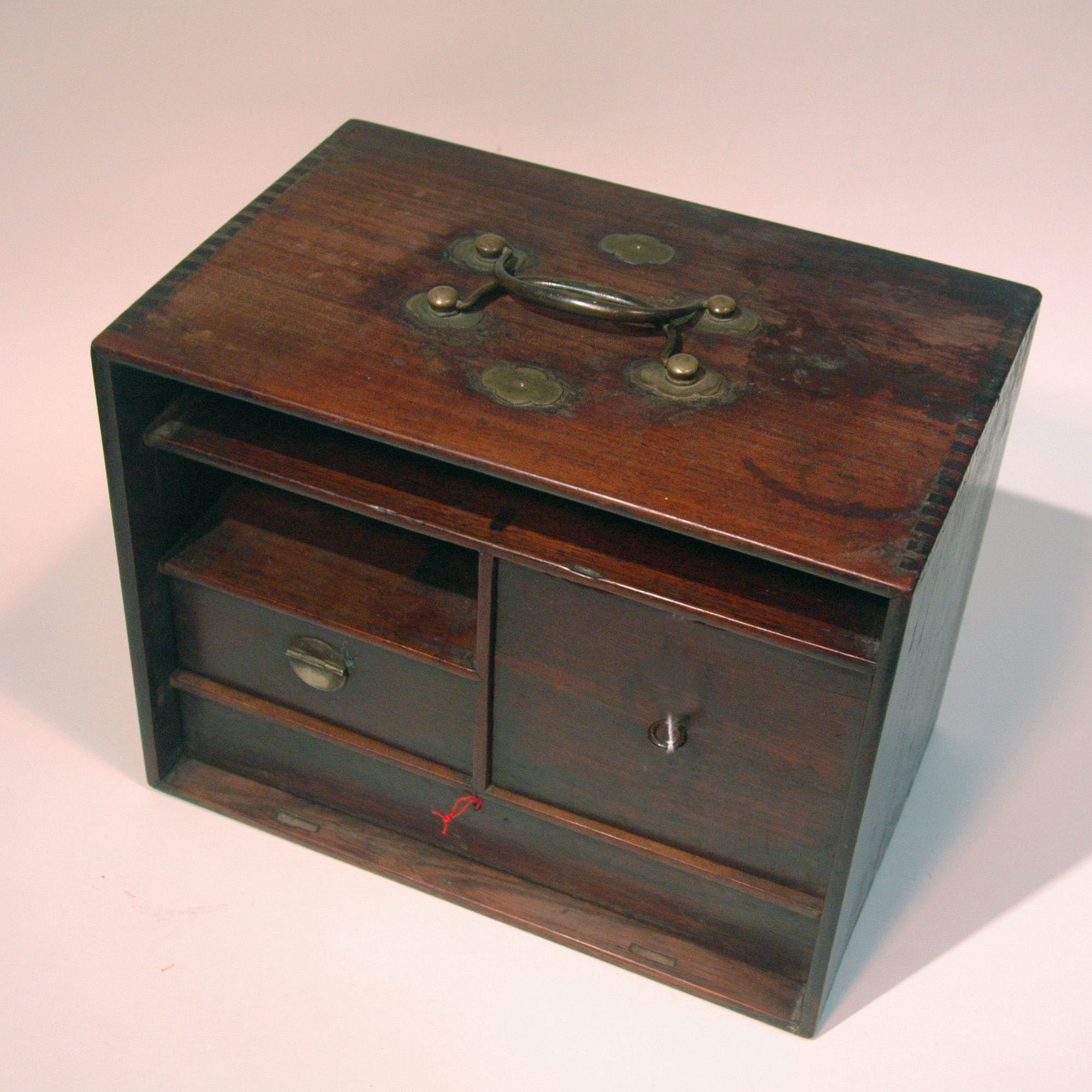
W130xD130xH150m, China

A small wooden box with brass handles and buckles, perfect for a treasure hunt.

I have been wondering what a box like this would be for.  The lock is rather redundant as the box is so small that the thief would have just grab it and go.  Perhaps its a box for a child to keep all the little precious items; a pebble from the beach, a ginkgo leave, an unknown seed, a dice, feather of some bird, a seashell …

L210xD140xH100, China

Narcissus, daffodil, is a very popular plant in China especially for the Chinese New Year.  So popular that there is a special container for its presentation.  A month before Chinese New Year, one would find daffodil bulbs for sale in the market.  The bulb would be placed inside the bowl, secured by pebbles and 2/3 of it cover with water.  Up till the days before flowering, the water would be replaced daily, when it started to flower every 3 days.  When the shoots started to appear, locate the bowl to a sunny but cool place.  As daffodil is part of the New Year decoration, it is almost essential that it is blooming with flowers on New Year’s day, this normally takes 25 days at 20C, if lacks behind a bit of warm water on New Year’s eve would normally do the trick.   And if all fails, one can always pay a bit more for the perfectly planted daffodil at the flower market.

DIA100xH40mm, Cambodia

This silver box is part of a betel set.  Betel chewing, a tradition since prehistorical time, was a popular past time all over Asia, enjoyed by men and women alike, in all social levels.  Betel leaf, areca nut, lime paste, camphor, cinnamon, nutmeg, tobacco etc are ingredients for betel chewing; they are stored in separate containers ready for consumption.  These container can be made of ratten, wood, lacquered, copper, silver and even gold.  In Cambodia, for common people silverware are not used as daily utensils, they are prized object used only for entertaining important people or in ceremonies.

W250xH200xD160mm, Japan

The proportion of this small chest of drawers reminded me of Mondrian, this Japanese Tansu is for storing personal accessories.

These portable chest of drawers originated from the cash boxes in the merchants’ houses of the Edo period, then people started to bring it to their bedrooms for keeping valuable goods.  Nowadays they are used for keeping stationary, as a treasure box in Japan.  A beautiful box for tidying up small things.


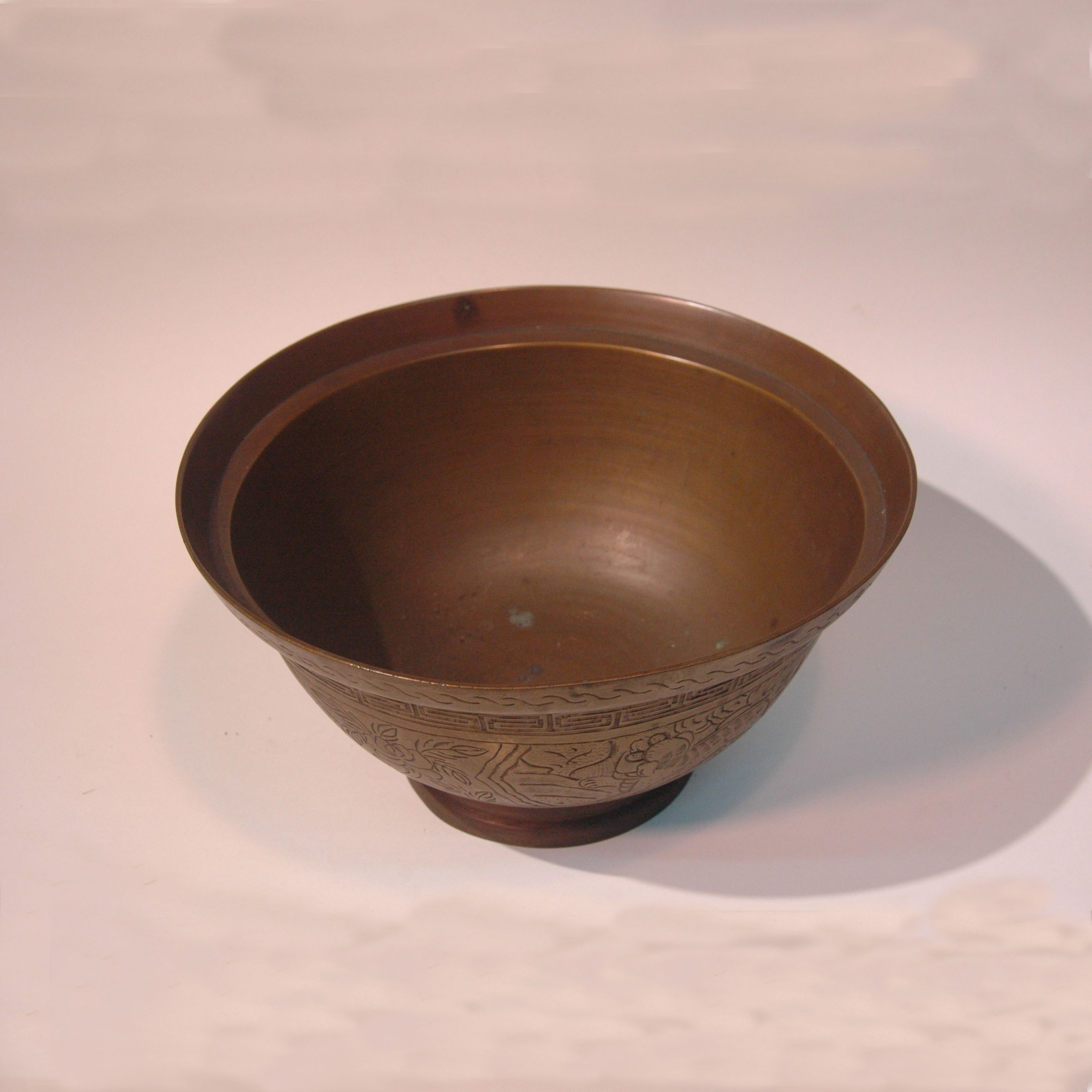
DIA280xH150mm, China

This bronze bowl is engraved with pattern of flowers and the blessed kirin; the art of bronze engraving was first founded in the Spring and Autumn period (722-476BC), it was then used to document important events and notables.  The craft of bronze engraving is most popular in Beijing where all the famous engravers reside,  these craftmen are also known for their calligraphy and seal engravings.

Just found out from goggling about bronze bowl that bronze is suppose to help with curing vitiligo, hmm, wonder if i should bring the bowl back and give it a try.  Will keep you updated on the progress.