Archives for the month of: January, 2012

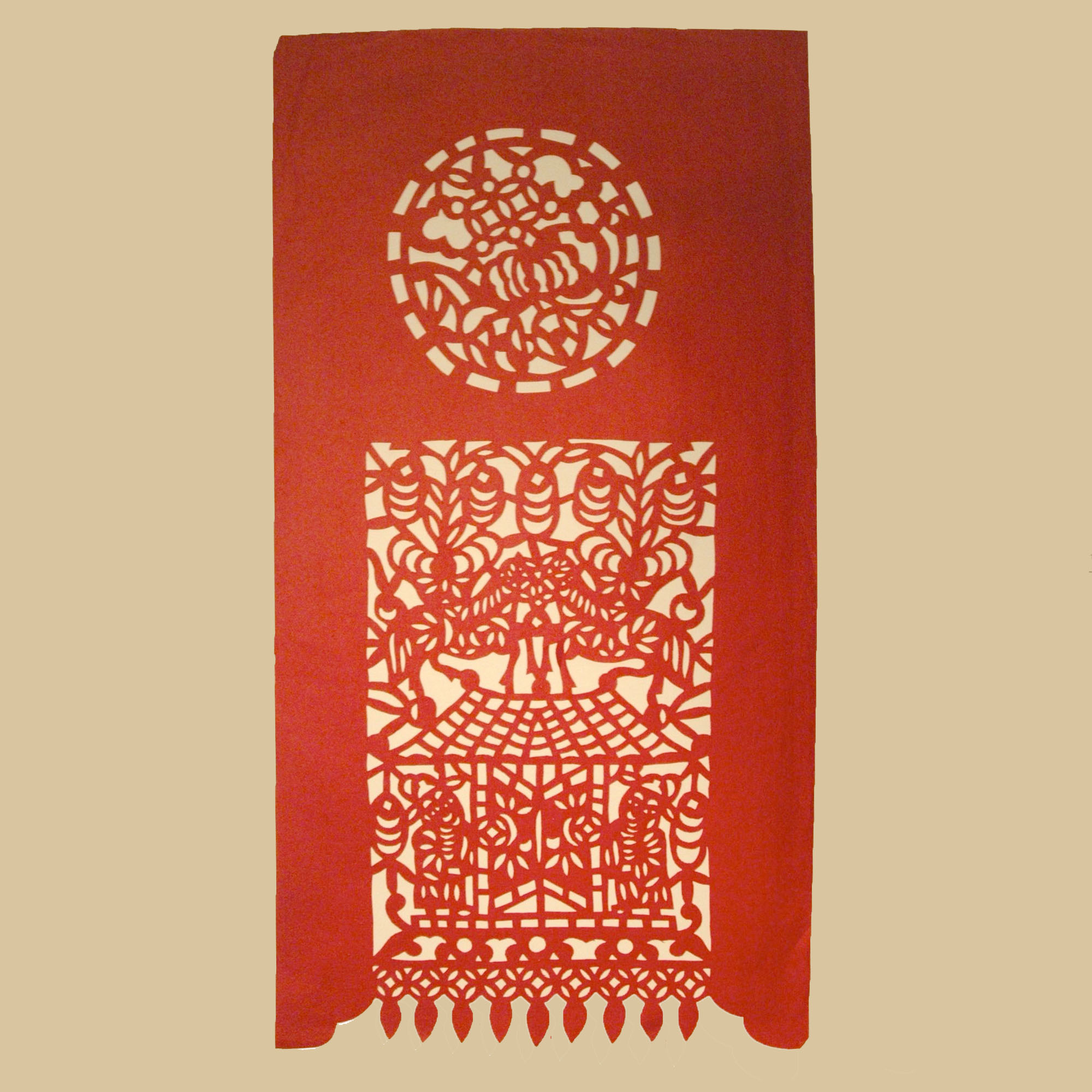
W280xH550mm, China

This Chinese New Year decoration is called the Diao Qian Er; a tradition that has been around since the Sung dynasty, a red paper cutout that will be hung on the lintel of the door.  Commonly, 3 pieces will be hanging on the lintel, 5 on the front door and on the window.  They are to be handle with care, if any is damaged before the 5th day of Chinese New Year, it will forecast a year of bad luck.  The legend of these lintel hanger goes like this; Jiang Zi Ya was made in charge of appointment of all the gods, when his wife found out he has this duty she wanted a title too.  Unfortunately, by then all the titles have been taken up, so Jiang made a title up and appointed her the god of  poverty.  Then he thought it is bad item, if the god of poverty entered the house of the poor, they will be more worse off and this is no job for any god, so he add on a small condition “the god of poverty shall not enter if the house is torn, she shall only enter those with wealth.”  People found out and decided to trick the god, torn piece of paper are stuck on the door and window, later these piece of paper became the Diao Qian Er.  This cutout has the pattern of coins, horses bring in gold and a happy household.

new year decoration.jpg

Come check out our new year decoration items!

DIA50mm, China

Yes yes I know tigers dont squeak, they roar … This toy is in keeping with the Chinese fascination of tiger as a protector guardian of children and child’s tiger squeak…  This tiger is made out of 2 pieces of clay, a bit like an oreo cookie, however it is a thin leather or toughen paper that is sandwich in between.  A squeak is fixed in the bottom layer, by moving the 2 parts a squeak will be sound.  It is known as the leather tiger.  It happens in China all the air blower tools, from bellow to a camera len blower are all called the leather tiger, can this only be a coincident?  or would it be some tribute to this toy.  Sadly, this toy is not longer popular for today’s children and are quite hard to find.

DIA100xH350mm, China

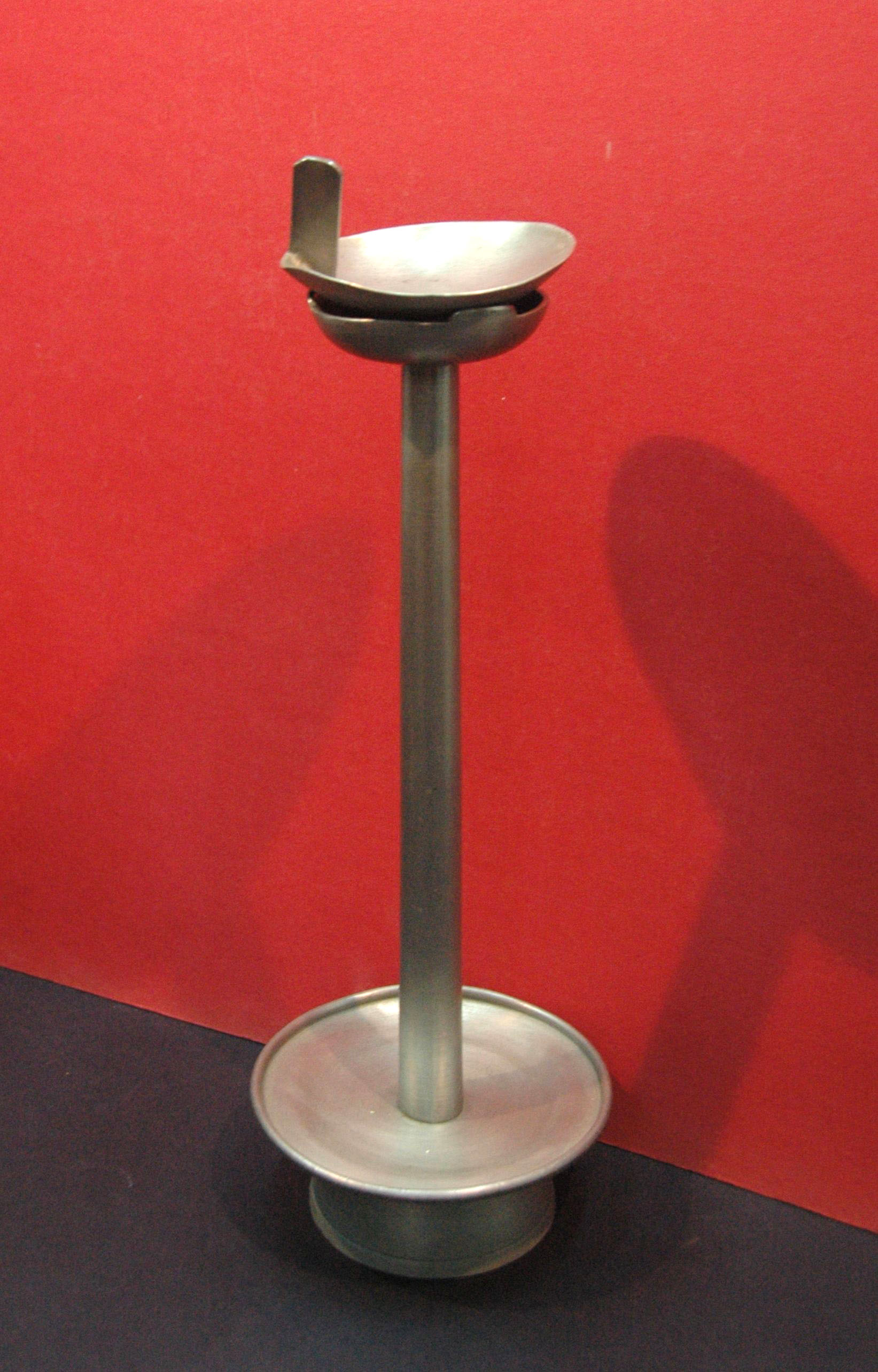
Oil lamp was the source of lighting in old China, as the technology advance metal lamps became more common by the Qing dynasty.  It quickly became popular because of its durability over the ceramic oil lamps.  This is one of a pair of the standard pewter lamp used in the old days in the Chinese wedding ceremony.

L220mm, China

Chopstick has been around in China for more than 3000 years; there has been many material used for making them, wood, bamboo, ivory, bone, lacquered, silver, gold, jade and of course the recent plastic and stainless steel version.  It is commonly believed that silver is used as a material for its ability to detect poison.  Perhaps it is the tarnishing of the silver from the sulphur in arsenic that made the name of the silver chopstick.  Please dont be alarmed by the tarnished silver on this pair of chopstick, it is due to natural oxidation from its age and not from any poison.  The legend of the silver chopstick goes like this; the famous politician of the Zhou dynasty Jiang Zi Ya was once only interest in fishing (with a straight hook) and nothing else.  His wife got fed up with his idleness and decided to kill him and to marry someone else.  One day as usual, he came home empty handed after fishing, his wife had prepared a spiked up meat dish for his supper, just as he tried to grab the meat a bird flew in and packed on his hand.  The bird did it again and again as he tried to go for the meat, sensing something is out of the ordinary, he pretend to chase the bird and left the house.  Up a hill, the bird told him only to eat with the two sticks on the ground where it stood.  Jiang return home and pick up the meat with the sticks as he was told, smoke appears and his wife fainted.  His eating sticks got famous and everyone started eating with chopsticks.  The moral of the story …. men, dont go fishing too often + remember to bring at least a fish home (even if you have to buy it from the supermarket).

DIA260xH480mm, China

This lacquered water bucket is part of the bridal dowry of a Chinese wedding.  The basic dowry list for bucket section would include a foot a water bucket, a foot washing basin and a chamber pot.  The list for a well off family would go up to more than 20 items.  All these items have in common is that they are all lacquered in red and structurally formed like a barrel, segments of circular planks tightened together by a piece of metal.  The bucket artisan used to be a very popular trade, making every day use items, repairs and of course the dowry items, but as China became industrialized now there is only a handful of old artisan left.

DIA180xH250mm, China

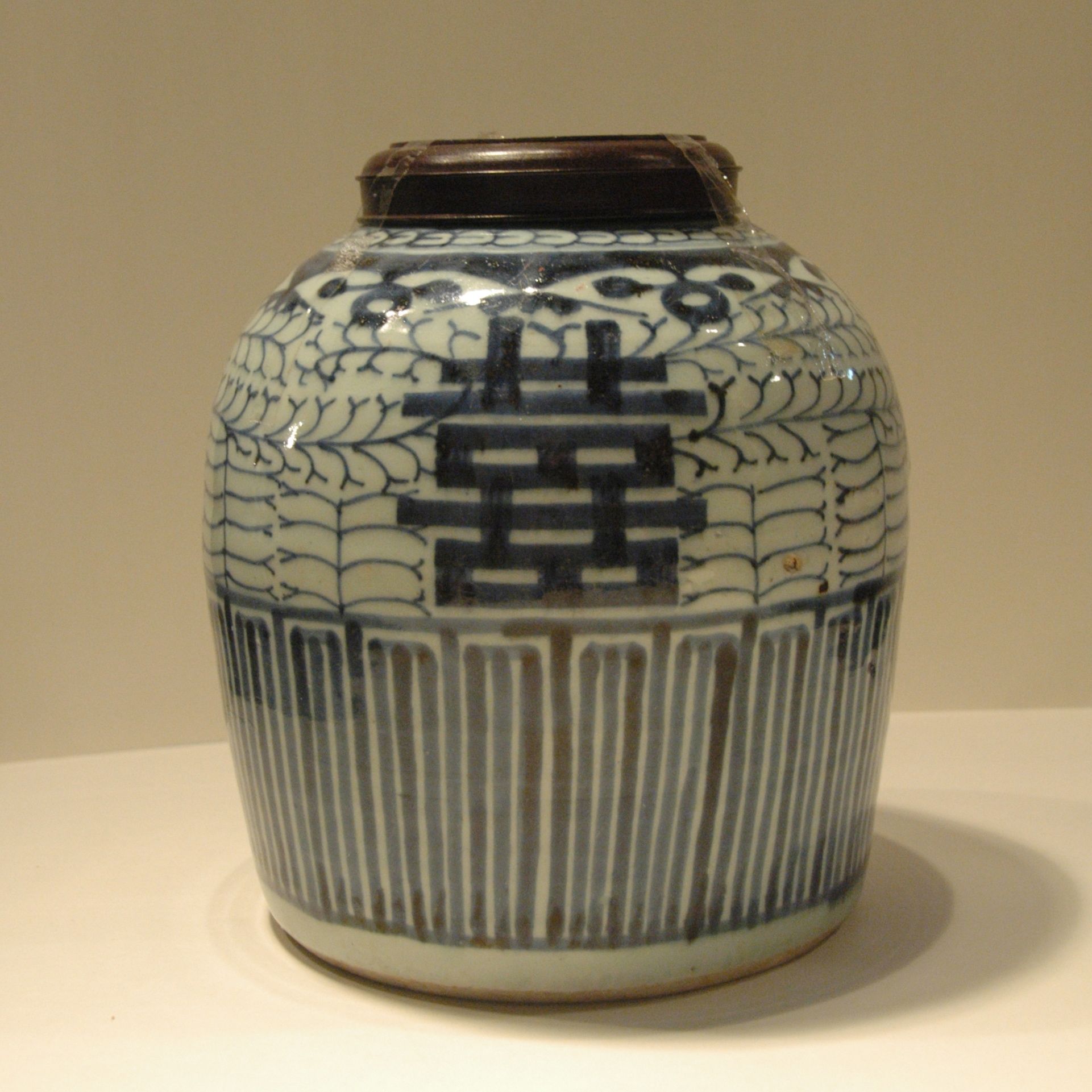
In the old days, for a common Chinese family the ceramic items on the dowry list would include: one vase, a pair of blue and white double happiness jars, a pair of hat rest.  Inside of the jars would be placed dates and lotus seeds as a symbol of  adding a son for the family.

D180xH180mm, China

It used to be as popular as the electrical kettle, every big family would have one in the house.  The teapot with tea already brewed would be kept warm in this rattan weaved basket.  Inside the basket is padded with cloth with only a custom made void for the teapot.  The tea cozy was invented in the Qing dynasty, some are weaved with rattan, some of reed and some straw.  The ratten is first cleaned and the knots untied, the skin is removed and the core polished.  The cozy is decorated with bronze accessory which unfortunately most are no longer on this piece.

W400xH250mm, China

The folding fan was introduced to China from Japan in the Song dynasty; they were a gift from monk Chonen to the Emperor.  Emperor Zhu Di lead on the fan fashion, he ordered the court to produce a large number of hand fans, decorated with poems or verses and award the to the high officials.  This became to the trend of the intellectuals, exchanging poems and calligraphy through the fans as a gesture of friendship.  Even the Qing dynasty, the fashion of hand fan was well in its height.  This is a fan from the 50s, a Bai Ju Yi poem about parenthood was added by my father recently.

W100xD40mm, China

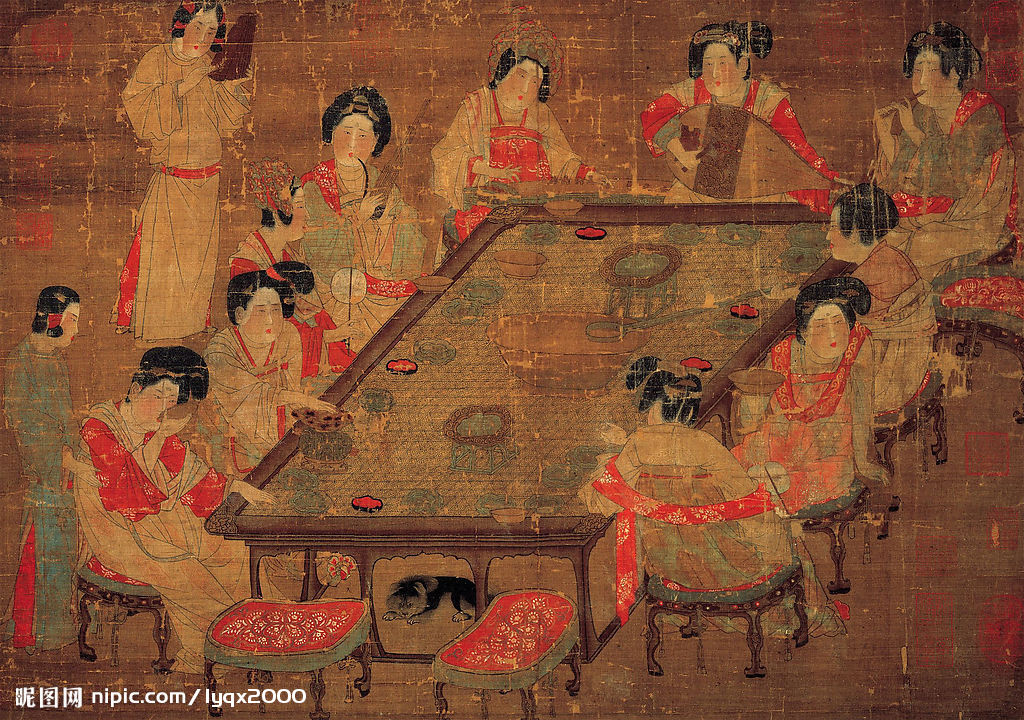
Comb in China became a special artisan trade around 700BC, the design, shape and material changes through out the different dynasty.  Apart from being a function object, it also became an accessory for hair styling in the Tong dynasty.  This can be seen in the Tang dynasty scroll “A Palace Concert” where ladies from the Emperor’s inner court were shown to be enjoying their drinks, the comb accessory can be seen as decoration in their hairdo.  This is still practiced by the minority tribes; the Shui, the Miao, the Dong tribe etc.  There is a folk tale explaining why the Shui tribe ladies have a comb in their hair, the story goes: a group of women were working hard in the fields, they have left their baby in a basket at the edge of the rice paddle.  Suddenly they heard the baby crying, they went running to see what is wrong only to found a large centipede making its way to the baby.  By the baby’s side is few wooden combs, the centipede had a look at the combs and compared the number of teeth with his own number of legs.  “Damn, i have been out numbered” thought the centipede and quickly made retreated.  Since then, the Shui tribe ladies have combs in their hair.