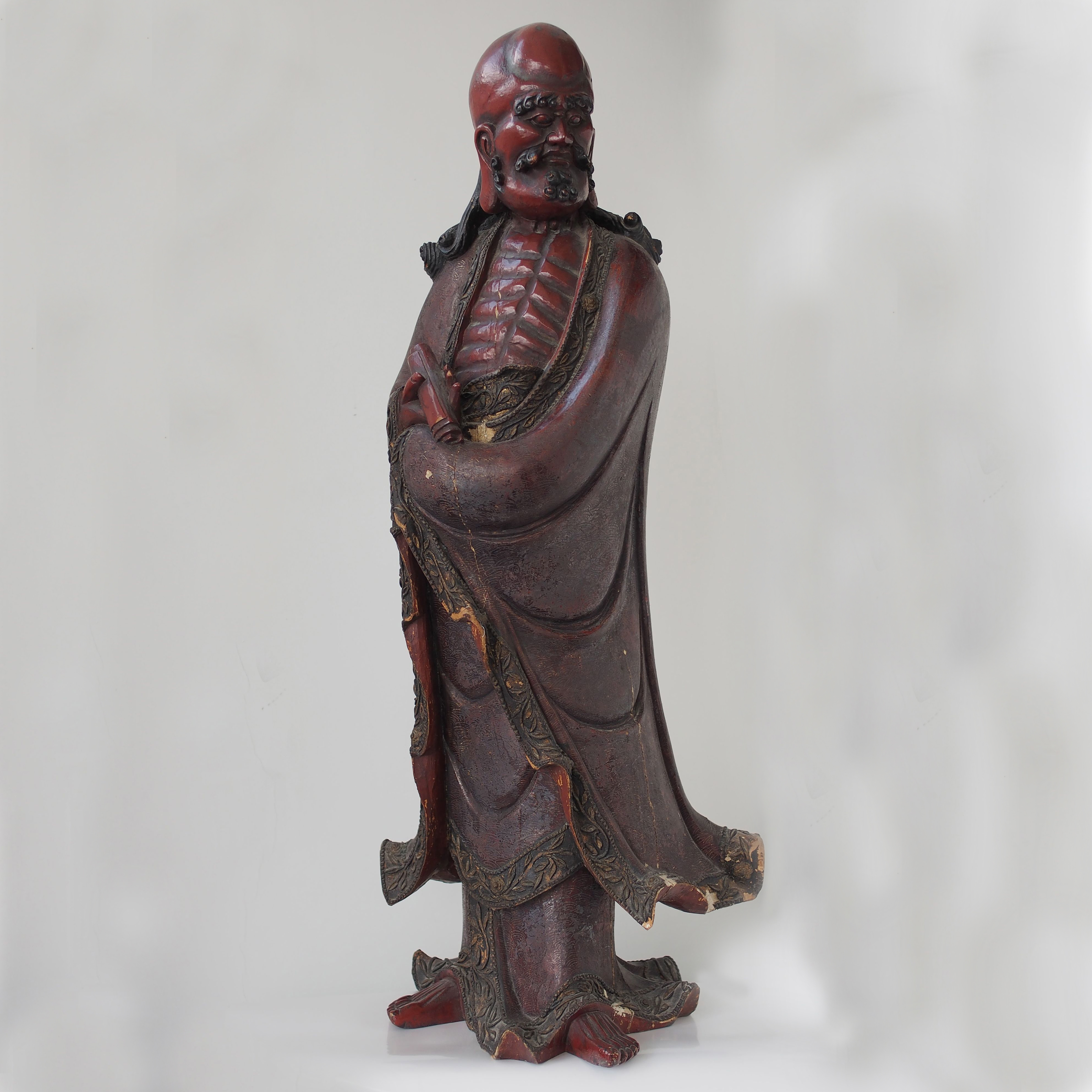
This is a statue of the Bodhidharma, the Buddhist monk who is accredited to have introduced Buddhism to China. It is believed that he is the third son of King Tamil Pallava of Kanchipuram and arrived to the now Guangzhou area in Southern Northern Dynasty (470AD). The most famous legend about Bodhidharma is his wall glazing. After felling out with Emperor in the Southern State, Bodhidharma travel up Yang Tze River, arrived at Shao Lin Temple and meditated by glazing on the wall for 9 years.
He is also believed to have introduced the 72 Shao Lin super kung fu and here is one of them.
This is a warrior mask of the Chinese Ground Theatre (Di Xi). A form of theater which based on the warring theme.
The character of the masks can be broadly divided into 4 catagories; generals, saints, clowns and animals. The generals would wear helmets, like this one; and consists of warriors, intellectuals, female, old and young generals. This particular mask belongs to the warrior general which the blue face symbolizes bravery and a strong character. The saint types are masks with a weird features, e.g. a beak; they are powerful figures which comes to assist the generals on wars. As in all theatres, di xi cannot be without the clowns, often character of distorted faces. Lastly, the animals; the fierceful lion and tiger, the tamed horse, the stipid pig, hard working ox, endearing dog and the cheeky monkey.
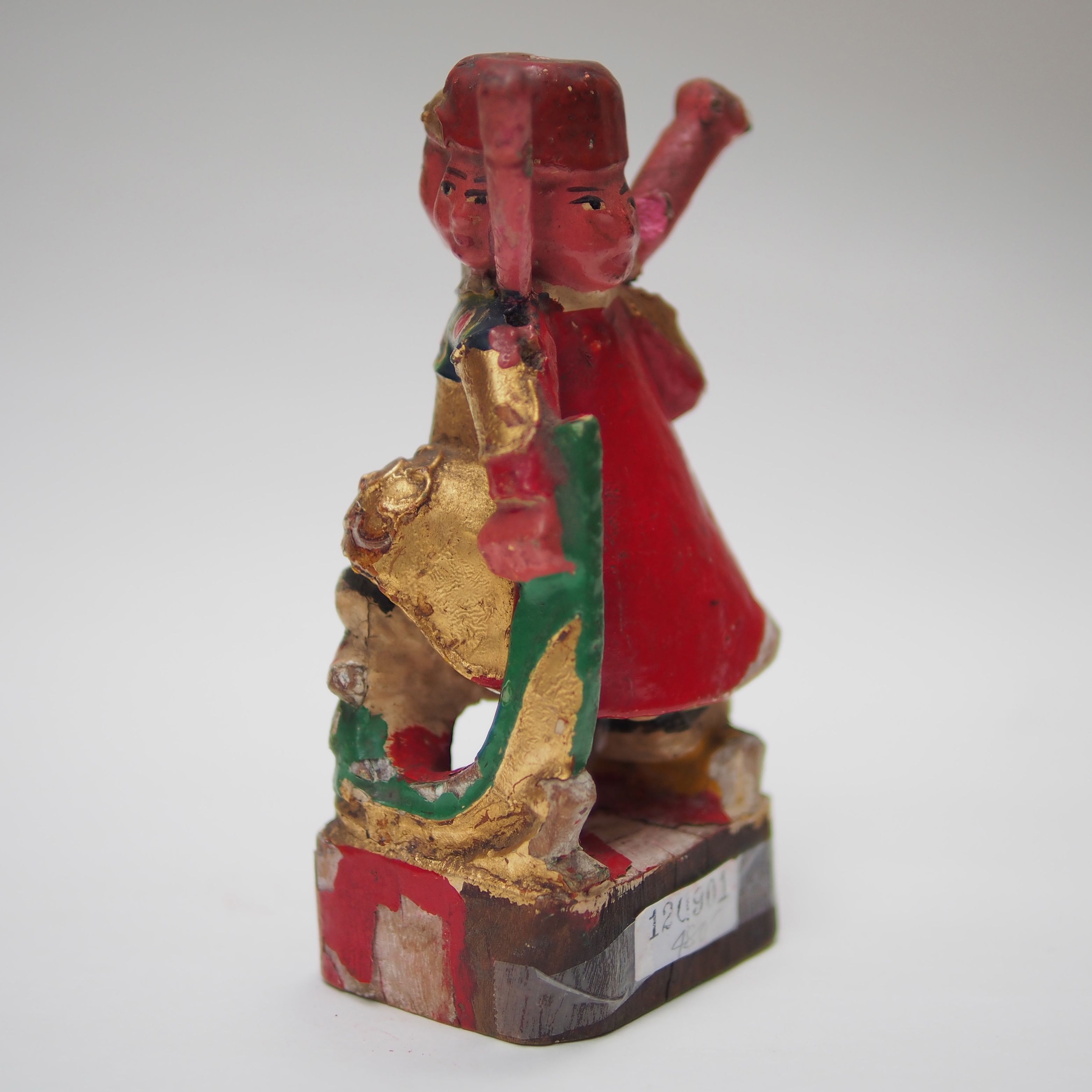
This dragon and tiger rider was an ancestral saint that was kept at the alter of the junk boat for keeping the fisherman’s journey safe. The multiple faces offer a supernatural power for this ancestral saint which is an usual expression for these figurines. Or would the fisherman had been to Bangkok on one of their fishing spree and got their inspiration from the famous Erawan Shrine?
This antique lacquer figurine is that of the Bodhisattva Manjusri (文殊菩薩). Bodhisattva Manjusri and Maitreya are the often depicted with the Gautama Buddha with Manjusri on the left and Maitreya on his right, representing wisdom and teaching receptively.
Mantra of Manjushri
The creature Bodhisattva Manjusri is riding is a green lion (suan ni), the 8th son of the dragon. He adores the incense and sitting so you will also be able to find him as a decoration for the feet of the incense burner.
Like other forms of Chinese theater, the glove puppet follows the same cast catagories. This puppet head belongs to the Jing category (painted face), a forceful character and the sub category of Black Flower (Hei Hua) which denotes a strong temperament but integrity (a bit like Captain Haddock in the Tin Tin comic). Junior means a younger character, hence there is also Black Flower Senior who comes with beard. Hei Hua Junior is often cast as the talented officers for a respected official
Tomorrow is the 2557th birthday of the Buddha, Vesakh,a holy day that commensurate the birth, enlightenment and death of Gautama Buddha by Buddhist all over the world. The date of the celebration differ slightly throughout the different countries, 8th of lunar April, in Thailand for example, Vesakh is on the 24th May.
On this special day, the devoted Buddhist will observe the 8 Precepts:
I undertake the precept to refrain from destroying living creatures.
I undertake the precept to refrain from taking that which is not given.
I undertake the precept to refrain from sexual activity.
I undertake the precept to refrain from incorrect speech.
I undertake the precept to refrain from intoxicating drinks and drugs which lead to carelessness.
I undertake the precept to refrain from eating at the forbidden time (i.e., after noon).
I undertake the precept to refrain from dancing, singing, music, going to see entertainments, wearing garlands, using perfumes, and beautifying the body with cosmetics.
I undertake the precept to refrain from lying on a high or luxurious sleeping place.
If you happen to be in Hong Kong, join in the celebration.
This is one of the topengs which appear in the introductory of the performance, they are archetype of the character in the show. In the solo act, the dancer will perform pure dance to show off their dancing skill. This particular mask is that of the Dalem, the handsome king who is intelligent, noble and strong, an ideal ruler. The actual performance will begin with the entrance of the king’s servants who wear a half mask as the narrator of the show. The dalem then re-enter and tackle the political or religious problems of his kingdom.
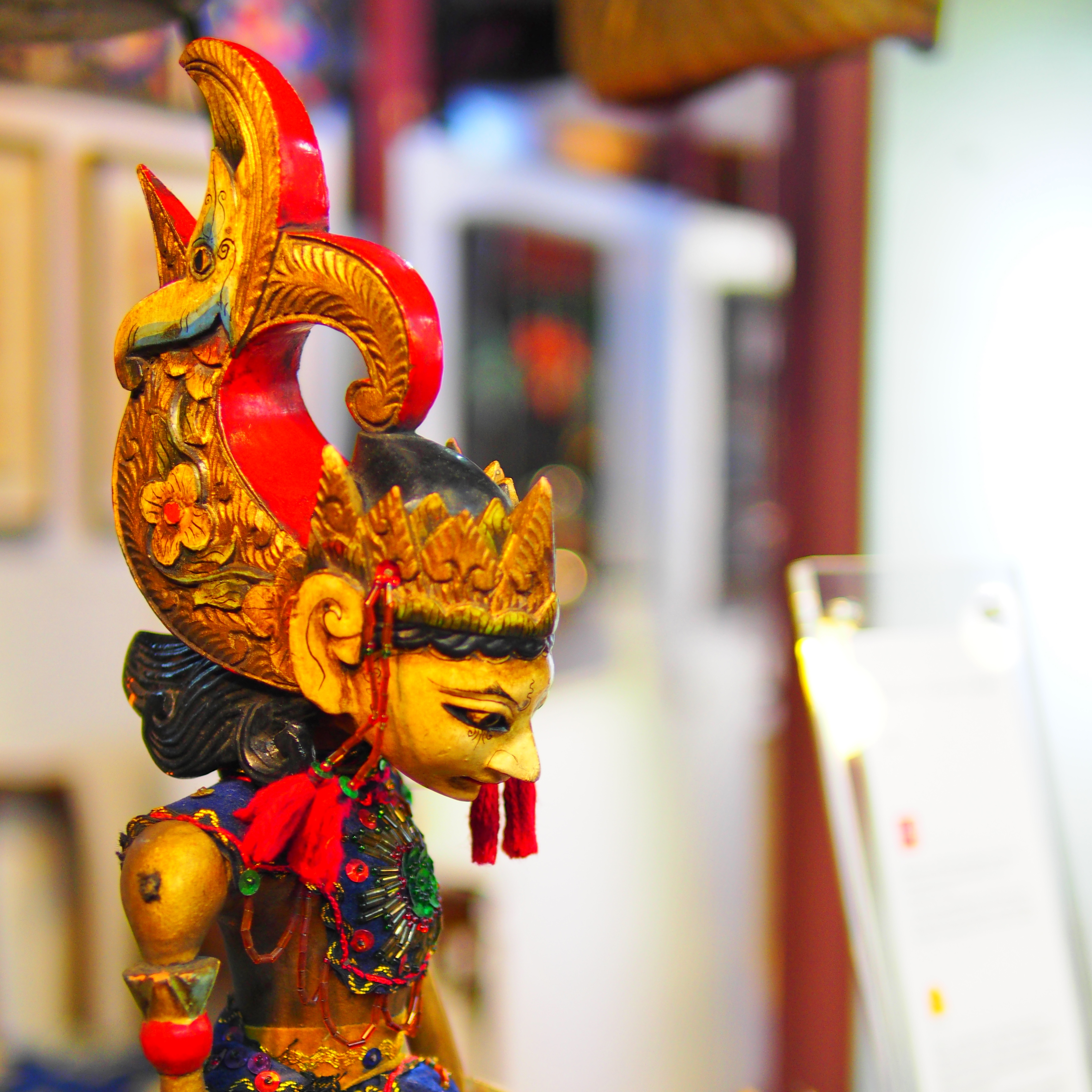
Wayang golek is the traditional West Javanese performance of the wooden rod puppet.
Here is a wonderful documentary about the Wayang golek.
The character of this puppet is Abhimanyu, the tragic hero in the Hindu epic Mahabharata. Son of Arjuna and Subhadra, like his father he was both courageous and a good fighter. Abhimanyu’s education of becoming a warrior started when he was still in womb of Subhadra, his father would go through in length different battle formation. Unfortunately at Subhadra has fallen asleep when it came to the exiting of Chakravyuha and Abhimanyu failed to gain the knowledge and there on the 13th day of the battle he was killed.
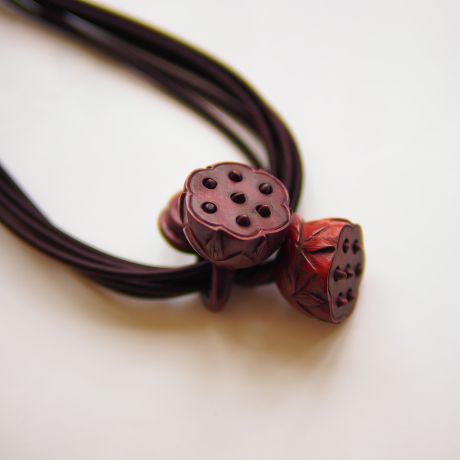
This is a necklace with a wood carving of a lotus pod. Like the real thing seeds are movable but cannot be taken out unless you break open the pod. These fresh lotus seeds were one of my favorite childhood snacks, what can be better than a soft package with refreshing sweet capsules. Sadly, they are not as easily found markets of Hong Kong anymore.
For the Asian Folkcraft Collection, we have another tool – an opium scale. This old scale is neatly set inside a teakwood case with carving on both side.
The scale is to be completed with a set of opium weights.






 Mountain Folkcraft