Archives for posts with tag: stationary

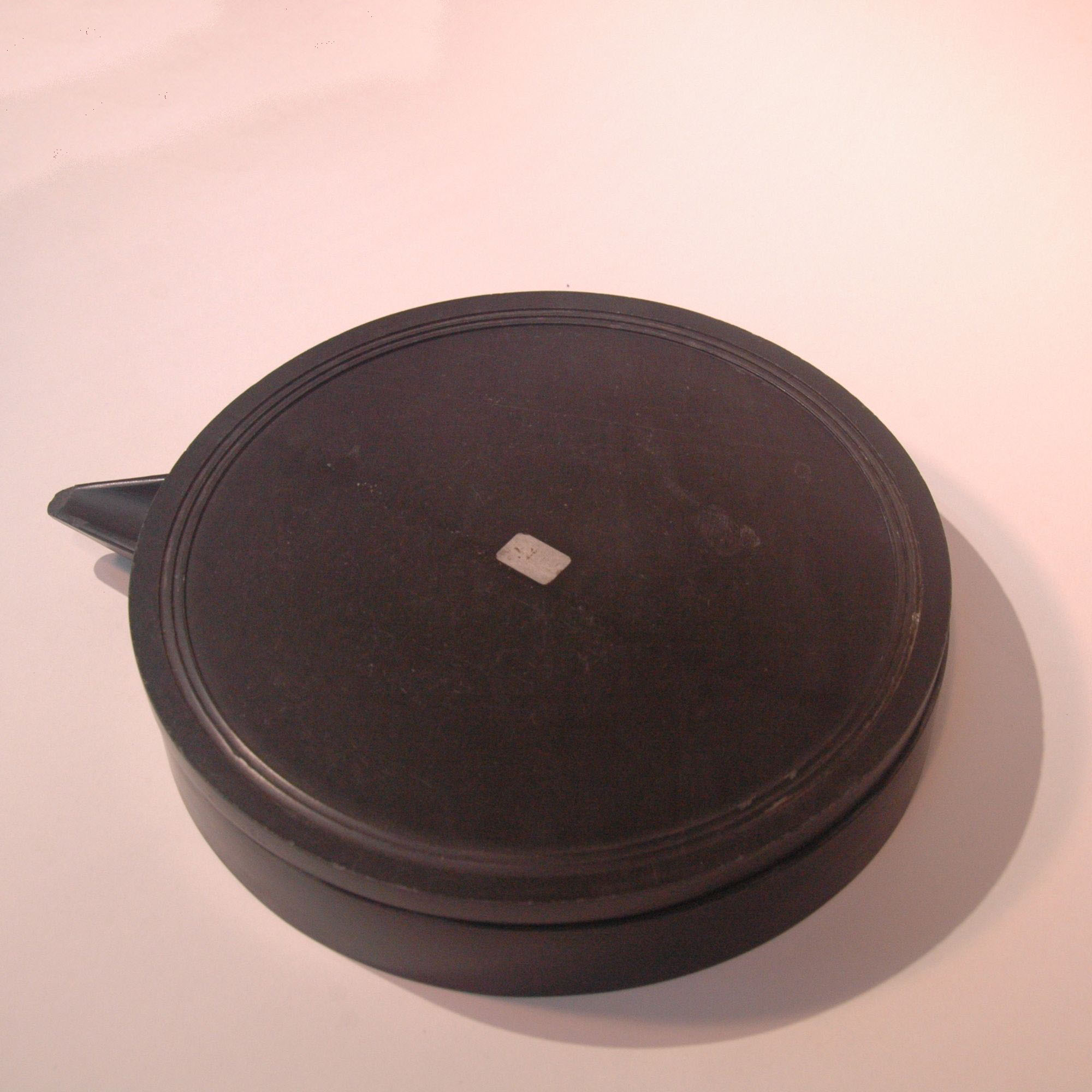
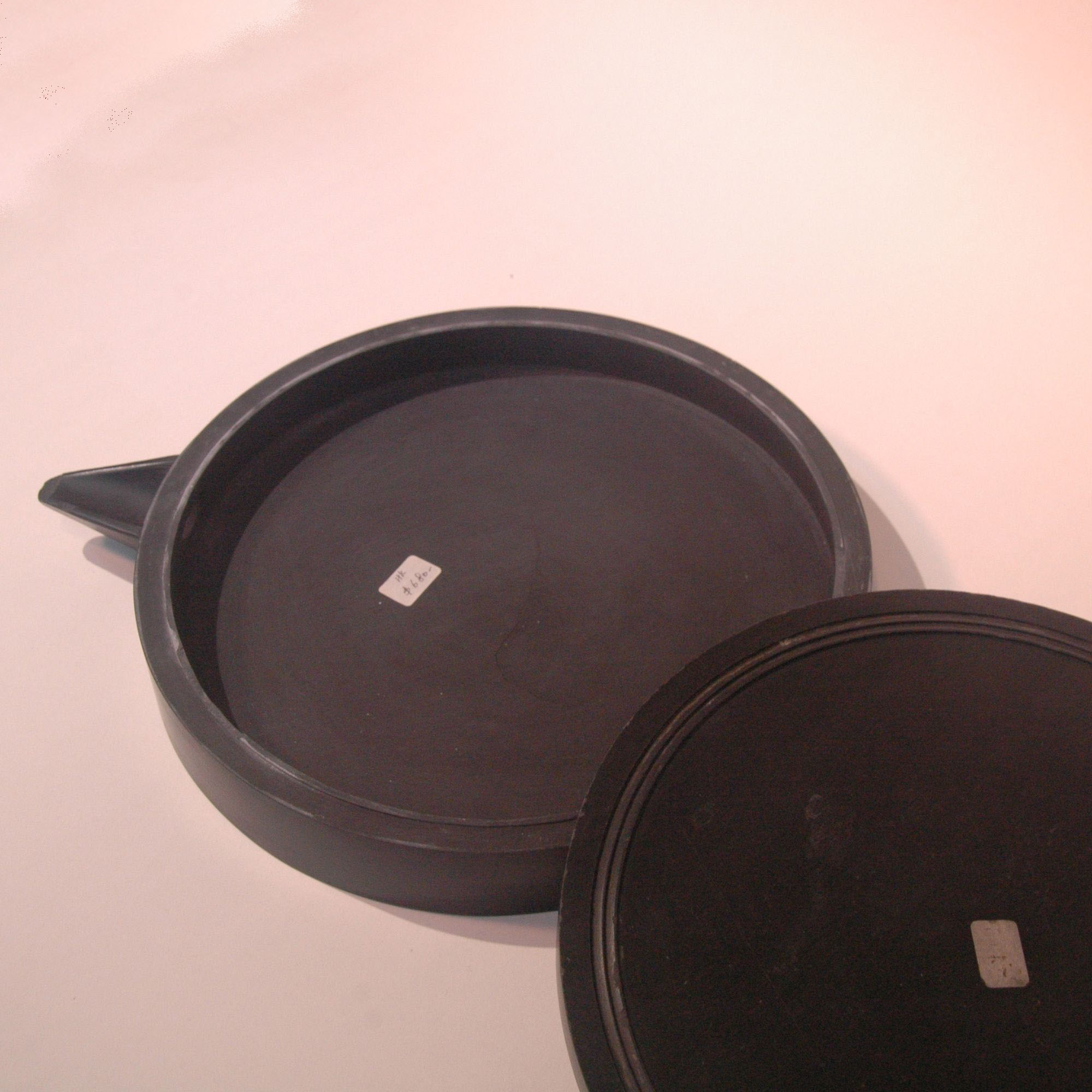
DIA230xH30mm, China

Yan, inkstone is one of the 4 stationary treasures of China, i.e., brush, ink, inkstone, paper.  The main function of the inkstone is for grinding the ink stick in preparation for the ink.  Before the inventory of inkstone, people would getting the pigment directly from the ink stick, this however is very restrictive in the size of the calligraphy word or painting, the brush would have ran out of ink when writing bigger size word.  To over come this problem, in Shang dynasty (17th century BC), flat and hard object (stone, bronze, jade, iron, brick) would be used for ink grinding.  Stone is the far most popular and liked material for inkstone, the stone type are also very selective.  This inkstone is a more utilitarian type, having no carving and the addition of a spout, its is most probably used to make a large quantity of ink for task like wood block printing.

W70xL140xH50mm, China

Dont be mislead by the tabloid title, this is in fact a piece of stationary, a copper box for keeping seals and seal paste.  In China seal was the form of  identification, a bit like the rubber stamp which is officially recognized.  The seal of the Emperor would represent the Emperor himself.  In the old days, most people will at least own a set of personal seal, but for artist and intellectuals they will own also a leisure set and a studio set, for each set there will be a collection of a seals.  There are a long culture for seals; the stone, the text, the design and the craftsmanship are all  refined and specialized.

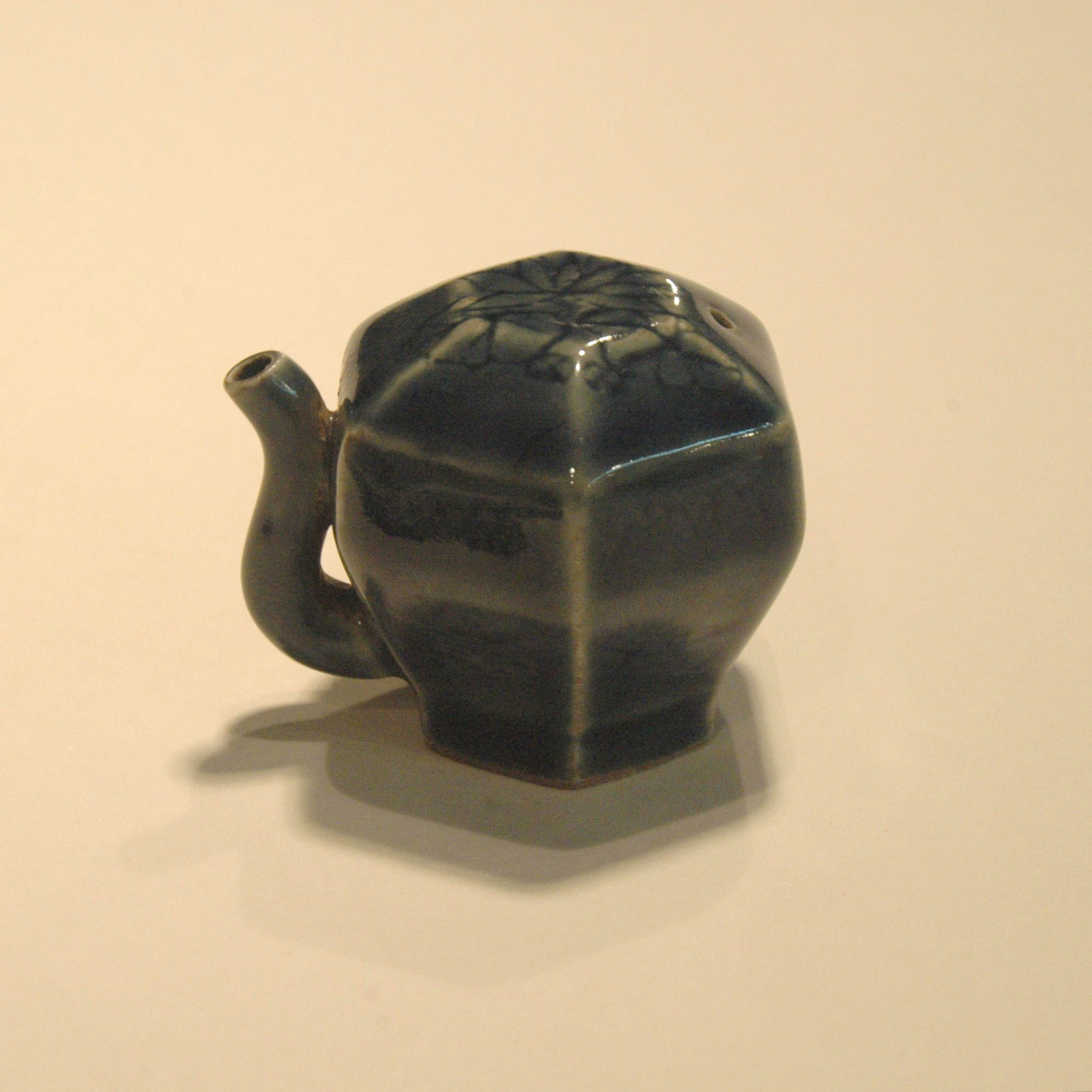
DIA60xH60mm, China

Here is another stationary for the Chinese calligraphy – a water drip for grinding and dilution of the ink.  It has a small water inlet and an outlet, the inlet acts also as suction control for the water flow.

W100xH50, China

This is holder for Chinese ink brush, the concept has been around for 1500 years (its hard to imagine otherwise as the ink brush is quite a messy object without it).  There are many different design and material, the ceramic mountain has been a popular design since the Ming dynasty.  Funny enough, there are brush holders that are named after mountains  but also also mountains that are named as “brush holder”, in Hong Kong (Beacon Hill), in Liao Ning, Qing Hai, Si Chuan, Fu Jian and of course the most famous mount on Huang Shan.

H540xW410xD200mm, China

This is screen is actually classified in history as a stationary, in the Song dynasty it is designed to be used as a screen to shield the inkwell from evaporation.  As time goes on, it became more of a desktop decorative item.  This cha ping has stone painting framed by mahogany.  The painting cleverly made use of the grain of the marble in the composition, at the back is a poem about a snow scene which reflect the marble grain.  The frame is removable, the painting can be taken out easily to show the reverse side.