
DIA165mm, Hong Kong
A simple necklace with a handmade millefiori bead. The making of a millefiori bead is though not as simple …
COLLECTIBLE JEWELLERY
SOMETHING OLD SOMETHING NEW
DIA165mm, Hong Kong
A simple necklace with a handmade millefiori bead. The making of a millefiori bead is though not as simple …
COLLECTIBLE JEWELLERY
SOMETHING OLD SOMETHING NEW
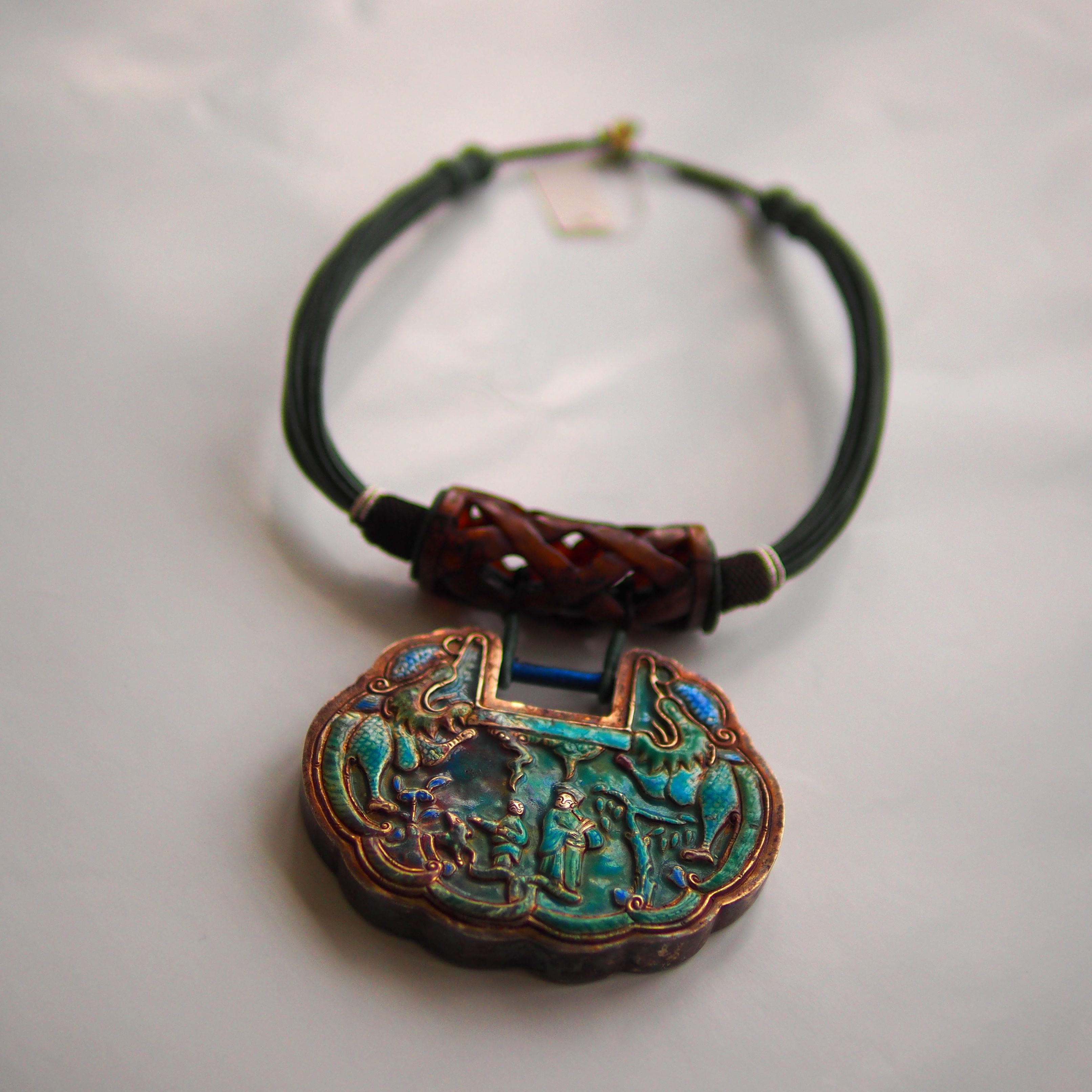
DIA165mm, China
We have previous talked about the long life lockets as a blessing for the young, more detail can be found in the posts;
Silver Necklace, Kirin Boy Necklace, Happy Encounter Necklace, 13 Tai Bo Locket, Original Long Life Locket and others items such as Du Dou Embroidery, Clay Doll – A Fu.
This particular locket has been glazed with Beijing enamel, shao lan, a vitreous enamel process used typically for silver jewellery. The powder enamel was melted at 600c to set on the silverware, cooled and reeapplied for 4-5 times. Because of the low temperature firing, the different ingredient, the Beijing enamel is more transparent than the popular Cloisonne.
The technique was introduced from Europe in the late 17th century and like all novelty only restricted for court production. By late Qing dynasty silver items of Beijing Enamel can be found in silversmiths.
This necklace has a hand woven string, with the silver locket anchored with a jade carving tube dyed traditional technique. On the locket, there are two kirins on either side with the word of blessing – Fortune and Career


Something Old Something New
Collectible Jewellery
 DIA165mm, China
Something Old Something New
Collectible Jewellery Collection
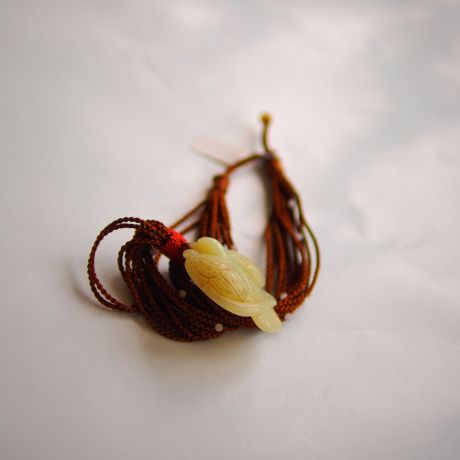
Fish jade pendants have been popular since the Neolithic period, Zhou, Sung, Ming, Qing dynasty and it continue till today. Fish was the probably the first stable food source before the invention of primitive farming and was chosen as an early subject matter. As linguist developed, it also attended as a symbol of “surplus“. In the Tang dynasty, it had even been prescribed to Concubine Yung Gui Fei for cooling the dry summer heat – by sucking on one jade fish a day.
The fish on this necklace are attached to the beautifully pleated collar.


DIA200mm, China
The pendant of this necklace is the partridge, “Chun”, the Chinese believes that this special bird comes from the same family as the Phoenix. Looking at the video … its probably a very very distant cousin …
The “Chun” first made its name in the Warring State period as a gourmet dish, by the Tang dyansty it is used in bird fighting. It made its name by the Sung dynasty as a popular subject for painting. One might wonder with its physique managed a place in the subject of the art world. It has to do with the word “Chun” sounds like “An” which means peace, ease and together with the other elements in the painting symbolizes longevity, settle, etc. The subject matter extended from Sung dyansty all the way to the Qing dynasty.

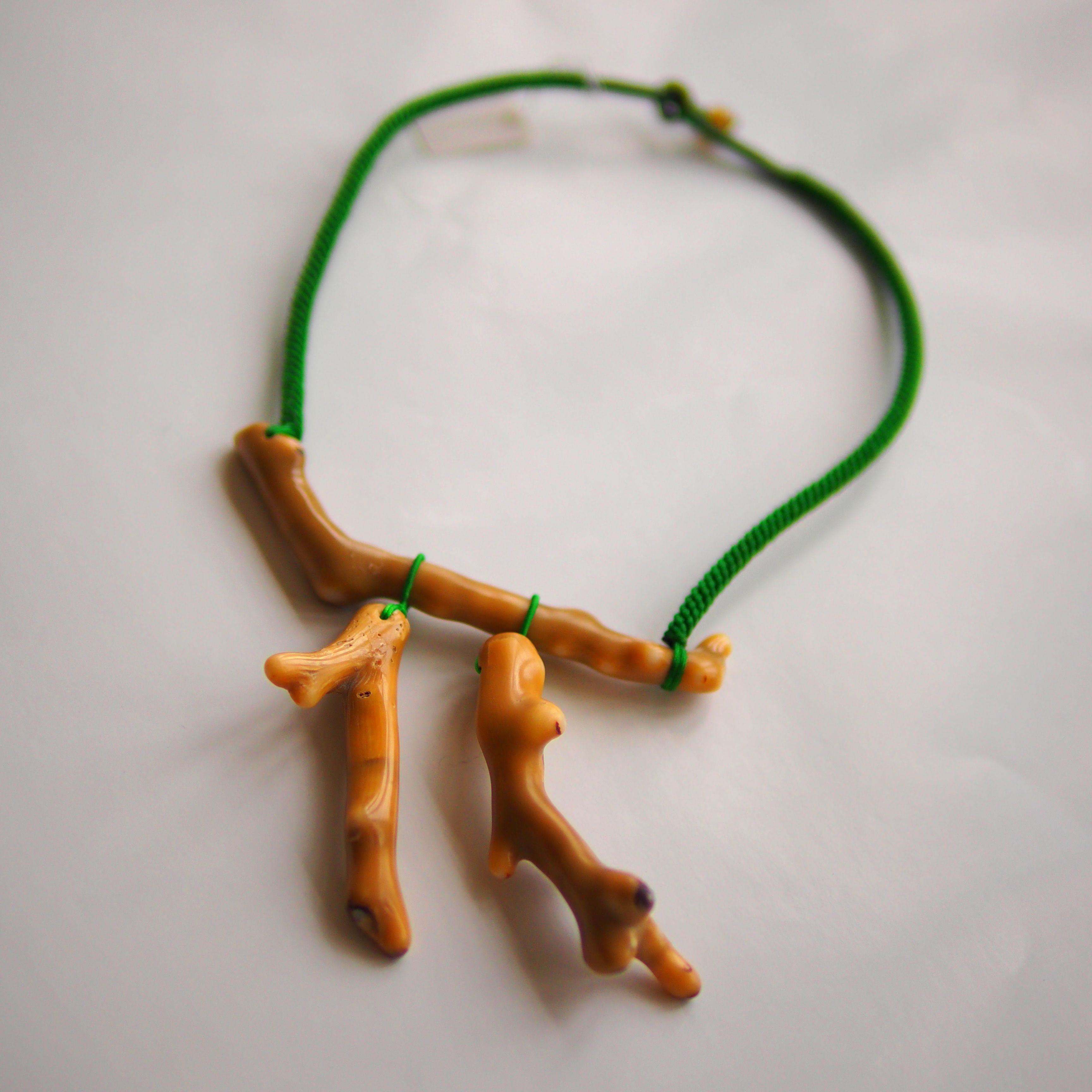 DIA165mm, China
Nothing to do with reindeer at all, this piece of coral necklace just reminds me Christmas. This minimal design has been put together by hand with a hand woven string using the traditional art of Chinese knotting.
Collectable Jewellery
Something Old Something New

DIA165mm, China
This neckware is made up of two ponys old silver pendants. These pendants have little bells attached attached at the bottom, similar to the previous Bell Necklace these were used as a child monitor. The colourful band of the necklace has been put together by hand.
Something Old Something New
Collectable Jewellery

DIA165mm, China
All the jewellery featured this week has been string with hand woven strings and put together with the technique from the art of Chinese knotting. This particular piece is one of the elaborated design with each jade beads carefully placed. The art of knotting is believe to have started as a function for early form of clothing, then as a memo on a string. By the Zhou dynasty, 800 B.C., knotting has found its use with jade ornaments. Since then till the end of Qing dynasty, the art of knotting was a craft practiced by the young girls in China (where 20/20 vision and crafty fingers are minimum requirement).


DIA165mm, China
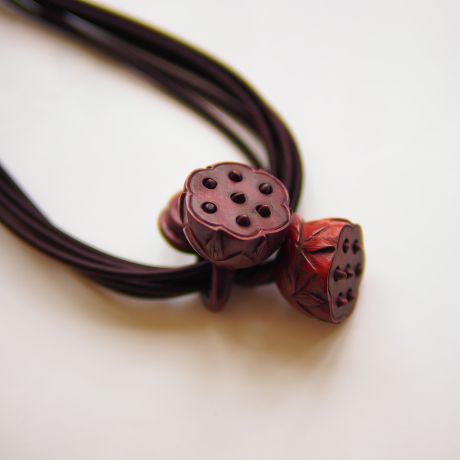
This is a necklace with a wood carving of a lotus pod. Like the real thing seeds are movable but cannot be taken out unless you break open the pod. These fresh lotus seeds were one of my favorite childhood snacks, what can be better than a soft package with refreshing sweet capsules. Sadly, they are not as easily found markets of Hong Kong anymore.
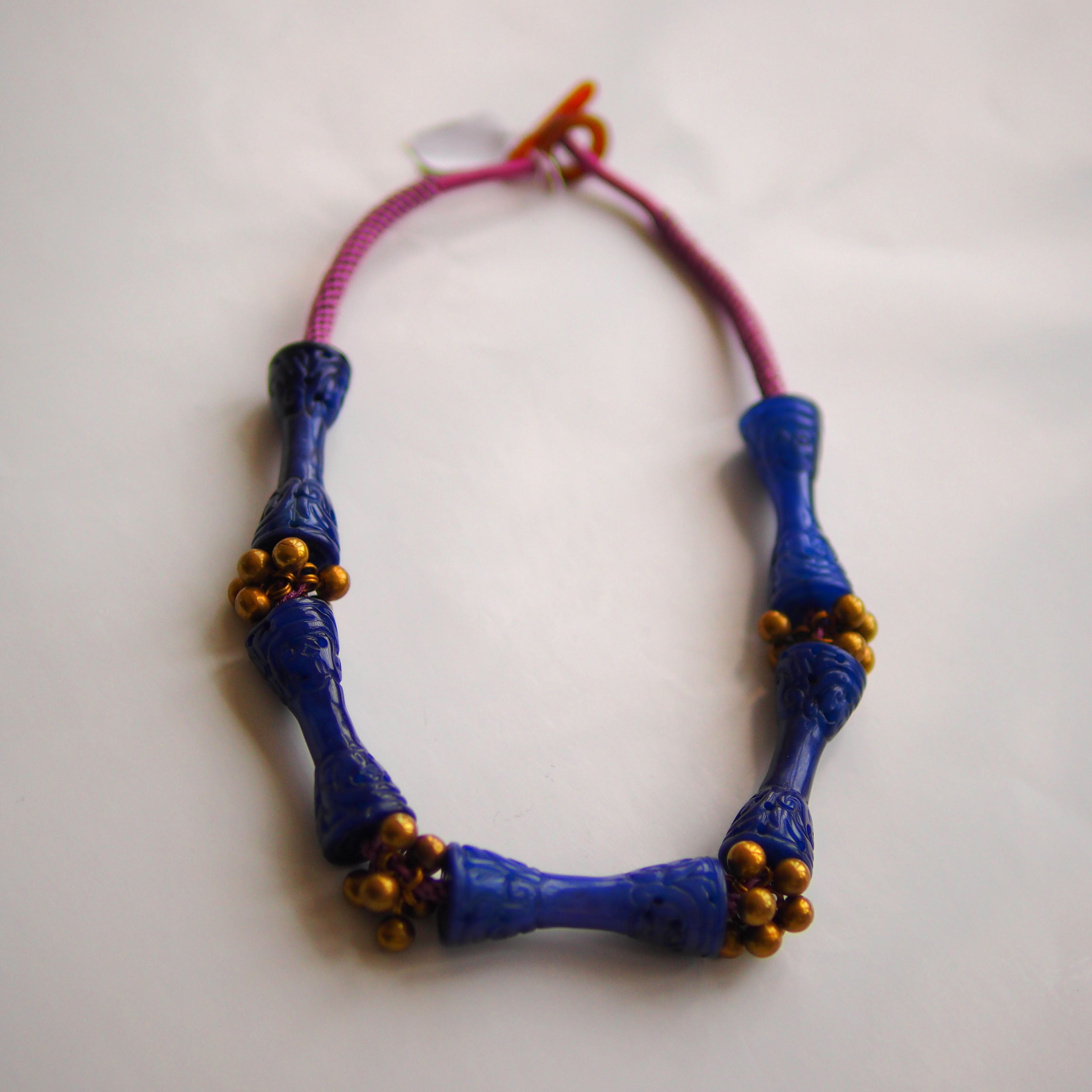 DIA165mm, China
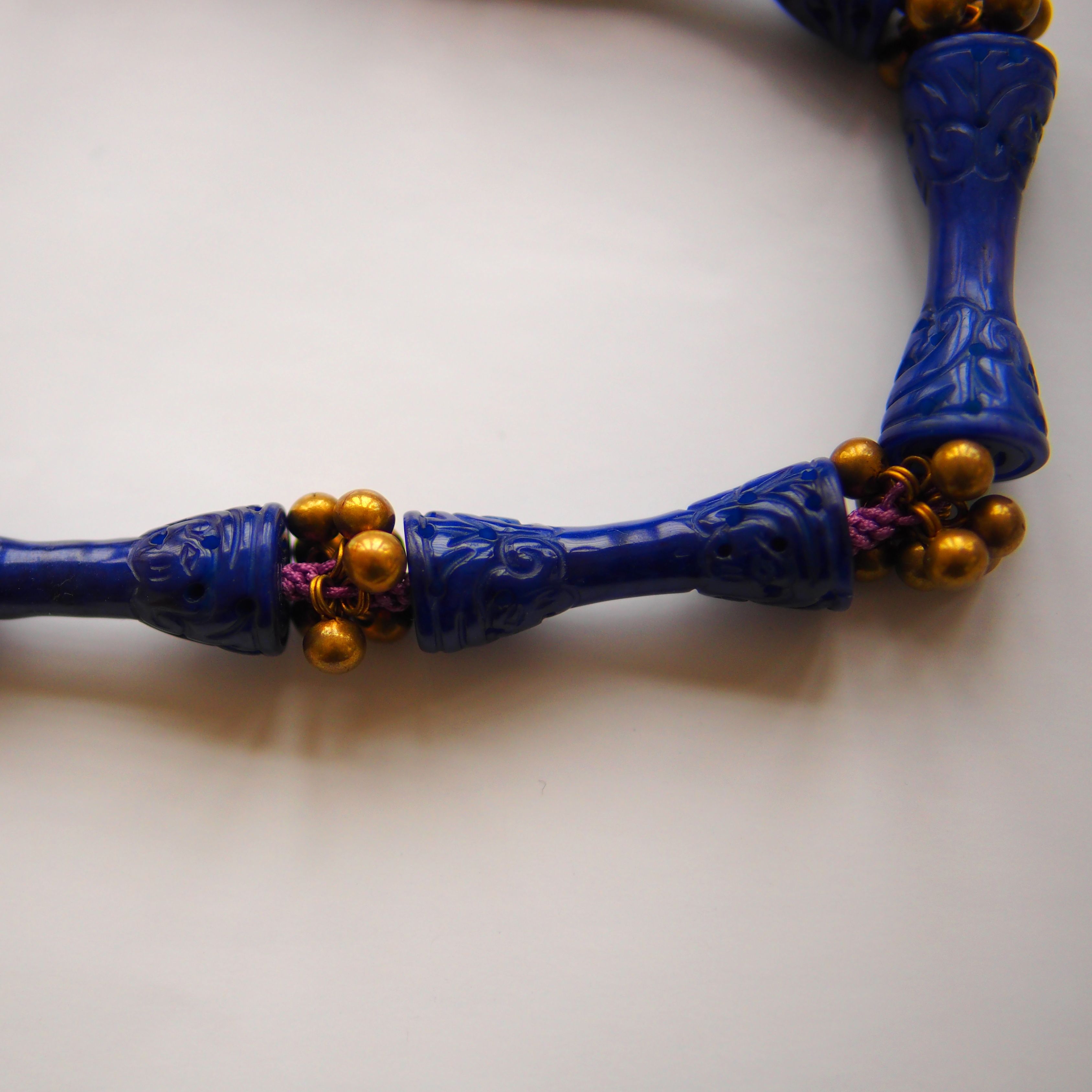
This beautiful blue beads are jade beads dyed with a technique which dated back to the Han dynasty. Unlike today where a lot of jade are dyed to imitate the perfect shade of green in order to fetch a better price, in the previous dynasties jade are dyed simply for a desired colour. The material is treated almost the same as a piece of cloth.
According to the book Yu Ji (The Record of Jade) of the Qing dynasty jade can be divided into 9 Se and 13 Cai.
“Se” refers to the intrinsic colour of the jade; still ocean black, indigo blue, moss green, peacock feather green, steam chestnut yellow, cinnabar red, clot blood purple, ink black, white as snow to lard.
The 13 “Cai” refers to the dye colour;
chestnut yellow from using earth with a darker shade when using rosin,
sky to sapphire blue from indigo,
peach red from lime,
coal black from mercury,
date red from blood,
parrot green from copper,
other dye colours include cinnabar red, chicken blood read, palm fiber purple, aubergine purple, pine cone green, ginkgo green, okra yellow, wine yellow, fish belly white, brown rice white, shrimp roe green, snot green.
Apart from the colour, the book also describe patterns, textures and even fragrant can be achieved.
 DIA165mm, China
This necklace featured a piece of antique jade huang.
Jade huang is a form used for jade pieces dated all the way back to the Neolithic Age, some 8000 years ago. The arch shaped form started as a part of the costume for the sorcerer when practicing black magic. By Shang dynasty, 1000 B.C., it has developed into a costume ornament which acted as a symbol of social status. The fashion of jade huang ended and took over by the jade pei, a more decorative pendent.
This jade huang has a carving of a dragon pattern.
 Mountain Folkcraft