Thrown and cut to get the round shape with a good fitting lid. Blue stoneware glazed first, then a few dash of real gold luster is added, fired at a low temperature at 750 C.
Then you have a bottle of blue magic.
Here is an interview of Chris about his love for pottery.
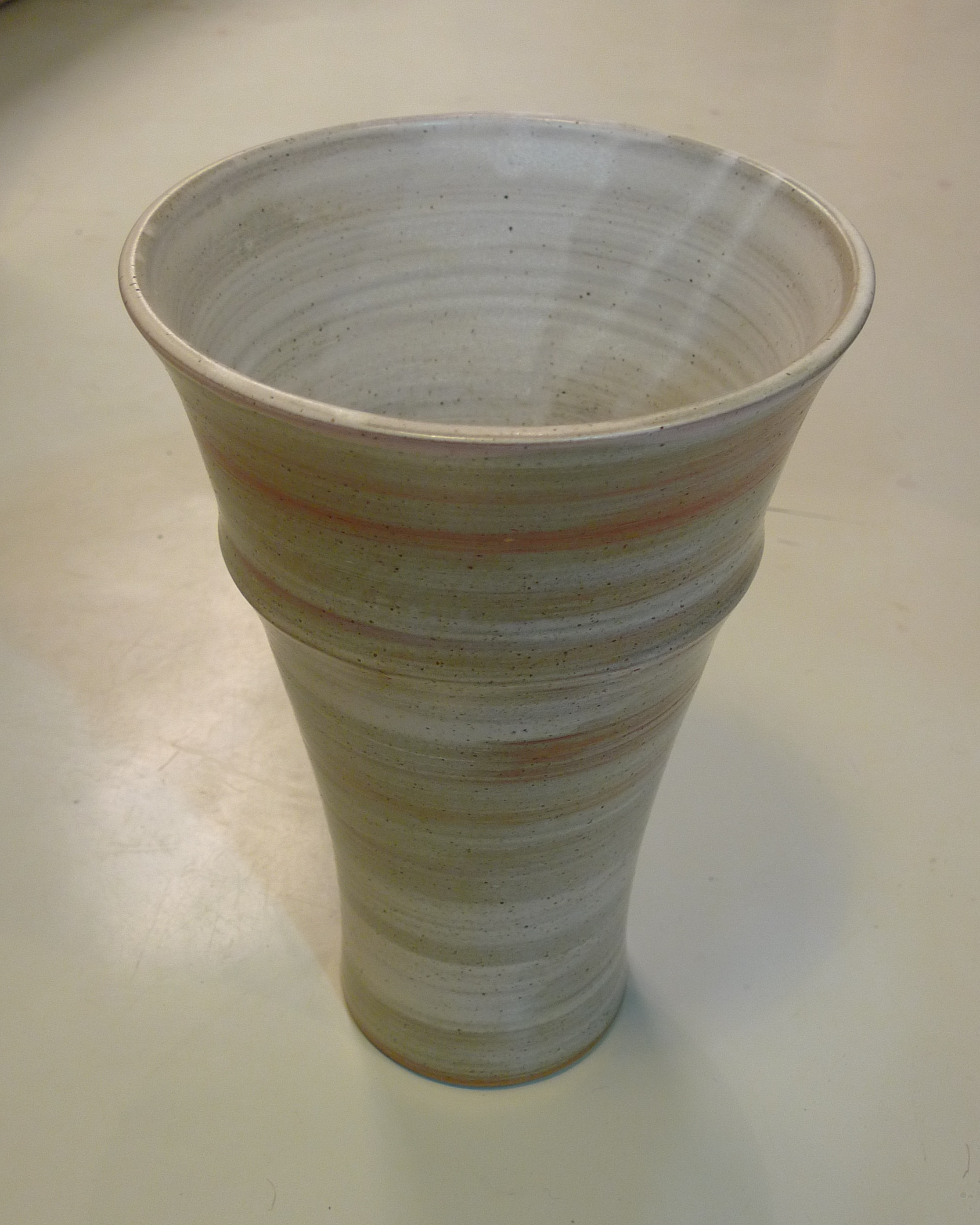
William Morris once said among the simple necessities that ought to furnish a room are a vase or two to put flowers in. If you are getting just one vase for your “room” this one will be perfect. And if you already have a collection of vases, this will be a delightful addition. Its shaped made it very easy for arrange for tall stemmed flowers, like the ginger lily (Hedychium coronarium), widely available in the local markets, but under appreciated.
Stoneware body with semi matt cornish stone white glaze and orange underglaze enhancement. Thrown on wheel.
It suddenly occur to me that not everyone might have caught on the relationship with pottery between the image of this poster and the “Throw A Party” theme.
We have been playing with the word “throw”.
To throw a party, as we know it, is to give or to held a party.
For a potter, to throw refers to form or to shape a piece of clay on a potter’s wheel. Under the sensitive hands of the potter, the clay on the spinning wheel is centered and formed into the desired shape. The center turning helps the potter to form a completely uniform circular vessel. But why would it be call “throwing”?
In old English, “thrāwan”, the word which “throw” originated from means to twist or to turn. The Latin “terere”, the root of the German word “drehen” means to rub. Where the Greek word “teirein” means to wear out. All of which are the action of the potter for throwing the vessel, so in a way, the word “throw” has more to do with the pottery than how we ordinary understand the word today.
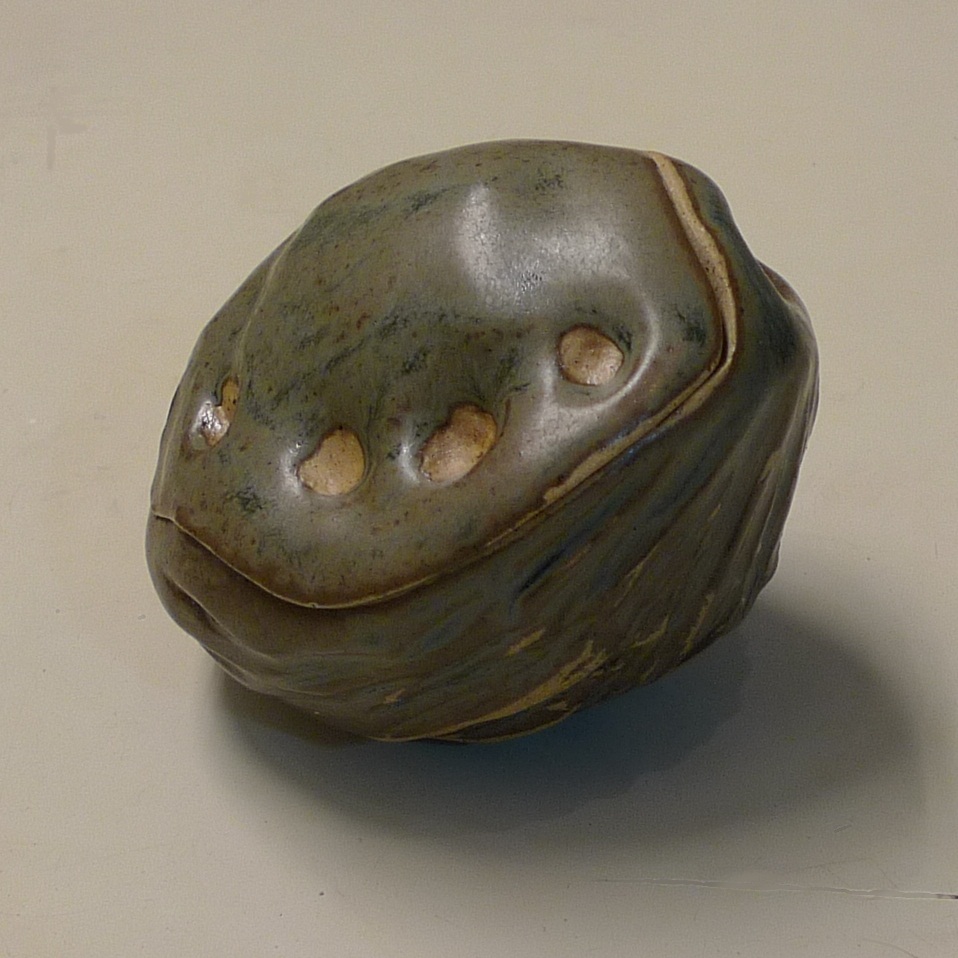
Everytime I see this box it just brings a smile across my face. It just made me think of a happy oyster. It will make a brilliant place for storing all the little treasure that would become pearls over time.
Orgainc shape box by King Fung; stoneware glaze, made by simple two parts pinching and alteration. Finger indent works provide an easy grab for opening the box.
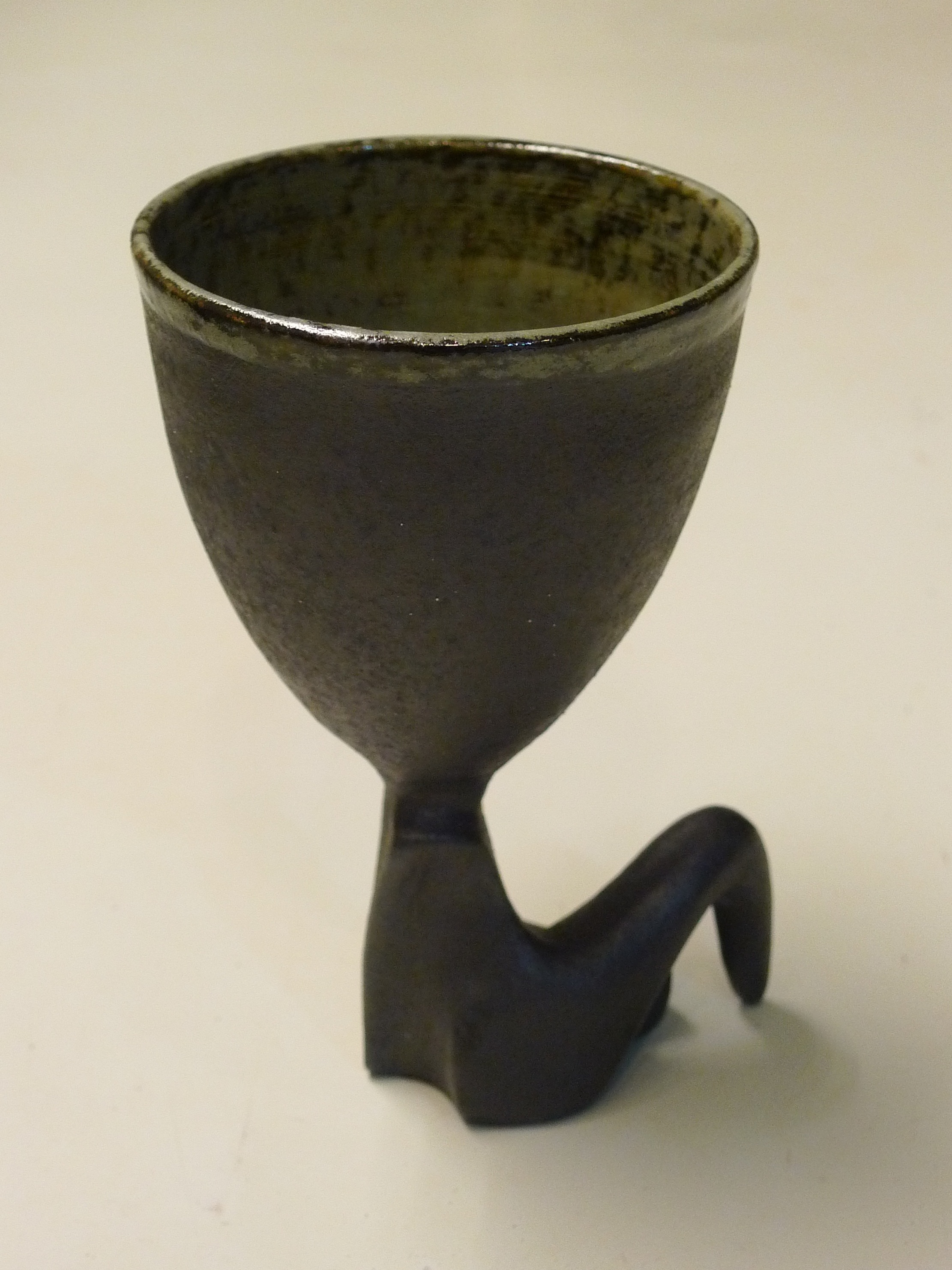
This series of black goblets, by Jessie Cheung, are full of energy and spirit. These animated goblets seem to be teasing one to take a sip from it.
Unique items for small dinner parties.
The goblets are created by throwing with a hand build sculptural attachment. Its matte black slip glaze contains high percentage of manganese dioxide, copper oxide , iron oxide and copper oxide, giving an intense blackness, the sculptural part is made by slip casting.
The clay body uses a groggy clay which can stand for the thermo shock created during the raku post reduction firing. The matte black carbonized surfaces and black crackles are the main characteristic of raku firing. The round shape gives a stable and strong body structure to avoid cracking.
Raku was started in Japan by Chojiro in the 16th century; unlike other type of pottery firing where they are loaded into a cold kiln with temperature rinsing slowly, taking anywhere from 8-24 hrs or longer, when the designated temperature is reached the heating is turned off and the contents allow to naturally cool down until they can be removed with bare hands. With raku, the pottery are loaded into a hot kiln where the desired temperature is reached in a much short time, can be as short as 15 mins). The pottery is then removed from the hot kiln with the aids of tongs and put into a container of combustible material (sawdust, leaves, etc) to be smoked, the surface is carbonized reacting with the glaze and the clay giving the unique matt black unglazed clay and crackled glazed surfaces.
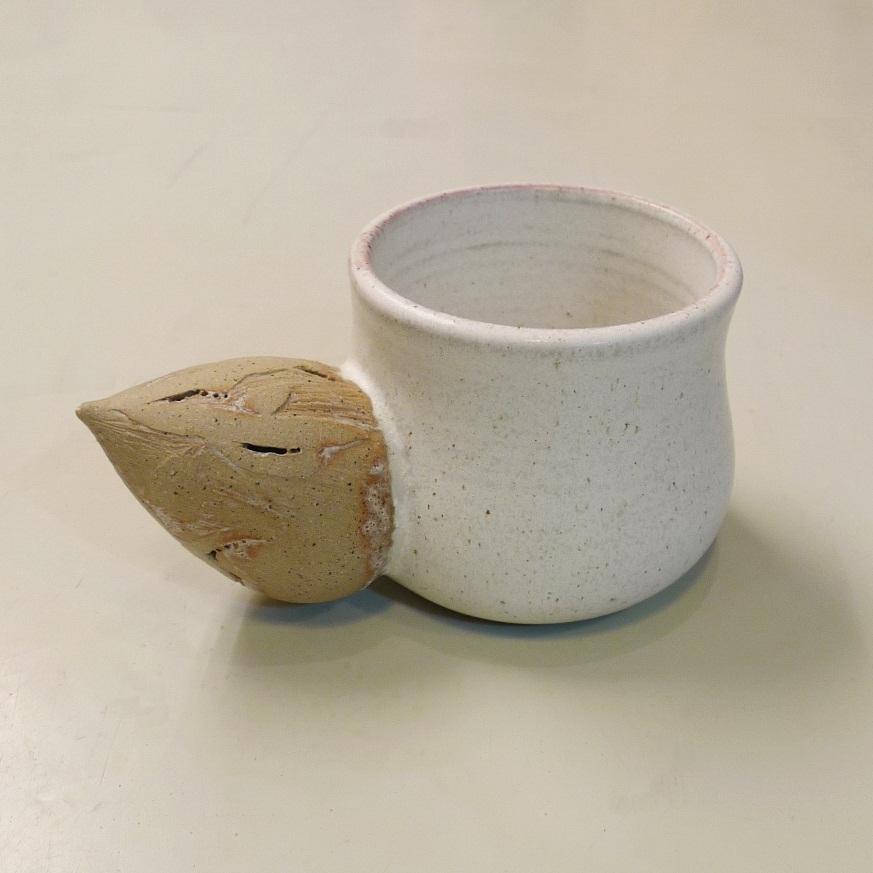
For the “Throw A Party” event, ceramic artist King Fung, instructor of the Cobo Ceramic Workshop, has created for the event a series of song mugs. A song singing glazed stoneware which interact with the user.
Stoneware glazed, body and handle are made by throwing and joined together after trimming. A small clay ball was put inside the hollow handle to give it a ring.




 Mountain Folkcraft