Archives for posts with tag: hand woven

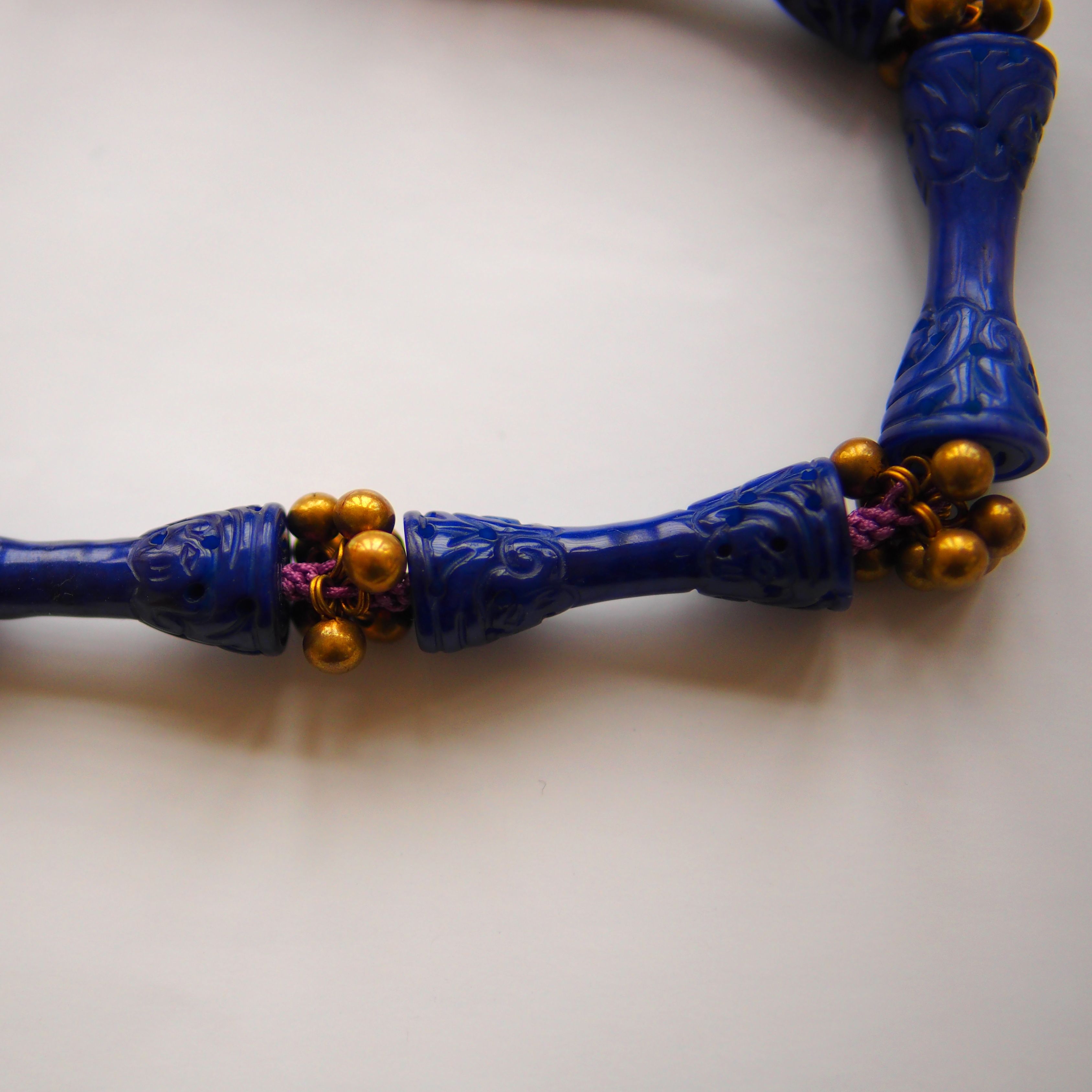
DIA165mm, China

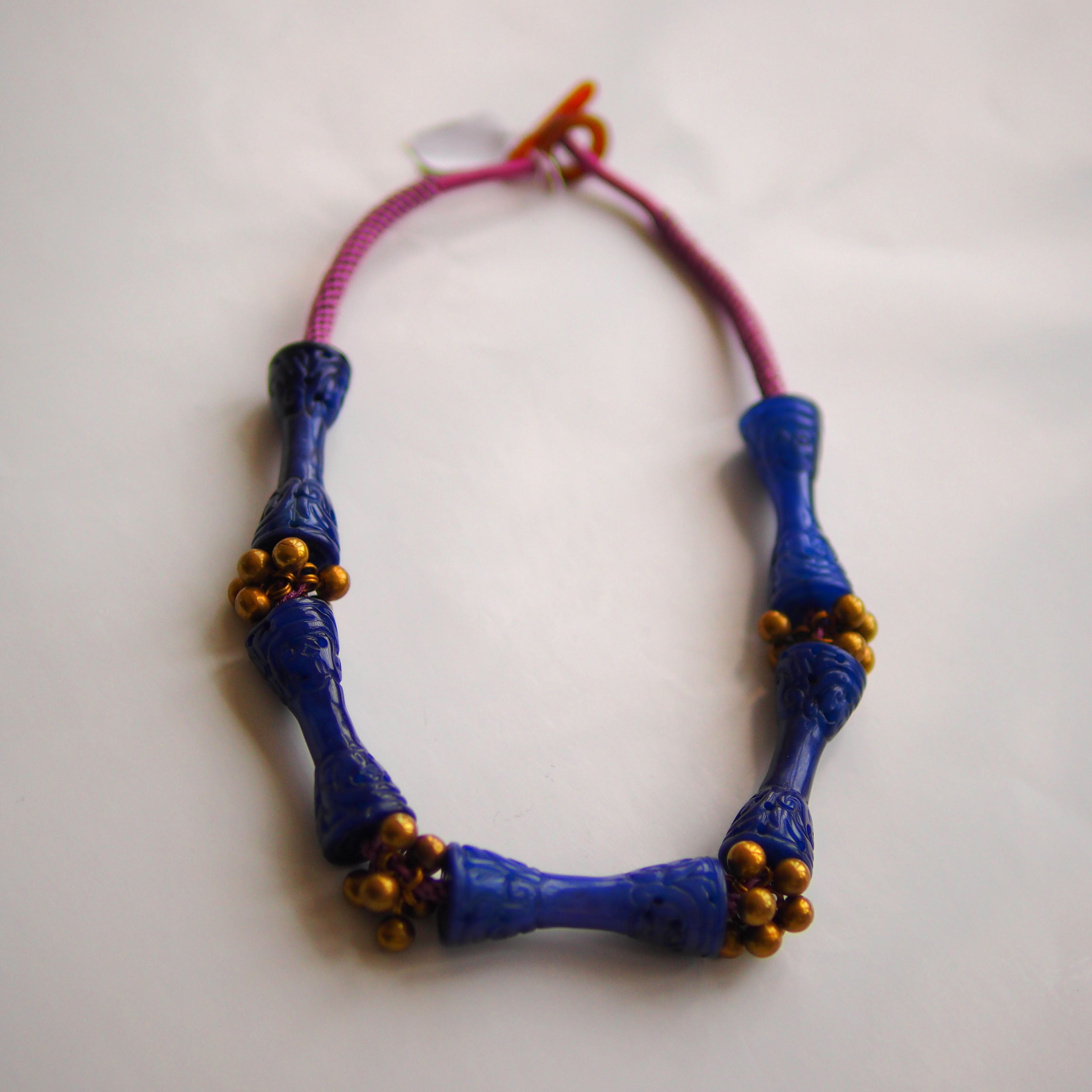
This beautiful blue beads are jade beads dyed with a technique which dated back to the Han dynasty.  Unlike today where a lot of  jade are dyed to imitate the perfect shade of green in order to fetch a better price, in the previous dynasties jade are dyed simply for a desired colour.  The material is treated almost the same as a piece of cloth.

According to the book Yu Ji (The Record of Jade) of the Qing dynasty jade can be divided into 9 Se and 13 Cai.
“Se” refers to the intrinsic colour of the jade;  still ocean black, indigo blue, moss green, peacock feather green, steam chestnut yellow, cinnabar red, clot blood purple, ink black, white as snow to lard.

The 13 “Cai” refers to the dye colour;
chestnut yellow from using earth with a darker shade when using rosin,
sky to sapphire blue from indigo,
peach red from lime,
coal black from mercury,
date red from blood,
parrot green from copper,
other dye colours include cinnabar red, chicken blood read, palm fiber purple, aubergine purple, pine cone green, ginkgo green, okra yellow, wine yellow, fish belly white, brown rice white, shrimp roe green, snot green.

Apart from the colour, the book also describe patterns, textures and even fragrant can be achieved.
blue bells

DIA165mm, China

 This necklace featured a piece of antique jade huang.

Jade huang is a form used for jade  pieces dated all the way back to the Neolithic Age, some 8000 years ago.  The arch shaped form started as a part of the costume for the sorcerer when practicing black magic.  By Shang dynasty, 1000 B.C., it has developed into a costume ornament which acted as a symbol of social status.  The fashion of jade huang ended and took over by the jade pei, a more decorative pendent.

This jade huang has a carving of a dragon pattern.

An interview with the HK Central Art Geeks, a Singaporean group who set out to discover the artistic side of Hong Kong.

Visit their web site @
http://bigshot52.sg/Hkartgeeks/index.html

Some of our fabric: Stencil Dye Fabric, Hand Woven Textile, Hand Woven Textile, Miao Hand Woven Fabric, Indigo Dye Fabric, Ikat, Silk Tie Dye, Indigo Dye Fabric, Tie Dye, Discharge Dye Fabric.

Textile width 380mm, China

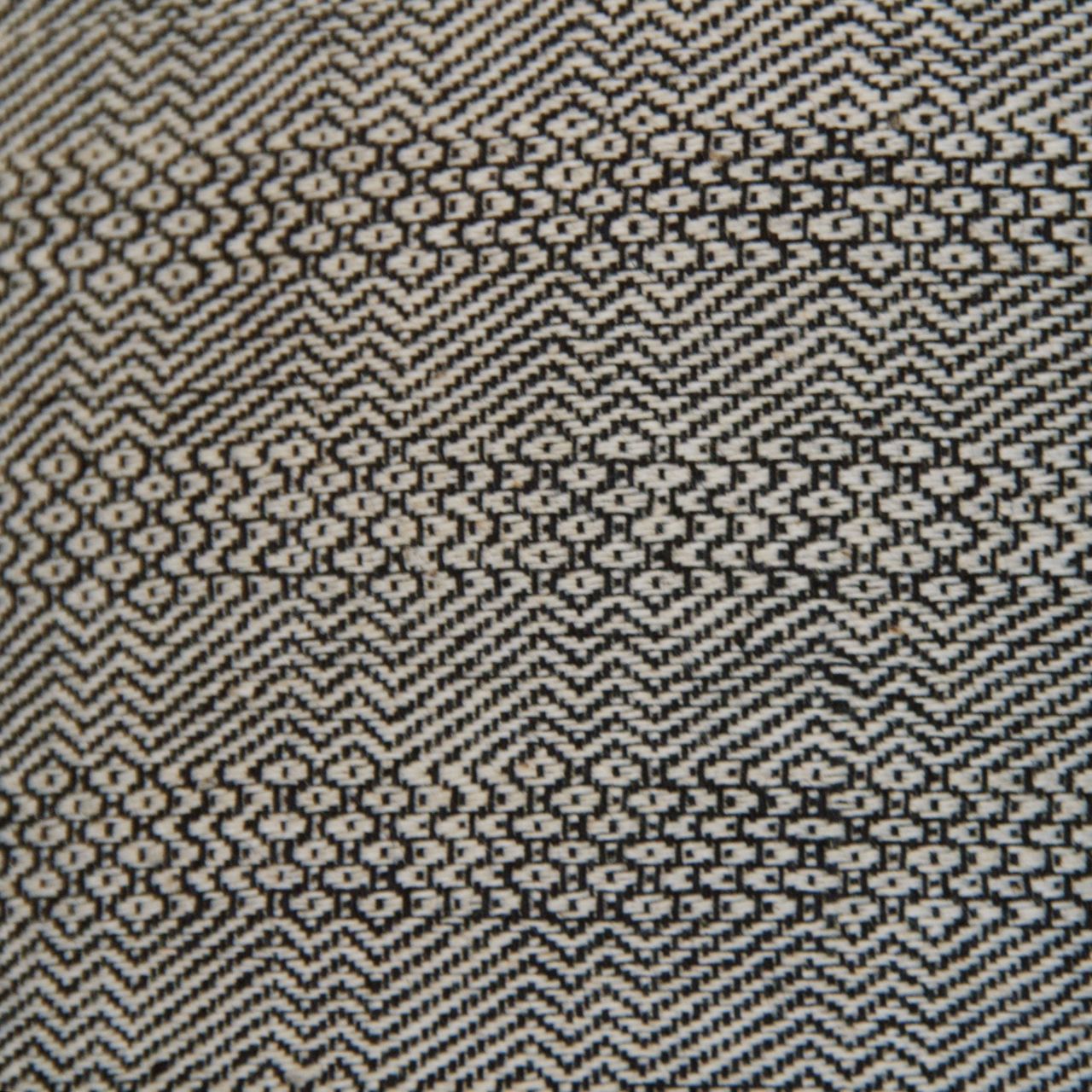
Hand woven fabric is a tradition art for the minority tribes in China.  Traditionally, the hand woven textile would be used for the small duvet for the child, the dowry of the bride, the keep sake head wrap, the decoration of ceremony – a significant piece of textile.  Not only are they functional they are also a show of love and care, however, at the highly industrialized China its concept of tradition and its function are both at risk of being replaced by something more trendy and more convenient to obtain, losing to either one would seize the continuation of this craft.

Textile width 380mm, China

This checker fabric is from the Bu Yi tribe in China, they are famous for their hand woven checker pattern fabric and their wax dyed fabric, they are one of the remain tribes whom the tradition of cloth weaving remains a strong tradition.  The checker pattern cloth is used for head wrap, bed sheet and clothing; though they are all checkers, the use are very specific.  Each pattern has its own story, this particular cloth is for making clothes.  Instead of going online or glue to the telly, girls of the Bu Yi tribe would weaving as their past time during the evening; the motivation comes from the preparation of the dowry which has to include the minimum of bed sheets, duvet cover, 10 costumes.

W90xL1900mm, China

This hand woven band is the belt for the costume of the Miao tribe.  Just after lunar New Year is the Cai Hua Shan festival of the Miao tribe.  Different clans will come together to the common area between the different villages, a large pine or cypress tree will be selected as the “flower stem”.  Before dawn the person in charge, “head of the flower stem”, will take on the task of erecting the tree post and tying ribbons and flower on the top.  This job is done by commonly agreed most kind hearted person (with such a task, I am not surprised).  The day begins with the “head” tossing wine to everyone and giving them blessing; fire crackers, drums are played to signify the start of the festival, followed by days of dance, music and laughter.  It is also the chance for dating, the men will give a woven band to the lady he desire and in return the lady will give him a embroided handkerchief or headwrap.

Textile width 380mm, China

We have a collection of the fabric from the Miao tribe, as they are hand woven, unlike the machine woven fabric, their textile width is quite narrow.  They are cotton fabric that would be normally used for making garments for the tribe.

Come check out our hand woven fabric collection!

W120xL1400mm, China

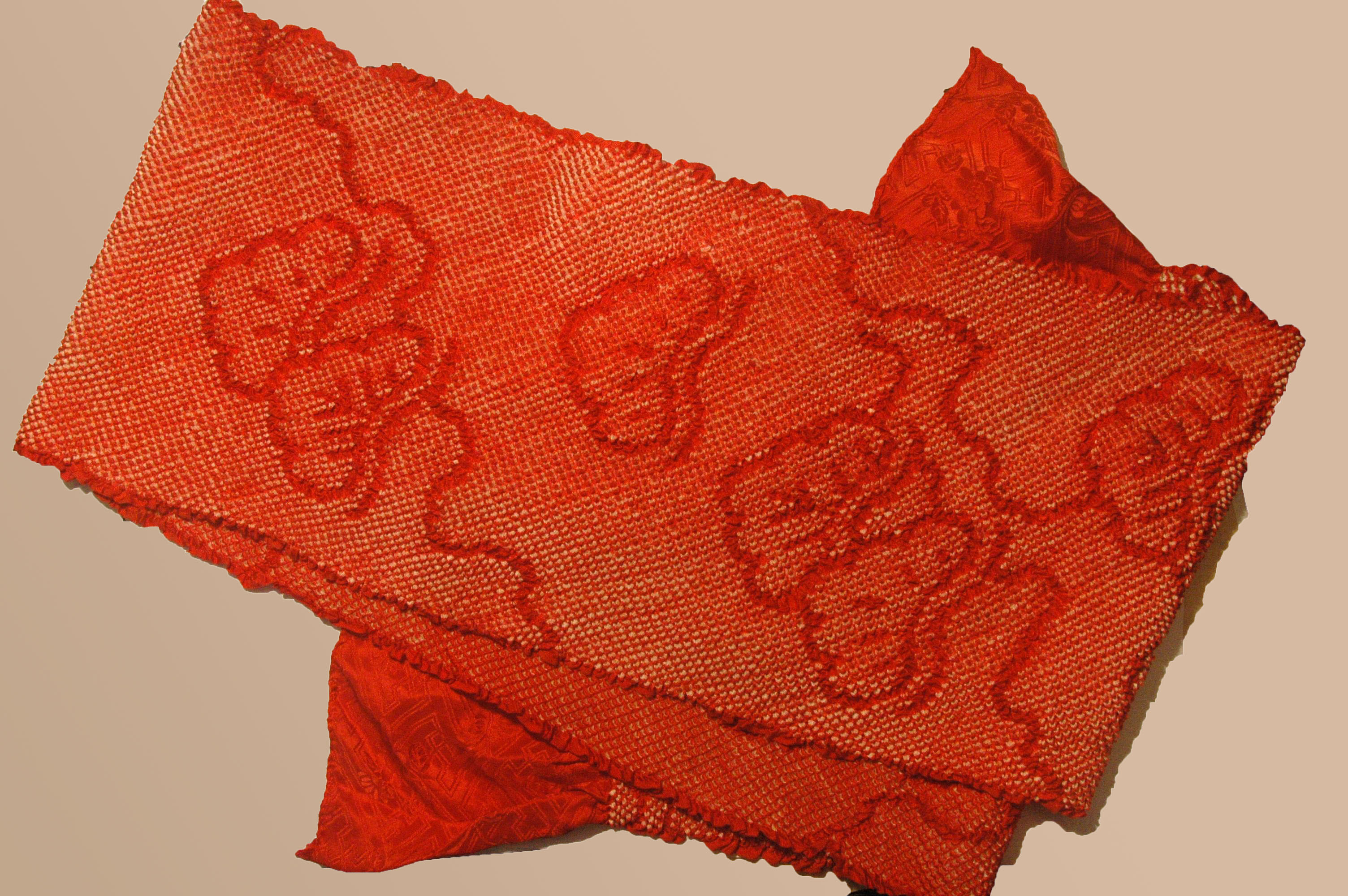
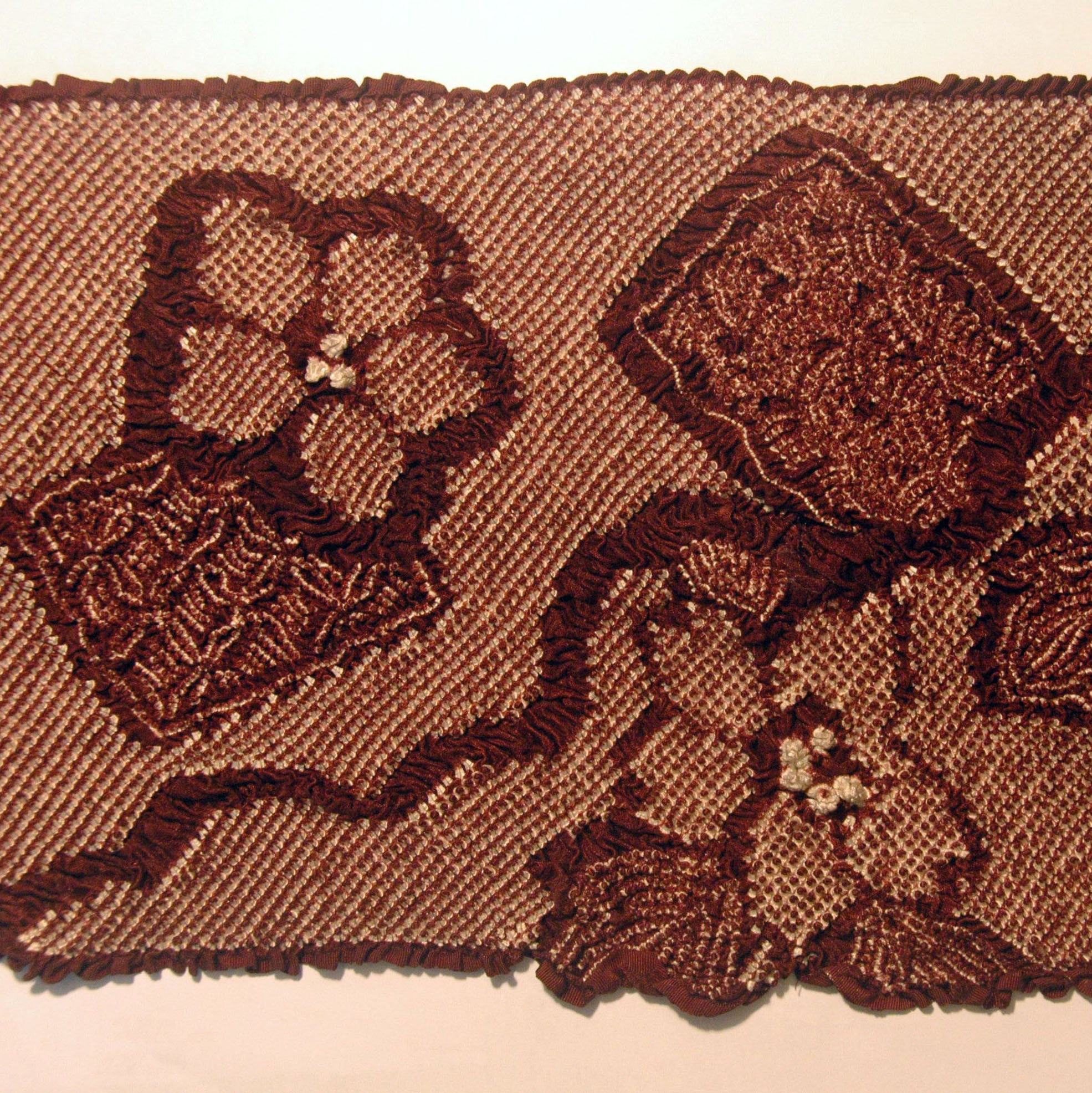
This is a tie dye on a piece of hand woven silk.  A short knitting needle like tool is used to pinch the silk for tying, this give a small and crisp effect on the fabric.  The main outline of the pattern is not tied, resulting as a bold line for the design.  Because of the nature of the silk and small ties, the fabric becomes stretchy and elastic.  This technical was only developed in the last couple of decades, relatively modern in the long history of tie dye in China.