This smart garment belongs to the Striped Hmong tribe (Hmoob Txaij) of Thailand, they are one of the 5 hill tribes in the area between Northern Thailand, Laos and Myanmar. Amongst the Hmong tribes, there are 4 sub tribe – White Hmong, Green Hmong, Striped Hmong and Hmong Chinese. The Striped Hmong’s costume have striped bands on the arms.
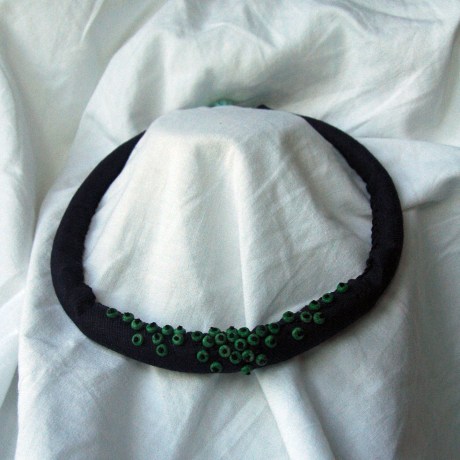
This embroidery captured a scene from the legend Madame White Snake, the novel Jing Shi Tong Yan from the late Ming dynasty. The story was set in the West Lake of Hang Zhou in the period of the Sung dynasty. The serpent spirit of the white snake and her friend green fish subordinate transformed themselves into 2 pretty girls; Bai (white) Su Zhen and Qing Qing (green). Bai fell in love with the Xu Xian and used her magical power got married to him. As time goes by, many strange incident happened because of Bai and Qing. Xu Xian was approached by monk Fa Hai who told him the truth about his wife being a serpent spirit and gave him a monk’s bowl. As Xu Xian place the bowl over his wife’s head, Bai and Qing returned to their original selves. Monk Fa Hai took the bowl with the two spirits and build a Lei Feng pagoda on top of them.
A more romantic story has been adapted for opera, movies where the true love of the white snake is celebrated and the monk became a busybody.
To see the same scene as the embroidery, go 10 minutes into the movie.
As for the Lei Feng pagoda, it was believed that the brick used for building the pagoda has the power of healing, people began to steal the brick, grind it into powder and use it for medicine. 950 year later in 1924, the pagoda fell under its own weight … wonder if the white snake and the green fish manage to escape. A new pagoda was rebuild in 2002.
This fabric is woven by the Pu Ji tribe, a minority tribe in Gui Zhou. Weaving is a technique passed down the generation of women, all fabric for the household would have been weaved by the family. Traditionally, the young girls will be helping their mother and elder sisters and pick up the know how along the way, by the time they are a teenager they will be capable of making the cloth from scratch.
By from scratch, its from the cotton and indigo plant. Cotton are collected and made into yarns and rolled onto the simple spindle while the strings for the warp are set out according to the design and often with the use of the exterior of the building. Clothes are placed on the loom and the work begins.
In the old days, needles are precious items that a girl would keep as part of her possession. In the days before the $10 budget store when one will just get a new set instead of looking for the one you already have. As needlework is part of any girls’ qualification, they would make their own pin holder, decorated with embroidery, patchwork, etc.
When I saw this bag, I felt the tribal craft has really adapted to the new material and function. Carrying on the bold embroidery tradition, it has also made use of fluorescent beads and pom-poms, compartments for wallets and travelling pass.
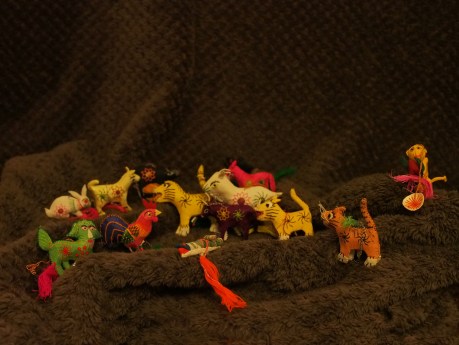
Here are a set of Christmas tree ornaments made in the form of Chinese folk toys. Christmas trees were everywhere in Hong Kong since the beginning of December, but there are actually specific dates for both setting up and taking down of a Christmas tree.
Not to be brought or decorated until Christmas Eve (24th Dec),
to be removed after the 12th night (5th Jan)
If you have messed up with the first one, dont worry, just get the second date right.
Have a Merry X’Mas!
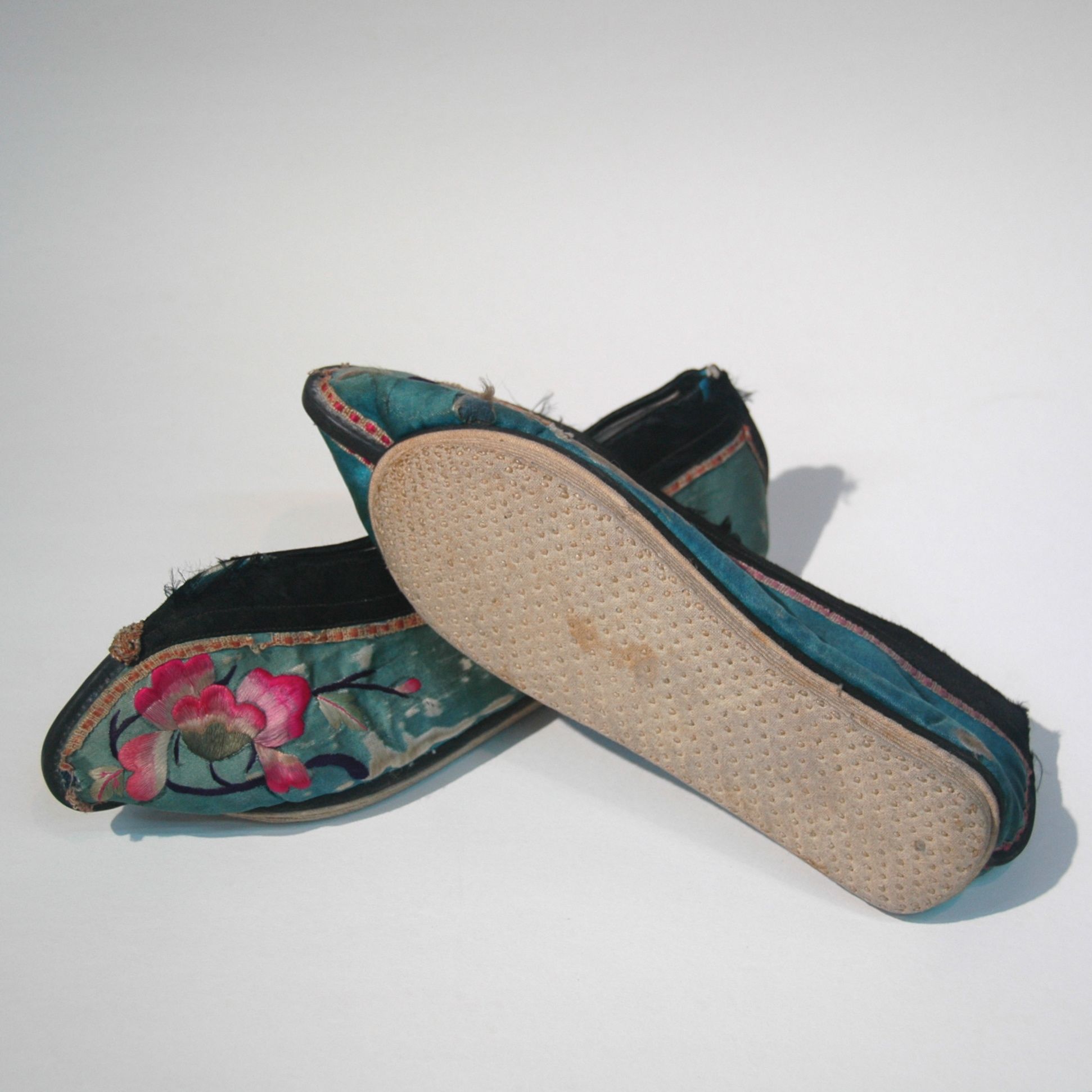
This is a pair of embroidery shoes of the Miao tribe (for more about Miao tribe shoes, see our earlier post, Embroidery Shoes). Today I would like to concentrate on the cloth sole of the shoes which is entirely handmade. Before rubber and leather sole became popular in China, most of the soles are made with cloth, it is a common household practice, even mother remembers making shoes for herself in her childhood. Here is mom’s instruction:
Save up old clothes and off cuts for a year, so materials are ready for making new shoes for Chinese new year
Cook up some glue with water and rice flour (the Chinese version of wall paper paste)
On a flat board, applied glue to the edge of the board, then stretch the a large piece of cotton cloth, apply a layer of glue over it. On the second layer place smaller pieces of cloth, avoid any overlapping or gaps, apply a layer. On the top place a large piece of cotton, avoid creases, applied glue over it. Let dry for a night
Use a newspaper to trace out the sole of the old pair of shoe, enlarge to suit. Prepare an addition one for a size larger.
Cut out from the dried cloth pile 6 pieces from the larger template (large filler – LF), 7 from the smaller (small filler – SF) one and 2 smaller pieces for the heel (H). Put the pieces of the same size together, clamp them and give it a good trim so that they are the same size and shape. Reverse the template and cut out the soles for the other shoe.
Take a piece from the large filler and mount a piece of cotton, wrapped the edges over to the top. This will become the bottom layer of the sole (BS), the piece that touches on the ground. Take the other 6 larger fillers and stick on a cotton piping around it.
Then places the fillers in the order; BS-LF-SF-LF-H-SF-LF-SF-LF-SF-LF-H-SF-LF-SF-SF-SF. Stitch temporarily to hold them together, clamp it well and sew the edge with hemp string (you will need an awl for this). Then make uniform and small stitiches (as seen in the photo) throughout the whole of the sole.
The completed sole is then brushed with warm water and covered with a blanket overnight.
The next morning, the sole is compressed with a mallet and air dried.
Now the sole is complete, all you need to do is the upper shoes and of course the embroidery …
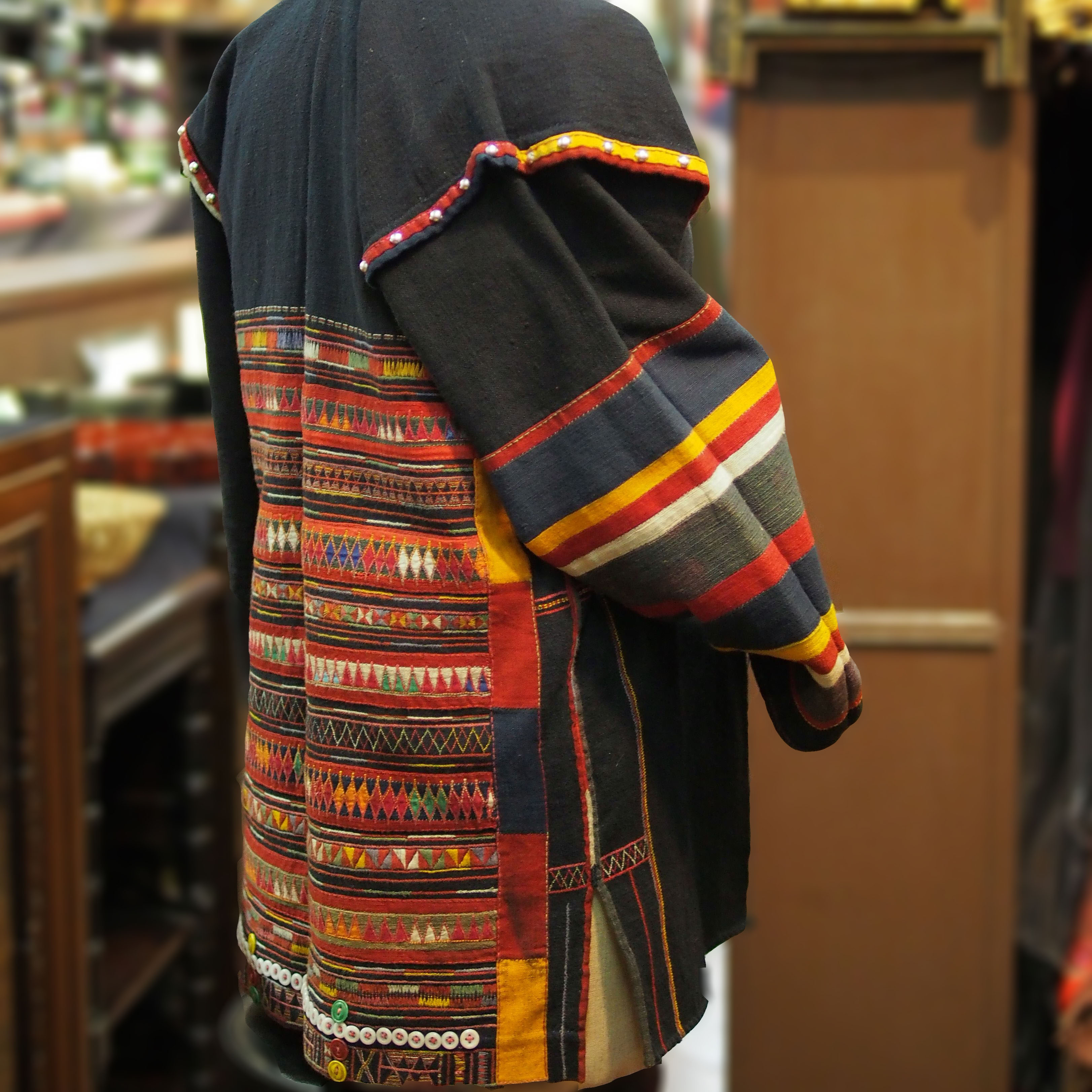
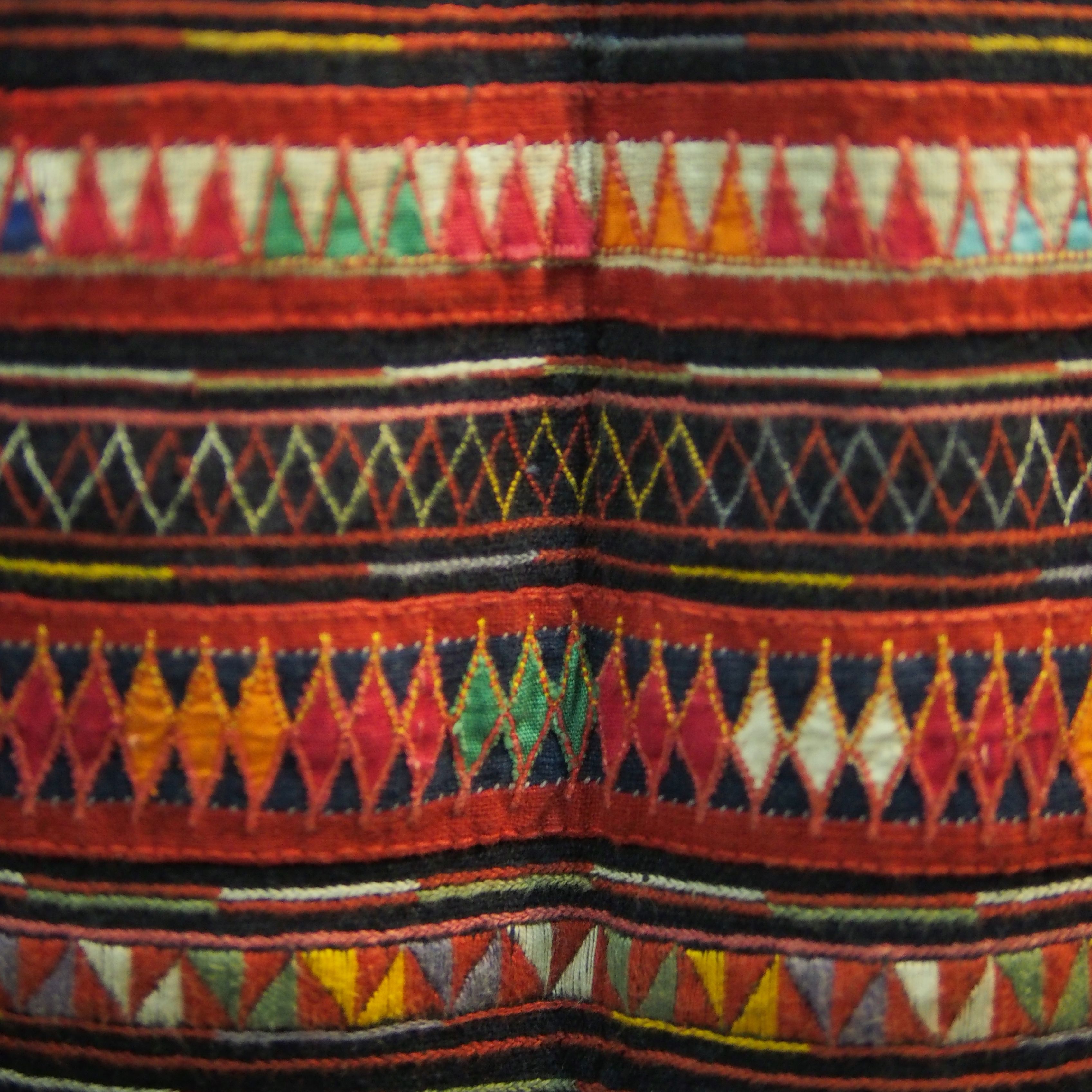 L700mm, Thailand


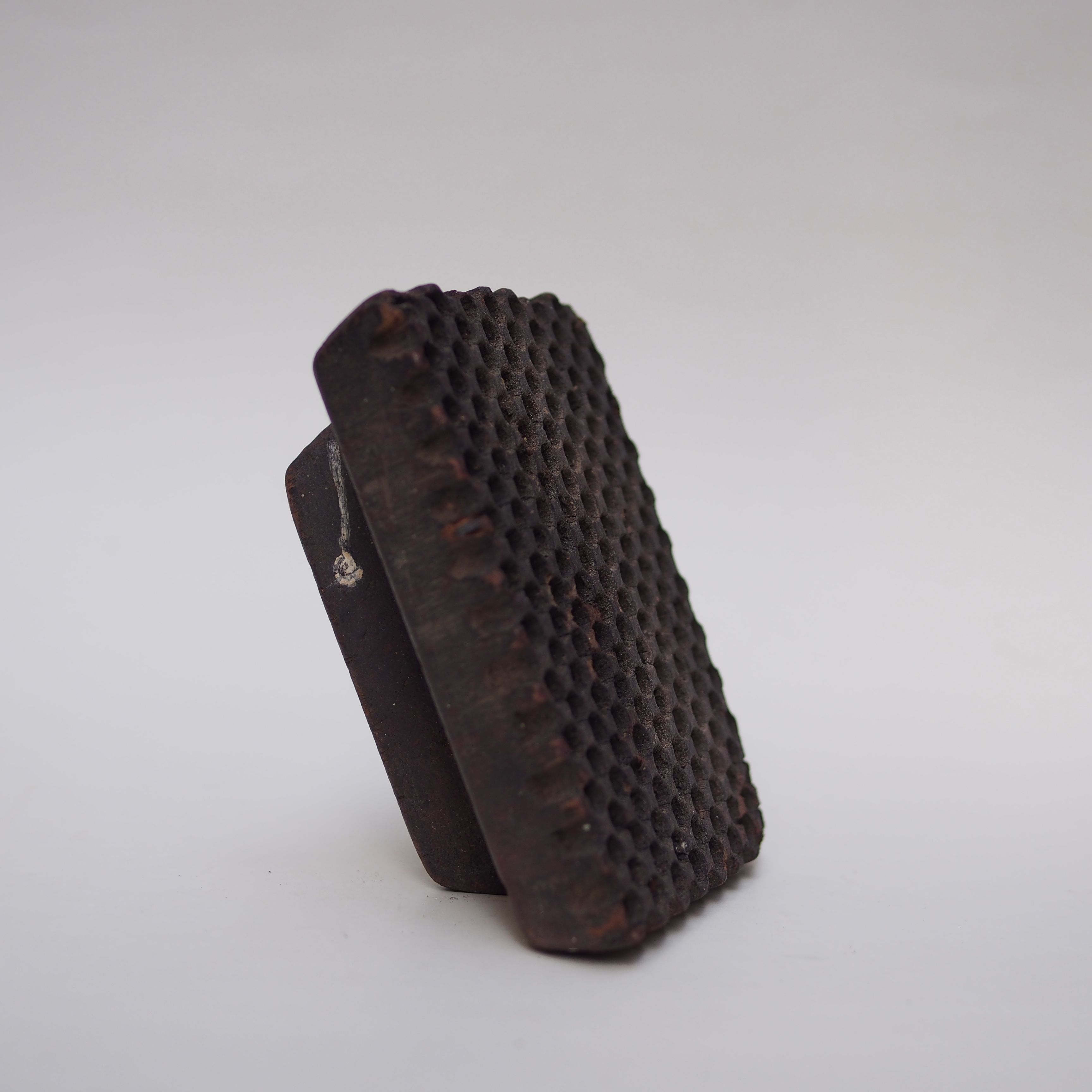


 Mountain Folkcraft