Archives for posts with tag: embroidery

W100xL600mm, Thailand

The Hmong tribe is one of the 5 major hill tribes in Thailand, the Hmong is a sub tribe of the Miao tribe in China.  It is believed that due to the cultural reforms brought on in the Qing dynasty, a search for more fertile land that have brought on a massive immgration in the 18th century.  According to records in the Chinese literature, the Miao tribe can be dated back to 3rd century BC.

These embroidery were decorative pieces on the sleeve or collar of the Black Hmong costume, unfortunately the garments which these embroidery have been on were too worn to be kept, these are the pieces that have been salvaged.  Traditionally, these garments were worn during the Hmong New Year in November or December when the harvest has been completed.  They are combination of cross stitching and patchwork, the embroidery patterns all have a subtle symbolic meaning; (left) a protection cross, (center) flowers, (right) snails.  These embroider pieces are a perfect for any handmade projects, bags, jackets, etc.
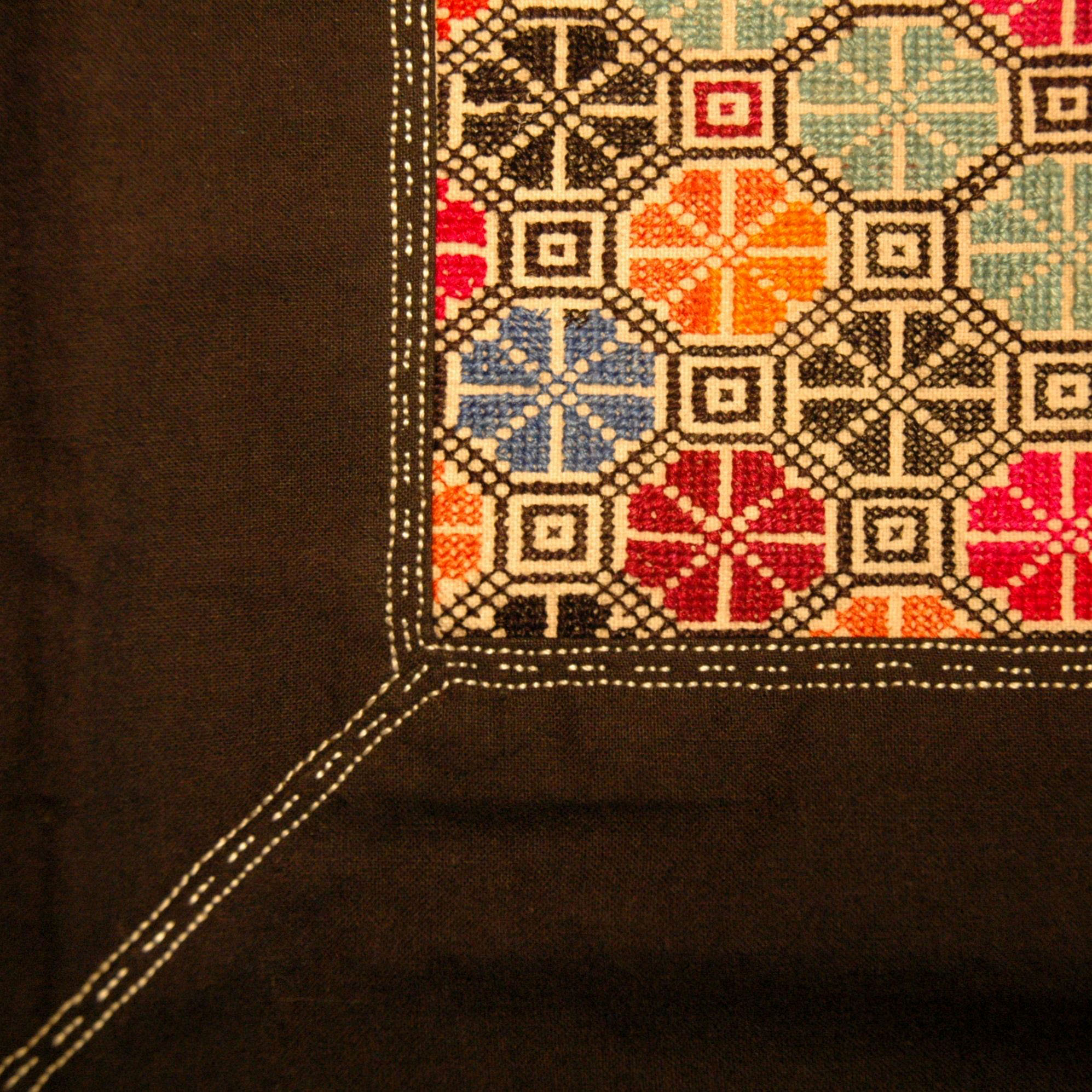
W600xL600mm, China

This Miao embroidery started its life as a traditional baby carrier.  The cloth baby carrier was once very popular, looking at old photos I too have spend some time wrapped up in a much less elaborated version of it.  For those who are not use to carrying baby around with belt and cloth, the Miao has converted the embroidery as a cushion cover.  The embroidery is made with cross stitch, a basic stitching of the Miao.

W80xL100mm, China
(If you see this image on an iphone, that will be close to the actual size.  This embroidery is very small)

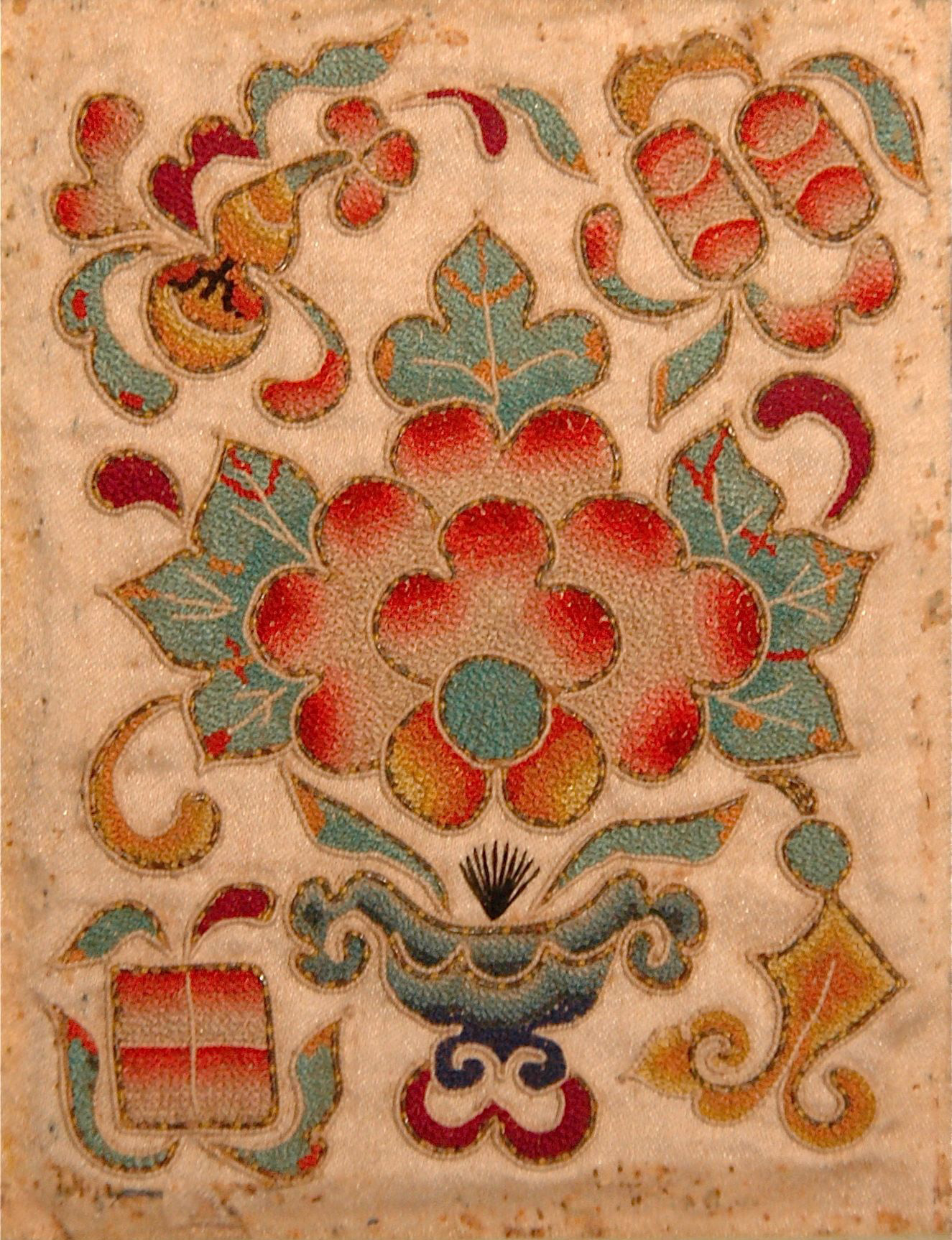
This is a piece of typical Beijing style embroidery with the use of the Da Zi stitch which is a specific to the Beijing embroidery.  With the Da Zi stitch each stitch is required to be of the same size, spacing and height, this demand a embroider to be able to use the same pressure for each stitch and to know where each stitch should be located.  The Beijing style embroidery uses Da Zi stitch as a colour shade filler, each stitch is looped individually.  The Beijing style embroidery work is labourious; in 1 sq cm, there would be 150 Da Zi stitches!

W180xL250mm, China

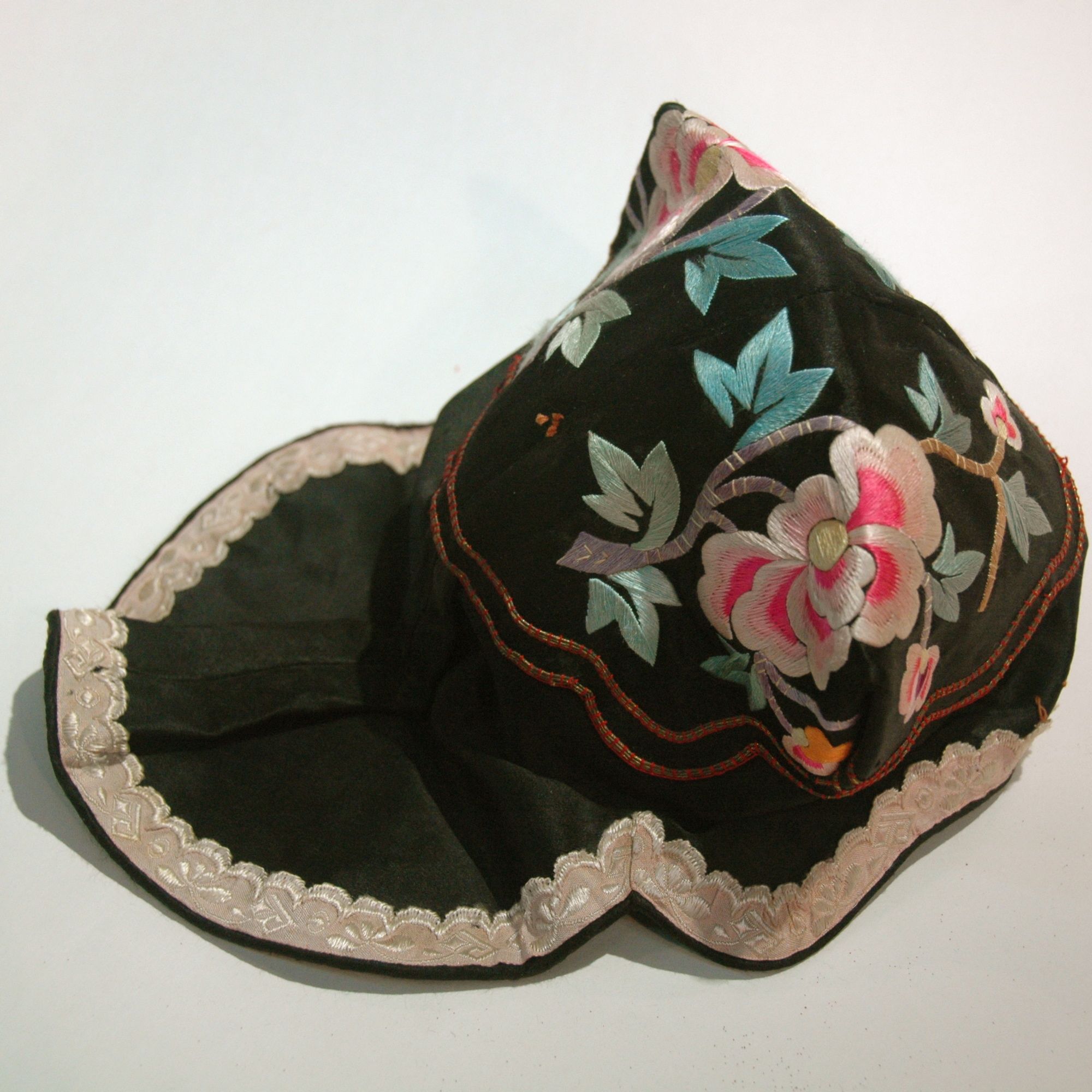
This is an embroidery hat for a child, flower pattern is embroiled on silk.  The embroidery would usually be made by girls in the family.  Please note that this is not a baseball style cap, the extension is not the bill but  a cloth that drap down the back of the neck.

W600xL900mm, China

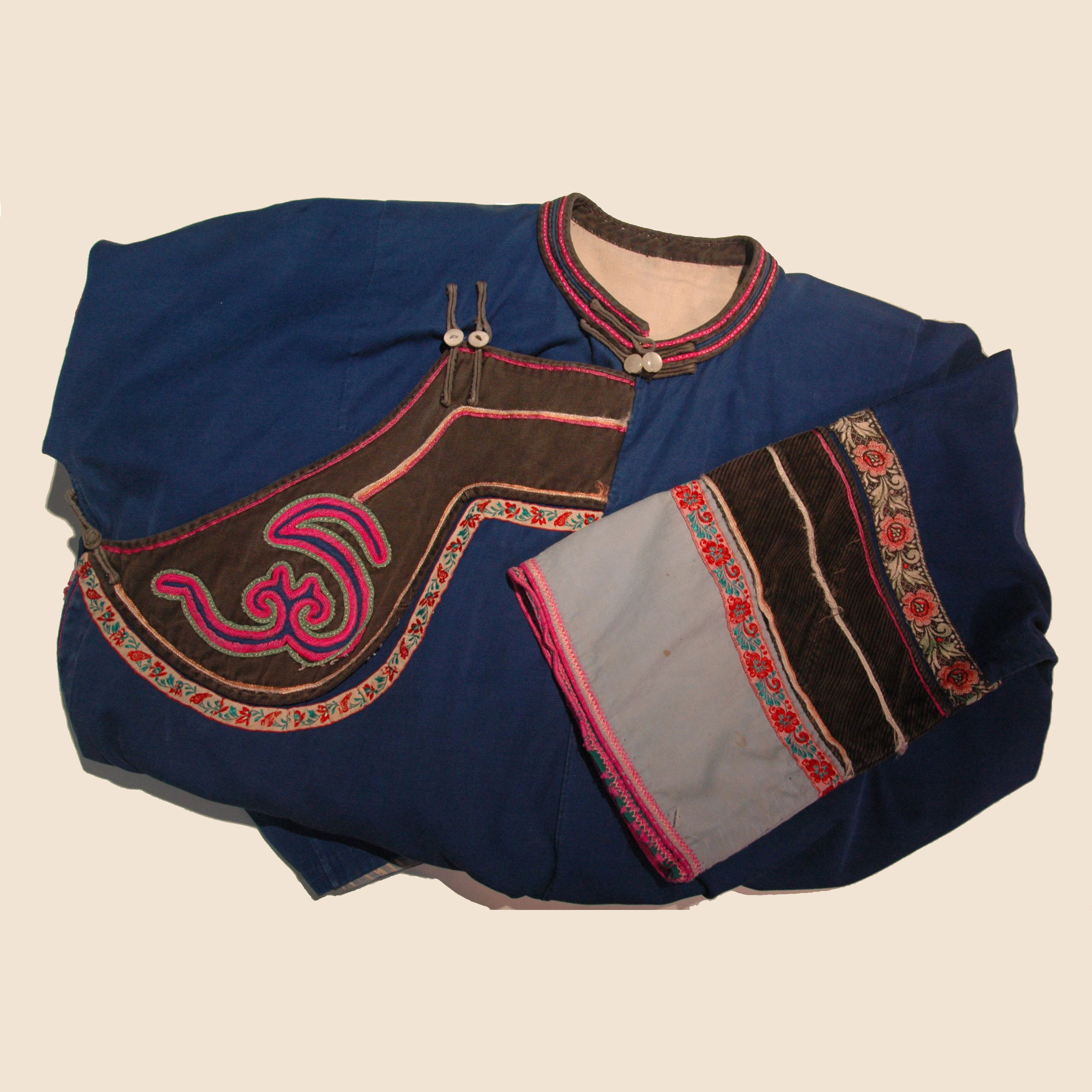
This is one of the traditional costume of the Miao tribe from the Qian Chung Nan area  In fact there are over 200 different styles within the Miao tribe, different district would have their own costumes (hairstyle, accessory, clothing, etc) which has been modified along the different dynasty.  From the Qing dynasty, embroidery, silverware, Manchurian style left or right breasted garments were added into the collection.  This garment would have been worn by a middle age female; made with blue cotton, tailored to be loosely fitted with no collar.

L1400xW1000mm, China

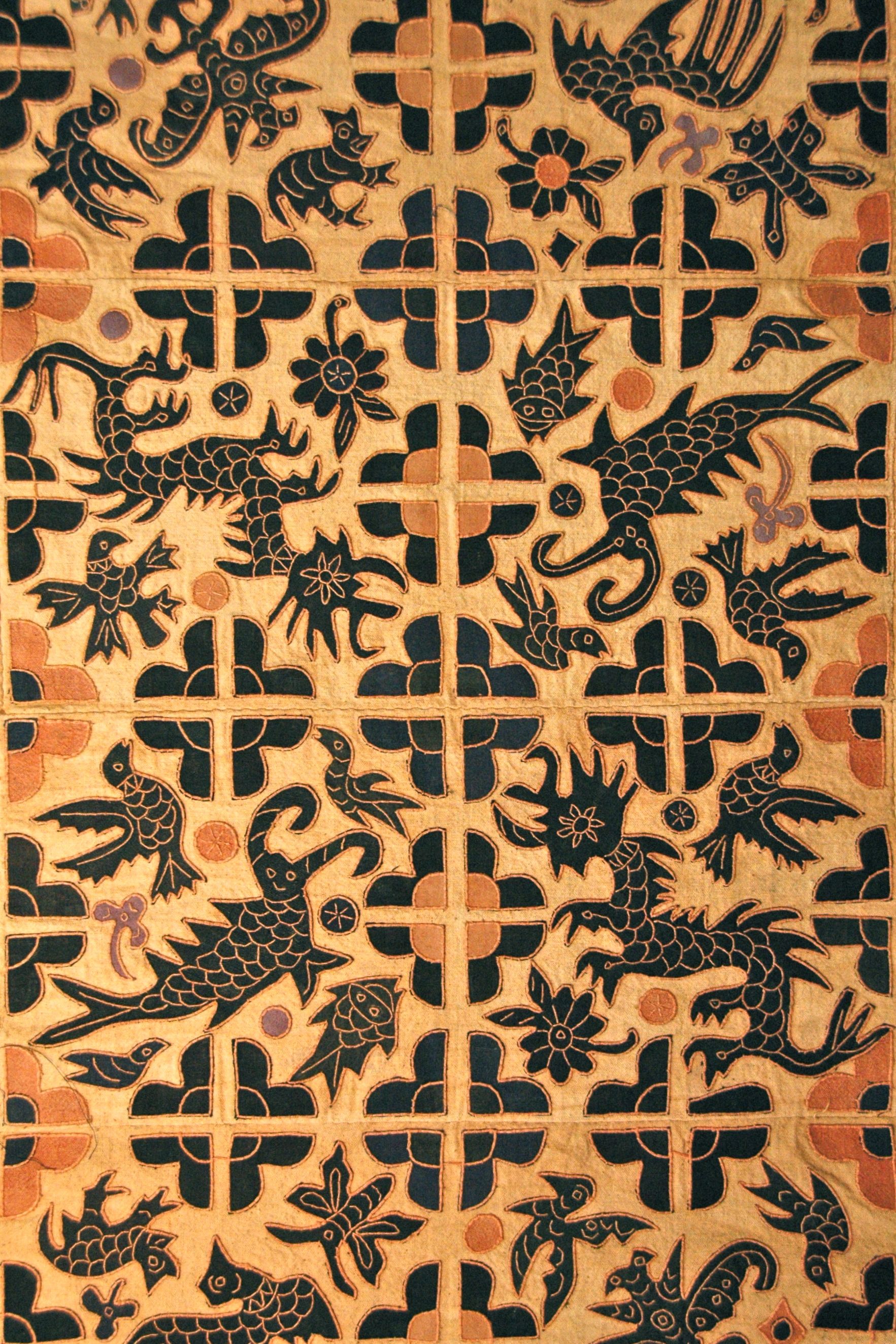
This is a patchwork embroidery duvet cover of the Miao Zu minority tribe.  As the name patchwork embroidery suggests, its a combination of both type of needlework; colours are created by the patchwork and the detail added in by the embroidery.  The Miao has their own individual language but not an individual text; their history is passed down the generations by word of mouth in form of songs or as a design on their embroidery.  The story is symbolised by the pattern of the embroidery, for example in this work, bird = happiness and freedom, flower = young girl, butterfly = mother, dragon = power, etc.

W400xL400mm, China

This is believed to be a piece of  Han Xiu embroidery from the area around Wu Han.  Han Xiu differ from the famous four Chinese embroidery styles where the colour scheme are flat and without shades.  Flourished in the early Qing Dynasty,  this style has now become a dying trade as the artisans have disappeared during the war.  This art has recently been listed as Intangible Cultural Heritage by the Chinese Government.  This particular piece of embroidery is a remnant of the decorative piece of a duvet cover.

L250mm, China

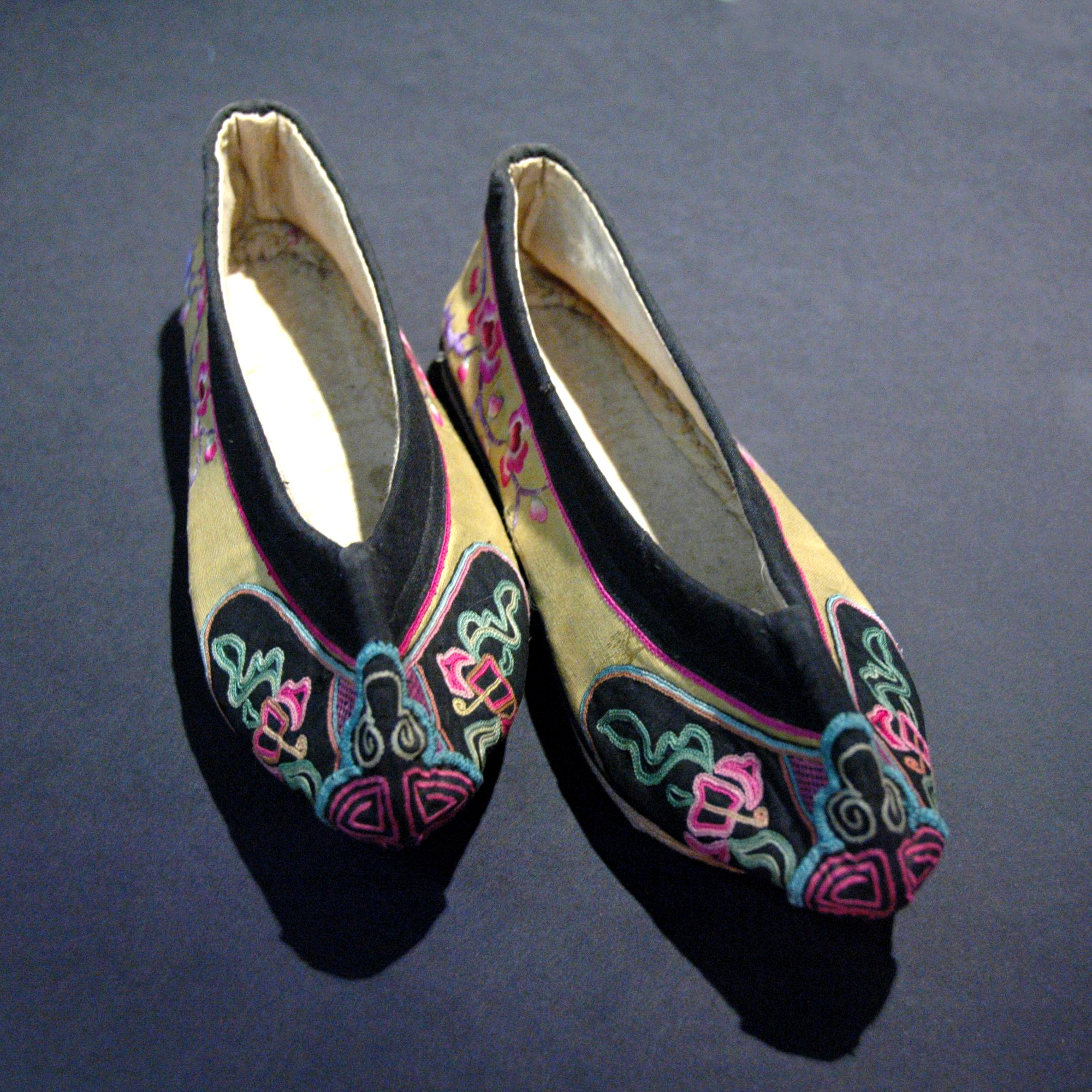
This is a pair of Miao Zu minority tribe embroidery shoes.  The Miao has their own individual language but not an individual text; their history is passed down the generations by word of mouth in form of songs or as a design on their costumes (by embroidery, accessories, folding, stitching, etc).  For example, Butterfly = ancestors, mother.  As fashion is their form of literature, it goes hand in hand that they have superb embroidery skills.  The skill would be passed down from mother to daughters.  Traditionally, embroiled shoes are worn by single young ladies who would select different shoes for different suitors and occasions.

W200xL200mm, India

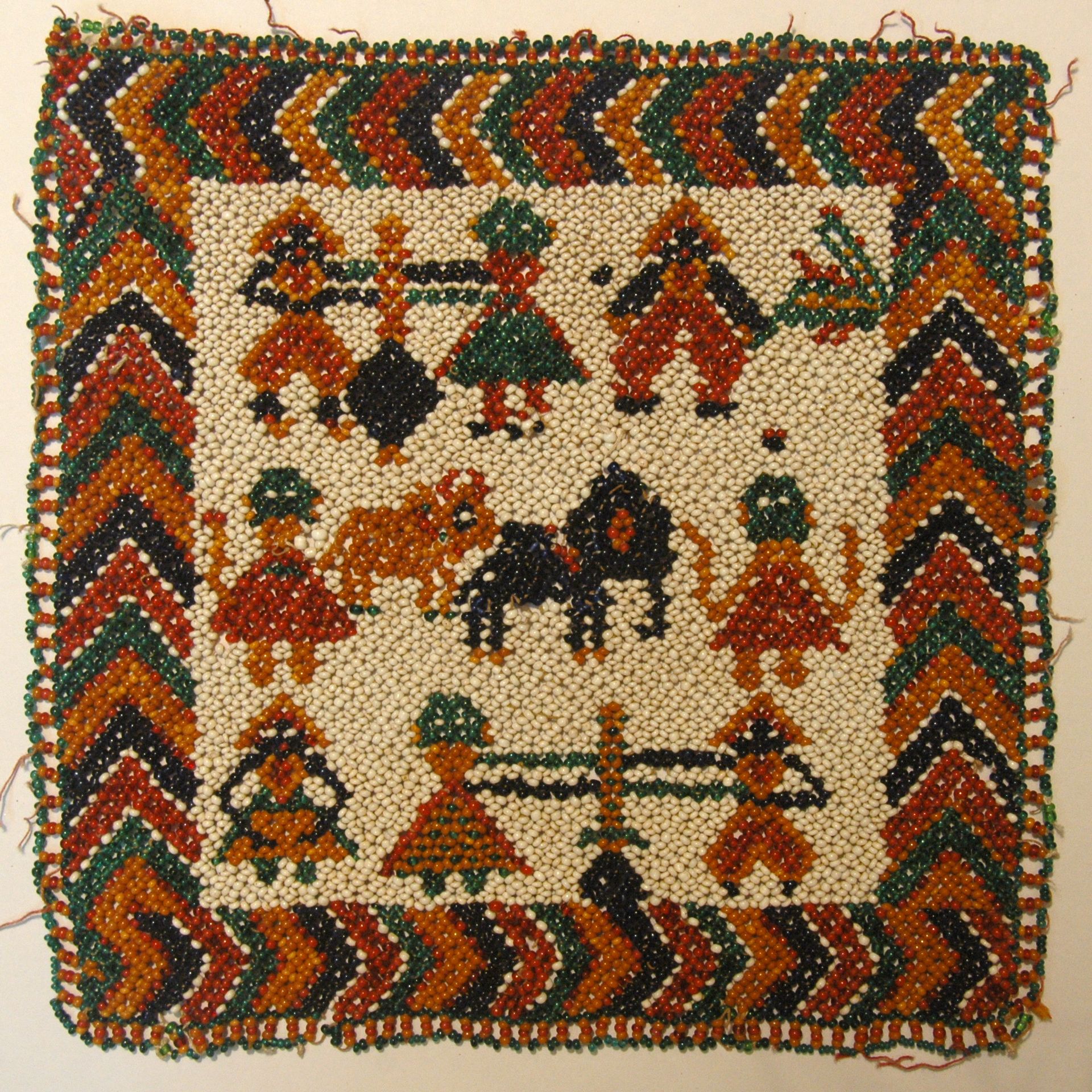
This is an Indian beaded chakla believed to be from the Kathi tribe in India.   Beadwork (moti-bharat) was introduced into India through trades with East Africa in the 19th Century when Venetian Murano beads landed in western India.   It became a very popular needlework craft among the Kathi women.  These beadwork chakla would be traditional used as wall hanging decorations, usually over a door for attraction positive energy.

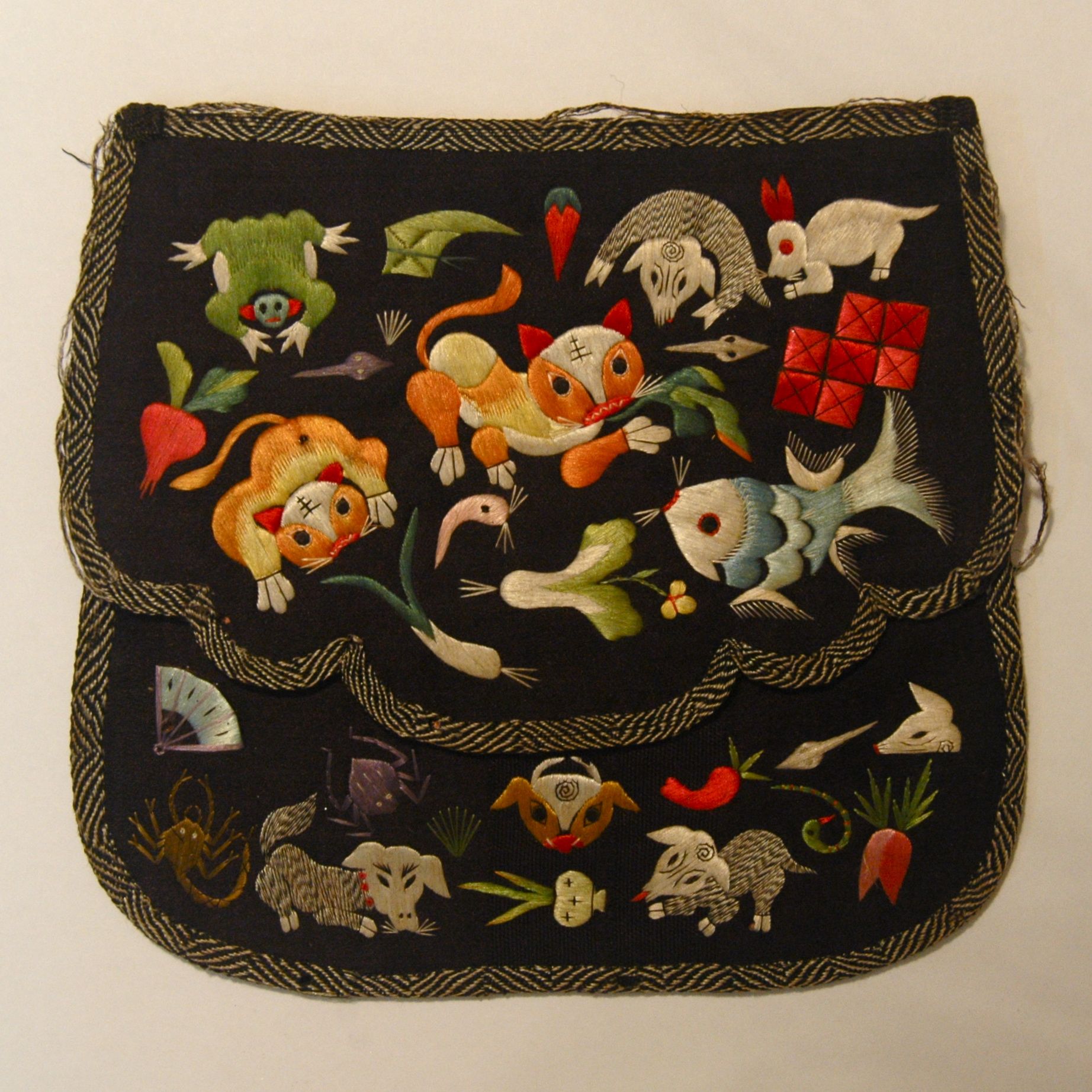
W120xL120mm, ChinaThis is a money pouch embroidery created by young girls not more than 12 years of age.  Among other items they prepare will form part of their dowry.  What is interesting of this this pouch is the design of the embroidered animals, though the original pattern might have come from the mother or great grand mother, they nevertheless captured a young girl’s perception of the world.