Archives for posts with tag: chinese

W900xH2200mm, China

This silk embroidery painting is a traditional gift for birthday of a lady of high social status.  In figure in the embroidery is the saint Ma Gu and the phoenix (queen of all birds) going to give her best wishes the Queen Mother of the West (the supreme head of all female saints) for her birthday.  On the tray that she is going to present to the Queen Mother has a few of the magic peaches which are believed to take 3000 years to flower, 3000 to bare fruits and another 3000 years to ripe, a bite of it will make one immortal.  The peach is a symbol of longevity, it was also featured in God of Longevity.

Unfortunately the closest we can get to the magic peach is through pottery, carving and paintings, but if you would like to try the worldly version, it is known as the Saturn Peach (Prunus persica f. compressa), they will not make you immortal but they are super delicious.

L210xD130xH60mm, China

This is a celadon daffodil bowl, yes celadon is not limited to the pale jade green glaze, it also can be white, grey, blue or yellow.  The cracks on the bowl are only on the glazing itself and has no impact to the bowl, this characteristic is known as crackle glaze.  This effect for the randomness which mimic nature has been appreciated by the Chinese since the Sung dynasty.  However, this texture started off as a defect in the firing process; the clay and the glaze having a different expansion ratio.  This crackle style is known as “a hundred broken pieces”.

For more about daffodil, click on Blue Glazed Narcissus Bowl.

W250xD250xH400mm, China

This is a double deck bamboo basket for food storage.  It is for carrying food stuff goodies as a gift for relative and friends, a kind of xmas hamper.  Upon receiving the gift a red packet thank you note would be sent back to the sender.

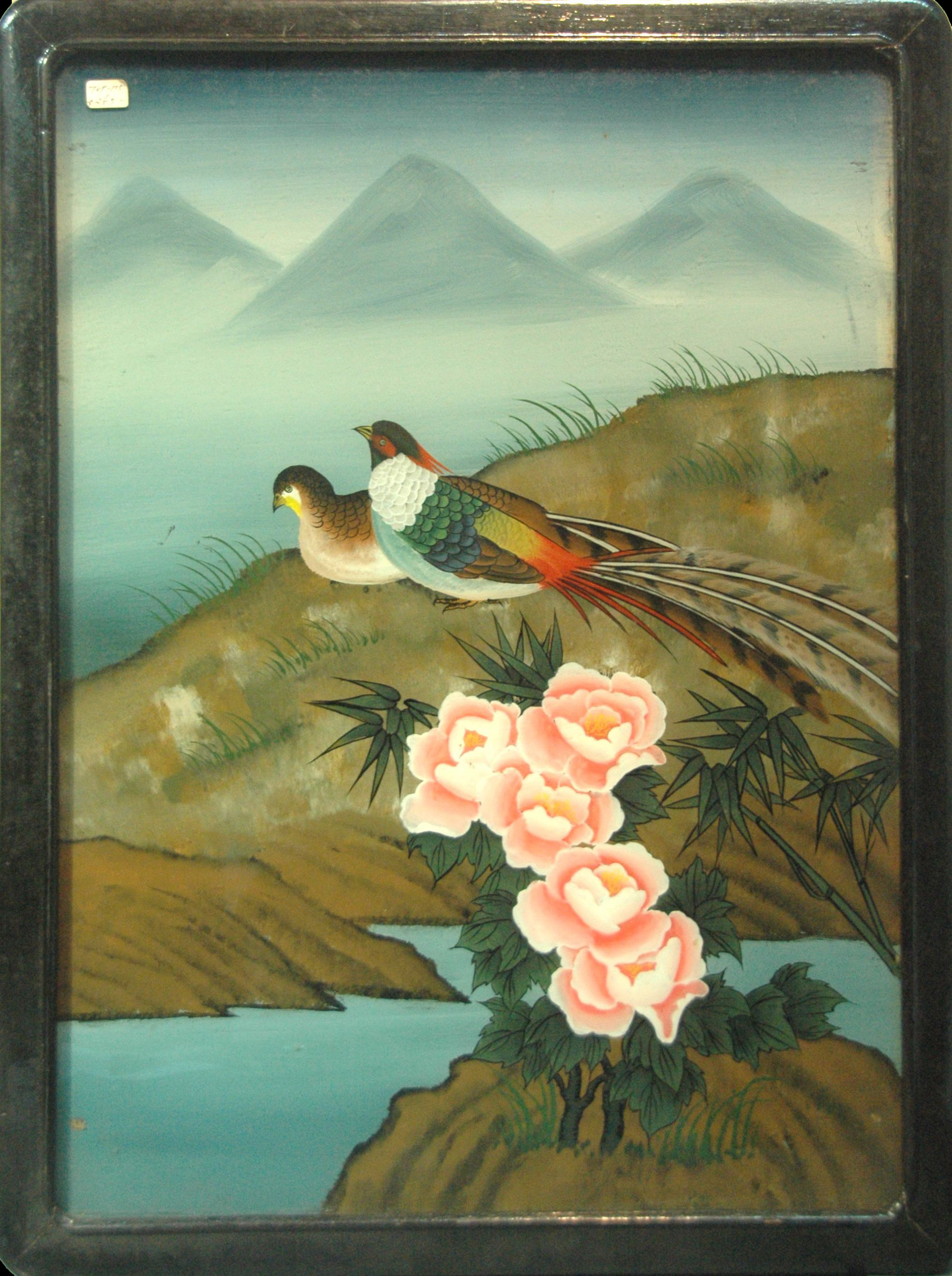
W450xH600mm, China

This is a glass painting of a pair of  Lady Amherst’s pheasant (Chrysolophus amherstiae) which are native to south western China and north eastern part of Myanmar.  For the Chinese, the Lady Amherst’s pheasant is a noble bird.  At the time of monarchy the Empress, being the highest ranking second only to the Emperor, would have phoenix as a pattern.  For the first ranking official, their costume would have a red crown crane, while the second ranking official the Lady Amherst’s pheasant.  The third ranking, the green peafowl and the fifth the silver pheasant, the eighth being the quail.

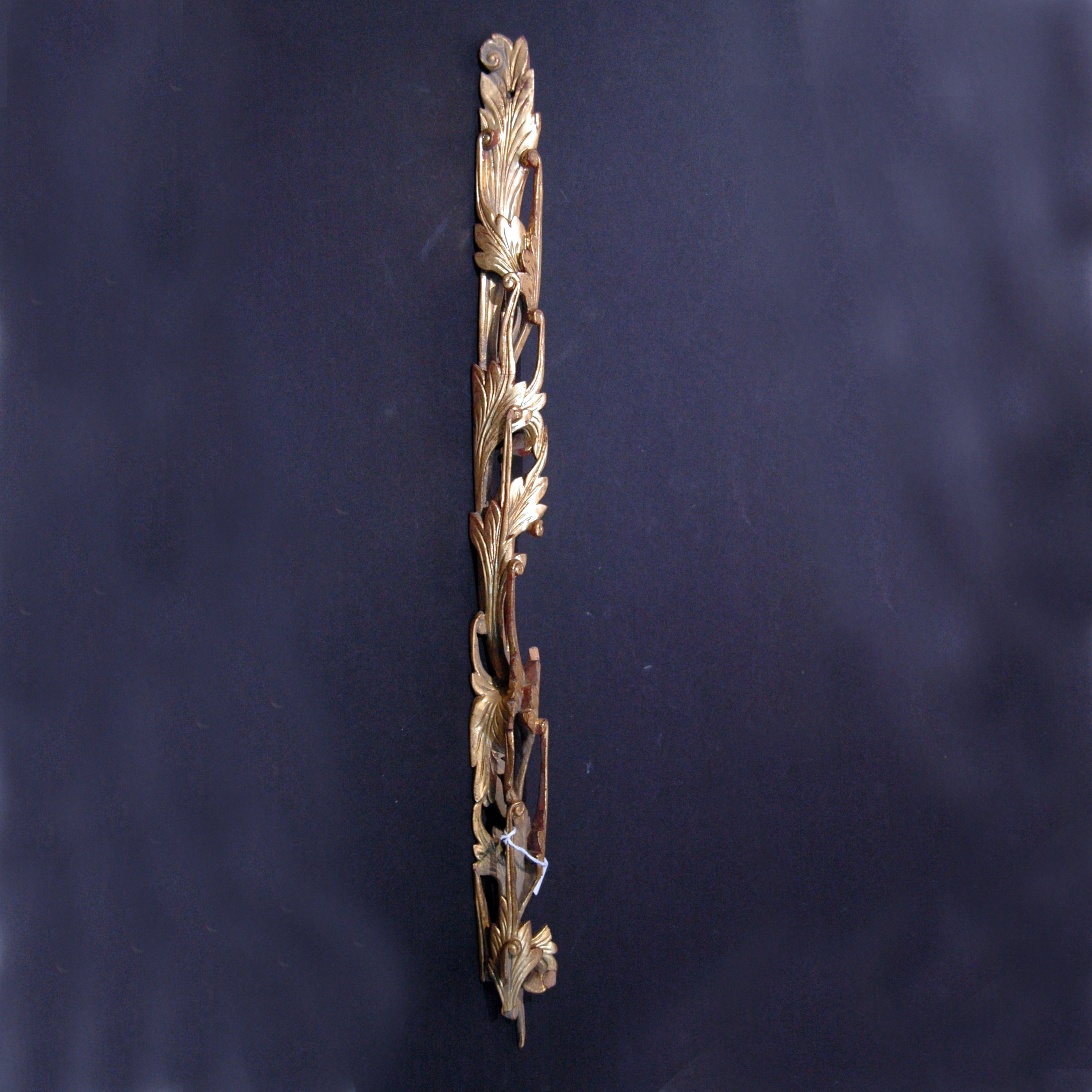
W40xD40xH500mm, China

This engraving of the plant reminded me the pattern of the arts and crafts movement.  Most probably also for the love of nature, the wall climber pattern was one of the first pattern to be used for the Chao Zhou golden wooden carving.  Apart from wood carving it is also a popular pattern for pottery and more abstractly on costume.

W970xL970mm, China

This is one of our baby carrier turn cushion cover series
(x-stitch, patchwork, x-stitch).

Many years ago on one of the shopping trips to Gui Zhou, mother was on a bus when she saw this baby carrier.  The baby carrier was not in a shop but carry a baby on the back of a woman.  Falling in love with the unusual design mother jumped out of the bus and ran to find the woman with the baby.  On closer look, the pattern looked even better, the colour are bright and the design abstract and modern.  Mother begged the lady to sell the carrier to her so she can use it as a sample.  The lady was very reluctant, as the baby carrier is believed to be an amulet for the child, protecting him throughout his life.  After much persuasion here we are – a pattern of birds with flower!

DIA250mm (BOWL DIA220mm), China

This lotus leave was the lid for a container which unfortunately is not with us anymore.  I think it will make a great presentation for lotus leave rice if you have a bowl of similar size or best of all make a  pottery one.  This will be my new pottery project, will keep you updated on this.  Meanwhile, you can start practicing on making my favorite lotus leave rice first.

INGREDIENTS (for 2)

  • 1 lotus leaf (fresh if possible)
  • 300g cooked rice
  • 0.5 tsp salt
  • 40g diced roast duck
  • 40g diced roast pork (Char Shui)
  • 40g diced prawns
  • 40g diced crab meat
  • 40g diced mushroom
  • 1 egg
  • 3 tbs water
  • 2 tsp soy sauce
  • 1 tsp chinese wine
  • 1 tsp sesame oil
  • 0.5 tsp salt
  • 0.5 tsp sugar
  1. wash the lotus leaf thoroughly then put it in boiling water till soft, rinse with cold water and pad dry.
  2. make a thin omelet with the egg, let cool and cut into thin slices.
  3. heat the wok with a little hot till smoke raises, add in and stir fried the diced prawn followed by the diced roast duck, char siu, mushroom and finally the rice and the seasoning.
  4. brush the lotus leave with oil, spoon in the fried rice and fold up the lotus leave like a gift.
  5. put it in a bowl and steam for half and hour.
  6. put the lotus leaf parcel in a nice container and enjoy!

W410xL230, China

Here is a folding fan with the fan leave decorated with a poem and painting by my father.  The poem from the poet Bai Ju Yi, “The Jackdaw’s Nightly Cry”,

“慈乌夜啼”

慈乌失其母,哑哑吐哀音。
昼夜不飞去,经年守故林。
夜夜夜半啼,闻者为沾襟。
声中如告诉,未尽反哺心。
百鸟岂无母,尔独哀怨深。
应是母慈重,使尔悲不任。
昔有吴起者,母殁丧不临。
嗟哉斯徒辈,其心不如禽。
慈乌复慈乌,鸟中之曾参。

The Jackdaw cries for the lost of its mother.
That year it stayed at their forest home; by day and by night.
Every midnight it cried, tears would run down those who heard.
As if it was saying it has not taken care of its mother.
Hundred of birds are without mother but only you are grieving so.
Your mother’s kindness deepens your sorrow.
There was general Wu Qi too busy chasing fortune to attend his mother’s funeral.
These kind of humans are worse than birds.
The Jackdaw is the dutiful son of birds.

Here is a clip of a jackdaw to make up for my bad translation of poem.


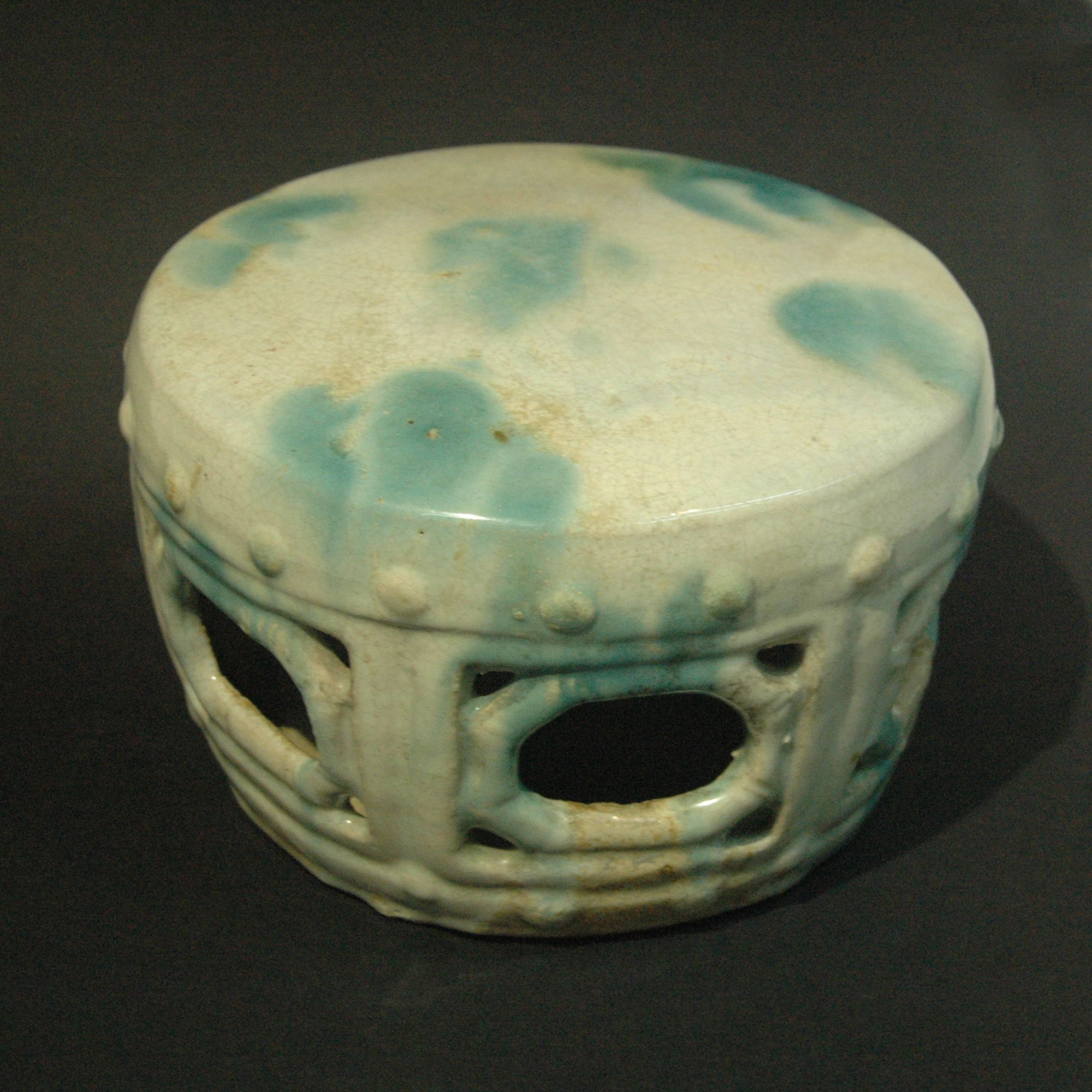
DIA190xH120mm, China

You have probably seen a larger version of this in a Chinese garden before, a stool for sitting on for the ladies.  It is called a Gu Dun, the word “Gu” means drum and as you can see the top of this pottery has decoration resembling a piece of leather held taut like a drum.  The Gu Dun was originally made in wood and later also made with pottery, porcelain, stone and lacquer.   You can see in the Sung painting below that it is already a popular chair at that time and the most recent design is perhaps Philip Starck’s Bonze Stool.

The one featured in the post today is a miniature decoration piece which is made in the form of a Gu Dun.


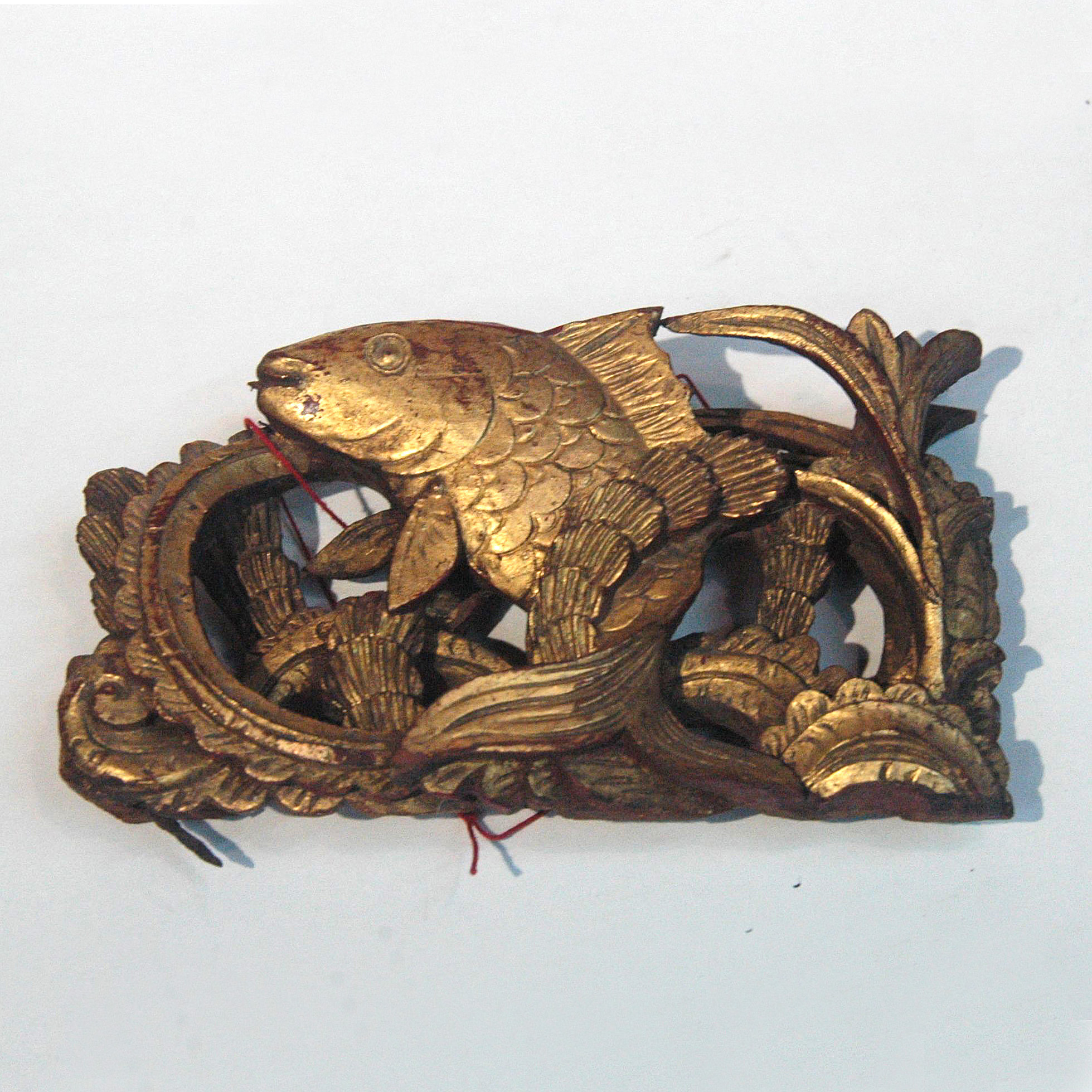
W130xH70xD30, China

The carp fish is a blessing symbol for the Chinese, there are many legends regarding the carp fish and here is one of them:
Once upon a time there is an orphan named Ji Qing, without a family he made his living as a boat tracker on the Chuan Jiang River.  Life was hard but he lived his days joyfully, being a good swimmer he is able to retrieve any objects his passenger accidentally dropped into the ocean.  Diving deep into the water he had a special bond with the carp fish, even if he is hungry he will not harm them, his friend made fun of him and called him silly Qing.  One day when he was tidying up the tow string, he saw a beautiful golden carp but at the same time a water snake was about to make it his dinner.  Ji Qing threw the string on the water snake and saved the golden carp, he took the injured carp to his hut and nursed it for days.  One evening exhausted from a day’s water he rushed home to see the carp but it was no where to be found.  Oddly on the table was 4 gold bars and there carved the words, “I have jumped to the sky and swam to the reef but failed to be a dragon (it is believe that if a carp can jump over the mountain it will turn into a dragon), here I am to give wealth to Ji Qing.

Would this be the golden carp?