round blue bottle

DIA100xH180mm, Hong Kong

Thrown and cut to get the round shape with a good fitting lid.  Blue stoneware glazed first, then a few dash of real gold luster is added, fired at a low temperature at 750 C.
Then you have a bottle of blue magic.

Here is an interview of Chris about his love for pottery.

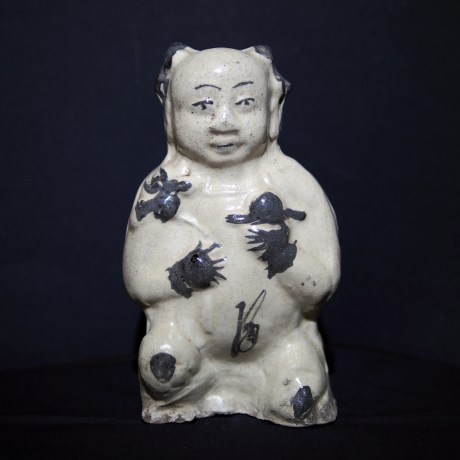
Ci Zhou KilnW70xH200xD120mm, China

Today, for Something New Something Old pottery, we have something old.  A figurine of a boy holding a lotus made in the Ci Zhou kiln.  On further research, the boy’s name is Mo He Yue, the Chinese folk portrayal of the Buddha Siddhattha Gotama’s son – Rahula.  Rahula was born before Prince Siddhartha was enlightened to become the buddha, being raised by the his mother and grandfather King Suddhodana.  When Rahula was 7 year old, the Buddha returned to the palace, on the 7th day his mother Princess Yasodhara told Rahula to ask his father for the inheritance of the crown since the Buddha has already renounced his duty as the prince.  The Buddha knowing the crown goes with the worldly life is full of trouble, so instead gave his son spiritual enlightenment.  The Buddha asked his disciple Sariputta to ordain Rahula who later became one of the arhants.

Since the Tang dynasty, figurines of Mo He Yue have been used for the worship for the Qi Xi festival (7th of lunar July).  However, the Qi Xi festival has nothing to do with Buddhism but a celebration of love between a cowboy (Nin Lang) and a weaver girl (Zhi Nu).  

The love story goes something like this; a poor boy called Nin Lang who live with lived with his brother and the wife.  The sister in law was not keen on having a boy hanging around and had a cunning plan.  She asked Nin Lang to herd 9 of her cows but on his returned claimed that there were 10, if Nin Lang didnt manage to find the 10th cow he will not be allowed home again.  Nin Lang found a sick yellow cow on the hill, he nursed him carefully until the cow regained its health.  The cow was very grateful and revealed that he was actually a saint who has been strike down to earth.  The cow became a buddy of Nin Lang and told him  a place on earth where the female saints would hang out and there Ning Lang met Zhi Nu.  The 2 soon fell in love with each other and had a twin.  The Queen Mother of the West (the supreme head of all female saints) found out this forbidden sin, a earthy being having children with the saint, and escorted Zhi Nu back to heaven.  Seeing that Nin Lang became very sad at the departure of his wife, the cow told Nin Lang that after his death, his skin could be used to make a pair of shoes that could bring Nin Lang to heaven so he could find Zhi Nu again.  Years later, the shoes were made, Nin Lang flew to the sky and saw Zhi Nu at a distance.  The Queen Mother of West throw a hair ornament which became the milky way separating the two again.  Moved by their love, the pica pica birds formed a bridge to help them cross the milky way.  The Queen Mother of West touched, made an exception for them, once a year on the 7th of lunar July, the 2 are allow to meet on the pica pica bridge.  This story is of course a conception of the early Chinese astronomy; Nin Lang being Altair, Zhi Nu being Alpha Lyrae, the yellow cow – the Aldebaran and of course the Milky Way.

Since the Tang dynasty there has been the worship of the 2 lovers, in particular Zhi Nu, the weaver of colourful clouds in the sky.  It is believed that the girls would pick up her skillful hands. Now what has Rahula, the son of the Buddha got to do with the 2 lovers.  It has to do with other custom of Qi Xi, as it is a night of the union of the lovers, baby figurines were made as a symbol of conception of the much desired baby boy.  By Tang dynasty, with the arrival of Buddhism from India, these baby figurines were made into Rahula who is gifted and grown to be an arhant, an image of a son everyone wished for.  Rahula, being left behind by the Buddha at birth but eventually enlightened and preached by the Buddha.  This reunion fulfilled the void left behind the by separation of Nin Lang and Zhi Nu.

Slowly, the figurine changed from their role of being worship to being admired and by Sung dynasty when technique of molding was made popular, the Rahula (Mo He Yue) figurine became a toy.

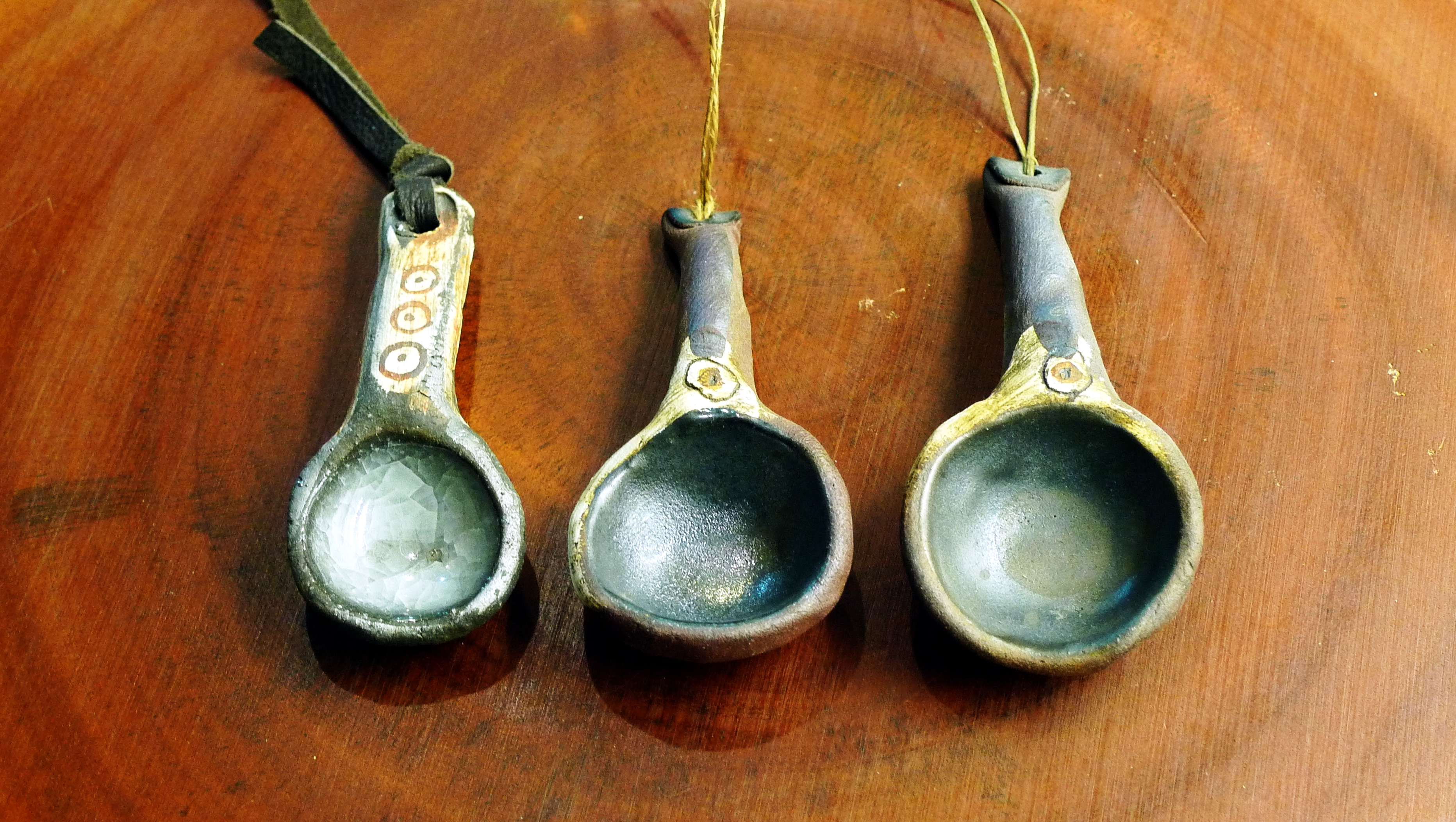
little spoonsW4xL9mm, Hong Kong

These series of unique spoons are an exploration by the artist of Japanese clay and glaze materials. Fired in gas kiln (1200C) in Shigaraki, Japan.

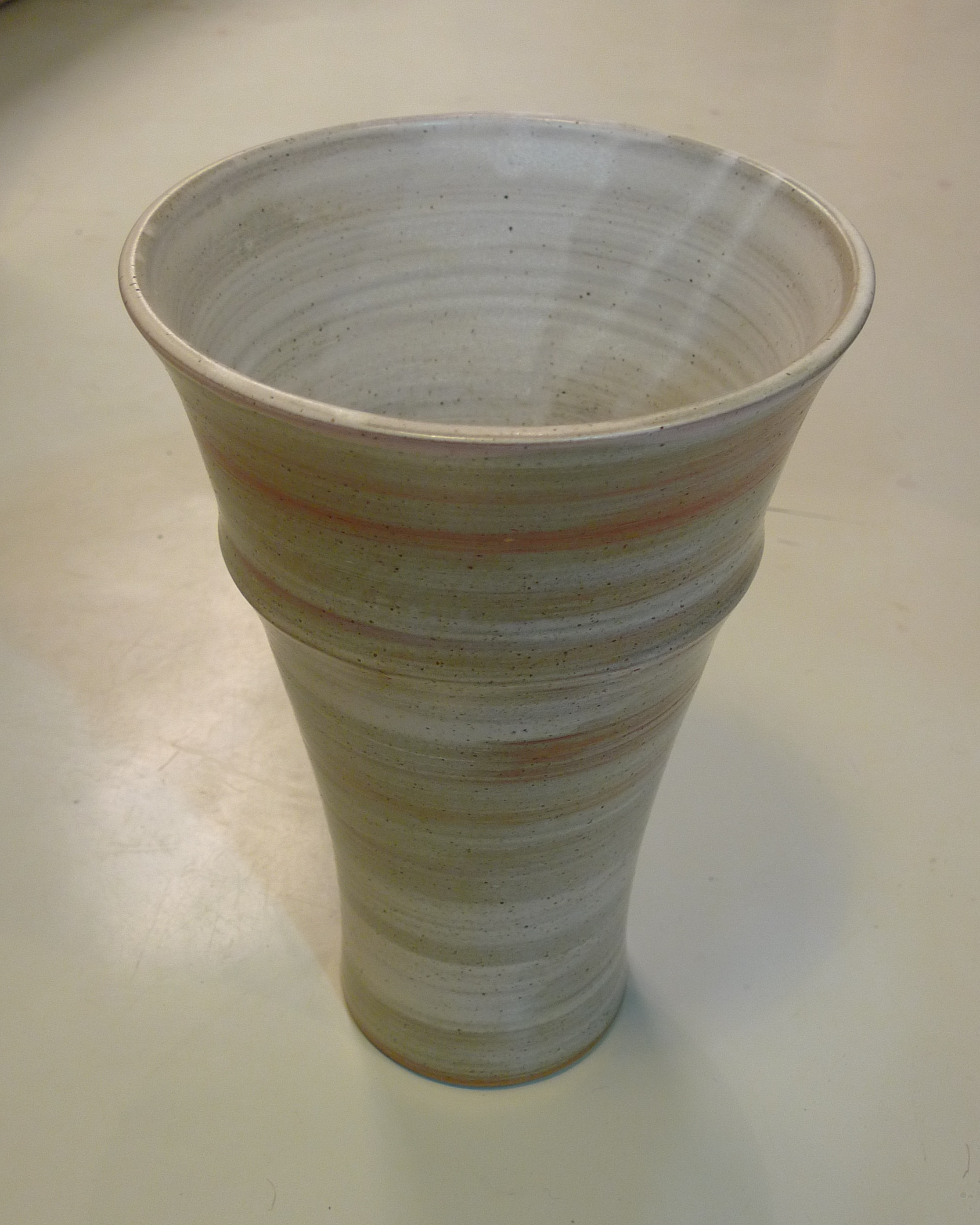
vaseDIA200xH320, Hong Kong

William Morris once said among the simple necessities that ought to furnish a room are a vase or two to put flowers in.  If you are getting just one vase for your “room” this one will be perfect.  And if you already have a collection of vases, this will be a delightful addition.  Its shaped made it very easy for arrange for tall stemmed flowers, like the ginger lily (Hedychium coronarium), widely available in the local markets, but under appreciated.

Stoneware body with semi matt cornish stone white glaze and orange underglaze enhancement. Thrown on wheel.

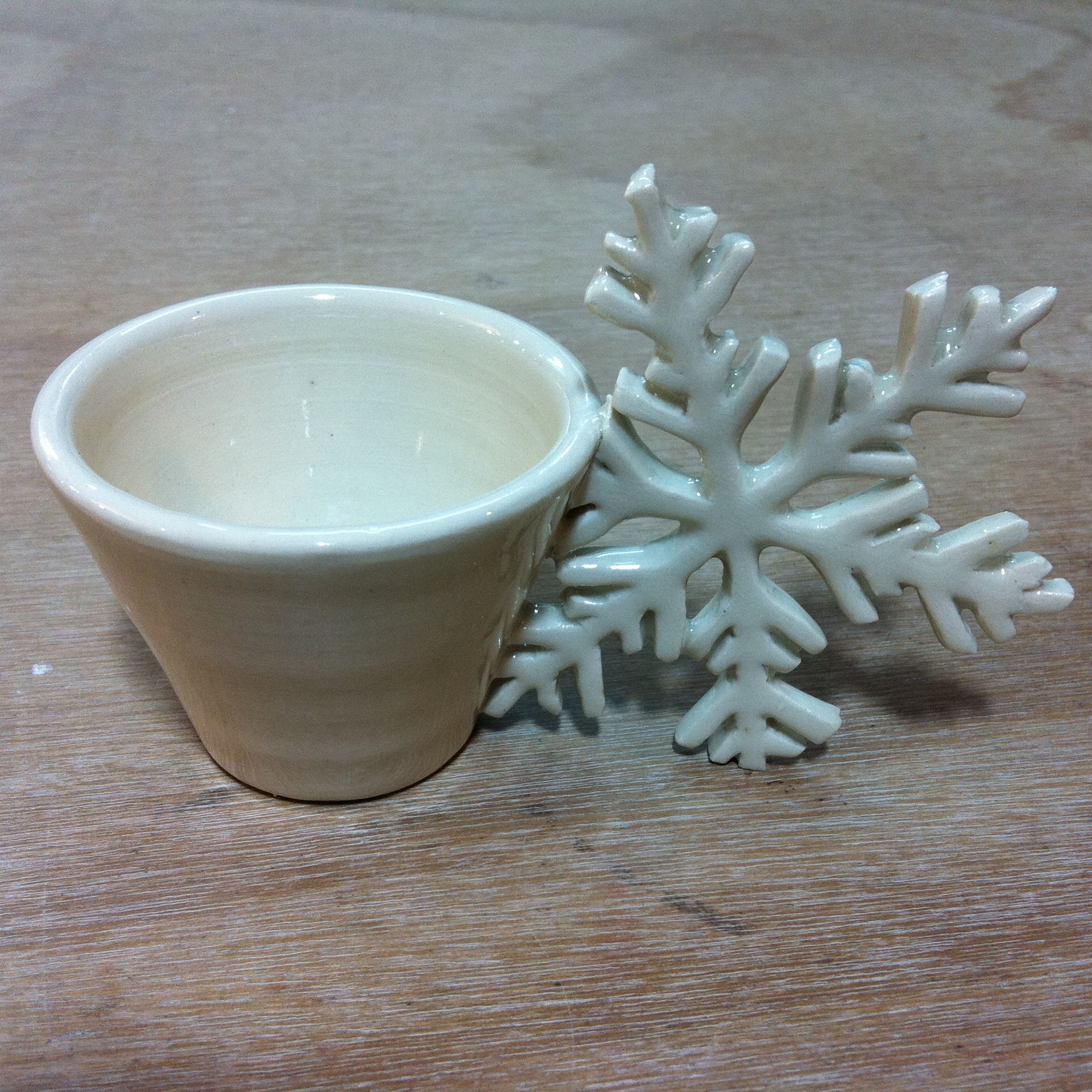
snow cupDIA55xH70mm, Hong Kong

These are candle cups.
By Joyce Li.

A throw body
with a snowflake handle
carefully carved and attached.

throw a partyIt suddenly occur to me that not everyone might have caught on the relationship with pottery between the image of this poster and the “Throw A Party” theme.

We have been playing with the word “throw”.

To throw a party, as we know it, is to give or to held a party.

For a potter, to throw refers to form or to shape a piece of clay on a potter’s wheel.  Under the sensitive hands of the potter, the clay on the spinning wheel is centered and formed into the desired shape.  The center turning helps the potter to form a completely uniform circular vessel.  But why would it be call “throwing”?

  In old English, “thrāwan”, the word which “throw” originated from means to twist or to turn.  The Latin “terere”, the root of the German word “drehen” means to rub.  Where the Greek word “teirein” means to wear out.  All of which are the action of the potter for throwing the vessel, so in a way, the word “throw” has more to do with the pottery than how we ordinary understand the word today.

Gold Cross Spoon

W65xL130mm, Hong Kong

How can a party be without something glamorous.  This gold cross spoon is perfect for serving delicacy like caviar, foie gras, etc.

White stoneware, clear glazed, high fired, then with gold luster and refired to 750C.

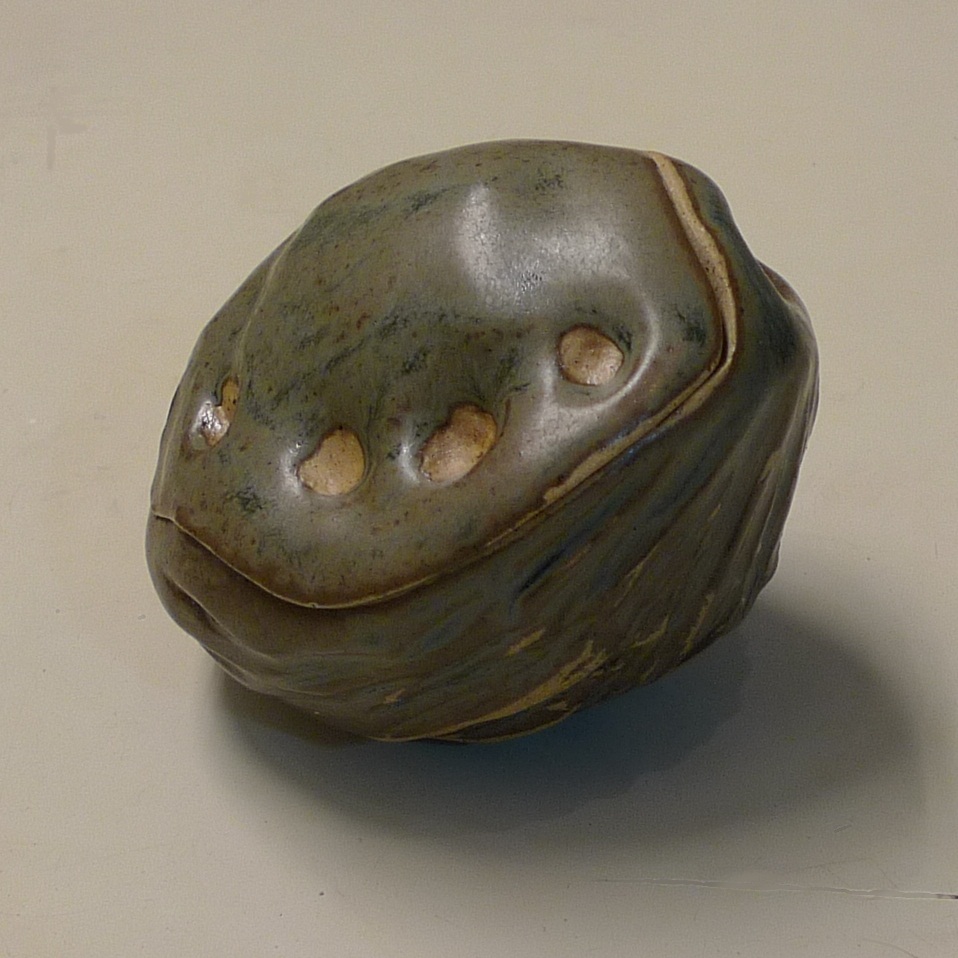
shell boxW80xD80xH80mm, Hong Kong

Everytime I see this box it just brings a smile across my face.  It just made me think of a happy oyster.  It will make a brilliant place for storing all the little treasure that would become pearls over time.

Orgainc shape box by King Fung; stoneware glaze, made by simple two parts pinching and alteration.  Finger indent works provide an easy grab for opening the box.

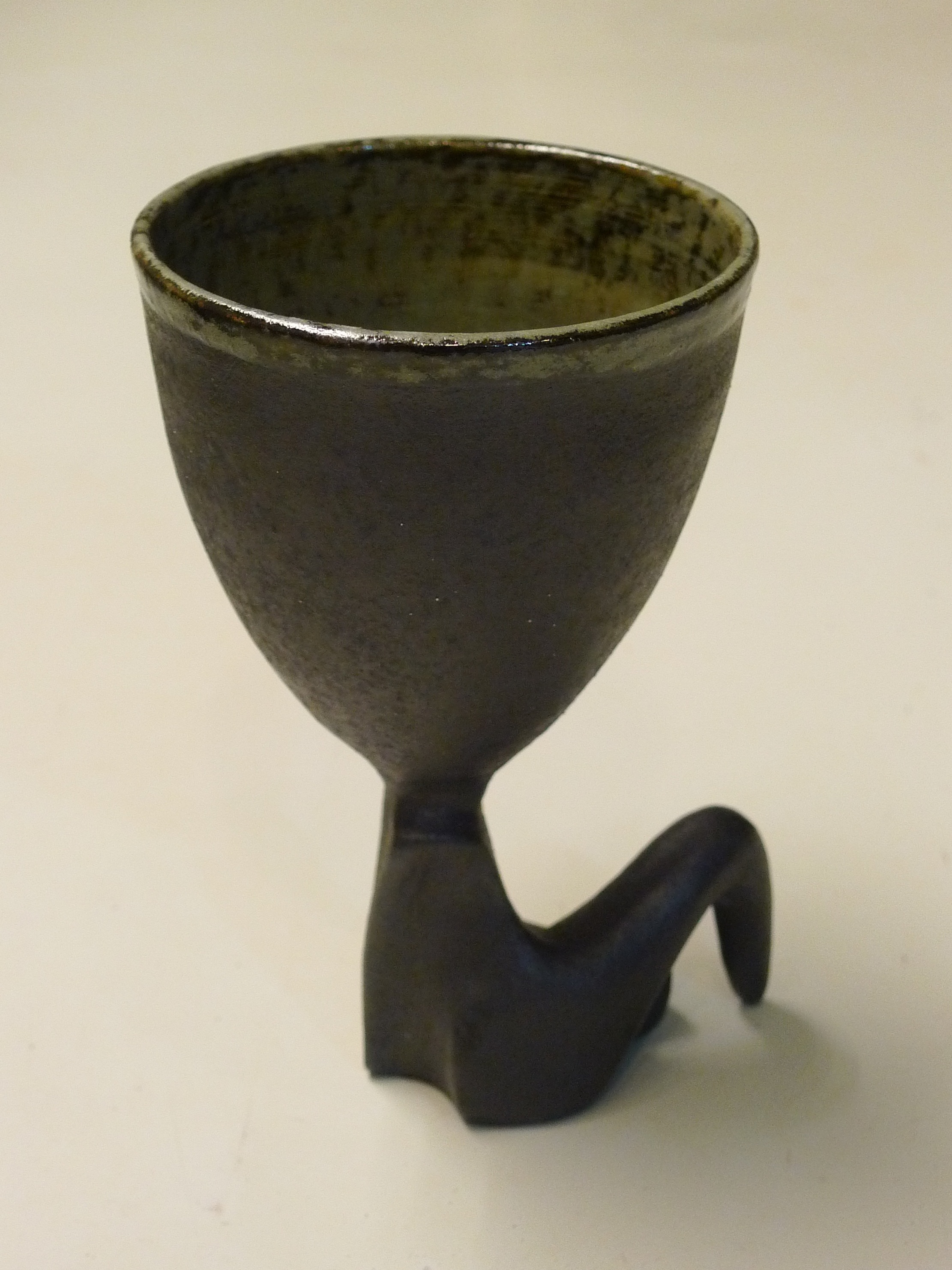
black globletDIA80xH130mm, Hong Kong

This series of black goblets, by Jessie Cheung, are full of energy and spirit.  These animated goblets seem to be teasing one to take a sip from it.
Unique items for small dinner parties.

The goblets are created by throwing with a hand build sculptural attachment. Its matte black slip glaze contains high percentage of manganese dioxide, copper oxide , iron oxide and copper oxide, giving an intense blackness, the sculptural part is made by slip casting.

raku vase

DIA90xH90mm, Hong Kong

This round bottle  is made by Chris Lo, founder of the Cobo Ceramic Workshop.

The clay body uses a groggy clay which can stand for the thermo shock created during the raku post reduction firing.  The matte black carbonized surfaces and black crackles are the main characteristic of raku firing.   The round shape gives a stable and strong body structure to avoid cracking.

Raku was started in Japan by Chojiro in the 16th century; unlike other type of pottery firing where they are loaded into a cold kiln with temperature rinsing slowly, taking anywhere from 8-24 hrs or longer, when the designated temperature is reached the heating is turned off and the contents allow to naturally cool down until  they can be removed with bare hands.  With raku, the pottery are loaded into a hot kiln where the desired temperature is reached in a much short time, can be as short as 15 mins).  The pottery is then removed from the hot kiln with the aids of tongs and put into a container of combustible material (sawdust, leaves, etc) to be smoked, the surface is carbonized reacting with the glaze and the clay giving the unique matt black unglazed clay and crackled glazed surfaces.