Archives for category: container

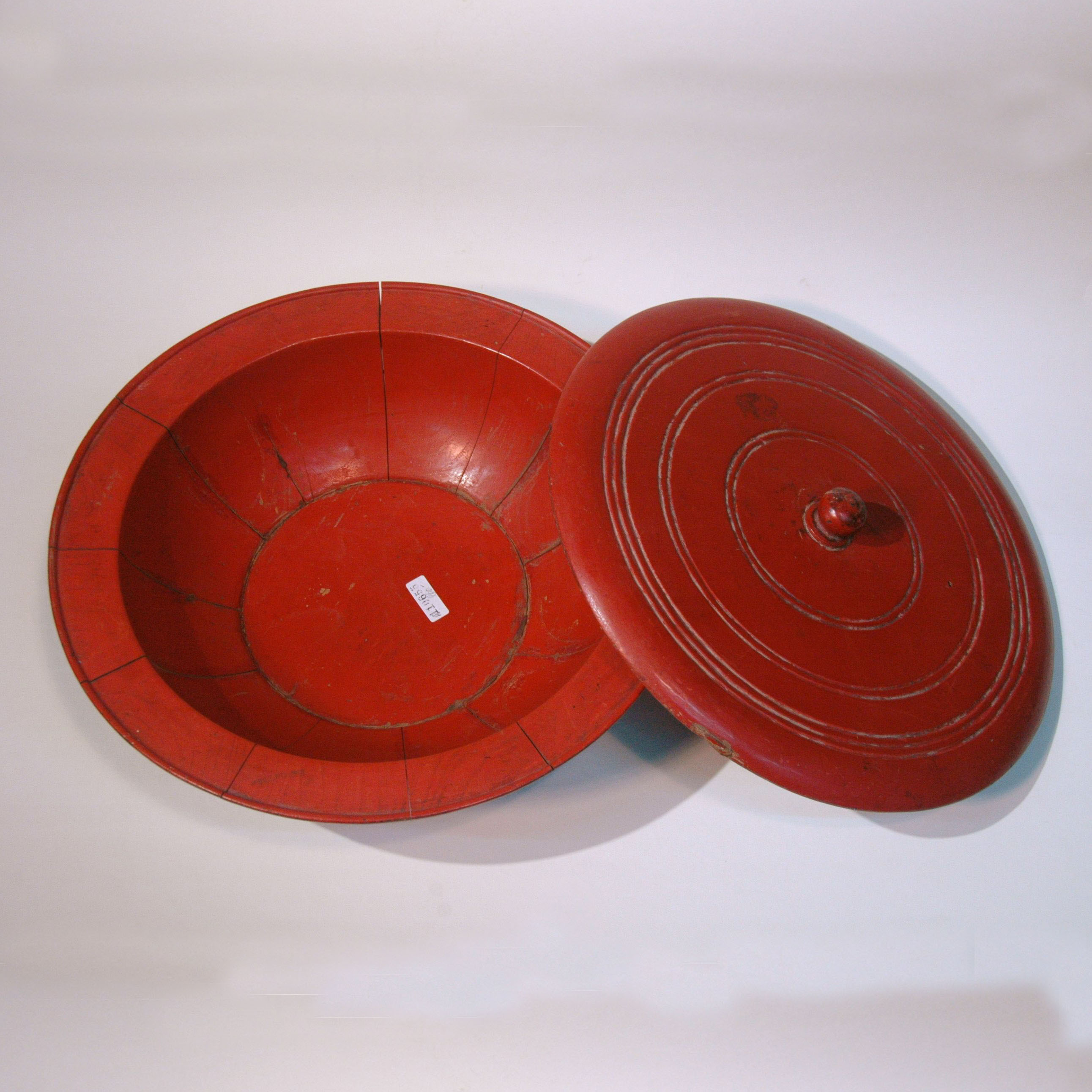
DIA340xH100mm, China

This red lacquer box is part would have been part of the dowry item in a traditional Chinese wedding.  In old China when the country is agricultural based, male is regarded as asset to the family with their labour and sadly , especially for the poor, female took on a minimal role in society.  It is said that a wealthy family their daughter is married off, a commoner’s daughter would be given away at the marriage and a poor man would have his daughter sold.  Wary of how the daughter’s life would be when she enters the groom’s family, the bride’s family would try their best to come up with an elaborate list of dowry so to ensure the status of their daughter in the new home and that she would not be seen as “sold”.  It so extensive that the production of the dowry would be categorized into wood work, carving work, lacquer work, box and bucket work and costume making.  In the morning of the wedding day, a team would set out from the groom to the brides house, after noon time, the team would return with the bride and the dowry procession.  For the riches, the dowry would be a full procession which goes on for miles.

This lacquer box is for storing confectionery.

D60xW120xH150mm, China

To continue with the chicken theme, we have a flower vase from the Ci Zhou kiln.  Ci Zhou kiln is the largest folk kiln in northern Chinese which dated back to the Song dynasty; it is famous for its black on white pottery (no, I did not set the camera to nostalgic tone) which was a break through in glazing tradition at the time, some believed that it set the foundation for the now well known blue and white porcelain ware.  White slip is applied to the semi dried clay work, a iron based black slip that contained iron is painted over to add detail to the vase, a clear glaze is applied after the first firing.

W80xL250xH400mm, Thailand

The most famous rooster in Thailand is perhaps the one which belonged to King Naresuan.  King Naresuan was the King of Ayutthaya between 1555 – 1605, he was most famous for freeing the Siam of Ayutthaya from Burmese rule and subsequently the expansion of his empire.  Now how does the roost come into the picture?  It is believed in popular legend that the young Prince Naresuan wagered a bet with the Burmese Prince of Ayutthaya that if Naresuan’s rooster would won the cock fight, Ayutthaya would be freed from Burmese rule and of course the rooster being as couragous as his master won fiercelessly.  Ceramic rooster statues can be seen as offering to King Naresuan in a few temples in Ayutthaya.

W70xL100xH60, China

This blue and white porcelain box, now displayed as a toothpick holder, was used as an “ink pad” for the Chines. It is a container for the red paste used with the Chinese seal. The ink paste has been used since the Qin dynasty and at that time using clay, the clay is made into small balls and soften with water when use, it is used as a seal for a document, similar to the wax seal in the West (only that the document is of bamboo, text written in lacquer, the envelope being as string which is then sealed). By the Tang dynasty, as paper is developed the ink paste is also refined, cinnabar replaced clay as the seal paste which is closer to today’s paste. Also see our previous post “A Seal Case“.

DIA150xH220mm, China

This pesto was used as be a medicine grinder; in the old days every household would have a grinder like this for grinning the certain Chinese medicine, herbal, shells, mineral, hones, bones, etc.

The most famous figure for medicine grinding is however not a doctor as we might have thought, it is in fact a rabbit, the Jade Rabbit (see earlier post) that lived on the moon.  Can you spot the rabbit?  This image on the moon can be seen on lunar 15th of every month.

DIA80xH80mm, China

Nowadays spittoon has almost disappear, at least in Hong Kong, there only place you might still be able to see one are in the old tea houses (e.g. the famous Luk Yu Tea House), however, they are used more as a rubbish bin or at most to gather used tea, so luckily you will not see them in action.  Before my research for this post, I have always seen spittoon as a very Chinese object, it is very surprising to find out that spittoon was originated from the UK and the USA and that it was a popular object in the 19th century at places where men gathers.  The main use for spittoon in the West was for spitting of the chew tobacco, when it was imported to China, it was used as a  receptacle for spit (usually of a larger size).  This small spittoon was one of the accessories for smoking opium, it would have been placed on the opium bed within reach of the user.

DIA270mm, China

This is a set of bronze plate which is believed to be used for food offering to the gods.  The Chinese uses ceramic for dinnerware, it is uncommon to use food using bronze or metal ware (well, now we have cast iron casserole, stainless steel bowls, enamel dishes, etc) .

DIA350xH200mm, China

Before the invention of the disposable paper gift boxes and wraps, there were these lacquer boxes for transporting and presenting gifts.  This particular one is for cakes and confectionery gift.  After the gift is received, the boxes will be returned to the sender.  A red packet will be placed inside the boxes as a thank you gesture to the giver, they should never be returned empty.  For bigger celebrations like wedding, the bride’s family will send out boxes of the bridal cake for friends and family as an announcement of the wedding.  The boxes will be rented out from the cake shop, though the wealthy family would have custom made the lacquer boxes for these occasion.  Nowadays the custom is replaced by a cake gift voucher … I must say I would be much happier to receive the gift from a beautiful box like one then a paper voucher, I think it will make the cake taste better and share more of the joy of the happy couple.

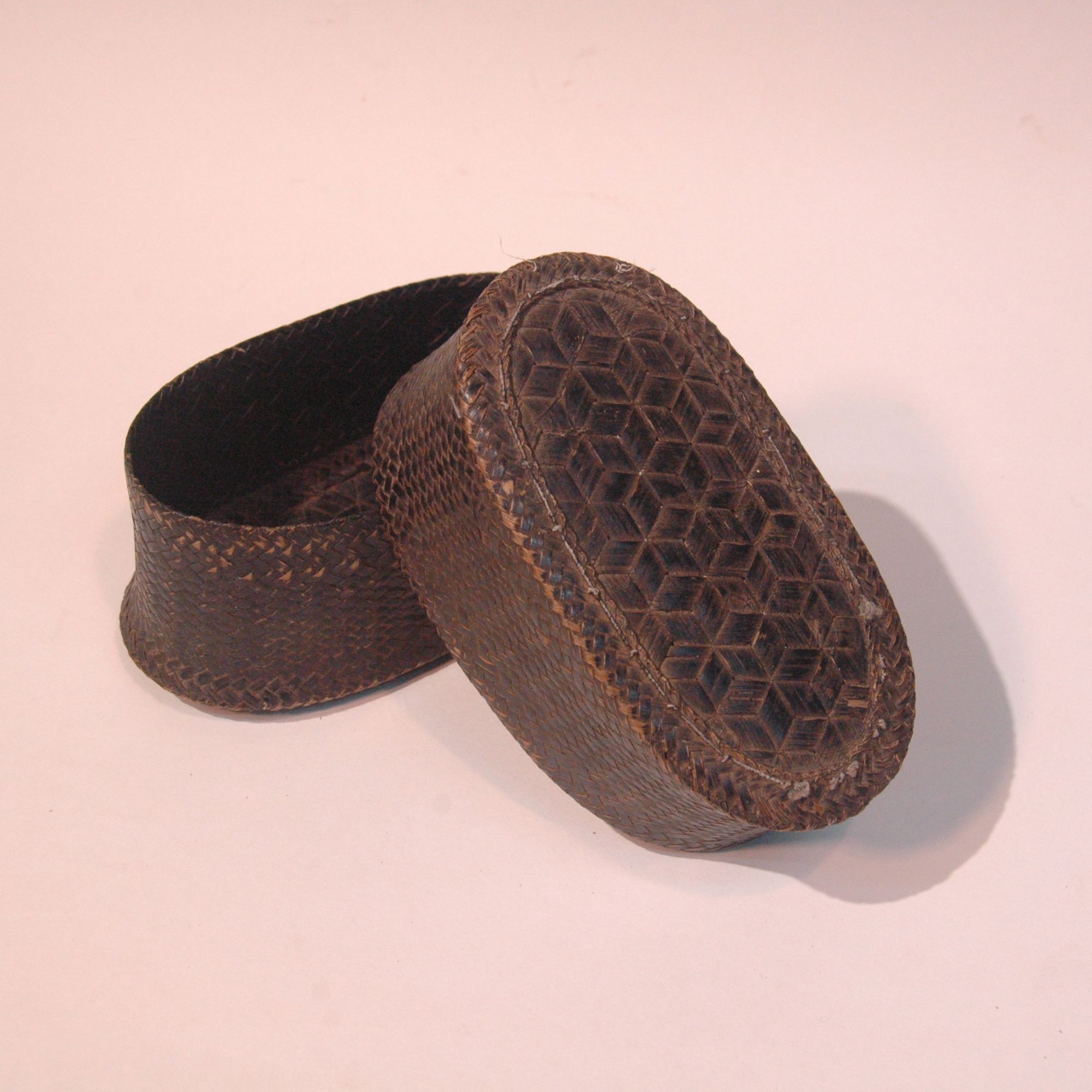
L150xW70xH70mm, Thailand

This bamboo weaved box is a rice serving basket for Thai sticky rice.  So finely made, it is perhaps too precious to be used for a daily task.  Here is the recipe for Thai sticky rice for 2 persons.

INGREDIENTS

  • 1.5 cup glutenous rice (sweet rice)
  • 0.5 tsp salt
  • water
  1. wash the rice thoroughly
  2. soak the sweet rice in water with the salt  for 1-2 hours (this will shorten the cooking time)
  3. pour the sweet rice through a sieve
  4. put the sieve with a lid over a saucepan and steam 
  5. after 10 mins, flip the rice over and steam for another 5 mins
  6. put into contain and serve

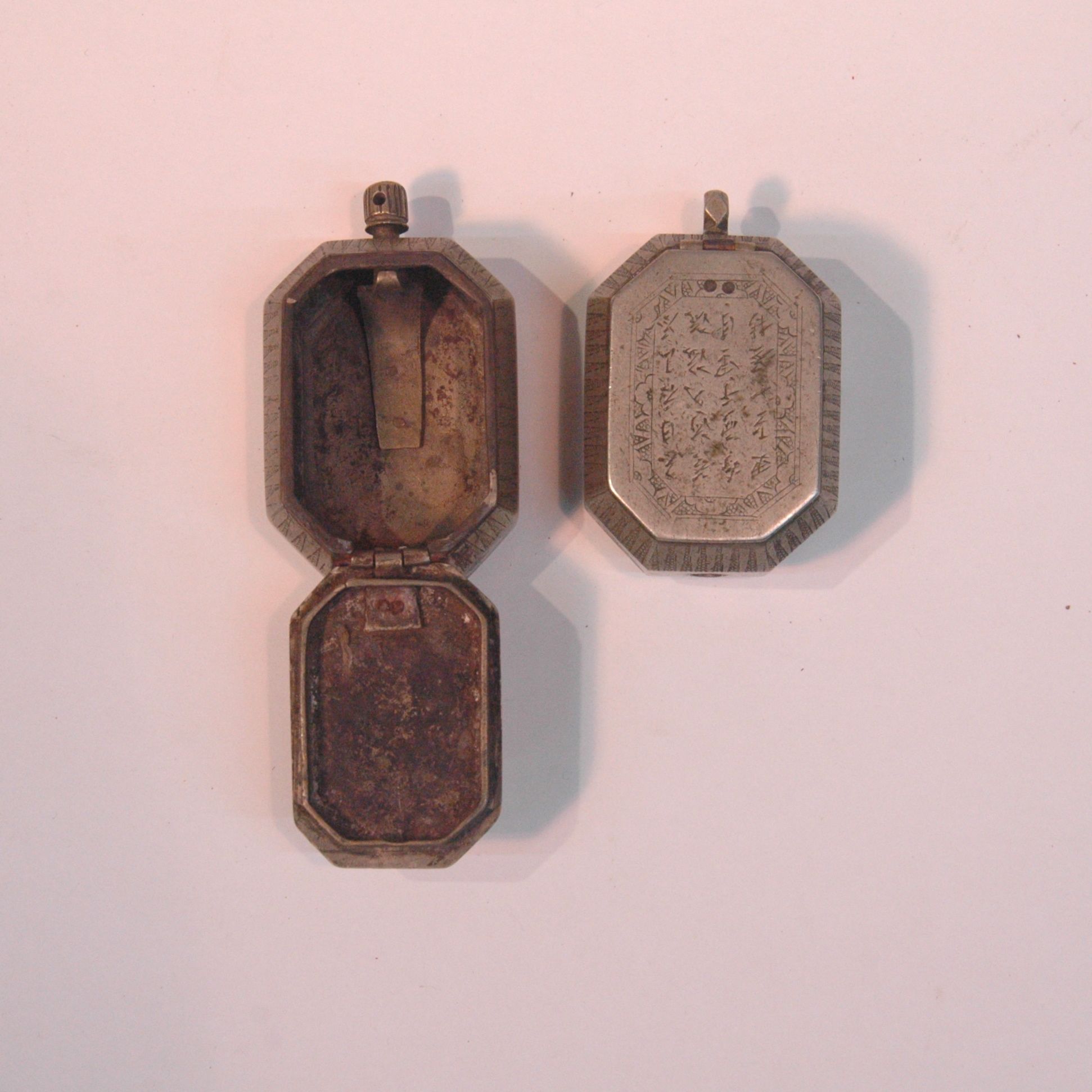
W50XD40XH70mm, China

This copper-nickle silver boxes are used in the late Qing dynasty for storing opium.  On the top of the box is a button for releasing the cover and also for attaching a string which can be tied to the waist.  The boxes are well used and worn, as if they were something treasured by the owner.  Knowing the history, its kind of sad looking at them, but at the same time they are a sharp reminder of what drugs can do to a person and a country.