Archives for the month of: November, 2011

W220xL300mm, China

Over Chinese New Year, wood block prints which express good fortune, blessing and protection would be posted in every household, shops, basically anywhere with a roof over (even at livestock are kept).  These prints are replaced on every New Year.  This print is of the Eye Goddess of the Taoist religion, she is one of the 15 mother goddesses, it is believed that her prayer would heal any problem of the eye.  The  Goddess print will be displayed in clinic of an eye specialist and at home of those that have sight problem.

H120xW120mm, China

This is a green glazed shade of an oil lamp, the shade act as a guard for fire prevention and fuel saving device.  Its other function is to keep the hungry mouse from consuming the precious oil.

Textile Width 400mm, China

A paper stencil is overlay on a piece of white cotton fabric, then a paste made up of lime and soya bean flour is applied with a blade over the stencil.  The cloth is then put into the indigo dye trough for 20 mins then hang for oxidation for 30 mins (this process is to be repeated for 6-8 times).  After drying the starch paste will be scraped off, under the paste will reveal the original white colour.  For dyeing with a white background, 2 stencils would be used, one for the small pattern and second one for the background itself.  This Chinese indigo fabric uses a handwoven cotton fabric with natural indigo dye.

Curtain with the same dyeing technique.

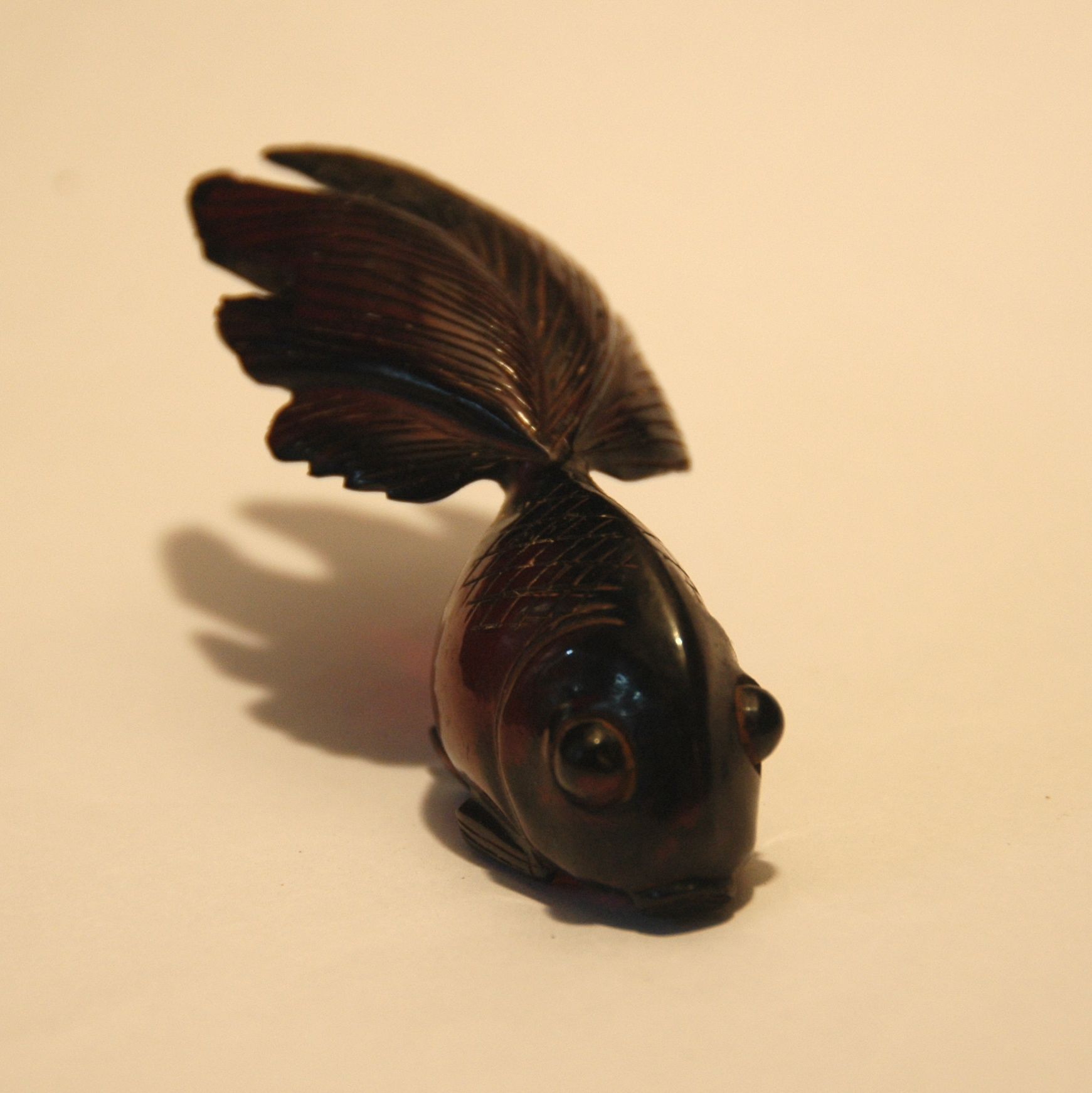
H50xL90mm, China

This is a small buffalo horn carving of a gold fish.

W90xL90mm, China

This is paper cutout is from the procession of the mouse’ wedding.  The Chinese believes that mouse are prey and should be kept out of the house.  The cunning plan was to arrange a marriage for daughter mouse on Chinese New Year’s eve so that the house would be cleansed and blessed.  Over New Year paper cutout of the full procession (including varies mouse musician, gift carrier and of course the bride) would be stuck on the walls or windows of the house.  This cutout is a part of the 12 zodiac animals made into a greeting card.

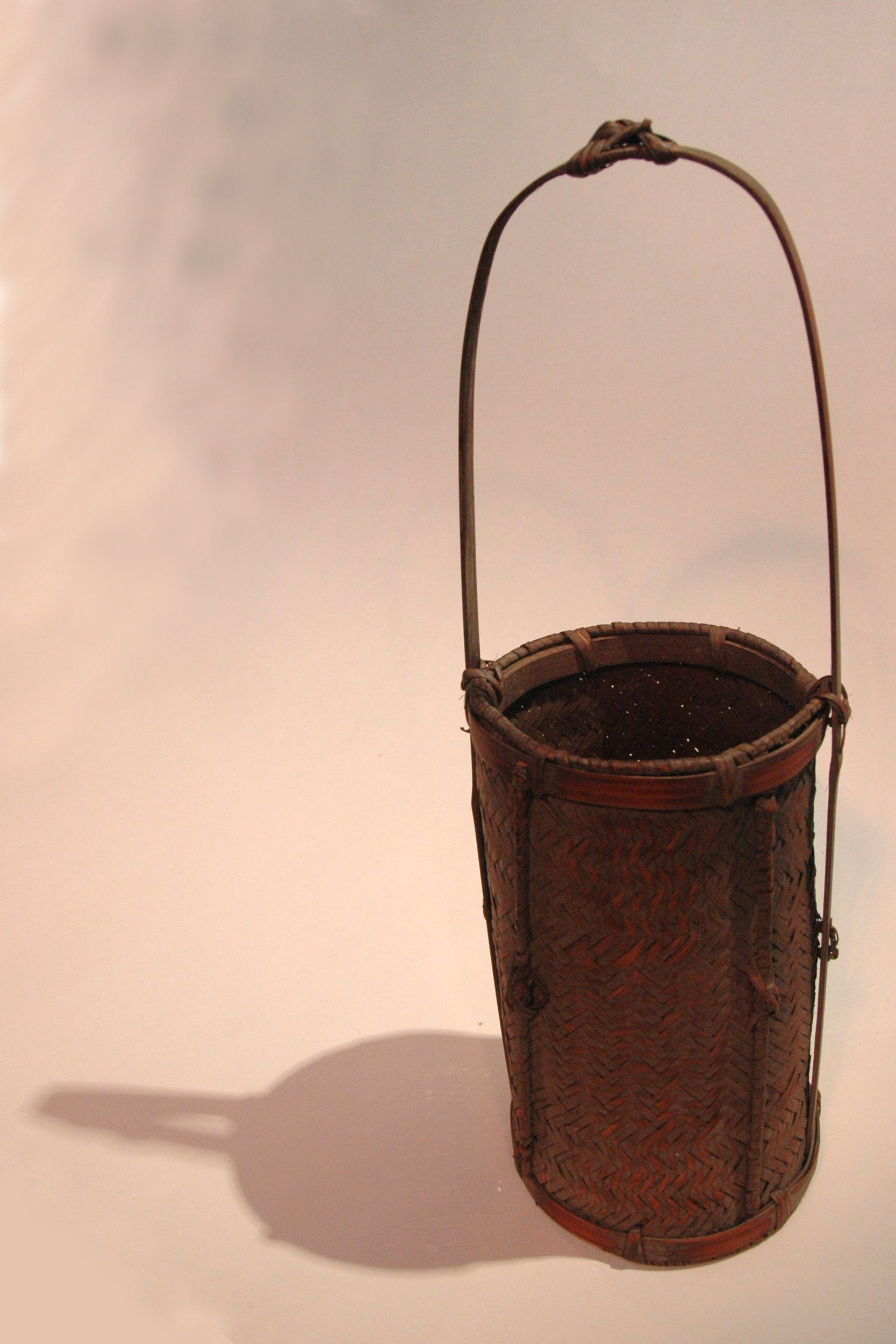
Dia110xH400mm, Japan

Bamboo as a material has been a very well utilised in Japan (and Asia) such that bamboo weaving became a specialized craft. Bamboo tree of 3-4 years old are cut, boiled to remove the oil and dried under the sun (there colour would turn from green to brown).  The bamboo is first split by a tool known as the Kikuwari (which looks a bit like the fruit cutter) dividing the bamboo stem into equal divisions.  The surface of the bamboo is then scrap off to allow the lacquer or other finishes to absorb.  To make the higo, each of the large section is split into half with the knife from the back side of the bamboo, the strip is peeled and then strip again to the desired width.  Finally, each strip is then rounded off on the 2 sides and the thickness evened, the higo is ready for weaving.  All these steps might sound simple but will take a very experience craftman to produce good quality higo, just for using the kikuwari to split straight down would take at least 3 years of practice.  This is a simple bamboo ikebana basket for Japanese flower decoration.

L230mm, China

Tin toy of the Zeppelin air ship.  Tin toy was introduced into China at the turn of the century and by the 20s China has started producing tin toy.  As they are durable and cheap they became the toy for many generations.