Archives for posts with tag: pottery

DIA150xH220mm, China

This pesto was used as be a medicine grinder; in the old days every household would have a grinder like this for grinning the certain Chinese medicine, herbal, shells, mineral, hones, bones, etc.

The most famous figure for medicine grinding is however not a doctor as we might have thought, it is in fact a rabbit, the Jade Rabbit (see earlier post) that lived on the moon.  Can you spot the rabbit?  This image on the moon can be seen on lunar 15th of every month.

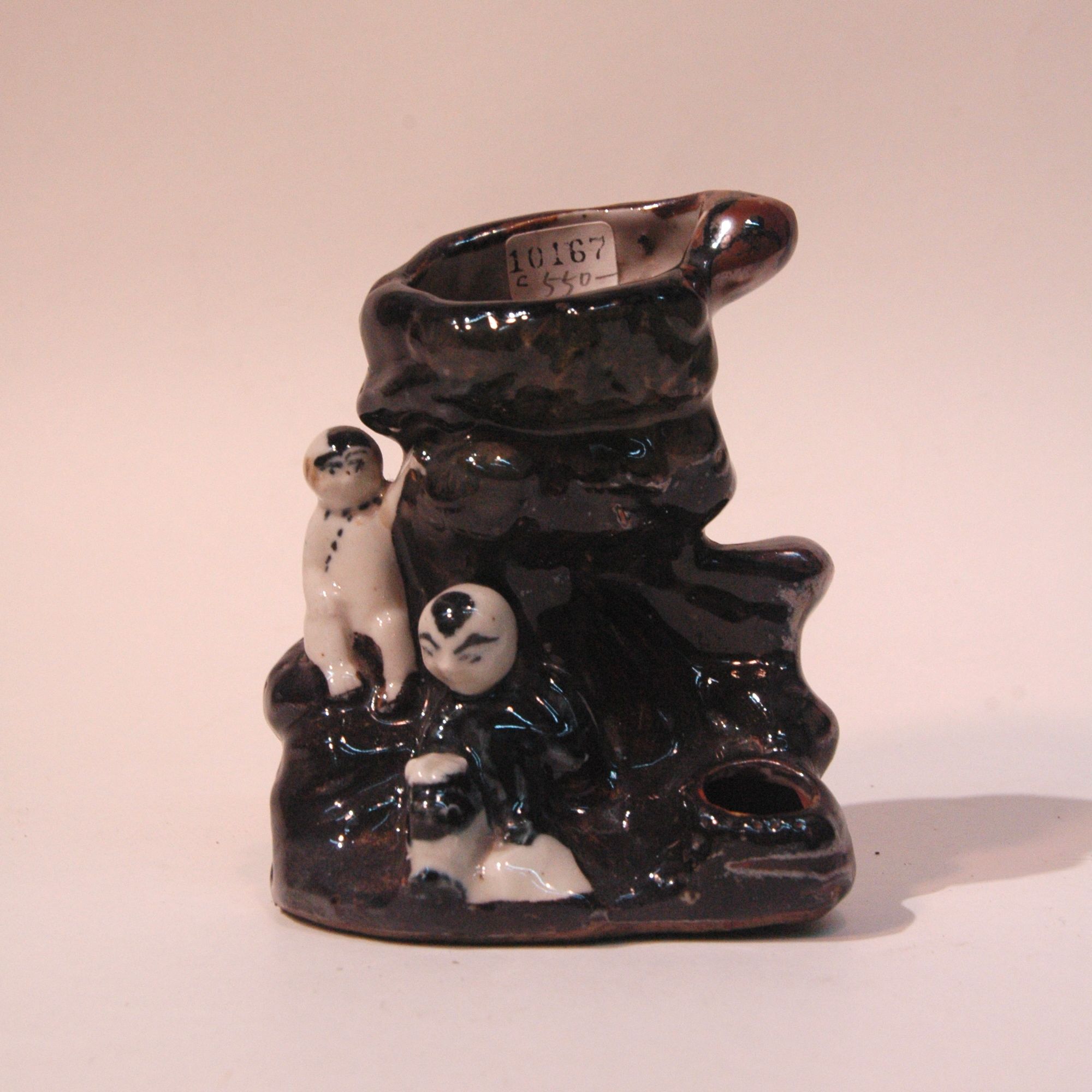
W100xD70xH130mm, China

This sweet mountain is in fact a pen holder (particularly like the little guy on the top grabbing hold of the rock as if he is scared of falling off), this is perhaps one that is made for a child, like this water drip.  Like today’s parents, parents in the past has also wracked their brains trying to get the child interested in studying or at least stay at the desk.  See our other version at Ceramic Pen Holder.

DIA80xH80mm, China

Nowadays spittoon has almost disappear, at least in Hong Kong, there only place you might still be able to see one are in the old tea houses (e.g. the famous Luk Yu Tea House), however, they are used more as a rubbish bin or at most to gather used tea, so luckily you will not see them in action.  Before my research for this post, I have always seen spittoon as a very Chinese object, it is very surprising to find out that spittoon was originated from the UK and the USA and that it was a popular object in the 19th century at places where men gathers.  The main use for spittoon in the West was for spitting of the chew tobacco, when it was imported to China, it was used as a  receptacle for spit (usually of a larger size).  This small spittoon was one of the accessories for smoking opium, it would have been placed on the opium bed within reach of the user.

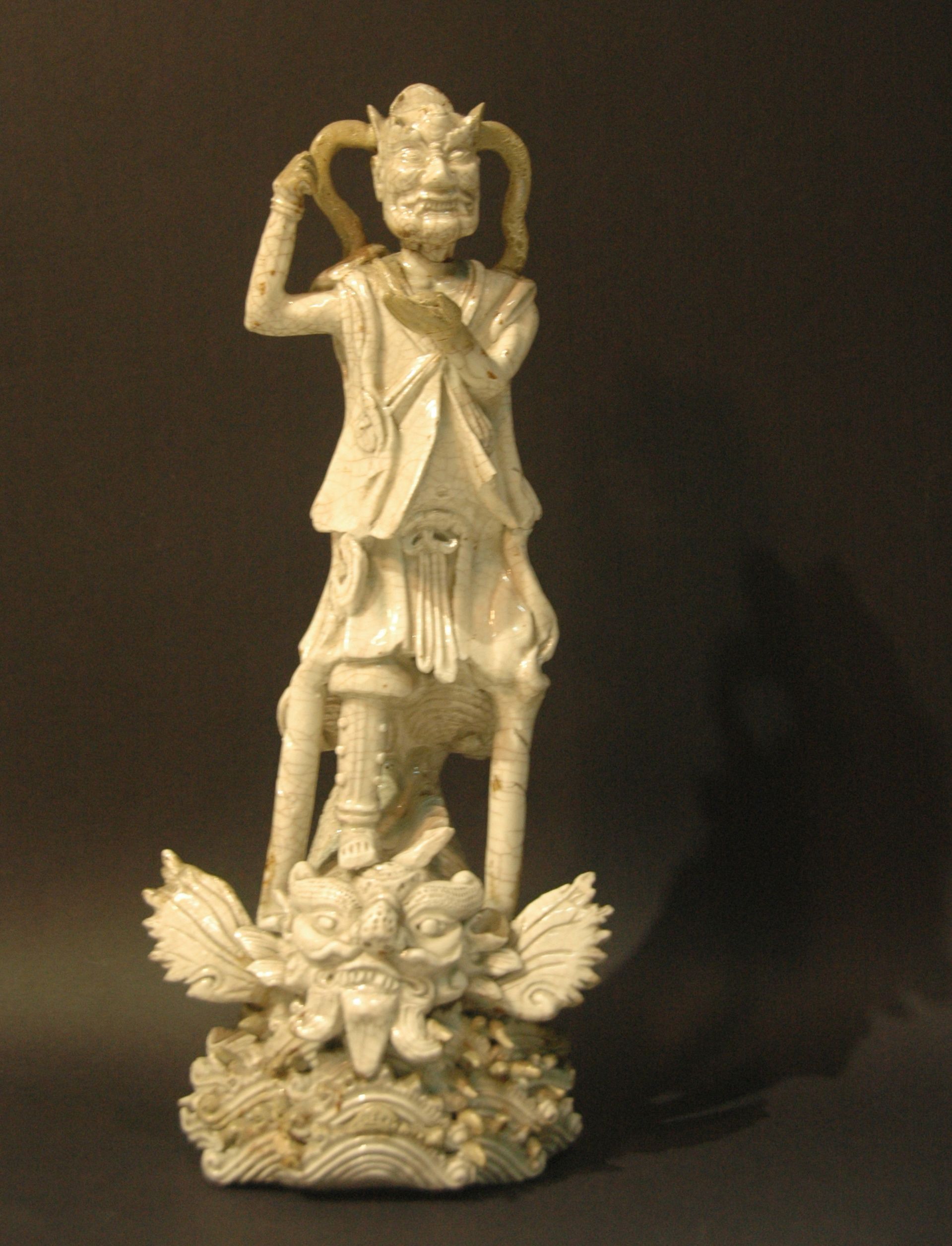
W100xD100xH300mm, China

This is a figurine of Kui Xing, a well respected figure amonst the Confucius intellectuals, he is believed to have the power to control the fate of all literature.  The legend has it that before being a god, Kui Xing was a scholar who took the Zhuang Yuan examination 3 times but failed, it was not because of his intellect but his ugly appearance.   Furious and frustrated, he kicked the box that held his books, jumped into the river and committed suicide … those were the days before we have plastic surgery …  Despite not being recognized officially by the court for his literary skills, his intellect was well acknowledged by the commoners, figurines of him were made for getting his blessing in examinations.  On the figurine he held a brush and ink, he is believed to write down the names of those who will success in the examination.  Under his feet is an Ao fish, a creature with a fish head a dragon body, a step carving outside of the palace where the Zhuang Yuan (the person who came top of the exam) will stand to wait for the emperor’s blessing.

W50mmxD30mmxH70mm, China

In the old days, every morning the ink will be grind on the inkstone.  Water will be added so the ink stick will be dissolved, water is also added during the day to dilute the ink on the stone.  For the ease of controlling the flow water, the water drip was invented.

This water drip of child and carp figurine which would have been made for children; the composition is a traditional one of blessing, carp being resilient and full of vitality which is what every parents would wish for their child.    Also see our earlier entry for a different form of  water drip .

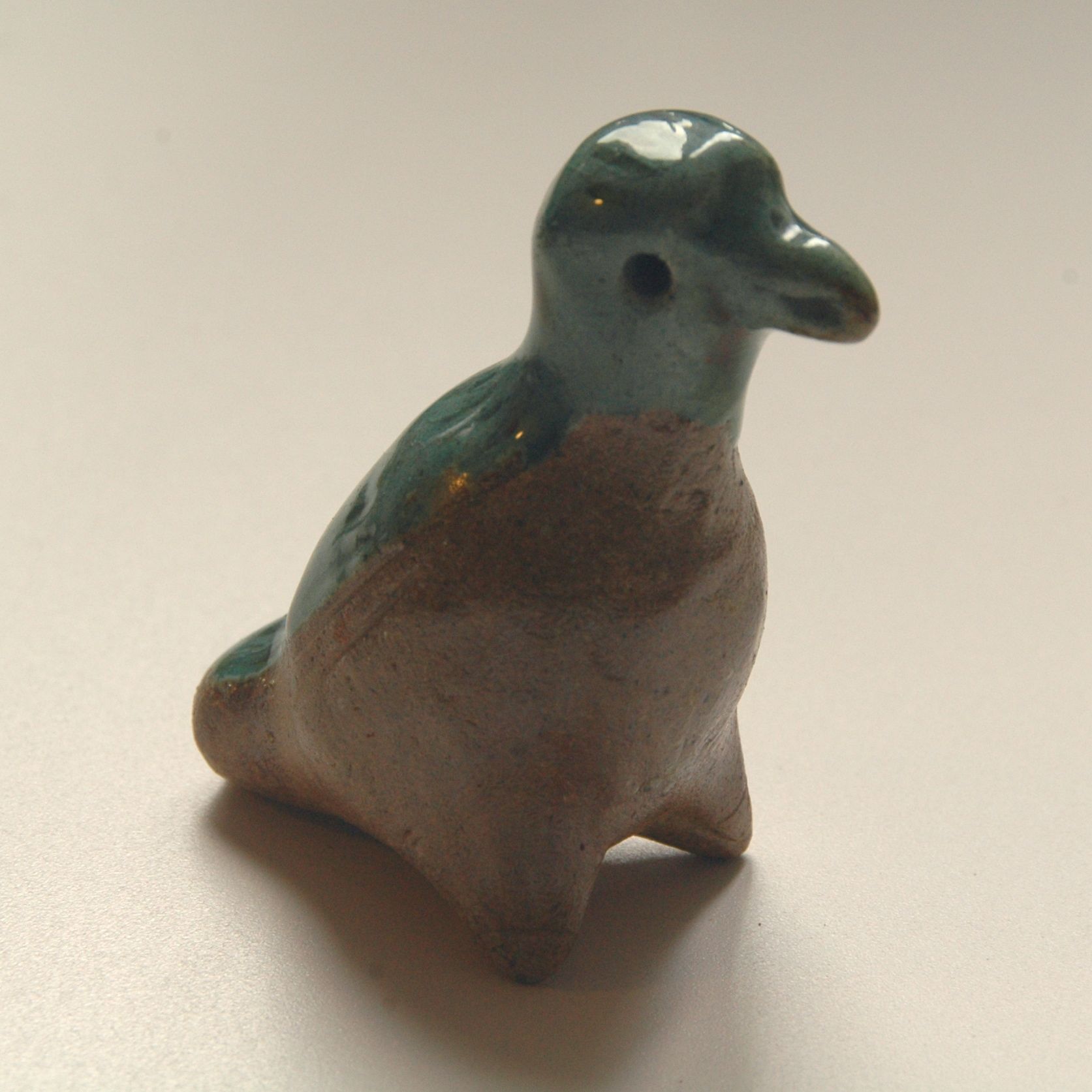
W40xD60xH60mm, China

How can we have a bird feeder without a bird?  This is a pottery bird whistle toy with a beautiful green glaze.

DIA40xH30mm, China

This tiny blue and white porcelain bowl is used for feeding the pet bird, the wooden detail on the side make it able to be attached to the bamboo bird cage (click to see).  The traditional bird feed includes; millet, crushed corn, peanut, sorghum, fruits, sunflower seed, perilla seed, mazi, foxtail millet.

W150xD100xH200mm, China

The Chinese cabbage (Brassica Pekinensis) is a basic vegetable consumed by the whole of China, it is not surprising that it will be come a subject for folkart.  This pottery cabbage is a wall hanging vase.  Chinese cabbage has been documented in Chinese history since the San Guo period (220AD), it became a popular vegetable together with the turnip by 600AD.

W150xD100xH300mm, China

There are numerous gods of wealth in China, mainly there are 3 more popular ones, the Main God of Wealth (Zhao Gong Ming, also known as the Moon God of Wealth), the Intellectual God of Wealth (Fan Li) and the Martial God of Wealth (Guan Yu).  This is a figurine of the Main God of Wealth.

And you might ask why is he has a pet tiger, well actually that is his transportation which he picked up on the way to the war of  Emporer Shang Zhou Wang.
(see the same figure in wood for his legend: God of Wealth)

DIA70xH120-250mm, China

We have a collection of these green glazed oil lamps, in pairs, of different heights.  For the ceramic oil lamp design, the design for these lamps are the most basic.  Its functional, well proportioned and durable (if Muji existed in Qing dynasty China, I suspect their oil lamp will be like these).  They are made on a pottery wheel and glazed with green glaze that has been popular since the Sung dynasty.