Archives for posts with tag: japanese

W280xL360mm, Japan

This is an Ukiyo-e Print published in 1862 of the topic of the Kanda Festival.  Kanda Festival is one of the 3 Shinto Festivals in Japan; it is a festival to celebrate the victory of the battle of  Sekigahara.  The festival is biennial, in years of odd number in the western calendar.  Originally the festival is held on 15th Lunar September, nowadays is held on the closest weekend to 15th May.  On Saturday, there are a parade of floats with 300 people, on Sunday, provinces will bring over 100 small and large portable shrines to the Kanda Myojin.  The Kanda area where the festival takes place is at the heart of tokyo, the uptown area.
W240xL360mm, Japan

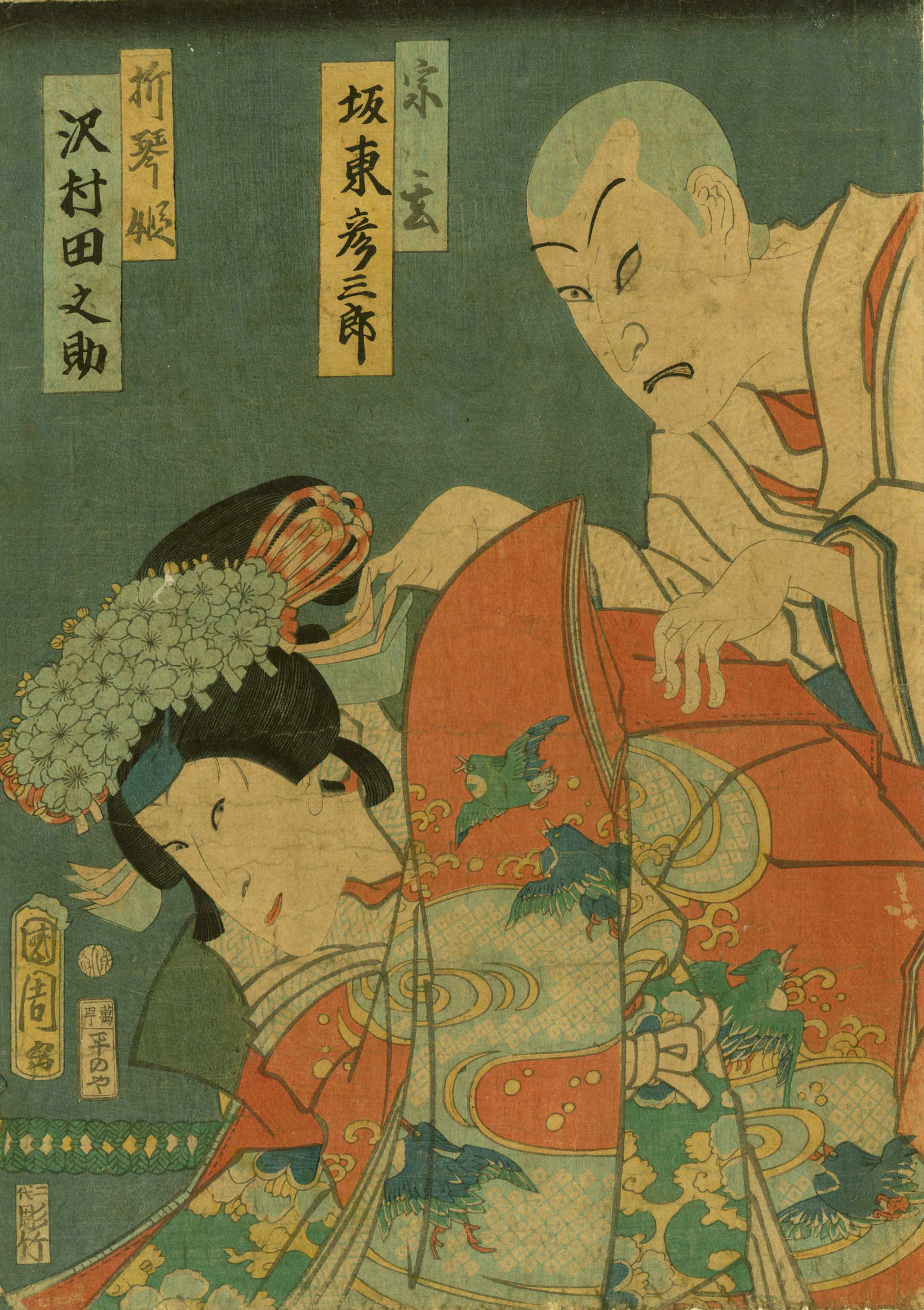
This is a Japanese wood block print by the artist Kunichita, published in 1862 by Hiranoya.  Kunichita was the founder of the Toyohara School and was one of the most famous ukiyo-e artist of his time.  His love with the Kabuki theater led him to work on ukiyo-e actor prints (prints of the kabuki actors and scenes from the popular plays).  In 1867, he was commissioned by the Japanese government to produce 10 pictures for the World Exhibition in Paris.  This exhibition strengthen the Japonism influence in the European art world.

This print is about the Kabuki play where monk Sogen (played by Bando Hikosaburo) became infaturated with the beautiful courtesan Orikotohime (played by Sawamura Tanosuke).  For this Sogen was expelled from the temple, tragically  Orikotohime died and he was left alone.

L1500xH500mm, Japan

This is a carp wind sock for the celebration of the Tango no Sekku festival (the Boy’s festival, now known as the Children’s Day).  The wind sock will be hung on a pole from April to early May.  Typically they will be hung up the roof on a pole from top down; the fukinagashi steamer, the biggest black koinobori (the father), the big red one (the mother), the small blue one (the son), the green, the purple and the orange koinobori (in sequence for the other children in the household).  As carps will swim upstream against all difficulties to achieve their goal, parents hopes their child will do the same to become a great person.

Dia110xH400mm, Japan

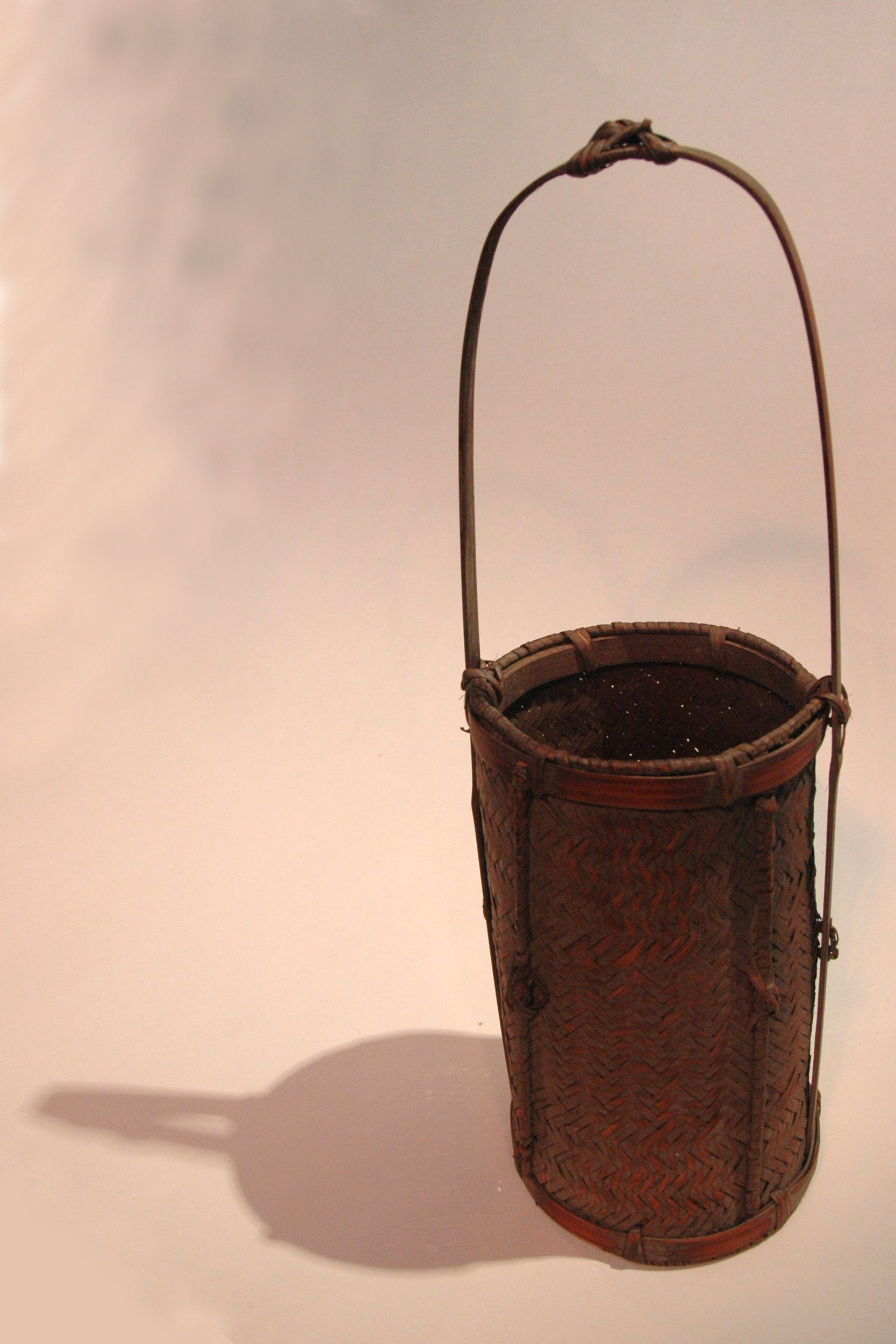
Bamboo as a material has been a very well utilised in Japan (and Asia) such that bamboo weaving became a specialized craft. Bamboo tree of 3-4 years old are cut, boiled to remove the oil and dried under the sun (there colour would turn from green to brown).  The bamboo is first split by a tool known as the Kikuwari (which looks a bit like the fruit cutter) dividing the bamboo stem into equal divisions.  The surface of the bamboo is then scrap off to allow the lacquer or other finishes to absorb.  To make the higo, each of the large section is split into half with the knife from the back side of the bamboo, the strip is peeled and then strip again to the desired width.  Finally, each strip is then rounded off on the 2 sides and the thickness evened, the higo is ready for weaving.  All these steps might sound simple but will take a very experience craftman to produce good quality higo, just for using the kikuwari to split straight down would take at least 3 years of practice.  This is a simple bamboo ikebana basket for Japanese flower decoration.

DIA300XH100mm, Japan

This is a wooden container for the preparation of sumeshi
(rice used for sushi).

  1. Cooked 6 bowls of rice with 100mm of kelp
  2. Prepare the vinegar dressing;
    60cml rice wine vinegar + 40g sugar + 10g salt
  3. Put hot rice in the wooden container and add in vinegar dressing
  4. Use a spatula and mix the rice
    (with some sliding and slipping action)
  5. Use a uchiwa (fan) to cool off the rice
  6. Once cooled, covered and ready for making sushi!

(L)L700xW550mm (S)L370xW260mm, Japan

This is a Japanese fan, uchiwa, it is constructed from a single piece of bamboo.  The bottom part of the bamboo forms the handle while the top part is split into many equal splinters which are splayed out radially to create the frame of the fan, paper is then pasted on top and varnished for water protection.  For the large uchiwa, thick cotton string is used to tie together the bamboo stems to reinforce the fan structure.  The uchiwa are believed to be originated from China, during the Tong dynasty they were introduced to Japan and also became a popular accessories for the aristocracy and ladies.  The pattern on the paper are refined and elaborated.  Apart from daily use for cooling, the uchiwa is also used in ceremonies, dances and gifts.

L100xH100xW50, Japan

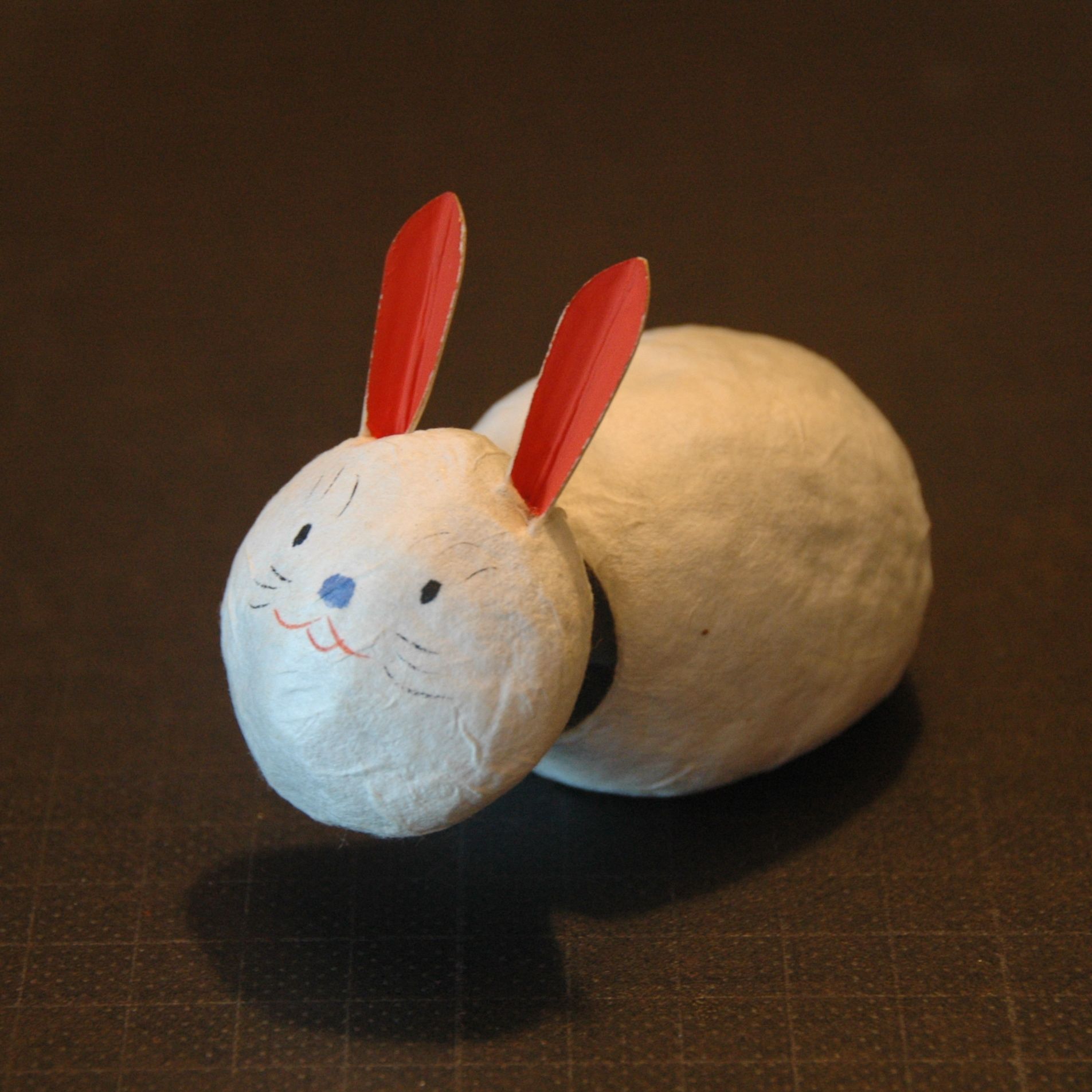
To continue with the moon theme on the day of “moon chasing”, a rabbit is chosen for today’s topic.  In the Japanese folk tale: an old man was at the end of his life, a fox, a monkey and a rabbit came to his aid.  The monkey collected nuts and fruits, the fox catch a fish.  The rabbit could only come up with some grass, so he decided to jumped into the fire and offer his own body.  The old man touched by the rabbit’s act and reveal himself as the Buddha and save the rabbit.  It is believe that the pattern on the moon is casted by the smoke when the rabbit jumped into the fire.  This papier mache is rabbit from the 12 zodiac figures from the Sendai region.  The head of the rabbit is made to swing.