Archives for posts with tag: chinese

yang liu qingL1140xH660mm, China

This Yang Liu Qing print is about the story “Wenji Reurning to Han”.

Wenji, was the daughter of the scholar Cai Yong, equally well learnt she was tributed to have revived some important ancient literature that was lost during the war.  Wenji though has a rather tough life; her first husband Wei passed away and during the war she was kidnapped by the Huns tribe and made to be the queen of the Hun king.  The king treated her well, they had children and soon Wenji though missing home was well settled in Hun.

Meanwhile her father Cai Yong was jailed and died for his support of a declined politician.  The story would have ended here if  emperor Cao Cao has not suddenly missed his friend Cai Yong and thought of his daughter.  Emperor Cao requested for her return to Han, though unwilling the Hun king dared not disobey and reluctantly send the mother of his child home to Han.  Feeling the sorrow as she departed her Hun family, Wenji wrote the poem “Eighteen Stanzas for a Barbarian Reed Leaf Pipe”

Happy to see her, Emperor Cao Cao felt bad that she is all alone and without a family so he arranged for her to be wedded to an official named Dong.  Unfortunately, Dong committed some crime and received a death sentence.  Wenji fearing she will lose yet another husband went to see Cao Cao and begged for his pardon.  Moved by her action, Cao Cao ordered for Dong’s release and chatted with her about her father’s literature.  Wenji told him that all the 4000 odd books were destroyed during the war but she could still recite 400 out of the 4000. Cao Cao was excited to record the lost literature and Wenji wrote them down word for word.

Click here to see our other Yang Liu Qing prints.

embroidery

DIA190mm, China

This embroidery is taken from a traditional Chinese under garment, the du dou, a garment that is made by the mother for the child as an extension of love and blessing.  The design of this embroidery showed the well wishes of the mother, the hope that her child would become a zhuang yuan, the scholar who came first in the official examination.  Since the Siu dynasty, the imperial court has set up a system of examination to find the best scholar to take up an imperial post.  This is perhaps the only way to promote one’s status in a hereditary society.

In the embroidery, there is the zhuang yuan holding a bamboo while stepping on head of the Ao fish.  獨占鰲頭, occupying the head of the so fish alone, is a symbol of being the zhuang yuan for during the ceremony with the emperor the zhuang yuan will be standing on the head of a stone carving of the ao fish.

national day

DIA200xH80mm, China

Have a great day!

Spike is rejoicing for the cancellation of this year’s firework celebration.
Rooaf Rooaf!

stirpes

Textile Width 450mm, China

Fancy a striped shirt made with hand woven cloth?

Before that some stripes illusion.

umbrella

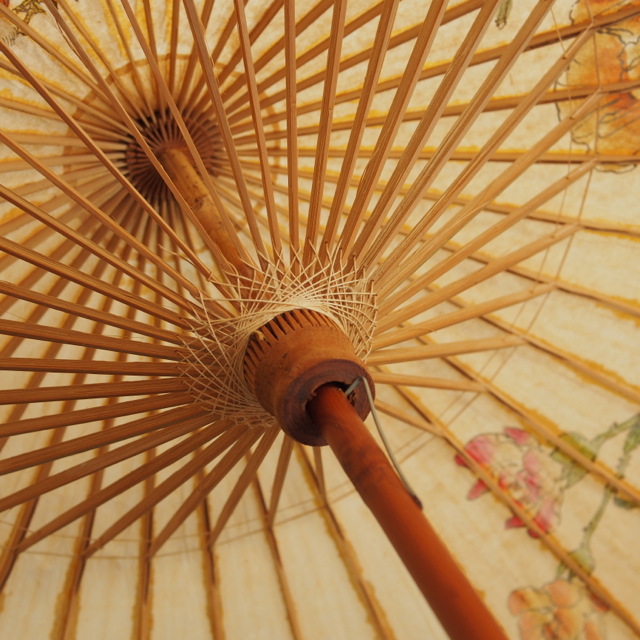
DIA990xH650mm, China

Typhoon Usagi just departed and its raining cats and dogs but this umbrella is probably too delicate to embrace the serve weather – a paper umbrella!

The paper is made from mulberry tissue paper coated with tung oil (oil extracted from the fruit of tung tree, Aluerites fordii Hemsi).  The structure is made delicately with bamboo.  These umbrellas are very durable, I had a plain dark blue one which lasted through my teen years.

OLYMPUS DIGITAL CAMERA OLYMPUS DIGITAL CAMERA

brush standW70xD50xH20mm, China

Continuing with the stationary items, this ceramic ware is a brush holder.  A holder for the small brush, unlike the previous brush rests where they are lay horizontally, the brush here are inserted into the small holes and left standing.  The small container is for keeping a bit of water in case the brush has gotten a bit dried.  This kind of brush stand are usually used by the people who are writing all the time, e.g. the doctor, the pawn shop owner, the restaurant manager etc.

bone knifeL240xW8xD15mm, China

There are pen knives and there are paper knives.  Long before the arrival of the computer and the internet, they have both lost their original function.

When we think of pen knife, the image of the Swiss army knife comes to mind (an object of desire in my youth).  However, pen knife was first designated for the use of sharping the nib of quill pens, hence – pen knife.  As for paper knife, there is the image of a sophisticated letter opener (remember the days when one would spend weekends and evenings writing letters?), well paper knife was actually used for cutting open the pages of books that were folded for printing and its edges left uncut.  (this pleaseure of cutting and turning an unseen page cannot even be met with a kindle).

arm rest

W50xL180xH50mm, China

Any guess of what this piece of bamboo is for?

You probably have one of those ergonomic mouse pad with a gel support at the wrist?  Well, this is the traditional waist rest for Chinese calligraphy, not only does it support the arm, it also prevents the ink from rubbing onto the sleeves and the perspiration of the hand from making the paper moist.  This member of the stationary is called a “Bi Ge”, arm rest.  The name “Bi Ge” apparently came from the imperial chamber for secret books, also pronounced as “Bi Ge”.

Now for the second surprise, the material of this Bi Ge is not bamboo but ceramic!

tin toy


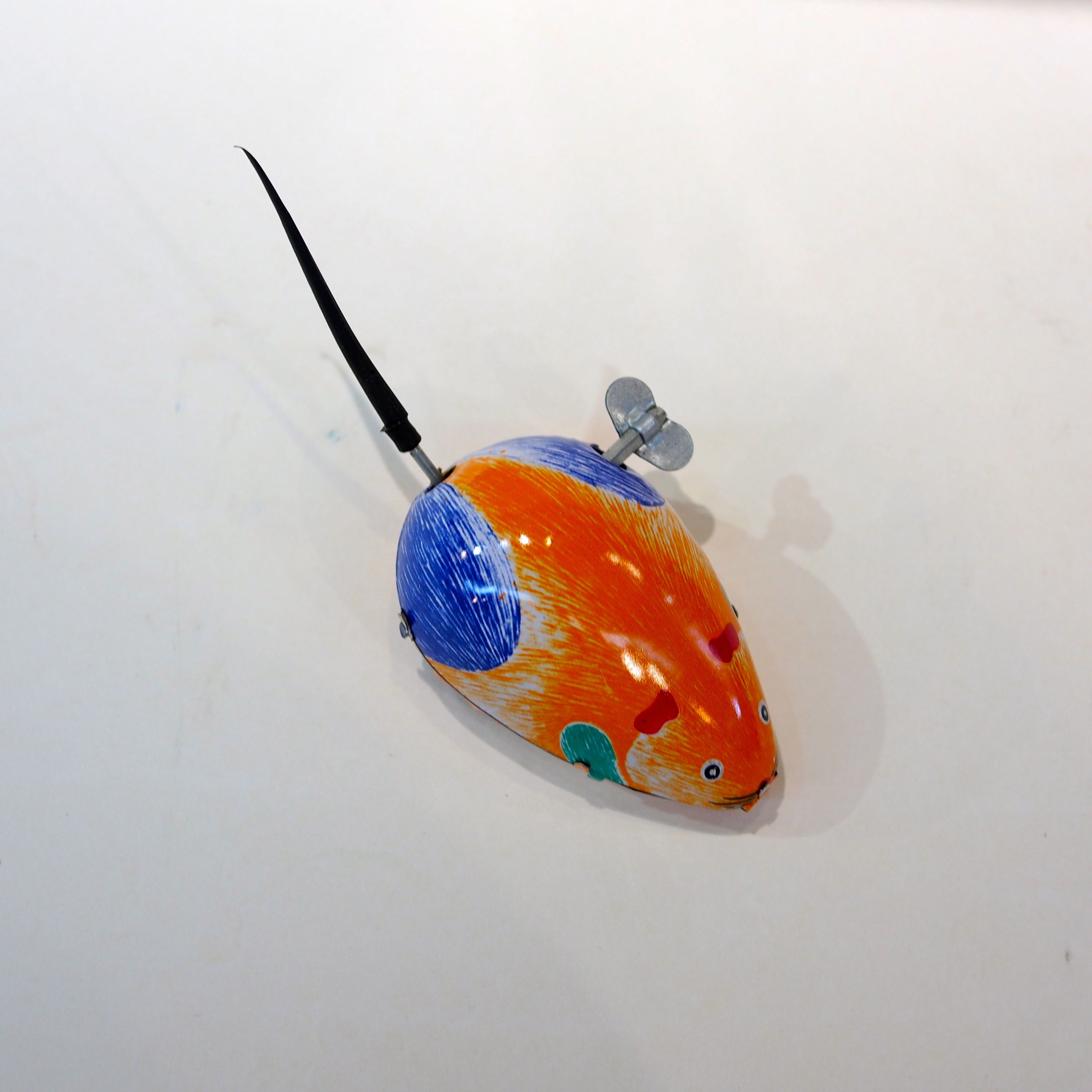
W50xL130xH40mm, China

An orange mouse that has probably had a feast of carrots.

To see our other tin toys, click here.

charcoal basketDIA230xH120mm, China

This bamboo weaved basket is known as a Wu Fu, a basket for storing charcoal for brewing tea.  It use can be dated back to the “Book of Tea” by the Tang Dynasty scholar Gu yuan Qing.  The name Wu Fu is sophisticated way of refer to the charcoal basket, the word “wu” means black, dirt – which is the charcoal, the word “fu” is a grand mansion – the humble basket.