Not only it this a yearly event when the birds come to party and feast when the plum blossom, it also has a symbolic meaning. A play on the phase 喜上眉梢 (xi shang mei shao), one is so happy that joy is expressed when in the eye brow. You might wonder what a facial express has to do with plum blossom and bird. The bird is 喜鵲 pica pica (magpie), its climbing on the plum branch 喜上梅梢 (xi shang mei que) has the same pronunciation has this uncontrollable joy.
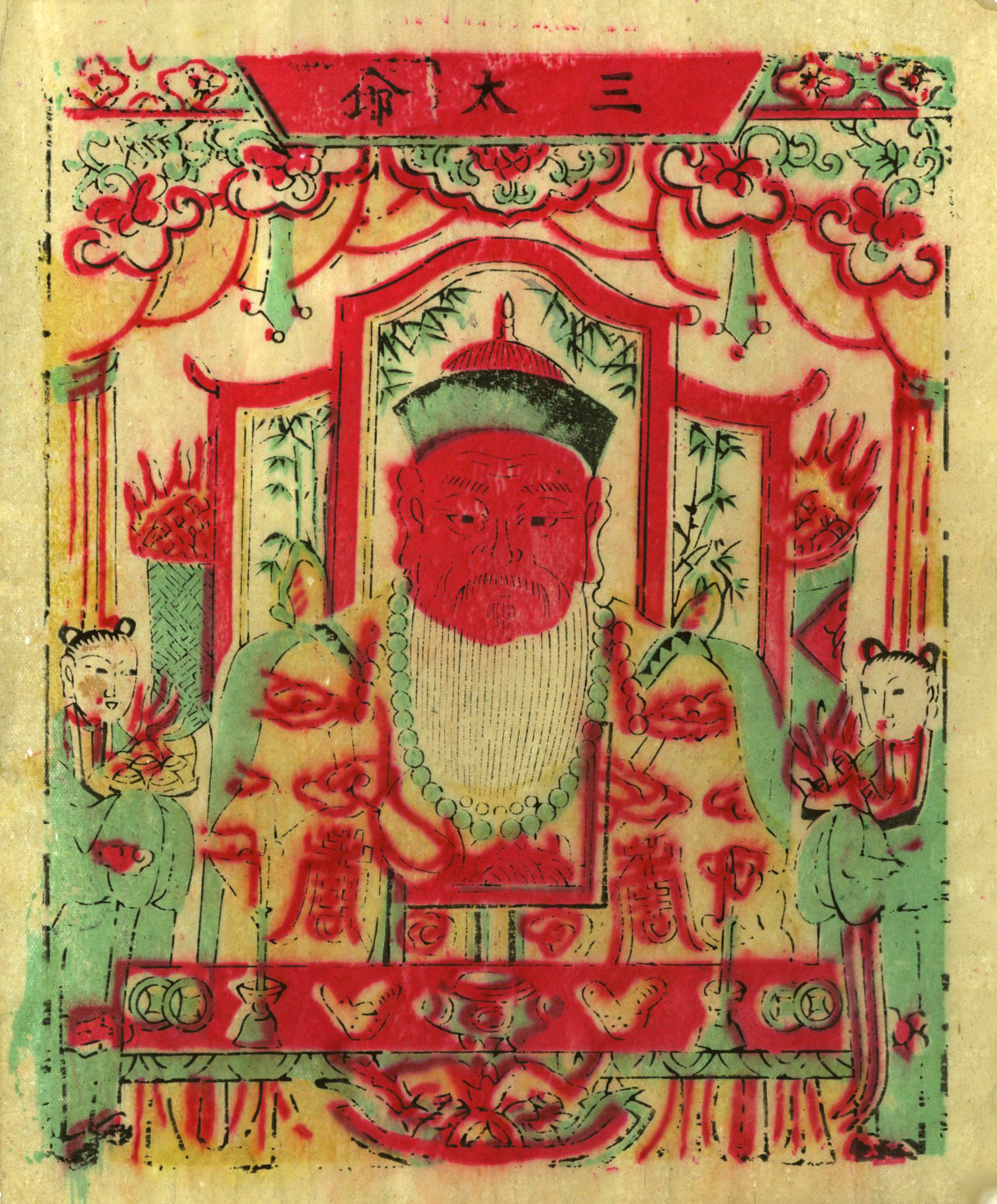
This is a new year print of (Hu) San Tai Yi 胡三太爷, one of the home protectors worshiped in the villages in the North East China. The most famous ones are saint Hu (胡) and Huang (黄), both Hu and Huang is a common Chinese surname, it is however referring to two animals the fox (狐狸) “Hu Li” and the weasel (黄鼬) “Huang You”. Out of respect, their real identity is disguised and humanized. San Tai Yi, is the most powerful home protector, he is the brother of the legendary Nine Tails Fox Goddess who helped Yu the Great to calm the floods in prehistoric China (2200BC).
During rutting period, the stag will roar to both attract the females and to keep his harem of females together.
In Shi Jing (The Classic Book of Poetry), the cries of the deer is expressed as relaxed and natural atmosphere.
呦呦鹿鸣,食野之苹。
我有嘉宾,鼓瑟吹笙。
吹笙鼓簧,承筐是将。
人之好我,示我周行。
呦呦鹿鸣,食野之蒿。
我有嘉宾,德音孔昭。
视民不恌,君子是则是效。
我有旨酒,嘉宾式燕以敖。
呦呦鹿鸣,食野之芩。
我有嘉宾,鼓瑟鼓琴。
鼓瑟鼓琴,和乐且湛。
我有旨酒,以燕乐嘉宾之心。
With pleased sounds the deer call to one another,
Eating the celery of the fields.
I have here admirable guests;
The lutes are struck, and the organ is blown;
The organ is blown till its tongues are all moving.
The baskets of offerings are presented to them.
The men lovews me,
ANd will show me the perfect path.
With pleased sound the deer call to one another,
Eating the southernwood of the fields.
I have here admirable guests;
Whose virtuous fame is grandly brilliant.
They show the people not to be mean;
The officers have in them a pattern and model.
I have good wine,
Which my admirable guests drink, enjoying themselves.
With pleased sounds the deer call to one another,
Eating the salsola of the fields.
I have here admirable guests;
For whom are struck the lutes, large and small.
THe lutes, large and small, are struck,
And our harmonious joy is long continued.
I have good wine,
To feast and make glad the hearts of my admirable guest.
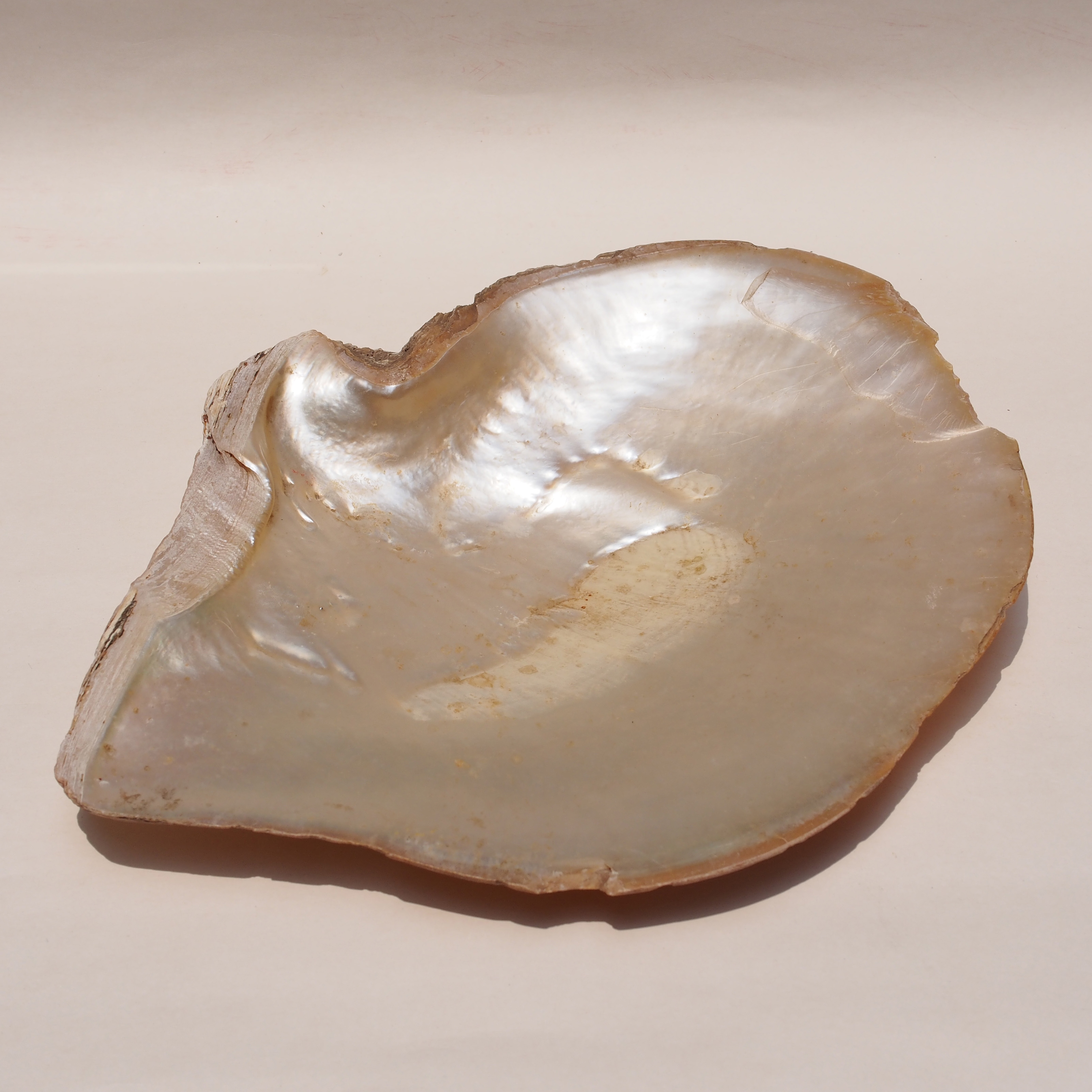
A large Chinese river clam which belongs to the Lamellibranchia family. Some of species of the clams are able to produce pearls, there are stories of these clams being able to light up the lake (possibly at the time when there was no artificial light and a full moon, some of the light could possibly been reflected on the pearl in the shallow part of the lake). Whether these stories were true or not it certainly get my imagination going.
For the oversize aged creatures, trees, turtle, foxes, etc., there are myths of them becoming monsters and goblins. Here is the story about what goes on in the palace of the sea, with the appearance of the lobster, clam, cochlear, turtle goblins … Perhaps this slightly oversize shell contained a goblin to be over 100 year ago.
This is fine piece of embroidery on silk.
A corner is trimmed back on this perfect square, a minimal cutting for the costume.
A Du Dou, a traditional undergarment.
The curve is placed on the collar with a string tied around the neck, strings from the two diagonal corners tied around the body.
Chrysanthemum and peony flowers are the theme of the embroidery, symbolizing happiness and wealth.
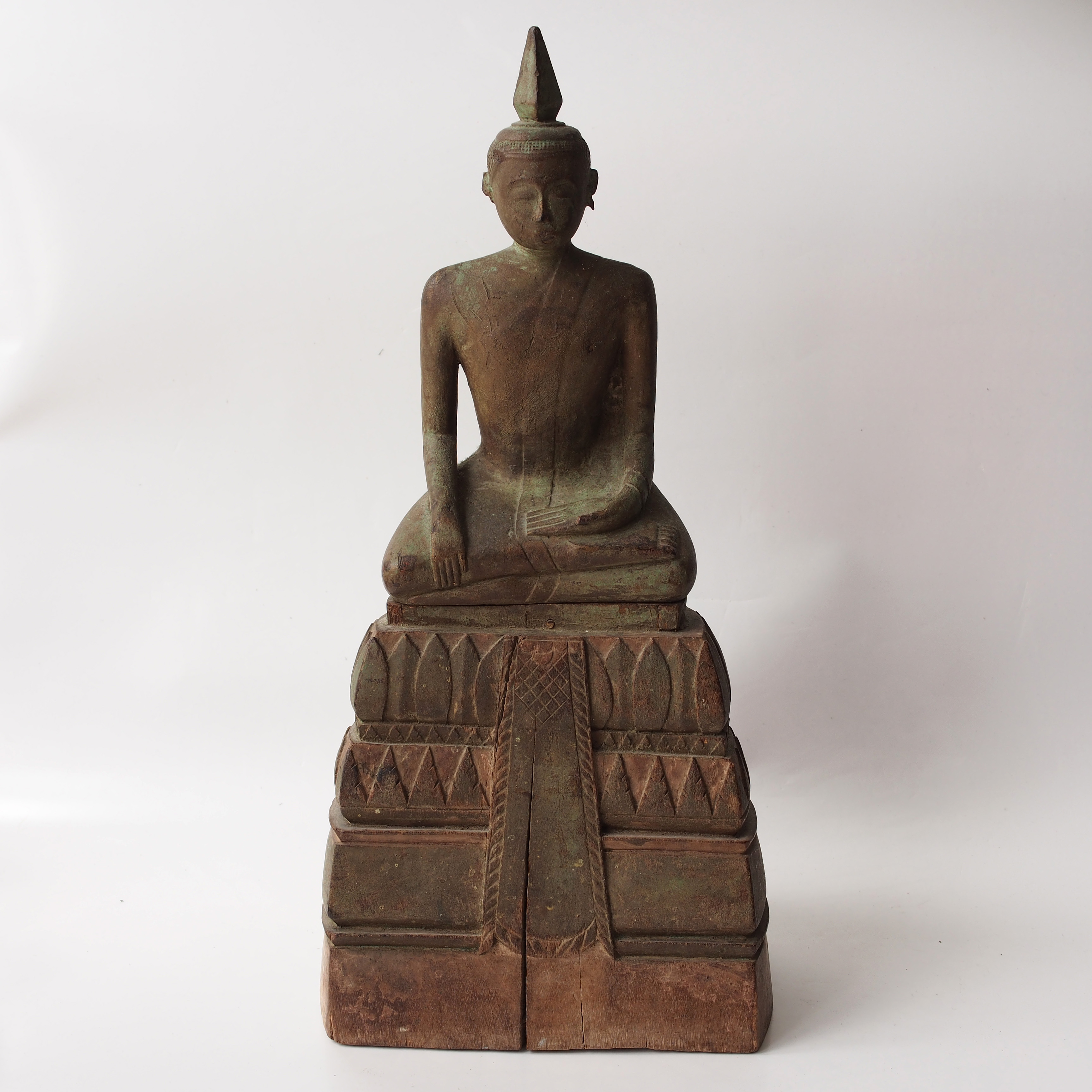
Today is the Buddha’s birthday, Vesak. A holy day for the Buddhist, commemorating the birth, enlightenment and death of the Buddha (Siddhartha Gautama). Because of the lunar calendar and varies customs, the date of celebration varies in different countries. For the Chinese Buddhist, the celebration falls on the 8th day of lunar April. You might still be able to catch the celebration in other parts of the world.
More than 2500 year ago, the Buddha was born. His wisdom guides the Buddhists away from the hinders of this world.
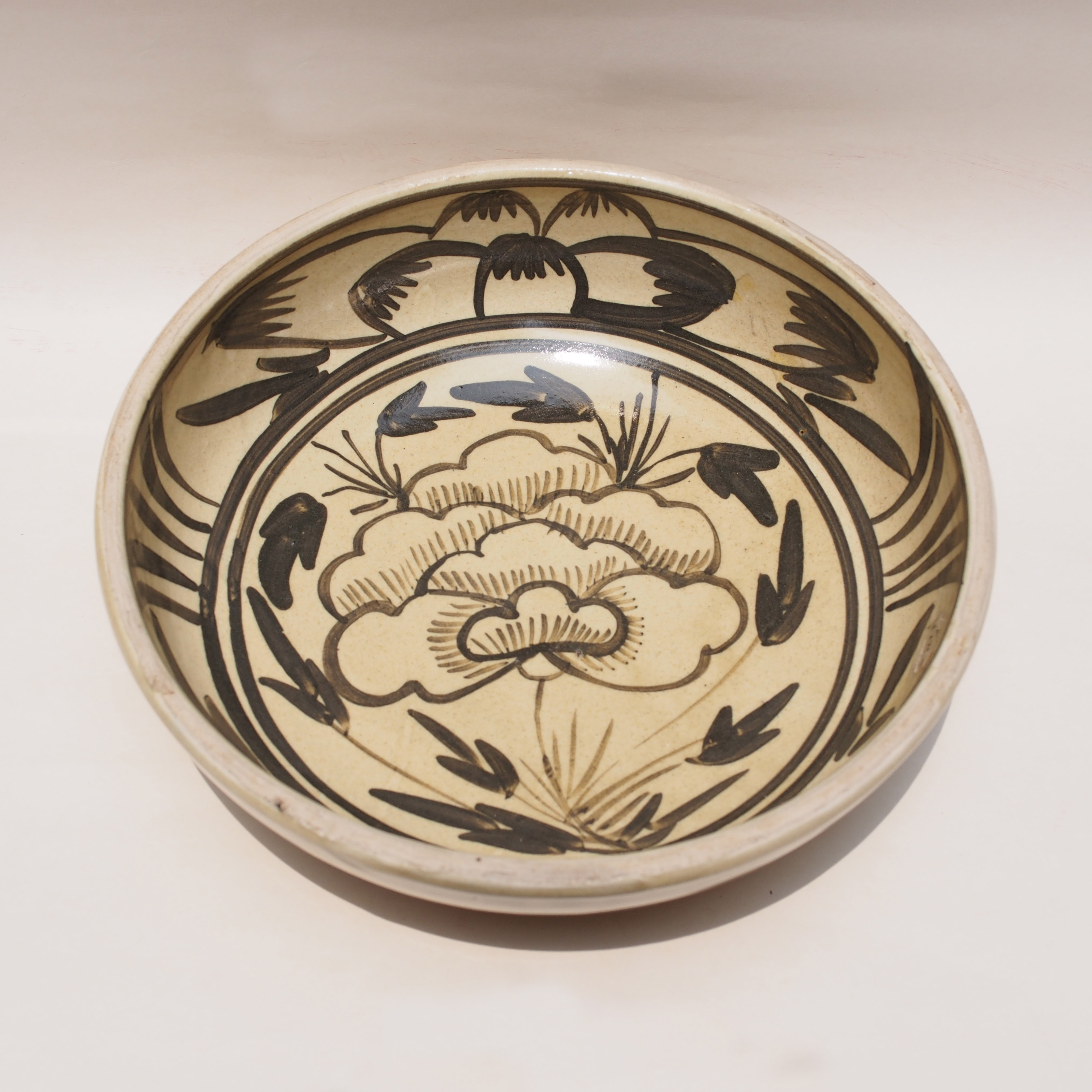
We are used to seeing blue and white porcelain, the black and white pottery is equally famous, dated back to the Sung dynasty. Originated from Ci Zhou, He Bei (north eastern China), at the end of Sung dynasty, to escape from the war in the north, artisan and craftsman moved to the south and brought along the technique with them. Ci Zhou pottery is not only rooted in Ci Zhou but Ji Zhou in the south.
Unlike blue and white porcelain, the white background of hte Ci Zhou ware is made by coating the pottery with a white slip. In this particular item, under glaze is then painted after bisque firing and coated with transparent glazing. In some Ci Zhou ware the idea of the slip is push to the extreme where strokes and carving comes into play.
This golden wood carving makes a perfect birthday present.
The four figurines are full of blessing, Fu Lu Shou and Ma Gu. They are all Taoist saints, representing blessings and happiness.
Fu (far right) – the planet Jupiter which was also attributed to Yang Cheng of the West Han period. Yang, after being nominated to be the Daozhou official, abolished the practice of present contribution to the Emperor, relieving the stain for the people and therefore seen as a blessing.
Lu (left of Fu) – god of prosperity. The stars Ursa Majoris humanized as Zhang Xian of the Shu dynasty, a brave general who was respected by the Emperor and worshiped by the people.
Shou (left of Lu) – god of longevity. The stars of Canopus, translated as Peng Zu who is believed to have livd to an age of 767!!
Lady (at the far left) is Ma Gu, goddess of longevity – with the appearance still being in her teens, she has witnessed 3 times the sea turned into fields (judging its not from any dramatic climatic changes, she has been around for a long long time). Her immortality and her yearly birthday tribute to the Queen Mother of the West is seen as a blessing and so Ma Gu is a popular subject for pritns, figurines, embroidery and alike.
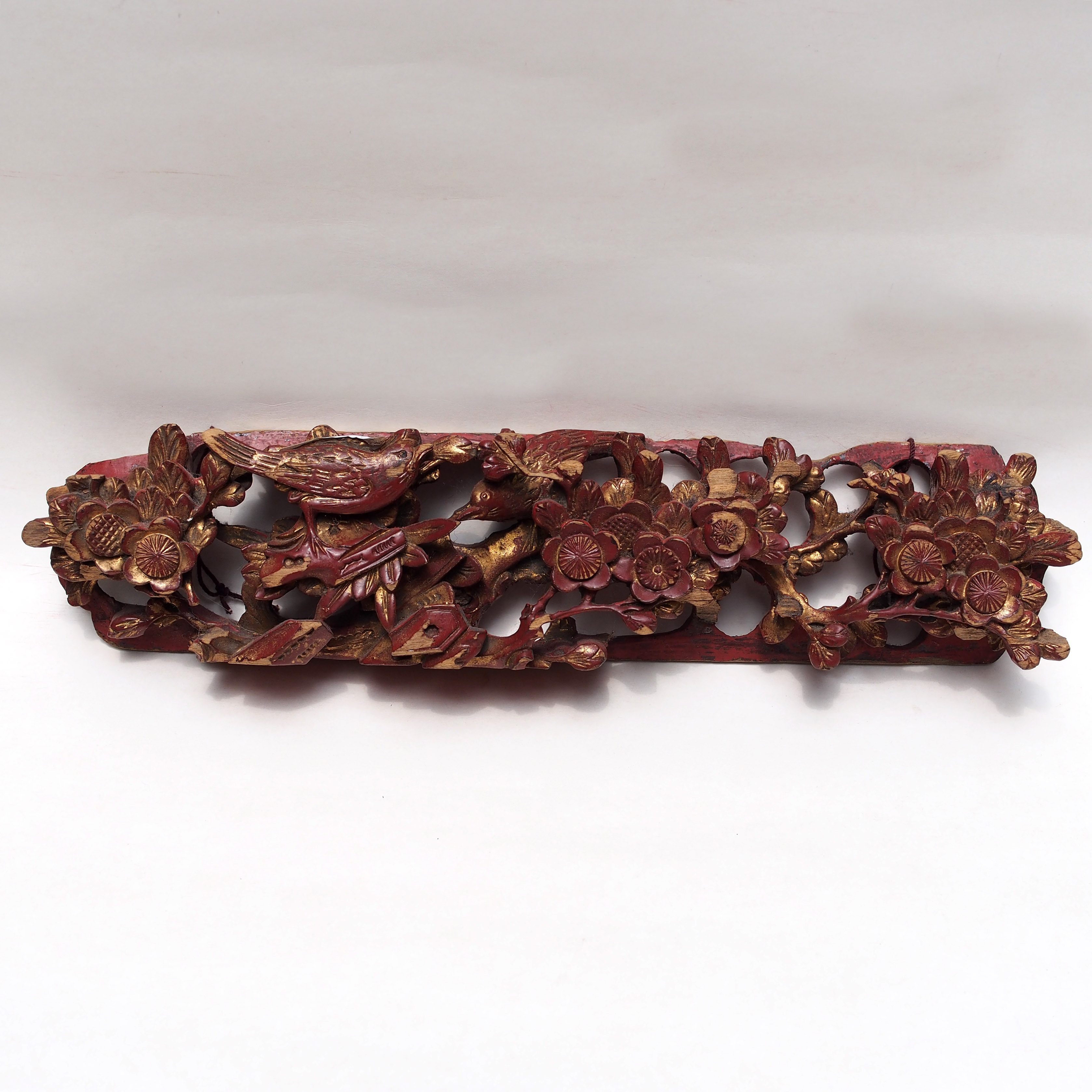 L300xD45xH65mm, China






 Mountain Folkcraft