Archives for posts with tag: bowl

bowl

bowlDIA120xH50mm, China

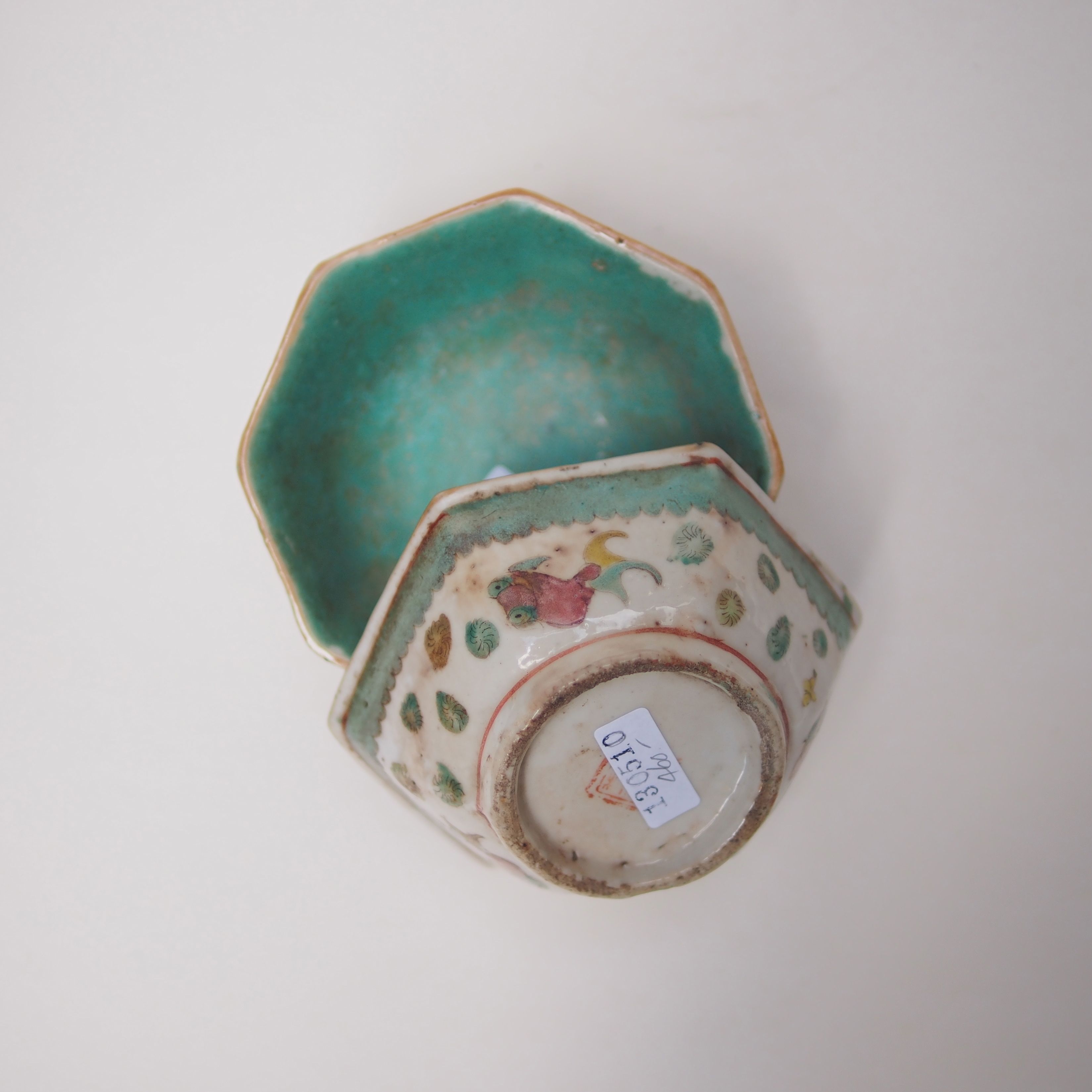
This pair of octagonal bowls are decorated with goldfish, a traditional blessing symbol.  Gold 金 (Jin) Fish 魚 (Yu), the word “fish” shares the same pronunciation with the word surplus 餘 (Yu).  A lot of chinese decoration symbols follow the play of homophone, these might all be a bit superstitious and arbitrary but in the days of old rural China when  life is hard, these kind of blessing is an expression hope for a better life.  Even in today’s world, these kind of subtle tradition carries on e.g. in Hong Kong, an Empty 空(Hung) Residence 宅 (Zaak) would be call a Blessed 吉(Ji) Residence, as the word “emtpy” 空(Hung) has the same pronunciation as 兇 (Hung) – a murder house.  Changing a word that make no sense to the original meaning just for the sake of avoiding a bad homophone.

Anyway, ain’t these goldfish the cutest?!

bowlDIA125xH60mm, China

This bowl bring back a lot of childhood memory for me, I remember it containing this delicious red bean paste desert.

In the old days, these type of bowls are used by the hawker street stalls, “dai pai dong”, which has long been replaced by plastic bowls.  Tung Po, my favorite place, is probably the only dai pai dong that still using similar bowls.  The use of the bowls are not more sophisticated, they are chilled and beer is served for drinking challenges.

bowlbowlDIA120xH50mm, China

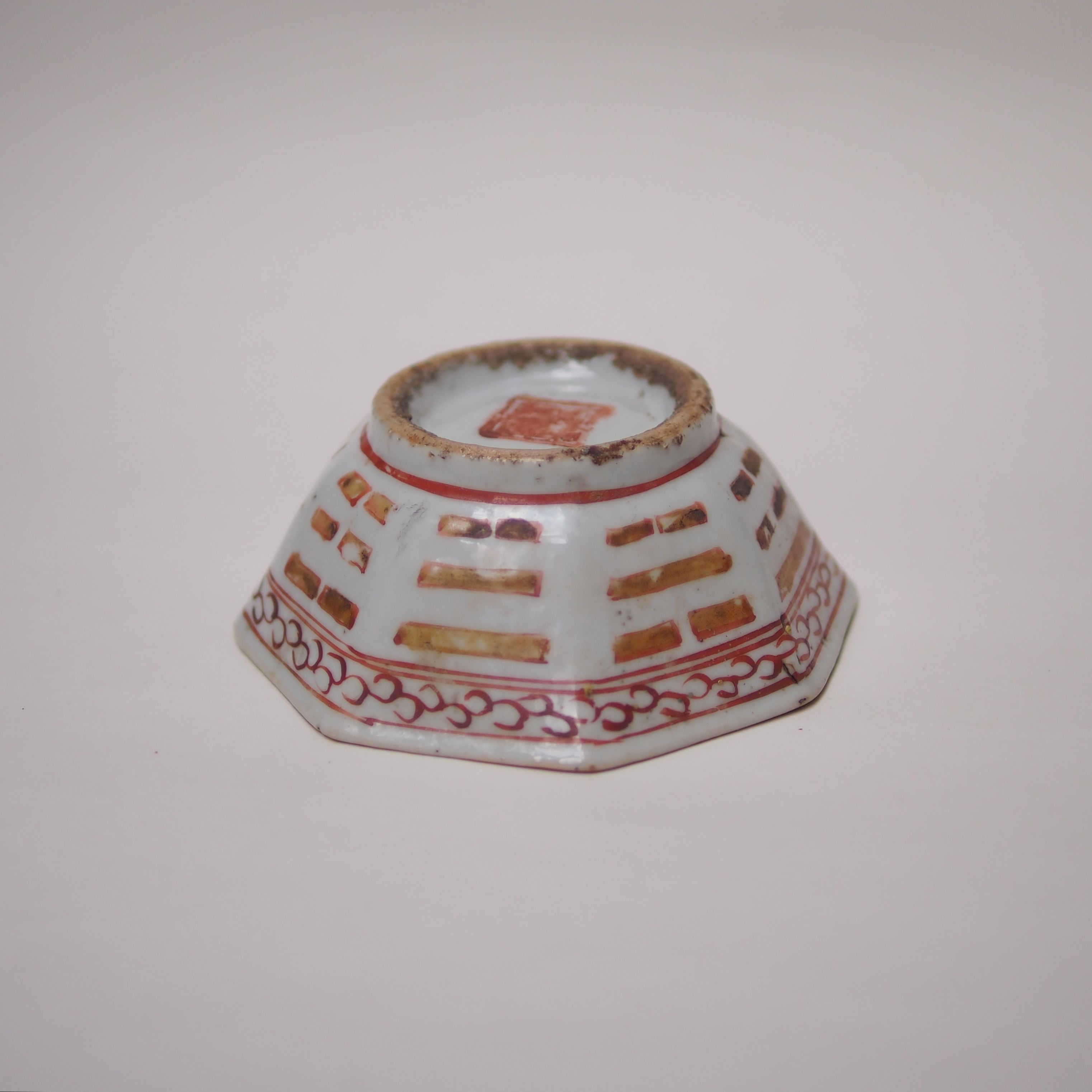
This pottery bowl was used as a container for Taoist offering.   The horizontal line pattern on the bowl are trigram figures from the I Ching, on each face of the octagon bowl are the pattern; 乾 Qian, 兑 Dui, 离 Li, 震 Zhen, 巽 Xun, 坎 Kan, 艮 Gen, 坤 Kun.  These 8 trigrams correspond to 8 nature phenomenon, namely, Sky, Lake, Fire, Thunder, Wind, Water, Mountain, Earth.  From the 8 trigrams found by Fu Hsi, 64 hexagrams was developed capturing more natural phenomenon and human events,it was later used for prediction of events.  From the Yuan dynasty, trigrams pattern were introduced to ceramic decoration and flourished in the Ming dynasty.

horse hair bowlDIA130xH90mm, Myanmar

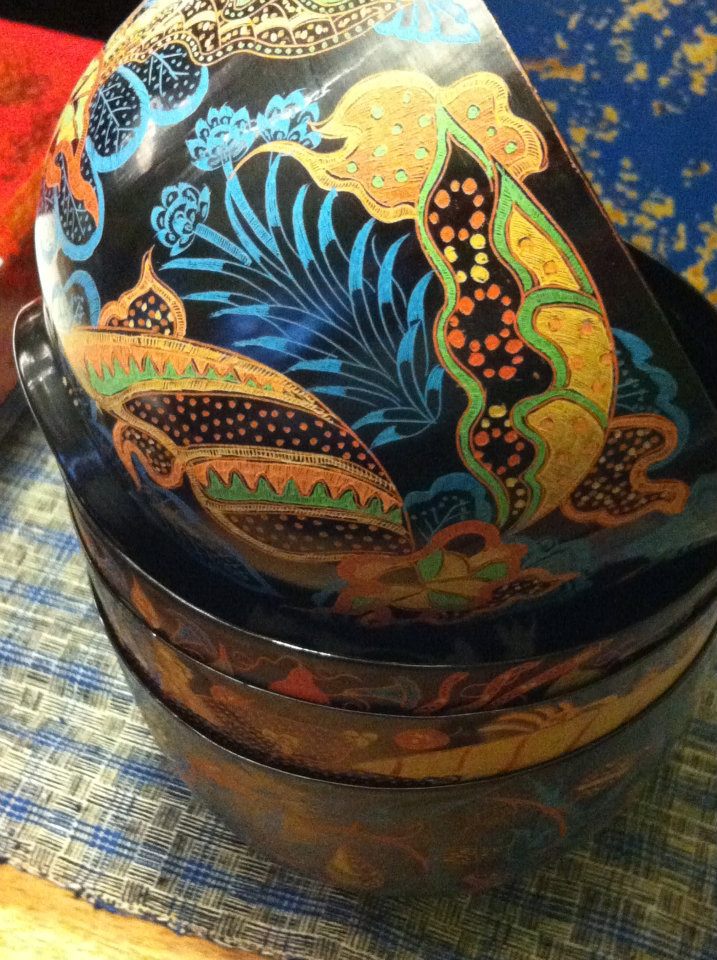
Veronica Gritsenko is a British-Ukrainian artist and scholar. In 2000 she set up the Black Elephant studio in Bagan, Burma and eventually developed her own unique technique and designs based on ancient methods and materials.  Black Elephant Lacquer is collected by private connoisseurs and was acquired by the British Museum and The Royal Botanic Gardens Museum.

These bowls are made with horsehair woven in between very thin bamboo splints, with further application of lacquer mixed with rice husk ashes.  Burma is famous for a special type of incised lacquerware called “yun” – It’s engraved with a sharp iron stylus and the incisions are filled with colouring matter to create a design.

Item from SOIL for the ASIAN FOLKCRAFT COLLECTION

DIA75 x H50mm, China

This item selected by Furze for the Something Old Something New exhibition and is available at both Mountain Folkcraft and Soil.

These pair of cups has a brown glazing (known as the soy sauce glaze) and internally a hand painted blue and white porcelain goldfish pattern.  The goldfish pattern is a traditional Chinese pottery decoration; the word goldfish (金魚) and the word gold & jade (金玉) are heterographs (same pronunciation, but different meaning and spelling), a bowl full of golden fish is hence a house of wealth.

And here is the ultimate goldfish in a bowl by Riusuke Fukahori

DIA 140xH65mm, Hong Kong

This bowl is an example of the traditional mass production of craft which is still 100% handmade.  Notice the ring at the bottom of the bowl?  That it is unglazed?  It is not part of the pattern of the bowl but a feature of the production of the bowl itself – stack firing.

If you turn a bowl over, you will notice that the bottom of the plinth is a bit rougher, that it hasn’t got any glazing.  This is because if the glaze is there, under the heat of the kiln it would melt and cause the work to stick to the kiln board, that’s why the potter would carefully clean off any glaze.  Normally when firing each item would be placed on a kiln board and at some distance apart from other works.  In the Qin dynasty (220BC), demand for pottery is high, stack firing becomes popular in the common kiln.  The bowls would be stacked on top of each other (like how the bowls are arranged  in your kitchen cabinets), about 10 pieces tall.  To prevent the glazing on the bowl sticking together the glazing on the inside of the bowl (where the plinth of the upper bowl is touching) is removed,  hence the unglazed ring.  This would yield a lot more work in a single firing – tradition mass production.

This item selected by Furze for the Something Old Something New exhibition and is available at both Mountain Folkcraft and Soil.

L210xD130xH60mm, China

This is a celadon daffodil bowl, yes celadon is not limited to the pale jade green glaze, it also can be white, grey, blue or yellow.  The cracks on the bowl are only on the glazing itself and has no impact to the bowl, this characteristic is known as crackle glaze.  This effect for the randomness which mimic nature has been appreciated by the Chinese since the Sung dynasty.  However, this texture started off as a defect in the firing process; the clay and the glaze having a different expansion ratio.  This crackle style is known as “a hundred broken pieces”.

For more about daffodil, click on Blue Glazed Narcissus Bowl.

L210xD140xH100, China

Narcissus, daffodil, is a very popular plant in China especially for the Chinese New Year.  So popular that there is a special container for its presentation.  A month before Chinese New Year, one would find daffodil bulbs for sale in the market.  The bulb would be placed inside the bowl, secured by pebbles and 2/3 of it cover with water.  Up till the days before flowering, the water would be replaced daily, when it started to flower every 3 days.  When the shoots started to appear, locate the bowl to a sunny but cool place.  As daffodil is part of the New Year decoration, it is almost essential that it is blooming with flowers on New Year’s day, this normally takes 25 days at 20C, if lacks behind a bit of warm water on New Year’s eve would normally do the trick.   And if all fails, one can always pay a bit more for the perfectly planted daffodil at the flower market.

DIA280xH150mm, China

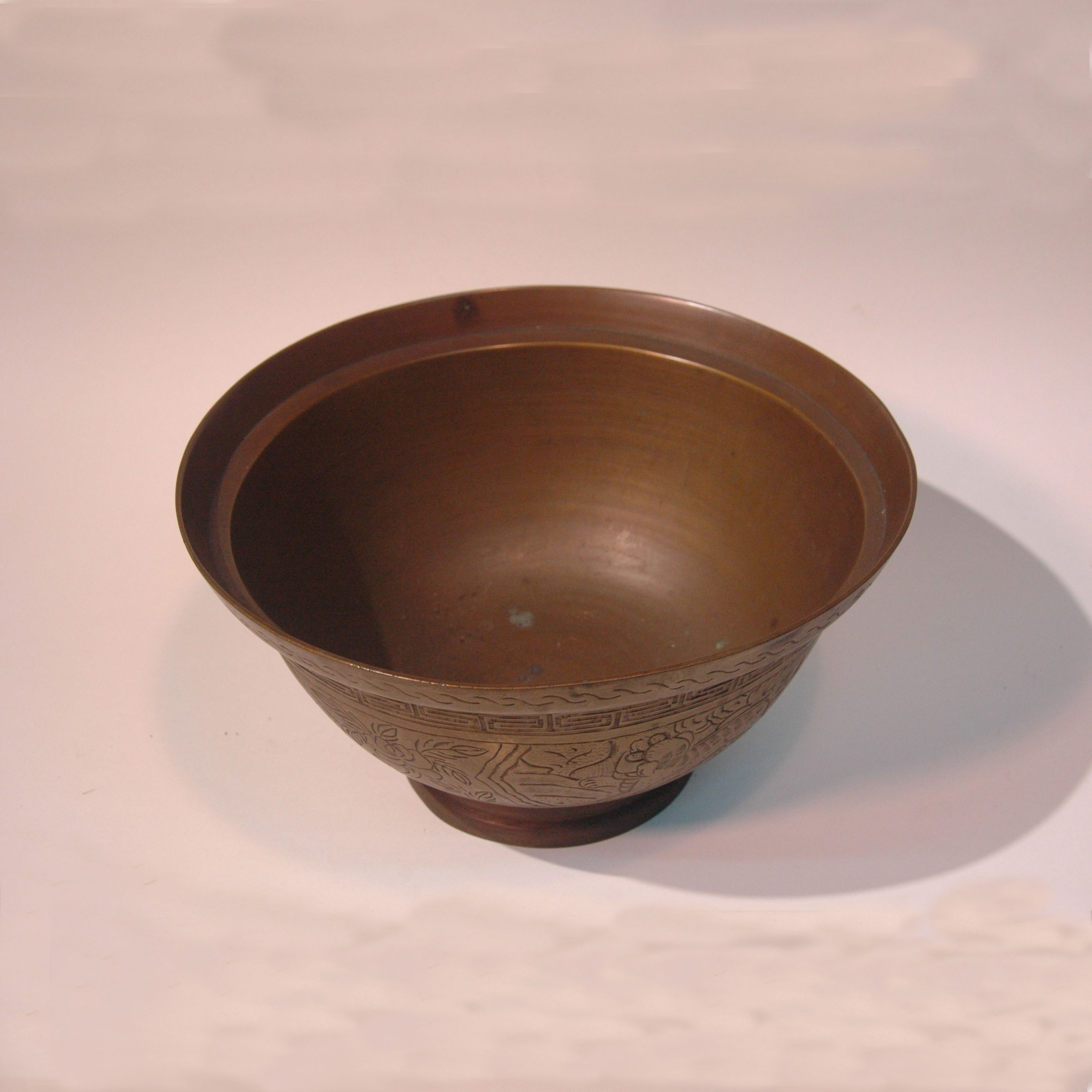
This bronze bowl is engraved with pattern of flowers and the blessed kirin; the art of bronze engraving was first founded in the Spring and Autumn period (722-476BC), it was then used to document important events and notables.  The craft of bronze engraving is most popular in Beijing where all the famous engravers reside,  these craftmen are also known for their calligraphy and seal engravings.

Just found out from goggling about bronze bowl that bronze is suppose to help with curing vitiligo, hmm, wonder if i should bring the bowl back and give it a try.  Will keep you updated on the progress.