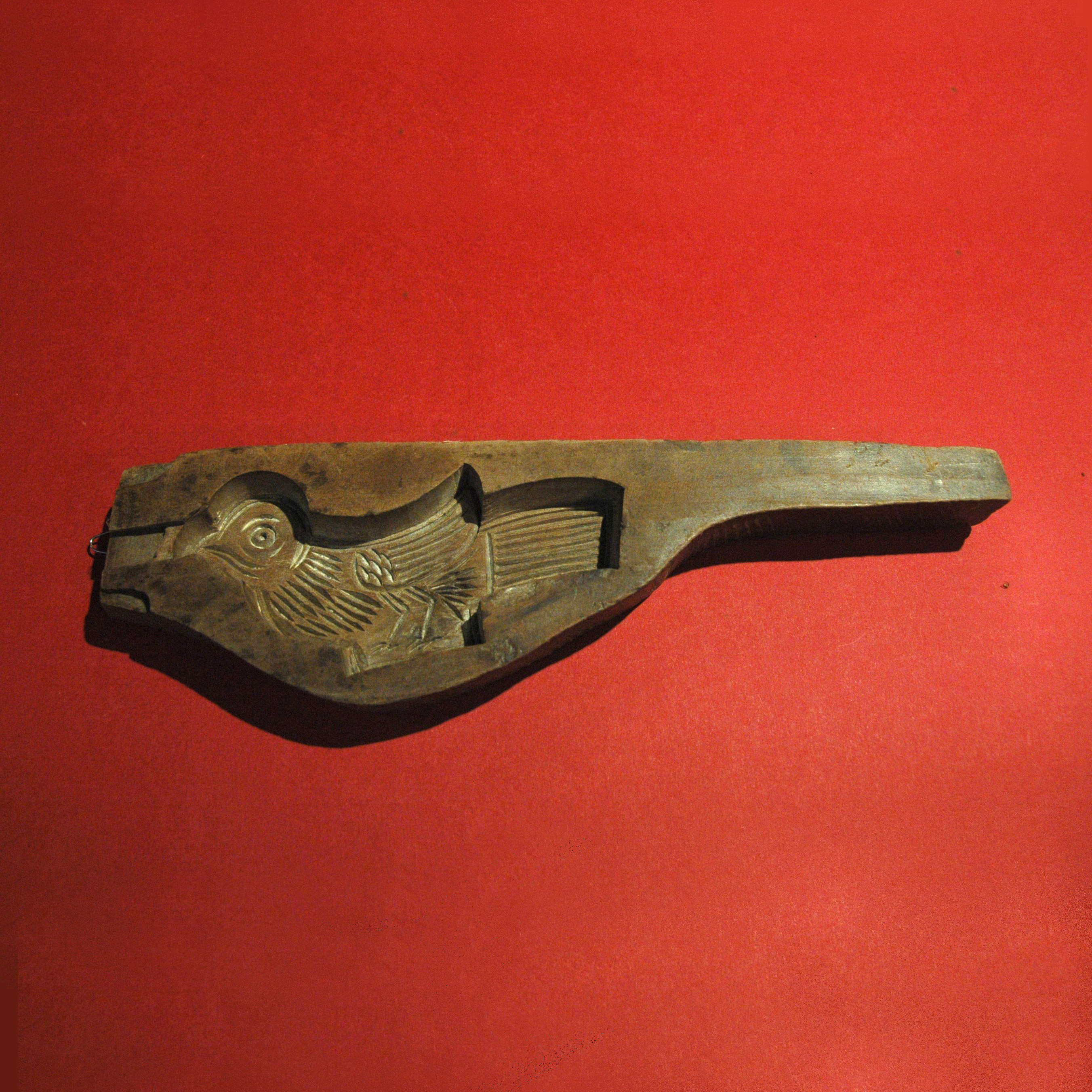
Traditionally a household would have a collection of different pattern cookie moulds; fish, cat, monkey, bird, bat, plants, etc. These mould will be used for the several festivities each year with different recipes. At the beak of the bird in this particular mould, one can see a carving adjoining to the edge of the mould, this air channel will make it easier when releasing the cookie from the mould.
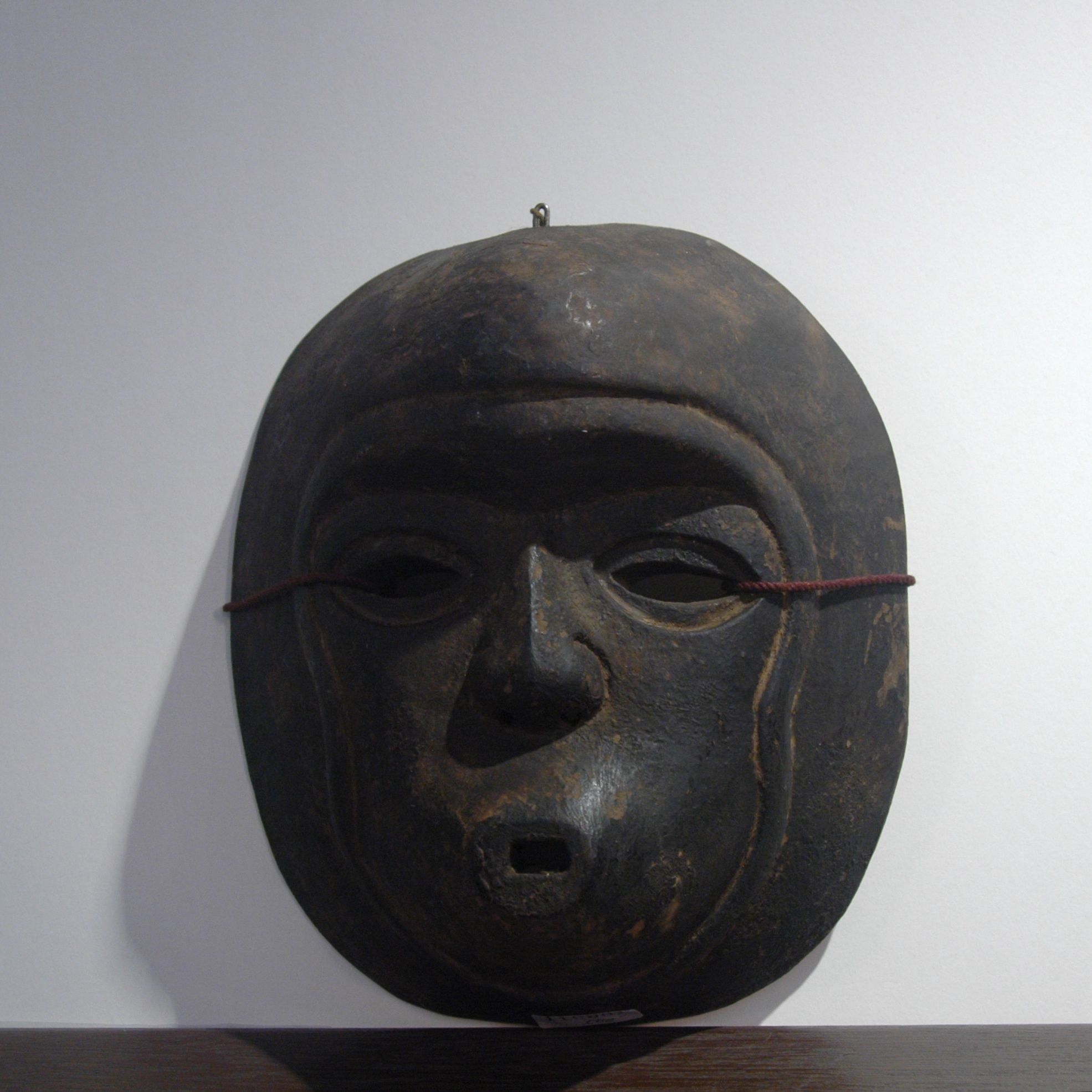
This is a Topeng use for masked dances in Indonesia. This mask would have been worn by the Bondres character , a joker to bring in the humorous elements in the performance. Despite the ugly facial expression, the Bondres are popular character because of the bawdy jokes and satires that poke fun at the current events. The jawless mask was made so for the actor to be able to speak clearly. Each dancer would have his own collection and there are many different of these clown character. The eye brow and moustache are made with goat hair.
Puppets originally are used as burial item made to replace human sacrificial burial. In the Han dynasty theatrical art developed, puppet show was not only the first performance art of China, it was the leader of all theatrical art. By Sung Dynasty, Quan Zhou was the cosmopolitan of its time; arts, trade, religion were at their peak, religious ceremony was held every 3-5 days, the witch craft associated puppet show flourished. There was a demand of high quality puppets, the carving works of the head that were in the beginning carried out by the Buddha statue craftman were later developed as specialised art. This is a glove puppet of a monk, the eye and the mouth can be controlled separately and there is even a small tongue!
Please pray for those who are suffering by the flood in Thailand, the worst in 50 years, and that serenity will return soon.
Praying monk figurine; they are usually found in a pair at either side of the Buddha statue, both kneeling, one praying and the other one has his hands resting on the thighs.
This is a wooden container for the preparation of sumeshi
(rice used for sushi).
- Cooked 6 bowls of rice with 100mm of kelp
- Prepare the vinegar dressing;
60cml rice wine vinegar + 40g sugar + 10g salt - Put hot rice in the wooden container and add in vinegar dressing
- Use a spatula and mix the rice
(with some sliding and slipping action) - Use a uchiwa (fan) to cool off the rice
- Once cooled, covered and ready for making sushi!
Along the coasts and waterway of the southern China there is a tribe called the Tanka who reside on the junk boats. Each family would have two small boats,one anchored for living and the other for fishing. Wooden figurines of Gods and ancestors are made for worshiping and to offer blessing when they are out at sea. With the decreasing number of fish and the better job opportunities on land, there are now only 1/5 of the Tanka still living at sea.
This is a musical instrument known as the Okokan which is in fact a cow bell. Originally the Balinese use the cow bell to keep track of their cows and buffalos in the field. When the herd of cows move, the bell would sound like music playing. This inspire the farmers to use it was an entertainment during harvest, it is also believe that the evil can be steered away as it does to the flies for the cows. This Okokan is in the shape of a head with the tongue being the clapper.
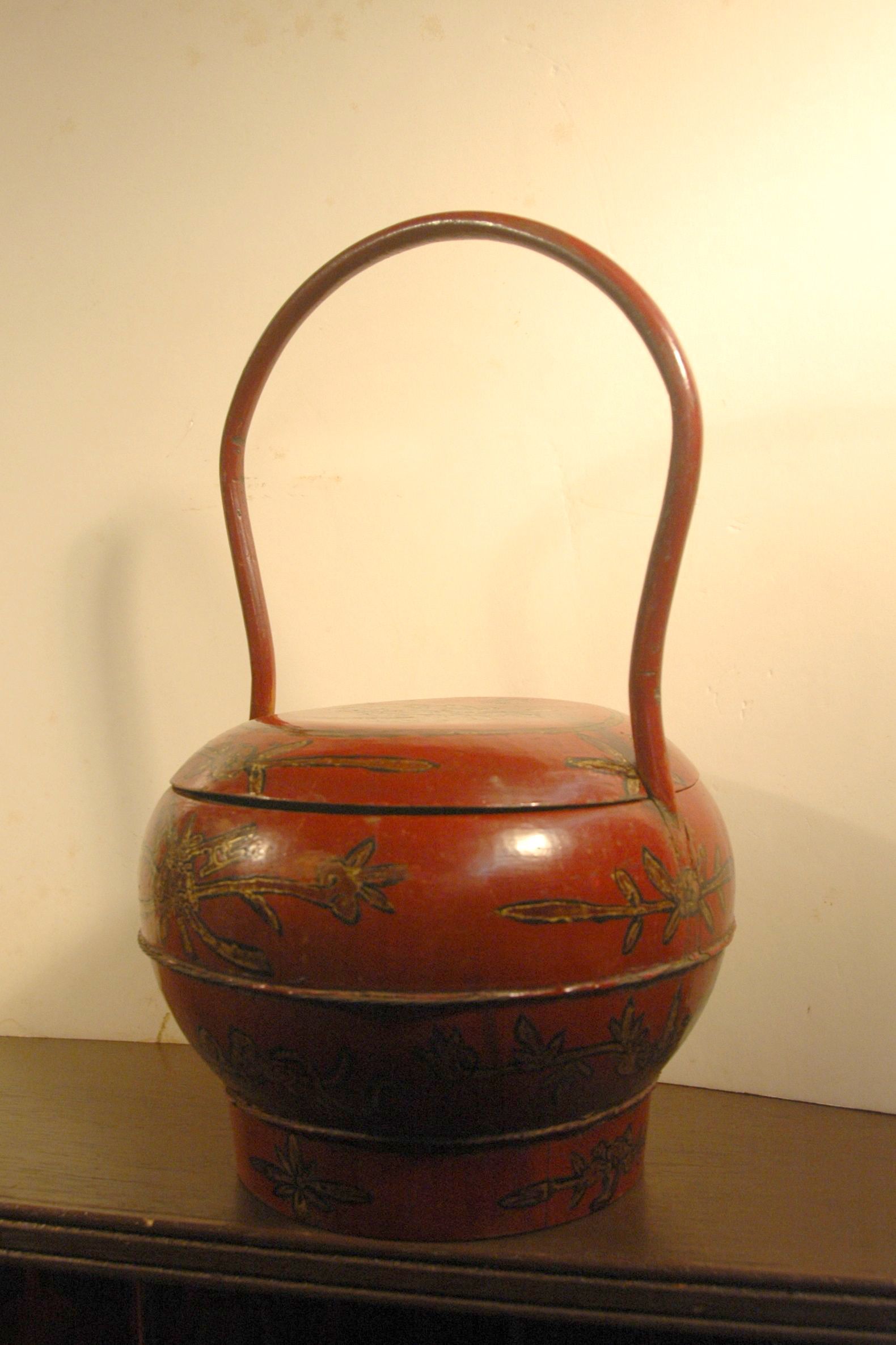
This is a rice container for the southern part of China. In a traditional Chinese family very often the clan would be living within one house / estate, all meals would be eaten together, rice would be cooked in a wok in a kitchen far away, the cooked rice would be transported and served in a lacquered pail. This pail is has a gold painted decoration over the lacquered.
Side tracking; the Chinese would insult a stupid person as a “rice barrel”, someone who is “a gold painted lacquered rice barrel” would transfer to someone who is well package but in fact an idiot (the precise word has escape me, please help to suggest the word). This is very nice item, I hope the story wont stop you from taking it home. :)
There are many different types of puppet in China, this is a Chaozhou wire puppet. It is called a wire puppet because it is controlled by 3 metal wire, one supports the head and the other two control the arms. Its other name “paper shadow puppet” reveals its history; at the Song dynasty the flat shadow puppet was introduced in the chaozhou region, it was later developed into 3D, as the demand from the spectators grow the paper between the puppet and the spectator is removed and the feature of the puppet refined (head, hands and feet, elaborated costumes). The head is made with clay, paper as hands, dried grass as body and wooden carved legs but the wire control remains.