This smart garment belongs to the Striped Hmong tribe (Hmoob Txaij) of Thailand, they are one of the 5 hill tribes in the area between Northern Thailand, Laos and Myanmar. Amongst the Hmong tribes, there are 4 sub tribe – White Hmong, Green Hmong, Striped Hmong and Hmong Chinese. The Striped Hmong’s costume have striped bands on the arms.
This fabric is woven by the Pu Ji tribe, a minority tribe in Gui Zhou. Weaving is a technique passed down the generation of women, all fabric for the household would have been weaved by the family. Traditionally, the young girls will be helping their mother and elder sisters and pick up the know how along the way, by the time they are a teenager they will be capable of making the cloth from scratch.
By from scratch, its from the cotton and indigo plant. Cotton are collected and made into yarns and rolled onto the simple spindle while the strings for the warp are set out according to the design and often with the use of the exterior of the building. Clothes are placed on the loom and the work begins.
This fine silver bracelet was one from the Miao tribe in China, the size of a cuff of a shirt, reminiscent of part of the armor. They are worn in pairs and would be up to 4 pairs at the same time. Different branches of the Miao tribe have their individual bracelet which all the women would be wearing.
Today we have something more traditional, part of the Dong tribe consume, a triple ring silver neckwear. Together with the silver head wear, they are the most important part of their costume, passing down from generations. There are many style for the neck ring, we found this particular one to be very modern and bold.
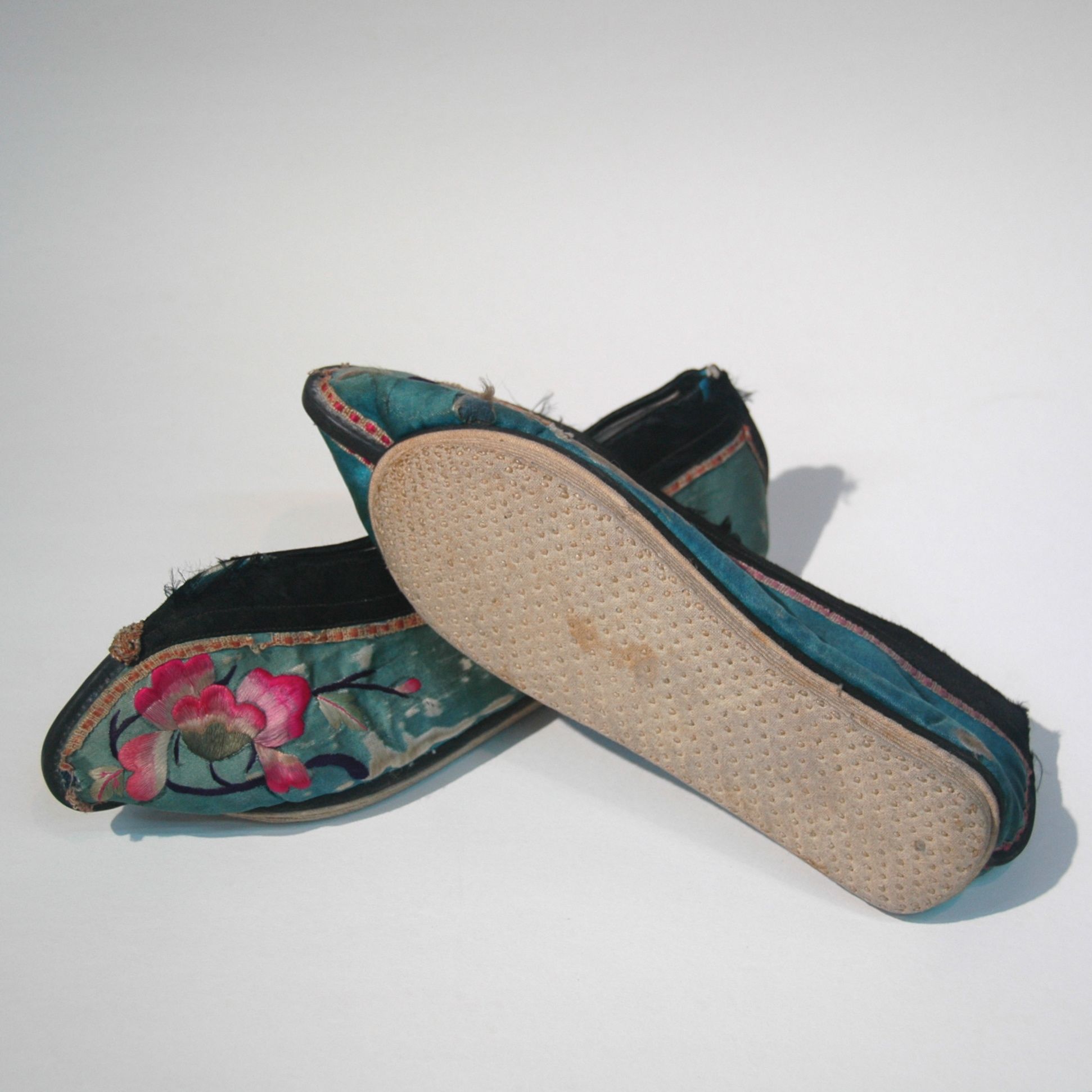
This is a pair of embroidery shoes of the Miao tribe (for more about Miao tribe shoes, see our earlier post, Embroidery Shoes). Today I would like to concentrate on the cloth sole of the shoes which is entirely handmade. Before rubber and leather sole became popular in China, most of the soles are made with cloth, it is a common household practice, even mother remembers making shoes for herself in her childhood. Here is mom’s instruction:
Save up old clothes and off cuts for a year, so materials are ready for making new shoes for Chinese new year
Cook up some glue with water and rice flour (the Chinese version of wall paper paste)
On a flat board, applied glue to the edge of the board, then stretch the a large piece of cotton cloth, apply a layer of glue over it. On the second layer place smaller pieces of cloth, avoid any overlapping or gaps, apply a layer. On the top place a large piece of cotton, avoid creases, applied glue over it. Let dry for a night
Use a newspaper to trace out the sole of the old pair of shoe, enlarge to suit. Prepare an addition one for a size larger.
Cut out from the dried cloth pile 6 pieces from the larger template (large filler – LF), 7 from the smaller (small filler – SF) one and 2 smaller pieces for the heel (H). Put the pieces of the same size together, clamp them and give it a good trim so that they are the same size and shape. Reverse the template and cut out the soles for the other shoe.
Take a piece from the large filler and mount a piece of cotton, wrapped the edges over to the top. This will become the bottom layer of the sole (BS), the piece that touches on the ground. Take the other 6 larger fillers and stick on a cotton piping around it.
Then places the fillers in the order; BS-LF-SF-LF-H-SF-LF-SF-LF-SF-LF-H-SF-LF-SF-SF-SF. Stitch temporarily to hold them together, clamp it well and sew the edge with hemp string (you will need an awl for this). Then make uniform and small stitiches (as seen in the photo) throughout the whole of the sole.
The completed sole is then brushed with warm water and covered with a blanket overnight.
The next morning, the sole is compressed with a mallet and air dried.
Now the sole is complete, all you need to do is the upper shoes and of course the embroidery …
The term brocade to the Chinese denotes mostly brocades woven by the minorities in Guang Xi province, the Miao tribe, Dong tribe (Gaeml) and Yao tribe in particular. The characteristic of these brocades are their vibrant colour combination and interesting geometric designs. To achieve these means that they have to have several shuttles for different colour yarns and a special designed jacquard hand loom.
During the Ming dynasty, these minority brocades were articles of royal appointment tribute. In the past, young girls by the age of 10 would have to start weaving a brocade of her own design and this would become her dowry for her wedding later on. Motifs of brocade mostly are cloud, water, fish, bird and floral. Brocades are used as quilt cover, wall hanging, cushion, head dress and belt etc.
Like the colourful band in the previous post, this black and white woven band is also a band of blessing. The Miao tribe reside on the hillside where they are constantly harassed by the snakes; once upon a time, a snake attacked a girl by wrapping its body on her, a young lad came to her rescue. The two soon fell in love, the girl woven a band for the young man as a sign of their love. One day as they were travelling together they came across another snake who was ready to attack, the lad used the band, wiggle it to imitate the snake and led the snake back into the woods. Since then, it was believed that the band would protect them from snake and all evils and the woven band became popular for the Miao.
Many years ago on one of the shopping trips to Gui Zhou, mother was on a bus when she saw this baby carrier. The baby carrier was not in a shop but carry a baby on the back of a woman. Falling in love with the unusual design mother jumped out of the bus and ran to find the woman with the baby. On closer look, the pattern looked even better, the colour are bright and the design abstract and modern. Mother begged the lady to sell the carrier to her so she can use it as a sample. The lady was very reluctant, as the baby carrier is believed to be an amulet for the child, protecting him throughout his life. After much persuasion here we are – a pattern of birds with flower!
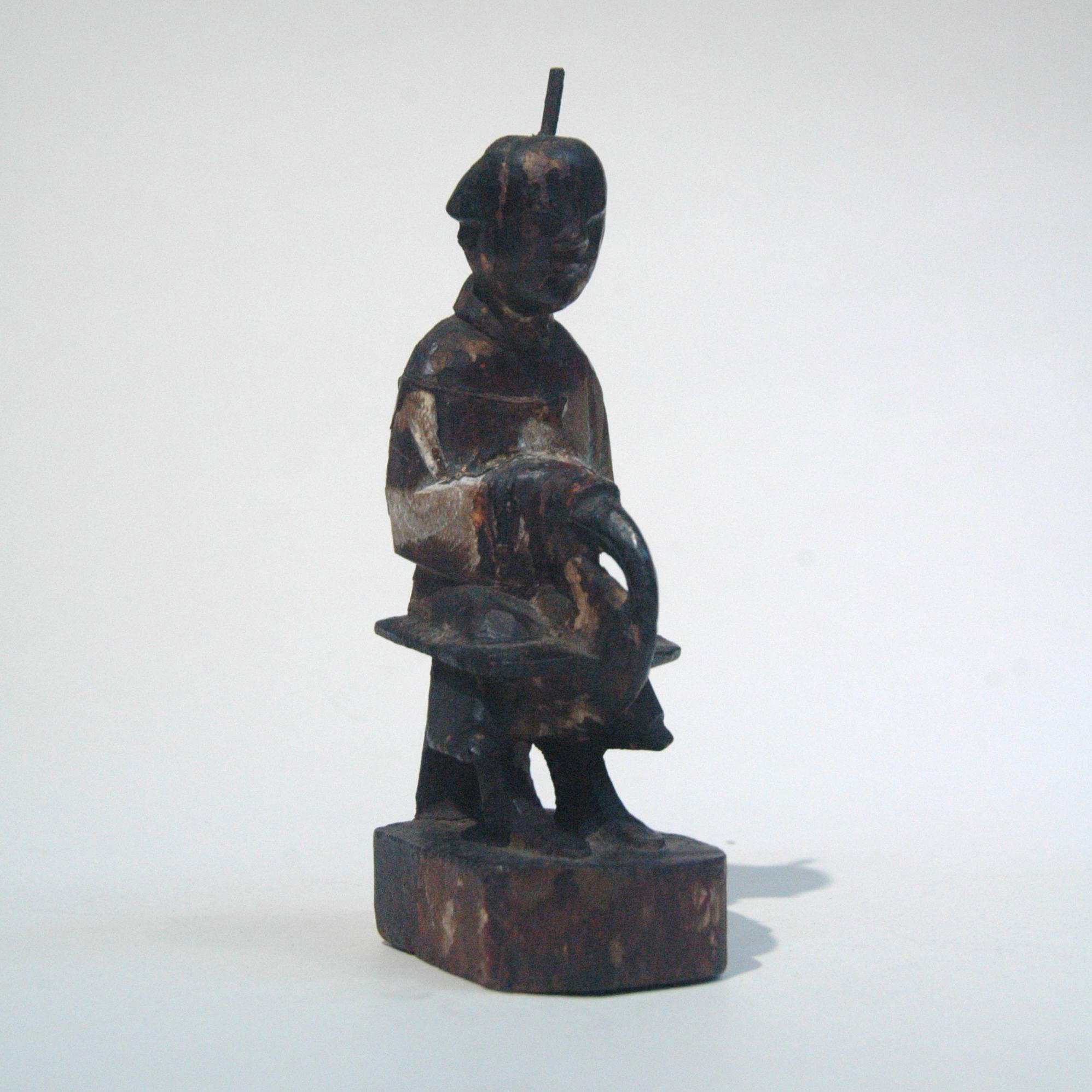
This is an old figurine worshiped by the fisherman on the junk boats of Hong Kong, it is one of the ancestral saints – Crane Riding Mother Saint, a figurine representing the female ancestors. It is believe that ancestors would protect the fisherman at sea. In Taoism, the Taoist saints be believe to travel around by riding a crane.
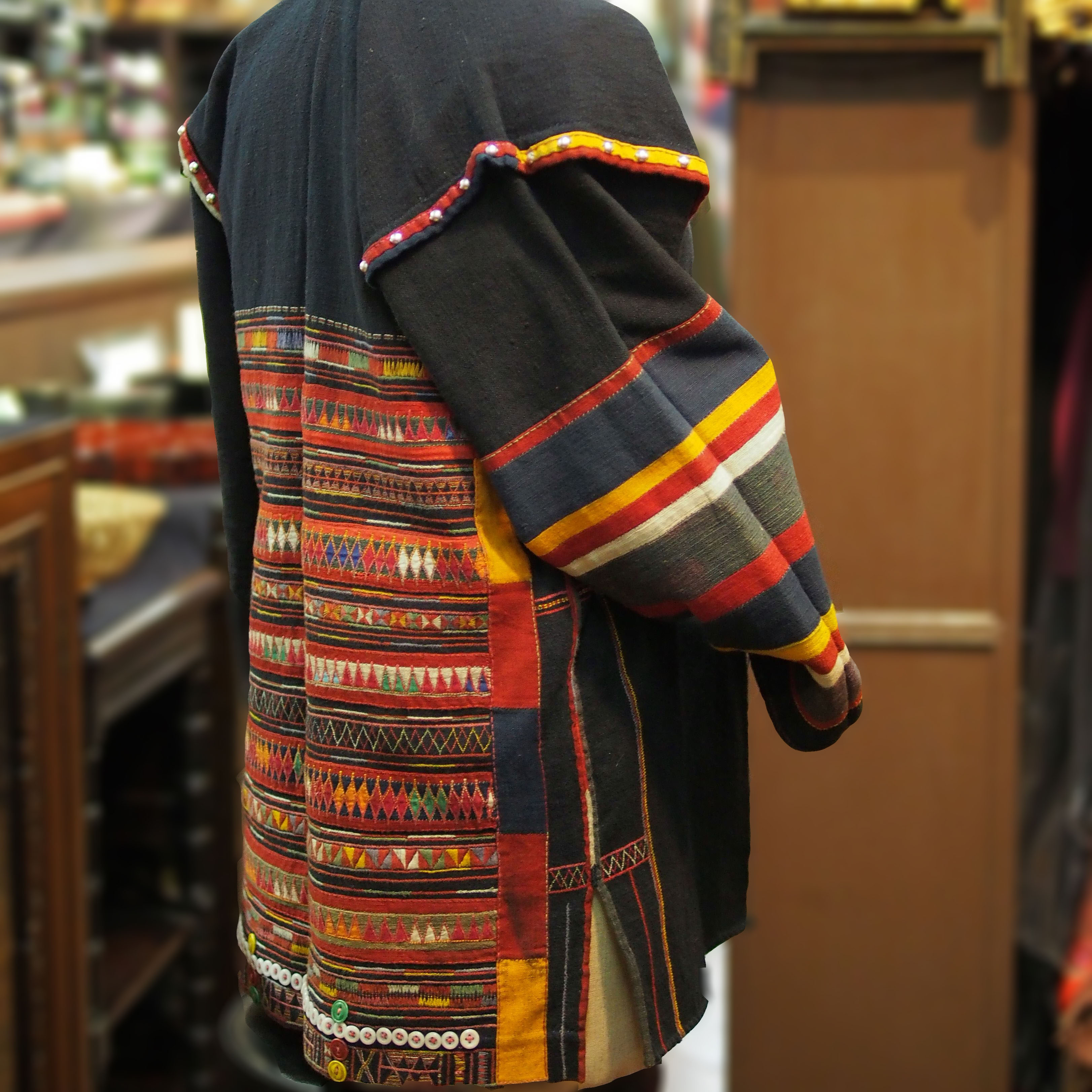
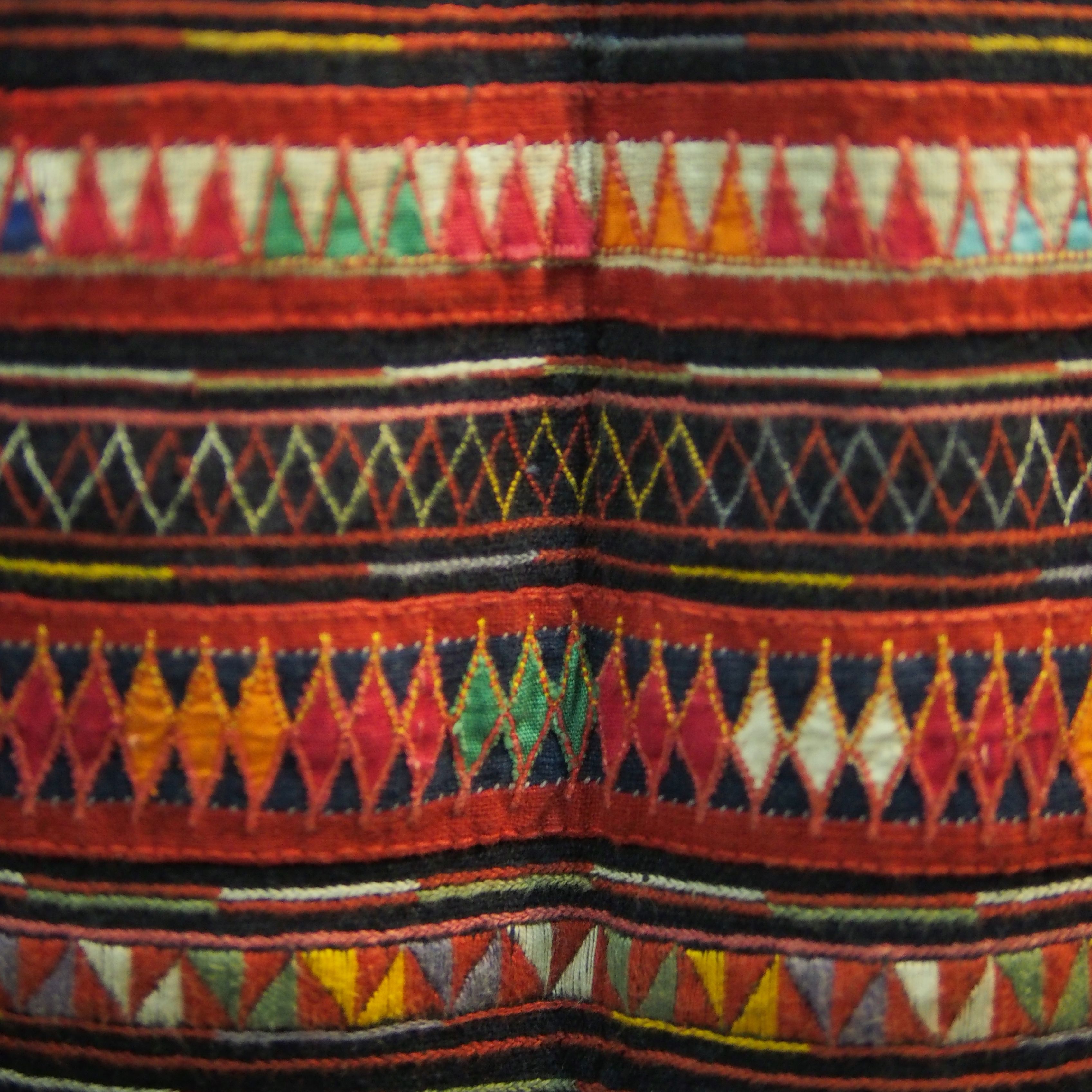 L700mm, Thailand




 Mountain Folkcraft