Archives for category: pottery

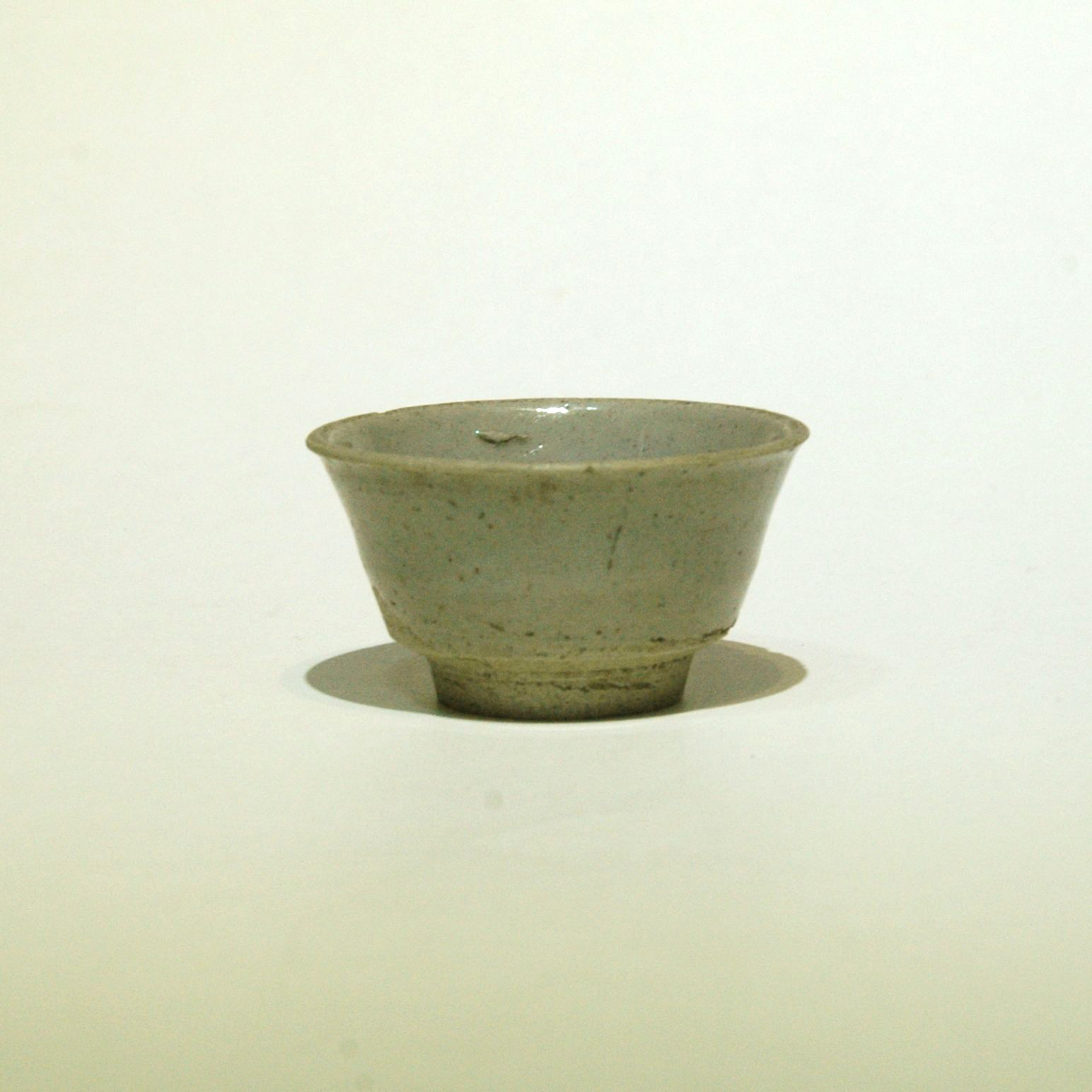
DIA75xH40mm, China

This is a small pottery wine cup, its small size is suitable for drinking games where one would bottoms up quite frequently.

Here is a traditional Chinese drinking game;
The Slap 7 Game
A group of drinkers in sitting in a circle, each counting a number from 1 to 99, the first person will say 1 and the second 2 and so on.  On the number that contain the number 7 or the multiple of 7 (e.g. 7, 14, 17, 21, etc), the person saying it till has to slap someone else’s head.  The person who got it wrong will have to drink up.  Sound simple, wait till you have a few cups of Chinese wine.

Here are a couple more items on drinks; Porcelain Wine Flask, Money God , The Wine God,

This item selected by Furze for the Something Old Something New exhibition and is available at both Mountain Folkcraft and Soil.
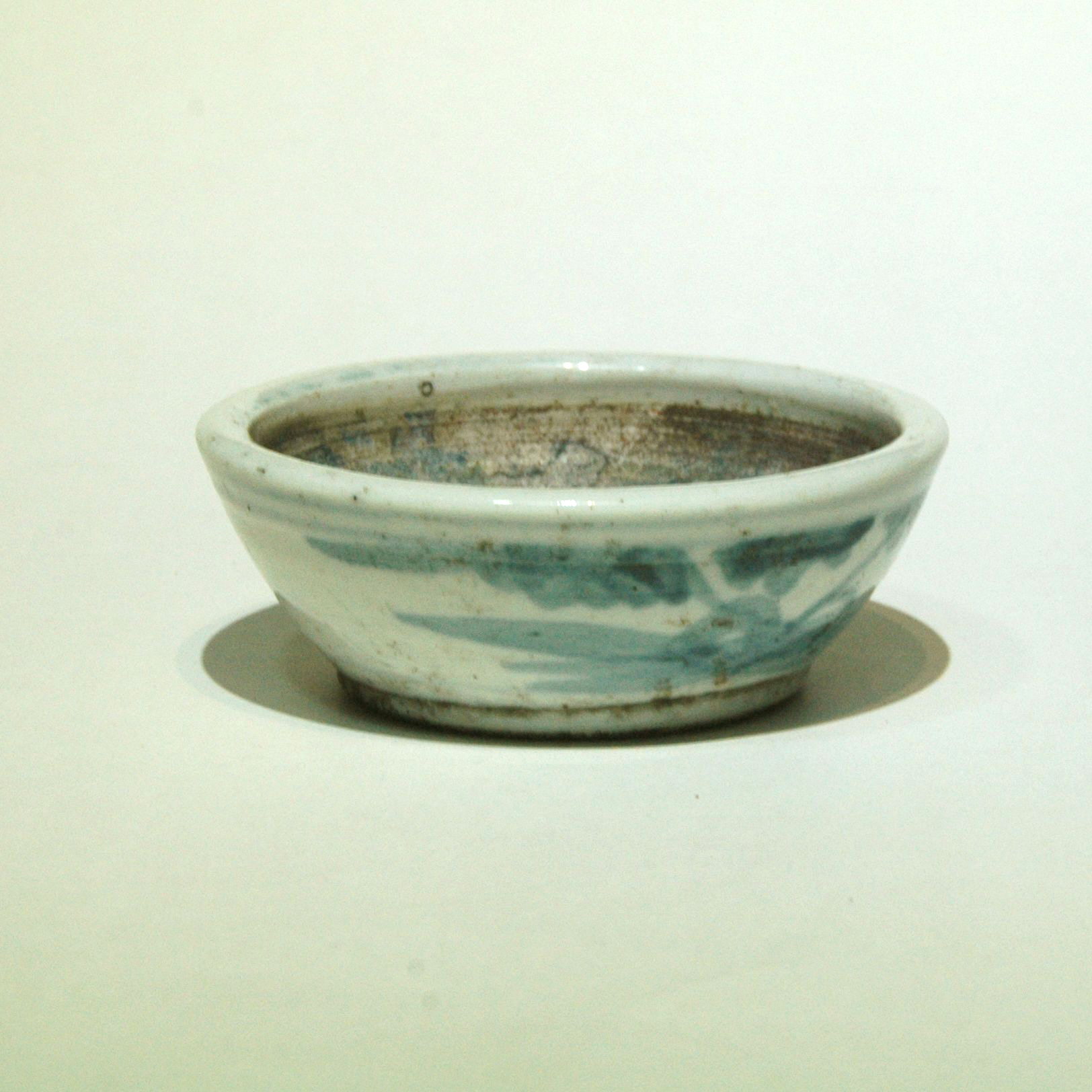
DIA100xH40mm, China

This miniature silver kettle was selected by Furze for the Something Old Something New exhibition and is available at both Mountain Folkcraft and Soil.

This is the base of a small pottery mortar which would have been used for grinding Chinese herbal medicine, now it can be used for grinding marination rubs, for making pesto, for grinding sesome.  Check out our other mortars; mortar, medicine grinder.

DIA100xH140mm, China

The oil lamp has been a form of lighting since the Warring State period (400BC), with its long history the design explored into many different forms and materials, by the Ming and Qing dynasty they are as common as today’s light bulb.  Lamps for the court and the wealthy tend to be decorative, the one used by the folks are more functional based (see our previous entries; oil lamp, pewter oil lamp, oil lamp shades).  They remained as a form of lighting till the arrival of the gas lamp from the west and of course electricity, my parents still remember the days when they are reading  under the light of an oil lamp when they were a child.

This item selected by Furze for the Something Old Something New exhibition and is available at both Mountain Folkcraft and Soil.

DIA75 x H50mm, China

This item selected by Furze for the Something Old Something New exhibition and is available at both Mountain Folkcraft and Soil.

These pair of cups has a brown glazing (known as the soy sauce glaze) and internally a hand painted blue and white porcelain goldfish pattern.  The goldfish pattern is a traditional Chinese pottery decoration; the word goldfish (金魚) and the word gold & jade (金玉) are heterographs (same pronunciation, but different meaning and spelling), a bowl full of golden fish is hence a house of wealth.

And here is the ultimate goldfish in a bowl by Riusuke Fukahori

DIA50xH70mm, China

This is small vase is a stationary, a water drip for diluting the ink.  The 2 other water drips featured in our previous posts ,which both has a mouth piece, those are known as “shui zhu”, one like this is known as a “shui cheng”.  Water drip is one of the essential stationary besides the fundamental 4; paper, brush, ink and inkstone.  Its small size and its basic utilitarian function enable the craftsman to be more expressive on the material, form and decorations.   The water drip is an articulated item for the scholar, an item kept at the desk which would reflect the owner’s passion.  I tried hard to think of an equivalent object for today’s scholar and failed, at best an old fountain pen and at worst a desktop pattern.  Is it because nowadays we owned too many objects?  Or has the digital life leave us little individuality?

This item selected by Furze for the Something Old Something New exhibition and is available at both Mountain Folkcraft and Soil.
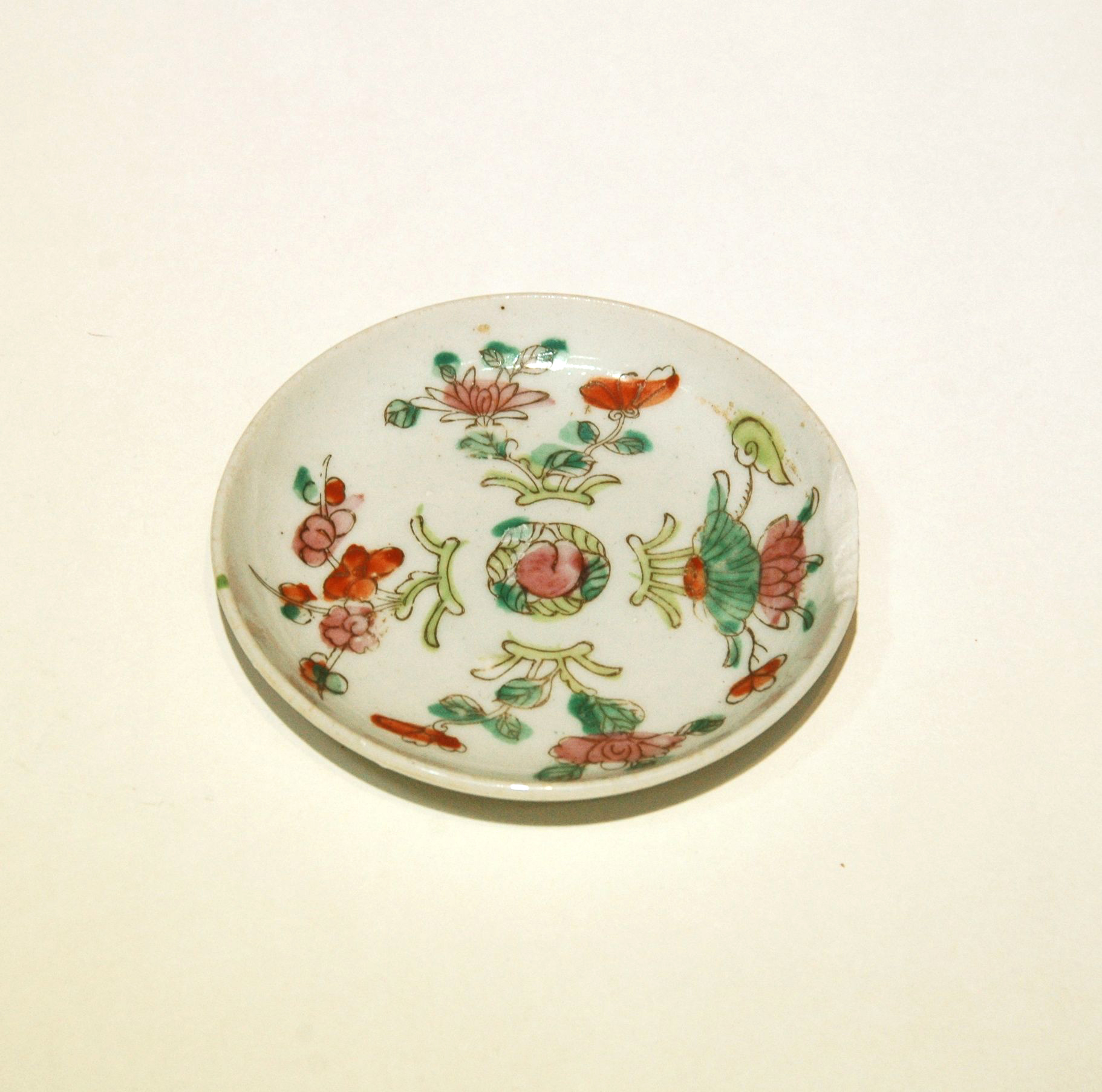
DIA100mm, China

This is four seasons floral plate is a folk’s version of the famille rose decoration.  The normal examples of famille rose you see in museum and exhibitions are very delicate and refine works of art, they can be seen as an extension of Chinese painting, the decoration of this plate uses the same technique of glazing but with a bolder pattern, it is an everyday plate for the commoners.  Famille rose was invented and became popular in the Qing dynasty, basing on the technique acquired from famille verte and the colour material of the color enamel from the West, a decoration of a softer and different shades is achieved.  The work is made from white clay, on the biscuit a colour outline is painted, then glass whiteness (a white colour use for enamel work) is applied within the outline.  Colours are then painted over the glass whiteness glazing, giving a softer colour than the famille verte decoration.

This item selected by Furze for the Something Old Something New exhibition and is available at both Mountain Folkcraft and Soil.

DIA50xH100mm, China

This item selected by Furze for the Something Old Something New exhibition and is available at both Mountain Folkcraft and Soil.
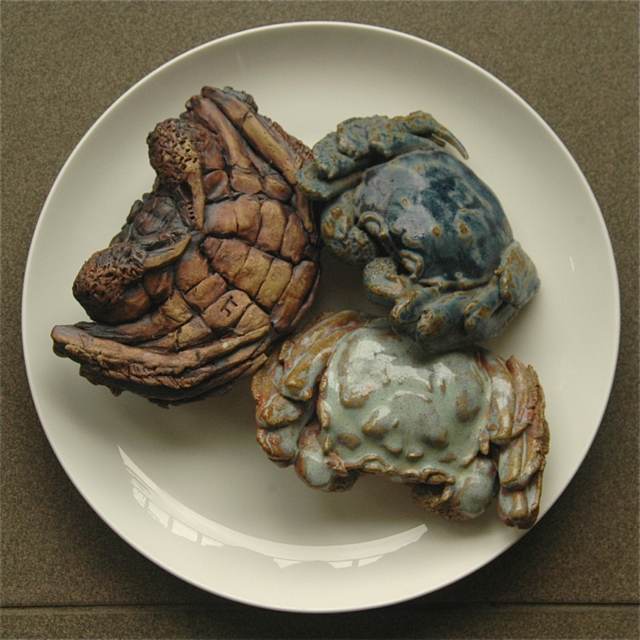
In the old days this flask would have been used in the kitchen for keeping oil or soy sauce for cooking.  Now with the hairy crab (Chinese mitten crabs) season coming up, it would be ideal for serving Hua Diao wine.  Being pottery, you can submerge the flask into hot water to heat up the wine.  Now talk about pottery and hairy crab, I cant help to show a piece of my work.

W120xD80xH40mm, Hong Kong (not for sale)

DIA75xH165mm, China

This item selected by Furze for the Something Old Something New exhibition and is available at both Mountain Folkcraft and Soil.

This is a traditional Chinese white glaze candle stand, this can be seen by the small hole on center of the top dish.  The traditional candle has a bamboo stick attached to the bottom, the candle would be secured by inserting it into the small hole.  Candle stands have been around since the 3 Kingdoms period (210AD) until the Tang dynasty they have been more descriptive and elaborated capturing the shape an animal or a plant, etc.  From the Sung dynasty, the form became more utilitarian and the 2 level form are the most common.

Talking about candles, I would like to share with you the candles hand made and designed by my friend Maha Alusi in Berlin.  And of course her view on “Passing Moments”.

http://mahaalusi.com/

DIA 140xH65mm, Hong Kong

This bowl is an example of the traditional mass production of craft which is still 100% handmade.  Notice the ring at the bottom of the bowl?  That it is unglazed?  It is not part of the pattern of the bowl but a feature of the production of the bowl itself – stack firing.

If you turn a bowl over, you will notice that the bottom of the plinth is a bit rougher, that it hasn’t got any glazing.  This is because if the glaze is there, under the heat of the kiln it would melt and cause the work to stick to the kiln board, that’s why the potter would carefully clean off any glaze.  Normally when firing each item would be placed on a kiln board and at some distance apart from other works.  In the Qin dynasty (220BC), demand for pottery is high, stack firing becomes popular in the common kiln.  The bowls would be stacked on top of each other (like how the bowls are arranged  in your kitchen cabinets), about 10 pieces tall.  To prevent the glazing on the bowl sticking together the glazing on the inside of the bowl (where the plinth of the upper bowl is touching) is removed,  hence the unglazed ring.  This would yield a lot more work in a single firing – tradition mass production.

This item selected by Furze for the Something Old Something New exhibition and is available at both Mountain Folkcraft and Soil.

DIA50 x H45mm, China

This item selected by Furze for the Something Old Something New exhibition and is available at both Mountain Folkcraft and Soil.

This Chinese porcelain tea ware is decorated with plum blossom, however, the white on the brown glaze just reminded me of Bambi.  Its not surprising that Chinese name for the Sika deer is plum blossom deer.